


Views: 289 Author: BorCart Publish Time: 2026-09-25 Origin: Site


Content Menu
● Why Source Electric Utility Carts From China?
● How We Evaluated Manufacturers
>> 1. Guangzhou BorCart Electric Vehicle Co., Ltd.
>> 2. Guangdong Marshell Electric Vehicle Co., Ltd.
>> 3. Dongguan Excar Electric Vehicle Co., Ltd.
>> 4. Guangzhou Langqing Electric Car Co., Ltd.
>> 6. Guangdong LVTONG New Energy Electric Vehicle Technology Co., Ltd.
>> 8. Xiamen Dalle Electric Car Co., Ltd.
>> 9. Kandi Technologies Group and Related Electric UTV Platforms
>> 10. Specialized Guangdong Utility-Cart OEM Factories
● Manufacturer Comparison Table
● Technical Details Buyers Should Specify
>> Powertrain and Electrical System
>> Battery and Transport Documentation
● Sourcing Risks and How to Avoid Them
>> Risk 1: The "same-looking cart" trap
>> Risk 2: Peak specifications sold as continuous performance
>> Risk 3: Certification does not match the shipped configuration
>> Risk 4: Warranty is offered without a spare-parts system
>> Risk 5: Range claims ignore payload and operating conditions
>> 1. Define the Work Before Selecting the Cart
>> 2. Audit the Factory Before a Large Order
>> 3. Start With a Controlled Sample Order
>> 4. Choose the Right Shipping Format
>> 5. Protect the Purchase Contract
● FAQ
>> 1. How can I verify whether a manufacturer's ISO 9001 certificate is still valid?
>> 2. Is CE enough to sell an electric utility cart in Europe?
>> 3. What should I test on an electric utility cart sample?
>> 4. How do I compare two lithium battery quotations fairly?
>> 5. What is a reasonable MOQ for a private-label electric utility cart?
China has become an important sourcing base for electric utility carts used in factories, resorts, airports, farms, campuses, warehouses, municipalities, and large private properties. For professional buyers, the key question is no longer simply "Who can make an electric cart?" It is: Which manufacturer can consistently deliver the right configuration, documented compliance, service parts, and predictable quality at scale?
The global electric utility vehicle market is projected to grow from USD 26.89 billion in 2026 to USD 53.20 billion by 2034, with commercial utility vehicles expected to represent the largest vehicle segment. Industrial facilities alone are projected to account for 43.87% of the market in 2026, reflecting demand for low-noise, lower-maintenance vehicles used for internal logistics, maintenance, cargo movement, and personnel transport.
For overseas brands and wholesalers, China offers a broad supplier base—but it also requires a structured qualification process. A low quotation can hide differences in chassis steel thickness, battery cell quality, controller origin, brake configuration, wiring protection, testing procedures, and spare-parts readiness. This guide is designed to help buyers identify manufacturers that are more suitable for long-term electric utility cart cooperation.
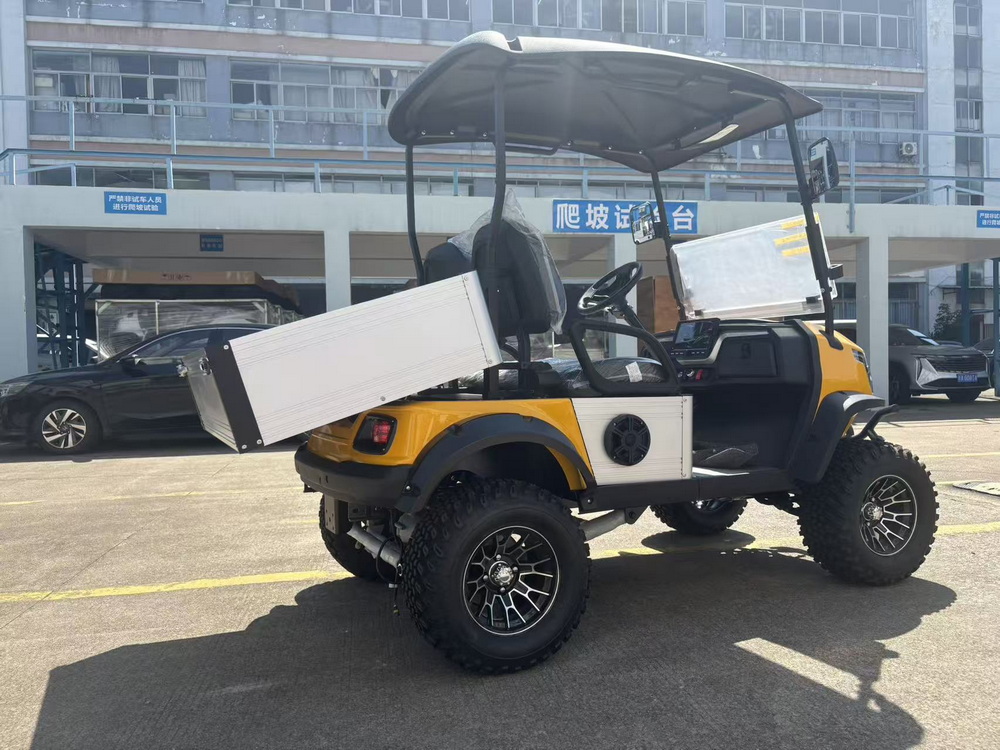
China's electric utility cart supply chain is concentrated mainly in Guangdong and Fujian, with supporting ecosystems for steel fabrication, plastic molding, battery packs, motors, controllers, chargers, wiring harnesses, lighting systems, tires, and export packaging.
Guangdong is especially relevant because manufacturers in Guangzhou, Dongguan, Zhaoqing, and nearby cities can access both vehicle-production resources and export infrastructure. Buyers sourcing from this region can often consolidate vehicles, accessories, spare parts, custom packaging, and aftermarket components through one coordinated supply chain.
Several factors make Chinese manufacturers attractive to international buyers:
- Broad product coverage, including cargo carts, golf utility carts, off-road utility carts, personnel carriers, maintenance vehicles, food-service carts, patrol carts, and electric mini trucks.
- Flexible private-label options for color, logo, seating layout, cargo bed, body shape, tire type, dashboard, accessories, battery configuration, and packaging.
- Mature component sourcing for AC motors, lithium batteries, controllers, chargers, and molded body parts.
- Competitive economics for buyers that require a branded product line but do not want to invest in their own vehicle plant.
- Stronger availability of CKD, SKD, and CBU shipment options for distributors serving different local assembly or tariff strategies.
However, China is not a single, uniform manufacturing market. A high-volume golf-cart assembler and a true OEM engineering partner are not always the same type of supplier. Buyers should assess factory ownership of critical processes, engineering responsiveness, quality-control evidence, and the supplier's willingness to define specifications in writing.
This list is not based on advertising language or marketplace ranking alone. It prioritizes manufacturers with visible electric-vehicle specialization, export-oriented product portfolios, stated production capability, a track record of utility or multi-purpose models, and evidence of customization capacity.
The following criteria should also be used by buyers when conducting their own supplier shortlist.
| Evaluation area | What professional buyers should verify | Why it matters |
|---|---|---|
| Manufacturing capability | Workshop size, number of production lines, welding, painting, assembly, testing, and molding capability | Determines supply continuity and quality consistency |
| Engineering support | Motor, controller, battery, suspension, cargo-bed, and body customization capability | Important for private-label products and application-specific fleets |
| Quality process | Incoming inspection, in-process inspection, final inspection, road testing, battery verification, and traceability | Reduces early-life failure and after-sales exposure |
| Compliance preparation | Model-specific CE, EMC, RoHS, battery transport, and destination-market documents | Avoids customs, registration, and product-liability problems |
| Supply-chain control | In-house chassis, body, molds, paint, wiring, or assembly capability | Helps control lead time, product changes, and spare-parts consistency |
| Commercial flexibility | Sample policy, MOQ, payment terms, private-label process, spare-parts package, and warranty framework | Essential for developing brands and regional distributors |
| Export experience | Packaging knowledge, container loading, CKD/SKD options, documentation support, destination-market history | Lowers shipping and customs risk |
A useful principle is to compare suppliers based on total landed operating value, rather than ex-works price alone. A cart that costs less at purchase but needs frequent controller replacements, battery warranty claims, or body-panel rework may cost a distributor more over the first 18 months than a higher-priced, better-documented alternative.
Location: Guangzhou, Guangdong
Founded: 2000
Primary focus: Golf carts, electric utility carts, sightseeing buses, cargo vehicles, hunting vehicles, low-speed vehicles, and tailored electric mobility projects
Suitable for: Importers, regional distributors, developing private-label brands, hospitality projects, industrial fleets, and buyers requiring flexible OEM support
Guangzhou BorCart Electric Vehicle Co., Ltd. is a practical option for buyers who need a supplier that combines established vehicle manufacturing capacity with comparatively flexible OEM/ODM collaboration. The company states that it operates a 200,000-square-meter workshop, employs more than 100 engineers and technicians and over 1,000 skilled workers, and runs four production lines. It also states a capacity of up to 10 containers of electric vehicles per day.
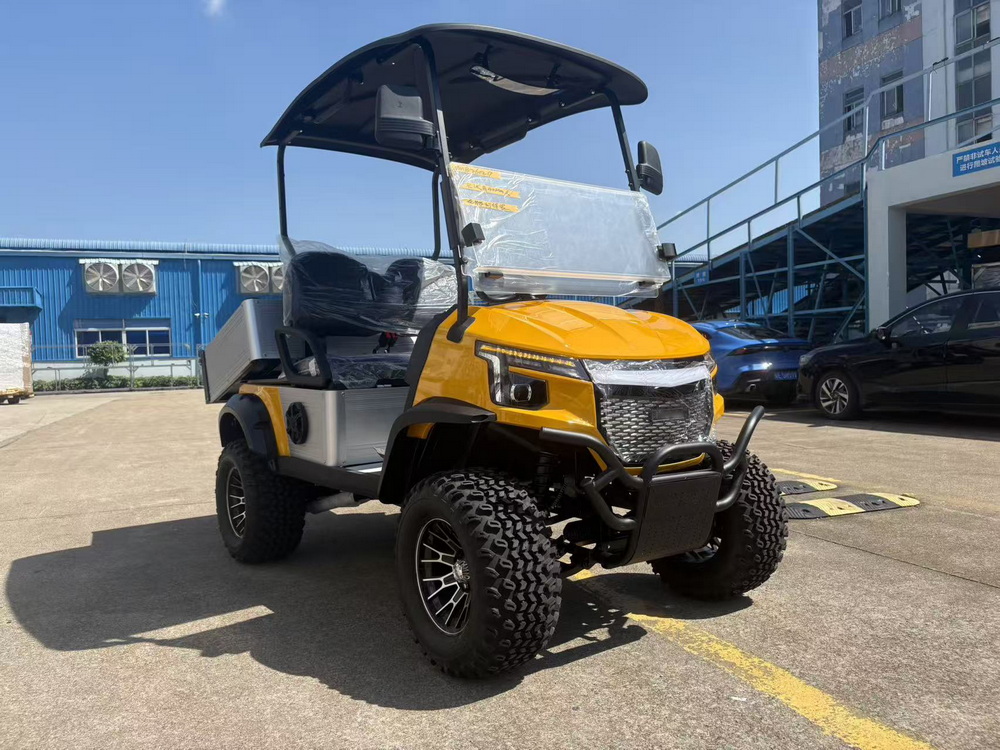
For utility-cart buyers, BorCart's strength is not limited to standard golf-cart-style vehicles. Its product range includes multi-purpose utility carts, cargo-cage carts, lifted utility carts, mini electric trucks, weather-protected models, food-service carts, and cargo configurations designed for industrial, resort, agricultural, and campus use.
BorCart is particularly relevant for small and mid-sized brands that need more than a stock vehicle with a logo decal. The company states that it can support customization for chassis, body, mold, paint, battery, motor, cargo bed, towing system, suspension, color, branding, and application-specific functions. It also produces selected components in-house, including chassis, bodies, molds, and paint, which can improve coordination when a buyer requires product adjustments.
Its stated quality workflow includes New Product Introduction procedures, incoming quality control, process quality control, quality assurance, and 100% assembly-line testing. The company also identifies internationally sourced components such as KDS or Mahle motors, Curtis controllers, and Delta-Q chargers in selected configurations. Buyers should still specify the exact component brand and model in the purchase agreement, because component selection can vary by cart configuration and market requirement.
Why buyers consider BorCart
- More than 25 years of stated electric-vehicle manufacturing experience.
- Broad platform coverage for utility, cargo, golf, sightseeing, and specialty vehicles.
- In-house capability for key structural and cosmetic components.
- Flexible support for trial orders, custom branding, and technical discussions.
- Export experience across more than 30 countries, according to the company.
- Suitable for buyers that want practical communication and deeper custom engineering support rather than a purely catalogue-based sourcing relationship.
OEM/ODM scope to discuss
- RAL or Pantone body color matching.
- Brand logo, dashboard label, steering-wheel badge, seat embroidery, and packaging.
- Cargo box dimensions, cage body, flatbed, dump bed, rear enclosure, or tool-rack configuration.
- Lead-acid or lithium battery options.
- Motor and controller selection for hill climbing, towing, or indoor low-speed operation.
- Right-hand-drive configuration, lighting packages, mirrors, windshields, and road-use equipment where applicable.
- CKD, SKD, or complete vehicle shipment planning.
Location: Guangdong, with stated operations in multiple Chinese production areas
Founded: 2002
Primary focus: Golf carts, sightseeing vehicles, utility vehicles, mobility scooters, forklifts, cleaning equipment, and vehicle electronics
Suitable for: Buyers seeking a larger multi-category supplier and a broad electric-vehicle product range
Marshell is one of the more visible Chinese manufacturers in electric mobility and adjacent industrial equipment. Public company information identifies electric vehicles, golf carts, resort sightseeing vehicles, utility vehicles, electric forklifts, and cleaning equipment among its major product categories. The company has stated that it welcomes distributor and OEM orders and operates substantial manufacturing resources, with a publicly stated workforce of more than 1,600 skilled workers and over 100 engineers.
Earlier supplier information indicates Marshell was founded in 2002 and developed production sites in Zhaoqing and Shanghai, with ISO 9001 production-site claims. Publicly available information can vary by website version and product category, so buyers should request the current factory address, applicable model list, current certification files, and actual production-line allocation before approving a supplier.
Marshell can be a logical candidate when buyers want to source multiple electric-product categories from a single group, such as utility carts together with mobility products, facility equipment, or sightseeing vehicles.
Why buyers consider Marshell
- Long operating history in electric vehicles and related electronics.
- Broad product categories beyond golf carts.
- Strong suitability for distributors building a diversified mobility portfolio.
- Publicly stated ISO 9001 management-system certification and OEM/ODM availability.
- Large-scale manufacturing profile compared with many small cart assemblers.
Key buyer questions
- Which workshop builds the selected utility-cart model?
- Is the proposed model produced on a dedicated line or shared with other product categories?
- Which parts are internally manufactured versus purchased from external suppliers?
- Can the supplier commit to a specified spare-parts list for five years?
- Are certification documents tied to the exact motor, charger, controller, and battery configuration being quoted?
Location: Dongguan, Guangdong
Founded: 2006
Primary focus: Electric golf carts, utility carts, sightseeing buses, patrol cars, and low-speed electric vehicles
Suitable for: Golf-cart distributors, utility-cart importers, and buyers needing a Guangdong-based supplier with a long vehicle focus
Dongguan Excar Electric Vehicle Co., Ltd., commonly known as EXCAR, is a specialist manufacturer of low-speed electric vehicles. Publicly available company information states that EXCAR was founded in 2006 and has developed electric golf carts, sightseeing buses, utility carts, and patrol vehicles.
Its visible product listings include electric utility cars, closed-cabin utility trucks, 48V lithium configurations, golf carts, and sightseeing vehicles. A manufacturer profile lists OEM/ODM service and a workforce of 334 employees, although buyers should validate current headcount and factory capacity during due diligence rather than treating marketplace data as an audited figure.
EXCAR is worth reviewing when a buyer's product assortment centers on utility golf carts, resort fleets, patrol vehicles, and related low-speed transport equipment.
Why buyers consider EXCAR
- More than a decade of concentration on low-speed electric vehicles.
- Product range includes utility, sightseeing, golf, and patrol applications.
- Guangdong location with access to established vehicle-component suppliers.
- Public claims of ISO 9001 and CE documentation for models.
- OEM/ODM availability shown in supplier profiles.
OEM/ODM scope to discuss
- Utility cargo body and enclosure requirements.
- Lithium battery supplier, BMS specifications, and charging protocol.
- 48V versus 72V platform selection.
- AC motor torque curve, climbing grade, and continuous-duty requirements.
- Dealer-oriented service kits and replacement-parts inventory.
Location: Guangzhou, Guangdong
Founded: Buyers should verify the exact current corporate entity and operating history
Primary focus: Golf carts, sightseeing vehicles, utility carts, and classic-style electric vehicles
Suitable for: Buyers seeking product variety, utility carts, sightseeing carts, and large-project vehicle sourcing
Guangzhou Langqing Electric Car is a known name in the Guangzhou electric-vehicle supply chain. Public information describes its range as golf carts, sightseeing vehicles, utility carts, and classic electric cars, with claims of ISO 9001 and CE documentation as well as OEM service.
Langqing may be relevant for hotel, resort, tourist-attraction, airport, and property-development projects that require a mix of people-moving and maintenance vehicles. For buyers focused solely on a work-oriented electric utility cart, the key is to distinguish between a visual passenger-cart platform adapted with a cargo bed and a platform engineered for sustained payload, towing, uneven terrain, and repeated stop-start duty cycles.
Why buyers consider Langqing
- Broad electric-vehicle portfolio.
- Guangzhou location supports convenient factory visits and export arrangements.
- Product types suitable for commercial and tourism projects.
- Publicly stated certifications and customization capacity.
Key buyer questions
- What is the rated payload after accounting for battery weight, passenger load, and accessories?
- Is the chassis designed for continuous cargo use or adapted from a passenger-cart platform?
- Can the supplier provide fatigue-test, brake-test, and hill-climb data?
- Is there corrosion protection inside the chassis rails, not only on visible exterior surfaces?
Location: Xiamen, Fujian
Founded: 2006
Primary focus: Golf carts, utility vehicles, personnel carriers, and dealer-oriented electric mobility products
Suitable for: Distributors looking for polished product presentation, recreational and utility cart lines, and established dealer-market support
HDK is an Xiamen-based manufacturer with a long presence in golf carts and electric mobility. Publicly available company information identifies its factory history as beginning in 2006, with an original Xiamen facility of approximately 60,000 square meters. Public material also indicates ISO and CE certification history dating to 2007.
The company may suit distributors that want a catalog of contemporary golf-cart and utility-vehicle designs, especially when product appearance, dealer merchandising, and accessory availability are important.
For industrial utility-cart applications, buyers should closely examine whether the selected model has an appropriate rear axle ratio, suspension tuning, tire load rating, braking reserve, thermal performance, and cargo-box mounting method for the expected duty cycle.
Why buyers consider HDK
- Established history in Xiamen electric-vehicle manufacturing.
- Strong golf-cart and electric-mobility positioning.
- Suitable for dealers that require attractive models and configurable options.
- Publicly stated ISO and CE history.
OEM/ODM scope to discuss
- Private-label body colors and dealer branding.
- Street-oriented versus work-oriented configuration.
- Lithium battery certification, BMS protocol, and charge-cycle expectations.
- Replacement body panels, dashboards, lights, and suspension components.
- Destination-market lighting, glass, mirrors, and speed settings.
Location: Guangdong
Founded: Buyers should obtain the current business-license record and confirm the specific production entity
Primary focus: Golf carts, utility carts, sightseeing vehicles, and low-speed electric vehicles
Suitable for: Distributors and project buyers looking for a supplier with a wide low-speed EV portfolio
LVTONG is frequently included in Chinese electric-cart supplier comparisons and is positioned around golf carts, sightseeing vehicles, utility carts, and related low-speed electric vehicles. It is a useful supplier to include in a competitive RFQ when buyers are comparing Guangdong-based manufacturers with broad product coverage.
The main purchasing task is to verify the exact product platform and selected supplier entity. In China's low-speed EV sector, a brand name can cover different workshops, model generations, and export configurations. A buyer should ensure that factory audit records, certification certificates, bills of materials, and warranty responsibility all relate to the same legal manufacturer that will appear on export documents.
Why buyers consider LVTONG
- Relevant product lineup for golf, utility, and sightseeing segments.
- Suitable for buyers needing multiple vehicle types for a project.
- Guangdong sourcing advantages for components, export service, and factory visits.
- Often included in market comparisons for Chinese electric-cart sourcing.
Key buyer questions
- Who is the legal manufacturer on the CE Declaration of Conformity?
- Can the factory provide VIN/chassis-number traceability?
- What is the standard corrosion-protection process?
- Are spare parts held by model year and revision level?
- Is the controller firmware version controlled and documented?
Location: China
Founded: Buyers should confirm the legal entity, factory location, and manufacturing scope
Primary focus: Golf carts and electric utility-oriented vehicles
Suitable for: Buyers benchmarking suppliers that serve international golf-cart and utility-cart markets
Eagle Electric Vehicle is commonly referenced in discussions of Chinese golf-cart manufacturing and international supply relationships. One market overview estimates that Eagle is among major China-based golf-cart manufacturers and notes manufacturing relationships associated with overseas cart brands, although these claims should be independently verified through current supply-chain documentation rather than treated as a purchasing guarantee.
For a distributor, Eagle can be a useful comparison point when evaluating platform design, export packaging, lithium configurations, accessories, and price positioning. However, buyers should request direct evidence of the proposed factory's current production ownership, warranty policy, and exact model documentation.
Why buyers consider Eagle
- Visibility in the export-oriented golf-cart market.
- Potential relevance for private-label and dealer programs.
- Useful benchmark supplier when comparing cart styling, accessories, and export-market configurations.
Key buyer questions
- Does the factory own the molds for the quoted body style?
- Will the buyer retain exclusive rights to custom molds or design modifications?
- Are wiring harnesses made to a controlled drawing and revision number?
- Can the supplier guarantee after-sales parts compatibility when a model is updated?
Location: Xiamen, Fujian
Founded: Buyers should verify current registration and manufacturing information
Primary focus: Golf carts, utility carts, sightseeing vehicles, and special-purpose electric vehicles
Suitable for: Buyers evaluating Fujian suppliers for golf, resort, and light-utility applications
Xiamen has developed an electric-cart manufacturing base that complements Guangdong's larger vehicle ecosystem. Suppliers in this region often serve golf, resort, community, hospitality, and light-utility applications. Dalle is frequently considered by buyers sourcing golf carts and low-speed electric vehicles from Fujian.
This supplier category can be appropriate for distributors that prioritize finished-cart styling, basic utility accessories, and export-oriented configuration support. For demanding industrial projects, buyers should request documented information on payload, towing, gradeability, braking, frame material, and battery endurance under real operating loads.
Why buyers consider Xiamen suppliers
- Access to a mature golf-cart manufacturing ecosystem.
- Strong relevance for leisure, hospitality, and community transport applications.
- Potential flexibility for private-label color and accessory configurations.
- Geographic diversification for buyers comparing Guangdong and Fujian supply bases.
Key buyer questions
- Is the quoted range based on unloaded testing or loaded operational testing?
- What is the continuous—not peak—motor output?
- How does payload affect range, motor temperature, and gradeability?
- Does the manufacturer test lithium battery packs at the vehicle level after installation?
Location: Zhejiang-based electric vehicle and powersports supply ecosystem
Founded: Buyers should confirm the specific entity and production platform for the proposed order
Primary focus: Electric UTVs, off-road platforms, and higher-clearance utility applications
Suitable for: Buyers needing more off-road capability, higher clearance, or utility-task-vehicle characteristics
Kandi is more relevant to buyers whose definition of an electric utility cart extends toward electric UTVs rather than golf-cart-derived utility vehicles. Market reporting notes the company's upgraded high-clearance electric UTV platform, intended to offer improved off-road performance through features such as an extended swing arm, widened wheelbase, and airbag shock absorbers.
This category is suitable when the application includes farms, construction areas, forestry, rough roads, mining-support operations, or outdoor maintenance where a conventional golf-cart chassis may not be sufficient.
Why buyers consider this category
- Better match for rough terrain and high-clearance applications.
- Useful for buyers whose product line requires electric UTV features.
- Suitable for evaluating more rugged suspension and chassis concepts.
Key buyer questions
- Is the vehicle designed for public-road use, private-land use, or a specific low-speed classification?
- What are the actual payload and towing limits under the intended terrain conditions?
- Are suspension, tires, brakes, and axle assemblies rated for sustained commercial use?
- What battery cooling or thermal-management provisions are included?
Location: Mainly Guangdong's Guangzhou, Dongguan, Foshan, Zhaoqing, and Shenzhen manufacturing corridors
Founded: Varies by manufacturer
Primary focus: Private-label utility carts, cargo carts, electric mini trucks, custom service vehicles, and component-based vehicle assembly
Suitable for: Experienced buyers with their own engineering specifications, quality team, and inspection resources
The final category is not one brand but an important sourcing route: specialized OEM factories that manufacture electric cargo carts, maintenance carts, food-service carts, utility golf carts, and custom low-speed work vehicles for overseas brands.
These suppliers can offer excellent flexibility, especially for a buyer that already has a detailed technical specification, design drawings, an approved bill of materials, a third-party inspection plan, and a spare-parts strategy. However, they also create more risk when the buyer is inexperienced. Some workshops can assemble an attractive sample but lack the process discipline for repeatable mass production.
For this reason, smaller OEM factories should be treated as an engineering project rather than a simple purchase order.
Why buyers consider specialized OEM factories
- Potentially lower MOQ for custom projects.
- Greater openness to custom cargo bodies, enclosures, tool racks, or unique layouts.
- Useful for niche applications that larger factories may not prioritize.
- Can be cost-effective for brands with strong in-house quality and engineering control.
Key buyer questions
- Is the chassis welding performed in-house?
- What is the welding standard and inspection method?
- Are body panels molded by the factory or purchased from common suppliers?
- Can the factory provide material certificates for steel, aluminum, fasteners, and battery components?
- Does the supplier have a documented engineering-change process?
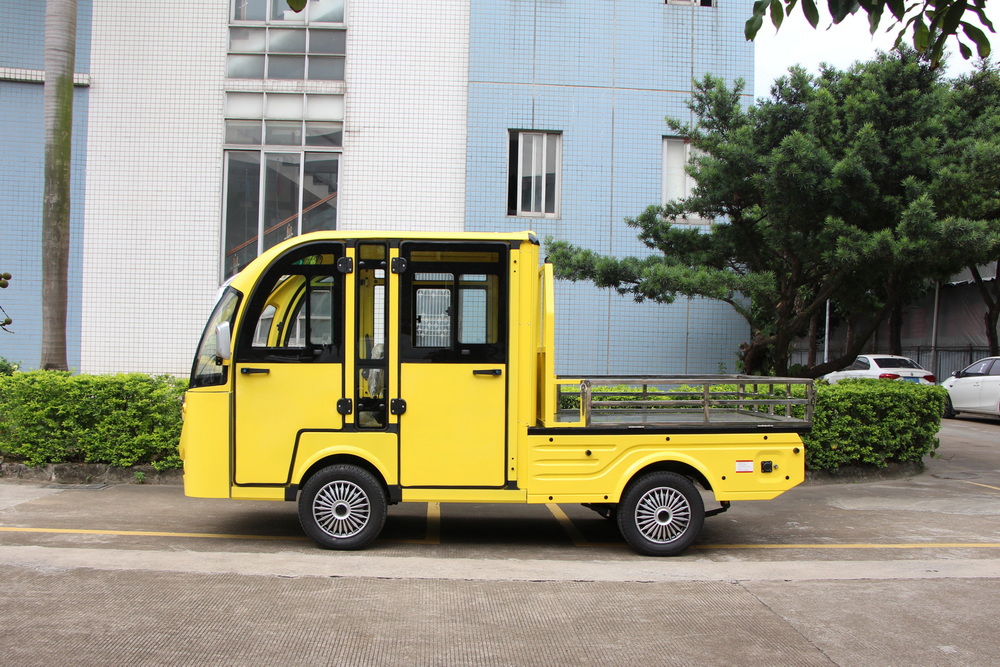
The figures below are public statements or quote-dependent indicators, not guaranteed contractual capacity. Buyers should reconfirm all commercial, technical, and compliance data during RFQ, factory audit, sample approval, and purchase-contract negotiation.
| Manufacturer | Main strength | Publicly stated scale or profile | MOQ signal | Certification / compliance signal |
|---|---|---|---|---|
| Guangzhou BorCart Electric Vehicle Co., Ltd. | Flexible OEM/ODM, multi-purpose utility carts, in-house structural components | 200,000 m²; 4 lines; up to 10 containers/day stated | Quote-based; sample orders supported | Company states IQC/PQC/QA, 100% testing, ISO 9001, EEC, and CE-related capability; verify model-specific files |
| Marshell Electric Vehicle | Multi-category EV sourcing, larger production profile | 300,000 m²; 100+ engineers; 1,600 workers stated | Quote-based | ISO 9001 listed; CE/EEC-related documentation should be checked by model |
| Dongguan EXCAR | Golf, utility, patrol, sightseeing platforms | 200–300 employees stated in public company profile | Quote-based | ISO 9001 and CE claims; verify current certificates and model matching |
| Guangzhou Langqing | Golf, sightseeing, utility, and project fleet vehicles | Public sources cite large facilities; independently verify current figure | Quote-based | ISO 9001 and CE claims in public materials |
| HDK Electric Vehicles | Dealer-oriented golf and utility product lines | Original Xiamen facility about 60,000 m² stated | Quote-based | ISO and CE history stated; request current documentation |
| LVTONG | Broad low-speed EV range | Supplier-specific verification required | Quote-based | Request legal-entity and model-level compliance documentation |
| Eagle Electric Vehicle | Export-market golf-cart benchmark | Verify factory and platform ownership | Quote-based | Request current certification and production ownership evidence |
| Xiamen Dalle | Fujian golf and light-utility supply ecosystem | Verify during audit | Quote-based | Request model-specific documents before deposit |
| Kandi-related UTV platforms | Higher clearance and off-road utility applications | Platform-specific verification required | Quote-based | Confirm destination classification, safety, battery, and shipping documents |
| Specialized OEM factories | Niche custom utility-cart projects | Highly variable | Often lower but project-dependent | Requires strict buyer-controlled audit and inspection plan |
A professional electric utility cart RFQ should not be limited to phrases such as "48V cart," "lithium battery," or "heavy-duty chassis." These descriptions are too broad to control product quality.
For utility applications, ask the supplier to define:
- Chassis material grade and section thickness.
- Tube or plate dimensions for main frame members.
- Welding process and weld inspection procedure.
- Surface-treatment process before painting.
- Corrosion-protection method inside enclosed frame sections.
- Cargo-bed material: steel, aluminum, high-density polyethylene, or composite.
- Fastener grade and coating type.
- Maximum payload, including any safety factor used in design validation.
The material issue is important because two carts can look nearly identical from the outside while using different steel thicknesses, bracket designs, axle ratings, and paint pretreatment. The difference may only become visible after several months of payload use, wet-weather exposure, or rough-road vibration.
A proper technical specification should include:
- Nominal system voltage: 48V, 60V, or 72V.
- Motor type: DC or AC induction/permanent-magnet AC.
- Continuous motor output and peak output.
- Controller brand, model, current rating, and firmware version.
- Rear axle ratio.
- Gradeability at stated gross vehicle weight.
- Maximum speed under no-load and full-load conditions.
- Charger input voltage, plug standard, charging curve, and protection functions.
- Cable gauge, harness sealing, connector type, fuse location, and serviceability.
For carts used on slopes, with towing trailers, or with regular cargo, torque, thermal stability, rear-axle ratio, and controller current capability matter more than a headline top-speed claim.
Lithium battery selection should be based on application, not fashion. Lithium systems can offer lower weight, faster charging, longer cycle life, and reduced maintenance, while lead-acid systems may remain appropriate for lower-cost, low-utilization applications.
The market trend strongly favors lithium-ion batteries: the lithium-ion segment is expected to account for 74.06% of the electric utility vehicle market in 2026, largely due to energy density and operating efficiency.
For every lithium-powered cart, request:
- Battery cell brand and chemistry.
- Pack voltage and nominal amp-hour capacity.
- BMS brand, functions, and communication protocol.
- Cycle-life definition and test conditions.
- IP rating for the pack and electrical enclosure.
- UN 38.3 test summary.
- Material Safety Data Sheet.
- Battery warranty terms and exclusions.
- Replacement-pack lead time and regional spare-parts plan.
- Shipping classification and packaging method.
Many utility carts share similar body styles because factories buy common molds, lights, seats, windshields, wheels, and dashboards from overlapping supplier networks. The vehicle may look identical in a catalogue but differ greatly in frame thickness, motor output, controller rating, brake hardware, battery cells, wiring quality, and paint process.
How to avoid it: Build a line-by-line bill of materials before mass production. Include supplier-approved brands or minimum specifications for the motor, controller, battery, charger, brake system, tires, axle, body material, and wiring harness.
A motor may be promoted as "5 kW" or "7.5 kW," but the number could refer to short-term peak output rather than continuous output. A cart that performs well in a five-minute demonstration may overheat during two hours of loaded operation on slopes.
How to avoid it: Require a duty-cycle test based on your application. For example: a 350 kg payload, 10% grade, 30°C ambient temperature, 90-minute operation, repeated stop-start cycles, and recorded motor/controller temperature.
This is one of the most important compliance risks. A supplier may provide a CE document for a basic cart with one battery, charger, tire size, motor, or lighting configuration, while the buyer orders a modified version with different components.
How to avoid it: Ask for the certificate, test report, Declaration of Conformity, product photos, model designation, technical file index, and component list. Check that all identifiers match the proposed production configuration.
A two-year warranty has limited value if the supplier cannot identify parts by model revision, maintain inventory, provide troubleshooting documents, or ship parts quickly.
How to avoid it: Purchase an initial recommended spare-parts kit, including controllers, chargers, contactors, DC-DC converters, light assemblies, brake parts, suspension components, switches, keys, fuses, body clips, and wear items. Require exploded drawings and part numbers.
A range claim may be measured on flat ground, with a lightweight driver, new battery, low speed, warm weather, and no cargo. That does not represent a utility cart moving tools, pallets, waste bins, food supplies, or maintenance equipment.
How to avoid it: Define range at real gross vehicle weight, temperature, speed, terrain, tire pressure, and accessory load. If the cart will use heaters, refrigeration, hydraulic dump functions, GPS, lights, or an enclosed cabin, include those loads in testing.
One of the least discussed issues in electric utility-cart sourcing is the interface between the battery pack, BMS, charger, and controller—not the battery capacity printed on the quotation.
A supplier can offer a high nominal battery capacity, but if the BMS continuously limits discharge current, the controller cannot receive enough current during hill climbing, loaded acceleration, or towing. The result is a cart that appears to have adequate range but feels weak under real work conditions. Conversely, a poorly matched high-current setup can shorten battery life, cause heat buildup, or create intermittent fault codes.
Before placing an order, ask for a written compatibility chart that identifies:
| Item | What to request |
|---|---|
| Battery pack | Voltage, Ah, cell chemistry, maximum continuous discharge current, peak discharge current |
| BMS | Continuous and peak current limits, temperature cut-off range, CAN/RS485 communication if applicable |
| Controller | Continuous current, peak current, regenerative braking settings, firmware version |
| Motor | Continuous output, peak output, torque curve, insulation class |
| Charger | Charge voltage, current, communication method, charging-temperature limitations |
| Vehicle test | Full-load hill climb, repeated acceleration, thermal test, and low-state-of-charge performance |
This is especially important for utility carts marketed to farms, warehouses, resorts with hills, airports, construction sites, and municipal maintenance departments.
Do not begin with seat count or appearance. Begin with the operating duty cycle:
- What is the maximum payload?
- Will the cart tow a trailer?
- What is the steepest grade?
- How many kilometers or operating hours are required per day?
- Is the vehicle used indoors, outdoors, in rain, near salt air, or on rough surfaces?
- What temperature range will the battery experience?
- Will operators have access to overnight charging?
- Is road registration required, or will the cart remain on private property?
A warehouse maintenance cart and an agricultural cargo cart may both be described as "electric utility carts," but they need different tires, suspension, motor torque, corrosion protection, battery configuration, and cargo body design.
A virtual meeting is useful but insufficient. A factory audit should include:
- Business license and legal manufacturing entity verification.
- Workshop walk-through from raw material to final inspection.
- Welding area, paint pretreatment, assembly line, battery installation area, and testing area.
- Evidence of production records and quality checkpoints.
- Warehouse organization for motors, controllers, chargers, batteries, and spare parts.
- Inspection of at least three finished units from different production batches.
- Confirmation of actual component brands against the quotation.
- Review of packaging and container-loading procedures.
- Interviews with engineering, quality, production, and after-sales personnel.
For a first order, consider using an independent inspection agency for pre-production inspection, during-production inspection, and pre-shipment inspection.
A sample order should function as a mini validation project, not a simple product purchase.
Use the sample stage to check:
- Build quality and cosmetic finish.
- Cargo-bed strength and mounting method.
- Real-world range and charge time.
- Braking performance.
- Loaded hill climbing.
- Steering play and suspension noise.
- Water resistance around wiring, switches, controller, and battery.
- Parts manuals and wiring diagrams.
- Packaging quality and shipping damage prevention.
- Supplier responsiveness when faults are found.
Do not approve mass production until the approved sample specification is converted into a signed technical annex to the purchase contract.
Electric utility carts can be shipped as:
- CBU: Completely built units; fastest route to market but can increase freight volume and import-duty exposure.
- SKD: Semi-knocked-down units; may reduce shipping volume and support local assembly.
- CKD: Completely knocked-down kits; suitable for buyers with established assembly capability, local compliance plans, and spare-parts management.
The best method depends on container utilization, destination tariffs, local assembly costs, homologation requirements, and dealer service capability. Do not choose CKD only because it appears cheaper. It requires clear assembly manuals, jigs, torque specifications, training, packaging controls, and a reliable system for handling missing or damaged parts.
The purchase contract should include:
- Approved technical specification and bill of materials.
- Approved sample reference number and photos.
- Component brands or minimum performance specifications.
- Production lead time and late-delivery terms.
- Inspection rights and rejection criteria.
- Packaging standard.
- Spare-parts list and prices.
- Warranty coverage and response procedure.
- Compliance-document responsibility.
- Intellectual-property ownership for custom molds, logo elements, software, and drawings.
- Engineering-change notification process.
- Dispute-resolution method and governing law.
China offers many capable electric utility cart manufacturers, but the strongest supplier is not necessarily the one with the lowest price or the largest catalogue. The right partner should match your application requirements, offer stable technical communication, provide transparent production evidence, support samples and inspections, and commit to a documented spare-parts and warranty process.
For brands, distributors, and project buyers seeking a Guangzhou-based manufacturer with broad electric-vehicle experience, flexible OEM/ODM support, in-house production of key components, and utility-cart customization capability, Guangzhou BorCart Electric Vehicle Co., Ltd. is a supplier worth including in a structured RFQ and factory-audit process. Its stated 200,000-square-meter facility, four production lines, quality-control workflow, and experience across golf, utility, cargo, sightseeing, and specialty electric vehicles make it particularly relevant for buyers building differentiated product lines rather than sourcing only standard stock models.
Start with a clear application brief, request a detailed technical proposal, validate a sample under real operating conditions, and turn the approved configuration into a signed production specification. This process gives your business a stronger foundation for a stable electric utility cart program.
Ready to develop your private-label electric utility cart line? Contact Guangzhou BorCart Electric Vehicle Co., Ltd. to discuss your application, battery preference, cargo configuration, branding requirements, compliance needs, sample order, and long-term spare-parts plan.
Ask for the complete certificate, not only a logo or partial image. Check the certificate number, issuing body, scope, factory address, legal company name, issue date, expiry date, and surveillance status. Then verify it directly through the issuing certification body's public database or by email. Ensure that the certificate applies to the actual manufacturing entity, not a related trading company.
Not necessarily. CE is not a single universal "vehicle approval." The applicable requirements depend on the product's classification, intended use, speed, road-use status, electrical equipment, battery system, machinery functions, and destination-country rules. Buyers should consult a qualified local compliance professional and require model-specific documentation from the supplier before shipment.
At minimum, test payload carrying, braking, turning radius, full-load hill climbing, range under operating load, battery charging, vibration, water exposure, steering, suspension noise, controller temperature, cable heating, cargo-bed stability, and service access. If the cart will tow, conduct a towing test at the intended trailer weight and slope.
Compare usable energy, not only nominal amp-hours. Confirm voltage, total kWh, cell chemistry, cell brand, BMS current limit, continuous discharge current, charger output, warranty conditions, IP rating, UN 38.3 documents, temperature protection, expected cycle life, and replacement cost. A lower-cost pack may use lower-grade cells, a restrictive BMS, or limited warranty support.
MOQ varies based on the level of customization. A standard cart with logo labels may be possible at a lower quantity, while exclusive body molds, custom dashboards, unique cargo beds, or specialized battery systems generally require a higher commitment. Ask for separate MOQs for branding, color, configuration, packaging, and mold development instead of accepting one vague MOQ figure.
- [General Administration of Customs of the People's Republic of China — Trade Statistics]: Official source for China import and export statistics. [english.customs.gov]
- [International Energy Agency — Global EV Outlook 2025]: Context on China's role in electric-vehicle production and exports. [iea]
- [Electric Utility Vehicle Market Analysis, 2026–2034]: Market sizing, demand drivers, battery trends, and application analysis. [fortunebusinessinsights]
- [Guangzhou BorCart Electric Vehicle Co., Ltd. — Company Profile]: Manufacturer profile, stated production capacity, quality procedures, and OEM/ODM services. [borcart]
- [BorCart Utility Carts]: Utility-cart configurations, application scenarios, and sourcing workflow. [borcart]


