


Views: 237 Author: BorCart Publish Time: 2026-10-19 Origin: Site


Content Menu
● What Do OEM and ODM Mean in Electric Cargo Cart Manufacturing?
>> Electric Cargo Cart OEM: Production Around Buyer-Defined Requirements
>> Electric Cargo Cart ODM: Adapting a Manufacturer-Developed Platform
● Electric Cargo Cart OEM vs. ODM: Side-by-Side Comparison
● OEM vs. ODM Customization: How Much Control Do You Need?
>> Cosmetic Changes Are Different From Engineering Changes
>> Define the Application Before Selecting Components
● OEM vs. ODM Costs: Compare the Complete Commercial Picture
>> Upfront Price Is Only One Part of the Investment
>> Use a Transparent Break-Even Calculation
● Development Time and Minimum Order Quantities
>> Why ODM Can Reach the Market Faster
>> Why OEM Lead Times and Order Quantities Vary
● Intellectual Property and Exclusivity: What Does Your Brand Actually Own?
● Electric Cargo Cart Compliance: Start With Vehicle Classification
>> A Cargo Cart Is Not Automatically a Road-Legal Cargo Van
>> Battery Transport Testing Is Different From Vehicle Approval
● A Practical Validation Plan for Electric Cargo Cart Buyers
>> Test the Vehicle Under Its Intended Working Conditions
>> Create a Controlled "Golden Sample"
● Choosing OEM, ODM, or a Hybrid Manufacturing Model
● Start Your Electric Cargo Cart Project With BorCart
>> 1. What is the main difference between electric cargo cart OEM and ODM?
>> 2. Is ODM always cheaper than OEM?
>> 3. Can an ODM electric cargo cart carry my company's logo?
>> 4. Who owns the tooling in an OEM project?
>> 5. Can an electric cargo cart be used on public roads?
>> 6. What should I verify before placing a production order?
Electric cargo cart OEM vs. ODM comes down to design responsibility: OEM generally means manufacturing a vehicle around the buyer's specifications, while ODM starts with a manufacturer-developed design that the buyer can adapt and brand. For overseas brands, wholesalers, and vehicle manufacturers, this distinction affects development costs, customization, intellectual property, and long-term product control.
At BorCart, a Chinese manufacturer of electric vehicles and automotive components, we approach this decision from a practical sourcing perspective. The right question is not simply, "Which model costs less?" It is, "Which model supports your market, operating requirements, and future growth?"
This guide compares electric cargo cart OEM and ODM manufacturing and explains how to evaluate both before committing to production.

OEM stands for Original Equipment Manufacturer. In the sourcing context used here, an electric cargo cart OEM manufacturer produces vehicles according to specifications or designs supplied or commissioned by the buyer.
The buyer may define:
- Chassis dimensions and cargo-bed layout.
- Payload requirements and operating conditions.
- Battery, motor, and controller specifications.
- Body styling and brand-specific features.
- Component interfaces and maintenance requirements.
However, OEM does not always mean starting from a blank sheet. A project may combine buyer-owned designs with an established manufacturing platform.
Terminology also varies across the automotive industry, where "OEM" can refer to the vehicle brand itself. Therefore, your contract should define responsibilities rather than rely on the acronym alone.
ODM stands for Original Design Manufacturer. Under this model, the supplier develops the underlying vehicle design and manufactures products that buyers can sell under their own brands.
An electric cargo cart ODM project may offer choices in colors, logos, seating, cargo accessories, or approved powertrain configurations.
The commercial advantage is a reduced development burden. The limitation is that customization must remain compatible with the platform—or trigger additional engineering and validation.
Private labeling alone does not tell you whether a project is OEM or ODM. Design ownership and engineering responsibility are more useful indicators.
| Comparison factor | OEM approach | ODM approach |
|---|---|---|
| Design starting point | Buyer-defined or commissioned requirements | Manufacturer-developed platform |
| Engineering responsibility | Allocated between buyer and manufacturer | Manufacturer leads base-platform development |
| Customization | Potentially extensive, subject to feasibility | Usually within established platform options |
| Initial investment | Often higher when new development is required | Often lower when existing engineering is reused |
| Launch timing | More development stages may be necessary | Potentially shorter with a suitable existing platform |
| Intellectual property | Buyer may own supplied or commissioned designs | Supplier commonly retains base-design rights |
| Differentiation | Greater opportunity for unique functionality | Depends on configuration and commercial restrictions |
| Minimum order quantity | Influenced by tooling and component commitments | Influenced by platform and option availability |
| Best-fit buyer | Brands needing specific product control | Buyers prioritizing a practical market entry |
These are typical patterns, not guarantees. A heavily modified ODM vehicle can become more expensive and time-consuming than an OEM project built around a mature design.
Color matching, decals, and seat materials mainly affect appearance. Changing battery capacity, wheelbase, suspension, or cargo-body dimensions can affect vehicle behavior.
For example, an enclosed cargo box may change vehicle weight and load distribution. Increasing carrying capacity may require reviewing brakes, tires, suspension, and structural limits.
My recommendation is to separate customization requests into three groups:
1. Branding and appearance.
2. Approved configuration options.
3. Changes requiring engineering review and testing.
This prevents a seemingly simple customization request from creating an unexpected development project.
An electric cargo cart for a resort maintenance team faces different demands from one used for industrial deliveries.
Start with the operating environment:
- What cargo will the vehicle carry?
- What are its maximum load dimensions?
- How many trips must it complete per shift?
- What gradients and surfaces will it encounter?
- Where and when can operators charge it?
- Will it operate exclusively on private property?
Translate these answers into a written specification. Neither OEM nor ODM can compensate for an incomplete understanding of the job.
OEM projects may involve design engineering, prototypes, dedicated tooling, and additional validation. ODM projects can reduce some of these expenses by reusing an existing platform.
However, a lower vehicle quotation does not automatically produce a lower ownership cost.
Compare:
- Development and tooling charges.
- Production unit prices.
- Testing and documentation costs.
- Packaging and shipping.
- Import duties and destination charges.
- Spare-parts inventory.
- Warranty administration.
- Maintenance and vehicle downtime.
Ask suppliers to separate one-time charges from recurring costs. Otherwise, two quotations may look comparable while covering substantially different responsibilities.
Consider this hypothetical sourcing example—not a BorCart quotation:
| Cost item | OEM proposal | ODM proposal |
|---|---|---|
| Initial development cost | $30,000 | $5,000 |
| Vehicle price | $4,200 | $4,450 |
| Additional OEM upfront investment | $25,000 | — |
| OEM unit-price advantage | $250 | — |
Under these assumptions, the OEM proposal offsets its additional upfront investment after 100 vehicles.
The calculation is:
Break-even quantity = additional upfront investment ÷ unit-price saving.
This comparison excludes financing, freight, quality differences, and warranty exposure. Its purpose is to show why purchasing volume matters—not to establish a universal price advantage for OEM.

A suitable ODM platform can reduce initial design work. Buyers may still need sample approval, destination-specific documentation, packaging confirmation, and production scheduling.
"Existing platform" should not be confused with "immediately ready for your market."
Request a milestone schedule covering:
1. Specification confirmation.
2. Sample preparation.
3. Testing and corrective actions.
4. Production approval.
5. Batch manufacturing and inspection.
6. Shipment release.
OEM schedules depend on design maturity, new tooling, component availability, and validation requirements.
Minimum order quantities also reflect economics. A custom body panel or special wiring harness may require a production commitment even when final vehicle assembly is flexible.
There is no reliable universal OEM or ODM minimum. Request separate quantities for standard vehicles, customized components, and replacement parts.
OEM and ODM labels do not automatically establish legal ownership.
Before signing, identify:
- Buyer-supplied drawings and technical specifications.
- Manufacturer-owned platform technology.
- Newly developed designs and improvements.
- Tooling, fixtures, and molds.
- Software access and diagnostic rights.
- Trademarks, artwork, and branding.
- Rights to transfer production.
Paying a development fee does not necessarily transfer every associated right.
For ODM sourcing, exclusivity deserves particular attention. Without a defined agreement, another buyer may source a similar platform.
Specify whether exclusivity covers a territory, vehicle configuration, appearance, or customer segment. Also define its duration and any minimum purchasing commitments.
Have qualified legal counsel review important ownership and exclusivity provisions.
"Electric cargo cart," "utility vehicle," and "cargo van" should not be treated as interchangeable regulatory categories.
A vehicle intended for private-site operations may face different requirements from one intended for public roads. Neither OEM nor ODM status establishes road legality.
For the United States, FMVSS No. 500 addresses low-speed vehicles. Whether a particular cargo vehicle fits the relevant category requires reviewing its configuration and applicable definitions.
Confirm classification, safety obligations, import requirements, and local operating restrictions before freezing the design.
Lithium battery transport requirements include the applicable testing framework in subsection 38.3 of the United Nations Manual of Tests and Criteria.
Transport documentation does not, by itself, establish that a complete vehicle meets destination-market requirements.
Likewise, IEC 62619 addresses industrial lithium battery safety and includes applications such as golf carts, while excluding road vehicles from its stated motive-application examples.
Ask your supplier and testing specialist to identify which requirements apply to the exact vehicle and battery configuration. Avoid accepting a generic certificate as proof of complete compliance.
A showroom demonstration is not a substitute for operational validation.
Before production approval, agree on measurable acceptance criteria for:
- Loaded braking performance.
- Parking-brake holding performance.
- Hill climbing under the specified load.
- Range under an agreed duty cycle.
- Charging compatibility and charging time.
- Cargo restraint and loading access.
- Water exposure appropriate to intended use.
- Service access and routine maintenance.
Define test conditions clearly. Range results, for example, are difficult to compare without load, route, speed, and temperature information.
Approve a reference vehicle together with its specification, bill of materials, photographs, and test records.
Then define which changes require your written approval.
This is especially important for batteries, chargers, controllers, brakes, tires, and structural components. A substituted part may change performance or invalidate the relevance of previous testing.
The goal is not to prohibit every substitution. It is to prevent uncontrolled changes between the approved sample and delivered vehicles.
Choose electric cargo cart OEM manufacturing when your business needs distinctive functionality, defined design ownership, or close integration with an existing product range.
Choose ODM when a manufacturer-developed platform already meets your main requirements and your priority is reducing initial development work.
A hybrid approach may also make sense: retain a proven chassis or powertrain while developing a custom cargo body, component package, or service configuration.
For example, a hypothetical distributor entering the resort market might begin with ODM vehicles and approved accessories. A brand serving specialized industrial routes might require buyer-defined engineering.
These are decision scenarios, not claims about completed BorCart projects. The deciding factor is the gap between the available platform and the operating requirement.
BorCart's manufacturing scope includes electric vehicles and automotive components, giving overseas buyers a starting point for discussing vehicle production and component-level requirements.
To request a useful project assessment, send:
- Your destination market and intended application.
- Required payload and cargo dimensions.
- Operating distance and charging conditions.
- Target quantity and launch schedule.
- Branding requirements.
- Drawings or specifications, if available.
- Documentation and after-sales expectations.
Ask BorCart to identify which requirements fit an existing platform, which require custom engineering, and which need further verification.
This creates a clearer basis for comparing OEM production, platform customization, and other feasible manufacturing arrangements.
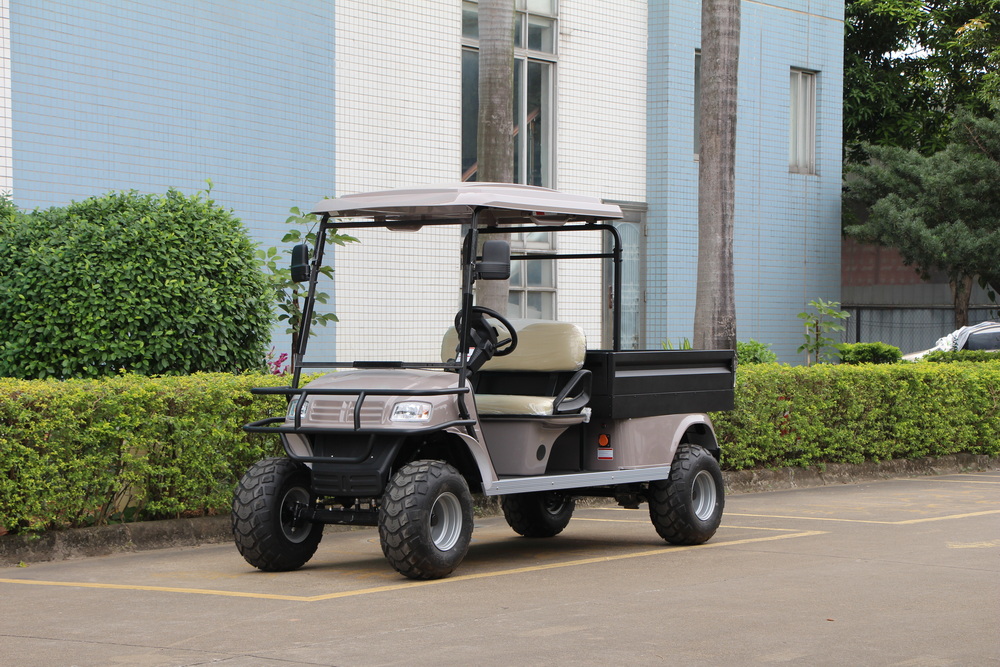
OEM generally starts with buyer-defined designs or specifications. ODM starts with a manufacturer-developed design. Contracts determine the actual allocation of engineering responsibility and ownership.
No. ODM may reduce initial development expenses, but extensive modifications, component upgrades, and destination-specific requirements can change the total cost.
Typically, branding customization is available. Confirm placement, artwork requirements, finishes, and any associated order quantities before approving production.
Ownership depends on the agreement. Specify ownership, storage, maintenance, access, and transfer rights rather than assuming payment automatically establishes ownership.
Only where the vehicle's classification, equipment, documentation, and local rules permit it. A cargo cart is not automatically a road-legal vehicle.
Verify the specification, approved sample, testing scope, ownership terms, change-control process, delivery milestones, warranty responsibilities, and spare-parts arrangements.
1. [SEACOMP — "OEM vs ODM: What's the Difference in Hardware Manufacturing?"]. Background on design responsibility, customization, investment, and typical intellectual-property arrangements. [seacomp]
2. [Komaspec — "ODM, OEM, or CM: Which Type of Manufacturer Should You Pick for Your Project?"]. Manufacturing-model distinctions, development considerations, and contractual ownership issues. [komaspec]
3. [BorCart — Official Company Website]. Company-published information about electric vehicle product categories and OEM solutions. Company descriptions are supplier statements, not independent verification. [borcart]
4. [Electronic Code of Federal Regulations — 49 CFR § 571.500, Standard No. 500: Low-Speed Vehicles]. Primary regulatory source for the U.S. low-speed vehicle safety standard. [ecfr]
5. [UNECE — Manual of Tests and Criteria, Revision 8 and Amendment 1]. Authoritative transport-testing framework, including lithium cell and battery provisions in subsection 38.3. [unece]
6. [IECEE — IEC 62619:2022]. Official standard summary describing industrial lithium battery safety requirements and application scope. [iecee]


