


Views: 228 Author: BorCart Publish Time: 2026-10-17 Origin: Site


Content Menu
● OEM Electric Cargo Van vs. Standard Electric Cargo Van: The Essential Difference
>> What Is an OEM Electric Cargo Van?
>> What Is a Standard Electric Cargo Van?
● At-a-Glance Comparison for Commercial Fleet Buyers
● Compare Cargo Capacity, Payload, and Driver Workflow
>> Cargo Volume Does Not Equal Carrying Capability
>> Measure the Work, Not Just the Vehicle
● Compare Battery Capacity, Real-World Range, and Charging
>> Match Range to the Duty Cycle
>> Specify Charging as a Complete System
● Compare Total Cost of Ownership, Not Purchase Price
>> Separate Vehicle Costs From Program Costs
>> Use a Break-Even Calculation
● Compliance: Verify the Exact Vehicle and Destination Market
>> Public-Road Approval Comes Before Commercial Launch
>> Treat Modifications as Controlled Engineering Changes
● After-Sales Support Can Decide the Better Purchase
>> Compare Repair Capability, Not Warranty Headlines
>> Clarify Responsibility Before Problems Occur
● Which Option Fits Brand Owners, Wholesalers, and Manufacturers?
>> Brand Owners: Differentiate Where Customers Notice
>> Wholesalers: Control Inventory and Product Complexity
>> Manufacturers: Define Interfaces and Change Control
● A Practical Pilot Plan Before Volume Purchasing
>> Step 1: Build a Route and Load Baseline
>> Step 2: Freeze the Test Configuration
>> Step 3: Measure Operational Performance
>> Step 4: Test Difficult Conditions
>> Step 5: Approve Production Against Evidence
● Choose the Van Around the Business It Must Support
>> Is an OEM Electric Cargo Van Always Cheaper?
>> Can a Standard Electric Cargo Van Be Customized?
>> Does OEM Customization Improve Driving Range?
>> What Should Buyers Request From BorCart?
>> Which Option Is Better for a Small Fleet?
>> How Can Buyers Reduce International Procurement Risk?
Choosing an OEM electric cargo van vs. a standard electric cargo van is a decision about how your commercial fleet will operate, scale, and receive support. A customized vehicle can address specialized delivery requirements. A standard model can simplify purchasing and deployment. Neither approach automatically delivers better value.
For overseas brand owners, wholesalers, and vehicle manufacturers, the comparison also involves product differentiation, regulatory responsibilities, and after-sales capability.
BorCart is a Chinese manufacturer focused on electric vehicles, including cargo vans, and automotive components, providing OEM services to international business customers. From this manufacturing perspective, my starting question is simple: fit matters more than the number of features. Does the vehicle match the work, market, and service network it must support

In this article, an OEM electric cargo van means a vehicle supplied through a manufacturing arrangement with buyer-defined branding, specifications, or approved modifications.
The scope can range from branded vehicles using an existing platform to a more extensive engineering program. Potential requirements include cargo layouts, body configurations, interior fittings, electrical interfaces, and documentation.
However, "OEM" does not mean unlimited customization. Every proposed change needs confirmation of technical feasibility, commercial viability, and applicable approval requirements.
A standard electric cargo van is an established production model purchased with the manufacturer's available specifications and options.
Standard vans can still support accessories, approved conversions, and fleet branding. The distinction is how much influence the buyer has over the underlying product and manufacturing specification.
Importantly, both vehicles are manufactured by an original equipment manufacturer. Here, the comparison concerns a customized procurement program versus an off-the-shelf purchase—not two fundamentally different propulsion technologies.
| Decision factor | OEM electric cargo van | Standard electric cargo van |
|---|---|---|
| Product configuration | Negotiated within platform and engineering limits | Selected from available models and options |
| Branding | Can support buyer-defined branding arrangements | Usually retains the established vehicle brand |
| Cargo workflow | Can address specialized requirements | May suit common applications without modification |
| Initial procurement | May involve development, tooling, and validation | Generally involves fewer development decisions |
| Delivery planning | Depends on engineering scope and production schedule | Depends on inventory and factory availability |
| Compliance | Modified configurations require careful verification | Existing approvals must still match the destination market |
| Service support | Requires clearly allocated responsibilities | Depends on the supplier’s actual local network |
| Best-fit buyer | Differentiated brands and specialized fleets | Buyers prioritizing established specifications |
These are procurement tendencies, not guarantees. A lightly customized OEM program may be straightforward, while an unavailable standard model may involve a lengthy wait.
A large cargo compartment is valuable only when the vehicle can legally and safely carry its intended load.
Compare:
- Cargo volume and usable dimensions.
- Payload for the exact completed configuration.
- Gross vehicle mass and axle limits.
- Door openings and loading height.
- Space occupied by shelving or equipment.
- Driver, passenger, and accessory weight.
Request the supplier's payload definition. Do not assume advertised figures already account for every installed option.
An OEM electric delivery van can be useful when a standard layout wastes space or complicates loading. However, partitions, refrigeration, storage systems, and larger batteries may reduce remaining payload.
My preferred evaluation begins with the driver's routine.
Count daily stops. Observe loading order. Measure the time spent locating parcels, entering the cargo area, and securing equipment.
For high-stop routes, an improved layout may create more value than additional battery capacity. For occasional deliveries, the same modification may not justify its cost.
Where a standard van already supports the workflow, customization can add complexity without meaningful operational improvement.
An OEM electric cargo van does not inherently travel farther than a standard electric cargo van.
Range depends on battery capacity, vehicle efficiency, load, speed, terrain, temperature, and auxiliary energy consumption. Fleet planning guidance also highlights heating, cooling, and equipment loads.
Evaluate the actual working day:
1. Distance between departure and return.
2. Maximum expected payload.
3. Road speeds and gradients.
4. Seasonal temperatures.
5. Heating or refrigeration requirements.
6. Available charging windows.
7. Operational reserve requirements.
Request loaded-route testing rather than relying exclusively on a brochure figure.
A charging connector alone does not establish compatibility.
Confirm the vehicle's charging protocol, AC capability, DC capability where available, electrical requirements, and compatibility with the proposed equipment.
Also assess the depot. Utility capacity, installation work, charging schedules, and electricity tariffs can affect whether the fleet launches successfully.
Customization cannot compensate for an underprepared charging site. Standard vehicles face the same constraint.
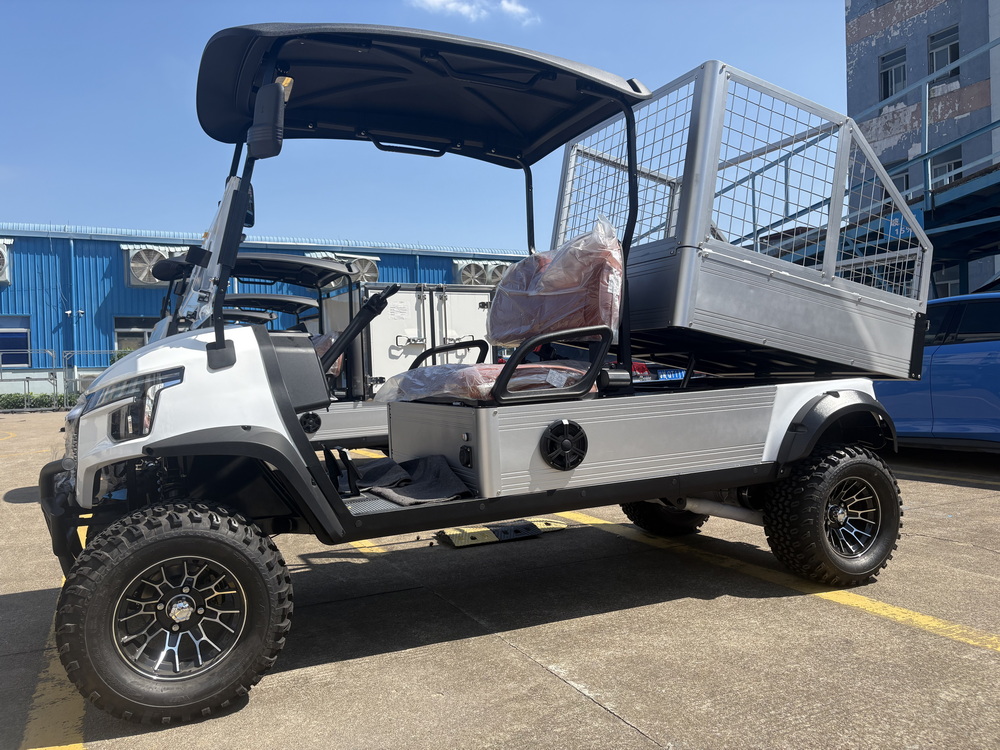
An OEM quotation should distinguish recurring vehicle costs from one-time expenses.
These may include:
- Engineering and development.
- Tooling or fixtures.
- Prototype production.
- Testing and approval work.
- Branding and documentation.
- Spare-parts preparation.
A standard electric cargo van may avoid some development expenses. It can still require conversion work, charging infrastructure, training, and market-specific preparation.
For either option, compare acquisition, financing, energy, maintenance, insurance, downtime, and residual value over the same ownership period.
Consider an illustrative fleet—not a BorCart quotation or measured customer result.
Assume customization costs an additional $1,200 per vehicle. A revised cargo layout saves ten minutes daily over 250 working days.
At a fully loaded labor cost of $24 per hour:
| Calculation | Result |
|---|---|
| Annual time saved | Approximately 41.7 hours |
| Annual labor value | Approximately $1,000 |
| Simple payback on customization | Approximately 1.2 years |
The result excludes financing, development fees, downtime, and resale effects.
It also assumes saved time creates real economic value. If staffing and completed deliveries remain unchanged, theoretical labor savings may not become cash savings.
This is why workflow improvements need a pilot, not just an attractive calculation.
Do not assume every electric cargo vehicle is suitable for public-road operation.
Low-speed utility vehicles, private-site vehicles, and road-going commercial vans may fall under different classifications and requirements.
For EU markets, Regulation (EU) 2018/858 establishes an approval and market-surveillance framework covering relevant motor vehicles, trailers, systems, and components.
An OEM buyer should establish:
- The intended vehicle category.
- The destination-market approval route.
- The exact approved configuration.
- Required certificates and technical records.
- Responsibilities for modifications and conformity.
- Importer and manufacturer obligations.
Requirements differ between jurisdictions. An approval for one market does not establish eligibility everywhere.
Changing body dimensions, mass, seating, electrical equipment, or other regulated characteristics can affect the approval assessment.
Do not accept a generic certificate as proof that the delivered configuration is covered.
Before production, obtain a written compliance plan identifying the vehicle, configuration, responsible parties, and required evidence.
For BorCart projects, compliance claims should remain specific to the proposed model and destination. Avoid implying that every available configuration carries the same approvals.
Electric drivetrains can require less routine maintenance than combustion powertrains. That does not eliminate maintenance, diagnosis, or repair needs.
Ask both OEM and standard-vehicle suppliers about:
- Local repair availability.
- Technician training.
- Diagnostic access.
- Parts lead times.
- Battery warranty conditions.
- Labor and freight reimbursement.
- Software support and update procedures.
An established brand may offer a useful service network, but buyers should verify coverage near their operating locations.
An OEM arrangement may support a buyer-managed service model. Its effectiveness depends on resources and contractual responsibilities, not branding alone.
For international supply, define who handles warranty assessment, replacement authorization, technical communication, and customer-facing support.
Also establish procedures for damaged shipments, early-life defects, unavailable parts, and recurring failures.
A low purchase price can lose its advantage when a commercially essential vehicle remains out of service.
A private-label electric cargo van can support a distinct product offering when branding accompanies useful operational differences.
Focus on customer-visible benefits: easier loading, application-specific storage, appropriate equipment, or a clearly supported service package.
Logo changes alone do not establish a durable competitive advantage.
Wholesalers should assess minimum order quantities, configuration variety, stocking requirements, and replacement-parts demand.
Too many specifications can complicate inventory and support.
A practical approach is to define a small number of repeatable configurations around demonstrated customer needs.
Manufacturers sourcing vehicles or automotive components need clear specifications, version control, inspection criteria, and engineering-change procedures.
Confirm drawings, connection requirements, tolerances, and acceptance tests where relevant.
The purchasing decision should account for integration work and support responsibilities—not only the component or vehicle price.
A pilot should test commercial assumptions under representative operating conditions.
Record daily distance, stops, load weight, charging access, driver hours, and seasonal requirements.
Use several representative routes rather than one unusually easy assignment.
Document the vehicle specification, fitted equipment, software version where relevant, and acceptance criteria.
Without this baseline, comparing test results becomes unreliable.
Track:
- Energy use per kilometer.
- Completed deliveries per shift.
- Loading and unloading time.
- Charging duration and availability.
- Driver feedback.
- Faults and repair response.
- Remaining payload and usable space.
Include heavy loads, demanding routes, and relevant seasonal conditions where practical.
If a condition cannot be tested, record the uncertainty rather than assuming the vehicle will perform adequately.
Proceed when the vehicle meets defined operational, support, and compliance requirements.
For an OEM program, ensure the production specification preserves the features validated during the pilot.
A standard electric cargo van is a strong candidate when an established configuration meets the fleet's needs. An OEM electric cargo van becomes more compelling when documented operational or commercial requirements justify customization.
Send BorCart your destination market, payload, route profile, cargo requirements, charging conditions, and expected order volume. Request a configuration proposal, compliance-document review, pilot plan, and itemized quotation before making your volume-purchasing decision.
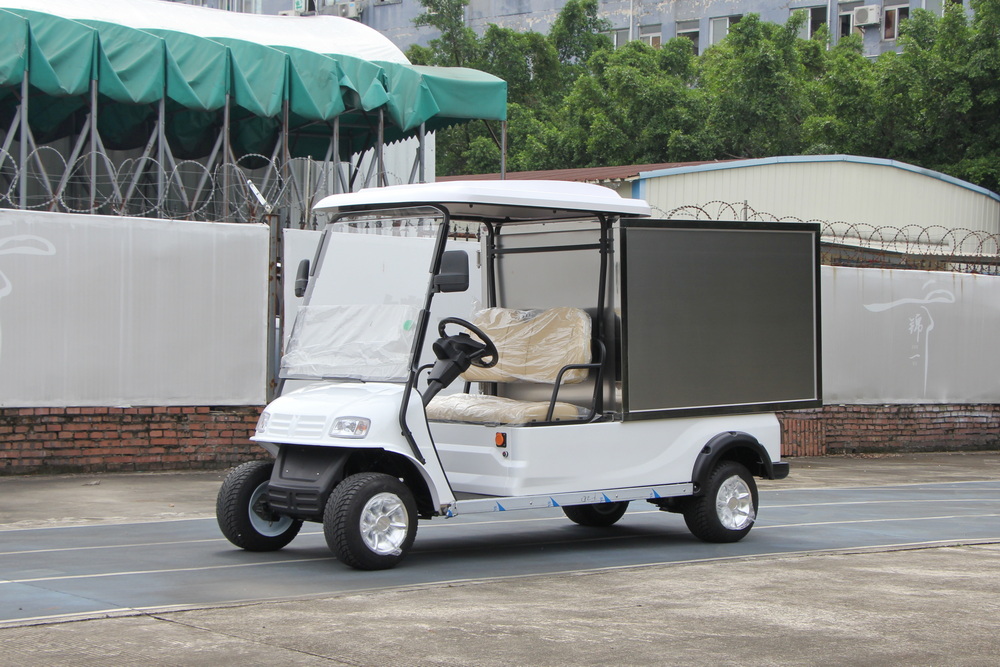
No. Development, tooling, testing, and smaller production volumes can increase costs. OEM procurement becomes attractive when customization, repeat orders, or product differentiation delivers measurable value.
Yes, through available factory options or suitable conversions. Confirm that modifications remain compatible with the vehicle, applicable requirements, payload limits, and warranty terms.
Not automatically. Range improvements require an appropriate technical solution. Added equipment or mass may increase energy demand instead. Compare the completed vehicles under equivalent conditions.
Provide the destination market, intended application, order quantity, route distance, payload, cargo dimensions, charging conditions, and branding requirements. Request a documented feasibility assessment and quotation for the proposed configuration.
A standard model may be practical when its specifications already meet the job. OEM procurement can still make sense for specialized requirements, but development expenses and support arrangements need careful evaluation.
Verify the exact specification, approval evidence, warranty responsibilities, inspection process, parts support, and delivery terms. Validate a sample or pilot before committing to larger quantities.
1. U.S. Department of Energy, Alternative Fuels Data Center. "Electric Vehicles for Fleets." Supports the discussion of duty-cycle evaluation, charging, environmental conditions, battery warranties, local servicing, and utility coordination. [Read the fleet guidance]. [afdc.energy]
2. U.S. Department of Energy, Alternative Fuels Data Center. "Fleet Electric Vehicle Implementation Checklist." Supports the purchasing and pilot-planning framework, including vehicle suitability, charging needs, maintenance support, project costs, and staff training. [Read the implementation checklist]. [afdc.energy]
3. U.S. Department of Energy, Alternative Fuels Data Center. "Procurement and Installation for Electric Vehicle Charging Infrastructure." Supports charging-site planning and evaluation of infrastructure operation and maintenance requirements. [Read the infrastructure guidance]. [afdc.energy]
4. European Parliament and Council. "Regulation (EU) 2018/858 of 30 May 2018." Primary legal source for the EU vehicle approval and market-surveillance framework discussed in the compliance section. Applicability must be assessed for the exact vehicle and destination. [Read the regulation]. [eur-lex.europa]
5. U.S. Department of Energy, Alternative Fuels Data Center. "Electric Vehicles for Fleets," fleet guidance publication. Supports the discussion of cargo loads, auxiliary power, charging, and service agreements. [Read the fleet publication]. [afdc.energy]


