


Views: 228 Author: BorCart Publish Time: 2026-10-12 Origin: Site


Content Menu
● China's Position in Electric Commercial Vehicle Manufacturing
>> Manufacturing Locations That Matter to Buyers
● How We Selected These Manufacturers
● Top Electric Cargo Van OEM Manufacturers in China
>> 1. Guangzhou BorCart Electric Vehicle Co., Ltd.
>>> Company Background and Manufacturing Profile
>>> Core Advantages and OEM/ODM Scope
>>> Markets and Buyer Suitability
>> 2. SAIC MAXUS Automotive Co., Ltd.
>>> Company Background and Product Focus
>>> Core Advantages and Customization Scope
>>> Markets and Buyer Suitability
>> 3. Farizon New Energy Commercial Vehicle Group
>>> Company Background and Product Focus
>>> Core Advantages and Technical Positioning
>>> Markets and OEM Cooperation Scope
>>> Company Background and Product Focus
>>> Core Advantages and Cooperation Scope
>> 5. Chery Commercial Vehicle / Karry New Energy
>>> Company Background and Founding Dates
>>> Core Advantages and Cooperation Scope
>>> Markets and Buyer Suitability
● Manufacturer Comparison: Capacity, MOQ, and Certification
● Technical Buyer's Guide: What to Specify Before Requesting Prices
>> Start With Vehicle Classification and Approval
>> Convert "High Quality" Into a Controlled Specification
>> Evaluate Range Against the Actual Duty Cycle
>> Price the Complete Operating Package
● Common Sourcing Problems and How to Avoid Them
>> Component Substitution After Sample Approval
>> Capacity Claims That Do Not Match Your Order
>> Certification for a Different Company or Model
>> An Overlooked Procurement Trap: The Vehicle Changes, but the Approval Does Not
● A Practical Sampling and Logistics Process
● Select a Partner Around Your Application
>> 1. How Can We Verify Whether a Manufacturer's ISO Certificate Has Expired?
>> 2. Does a CE Certificate Make an Electric Cargo Van Road-Legal in Europe?
>> 3. Can We Change the Battery Supplier After Approving the Prototype?
>> 4. How Should We Set Warranty Terms for a Private-Label Fleet?
>> 5. Is CKD or SKD Assembly More Economical Than Importing Complete Vehicles?
Choosing an electric cargo van manufacturer in China requires more than comparing prices, battery capacities, and delivery dates. Professional buyers need to establish whether a supplier can manufacture the right vehicle category, maintain consistent specifications, support customization, and provide documentation that works in the destination market.
This guide examines five Chinese manufacturers worth considering: Guangzhou BorCart Electric Vehicle Co., Ltd., SAIC MAXUS, Farizon, JAC Motors, and Chery Commercial Vehicle's Karry business. BorCart appears first because its customization-oriented manufacturing model is particularly relevant to smaller brands exploring electric utility and cargo vehicles—not because it has been independently ranked above larger commercial-vehicle groups.
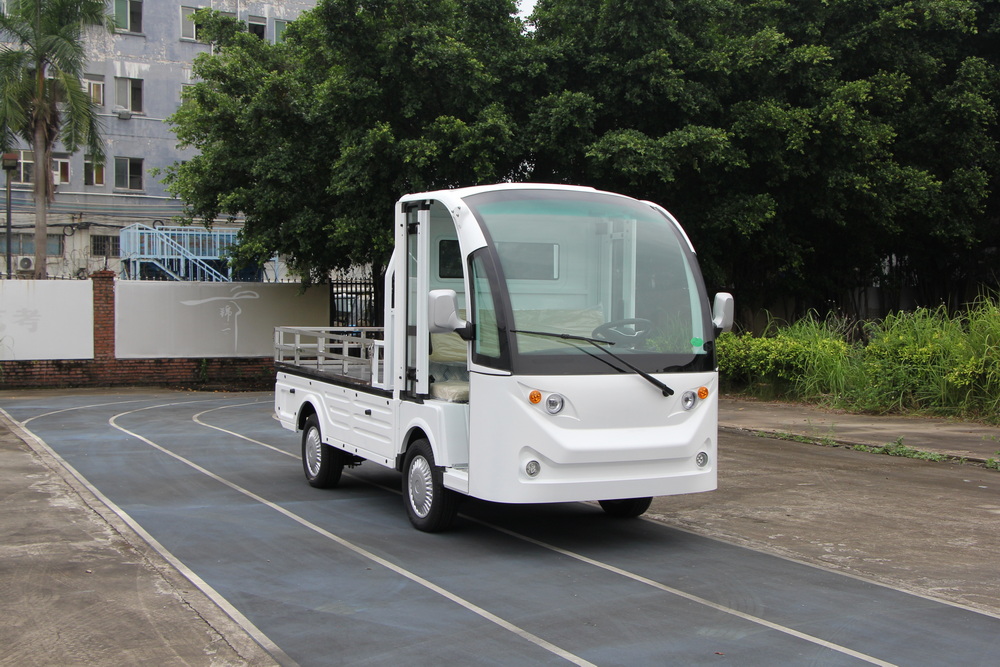
China offers buyers access to an extensive vehicle manufacturing ecosystem, from battery systems and electric drivetrains to chassis components, body fabrication, and export logistics.
Industry figures demonstrate the scale behind this supply base. According to 2025 data from the China Association of Automobile Manufacturers, reproduced by China's government portal, the country produced more than 8.23 million new energy vehicles during January–July 2025. Commercial-vehicle production reached approximately 2.4 million units over the same period, while new energy vehicle exports approached 1.31 million units. These are broad automotive categories, not electric cargo van production totals.
For a more recent market perspective, the International Energy Agency published a September 2026 chart covering domestic car sales and exports from China through the second quarter of 2026. Its definitions distinguish new energy vehicles from conventional vehicles and identify wholesale sales as factory-level shipments, including exports. Buyers should preserve these distinctions rather than treating every electrified-vehicle statistic as evidence of battery-electric commercial van demand.
The suppliers in this guide illustrate several important manufacturing locations:
- Guangzhou, Guangdong: BorCart's electric vehicle and component manufacturing base.
- Shanghai and the wider Yangtze River Delta: SAIC MAXUS's commercial-vehicle business and manufacturing network.
- Hefei, Anhui: JAC's automotive headquarters.
- Wuhu, Anhui: Chery Commercial Vehicle's business base.
These locations provide a practical starting point for factory visits and supplier comparisons. However, proximity to an automotive cluster does not establish the quality of an individual factory. Buyers still need to verify the actual production site, subcontracting arrangements, and model-specific capabilities.
This is a research-based shortlist, not the result of physical factory audits or comparative vehicle testing. Company descriptions draw on manufacturer materials, official market information, and identifiable product offerings.
The selection framework considers six procurement dimensions:
| Selection dimension | What a professional buyer should verify |
|---|---|
| Manufacturing identity | Legal entity, factory address, business scope, and whether the contracting company controls production |
| Engineering capability | Existing platforms, customization boundaries, design validation, and responsibility for technical changes |
| Quality control | Incoming inspection, assembly controls, end-of-line testing, traceability, and corrective-action records |
| Product suitability | Vehicle category, payload, cargo volume, operating environment, and charging compatibility |
| Compliance readiness | Destination-specific approval documents covering the exact configuration being purchased |
| Delivery and support | Production allocation, sample schedule, spare parts, diagnostics, warranty procedures, and repeat-order consistency |
A supplier's published capacity is useful background, but it is not proof of available capacity. The important question is how many vehicles the factory can allocate to your approved specification within your required delivery window.
Similarly, an automotive manufacturer is not automatically a private-label contract manufacturer. Branding rights, tooling ownership, distribution restrictions, and engineering access must be negotiated separately.
BorCart states that it was founded in 2000 and operates from Guangzhou. Its company profile reports a 200,000-square-meter workshop, more than 100 engineers and technicians, over 1,000 skilled workers, and four production lines. These are manufacturer-published claims rather than independently audited figures.
Its established product focus includes golf carts, sightseeing buses, low-speed vehicles, and multipurpose electric vehicles. This distinction matters: buyers should not assume that every BorCart cargo application is equivalent to a road-approved commercial panel van. BorCart's own technical content distinguishes electric cargo vans from electric utility carts according to their operating requirements.
BorCart's potential value for smaller overseas brands lies in its stated customization capability and in-house production of chassis, bodies, molds, and paint-related work. Its website explicitly offers OEM/ODM services, sample orders, and factory visits.
For a brand owner developing a specialized cargo or site-transport vehicle, this combination may provide a practical route to discussing:
- Cargo-body dimensions and functional layouts.
- Exterior styling, colors, and branding.
- Chassis or body adaptations within validated engineering limits.
- Component selection and service-access requirements.
- Application-specific vehicles for industrial, hospitality, agricultural, or campus use.
These should be treated as development topics to confirm with the engineering team, not as guaranteed options on every model.
BorCart also describes an NPI process supported by incoming quality control, process quality control, quality assurance, and testing of every vehicle on the assembly line. Buyers should request the inspection records and acceptance limits behind those procedures.
The company reports customers in more than 30 countries, including the United States, Germany, France, the United Kingdom, Australia, and several Southeast Asian markets. These are company-reported customer destinations, not independently verified market-share figures.
BorCart deserves consideration as a value-oriented, customization-focused supplier for smaller brands. However, published information does not establish a quantified price advantage, response-time guarantee, or universal low MOQ.
To evaluate its flexibility and communication efficiency, request a named technical contact, an agreed response schedule, a marked-up specification sheet, and a written prototype plan.
Procurement checkpoint: Confirm the exact vehicle category, permissible operating environment, payload, battery configuration, and destination-market approval before discussing volume pricing.
SAIC MAXUS was established on March 21, 2011, as a wholly owned subsidiary of SAIC Motor. Its international product portfolio includes the eDeliver 3, eDeliver 5, eDeliver 7, and eDeliver 9 commercial vehicles.
The global website states that the brand operates in more than 60 markets. This provides evidence of international market activity, although service availability and product specifications still differ by country.
MAXUS is relevant to buyers seeking established commercial-van platforms rather than developing a low-speed utility vehicle from the ground up.
The company describes a customer-to-business approach supporting customized production. For procurement teams, this makes it worth investigating platform configurations and application-specific requirements. It does not, by itself, confirm unrestricted private-label manufacturing or access to proprietary platform engineering.
Potential cooperation discussions include:
- Factory-supported vehicle configurations.
- Cargo-area fit-outs and approved accessories.
- Fleet specifications and delivery schedules.
- Conversion projects coordinated with authorized partners.
Its documented international commercial-vehicle presence makes MAXUS a logical candidate for distributors and fleet buyers investigating road-going electric vans. The purchasing team should establish whether the relationship would be direct factory supply, distribution, fleet sales, or an approved conversion arrangement.
Procurement checkpoint: Request approval documentation for the specific model and destination, then confirm whether your intended conversion changes the approved vehicle configuration.
Farizon was established in 2016 and is Geely's commercial-vehicle division. Its official UK materials identify the SV electric panel van as the model leading the brand's entry into that market.
Farizon is especially relevant to buyers examining dedicated electric van architecture rather than an electrified derivative of a conventional vehicle.
The UK SV product page lists battery options of 67, 83, and 106 kWh, multiple body configurations, cargo volume up to 13 cubic meters, and payload up to 1,350 kilograms. These are range-wide maximum figures; buyers must not assume that maximum battery capacity, maximum cargo volume, and maximum payload occur in the same configuration.
The Irish specification page demonstrates why configuration-level comparison matters. It lists an L3H3 version with a 106 kWh battery, 13 cubic meters of cargo volume, and 1,035 kilograms of payload—different from the portfolio-wide maximum payload.
The UK and Ireland provide documented examples of Farizon's overseas electric van presence. Its public retail materials, however, do not establish an open private-label OEM/ODM program.
Brand owners should therefore ask whether cooperation is available through distribution, fleet supply, approved conversion work, or a separately negotiated industrial agreement.
Procurement checkpoint: Compare complete configuration sheets, including curb mass, axle limits, usable payload, battery size, charging equipment, and conversion allowances.
JAC was founded in 1964 and is headquartered in Hefei, Anhui. Its business includes commercial vehicles, and it has a significant export presence in emerging markets across Latin America, the Middle East, and Africa.
JAC's official Sunray materials describe a vehicle family serving domestic and international markets, with cargo vans and special-purpose applications. Its website also identifies the Sunray EV as an electric commercial-vehicle product.
JAC is a relevant candidate for buyers seeking an established commercial-vehicle manufacturer with a broad platform background.
Its Sunray portfolio provides a starting point for discussions about cargo configurations and special-purpose applications. However, the existence of passenger, cargo, and special-purpose variants does not mean every configuration is available with an electric drivetrain in every export market.
Buyers should investigate:
- Electric cargo variants available for the destination.
- Approved conversion opportunities.
- Distributor and service support.
- Availability of technical documents and spare parts.
- Whether local assembly or industrial cooperation is commercially available.
Procurement checkpoint: Obtain a current export specification rather than relying on an older catalogue or a domestic-market vehicle listing.
The official Chery Commercial Vehicle history gives three distinct dates:
- Chery Commercial Vehicle established in 2001.
- Karry brand founded in 2007.
- Karry New Energy founded in 2017.
Keeping these dates separate prevents confusion between the parent business, the commercial brand, and its new energy operation.
Karry merits investigation for buyers assessing light commercial vehicle supply and overseas industrial cooperation.
The company's official history records exports to Colombia and Malaysia in 2012, followed by entry into Egypt in 2013. It identifies the Egyptian project as Karry's first overseas CKD project. This is evidence of historical assembly cooperation, not proof that a current electric cargo van CKD program is available on identical terms.
Potential discussions should focus on the current electric product portfolio, export specifications, distribution arrangements, and whether model-specific assembly cooperation can be offered.
The documented overseas history covers South America, Asia, and Africa. It does not establish that electric cargo vans account for the same market coverage as the broader Karry range.
Procurement checkpoint: Verify the exact contracting entity, current battery-electric model, destination eligibility, and commercial conditions for any proposed assembly program.
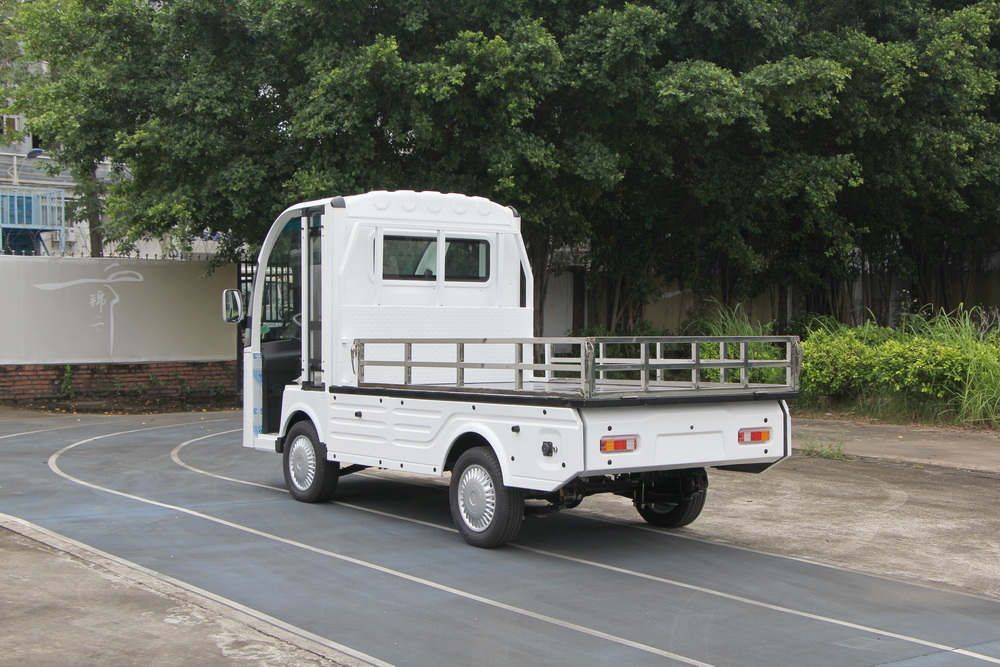
The table below deliberately separates published information from items that require a quotation or document review. Unverified numbers would make the comparison appear more complete while making it less reliable.
| Manufacturer | Published capacity information | MOQ / trial order position | Certification and approval position | Main procurement focus |
|---|---|---|---|---|
| BorCart | Reports four lines and delivery capability of 10 containers of mixed electric vehicles daily; not a cargo-van unit capacity | Sample-order service advertised; numerical production MOQ not established | Verify current certificates and model-specific market eligibility | Customized utility/cargo applications and smaller-brand development |
| SAIC MAXUS | Cargo-van-specific available capacity not established in reviewed material | Obtain model- and market-specific terms | Check approval documents for the exact export configuration | Established road-going electric van platforms |
| Farizon | SV-specific available capacity not established in reviewed material | Obtain fleet, distribution, or industrial-agreement terms | Overseas product availability does not replace document verification | Dedicated electric panel van architecture |
| JAC | Electric cargo-van-specific available capacity not established in reviewed material | Obtain current export-program terms | Verify the exact electric variant and destination documents | Commercial platforms and export-market cooperation |
| Chery / Karry | Electric cargo-van-specific available capacity not established in reviewed material | Confirm current model and assembly-program terms | Historical CKD activity is not evidence of current model approval | Light commercial vehicles and potential assembly cooperation |
BorCart's capacity and sample-order statements come from its company profile. The remaining entries identify information that the reviewed manufacturer materials do not establish, rather than implying low capacity or high minimum orders.
For EU road-going goods vehicles, Regulation (EU) 2018/858 provides the vehicle approval framework. It addresses category N goods vehicles, whole-vehicle approval, conformity of production, and certificates of conformity. A generic CE document is not a substitute for the applicable vehicle approval pathway.
Similarly, a RoHS statement should not be presented as universal proof that a complete van can be registered. Buyers must identify which requirements apply to the vehicle, its components, its charger, and its intended market.
Electrical safety requirements also need attention. UN Regulation No. 100 is a key regulation concerning electric powertrain safety within relevant vehicle approval arrangements. Applicability and amendment level should be confirmed with a qualified approval specialist.
Avoid purchasing against vague phrases such as "automotive-grade steel," "premium battery," or "export-quality components."
Instead, make the following items part of the technical agreement:
| Area | What to specify or request |
|---|---|
| Structural materials | Grade, thickness, coating, supplier traceability, and approved substitutions |
| Welding and assembly | Process instructions, inspection methods, torque controls, and repair procedures |
| Battery system | Cell and pack identity, usable energy, thermal management, protection functions, and warranty conditions |
| Cargo body | Dimensions, floor rating, loading points, water ingress requirements, and corrosion protection |
| Electrical system | Harness protection, connectors, charger compatibility, diagnostic access, and software version |
| Final testing | Recorded acceptance criteria for braking, charging, electrical faults, and functional checks |
This approach makes material substitution detectable. It also provides a basis for resolving disputes when delivered vehicles differ from approved samples.
Published range is a starting point, not a route guarantee.
Ask the supplier to evaluate the vehicle against your intended payload, ambient temperature, gradients, stop frequency, average speed, and auxiliary loads. Refrigeration and cabin conditioning should be included where relevant.
Do not compare one vehicle's city-cycle figure with another vehicle's combined-cycle result. Require the test cycle, configuration, and operating conditions behind each claim.
Request separate pricing for the vehicle, customization engineering, tooling, approval work, spare parts, diagnostic equipment, packaging, transport, and commissioning.
A lower vehicle price may not produce a lower fleet cost if buyers must independently solve registration, charging compatibility, service training, or replacement-parts access.
A sample can meet expectations while later production uses a different cell, controller, charger, or structural material.
Require an approved bill of materials and a written change-control clause. Define which changes need buyer authorization, supporting test evidence, and a review of approval implications.
Annual group output or container dispatch capability does not show the capacity available for your customized model.
Ask for a production allocation plan tied to prototype approval, component procurement, assembly, inspection, and shipment milestones.
A certificate may refer to a trading company, another factory site, or a different vehicle configuration.
Cross-check legal names, addresses, scope, model identifiers, and current status. Management-system certification and vehicle approval answer different questions; neither should be used as a substitute for the other. IAF CertSearch supports checks of certificate status, scope, issuing body, and accreditation information.
A less obvious risk arises when a supplier treats a battery change, body conversion, or added equipment as a simple commercial variation.
EU approval rules require attention to changes affecting approved characteristics and require multi-stage modifications to preserve the validity of relevant approved systems. An apparently minor customization therefore needs an approval-impact assessment, not just a revised price.
Use a three-way release check:
1. Confirm the purchased specification.
2. Confirm the production bill of materials and software configuration.
3. Confirm that the approval documentation covers the completed vehicle.
Make one person responsible for reconciling all three before shipment.
Use a staged purchasing process rather than moving directly from quotation to a large deposit.
1. Verify the supplier. Check the legal entity, factory location, contracting party, and certificate details.
2. Freeze the intended application. State whether the vehicle operates on public roads, private sites, or both.
3. Review the compliance pathway. Have destination-market specialists review the proposed configuration.
4. Agree on prototype acceptance. Define payload, charging, functional, environmental, and documentation tests.
5. Order a representative sample. Record its components and software so it can become a controlled production reference.
6. Release a pilot batch. Inspect consistency across several vehicles before scaling.
7. Confirm shipment arrangements. Obtain written instructions from the carrier and freight forwarder for the exact vehicle, installed battery, and any separately shipped batteries.
8. Prepare local support. Hold essential spare parts, service information, and diagnostic access before vehicles enter operation.
For logistics, clarify responsibility for export clearance, destination clearance, damage inspection, unloading, and insurance. Shipping an assembled vehicle and shipping a knock-down kit are different projects; compare the total landed and commissioning cost, not freight alone.
China offers several distinct supplier routes rather than one universally suitable electric cargo van manufacturer.
BorCart is worth investigating for customization-led utility and cargo projects, especially where smaller brands need direct engineering discussions and sample development. MAXUS and Farizon provide identifiable road-going electric van platforms. JAC and Karry bring broader commercial-vehicle backgrounds and export cooperation experience, subject to current model availability and negotiated terms.
For buyers considering BorCart, begin with a technical brief stating the destination country, operating environment, payload, cargo dimensions, daily distance, charging conditions, branding requirements, and forecast order volume. Request a model-specific proposal, sample plan, controlled component list, and compliance review before comparing final prices.
A credible manufacturing partnership starts when the supplier can explain not only what it can build, but how it will keep every delivered vehicle consistent with the configuration you approved.
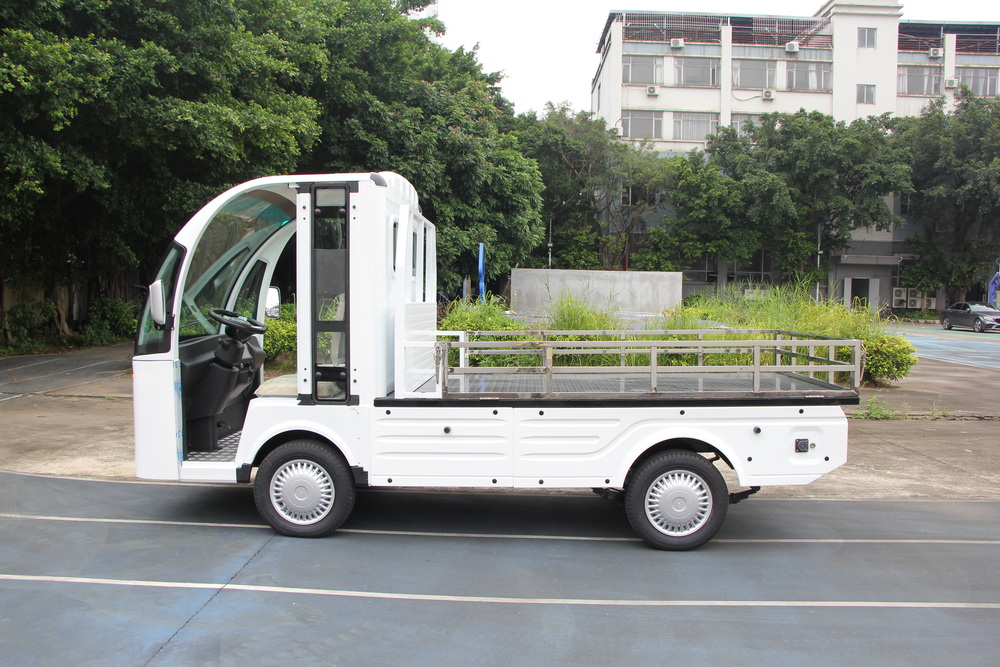
Search the legal company name or certificate number in IAF CertSearch, then review the status, scope, issuing certification body, and accreditation information. The database distinguishes active, suspended, withdrawn, and expired certificates.
Also confirm that the certificate covers the actual manufacturing site and relevant activity. If a record cannot be found, seek confirmation directly from the issuing certification body rather than assuming either validity or fraud.
No. For vehicles covered by the EU road-vehicle approval framework, buyers need the relevant approval pathway and associated documentation. Regulation (EU) 2018/858 addresses vehicle type approval and certificates of conformity; a generic CE document does not replace these requirements.
Ask an approval specialist to assess the exact vehicle category and destination before paying for production.
Do not accept the change solely because nominal voltage and capacity appear similar.
Require engineering evidence addressing mounting, mass, protection functions, charging behavior, thermal management, and software compatibility. The manufacturer should also assess whether the change affects the approved vehicle type and requires notification or an approval amendment.
Separate vehicle defects, battery degradation, wear items, and excluded operating conditions.
Define claim evidence, response deadlines, parts dispatch, labor reimbursement, diagnostic responsibility, and who pays freight. For batteries, specify the method used to assess remaining capacity rather than relying on an undefined "battery failure" clause.
Private-label buyers should also negotiate continued access to spare parts and service information if the model is discontinued.
It depends on duties, volume, local assembly cost, tooling, quality controls, approval responsibilities, and working capital.
Karry's documented Egyptian CKD history shows that Chinese commercial-vehicle businesses have pursued overseas assembly cooperation, but it does not establish the economics of your project.
Compare three complete scenarios: finished-vehicle imports, semi-knocked-down assembly, and completely knocked-down assembly. Include commissioning, rework, training, and registration—not just shipping cost.
- [China government portal: 2025 automotive production, commercial-vehicle output, and new energy vehicle export figures]. [english.www.gov]
- [International Energy Agency: Domestic car sales and exports from China, 2025–Q2 2026]. [iea]
- [EUR-Lex: Regulation (EU) 2018/858 on vehicle approval and market surveillance]. [eur-lex.europa]
- [IAF CertSearch: Certificate verification and status checks]. [iafcertsearch]
- [BorCart: Company profile, manufacturing claims, and OEM/ODM services]. [borcart]
- [SAIC MAXUS: Corporate background and commercial-vehicle portfolio]. [en.saicmaxus]
- [Farizon UK: Company background] and [SV product specifications]. [farizonauto.co]
- [JAC Motors: Sunray EV product information]. [jacen.jac.com]
- [Chery Commercial Vehicle: Official development history and overseas cooperation milestones]. [cherycvglobal]


