


Views: 263 Author: BorCart Publish Time: 2026-10-18 Origin: Site


Content Menu
● Custom Electric Utility Cart Specifications at a Glance
● Battery and Charging Customization for Electric Utility Carts
>> Choose Battery Capacity Around the Working Day
>> Match Battery Chemistry to Fleet Operations
>> Specify the Charger at the Same Time
● Motor, Controller, and Speed Specifications
>> Evaluate Loaded Performance, Not Motor Power Alone
>> Agree on Speed Settings and Test Conditions
● Cargo Bed, Payload, and Towing Customization
>> Design the Cargo Body Around Real Items
>> Separate Bed Capacity from Total Vehicle Capacity
>> Confirm Towing as a Separate Requirement
● Chassis, Suspension, Tires, and Seating
>> Select Running Gear for the Actual Surface
>> Balance Seating with Working Space
● Branding, Accessories, and Private-Label Options
>> Build a Consistent Product Identity
>> Review Accessories as Part of the Vehicle System
● Three Overlooked Decisions That Improve OEM Projects
>> 1. Define Range Through a Repeatable Duty-Cycle Test
>> 2. Design for Local Service Support
>> 3. Freeze the Approved Production Configuration
● How to Prepare a Custom Electric Utility Cart OEM Brief
>> Step 1: Describe the Application
>> Step 2: Set Measurable Acceptance Criteria
>> Step 3: Request a Detailed Technical Proposal
>> Step 4: Validate a Representative Sample
>> Step 5: Agree on Shipment and Support
● Compliance and Cost Questions to Resolve Early
● Start Your BorCart OEM Utility Cart Project
>> What specifications can be customized on an electric utility cart?
>> Can BorCart supply private-label utility carts?
>> Can I customize battery capacity to increase range?
>> Does a larger cargo bed increase carrying capacity?
>> Can a custom utility cart be used on public roads?
>> What is the minimum order quantity for customization?
>> Should buyers approve a sample before production?
A custom electric utility cart can be configured around your workload, operating environment, and brand requirements. Battery capacity, motor and controller specifications, cargo beds, seating, suspension, tires, body colors, and private-label branding are all potential customization areas. However, the available options depend on the vehicle platform and engineering approval.
For overseas brand owners, wholesalers, and manufacturers, the important question is not simply what can be changed. It is which changes will create a reliable, serviceable product that fits the target market.
At BorCart, our OEM discussions cover application requirements, component selection, branding, samples, and production specifications. This guide explains the main customization decisions—and how to turn them into a clear purchasing brief.
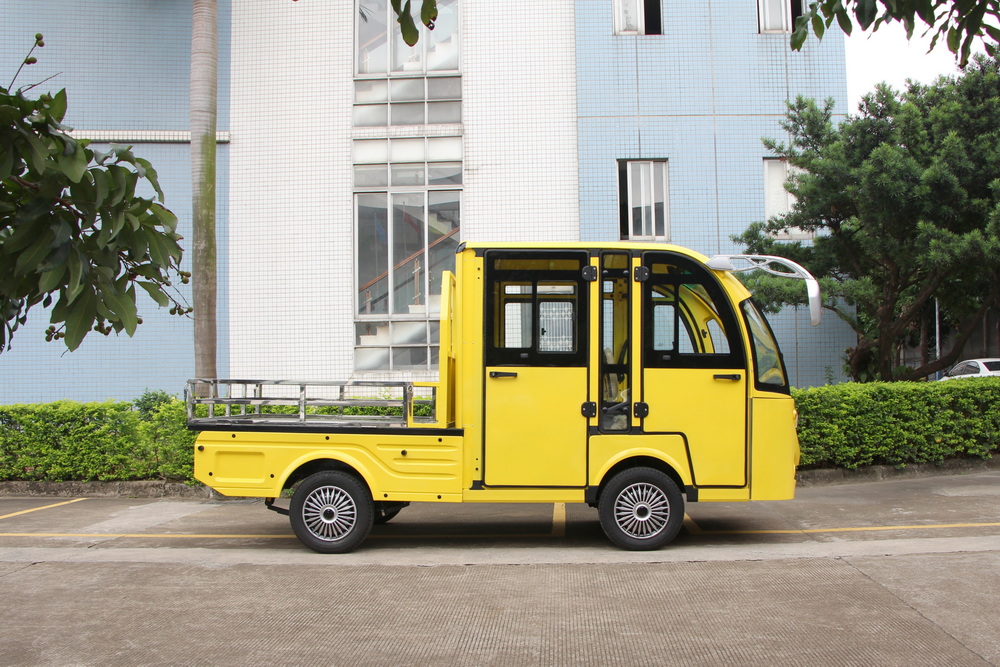
Customization falls into three practical categories: appearance changes, platform-compatible configurations, and engineering modifications.
A logo change differs substantially from redesigning a chassis or increasing rated carrying capacity. Identifying the category early helps buyers understand development work, testing requirements, and quotation differences.
| Specification | Potential customization | What buyers should confirm |
|---|---|---|
| Battery system | Chemistry, capacity, installation | Usable energy, compatibility, charging |
| Motor and controller | Component selection, operating settings | Loaded performance and thermal limits |
| Cargo body | Bed dimensions, cages, racks, covers | Rated load and weight distribution |
| Seating | Layout, upholstery, colors | Occupant capacity and cargo trade-offs |
| Suspension and tires | Platform-dependent configurations | Terrain suitability and loaded handling |
| Appearance | Paint, logos, trim | Approved samples and finish consistency |
| Accessories | Lighting, displays, storage | Electrical demand and mounting |
| Packaging | Branding and shipment configuration | Assembly responsibilities and protection |
BorCart publicly lists lithium and lead-acid battery options, custom cargo beds, tool racks, towing systems, and OEM branding services. Availability should be confirmed for the selected model rather than assumed across the entire range.
Start with the operating schedule, not an advertised maximum range.
A maintenance vehicle making short trips with frequent stops has different requirements from a cart covering long routes between buildings. Heavy loads, gradients, auxiliary equipment, and charging opportunities should all appear in the battery brief.
Ask the supplier to document:
- Nominal voltage and rated capacity.
- Usable battery energy.
- Maximum continuous discharge capability.
- Recommended charging conditions.
- Battery warranty terms and exclusions.
Ampere-hours alone do not provide a fair comparison between systems operating at different voltages. Nominal energy is calculated from voltage multiplied by ampere-hours, while usable energy depends on the battery's operating limits.
BorCart lists both lead-acid and lithium battery options. Selection should consider purchase cost, maintenance arrangements, battery weight, charging access, and replacement support.
Avoid treating every lithium battery as equivalent. The pack, protection system, connectors, enclosure, and charger must work together.
For an OEM order, request the exact battery specification and applicable test documentation. Do not substitute a general supplier certificate for evidence covering the proposed battery.
A battery upgrade should include a charger review.
Confirm the destination's supply voltage, plug requirements, charging location, and available electrical infrastructure. Also establish whether charging equipment is onboard or external.
This prevents a practical sourcing mistake: purchasing a suitable cart but discovering that its charging arrangement does not fit the installation.
Motor output is only one part of a utility cart's performance. The battery, controller, drivetrain, vehicle mass, and operating conditions also influence results.
BorCart's utility-cart materials list KDS or Mahle motors and Curtis controllers among available components. Buyers should confirm the exact combination in their quotation.
Instead of requesting "the most powerful motor," describe the job:
- Expected operating load.
- Steepest working gradient.
- Surface conditions.
- Frequency of hill starts.
- Continuous working periods.
An engineering review can then determine whether an existing configuration fits the application or needs modification.
A resort maintenance fleet may prioritize predictable low-speed operation. A larger industrial site may require a different operating profile.
Specify the required speed limit and ask how it will be controlled. Also distinguish unloaded performance from performance with the agreed working load.
Higher speed should not be treated as an isolated upgrade. Any proposed change needs a review of braking, handling, and the intended operating environment.
Custom cargo beds can improve productivity when their dimensions match the tools, containers, or materials being transported.
Potential configurations include open beds, cages, covered compartments, and tool racks. Define internal dimensions and loading access rather than describing the body only as "large."
Provide photographs or drawings of typical cargo. Include loading height, unloading method, tie-down needs, and cleaning requirements.
The goal is a body that supports the work without adding unnecessary weight or obstructing maintenance access.
Payload is one of the most important specifications to clarify.
Cargo-bed capacity and total vehicle capacity are not interchangeable. As an industry example, Club Car publishes a 1,000 lb cargo-bed capacity and a 1,500 lb total vehicle capacity for its Carryall 700.
These figures illustrate the distinction; they are not BorCart specifications.
For your project, request written definitions covering occupants, cargo, accessories, and any other loads counted against the vehicle rating. An enclosed body or permanent equipment package may change the remaining carrying allowance.
A towing attachment does not establish an approved towing capacity.
State the trailer's loaded mass, route gradients, coupling arrangement, and operating conditions. Ask for a platform-specific towing rating and any restrictions.
Where trailers are involved, braking and trailer requirements also need review. Avoid assuming that carrying capacity can be converted directly into towing capacity.
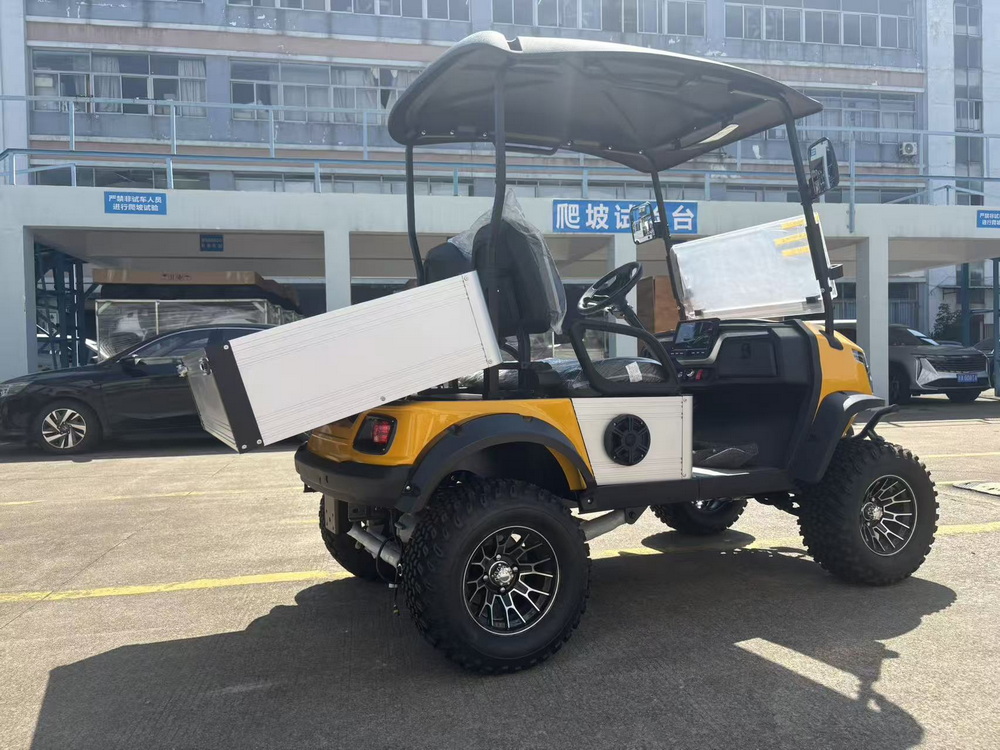
Smooth factory roads, landscaped grounds, and uneven service routes create different requirements.
BorCart describes suspension and tire configurations among its customization options. The appropriate choice depends on the selected platform and operating environment.
Request evaluation with the representative load. An unloaded demonstration cannot fully establish ride quality or handling during work.
Specify route width and turning space too. A larger vehicle may offer more cargo volume but be less suitable for narrow service corridors.
Additional seats can reduce the area available for cargo and increase the load carried by the vehicle.
A two-seat configuration may suit a technician and tools. A mixed passenger-and-cargo arrangement may suit another application, provided its layout and load limits are approved.
Seat material, color, and upholstery can support brand positioning. For working fleets, cleaning access and replacement availability deserve equal attention.
BorCart's published OEM scope includes logos, colors, configuration, and packaging customization. Its materials also describe body-color matching, seating finishes, and dashboard options.
Prepare a brand specification with:
- Approved artwork files.
- Color references.
- Logo dimensions and positions.
- Seat and trim selections.
- Packaging graphics.
Approve physical samples where possible. Screen images alone are a weak basis for judging finish consistency.
Lighting, displays, USB outlets, storage, and other equipment should appear in the agreed specification.
For powered accessories, request an electrical-load review and confirm wiring, protection, and connection details. For mounted accessories, confirm attachment points and service access.
Accessories should not make routine repairs unnecessarily difficult.
An isolated range figure says little without its test conditions.
Create a repeatable route using a representative load, speed, terrain, and stop pattern. Record starting charge, distance completed, remaining charge, and ambient conditions.
For example, a resort maintenance brief could require several loaded trips, repeated hill starts, and a reserve for unplanned work. This is an illustrative planning scenario, not a reported BorCart customer case.
A shared test method makes sample results more useful than competing headline claims.
A customized vehicle must remain repairable after delivery.
Before adding exclusive components, ask how dealers will obtain replacements and diagnose faults. Confirm access to wiring diagrams, parts identification, and maintenance instructions.
Useful questions include:
- Can common wear parts be replaced locally?
- Which components are unique to this order?
- Are diagnostic tools or passwords required?
- How are warranty claims documented?
Service planning protects the buyer's brand as well as the fleet's availability.
The sample and production order should share a controlled specification.
Record the approved battery, motor, controller, charger, tires, body, and accessories. Establish a written procedure for approving substitutions.
A component change may affect fit, performance, documentation, or spare-parts planning. Written change control helps prevent disagreement when shipments arrive.
Explain where the cart will operate, who will drive it, and what it must carry. Include route photographs, gradients, climate, and charging arrangements.
Define capacity, dimensions, speed, working duration, and required functions. Separate essential requirements from optional features.
Ask for component specifications, drawings, customization scope, development charges, sample arrangements, and quotation assumptions.
BorCart's published process includes requirement analysis, technical proposals, samples, and production quality control.
Check loaded operation, braking, steering, charging, cargo access, and maintainability. Record findings and resolve deviations before approving production.
Confirm packaging, assembly responsibilities, documentation, spare parts, and warranty procedures. BorCart lists complete-vehicle and partially or fully knocked-down shipment options; suitability depends on the order.
Customization does not automatically establish approval for public-road use or every destination market.
Identify the intended operating environment first. Then request a market-specific review of vehicle classification, required equipment, documentation, and testing.
Likewise, do not assume a battery-related standard certifies the complete vehicle. UL 2271 concerns batteries for light electric vehicle applications; its relevance and any additional requirements need project-specific assessment.
For cost comparisons, look beyond the vehicle price. Include development, samples, freight, assembly, charging equipment, spare parts, and local support.
A lower quotation is meaningful only when the scope and responsibilities are comparable.
Send BorCart your destination market, application, expected load, daily operating schedule, branding requirements, and estimated order quantity.
Request a platform-specific proposal covering customization feasibility, components, sample validation, pricing, and delivery assumptions.
For a useful first discussion, include cargo photographs and route details. A clear brief makes it easier to identify the right configuration before investing in samples or production.
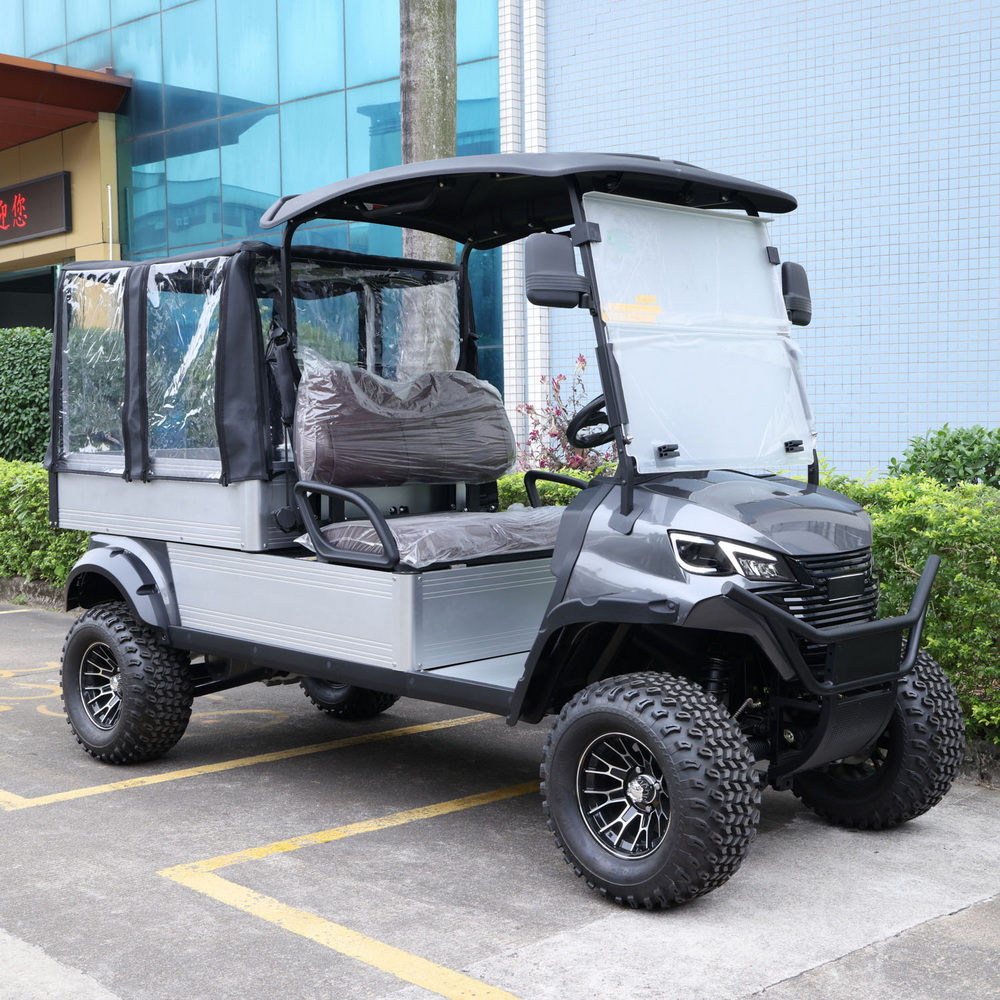
Potential areas include batteries, motors, controllers, cargo bodies, seating, suspension, tires, colors, logos, and accessories. Availability depends on the model and engineering approval.
BorCart publicly offers OEM branding, color, configuration, and packaging customization. Confirm artwork, sample approval, and the exact scope in the order agreement.
Battery capacity can be reviewed, but compatibility, installation space, weight, charger selection, and operating conditions must also be considered. Validate range using an agreed duty cycle.
Not automatically. Bed size and rated carrying capacity are different specifications. Any proposed capacity increase requires a platform-specific engineering review.
Only where the complete configuration satisfies the applicable requirements. Accessories or lighting alone do not establish public-road approval.
BorCart states that minimum quantities vary by configuration. Request separate confirmation for standard options, private-label changes, and engineering modifications.
For significant customization, sample validation provides a practical opportunity to check performance, fit, usability, and documentation before committing to the production configuration.
- BorCart. "Wholesale Utility Carts, China Utility Carts Manufacturer & Supplier." Primary source for published customization options, components, OEM workflow, shipment configurations, and support scope. Manufacturer statements are not independent verification of a particular order. [borcart]
- BorCart. "Denago EV Golf Cart vs BorCart OEM Golf Carts: Which Is Better for Dealers, Wholesalers and Custom Brands?" Additional manufacturer information on private-label configuration areas. [borcart]
- Club Car. "Carryall 700 Utility Vehicle." Industry example distinguishing cargo-bed capacity from total vehicle capacity; figures do not apply to BorCart vehicles. [clubcar]
- Federal Register. "Safety Standard for Lithium-Ion Batteries Used in Micromobility Products and Electrical Systems." Published June 24, 2026. Source identifying UL 2271-23 as a battery standard for light electric vehicle applications; not evidence of BorCart certification. [federalregister]


