


Views: 234 Author: BorCart Publish Time: 2026-10-21 Origin: Site


Content Menu
● 1. Define the Hotel Utility Cart's Job Before Choosing Options
>> Build a Configuration Matrix by Department
● 2. Match Payload, Cargo Dimensions, and Chassis Capability
>> Choose Access Before Appearance
● 3. Specify Battery Capacity Around the Actual Duty Cycle
>> Compare Battery Packages, Not Chemistry Alone
>> Use a Transparent Energy Estimate
● 4. Design Charging Into the Property Layout
>> Confirm the Electrical Installation
● 5. Customize for Terrain, Weather, and Guest Experience
>> Test Loaded Performance on Critical Routes
>> Specify Weather Protection Carefully
● 6. Separate Private-Property Use From Public-Road Approval
● 7. Turn Hotel Feedback Into Measurable Design Requirements
>> Translate Comments Into Acceptance Criteria
● 8. Establish an OEM Approval and Delivery Process
>> Define Delivery Documentation
● 9. Compare Total Ownership Cost, Not Just Unit Price
>> Include These Cost Categories
● Start Your BorCart Hotel and Resort Customization Project
>> Can One Electric Utility Cart Serve Every Hotel Department?
>> How Should We Choose Battery Capacity?
>> What Information Does BorCart Need for an OEM Quotation?
>> Are Customized Resort Utility Carts Automatically Street Legal?
>> What Should We Inspect Before Approving Production?
>> How Can We Reduce Maintenance Downtime?
To customize an electric utility cart for hotel and resort projects, start with the work it must perform—not its color or accessories. Define the routes, loads, operating hours, charging opportunities, and guest-facing requirements before selecting the chassis, battery, cargo body, and branded finishes.
A beachfront resort moving housekeeping supplies needs a different vehicle from a hillside hotel transporting maintenance equipment. Even within one property, luggage handling, landscaping, and engineering teams may require separate configurations.
For overseas brands, wholesalers, and manufacturers, the challenge is turning these operating needs into a repeatable OEM specification. BorCart offers utility cart customization covering branding, battery configurations, and application-specific equipment, with final availability subject to the selected model and project requirements.
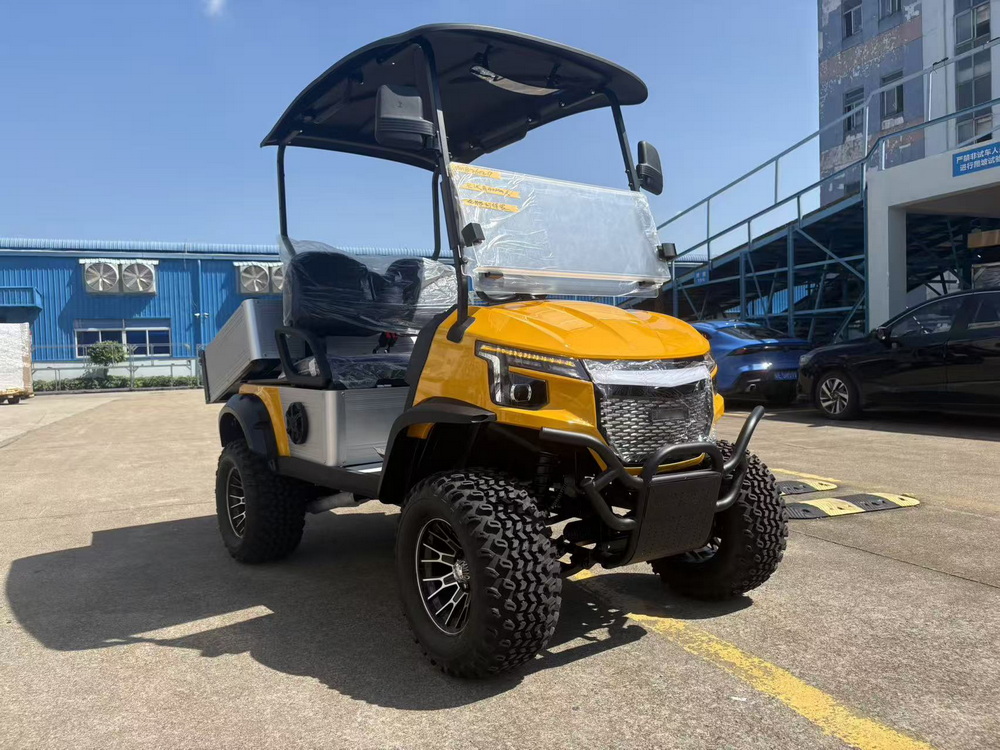
The first purchasing document should be a duty profile. This describes what the vehicle actually does during a normal shift and during the busiest operating period.
Interview housekeeping, engineering, landscaping, security, and front-office teams separately. Their priorities often conflict. Housekeeping may want enclosed storage, while maintenance needs fast access to bulky tools.
Record these details:
- Typical and maximum load, including occupants.
- Daily travel distance and number of trips.
- Steepest gradients and narrowest passages.
- Surface conditions, including wet paving and gravel.
- Available charging windows.
- Storage dimensions and loading access.
- Guest-facing appearance and noise expectations.
| Department | Main task | Customization priorities |
|---|---|---|
| Housekeeping | Move linen and cleaning supplies | Enclosed compartments, washable surfaces, organized storage |
| Engineering | Transport tools and replacement parts | Lockable storage, load restraints, accessible cargo area |
| Landscaping | Carry materials and equipment | Suitable cargo bed, durable finishes, easy cleaning |
| Front office | Transfer guest luggage | Weather protection, secure luggage space, polished appearance |
| Security | Patrol property routes | Visibility, communication mounts, controlled speed |
These are planning priorities, not universal specifications. Confirm every option against the vehicle's approved capacity and operating limits.
A cargo box that looks large enough may still be unsuitable for the intended load. Size and weight are separate requirements.
Measure actual linen bins, luggage, tool cases, and maintenance equipment. Include handles, lids, and the space needed to remove items without awkward lifting.
Ask the supplier to distinguish between:
- Cargo-bed capacity.
- Total allowable payload.
- Occupant allowance.
- Maximum permitted vehicle weight.
- Any restrictions created by fitted accessories.
Do not assume every published "load capacity" uses the same definition.
Consider an illustrative housekeeping load: two employees, clean linen, cleaning equipment, and collected waste. The specification must account for all of them—not just the linen.
A heavier custom enclosure also affects the finished vehicle's weight. Ask for the load limits of the completed configuration rather than relying on figures for a standard chassis.
Keep heavy items secured and positioned according to the manufacturer's loading instructions. Avoid configurations that encourage staff to stack loose cargo above their sightline.
Rear loading may work well at a maintenance depot but become inconvenient in a narrow service corridor.
Discuss side-opening doors, compartment dividers, removable shelves, and loading height. Test whether staff can reach frequently used items without unloading the entire vehicle.
Good cargo design reduces handling steps. It should also separate clean supplies from waste and keep tools from moving during travel.
Battery selection should answer one question: can the cart complete its intended work with a practical reserve under the property's operating conditions?
A brochure range is not a guaranteed working range. Payload, gradients, repeated stops, accessories, and temperature can change energy demand. Fleet planning should also account for battery operating and charging temperature limits.
Request the following for each proposed battery package:
- Nominal voltage and usable energy.
- Approved charger specification.
- Expected charging time under stated conditions.
- Battery management and protection functions.
- Operating and charging temperature limits.
- Warranty conditions and exclusions.
- Replacement availability in the destination market.
Lithium and lead-acid options should be compared as complete systems. Avoid choosing solely on purchase price or an unsupported lifespan claim.
For early planning, multiply daily distance by an estimated energy consumption per kilometer. Then account for the usable operating window and a reserve.
For example, 25 kilometers at an assumed 0.16 kWh per kilometer requires 4 kWh before adding operational allowances. This is an illustrative calculation, not a BorCart performance claim.
Validate the estimate using a loaded prototype on representative routes. Record starting charge, finishing charge, distance, load, temperature, and charging time.
Charging is part of the project specification—not an issue to resolve after delivery.
Locate charging spaces where vehicles naturally finish their shifts. A convenient charging bay can be more useful than additional battery capacity that the operation does not need.
Have a qualified local electrical professional review:
- Supply voltage and frequency.
- Charger input requirements.
- Circuit capacity and protection.
- Grounding arrangements.
- Exposure to rain, washing, and flooding.
- Cable placement and pedestrian access.
- Simultaneous charging demand.
Use the charger approved for the selected battery system. Charging infrastructure must deliver electricity safely, and extreme climates may require protected or temperature-controlled locations.
Create a charging schedule around actual operations. Overnight charging may suit maintenance carts, while housekeeping fleets may need staggered breaks or additional vehicles during peak occupancy.
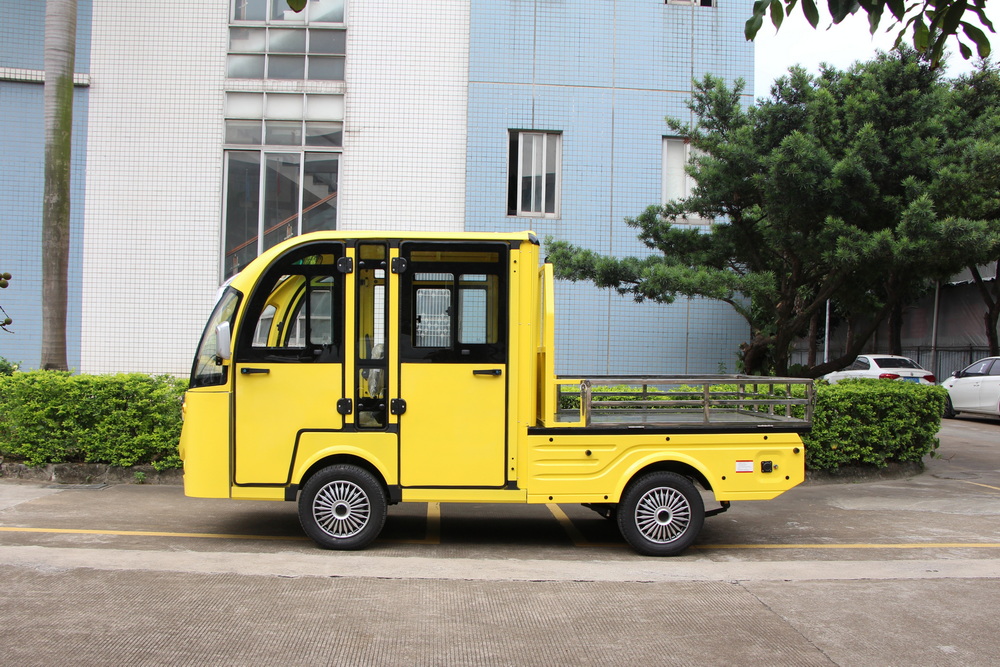
A resort cart must work across the property without becoming intrusive.
Ask the supplier to evaluate the steepest loaded route, stopping conditions, turning space, and surface transitions. A motor-power figure alone does not establish suitability for a specific hill.
The pilot should include:
1. A start on the steepest approved incline.
2. Controlled descent with the intended load.
3. Turns through narrow service areas.
4. Travel over representative surface changes.
5. Parking and unloading at actual work locations.
Use manufacturer-approved procedures and trained operators. Do not improvise extreme tests or exceed stated vehicle limits.
For exposed sites, discuss corrosion protection, drainage, electrical connector protection, and cleaning procedures.
Coastal projects should ask what evidence supports any corrosion-resistance claim. "Weatherproof" is too broad unless the supplier explains which components and conditions it covers.
Enclosures and windshields should also be evaluated for visibility, ventilation, and driver access. Comfort features should not make loading or safe operation harder.
For guest-facing fleets, coordinate body colors, upholstery, and logos with the property's visual identity. BorCart publicly lists color matching, logo customization, and configuration options; confirm the exact scope in the quotation.
A cart suitable for hotel grounds is not automatically legal on public roads.
This distinction matters when vehicles cross streets between resort buildings or travel to off-site facilities. Lighting, mirrors, or seat belts alone do not establish road approval.
In the United States, low-speed vehicles are a defined regulatory category with specific federal requirements. Vehicle classification and applicable requirements must be checked for the completed configuration, alongside state and local operating rules.
For other destinations, confirm the relevant classification with a qualified local adviser before ordering.
Ask the supplier to identify:
- Intended vehicle category and operating environment.
- Applicable documentation for the destination.
- Which tests cover the exact configuration.
- Any modifications that could affect compliance.
- Buyer responsibilities for registration or approval.
Avoid accepting a generic certificate that cannot be linked to the model being purchased.
Staff feedback becomes valuable when it changes a specification.
Do not ask only whether employees "like" the sample. Ask where they lose time, what is difficult to reach, and which tasks create unnecessary handling.
| Staff feedback | Requirement to investigate | Pilot check |
|---|---|---|
| "We unload everything to find one tool." | Separate tool compartments | Retrieve frequently used tools without moving unrelated cargo |
| "The cart is difficult in the service lane." | Suitable dimensions and turning capability | Complete the route within approved clearance limits |
| "Supplies get wet." | Appropriate cargo protection | Inspect storage after an agreed exposure test |
| "Charging interrupts our shift." | Battery and charging plan matched to workload | Complete the agreed duty cycle with reserve |
These are illustrative feedback scenarios, not actual BorCart customer reviews.
Invite representative users into the pilot. A procurement manager may approve the appearance, while drivers identify door placement or storage problems that would affect every shift.
For brand owners and wholesalers, consistency matters as much as the first sample.
A sample that performs well is not enough if later shipments arrive with different chargers, upholstery, or cargo fittings.
1. Requirements approval: confirm routes, loads, dimensions, branding, and destination requirements.
2. Engineering approval: review drawings, component specifications, and unresolved assumptions.
3. Sample approval: inspect the finished vehicle and complete the agreed pilot.
4. Production release: approve the final specification and inspection criteria.
Keep an approved bill of materials and a written change-control process. Require notification before substitutions that affect fit, performance, serviceability, or documentation.
Agree on operating manuals, maintenance instructions, wiring information, spare-parts identification, battery guidance, and warranty procedures.
For private-label projects, also approve logo files, color references, packaging, labels, and document branding.
BorCart's published OEM information includes private-label branding and configurable vehicle features. Treat that as a starting point for a project-specific agreement rather than a promise that every option fits every model.
A lower quotation may lose its advantage if the fleet is difficult to maintain or cannot complete the required workload.
Compare offers using the same configuration, destination, and commercial assumptions.
- Vehicle and customization costs.
- Freight, duties, and delivery charges.
- Charging installation.
- Electricity and scheduled maintenance.
- Wear parts and battery replacement.
- Training and spare-parts stock.
- Downtime and temporary replacement vehicles.
Cost per completed task can be more useful than cost per vehicle. For housekeeping, track trips completed and loading time. For engineering, track equipment availability and unplanned downtime.
Do not publish savings percentages without a defined baseline and operating evidence.
Standardizing shared components across departments may simplify support. However, excessive standardization can force unsuitable cargo layouts onto teams with different needs.
The best starting point is a clear operating brief, not a fully selected accessory package.
Send BorCart your route profile, peak workload, cargo measurements, charging conditions, destination requirements, and branding objectives. Request a proposed configuration, a list of unresolved assumptions, and a sample acceptance plan.
Make validation the final step before production. That is how a customized electric utility cart becomes a dependable part of hotel operations rather than simply a branded vehicle.
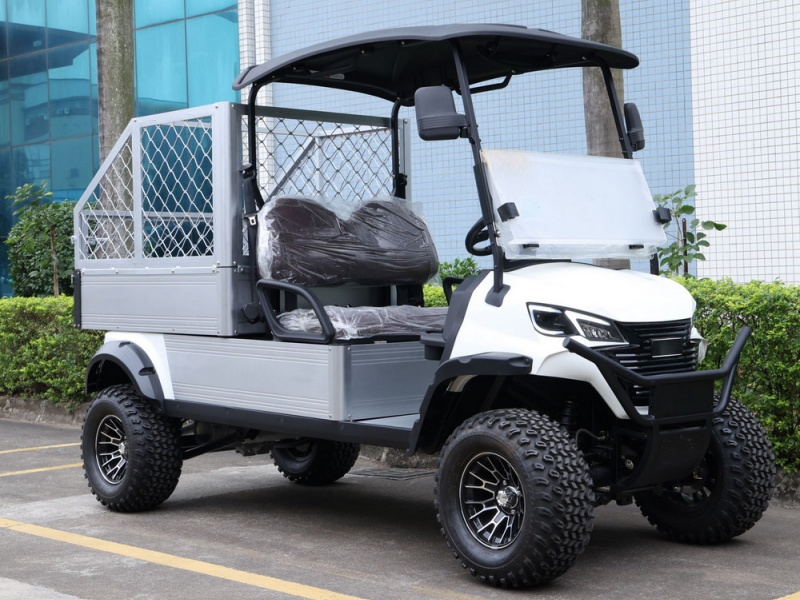
Sometimes, but compromises are likely. A modular cargo arrangement may suit related tasks. Separate configurations are often worth evaluating when clean supplies, waste, tools, and guest luggage require different handling.
Start with the busiest duty cycle, available charging time, route gradients, and intended load. Request a documented estimate, then validate it with a loaded pilot. Leave an agreed reserve rather than planning to use the entire available charge.
Provide the destination market, intended use, quantity, load requirements, route conditions, cargo dimensions, battery preference, branding files, and delivery expectations. Include any road-use or documentation requirements before configuration work begins.
No. Private-property suitability and public-road approval are separate issues. Confirm the vehicle category, applicable requirements, and local operating permissions for the exact finished configuration.
Check dimensions, cargo access, approved components, branding, charging compatibility, documentation, and workmanship. Complete the agreed operational tests and record any corrections before releasing the production specification.
Plan access to service information, identify common replacement parts, train operators, and agree on warranty reporting procedures. Confirm how replacement components will reach the destination market before placing the order.
- BorCart — "Wholesale Utility Carts, China Utility Carts Manufacturer & Supplier." Manufacturer-published information on utility cart applications and customization, including branding, batteries, and functional configurations. [borcart]
- BorCart — "Denago EV Golf Cart vs BorCart OEM Golf Carts: Which Is Better for Dealers, Wholesalers and Custom Brands?" Manufacturer-published description of OEM cooperation and configurable features. [borcart]
- U.S. Department of Energy, Alternative Fuels Data Center — "Electric Vehicles for Fleets." Guidance on fleet electrification, infrastructure planning, and battery temperature considerations. Its general planning principles should be adapted to the selected utility cart. [afdc.energy]
- U.S. Department of Energy, Alternative Fuels Data Center — "Electric Vehicle Benefits and Considerations." Background on charging infrastructure and safe electricity delivery. [afdc.energy]
- National Highway Traffic Safety Administration — "Interpretation ID: 07-005545as." Explanation of U.S. low-speed vehicle classification and associated federal requirements. [nhtsa]
- Electronic Code of Federal Regulations — "49 CFR § 571.500: Standard No. 500; Low-speed vehicles." Federal requirements applicable to vehicles within that classification. [ecfr]


