


Views: 208 Author: BorCart Publish Time: 2026-10-20 Origin: Site


Content Menu
● 1. Define Your Electric Cargo Truck's Operating Requirements
>> Document the Route and Duty Cycle
>> Describe the Cargo and Loading Process
● 2. Choose the Right Electric Cargo Vehicle Platform
>> Confirm the Intended Vehicle Category
● 3. Match Payload Capacity to the Finished Vehicle
>> Create a Complete Weight Budget
>> Evaluate Load Position, Not Just Total Weight
● 4. Size the Battery Around the Real Delivery Route
>> Include Auxiliary Energy Consumption
>> Use a Transparent Planning Calculation
● 5. Design Charging Around Vehicle Availability
>> Verify Vehicle and Charger Compatibility
>> Estimate Charging Time Conservatively
● 6. Customize the Cargo Body for Faster, Safer Work
>> Specify Clear Dimensions and Access Points
>> Consider the Operator's Repeated Tasks
● 7. Integrate Electrical Accessories Through Approved Interfaces
>> Prepare an Accessory Power Schedule
● 8. Build Market Requirements into the OEM Brief
>> Create a Responsibility Matrix
● 9. Validate a Prototype Before Committing to Volume Production
>> Agree on Acceptance Criteria in Advance
>> Translate Customer Feedback into Design Requirements
● 10. Compare Lifetime Operating Requirements, Not Just Purchase Price
● Start Your BorCart OEM Project with a Clear Specification
>> What information is needed to customize an electric cargo truck?
>> Can customization increase an electric cargo truck's payload?
>> How should I choose battery capacity for a custom electric cargo van?
>> Can an electric cargo truck support refrigeration or a liftgate?
>> Should I order a prototype before a large OEM purchase?
>> Are customized electric cargo vehicles suitable for every export market?
To customize an electric cargo truck successfully, start with the work it must perform—not a list of accessories. Payload, delivery routes, loading methods, charging access, and local vehicle requirements should guide every specification. For overseas brands, wholesalers, and manufacturers, this approach helps turn an OEM project into a commercially practical vehicle.
At BorCart, our business focuses on electric vehicles, including cargo vans, and automotive components for OEM customers. This guide explains how buyers can structure a customization brief, evaluate engineering trade-offs, and prepare a prototype validation plan.
The central principle is simple: application-first customization. A vehicle should fit the operator's daily workflow while remaining safe, serviceable, and suitable for its intended market.

A useful customization brief describes what happens during a complete working day. "Urban delivery" alone is not specific enough. Two vehicles covering similar distances may need different batteries, bodies, and loading equipment.
Record the following before requesting a quotation:
- Daily distance and the longest expected route.
- Typical speeds, gradients, and road surfaces.
- Number of stops and average stop duration.
- Working hours and available charging windows.
- Seasonal temperatures and weather exposure.
- Access restrictions, parking dimensions, and turning space.
Use actual operating records where available. A route average can conceal demanding days, so include representative peak conditions rather than specifying around the easiest shift.
Identify cargo weight, dimensions, packaging, and handling requirements. Explain whether operators load pallets, parcels, tools, food containers, or irregular equipment.
Also document who loads the vehicle and how. Forklift loading, manual handling, and frequent curbside unloading create different requirements for floor height, doors, access steps, and cargo restraint.
This information gives the engineering team a clearer starting point than a request for "maximum capacity."
An electric cargo van, open-bed truck, and enclosed delivery truck are not interchangeable. Select the platform around cargo protection, access, and the operating environment.
| Application | Configuration to evaluate | Main customization priorities |
|---|---|---|
| Parcel delivery | Enclosed cargo van or box body | Shelving, frequent access, cargo security |
| Factory transport | Open bed or enclosed utility body | Load restraint, maneuverability, durability |
| Maintenance services | Service body or fitted cargo van | Tool storage, work lighting, equipment access |
| Temperature-sensitive delivery | Insulated or refrigerated body | Thermal performance, auxiliary energy demand |
| Bulky goods delivery | Platform or box body | Loading method, clear dimensions, weight distribution |
These are planning options, not confirmation that every configuration is available on every BorCart model.
Establish whether the vehicle will operate on public roads, private industrial sites, or other controlled environments.
A low-speed utility vehicle should not be treated as equivalent to a road-approved commercial truck. Before selecting a chassis, identify the destination market, intended road access, and applicable approval pathway.
Do not infer road legality from appearance, motor power, or the presence of lights and seat belts.
Payload planning must account for the completed configuration—not simply the unmodified platform.
An enclosed body, shelving, refrigeration equipment, liftgate, and tools all contribute weight. Their combined effect can reduce the remaining capacity for saleable cargo.
Ask the engineering team to document:
1. The base vehicle's mass and rating definitions.
2. The proposed body and installed equipment mass.
3. Driver, passenger, and operating equipment allowances.
4. Maximum cargo mass.
5. Total loaded mass and individual axle loads.
For illustration, assume an approved configuration has 1,000 kg of capacity available for occupants, additions, and cargo. If installed equipment weighs 180 kg and the driver allowance is 80 kg, only 740 kg remains for cargo.
This is a hypothetical calculation, not a BorCart specification.
A vehicle can remain below its total mass limit while exceeding an axle limit.
Heavy equipment near the rear, uneven shelf loading, and cargo stacked high can change the vehicle's loading characteristics. Request a loading diagram covering typical and maximum-load conditions.
Adding stronger springs or changing the body does not automatically authorize a higher payload rating.
Battery selection should connect route energy demand with the available charging schedule.
A larger battery may increase operating flexibility, but it can also add cost and mass. The right solution is not necessarily the largest pack; it is the configuration that completes the required duty cycle with an appropriate operating reserve.
Assess more than propulsion. Relevant loads may include:
- Cabin heating or cooling.
- Refrigeration.
- Cargo lighting.
- Electrically operated loading equipment.
- Communications and other onboard systems.
For refrigerated deliveries, document ambient temperature, target cargo temperature, door-opening frequency, and loading practices. These variables belong in the energy assessment.
Consider a hypothetical 100 km route with propulsion consumption of 0.22 kWh/km.
The driving requirement would be 22 kWh. If auxiliary equipment consumes another 6 kWh during the shift, total estimated demand becomes 28 kWh.
With an illustrative 20% planning margin, the requirement becomes 33.6 kWh.
These assumptions are not measured product performance. The calculation also does not automatically specify nominal battery capacity: usable energy, operating limits, aging, and environmental conditions still require engineering review.
Request route-based validation rather than relying exclusively on an advertised range figure.
Charging equipment should match the vehicle's capabilities and the fleet's downtime.
Begin with a practical question: when is the vehicle parked long enough to recover the energy used during its shift?
Confirm:
- Destination-market connector requirements.
- Vehicle-supported charging modes and power.
- Available site voltage and electrical capacity.
- Charger communication requirements.
- Cable reach and parking layout.
- Responsibility for installation and commissioning.
A higher-powered charger cannot force a vehicle to accept more power than its charging system supports.
For multiple vehicles, assess simultaneous charging demand. Installing several chargers without evaluating the site supply can create an avoidable infrastructure problem.
A preliminary estimate divides energy to be replenished by effective charging power.
For example, replenishing 28 kWh at a sustained 7 kW would take approximately four hours before allowing for losses and charging behavior.
Use this only as a planning estimate. Temperature, battery condition, charging controls, and power restrictions can affect actual completion time.

Useful cargo-body customization reduces handling friction without unnecessarily increasing weight or complexity.
Provide internal cargo dimensions and door-opening dimensions separately. A compartment may fit a pallet while its entrance does not.
Relevant specifications include:
- Clear internal length, width, and height.
- Rear and side opening dimensions.
- Loading height.
- Shelf spacing and compartment layout.
- Floor finish and drainage needs.
- Cargo restraint locations.
- Interior lighting and lock arrangements.
Use drawings showing the actual goods or handling equipment. This helps identify interference before fabrication.
Observe how workers retrieve cargo, secure doors, and reach equipment.
A shelf arrangement that looks efficient in a drawing may obstruct heavy packages or require excessive reaching. Prototype reviews should include the people who will operate the vehicle, not only purchasing and management teams.
For temperature-sensitive goods, define measurable acceptance criteria. Insulation alone does not prove that a vehicle can maintain the required conditions during delivery.
Electrical customization requires more than connecting an accessory to an available power source.
Body-builder documentation from established truck manufacturers illustrates the importance of approved interfaces, protected circuits, suitable cable routing, and clearly assigned integration responsibilities.
For each accessory, list:
- Rated power and expected peak demand.
- Operating duration.
- Required voltage.
- Control method.
- Fuse and protection requirements.
- Whether it must operate while parked.
- Any communication with vehicle systems.
Ask the vehicle engineering team to confirm the integration method.
Do not assume that aftermarket refrigeration, liftgates, telematics, or lighting can connect directly to the traction battery. High-voltage work and safety-critical changes require appropriate expertise and authorization.
For connected accessories, also define data access, software ownership, and update responsibilities.
Compliance planning should begin before the prototype is finalized.
The relevant requirements depend on vehicle category, destination, configuration, and operating environment. A component certificate does not necessarily establish approval for the complete vehicle.
Assign responsibility for:
- Vehicle classification and approval.
- Lighting, braking, and other applicable requirements.
- Battery and charging documentation.
- Labels, manuals, and required languages.
- Import documentation and registration support.
- Assessment of changes made during customization.
Ask which documents apply to the exact proposed configuration. Confirm whether body modifications or electrical additions require further assessment.
For branding, specify logos, colors, label locations, and document language. Keep commercial branding separate from mandatory identification and safety information.
A prototype should demonstrate operational suitability, not merely match an approved appearance.
This is particularly important when combining a new body, unfamiliar routes, auxiliary equipment, and destination-specific requirements.
Create a test plan covering:
1. Dimensions and loading compatibility.
2. Loaded vehicle mass and axle distribution.
3. Representative-route energy consumption.
4. Charging performance at the intended facility.
5. Accessory operation under relevant conditions.
6. Doors, locks, lighting, and cargo restraint.
7. Driver visibility and operator access.
8. Service access and documentation completeness.
Where relevant, include water-ingress checks and cargo-temperature performance.
Define test conditions, instruments, pass criteria, and corrective-action responsibilities before testing begins. "Works well" is not an adequate acceptance standard.
If customers report difficult loading, measure the opening, handling clearance, and loading height. If they report range concerns, examine route data and charging records.
Separate verified findings from personal preferences. This converts feedback into actionable engineering changes without treating every complaint as proof of the same underlying problem.
A low initial quotation may become less attractive if it creates maintenance difficulties or charging constraints.
Evaluate the complete operating package:
- Vehicle and customization cost.
- Charging equipment and installation.
- Energy use and local tariffs.
- Scheduled maintenance.
- Spare parts availability.
- Diagnostic tools and technician training.
- Warranty scope and exclusions.
- Expected downtime and support arrangements.
Calculate energy cost using a consistent measurement boundary. Electricity measured at the charger may differ from energy recorded by the vehicle, so avoid comparing unlike figures.
For overseas distribution, clarify which components can be serviced locally and which require specialist support.
A strong inquiry should include your destination market, intended vehicle category, route profile, cargo dimensions, payload, charging conditions, and expected order quantity.
Send BorCart your application brief and request a configuration review covering platform suitability, proposed customization, documentation, prototype testing, and production arrangements.
Before placing a volume order, agree on the approved specification and acceptance criteria. This gives both teams a clearer basis for controlling cost, quality, and delivery expectations.
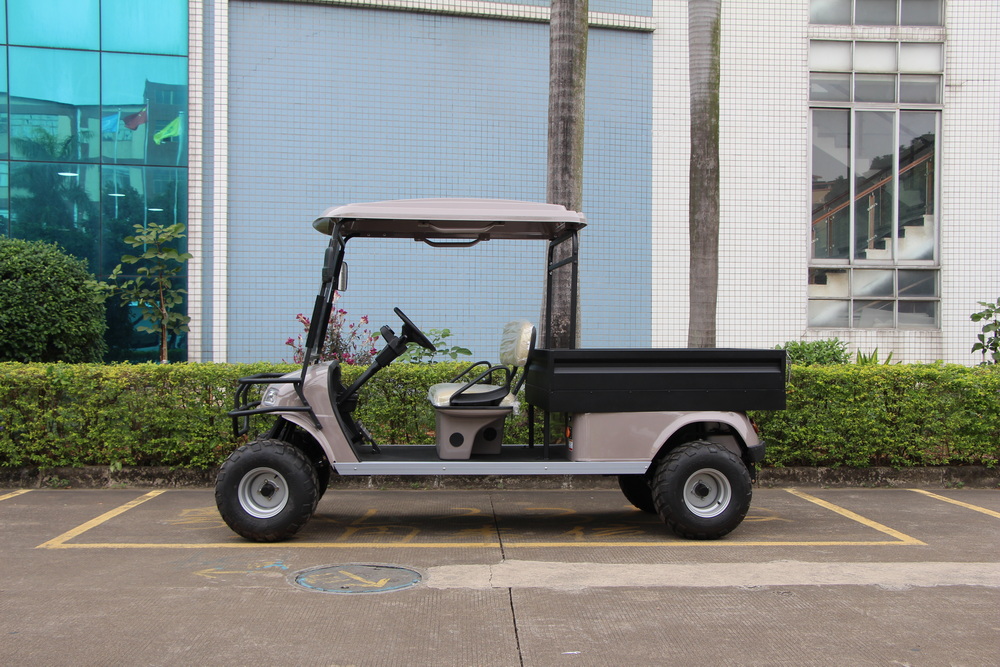
Provide route distance, operating hours, cargo weight and dimensions, loading methods, climate, charging access, destination market, and expected quantity. Include drawings or photographs where they clarify handling requirements.
Not automatically. Body changes and accessories often consume available capacity. Any proposed increase requires engineering review and confirmation of applicable vehicle and axle ratings.
Estimate propulsion and auxiliary energy demand for representative routes, then consider an operating reserve and charging opportunities. Validate the proposed configuration through testing rather than selecting by distance alone.
Potentially, if the platform and approved electrical architecture support the equipment. Confirm mounting, mass, power demand, protection, and integration before assuming compatibility.
A prototype is valuable when introducing significant changes or operating in a new application. Define measurable acceptance criteria so testing can identify issues before production scales.
No universal approval should be assumed. Suitability depends on vehicle classification, local requirements, and the exact finished configuration. Verify documentation for the destination before committing to an order.
1. U.S. Department of Energy, Alternative Fuels Data Center. "Electric Vehicles for Fleets." Supports duty-cycle assessment, vehicle selection, fleet charging, infrastructure planning, and installation considerations. [afdc.energy]
2. U.S. Department of Energy, Alternative Fuels Data Center. "Electric Vehicle Readiness." Supports charging-access assessment and infrastructure planning. [afdc.energy]
3. Volvo Trucks North America. "Body Builder Instructions: VNR Electric," 2025. Provides a model-specific example of battery-electric vehicle integration documentation; it does not establish specifications or approvals for BorCart vehicles. [volvotrucks]
4. Mack Trucks. "Body Builder Instructions," 2025. Provides examples of accessory electrical integration, circuit protection, cable routing, and bodywork-electronics responsibilities. Its instructions are model-specific and should not be applied directly to unrelated vehicles. [macktrucks]


