


Views: 288 Author: BorCart Publish Time: 2026-10-15 Origin: Site


Content Menu
● Electric Cargo Truck with Iron Box vs. Open Cargo Truck: Key Differences
● Cargo Protection: When an Enclosed Electric Truck Makes Sense
>> Weather Protection for Packaged and Sensitive Goods
>> Security and Product Visibility
>> Enclosure Does Not Provide Temperature Control
● Loading Flexibility: Where an Open Cargo Truck Performs Better
>> Door Openings Can Be the Real Bottleneck
>> Compare Complete Loading Cycles
● Payload Capacity: Compare Finished Vehicles, Not Bare Chassis
>> Calculate What Remains After the Body Is Installed
>> Illustrative Payload Comparison
● Driving Range: Why Body Style Alone Cannot Predict Performance
>> Weight Is Only One Variable
>> Evaluate the Hardest Working Day
● Cargo Safety: An Enclosed Box Does Not Replace Restraints
>> Secure Loads in Both Configurations
>> Keep Weight Distribution Under Control
● Ownership Costs: Look Beyond the Purchase Price
>> Illustrative Break-Even Calculation
● A Practical Five-Step Vehicle Selection Test
>> 1. Record Your Actual Cargo
>> 2. Identify the Main Operational Risk
>> 3. Request Comparable Supplier Specifications
>> 4. Run a Representative Loaded Trial
>> 5. Compare Cost per Completed Job
● Which Businesses Should Choose Each Configuration?
● Choose the Body Around Your Route and Cargo
>> Is an Electric Cargo Truck with Iron Box Always Better for Delivery?
>> Does an Open Cargo Truck Always Carry More Weight?
>> Can a Standard Iron Box Carry Refrigerated Products?
>> Do Goods Need Restraints Inside an Enclosed Truck?
>> Which Configuration Offers Better Electric Range?
>> Can a Tarpaulin Replace an Enclosed Cargo Box?
An electric cargo truck with iron box offers enclosed storage for goods that need protection from weather and unauthorized access. An open cargo truck provides easier access for bulky materials, equipment, and irregular loads. The better choice depends on what you carry, how you load it, and the conditions along your delivery route.
My starting point for this comparison is straightforward: cargo compatibility matters more than appearance or the lowest purchase price. A truck that protects your products but slows every delivery can be expensive. So can an open truck that saves loading time but exposes valuable goods to damage.
This guide compares enclosed and open cargo bodies on electric vehicles. Keeping the powertrain comparable helps isolate the differences that actually come from body design.

In commercial listings, "iron box" usually describes an enclosed metal cargo compartment. Buyers should verify the actual material rather than assume the body uses pure iron. Ask whether the panels and framework are steel, aluminum, or a combination.
Here, an open cargo truck means a vehicle with an uncovered cargo platform, potentially fitted with fixed or folding sideboards.
| Comparison factor | Enclosed iron-box truck | Open cargo truck |
|---|---|---|
| Weather exposure | Enclosure reduces direct exposure | Cargo remains exposed unless covered |
| Cargo access | Limited by doors and interior dimensions | Easier side or overhead access |
| Security | Supports lockable, concealed storage | Usually needs additional protection |
| Loading suitability | Cartons, parcels, tools, packaged goods | Equipment, bulky goods, irregular loads |
| Body weight | Depends on panels, frame, and equipment | Depends on deck, sideboards, and equipment |
| Cleaning | Interior corners and seals need attention | Accessible deck can simplify cleaning |
| Main purchasing concern | Payload, door clearance, sealing | Restraint points, deck strength, exposure |
Neither design wins every category. The right truck is the one that handles your normal work efficiently without compromising safety.
An enclosed electric cargo truck creates a physical barrier against rain, road spray, and direct exposure to windblown debris.
That makes it a logical option for:
- Cardboard cartons and retail packaging.
- Tools and replacement parts.
- Furniture and finished products.
- Parcels and business supplies.
- Goods with surfaces that must arrive clean.
However, enclosed does not automatically mean waterproof. Door seals, roof joints, drainage, and body workmanship determine how effectively the compartment resists water entry.
Ask the supplier to explain its leak-testing procedure. Inspect seals and joints rather than relying on photographs of the exterior.
A lockable compartment conceals goods and provides a barrier against casual access. This can be useful on routes involving frequent stops or unattended parking.
Still, a metal box is not theft-proof. Door hinges, locks, parking practices, and access control all matter.
For valuable cargo, evaluate the complete security arrangement. A robust body with weak locks may provide less protection than buyers expect.
An ordinary metal cargo box is not a refrigerated body.
If your products require controlled temperatures, specify insulation, refrigeration capacity, monitoring, and the intended operating conditions separately.
This distinction is especially important when transporting temperature-sensitive food, pharmaceuticals, or other regulated goods.
An open cargo truck can accommodate loading methods that are difficult with a fixed enclosure.
Depending on its design, operators may load from the side, rear, or above. Folding sideboards can improve access, while a suitable platform can support forklift handling.
This flexibility matters for landscaping equipment, maintenance machinery, construction supplies, and awkwardly shaped components.
The advantage is not unlimited carrying capacity. Every load must remain within applicable weight, dimension, and securement requirements.
For an enclosed truck, advertised cargo volume does not tell the whole story.
A machine might fit inside the compartment but fail to pass through the rear door. Similarly, a pallet may fit through the opening yet leave insufficient room for positioning or restraint.
Check:
- Clear door width and height.
- Internal length, width, and height.
- Wheel-arch intrusion.
- Floor height above ground.
- Ramp or lift compatibility.
- Space needed to handle and secure cargo.
For an open truck, inspect deck dimensions, sideboard operation, and access to rated restraint points.
Do not measure loading speed alone.
An open platform may load quickly but require additional time for covering, securing, and uncovering goods. An enclosed truck may take longer to load while simplifying weather protection at each stop.
The useful comparison is total handling time per completed delivery.
Payload is a common source of purchasing mistakes.
The relevant figure is the capacity of the completed vehicle, including its cargo body and installed equipment. A chassis specification may not reflect the finished configuration.
A practical screening calculation is:
Available cargo allowance = permitted loaded vehicle mass − actual operating vehicle mass.
The operating mass should account for the body, batteries, accessories, occupants, and other items not already included in the stated weight. Manufacturer definitions vary, so clarify exactly what each figure includes.
Also check axle ratings. Staying below the total vehicle limit does not guarantee that each axle is correctly loaded.
Consider two hypothetical trucks with the same permitted loaded mass of 2,000 kg.
| Item | Enclosed configuration | Open configuration |
|---|---|---|
| Vehicle mass before occupants and cargo | 1,250 kg | 1,100 kg |
| Occupants and carried equipment | 150 kg | 150 kg |
| Remaining cargo allowance | 600 kg | 750 kg |
In this example, the open truck offers 150 kg more cargo allowance.
These are illustrative figures, not product specifications. A lightweight enclosed body could outperform a heavily reinforced open platform. Request verified weights for the actual vehicles being quoted.
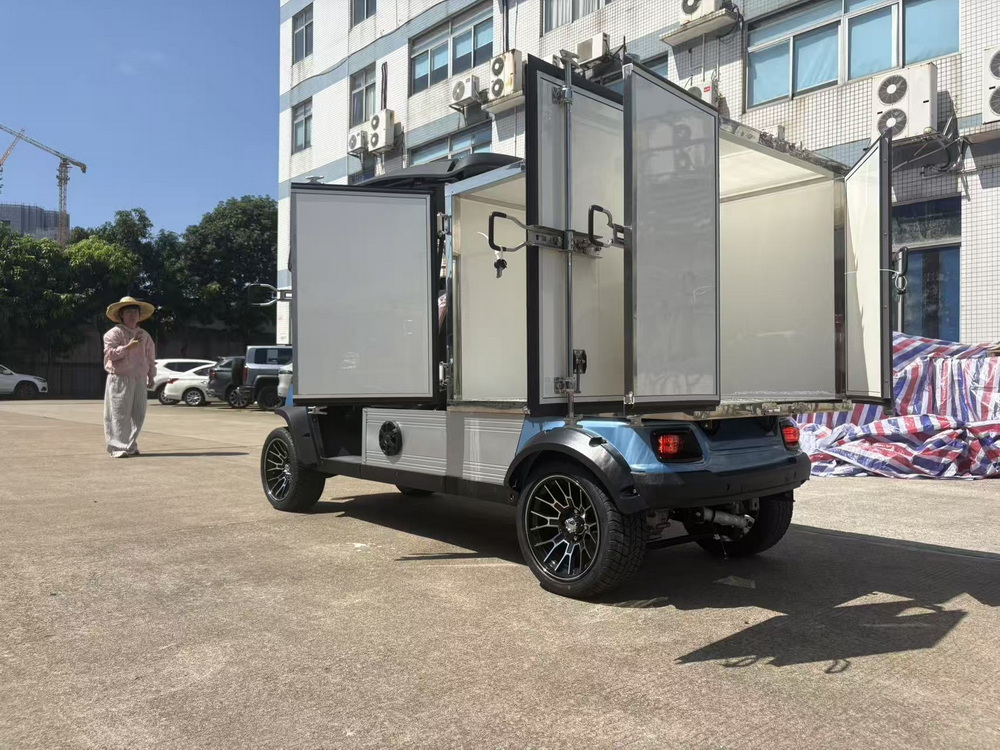
Body weight can affect energy demand, but electric commercial vehicle consumption also depends on speed, temperature, wind, load, and auxiliary equipment.
An enclosed body changes the vehicle's exterior shape. An open platform's aerodynamic behavior changes with the cargo placed on it.
Therefore, "open trucks always travel farther" and "box trucks are always more efficient" are both unreliable purchasing assumptions.
Ask for range evidence that specifies:
- Test load.
- Route and average speed.
- Ambient temperature.
- Elevation changes.
- Battery capacity and condition.
- Use of heating, cooling, or other electrical equipment.
A useful route assessment includes the busiest schedule, heavier loads, hills, detours, and seasonal conditions.
Check whether the truck can complete that duty cycle with a practical reserve and recharge during the available parking window.
Advertised maximum range is less useful than documented performance on a route resembling your own.
Goods can move inside a closed compartment during braking, turning, or travel over uneven roads.
An enclosed body should therefore have a suitable load-restraint arrangement. Depending on the cargo, that might involve rated anchor points, bars, straps, partitions, or other appropriate equipment.
Open trucks also require restraint systems matched to the load. Sideboards should not automatically be treated as adequate structural barriers.
In the United States, applicable commercial-vehicle rules address cargo shifting inside vehicles as well as cargo falling from them. Other markets have their own requirements.
Heavy items should be positioned according to the vehicle manufacturer's loading instructions and axle limits.
Uneven loading or excessive rear overhang can create problems even when the total load appears acceptable.
Ask the supplier for loading guidance, restraint-point ratings, and any restrictions associated with concentrated loads.
A useful comparison includes more than the truck invoice.
Account for:
- Body and optional equipment.
- Charging infrastructure.
- Electricity consumption.
- Maintenance and repairs.
- Insurance and applicable fees.
- Loading and unloading labor.
- Cargo damage or replacement.
- Downtime and additional trips.
- Residual value.
An enclosed body may justify its cost when protecting goods reduces losses. An open platform may offer better value when fast access and bulky-load handling are central to the business.
Neither conclusion should be assumed without operating data.
Suppose an enclosed configuration costs $1,500 more than a comparable open truck.
Assume it avoids an average of $90 per month in packaging damage, replacement, and associated administration.
The simple recovery period is:
$1,500 ÷ $90 = approximately 16.7 months.
This is a hypothetical screening example. It excludes financing, energy differences, repairs, and resale value.
Its purpose is to show how cargo protection can have measurable value. Replace the assumptions with your own records before making a purchase decision.
List typical weights, dimensions, packaging types, and loading methods.
Include difficult loads and peak-day demand, not just average orders.
Determine whether your biggest problem is weather damage, theft exposure, slow handling, insufficient payload, or restricted access.
This prevents attractive features from distracting you from the actual bottleneck.
Obtain completed-vehicle weight, rated carrying capacity, dimensions, battery information, charging requirements, and warranty terms for both configurations.
For the enclosure, request material and sealing details. For the open platform, request deck specifications and restraint-point ratings.
Use your own cargo where possible.
Measure handling time, energy consumption, maneuverability, parking access, and remaining charge. Test whether doors, sideboards, and restraints remain practical during repeated use.
A cheaper truck is not necessarily cheaper to operate if it requires extra trips or additional handling.
Compare daily operating cost with the number of jobs the vehicle can complete safely and reliably.
An electric cargo truck with iron box is generally the stronger candidate when goods need enclosure and most loads fit comfortably through the available doors.
Typical applications include parcel delivery, retail replenishment, packaged-product distribution, and service routes carrying tools.
An open electric cargo truck is generally the stronger candidate when the work prioritizes flexible access and the cargo can tolerate exposure or receive suitable protection.
Typical applications include grounds maintenance, equipment movement, construction support, and bulky-material transport.
For mixed fleets, assigning different body types to different routes may be more practical than forcing one design to handle every task.
Choose an enclosed electric truck when protection and concealed storage are central to the job. Choose an open platform when flexible loading and handling irregular cargo matter more.
Before requesting a quotation, prepare your maximum cargo weight, largest item dimensions, daily distance, loading method, and exposure conditions. Ask the supplier to recommend both configurations against the same requirements and confirm completed-vehicle payload and loaded-route performance.
That turns a general product comparison into a purchase decision you can verify.
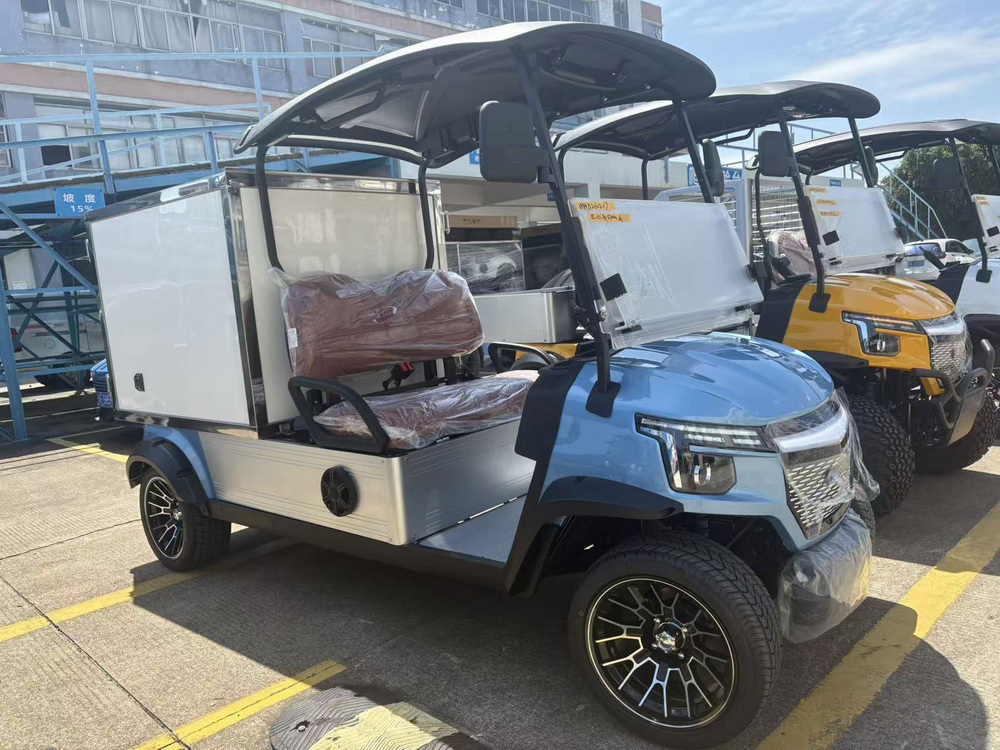
No. It is often suitable for packaged goods that need enclosure. An open truck may be more practical for bulky or irregular items requiring side or overhead access.
No. Compare the finished vehicles. Body materials, reinforcement, batteries, and accessories all affect available cargo allowance.
A standard enclosure does not provide controlled refrigeration. Temperature-sensitive goods require a body and cooling system designed for their specific requirements.
Yes, when necessary to prevent unsafe movement. Closing the doors does not stop unsecured goods from shifting during driving.
There is no universal winner. Compare loaded-route performance because weight, body shape, cargo arrangement, speed, and weather all affect consumption.
A suitable cover may reduce weather exposure, but its effectiveness depends on installation and condition. It does not automatically provide equivalent security, sealing, or cargo restraint.
1. Federal Motor Carrier Safety Administration. [Cargo Securement Rules]. Supports the discussion of load containment, restraint systems, and preventing cargo movement. Its requirements apply within the stated U.S. regulatory scope. [fmcsa.dot]
2. Federal Motor Carrier Safety Administration. [Do the Rules for Protection Against Shifting or Falling Cargo Apply to CMVs with Enclosed Cargo Areas?]. Confirms that enclosed cargo areas do not eliminate applicable securement obligations. [fmcsa.dot]
3. Argonne National Laboratory. [Comprehensive Total Cost of Ownership Quantification for Vehicles with Different Size Classes and Powertrains]. Supports the ownership-cost framework and discussion of payload and charging-related operational costs. It does not establish a universal cost difference between open and enclosed bodies. [osti]
4. International Council on Clean Transportation. [Total Cost of Ownership Calculator]. Supports including purchase costs, energy, maintenance, charging infrastructure, and residual value in a lifetime-cost assessment. [theicct]
5. Morgan Truck Body. [Are Electric Vehicles Changing Parcel Delivery Truck Bodies?]. Provides industry context on body weight, aerodynamics, chassis integration, and cargo design. [morgancorp]
6. BAS World. [Electric Cargo Van: Payload vs. Range]. Supports the discussion of temperature, speed, wind, load, and auxiliary systems as energy-consumption variables. [basworld]


