


Views: 219 Author: BorCart Publish Time: 2026-10-16 Origin: Site


Content Menu
● Why Source Electric Cargo Vans from China?
>> Manufacturing Clusters Relevant to Buyers
● Selection Criteria: How This Shortlist Was Developed
>> 1. Manufacturer Identity and Production Scope
>> 2. Engineering and Customization Capability
>> 3. Quality-Control Discipline
>> 4. Model-Specific Compliance
>> 5. Production and Delivery Reliability
>> 6. Long-Term Commercial Support
● Manufacturer Comparison: Capacity, MOQ, and Certification Evidence
● 1. Guangzhou BorCart Electric Vehicle Co., Ltd.
>> A Customization-Led Candidate for Smaller Brands
● 2. SAIC MAXUS Automotive Co., Ltd.
>> An Established Road-Going Electric Van Manufacturer
>> Markets and Customization Scope
>> Quality and Compliance Considerations
>> Dedicated Electric Platforms for Commercial Applications
>> Commercial-Vehicle Experience and Electric Van Development
>> Electric Vans Within a Broad Commercial-Vehicle Portfolio
● Technical Buyer's Guide: What a Competitive Quotation Must Specify
>> Start with Vehicle Classification
>> Specify Materials and Manufacturing Evidence
>> Treat CE and RoHS Claims Carefully
>> Separate Battery Safety from Vehicle Approval
● Common Sourcing Risks and How to Reduce Them
>> Undisclosed Component Substitution
>> Unclear Delivery Commitments
● An Underappreciated Procurement Risk: The Sample May Not Match the Approved Configuration
● Factory Verification, Samples, and Logistics
>> Verify the Factory Before Paying for Development
>> Use a Staged Sample Process
>> Confirm Freight and Import Requirements Before Production Release
● Select the Factory That Matches the Project
>> 1. How Can I Check Whether a Factory's ISO Certificate Is Expired or Suspended?
>> 2. Does a CE or RoHS Certificate Allow an Electric Cargo Van to Be Registered in Europe?
>> 3. Can an OEM Buyer Change the Battery Supplier After Sample Approval?
>> 4. How Should We Evaluate Payload After Installing Refrigeration or Shelving?
>> 5. Can Every Manufacturer in This Guide Provide Private-Label OEM Vehicles?
Choosing an electric cargo van factory is not simply a matter of comparing battery capacity, advertised range, and unit price. For overseas brands, wholesalers, and vehicle manufacturers, the more important question is whether a supplier can consistently deliver the right vehicle, with the right documentation, at a commercially sustainable cost.
A practical supplier assessment should examine factory identity, engineering capability, quality-control records, model-specific approvals, production scheduling, and after-sales support. The strongest proposal connects these elements rather than treating certification, customization, and delivery as separate promises.
This guide profiles five Chinese manufacturers with different procurement strengths: Guangzhou BorCart Electric Vehicle Co., Ltd., SAIC MAXUS, Farizon, JAC Motors, and Foton Motor. BorCart appears first because of its relevance to customization-led sourcing by smaller brands—not because this article establishes an independently audited ranking.
One distinction matters throughout: low-speed cargo vehicles for campuses and industrial sites are not automatically interchangeable with road-legal commercial vans. Buyers should establish vehicle classification before comparing quotations or selecting a factory.

China offers a substantial automotive manufacturing base and an established electric-vehicle supply chain. According to China Association of Automobile Manufacturers figures reported in January 2026, China produced 16.63 million new energy vehicles and sold 16.49 million in 2025. Total vehicle exports reached 7.09 million units, including 2.62 million new energy vehicles. These figures cover multiple vehicle categories and powertrain types; they are not electric cargo van production totals.
More recent industry analysis is also available. The International Energy Agency published a September 2026 chart covering Chinese domestic car sales and exports through the second quarter of 2026, using CAAM data. Its definitions distinguish new energy vehicles from conventional vehicles and identify wholesale sales as factory-level shipments, including exports. Buyers should maintain these distinctions when interpreting market-size claims.
The manufacturers in this guide illustrate several sourcing locations:
- Guangzhou: BorCart's electric-vehicle manufacturing and customization operations.
- Shanghai: SAIC MAXUS's corporate base.
- Zhejiang: Farizon's commercial-vehicle organization.
- Hefei, Anhui: JAC's automotive manufacturing heritage.
- Beijing: Foton's headquarters and commercial-vehicle organization.
These locations provide useful starting points for factory visits and supplier mapping. However, a headquarters address does not identify the plant producing a particular van.
China's practical sourcing advantage is the opportunity to evaluate integrated vehicle manufacturers alongside specialist electric-vehicle factories. The correct choice depends on whether a project prioritizes road homologation, established distribution, fleet deployment, or deeper private-label customization.
This is a document-based procurement shortlist, not a claim that all five factories have undergone on-site inspection. Published manufacturer information, distributor materials, industry reporting, and regulatory sources form the evidence base.
The assessment uses six criteria.
Buyers should establish whether the contracting company owns the production facility, controls the vehicle design, or acts as an authorized distributor.
Request the legal company name, manufacturing address, business registration, and clarification of any relationship between the exporter, brand owner, and actual producer.
A logo change is different from vehicle engineering.
Useful evidence includes engineering drawings, prototype procedures, documented design changes, and validation plans for cargo bodies, electrical accessories, battery systems, and vehicle controls.
Ask how the factory controls incoming components, assembly operations, and final vehicle release.
The assessment should focus on traceability, inspection records, corrective-action procedures, and the relationship between the approved sample and production vehicles.
A company certificate does not establish that every model can be registered in every country.
For EU-bound road vehicles within the relevant categories, Regulation (EU) 2018/858 provides the approval and market-surveillance framework. Buyers must verify the applicable approval route and documents for the exact vehicle being purchased.
Published capacity is useful background, but available capacity is what determines delivery.
Request an order-specific schedule covering engineering approval, component procurement, assembly, inspection, and shipment release.
A sourcing agreement should define warranty administration, spare parts, technical documentation, software access where applicable, and responsibility for field failures.
These are proposed due-diligence criteria. They should not be interpreted as verified performance scores for the manufacturers below.
The table deliberately distinguishes published information from details that require a formal quotation. Unverified annual output, minimum orders, and certification claims are not filled with estimates.
| Manufacturer | Established | Procurement focus | Public capacity information reviewed | MOQ information | Certification or approval evidence |
|---|---|---|---|---|---|
| Guangzhou BorCart | 2000 | Custom electric cargo and utility-vehicle projects | Company reports four production lines and delivery capability of 10 containers daily across its vehicle portfolio; not van-specific output | Sample-order service published; production MOQ requires quotation | Obtain current factory certificates and exact-model compliance documents; profile alone does not establish road approval |
| SAIC MAXUS | 2011 | Road-going electric commercial vans | Comparable electric-van factory capacity not established in reviewed sources | Project- and market-specific quotation required | Published commercial-van safety ratings; these are not substitutes for homologation documents |
| Farizon | 2016 | Dedicated electric commercial-vehicle platforms | Comparable van-specific capacity not established in reviewed sources | Distributor or project quotation required | Distributor publishes European-standard development claims; verify exact-market approval documents |
| JAC Motors | 1964 | Commercial-vehicle platforms and electric vans | Comparable electric-van capacity not established in reviewed sources | Project quotation required | Exact variant's approval and production status require confirmation |
| Foton Motor | 1996 | Commercial fleets and electric vans | Comparable electric-van capacity not established in reviewed sources | Project quotation required | Confirm model-specific approvals and current factory certificates |
Founding dates, product positioning, and the published evidence summarized above come from company, distributor, and supporting corporate sources. No reviewed source establishes a standardized MOQ comparison across all five manufacturers.
Guangzhou BorCart states that it was founded in 2000 and operates a 200,000-square-meter workshop, with more than 100 engineers and technicians and over 1,000 skilled workers. Its published portfolio includes cargo vans, utility vehicles, golf carts, sightseeing buses, and other electric vehicles. These are company-reported figures rather than independently audited findings.
BorCart's relevance to overseas buyers lies in its published OEM/ODM offering, sample-order service, and in-house production of components such as chassis, bodies, and molds. The company also describes an NPI process supported by incoming quality control, process quality control, quality assurance, and assembly-line testing of every vehicle.
For a smaller brand, this makes BorCart a reasonable candidate to investigate for cost-conscious customization. In-house component production may support cost control, but it does not prove that BorCart offers the lowest price or lowest lifecycle cost.
BorCart reports customers in more than 30 countries, including the United States, Germany, France, the United Kingdom, Mexico, Australia, South Africa, and several Southeast Asian markets. These references cover its broader electric-vehicle business and should not be presented as cargo-van-specific sales shares.
Its published services support discussions around customer-specific designs, special functions, OEM/ODM development, samples, and factory visits. Buyers can use this framework to explore cargo configurations, branding, and application-specific equipment, subject to engineering confirmation.
BorCart's flexibility is more directly supported by its customization and sample services than by public evidence of communication speed.
During qualification, ask for:
- A named commercial contact and engineering contact.
- A written response timetable for technical questions.
- A revision-controlled specification sheet.
- Separate pricing for standard vehicles and custom development.
- Confirmation of vehicle classification and destination-market eligibility.
Its profile emphasizes golf carts and low-speed vehicles. Do not infer that a cargo model has highway capability, fast charging, or public-road approval without the exact model's technical and regulatory documents.
SAIC MAXUS was established on March 21, 2011, as a wholly owned SAIC Motor subsidiary. Its global lineup includes the eDELIVER 3, eDELIVER 5, eDELIVER 7, and eDELIVER 9 electric commercial vans.
MAXUS is particularly relevant to buyers seeking an established road-going van range rather than a specialist low-speed cargo platform.
Its global eDELIVER 9 page publishes a 100 kWh battery, maximum combined WLTP range of 370 km, maximum payload of 1,530 kg, and cargo volume up to 12.3 cubic meters. Buyers should confirm the relevant configuration rather than assume all maximum figures apply simultaneously to one vehicle.
MAXUS's current global website describes availability in more than 60 markets. Earlier SAIC publications document activity in Europe, Australia, and New Zealand, demonstrating a longer international commercial-vehicle history.
Potential procurement discussions include fleet configurations and approved commercial conversions. However, the reviewed sources do not establish unrestricted private-label manufacturing or open-ended ODM availability.
Branding rights, distribution territories, and body-conversion permissions should therefore be negotiated explicitly.
SAIC reported that the eDELIVER 5 received a Platinum rating in the 2024 Euro NCAP Commercial Van assessment, while the eDELIVER 7 and eDELIVER 9 received Gold ratings. These concern safety-assistance performance and should not be described as complete vehicle certification or crash-test equivalence.
MAXUS deserves consideration when a buyer values an established commercial-van platform. The purchasing decision still requires exact-market approval, warranty, and service documentation.
Farizon was established in 2016. Its UK distribution partner describes the SV as a vehicle developed on a dedicated electric modular platform, with more than 2,000 engineers contributing to development and a one-million-mile testing program. These are published distributor claims, not findings from this article's own testing.
This makes Farizon a relevant candidate for buyers evaluating purpose-built electric vans rather than relying only on adapted conventional-vehicle designs.
The SV supported Farizon's UK market entry, with sales planned from the first half of 2025. Farizon's UAE distributor also markets electric cargo vans, passenger vans, panel vans, and light trucks. These establish identifiable market activity, although not a complete ranking of its largest export destinations.
For procurement teams, the available evidence supports discussions about commercial configurations and fleet applications. It does not establish that Farizon offers smaller customers unrestricted private-label or bespoke ODM programs.
Ask whether the proposed vehicle is an approved, locally supported specification or a different export configuration.
Particular questions should cover:
- Diagnostic tools and technician access.
- Battery and drivetrain warranty handling.
- Software-update responsibilities.
- Local spare-parts inventory.
- Approval implications of shelving, refrigeration, or other conversions.
A dedicated electric platform is useful only when its specification, support arrangements, and approval status match the buyer's operating market.
JAC's history dates to the founding of the Hefei JAC automobile factory on May 20, 1964. Its official international website lists the Sunray EV within a wider automotive and commercial-vehicle portfolio.
At IAA Transportation 2026, industry reporting described the debut of the SUNRAY PRO electric van. Reported specifications include up to 8.3 cubic meters of cargo space, maximum payload of 1,312 kg, an 83.66 kWh battery, and combined WLTP range up to 348 km. These relate to the announced model and should be checked against final production specifications.
JAC has identifiable international activity, including regional representation in the UAE and a Romanian distributor listing electric commercial vehicles and the eSunray PRO. This is evidence of market presence, not proof of market share or immediate delivery availability.
Its commercial-vehicle portfolio makes JAC relevant to buyers investigating cargo, passenger, and special-purpose applications. The reviewed sources do not establish a universal private-label policy, minimum order, or bespoke ODM scope.
For a newly introduced platform, distinguish exhibition specifications from production availability.
Request confirmation of:
- Start of production and export delivery dates.
- Final approved specifications.
- Destination-market homologation.
- Production drawings and conversion guidelines.
- Service readiness and initial spare-parts supply.
An attractive launch specification should not replace evidence that the proposed vehicle can be delivered, registered, and maintained.
Foton states that it was founded in 1996 and is headquartered in Beijing. Its portfolio includes trucks, vans, buses, and new energy commercial vehicles. The company also describes collaboration with CATL on vehicle powertrain development.
Foton's published eVIEW information includes cargo volume up to 7 cubic meters, load capacity up to 1.2 tonnes, a CATL battery, and both AC and DC charging. The same product page also describes passenger layouts, making exact body-variant identification especially important.
Foton's official materials identify international commercial-vehicle activity, including Latin American new energy bus fleets and African market shipments. These broader references should not be treated as electric-van-specific market data.
Foton is relevant to buyers seeking electric vans within a wider commercial fleet strategy. Discussions may cover cargo configurations, approved body applications, and regional distribution, but private-label rights and engineering scope require a written proposal.
Confirm that cargo volume, payload, charging specification, and equipment refer to the same version.
A factory's global commercial presence does not guarantee that a particular electric cargo van has local parts stock, trained technicians, or the correct charging interface.
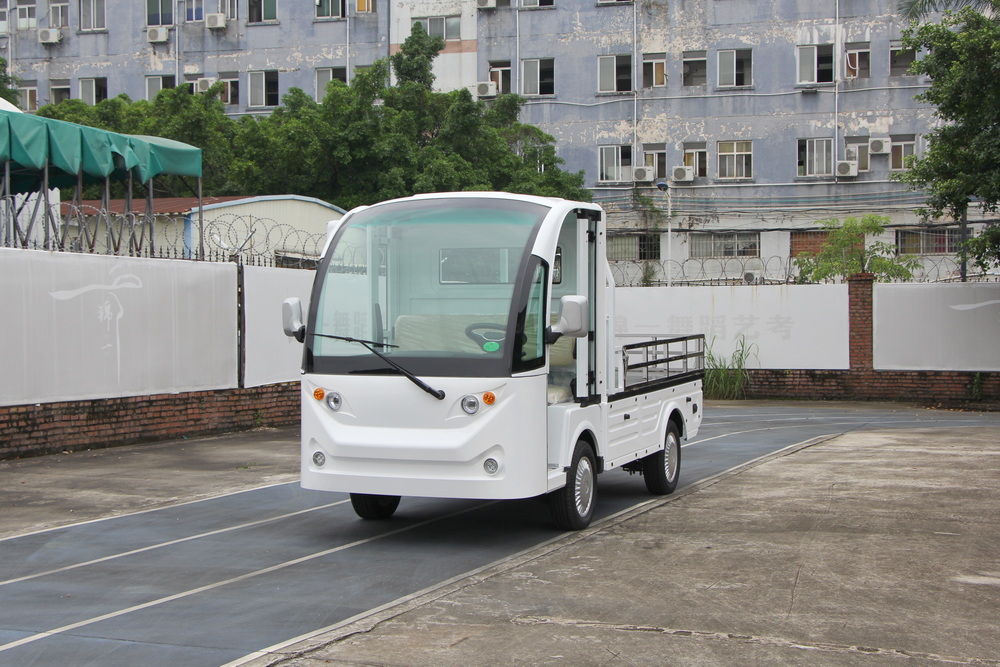
Before comparing factories, define whether the project requires:
- A road-legal delivery van.
- A low-speed cargo vehicle.
- A vehicle for a private industrial site.
- A special-purpose converted commercial vehicle.
For EU-category road vehicles, the approval framework covers whole vehicles as well as relevant systems and components. The applicable route must match the product, not merely the wording in a supplier's brochure.
Avoid vague requirements such as "premium steel" or "heavy-duty chassis." Instead, request a design-specific materials schedule.
A procurement specification can require:
| Area | Evidence to request |
|---|---|
| Structural materials | Material designation, thickness, mechanical-property requirements, and traceable inspection records |
| Welded assemblies | Approved drawings, process controls, inspection criteria, and repair procedures |
| Corrosion protection | Surface preparation, coating system, coverage checks, and agreed validation results |
| Cargo floor | Defined loading conditions, attachment details, and durability evidence |
| Electrical installation | Harness specifications, protection arrangements, connector identification, and test records |
| Production release | Vehicle identification, final inspection results, and configuration records |
These are proposed purchasing requirements, not claims that every listed manufacturer already supplies them.
For safety-critical structures, the objective is to verify the engineered design—not to replace the manufacturer's design with an arbitrary material grade.
For road-going commercial vehicles, a generic CE claim does not replace the applicable vehicle-approval process.
RoHS also requires careful interpretation. Directive 2011/65/EU excludes means of transport for persons or goods, subject to its stated exception for certain electric two-wheel vehicles. Therefore, a whole electric cargo van should not be described as road-legal simply because a supplier presents a RoHS report.
Separate equipment supplied with a vehicle may require its own assessment. Ask the supplier and destination-market specialist to identify which rules apply to each item.
UN Regulation No. 100 addresses electric-powertrain and rechargeable energy-storage safety for relevant road-vehicle categories. Its battery provisions include tests addressing stresses and hazards associated with vehicle use.
Battery transport testing is a different issue: UNECE materials separately reference the Manual of Tests and Criteria, subsection 38.3, for lithium battery transport testing. One document should not be used as a substitute for the other.
Request a document matrix connecting each certificate or test report to the battery, vehicle variant, intended market, and shipping arrangement.
A useful preventive measure is a contractually controlled bill of materials.
Identify safety- and performance-critical parts, approved alternatives, and the process for authorizing substitutions. Compare production records with the approved sample before shipment.
This is more reliable than accepting "equivalent quality" without part numbers or technical evidence.
MAXUS and the reported JAC SUNRAY PRO specifications use combined WLTP figures. Buyers should retain the test-cycle label whenever quoting or comparing range.
For final acceptance, propose route testing that records payload, speed profile, ambient conditions, accessory use, starting charge, ending charge, and energy consumption. This evaluates the intended application rather than treating brochure range as a guaranteed daily operating result.
Separate the schedule into engineering approval, component availability, production, inspection, and freight booking.
Ask what starts the lead-time clock. A delivery promise should state whether it depends on deposit receipt, design freeze, approval completion, or another milestone.
Define responsibility for diagnosis, replacement parts, freight, local labor, and major battery repairs.
The practical question is not only how long the warranty lasts, but how a disabled vehicle returns to service.
The most useful insider-style safeguard is configuration control.
A sample can look correct and operate well while still differing from the vehicle variant covered by the approval documents. This is not an allegation against the listed manufacturers. It is a procurement risk that follows directly from the importance of production conformity.
EU approval rules require vehicles to conform to the approved type. They also address changes to approved characteristics and require scrutiny of modifications made during multi-stage construction.
Before approving the sample, connect these five records:
1. The sample's vehicle identification.
2. Its complete specification and bill of materials.
3. The applicable approval documents.
4. The final production configuration.
5. Any conversion or modification authorization.
A battery, body, seating, or equipment change should trigger an engineering and compliance review—not merely an updated sales quotation.
This helps prevent a successful sample evaluation from creating false confidence in a later, differently configured shipment.
Use the legal company name consistently across contracts, certificates, invoices, and bank-account documentation.
During a factory visit or independent audit, request access to the proposed model's production process, inspection records, traceability system, and engineering-change procedure.
For BorCart, a factory tour and sample order are explicitly offered services, giving buyers a published route into this qualification process.
A practical sourcing plan is:
1. Define the operating requirement and destination market.
2. Review the compliance and technical document package.
3. Approve the sample specification.
4. Test the sample against written acceptance criteria.
5. Close defects and freeze the configuration.
6. Inspect an initial production batch before scaling.
Assign responsibility for each stage and retain signed records of changes.
Ask a qualified freight forwarder and customs adviser to confirm the shipping arrangement for the exact vehicle and battery configuration.
The logistics package should address handling, securing, dimensions, transport documentation, insurance, destination charges, and import eligibility.
Do not assume that a container-loading proposal proves road-registration eligibility. Shipping acceptance and vehicle approval are separate checks.
The right electric cargo van manufacturer depends on the application and commercial model.
BorCart merits investigation for customization-led electric cargo and utility-vehicle projects, particularly where a smaller brand needs samples and OEM/ODM development. MAXUS offers an established electric commercial-van range. Farizon presents a dedicated electric-platform approach. JAC combines commercial-vehicle heritage with new electric-van development. Foton offers electric vans within a broader commercial-vehicle portfolio.
For a productive first enquiry to Guangzhou BorCart Electric Vehicle Co., Ltd., provide the destination country, intended road or private-site use, required payload, cargo dimensions, daily operating distance, charging conditions, customization requirements, and expected order volume.
Request a model-specific proposal covering the technical specification, sample process, production MOQ, available manufacturing schedule, compliance documents, and after-sales arrangements. That creates a stronger basis for a long-term partnership than a price-only enquiry.
Search the legal company name or certificate number in IAF CertSearch. Review the standard, status, scope, covered locations, issuing certification body, and accreditation details.
Check that the certificate covers the actual manufacturing site and activity. If the record is absent or inconsistent, seek direct confirmation from the issuing certification body rather than treating a PDF as conclusive evidence.
Not by itself.
For vehicles within the scope of the EU road-vehicle approval framework, registration eligibility depends on the applicable approval route and vehicle documentation. RoHS excludes means of transport for persons or goods, subject to its specified exception. Neither a generic CE statement nor a RoHS report should be accepted as whole-vehicle road approval.
Treat the change as an engineering and compliance event.
Request a documented review covering specification, integration, validation, and approval implications. EU rules require manufacturers to inform the approving authority of relevant changes to an approved vehicle type so continued compliance can be assessed.
Require the manufacturer or approved converter to document the completed vehicle's mass and loading limits.
Make completed-vehicle weighing and configuration-specific acceptance part of the purchasing plan. For multi-stage EU approval, modifications must be checked so they do not invalidate previously approved systems or components.
Do not base the final purchasing decision solely on the unmodified van's advertised maximum payload.
No such universal conclusion is supported by the reviewed sources.
BorCart explicitly publishes OEM/ODM services. MAXUS, Farizon, JAC, and Foton publish branded commercial-vehicle offerings, but this review does not establish unrestricted private-label access for all four.
Ask separately about trademark rights, vehicle identification, approval-holder responsibilities, territory restrictions, tooling ownership, and minimum project volume.
- China Association of Automobile Manufacturers — industry statistics and reporting: [https://en.caam.org.cn/Index/lists/catid/3.html] [en.caam.org]
- China Daily — January 2026 report presenting CAAM's full-year 2025 production, sales, and export figures: [https://global.chinadaily.com.cn/a/202601/19/WS696d89eba310d6866eb34725.html] [global.chinadaily.com]
- International Energy Agency — Chinese domestic car sales and exports, 2025–Q2 2026: [https://www.iea.org/data-and-statistics/charts/domestic-car-sales-and-exports-from-china-2025-q2-2026] [iea]
- Guangzhou BorCart — company profile, manufacturing claims, quality processes, and OEM/ODM services: [https://www.borcart.com/aboutus.html] [borcart]
- SAIC MAXUS — company overview: [https://en.saicmaxus.com/about.shtml] [en.saicmaxus]
- SAIC MAXUS — eDELIVER 9 specifications: [https://en.saicmaxus.com/car/edeliver9.shtml] [en.saicmaxus]
- SAIC Motor — 2024 commercial-van safety-assistance ratings: [https://www.saicmotor.com/english/latest_news/maxus/60188.shtml] [saicmotor]
- Jameel Motors — Farizon founding date, SV development, and UK launch information: [https://jameelmotors.com/en/news/jameel-motors-to-launch-geely-farizon-sv-electric-van-in-the-uk/] [jameelmotors]
- JAC Motors — international product portfolio: [https://jacen.jac.com.cn/] [jacen.jac.com]
- JAC UAE — company history: [https://jacuae.com/history.html] [jacuae]
- China Trucks — reported SUNRAY PRO launch specifications: [https://m.chinatrucks.org/news/11698.html] [m.chinatrucks]
- Foton Motor — official company overview: [https://www.fotonmotor.com/about-foton.html] [fotonmotor]
- Foton — eVIEW published product information: [https://foton-global.com/product/emobility/eview.html] [foton-global]
- EUR-Lex — Regulation (EU) 2018/858; consult the current consolidated version for an actual procurement project: [https://eur-lex.europa.eu/eli/reg/2018/858/oj/eng] [eur-lex.europa]
- EUR-Lex — Directive 2011/65/EU and RoHS scope exclusions: [https://eur-lex.europa.eu/eli/dir/2011/65/oj/eng] [eur-lex.europa]
- UNECE — UN Regulation No. 100, Revision 3: [https://unece.org/transport/documents/2022/03/standards/regulation-no-100-rev3] [unece]
- IAF CertSearch — certificate status, scope, and issuer verification: [https://www.iafcertsearch.org/services/certificate-search] [iafcertsearch]


