


Views: 299 Author: BorCart Publish Time: 2026-10-23 Origin: Site


Content Menu
● Start Electric Cargo Vehicle Customization with the Operating Requirements
>> Specify the Hardest Normal Working Day
● Cargo Box Customization: Match Capacity with Loading Efficiency
>> Define Internal Dimensions and Door Openings
>> Compare Cargo Body Materials by Application
>> Design Doors and Restraints Around Daily Work
● Seating Customization: Balance Crew Requirements and Cargo Space
>> Evaluate Comfort Through the Work Cycle
● Battery Customization: Select Energy Capacity for the Actual Route
>> Compare Complete Battery Systems
>> Build a Transparent Range Estimate
>> Plan Charging Alongside Battery Capacity
● Vehicle Configuration: Review the Entire Loaded System
>> Understand What Customization Does to Payload
● Three Practical Steps for a More Reliable OEM Project
>> 1. Create a Configuration Matrix
>> 2. Test a Representative Prototype
>> 3. Control Production Changes
● Branding and After-Sales Support for Overseas Buyers
● Request a BorCart OEM Configuration Review
>> Can an Electric Cargo Vehicle Be Customized for Both People and Goods?
>> How Do I Choose the Right Cargo Box Size?
>> Is Lithium Always Better Than Lead-Acid?
>> Can a Larger Battery Guarantee Longer Working Range?
>> Does OEM Customization Include Branding?
>> Are Customized Cargo Vehicles Automatically Road Legal?
>> What Should Buyers Approve Before Mass Production?
Electric cargo vehicle customization should begin with the job the vehicle must perform—not simply its appearance. For overseas brands, wholesalers, and manufacturers, the right cargo box, seating layout, battery system, and vehicle configuration determine whether an OEM electric cargo van fits the intended operation.
A vehicle carrying maintenance tools around a factory has different priorities from one transporting parcels, hotel supplies, or bulky equipment. Loading access, passenger requirements, charging availability, and operating conditions all influence the specification.
At BorCart, our electric vehicle range includes cargo vans and utility vehicles, with OEM customization options covering battery capacity, motor specifications, body colors, branding, and selected functional features. Availability depends on the platform and project.
This guide explains how to turn those options into a clear purchasing brief—and how to evaluate a customized electric cargo vehicle before committing to production.
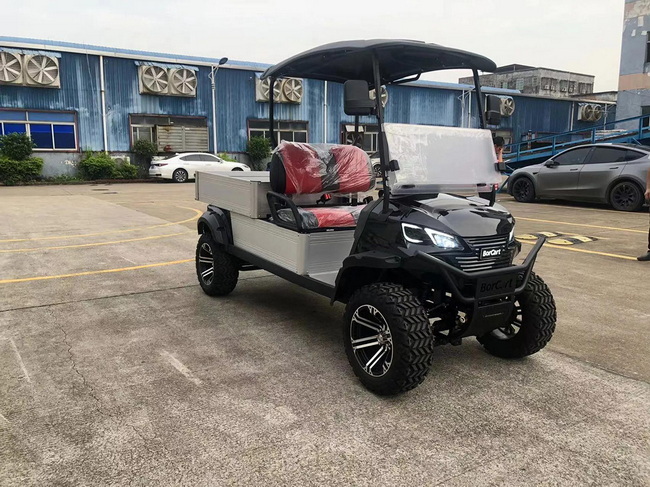
Before comparing components, define the working environment. "Cargo van" alone does not describe the route, load, or vehicle category sufficiently.
Our recommendation is to prepare a short operational profile covering:
- Typical and maximum cargo weight.
- Package dimensions and loading frequency.
- Daily distance and operating hours.
- Passenger numbers and carried equipment.
- Slopes, surface conditions, and turning restrictions.
- Climate, storage conditions, and charging access.
- Intended country and permitted operating locations.
Distinguish between a vehicle intended for controlled-site use and one intended for public-road operation. Do not assume that an enclosed body, lights, or a particular product name establishes registration eligibility.
Ask for documentation applicable to the exact vehicle configuration and destination market. Resolve that question before developing expensive bodywork or ordering a fleet.
Average conditions can hide operational problems. A lightly loaded demonstration vehicle may perform differently from the production configuration on a busy shift.
Describe the most demanding day that occurs regularly: the heaviest expected load, longest route, busiest loading schedule, and most challenging seasonal conditions.
That becomes the baseline for configuration discussions and prototype testing.
The cargo box affects more than storage volume. It influences loading time, vehicle weight, cargo protection, and access to individual items.
For a custom electric cargo van, usable space matters more than external dimensions.
Provide drawings or measurements of the actual goods. Include pallets, containers, carts, and packaging—not only the products inside them.
Specify:
- Clear internal length, width, and height.
- Door-opening dimensions.
- Loading-floor height.
- Space needed for handling equipment.
- Any wheel-arch or structural intrusions.
- Required access from the rear or sides.
A box may have enough theoretical volume but still reject a large container because the doorway is too narrow. Likewise, shelving can improve organization while reducing usable clearance.
Check the complete loading path before approving the layout.
BorCart's published cargo range includes iron-body and stainless-steel-box configurations. Material selection should follow the working environment and approved design rather than appearance alone.
| Cargo body consideration | Questions to resolve |
|---|---|
| Steel or iron construction | What coating, corrosion protection, and finished body weight are specified? |
| Stainless steel construction | Which grade and surface finish suit the cleaning and exposure conditions? |
| Alternative lightweight construction | Can the chosen platform support the proposed structure and repair method? |
| Insulation or special lining | How much internal space and payload allowance will it consume? |
Request material specifications, not just descriptions such as "heavy-duty" or "premium."
For wet environments or frequent cleaning, discuss joints, drainage, seals, and coating durability. For specialist cargo, define the required protection and validation separately.
Rear doors can suit bulk loading. Side access can reduce unnecessary unloading when operators need several items at different stops.
Evaluate hinges, latches, opening angles, seals, and clearance around nearby vehicles.
Also specify load-restraint provisions. Shelving, partitions, and tie-down points should be reviewed together with the intended cargo distribution—not added as an afterthought.
Seating decisions influence vehicle layout and operating capacity. An additional seat may support a maintenance team, but it can also occupy space needed for tools or deliveries.
Start with the normal crew requirement.
Ask whether the vehicle needs:
- A driver-only arrangement.
- A driver and passenger seat.
- Additional crew capacity.
- A separated passenger and cargo compartment.
Treat each seating arrangement as a configuration requiring engineering review. Do not assume that seats can be added without implications for mounting, occupant protection, vehicle classification, or load limits.
A seat that feels comfortable during a brief demonstration may be less suitable for repeated entry and exit throughout a shift.
Assess access height, foot space, visibility, seat adjustment, and the position of frequently used controls.
For upholstery, define practical requirements such as cleaning methods, abrasion resistance, and exposure to moisture.
Where applicable, confirm the restraint system, mounting arrangement, and documentation for the intended market.
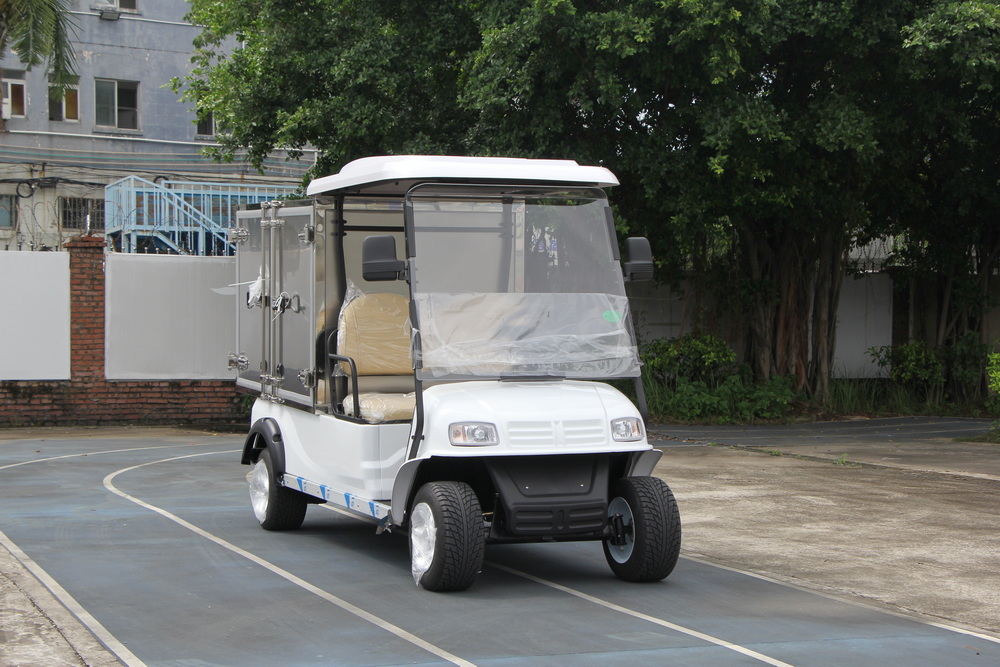
Battery selection should support the working schedule, not merely produce an attractive advertised range.
Electric vehicle range varies with temperature, driving behavior, speed, gradients, and carried load. Cabin heating or cooling can also consume energy.
BorCart publicly lists lead-acid and lithium battery customization options. Buyers should request the specification and operating requirements of the actual proposed battery system.
Avoid choosing solely by chemistry label or amp-hour rating.
Compare:
- Nominal voltage and energy capacity.
- Usable energy under stated conditions.
- Battery-system weight.
- Approved charging equipment.
- Temperature-related operating limits.
- Maintenance requirements.
- Warranty terms and exclusions.
- Replacement availability and service support.
Capacity expressed in amp-hours is not directly comparable across different voltages. Ask for energy capacity in kilowatt-hours and clarification of whether the figure is nominal or usable.
Battery-life expectations should also include the supplier's stated operating conditions. A general lifespan claim is not a substitute for a project-specific warranty.
A useful planning relationship is:
Estimated route range = usable battery energy ÷ route energy consumption.
For illustration only, a vehicle with 15 kWh of usable energy consuming 0.15 kWh per kilometer would have a calculated range of 100 kilometers before an operating reserve.
This is not a BorCart performance specification.
Measured route consumption is preferable to a generic assumption. It should reflect the selected body, payload, tires, accessories, and driving conditions.
A larger battery does not automatically solve an unsuitable charging schedule.
Confirm the available power supply, charger input requirements, connector arrangement, parking location, and time between shifts.
Request charging-time information for the intended starting and finishing charge levels. Charging behavior can change near a full battery, so a simple energy-divided-by-power calculation may not describe the complete session.
For cold climates, ask whether the platform provides approved battery-temperature management or preconditioning. Do not assume features available on larger road vehicles are included on a compact utility platform.
Motor power, brakes, suspension, tires, and the cargo body must work as a coordinated system.
Specify the required operating speed and loaded route. Where slopes are involved, distinguish between a short incline and sustained climbing under load.
Ask the manufacturer to evaluate:
- Motor and controller compatibility.
- Loaded climbing requirements.
- Braking performance.
- Suspension suitability.
- Tire load capacity and ground conditions.
- Ground clearance and turning space.
- Accessory electrical demand.
Accessories such as work lights, refrigeration equipment, or powered handling devices require separate review. Their weight and energy consumption must be included in the final specification.
Payload is not simply the amount of goods that fits inside the box.
A practical preliminary check is:
Available cargo allowance = permitted loaded vehicle mass − configured vehicle mass − occupants − other carried equipment.
Confirm how the manufacturer defines each figure. The final design must also respect axle, tire, structural, and other applicable limits.
A heavier cargo body, extra seats, or additional equipment can reduce the remaining cargo allowance. Ask for the payload of the finished configuration, not only the base platform.
A structured brief prevents important details from being lost across emails.
| Specification area | Information to provide |
|---|---|
| Operating environment | Destination, route type, surfaces, climate |
| Cargo | Weight, dimensions, handling method |
| Body | Internal dimensions, doors, materials |
| Seating | Crew size, access, upholstery |
| Battery | Shift distance, charging window, temperature |
| Performance | Speed, slopes, loaded duty cycle |
| Branding | Colors, artwork, label requirements |
| Support | Manuals, parts, warranty expectations |
Separate essential requirements from preferred options. This helps identify what can use an existing platform and what needs additional development.
A sample should represent the intended production configuration closely enough to reveal operational issues.
Prepare an agreed test plan covering:
1. Loaded dimensions and vehicle weight.
2. Cargo loading and unloading.
3. Route performance and energy use.
4. Braking and handling under agreed conditions.
5. Charging during the actual available window.
6. Door, latch, and accessory operation.
7. Operator access and visibility.
Record the load, route, weather, and charging conditions. A range result without those details is difficult to interpret.
Set acceptance criteria before testing rather than debating them afterward.
After approving the prototype, establish a signed specification package.
Include the approved drawings, component list, battery and charger identification, color references, labels, and inspection requirements.
Agree how substitutions and design changes will be proposed and approved. A seemingly minor replacement can affect fit, servicing, or performance.
For repeat orders, retain revision numbers so both parties know which configuration is being manufactured.
Branding should be consistent, durable, and easy to reproduce.
BorCart lists Pantone/RAL color matching and customized logos among its OEM options. Provide approved artwork, placement drawings, finish requirements, and sample-approval expectations.
Discuss supporting materials as well:
- Operator and charging instructions.
- Illustrated spare-parts information.
- Maintenance schedules.
- Battery safety guidance.
- Diagnostic procedures.
- Warranty claim requirements.
For wholesalers and brands, service information supports the customer relationship after delivery. For manufacturers integrating components, clear interfaces and part identification can be equally important.
The strongest inquiry describes the operation—not just the desired vehicle.
Send BorCart your target market, cargo measurements, crew requirements, daily route, charging conditions, branding files, and estimated order quantity.
Request a proposed configuration, available options, applicable documentation, sample plan, quotation, and project-specific delivery schedule.
Before confirming production, agree on what will be supplied, how it will be tested, and which requirements remain subject to engineering approval.

Yes, where the selected platform supports an approved passenger-and-cargo arrangement. Confirm seating mounts, restraints, cargo separation, and the remaining load allowance for the finished configuration.
Measure the actual goods and handling equipment. Check internal clearance, door openings, and loading access. External box dimensions alone do not establish usable capacity.
There is no universal answer for every project. Compare the proposed systems by usable energy, weight, charging requirements, operating conditions, warranty, maintenance, and replacement support.
Additional usable energy can support longer operation, but achieved range still depends on load, temperature, speed, terrain, and accessories. Validate the completed vehicle on a representative route.
BorCart publicly lists customized logos and Pantone/RAL color matching. Confirm availability, artwork requirements, approval procedures, and costs for the selected model.
No. Product naming and visible equipment do not establish registration eligibility. Confirm the vehicle category and destination-specific requirements for the exact configuration before ordering.
Approve the final specification, drawings, component list, prototype results, inspection criteria, documentation, commercial terms, and change-control process.
1. [BorCart — Cargo Vans and OEM/ODM Customization]
Manufacturer-published source for cargo vehicle categories, iron and stainless-steel body options, battery customization, functional configurations, branding, and interior options. Published capabilities should be confirmed for the selected platform; they are not treated here as universal specifications. [borcart]
2. [U.S. Department of Energy, Alternative Fuels Data Center — All-Electric Vehicles]
Technical basis for the discussion of battery-electric operation and the effects of temperature, driving behavior, speed, heavy loads, and gradients on range. [afdc.energy]
3. [U.S. Department of Energy — Winterizing Your Electric Vehicle]
Published January 30, 2024. Supports the discussion of cold-weather preparation, preconditioning where available, and reduced charging power near full charge. Its general guidance does not establish that a particular BorCart model includes those features. [energy]
Background source on factors affecting battery life, including climate, charging patterns, chemistry, design, and thermal management. No generalized battery-life figure is presented as a BorCart warranty. [afdc.energy]


