


Views: 210 Author: BorCart Publish Time: 2026-09-22 Origin: Site


Content Menu
● Electric Cargo Cart vs. Electric Cargo Truck: The Core Difference
● When an Electric Cargo Cart Is the Better Choice
>> Best Applications for Electric Cargo Carts
>> Advantages of an Electric Cargo Cart
● When an Electric Cargo Truck Is the Better Choice
>> Best Applications for Electric Cargo Trucks
>> Advantages of an Electric Cargo Truck
● Compare the Route Before Comparing the Vehicle
>> Measure These Seven Operating Variables
● Payload Is Not the Same as Cargo Volume
>> Example: Two Businesses, Two Different Choices
● Battery, Range, and Charging: Use a Realistic Planning Method
>> Charging Strategy by Vehicle Type
● Safety, Compliance, and Market Access
>> Questions to Ask Before Importing
● Customization Priorities for OEM Buyers
>> Electric Cargo Cart Customization Options
>> Electric Cargo Truck Customization Options
● A Five-Step Selection Process
>> 1. What is the main difference between an electric cargo cart and an electric cargo truck?
>> 2. Can an electric cargo cart be used on public roads?
>> 3. How do I calculate the range I need?
>> 4. Is a larger battery always the best choice?
>> 5. Which vehicle is better for factories and industrial parks?
>> 6. Which vehicle is better for last-mile delivery?
>> 7. What information should I provide to an OEM manufacturer?
Choosing between an electric cargo cart and an electric cargo truck is not simply a question of vehicle size. It is a business decision involving payload, route conditions, charging access, operating cost, regulatory requirements, driver comfort, and the type of cargo being moved.
For overseas brands, wholesalers, fleet operators, and vehicle manufacturers, the best option depends on one central question: Where will the vehicle work, and what must it carry every day? An electric cargo cart is often the better choice for controlled sites and short, repeated routes. An electric cargo truck is generally the stronger choice for public-road logistics, larger payloads, enclosed cargo, and longer daily travel.
As a manufacturer of electric vehicles, cargo vehicles, and automotive components, BorCart has seen a clear pattern: buyers achieve better results when they select a platform around the real operating scenario—not the biggest battery, highest speed, or lowest initial quotation.

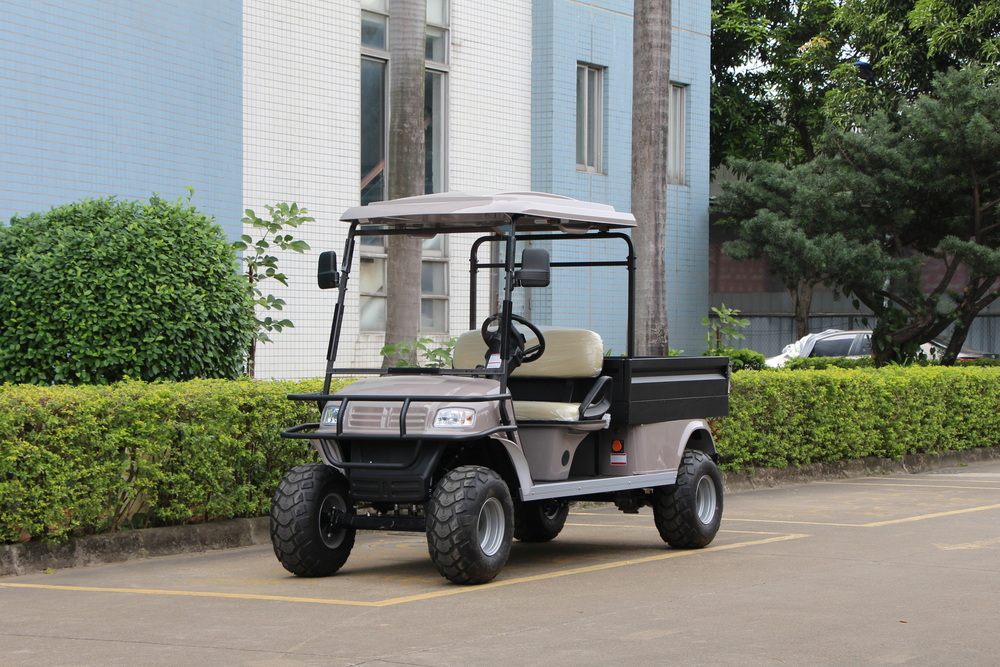
An electric cargo cart is usually a compact, low-speed electric utility vehicle designed for short-distance material transport. It may use an open cargo bed, enclosed box, flatbed, dump bed, or custom rear-body structure. Typical applications include resorts, factories, warehouses, campuses, airports, farms, industrial parks, and large private properties.
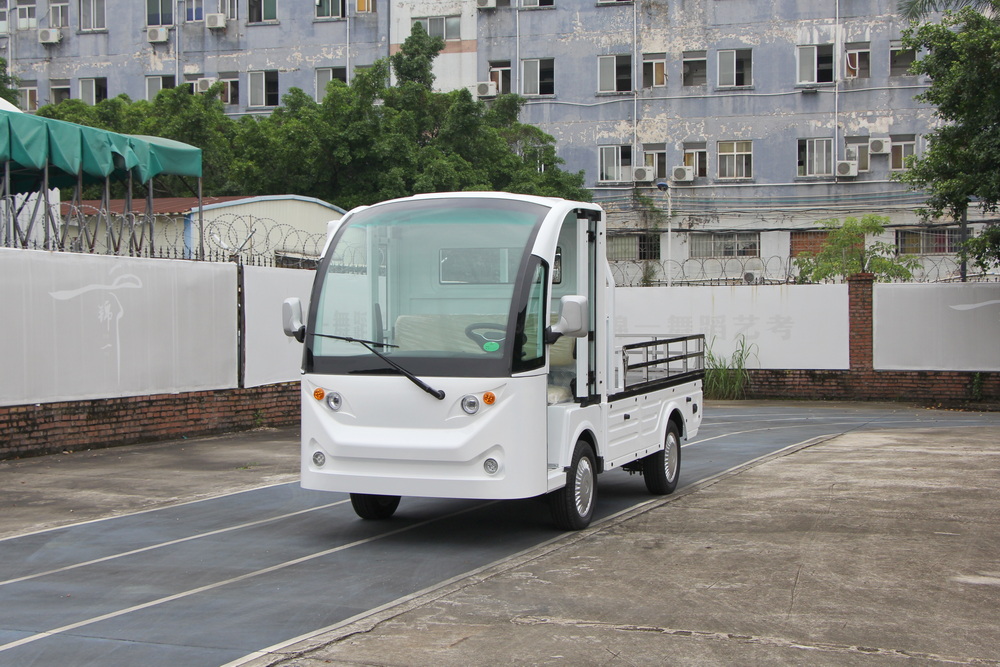
An electric cargo truck is a larger commercial electric vehicle designed for heavier loads, greater cargo volume, higher road speed, and more demanding delivery routes. Depending on the market, it may include an electric cargo van, box truck, pickup-style truck, light-duty truck, or purpose-built delivery vehicle.
The practical distinction is simple:
- Electric cargo carts prioritize maneuverability, short-route productivity, and lower operating complexity.
- Electric cargo trucks prioritize road capability, load capacity, cargo protection, driver comfort, and broader logistics coverage.
For many fleet buyers, the right answer is not one vehicle type for every job. It is often a two-tier fleet strategy: cargo carts for site movement and electric cargo trucks for external delivery.
| Factor | Electric Cargo Cart | Electric Cargo Truck |
|---|---|---|
| Typical operating environment | Campuses, factories, resorts, warehouses, private roads | Urban roads, commercial delivery routes, regional transport |
| Vehicle size | Compact | Medium to large |
| Maneuverability | Excellent in narrow spaces | Better for normal roads and loading bays |
| Typical speed | Low speed | Higher speed, depending on classification and market approval |
| Payload potential | Light to medium duty | Medium to heavy duty |
| Cargo space | Open bed, utility box, flatbed, small enclosed body | Enclosed cargo body, box body, van body, larger flatbed |
| Weather protection | May be open or semi-enclosed | Usually stronger cab and cargo protection |
| Charging requirement | Often lower battery capacity and simpler charging | Larger battery system and greater charging-planning needs |
| Upfront investment | Usually lower | Usually higher |
| Best use case | Repeated short-distance internal transport | Multi-stop delivery and public-road cargo operations |
| Customization focus | Cargo bed, seating, canopy, tires, utility accessories | Battery size, wheelbase, body type, cabin, telematics, charging |
An electric cargo cart is ideal when work happens within a defined area and travel distances are short. In these scenarios, compact dimensions can be more valuable than maximum range.
Electric cargo carts are commonly selected for:
- Factory material handling
- Hotel and resort supplies transport
- Warehouse-to-warehouse movement
- Airport ground support
- University and hospital campuses
- Golf communities and large residential sites
- Agricultural estates and greenhouses
- Industrial parks
- Theme parks and tourist attractions
- Maintenance teams carrying tools and spare parts
In these environments, the vehicle may travel the same route dozens of times per shift. The key requirement is often fast loading, easy turning, and reliable stop-start operation, rather than highway-level performance.
A compact electric cargo cart can offer several operational benefits:
- Tight turning radius for narrow lanes, aisles, and loading zones
- Lower energy consumption for short-range daily transport
- Lower noise around guests, patients, students, and workers
- Simpler daily charging when vehicles return to the same depot
- Lower floor height for frequent loading and unloading
- Flexible body configurations, including flatbeds, enclosed boxes, dump beds, and maintenance bodies
- Potentially lower acquisition cost than a road-capable cargo truck
A well-designed cargo cart can also reduce unnecessary vehicle movement. For example, a resort maintenance team may not need a full-size delivery truck to carry towels, linens, landscaping tools, or repair equipment across internal roads. A compact electric utility platform can complete those tasks with less space, lower energy use, and easier parking.
However, buyers should not force an electric cargo cart into an unsuitable role.
A cargo cart may be a poor fit when the operation requires:
- Regular travel on higher-speed public roads
- Long daily routes without reliable charging opportunities
- Large enclosed cargo volume
- High payloads or towing demands
- Strong weather protection for drivers and goods
- Advanced highway safety systems
- Long-distance customer delivery
The most common purchasing mistake is selecting a cargo cart because the initial price looks attractive, then using it for duties that require an electric cargo truck.
An electric cargo truck is usually the right choice when cargo must move beyond a controlled site. It is designed for businesses that need stronger road performance, larger capacity, and a more professional delivery format.
Electric cargo trucks are particularly suitable for:
- Last-mile urban delivery
- Retail replenishment
- Food and beverage distribution
- Parcel and e-commerce delivery
- Municipal service fleets
- Hotel and restaurant supply delivery
- Mobile service operations
- Medical and pharmaceutical logistics
- Construction material delivery
- Regional business-to-business transport
Electric delivery vans and cargo trucks can provide large enclosed cargo areas while offering better weather protection and road capability than compact cargo carts. Current commercial electric vehicles vary widely by configuration, but published market examples show that electric cargo vans may offer hundreds of cubic feet of cargo space, payload ratings in the thousands of pounds, and daily driving ranges designed for planned urban delivery routes.
An electric cargo truck typically delivers:
- Greater payload capacity
- More cargo volume
- Better road speed and stability
- Enclosed cargo protection
- Improved driver cabin comfort
- Stronger suitability for branded delivery operations
- More options for fleet technology, such as route management and telematics
- Higher towing potential, depending on vehicle class and configuration
For distributors and wholesalers, cargo protection can be a deciding factor. Electronics, packaged goods, spare parts, medical supplies, furniture, and finished consumer products often require an enclosed body, controlled loading access, and stronger protection from rain, dust, and theft.
A larger electric cargo truck also requires more planning. Buyers need to evaluate:
- Charging power available at the depot
- Daily route distance
- Payload effect on driving range
- Driver licensing requirements
- Local vehicle registration rules
- Parking and turning space
- Maintenance support
- Battery warranty expectations
- Body integration requirements
The vehicle itself is only part of the investment. Charging infrastructure, electrical capacity, installation, operational scheduling, insurance, and fleet training should all be included in the ownership model. Fleet cost evaluations increasingly consider acquisition, energy, maintenance, infrastructure, insurance, depreciation, and residual value—not only the purchase price.
The most effective procurement process starts with route data. Before requesting a quotation, record the actual operating conditions for at least two to four weeks.
1. Daily distance
Measure the total kilometers or miles driven per shift, not just the distance between two points.
2. Maximum payload
Identify the heaviest realistic load, including pallets, packaging, tools, passengers, and accessories.
3. Cargo volume
A large but lightweight load may require more cubic space rather than more payload capacity.
4. Number of stops
A route with 50 short stops creates different needs from a route with five long-distance deliveries.
5. Road conditions
Include slopes, uneven surfaces, narrow aisles, public roads, loading ramps, and weather exposure.
6. Charging window
Determine whether charging happens overnight, during breaks, between shifts, or at public chargers.
7. Legal operating area
Confirm whether the vehicle will stay on private property or travel on public roads.
This assessment prevents two costly errors: buying a vehicle that is too small for growth or paying for truck-level capability that the operation will never use.
Buyers often focus on payload only. That can lead to an incorrect vehicle selection.
Payload is the maximum weight that the vehicle can safely carry.
Cargo volume is the physical space available for goods.
A florist may need a large enclosed cargo body but only moderate payload. A beverage distributor may need high payload because bottled products are dense and heavy. A maintenance department may need a flatbed for equipment with irregular shapes. A hotel may need a utility box body for linens and cleaning supplies.
| Business Scenario | Main Requirement | Better Vehicle Choice |
|---|---|---|
| Resort housekeeping team | Multiple short trips, narrow pathways, light supplies | Electric cargo cart |
| Beverage distributor | Heavy loads, protected cargo, urban delivery | Electric cargo truck |
| Factory maintenance department | Tools, parts, internal roads, frequent stops | Electric cargo cart |
| E-commerce delivery company | Enclosed goods, public roads, route distance | Electric cargo truck |
| Agricultural estate | Uneven ground, utility equipment, short-range transport | Electric cargo cart with suitable tires and suspension |
| Parts wholesaler | Larger boxed items, customer deliveries, branded body | Electric cargo truck |
The correct decision comes from matching the vehicle body and chassis to the cargo profile—not simply selecting the vehicle with the highest rated capacity.
A published range figure is not a guarantee of daily usable range. Actual performance changes with payload, terrain, driving behavior, temperature, tire pressure, battery age, accessory use, and stop-start frequency.
For electric cargo vehicles, buyers should plan a working range buffer instead of using the full claimed range.
A practical planning formula is:
Required Daily Range=Planned Route Distance×1.25
For example, if a vehicle normally drives 60 km per day:
60×1.25=75 km
The buyer should therefore target a configuration that can reliably complete at least 75 km under expected working conditions. If the route includes steep slopes, heavy cargo, cold weather, or high auxiliary power use, a larger reserve may be necessary.
Electric cargo cart charging often works best with overnight AC charging at a centralized parking area. Because the battery pack is usually smaller, fleet operators may not need high-power charging equipment for every unit.
Electric cargo truck charging requires more detailed planning. Route length, battery size, return-to-base time, electricity demand, charger output, and possible future fleet expansion all matter. For predictable urban routes, depot charging can simplify operations. For longer or variable routes, charging opportunities must be planned before vehicles are deployed.
A strong fleet plan asks: Can every vehicle leave the depot fully prepared for its next shift without creating a charging bottleneck?
Legal classification is one of the most important differences between an electric cargo cart and an electric cargo truck.
A compact low-speed cargo vehicle may be suitable for private sites, but public-road operation can require specific lighting, mirrors, braking systems, windshields, seat belts, speed limitations, identification labels, and other compliance features. In the United States, low-speed vehicles are subject to Federal Motor Vehicle Safety Standard No. 500, which specifies minimum safety equipment for qualifying low-speed vehicles and limits maximum speed under its defined test conditions.
Requirements vary by country, state, province, city, and intended vehicle category. Importers should confirm the applicable rules before placing an order, especially when the vehicle will operate on public roads.
- Will the vehicle operate only on private land or on public roads?
- What safety equipment is mandatory in the destination market?
- Is a specific vehicle type approval required?
- Are there battery transport and documentation requirements?
- Does the destination market require a vehicle identification number format?
- What lighting, mirrors, tires, glass, and restraint systems are required?
- Is local registration available for the selected vehicle category?
- Are there restrictions on maximum speed, weight, or road access?
Do not treat compliance as an optional accessory. It should be part of the vehicle design from the first engineering discussion.
For brand owners and wholesalers, a cargo vehicle must fit the market and reinforce the brand. A standard platform can be a good starting point, but customization often determines commercial success.
- Open flatbed or enclosed cargo box
- Tipping dump bed
- Rear cargo rack
- Extended roof or weather enclosure
- Fold-down side panels
- Heavy-duty suspension
- All-terrain or industrial tires
- Custom seat layout
- Tool storage compartments
- Warning lights and work lamps
- Brand color and logo treatment
- Cargo van body
- Refrigerated body integration
- Box truck body
- Roll-up rear door
- Side access door
- Shelving and partition systems
- Liftgate compatibility
- Fleet telematics preparation
- Battery capacity selection
- Driver cabin upgrades
- Custom wheelbase and body dimensions
- Brand graphics and exterior identity
From an OEM perspective, the most valuable supplier is not merely one that can add a logo. The supplier should be able to discuss payload distribution, battery selection, body mounting, cable routing, service parts, destination-market requirements, and repeat-order consistency.
Use this process when deciding between an electric cargo cart and an electric cargo truck.
1. Define the route
Document daily distance, stop frequency, slopes, road type, and parking conditions.
2. Define the cargo
Record maximum weight, average weight, dimensions, loading method, and weather-protection needs.
3. Define the operating zone
Separate private-site movement from public-road delivery.
4. Define the charging plan
Confirm electrical capacity, parking layout, overnight dwell time, and future fleet growth.
5. Request a matched configuration
Ask suppliers for a recommendation based on actual duty cycle, rather than requesting only a price list.
This approach creates a more reliable specification and reduces the risk of receiving a vehicle that looks correct on paper but performs poorly in daily use.
Choose an electric cargo cart when your operation depends on compact size, repeated short routes, internal-site transport, lower-speed movement, and flexible utility bodies.
Choose an electric cargo truck when you need public-road capability, larger payload, enclosed cargo protection, longer daily routes, professional delivery performance, and stronger scalability.
For many commercial buyers, the best fleet solution is to assign each vehicle type to the work it does best. Use electric cargo carts for internal logistics and electric cargo trucks for outward delivery. This can improve productivity, reduce unnecessary operating cost, and create a clearer vehicle strategy as the business grows.
If you are developing a branded electric cargo vehicle range, preparing a wholesale program, or sourcing an OEM manufacturing partner, BorCart can help evaluate your duty cycle and develop a cargo solution around your required payload, body style, battery configuration, destination market, and brand identity.
An electric cargo cart is usually a compact, low-speed vehicle for short-distance work on private sites, campuses, resorts, warehouses, or industrial areas. An electric cargo truck is generally larger and better suited to public roads, enclosed cargo, higher payloads, and commercial delivery routes.
It depends on the local laws and the vehicle's approved classification. Some low-speed vehicles may be allowed on certain roads if they meet applicable safety requirements, while others are limited to private property. Buyers should confirm local registration and road-use rules before importing.
Start with the real daily route distance and add at least a 25 percent operating buffer. Also consider payload, hills, weather, battery aging, stop-start driving, and accessory power consumption.
No. A larger battery can increase weight, cost, charging time, and vehicle price. The best battery size is one that completes the duty cycle with a suitable reserve while supporting the target payload and budget.
An electric cargo cart is often better for internal factory and industrial-park transportation because it can move through narrow lanes, make frequent stops, and operate efficiently at lower speeds.
An electric cargo truck or electric cargo van is usually better for last-mile delivery because it can provide more enclosed cargo space, stronger road capability, better driver protection, and more suitable daily range.
Provide your target market, planned annual volume, vehicle application, daily distance, maximum payload, cargo dimensions, desired body type, charging conditions, branding requirements, regulatory needs, and preferred delivery schedule.
1. U.S. Environmental Protection Agency. "[SmartWay Heavy-Duty Truck Electrification Resources]."
2. Electronic Code of Federal Regulations. "[49 CFR § 571.500 — Standard No. 500; Low-Speed Vehicles]."
3. National Highway Traffic Safety Administration. "[NHTSA Statutes, Regulations, Authorities & Federal Motor Vehicle Safety Standards]."
4. Cornell Law School, Legal Information Institute. "[49 CFR § 571.500 — Standard No. 500; Low-Speed Vehicles]."
5. Green Car Journal. "[Commercial Vehicles]."
6. Mike Albert Fleet Solutions. "[EV Trucks and Vans Guide]."
7. 7Gen. "[How to Calculate EV Fleet Total Cost of Ownership]."


