


Views: 217 Author: BorCart Publish Time: 2026-09-12 Origin: Site


Content Menu
● Golf Scooter vs Traditional Cart at a Glance
● Why Pace of Play Matters to Golf Courses
● Golf Scooter Benefits for Solo Golfers
>> A More Direct Route Between Shots
>> Smaller Footprint, Easier Fleet Storage
>> A Different Customer Experience
● Traditional Golf Cart Advantages That Still Matter
>> Better for Two Golfers Sharing a Round
>> More Comfort for Long Rounds
>> Stronger Multi-Purpose Fleet Value
● Golf Scooter vs Traditional Cart: Detailed Performance Comparison
>> Maneuverability and Course Navigation
>> Battery Range and Charging Strategy
>> Maintenance and Operating Costs
● A Practical Fleet-Mix Strategy for Golf Courses
>> Example: A 72-Vehicle Golf Fleet
● How to Choose the Right Vehicle for Your Market
>> Choose a Golf Scooter When Your Customers Need
>> Choose a Traditional Golf Cart When Your Customers Need
>> Choose Both When Your Customers Want
● Key Design Priorities for an OEM Golf Scooter
● Final Verdict: Golf Scooter or Traditional Cart?
● FAQ
>> 1. Is a golf scooter faster than a traditional golf cart?
>> 2. Can golf scooters be used on every golf course?
>> 3. Are traditional golf carts better for golf resorts?
>> 4. What battery is best for a golf scooter or electric golf cart?
>> 5. Can a golf scooter carry a full golf bag?
>> 6. Should a golf course replace all traditional carts with golf scooters?
>> 7. Can distributors order customized golf scooters from China?
For solo golfers, the choice between a golf scooter and a traditional golf cart can directly influence comfort, course flow, operating costs, and the overall pace of play. While a conventional two-seat golf cart remains the familiar choice for most clubs, a single-rider electric golf scooter is becoming an increasingly practical option for facilities that want to move individual players around the course more efficiently.
For golf courses, resorts, distributors, and private-label vehicle brands, this comparison is not simply about choosing a smaller vehicle. It is about matching the right electric mobility solution to player behavior, terrain, fleet economics, safety expectations, and brand positioning. As an OEM manufacturer of electric golf carts, low-speed vehicles, and automotive components, BorCart understands that the ideal vehicle configuration depends on how golfers actually use the course—not just how the vehicle looks in a product catalog.
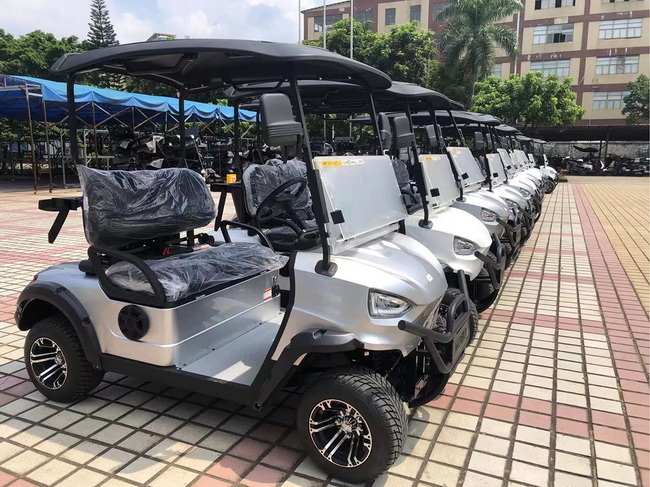
A golf scooter is generally designed for one golfer, one golf bag, and quick point-to-point movement. It is compact, lightweight, and often built around a standing or seated rider platform with a dedicated bag carrier.
A traditional golf cart is typically designed for two or more passengers, with room for golf bags, personal items, and sometimes rear-facing seats or utility configurations. It is versatile, familiar, and well suited to shared rounds, resort transport, maintenance operations, and multi-purpose fleet use.
| Comparison Factor | Golf Scooter | Traditional Golf Cart |
|---|---|---|
| Typical rider capacity | One golfer | Two golfers or more |
| Best use case | Solo rounds and fast individual movement | Paired rounds, group play, resorts, mixed-use fleets |
| Vehicle footprint | Compact | Larger |
| Golf bag capacity | Usually one bag | Usually two bags or more |
| Parking space required | Lower | Higher |
| Passenger comfort | Basic, individual-focused | Higher, especially for longer rides |
| Course traffic impact | Can reduce waiting behind shared vehicles | Efficient when two players share one cart |
| Customization potential | Strong for niche product positioning | Broad, with more body and seating options |
| Fleet versatility | Specialized | High |
| Familiarity for players | Growing but less universal | Very high |
The important point is simple: a golf scooter does not replace every traditional cart. Instead, it gives clubs and vehicle brands an additional format for solo golfers, quick rounds, premium mobility programs, and compact fleet operations.
Pace of play affects nearly every part of the golf-course experience. When groups move consistently, tee times remain on schedule, staff can manage the course more easily, and golfers are more likely to enjoy their round.
Slow play can create a chain reaction. One delayed group can affect several groups behind it, particularly during peak weekend periods, tournaments, resort guest sessions, and corporate events.
For solo golfers, mobility is often one of the most overlooked factors. A player using a shared golf cart may need to travel to one ball, wait while another player hits, move to the second ball, and then continue toward the green. That pattern is normal in a two-person round, but it is not always efficient for a golfer playing alone.
A dedicated golf scooter allows one golfer to follow a more direct route:
1. Drive to the ball.
2. Select the club.
3. Play the shot.
4. Return the club.
5. Continue toward the next shot.
This independent movement can help a solo golfer maintain a more natural rhythm. It may also reduce unnecessary stops when the golfer's ball is on the opposite side of the fairway from a playing partner.
However, faster movement does not automatically guarantee a faster round. Golf courses still need to consider group spacing, player skill level, cart-path rules, course traffic, marshal policies, and local safety requirements. The best results come when the vehicle format supports an organized pace-management strategy.
The primary appeal of a golf scooter is its single-rider efficiency. The vehicle is built around one player, so the golfer does not need to coordinate every movement with a partner.
On a busy course, this can be especially useful for:
- Individual players joining a group temporarily.
- Golfers playing nine holes after work.
- Members seeking a quick early-morning round.
- Practice-course users moving between holes.
- Tournament officials or course staff needing rapid mobility.
- Resort guests who prefer a more personal riding experience.
A compact electric golf scooter can make the ride feel more responsive and personal. Rather than sitting beside another golfer and waiting between shots, the rider has control over their own movement pattern.
Compared with a standard two-seat golf cart, a single-rider golf scooter generally requires less floor space in charging, storage, staging, and maintenance areas.
For clubs with limited cart-barn capacity, this matters. A facility may be able to add a smaller-format vehicle category without expanding its storage building. The result can be a more flexible rental fleet, especially when player demand varies between individual golfers, couples, foursomes, and resort groups.
For distributors and private-label brands, compact vehicle dimensions can also support container-loading efficiency, warehouse planning, and regional dealer storage.
Golfers increasingly expect more than basic transportation. They notice vehicle design, battery performance, phone storage, bag accessibility, ride stability, and convenience features.
A golf scooter can create a differentiated experience because it feels less like traditional passenger transport and more like a personal electric riding device. That distinction may appeal to younger golfers, tech-oriented players, resort guests, and club members looking for a modern alternative.
A well-designed model can include features such as:
- A secure golf-bag mounting system.
- Non-slip standing or seating surfaces.
- Durable all-terrain tires.
- LED lighting.
- USB charging ports.
- Cup holders and accessory trays.
- Adjustable handlebars or steering controls.
- Lithium battery options.
- Speed-control settings.
- Keyless start or smart-access integration.
The strongest designs do not add features only for appearance. They solve practical problems, such as keeping the golf bag stable, preventing clubs from rattling, giving the rider a secure grip, and allowing quick access to balls, tees, gloves, and rangefinders.
Despite the growing interest in golf scooters, the traditional golf cart remains essential for most golf operations. Its popularity is based on versatility, familiarity, and multi-player practicality.
When two golfers play together, one traditional cart can be more efficient than two single-rider vehicles. Both players can share the same vehicle, carry two golf bags, and move through the course as a unit.
This can reduce fleet complexity and help course staff manage vehicle traffic. A standard cart also provides more room for personal belongings, beverages, rain gear, towels, jackets, and additional accessories.
For a foursome, two conventional carts are still the standard operational model at many courses. Players understand how they work, and staff already know how to manage charging, parking, cleaning, and rental procedures.
Golf scooters prioritize agility. Traditional golf carts prioritize seated comfort and passenger capacity.
On a long 18-hole course, especially in hot weather, wet conditions, or hilly terrain, some golfers may prefer the stability and comfort of a full-size cart. Older players, golfers with limited mobility, and resort guests unfamiliar with standing-style vehicles may also find traditional carts easier to use.
A standard cart can offer:
- Padded seats.
- Wider footwells.
- More weather protection options.
- Larger windshields.
- Greater storage capacity.
- Easier passenger conversation.
- Multiple seating configurations.
- Better adaptability for non-golf transport.
For resorts and destination clubs, this flexibility is valuable. The same vehicle platform can serve golfers in the morning, transport guests in the afternoon, and support event logistics later in the day.
A traditional electric golf cart can be adapted into many configurations, including:
- Two-seat golf carts.
- Four-seat people movers.
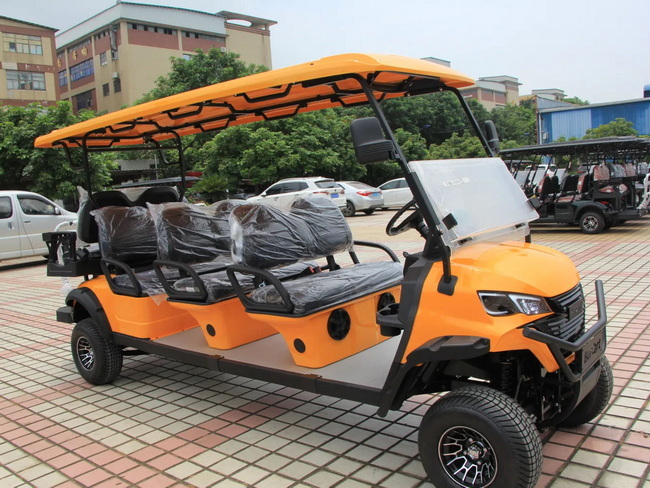
- Six-seat resort shuttles.
- Utility carts with cargo beds.
- Maintenance vehicles.
- Food and beverage service carts.
- Security patrol vehicles.
- Sightseeing vehicles.
This makes the traditional cart platform highly attractive for golf resorts, property developments, hotels, universities, industrial parks, and private communities.
BorCart's product positioning around golf carts, utility vehicles, sightseeing transport, and electric-vehicle components reflects this broader commercial demand for adaptable low-speed electric platforms.
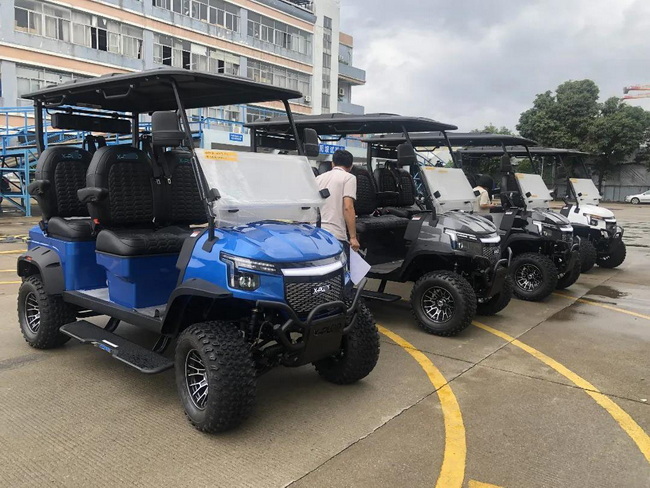
A golf scooter generally has the advantage in compact maneuvering. Its smaller body can be easier to position near a ball, park beside a tee box, or move through designated vehicle routes.
However, maneuverability should never be separated from safety. Golf courses have slopes, wet grass, uneven ground, bridges, curbs, bunkers, water hazards, and pedestrian areas. A compact vehicle must have the correct center of gravity, tire selection, braking response, speed settings, and rider instruction.
Traditional carts are larger, but they are familiar. Most golfers already understand basic cart handling, and clubs have established traffic patterns for them.
Best choice for maneuverability: Golf scooter, particularly for experienced solo riders on well-managed courses.
Best choice for universal familiarity: Traditional golf cart.
Both golf scooters and traditional electric carts can use lead-acid or lithium battery systems, although lithium configurations are increasingly attractive for fleet operators seeking lower maintenance, faster charging potential, stable voltage output, and longer service life.
The right battery capacity depends on more than vehicle size. Course operators should calculate real operating conditions, including:
- Total course distance.
- Elevation changes.
- Average daily rounds.
- Passenger and bag weight.
- Ambient temperature.
- Tire type and pressure.
- Stop-and-start frequency.
- Accessory power consumption.
- Charging time between rounds.
A compact golf scooter may consume less energy per trip because of its lower mass. Yet a traditional cart may deliver better overall fleet efficiency when it carries two golfers instead of one.
For example, if two golfers share one properly configured electric cart, the course may move two players using one vehicle charge cycle. If those same golfers each use a separate scooter, total fleet energy use and charging demand may increase—even if each scooter uses less power individually.
This is why fleet planning should focus on energy per golfer round, not just energy per vehicle.
Traditional carts have a long operating history at golf facilities. Parts, technician familiarity, cleaning procedures, tire replacements, charger systems, and maintenance routines are well established.
Golf scooters may have fewer large body panels and a smaller overall structure, but they also introduce specialized components such as compact bag mounts, scooter-style steering assemblies, deck surfaces, and rider-control systems.
For buyers considering an OEM golf scooter program, serviceability should be part of the product-development discussion from the beginning.
Ask the manufacturer about:
1. Battery warranty and charging-cycle expectations.
2. Motor and controller specifications.
3. Brake system maintenance intervals.
4. Replacement availability for high-wear components.
5. Waterproofing or dust-protection design.
6. Spare-parts packaging for overseas distributors.
7. Diagnostic support for dealers.
8. Custom branding options for replacement parts and accessories.
A low purchase price is not always the lowest lifecycle cost. A fleet vehicle should be evaluated based on reliability, part availability, technician training, battery management, warranty structure, and expected downtime.
The most effective answer is often not "golf scooter or traditional cart." It is a mixed fleet.
A club may keep traditional carts as the main fleet while adding a smaller number of golf scooters for specific player segments. This allows the facility to test demand without changing the entire operating model.
Imagine a golf club with 72 conventional carts during peak season. Instead of replacing every cart, it could introduce a pilot fleet such as:
| Fleet Category | Quantity | Main Purpose |
|---|---:|---|
| Two-seat traditional carts | 56 | Standard member and visitor rounds |
| Premium traditional carts | 8 | Resort guests, VIP rounds, events |
| Golf scooters | 6 | Solo golfers, fast rounds, member upgrades |
| Utility or staff vehicles | 2 | Course operations and maintenance |
This model gives the club useful data. It can track rental demand, average round time, rider feedback, charging patterns, maintenance needs, and revenue per vehicle type.
A pilot program is especially valuable because golf scooter demand can vary by region, player demographics, climate, terrain, local regulations, and course culture.
For brands, wholesalers, and golf-course buyers, product selection should begin with a clear customer profile.
- A dedicated vehicle for solo golfers.
- Compact storage and staging.
- A modern, premium, or differentiated mobility product.
- Quick nine-hole rounds.
- A lighter, more agile vehicle format.
- An alternative rental product for club members.
- A niche private-label vehicle for specialty golf markets.
- Two-person or multi-person capacity.
- A familiar rental experience.
- Resort and hospitality versatility.
- Greater passenger comfort.
- Larger storage capacity.
- Multi-purpose use beyond golf.
- A standardized fleet platform for a high-volume operation.
- Flexible fleet management.
- A premium membership upgrade option.
- A vehicle offering for different age groups and mobility preferences.
- Better market differentiation.
- A phased way to test single-rider electric mobility.
- A broader catalog for dealers and distributors.
For a private-label golf scooter project, the product should be designed around real golfer behavior rather than generic electric-scooter specifications.
The golf bag is central to the experience. A bag mount must keep the bag secure during acceleration, braking, turns, and movement over uneven course surfaces. Clubs should remain accessible, and the rider should not need to remove the bag repeatedly.
Other important engineering priorities include:
- Weight distribution: The rider, golf bag, battery, and drivetrain must be balanced to improve stability.
- Braking confidence: Smooth, predictable braking is essential, particularly on slopes and wet paths.
- Terrain capability: Tire tread, suspension options, ground clearance, and torque output should match intended course conditions.
- Speed control: Adjustable speed settings can support different facility rules and rider confidence levels.
- Weather durability: Electrical components, connectors, displays, and charging ports should be protected from rain, dust, and humidity.
- Easy cleaning: Golf-course fleets face mud, grass, sand, spilled drinks, sunscreen residue, and frequent daily use.
- Brand presentation: Color, logo placement, seat materials, wheels, lighting, dashboard design, and accessory packages should reinforce the customer's brand identity.
For international buyers, product development should also address destination-market standards, documentation, packaging, shipping requirements, and after-sales parts planning before mass production begins.
A golf scooter can accelerate the pace of play for solo golfers by giving them direct, independent movement between shots. It can also create a distinctive rental product, reduce storage requirements, and help clubs appeal to players seeking a more personal electric mobility experience.
A traditional golf cart remains the most versatile and widely suitable choice for paired rounds, resort operations, senior-friendly transport, group play, and mixed commercial use.
The best decision depends on the customer profile:
- Solo golfers and quick rounds: Golf scooter.
- Two-player rounds and resort guests: Traditional cart.
- Large clubs with varied customer needs: A mixed fleet.
- Distributors building a differentiated private-label range: Offer both formats.
For brands, wholesalers, and golf-course operators looking to develop a customized electric mobility lineup, BorCart can support OEM projects across electric golf carts, golf-focused mobility vehicles, utility vehicles, sightseeing transport, and related electric-vehicle components. Discuss your target market, desired configuration, battery platform, branding requirements, and expected order volume to build a product range that fits your customers and your commercial strategy.
A golf scooter is not always faster in top speed. Its main advantage is that a solo golfer can move independently between shots without coordinating with another rider. This may help individual players maintain a more consistent playing rhythm.
Not necessarily. Course operators need to consider terrain, cart-path rules, vehicle policies, rider training, local safety requirements, insurance arrangements, and the condition of fairways and paths before introducing golf scooters.
In many cases, yes. Traditional carts are generally better suited to resorts because they carry two or more people, provide more comfort, accommodate luggage or personal belongings, and can be used for non-golf guest transport.
The best battery depends on operating needs. Lithium batteries can offer lower maintenance, lighter weight, stable power delivery, and potentially longer service life, while lead-acid systems may remain suitable for buyers focused on familiar technology and lower initial cost.
A purpose-built golf scooter should be designed to carry one full golf bag securely. The bag rack, retaining straps, weight balance, and access angle should be tested carefully because the golf bag affects vehicle handling and rider convenience.
Usually, no. A gradual pilot program is often more practical. Traditional carts remain important for pairs, groups, older golfers, guests, and multi-purpose operations. Golf scooters can be introduced as a specialized option for solo riders and fast-play programs.
Yes. OEM buyers can commonly request custom branding, color schemes, seating or deck designs, wheel styles, battery configurations, lighting, accessories, packaging, and selected technical specifications. Buyers should confirm product standards, spare-parts support, quality-control procedures, and after-sales plans before placing production orders.
1. [BorCart — OEM Golf Carts and EV Components Manufacturer in China]
2. [BorCart — Golf Cart OEM Manufacturer News and Product Information]
3. [BorCart EV — Lithium Golf Cart Product Information]
4. [Made-in-China.com — Golf Cart Manufacturers and Suppliers Directory]
5. [LVTONG — Golf Cart OEM Manufacturing and Global Delivery]


