


Views: 210 Author: BorCart Publish Time: 2026-09-29 Origin: Site


Content Menu
● Electric Cargo Truck vs. Electric Cargo Van
>> Start with the cargo, not the vehicle
● Will the Truck Complete Your Routes?
>> Compare advertised and working range
● Can Your Depot Charge the Fleet?
>> Match charging to dwell time
>> Test the assumptions behind savings
● Is It Road-Legal in Your Market?
>> Review the complete vehicle
● How Should You Evaluate an OEM Supplier?
>> Ask for evidence before customization
● Run a Pilot Before a Fleet Order
>> Use a pass-or-revise decision
● Questions to Settle Before Ordering
>> How is an electric cargo truck different from an electric cargo van?
>> Is the advertised range enough to choose a truck?
>> Do I need fast charging for an electric delivery truck?
>> What affects electric cargo truck payload?
>> Are electric cargo trucks cheaper to maintain?
>> Can I import an OEM electric cargo truck for road use?
>> What should I send a manufacturer for an accurate quotation?
Before buying an electric cargo truck, define the work it must do—not just the range advertised on its specification sheet. For a commercial buyer, the key questions are whether it can carry the required load, complete routes in poor conditions, recharge within the available window, and operate legally in the destination market. It is also worth asking whether an electric cargo van would serve the same routes with less space and infrastructure demand.
At BorCart, we approach this as a vehicle-and-operation decision. A promising truck specification means little if the loaded vehicle cannot finish a winter shift, fit its loading bays, or obtain the approvals needed for registration. The following buying framework is designed for fleet operators, overseas brands, wholesalers, and manufacturers evaluating standard vehicles or an OEM program.

The word "truck" covers very different vehicles. A compact delivery truck, a medium-duty box truck, and a heavy-duty freight vehicle should not be assessed against the same route or charging assumptions. Before requesting quotations, establish the required vehicle class, body configuration, and operating environment.
| Buying question | Electric cargo truck | Electric cargo van |
|---|---|---|
| Typical advantage | Greater scope for large, heavy, or specialized cargo bodies | Enclosed cargo space in a more compact package |
| Best-fit work | Palletized deliveries, heavier loads, larger equipment, or body-specific tasks | Parcel delivery, service routes, and lighter urban distribution |
| Main constraint to investigate | Loaded weight, body integration, depot access, and charging power | Payload after fit-out, cargo dimensions, and access to the load |
| Procurement priority | Validate the complete vehicle, including its fitted body | Validate usable cargo space and payload after shelving or equipment |
These are selection principles, not guarantees about every model. A larger truck may carry more, yet cost more to purchase and occupy more depot space. A van may be easier to use on dense routes, yet unsuitable for a pallet, tail lift, or unusually heavy load. Compare actual configurations rather than relying on vehicle names.
List what drivers carry on an ordinary day and on the busiest day. Record the weight and dimensions of individual items, the number of delivery stops, and whether loading requires a forklift, ramp, or liftgate.
Then check the usable payload of the finished vehicle. Shelving, insulation, refrigeration equipment, tools, a liftgate, and other additions can reduce the weight available for goods. Cargo volume alone is not enough: a large empty box cannot solve a weight-limit problem.
For bulky but light goods, measure internal length, width, height, and door openings. For dense goods, prioritize allowable mass, axle loading, and load restraint. If deliveries involve frequent hand unloading, floor height and driver access can matter as much as maximum capacity.
An electric cargo truck should be sized for its hardest credible working day, not its average trip. Obtain route records before comparing batteries. Useful data includes daily distance, time at each stop, road speed, gradients, seasonal temperatures, cargo weight, and the time the vehicle returns to base.
Advertised range is a starting point, not a route promise. A truck's energy use can change with load, speed, terrain, weather, cab heating, and equipment powered by the vehicle. Two trucks with similar stated range may perform differently when one carries a heavier body or spends hours operating an auxiliary system.
Ask each supplier to state:
- The test method and vehicle configuration behind its range claim.
- The assumed payload, tires, speed, and ambient temperature.
- The battery's usable energy, rather than only its nominal capacity.
- Energy consumption data from a route resembling yours.
- How heating, cooling, and auxiliary equipment affect operation.
Cold-weather planning deserves particular care. Research on battery-electric vehicles shows that low temperatures and cabin heating can materially reduce range; the effect varies by vehicle design and conditions. Do not transfer a passenger-car test percentage directly to a cargo truck. Instead, require model-specific, loaded-route evidence or run your own winter pilot.
A fleet needs capacity for detours, traffic delays, missed charging opportunities, and battery aging. Set a minimum arrival charge based on your risk tolerance rather than planning every route to end near empty.
For example, if a route occasionally extends beyond its normal distance, test that longer route with a representative load and the heating or cooling system running. If the truck succeeds only when conditions are ideal, it is not yet a reliable match. It may need a different battery, a charging opportunity, or reassignment to a shorter route.
Charging must fit the operating schedule. A truck parked overnight has a different infrastructure requirement from one that returns briefly between two shifts. Before ordering vehicles, map when each truck arrives, how much energy it needs, and when it must leave again.
Ask the vehicle and charger suppliers to verify connector compatibility, supported charging power, and expected charging time over the battery-charge window your operation will actually use. A charger's headline output does not mean a truck can accept that power throughout a session.
Assess the depot as a complete system:
1. Calculate daily energy demand from representative routes and vehicle consumption.
2. Plot parking and departure times to identify trucks that must charge simultaneously.
3. Check electrical capacity with the site owner, electrical contractor, and utility.
4. Price the full installation, including equipment, cabling, civil works, permits, and potential upgrades.
5. Plan for failure, including charger maintenance, a backup charging option, and dispatch procedures.
Managed charging can stagger sessions rather than starting every vehicle at full power on arrival. For larger fleets, this may affect both the infrastructure design and electricity costs. Confirm the plan before vehicle delivery; a truck that is ready months before its depot is ready cannot deliver its expected value.
Power availability is only half the question. Trucks need room to park, connect safely, and leave without blocking other vehicles. Inspect charger reach, cable routing, turning space, pedestrian movement, and whether the chosen vehicle body changes access to the charging port.
If fleet expansion is likely, ask whether conduits and electrical capacity can be planned for later additions. Designing for future vehicles is often simpler than rebuilding a busy depot after launch.
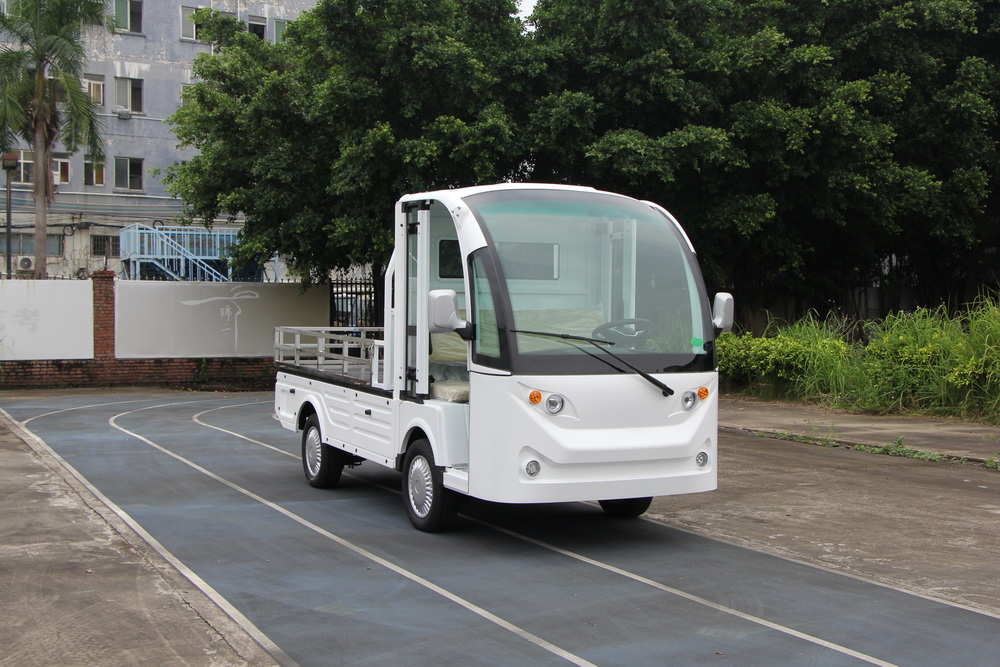
The lowest purchase quotation is not necessarily the lowest-cost fleet choice. Compare the electric cargo truck with a suitable electric cargo van and, where relevant, the existing diesel vehicle over the same service period.
A useful total cost of ownership estimate includes purchase and upfit costs, shipping and import costs, charging installation, electricity, maintenance, tires, insurance, financing, downtime, and expected resale value. Include the cost of any extra vehicle needed if one option cannot cover a long route or requires extended charging.
Electric vehicles generally have fewer routine powertrain maintenance tasks than combustion-engine vehicles. That does not remove the need to budget for tires, brakes, suspension, cooling-system checks, body repairs, chargers, and trained technicians. Battery repair terms also deserve close review.
Request written answers to these questions:
- What is covered by the vehicle and battery warranties, and for how long?
- Are replacement parts and diagnostic tools available in the destination market?
- Who pays for shipping, labor, and downtime during a warranty claim?
- What electricity tariff applies when the fleet will charge?
- Are estimated residual values based on evidence or simply assumed?
Run more than one financial scenario. A favorable case may use low electricity costs and high annual mileage. A conservative case should reflect higher installation costs, slower deployment, and less favorable utilization. The result is more useful than a single optimistic payback figure.
A vehicle suitable for private-site use is not automatically approved for public roads. Requirements vary by destination and vehicle category. Resolve classification and approval before committing to a design, particularly when a vehicle is being imported or fitted with a custom body.
For a European-market project, goods vehicles fall into regulatory categories based on maximum mass, and type-approval requirements apply to the vehicle and relevant systems. Other markets use different approval processes. Ask a qualified local specialist to confirm which rules apply to the precise configuration you intend to sell or operate.
Approval documents should match the finished truck, not just a base platform. Changes to the body, weight distribution, lighting, seats, or safety-related systems can affect what must be tested or documented.
Before placing an OEM order, request a compliance file covering the proposed vehicle category, applicable approvals, component documentation, and the party responsible for final approval. Confirm registration, insurance, and licensing requirements with local authorities or advisers. A supplier's general statement that a model is "road legal" is not a substitute for market-specific evidence.
For overseas brands and wholesalers, the decision goes beyond one vehicle's performance. You need a design that can be built consistently, supported locally, and documented for your customers. At BorCart, we see the most useful starting point as a detailed application brief: target market, route, payload, body layout, charging method, annual volume, and service expectations.
A supplier should be able to explain which features are standard, which need engineering changes, and which may alter cost, lead time, testing, or approval. Discuss battery and drivetrain options alongside the complete vehicle's weight, thermal management, and serviceability. Avoid choosing the largest battery by default if it reduces available payload without solving a real route problem.
For a branded or custom vehicle, clarify:
- Scope: Which components, body features, colors, branding elements, and software functions can change?
- Validation: What tests will be completed on the production-intent configuration?
- Quality: How are components identified, inspected, and traced across batches?
- Support: Which spare parts, manuals, training materials, and diagnostic resources are supplied?
- Commercial terms: What are the sample process, minimum order, production timeline, and warranty responsibilities?
If a feature is essential to your business case, put its acceptance criteria in writing. "Suitable for delivery use" is vague. A specified load, route, temperature range, and charging window can be checked.
A pilot is the strongest way to expose differences between a specification and daily work. Select a route that represents a difficult normal day, not an unusually easy demonstration. Use the intended body and equipment, load it realistically, and have regular drivers operate it.
Record departure and arrival charge, distance, energy used, payload, outside temperature, charger performance, loading time, and driver feedback. Repeat the test across different conditions where practical. A single successful trip is encouraging; consistent results are a better purchasing basis.
Set the pilot's pass conditions before it begins. They might include completing the longest required route above a minimum arrival charge, carrying the planned load within legal limits, recharging before the next shift, and fitting the depot and delivery sites.
If it misses a condition, identify the cause before changing specifications. The answer may be a revised route, a different body, a charging change, or a different vehicle class. Buying more battery capacity is not always the most effective fix.
Before signing a purchase or OEM agreement, bring the route study, depot plan, cost model, and approval file together. The truck should pass all four tests. Strong range cannot compensate for an unsuitable payload; a low quote cannot compensate for uncertain registration or unavailable local service.
If you are sourcing for an overseas brand or fleet, send BorCart your target market, vehicle class, payload, cargo dimensions, representative route, charging window, and expected order volume. We can use that brief to discuss an appropriate electric cargo vehicle configuration and the documentation your project will require. Any proposed specification should still be validated against your local rules and operating conditions.
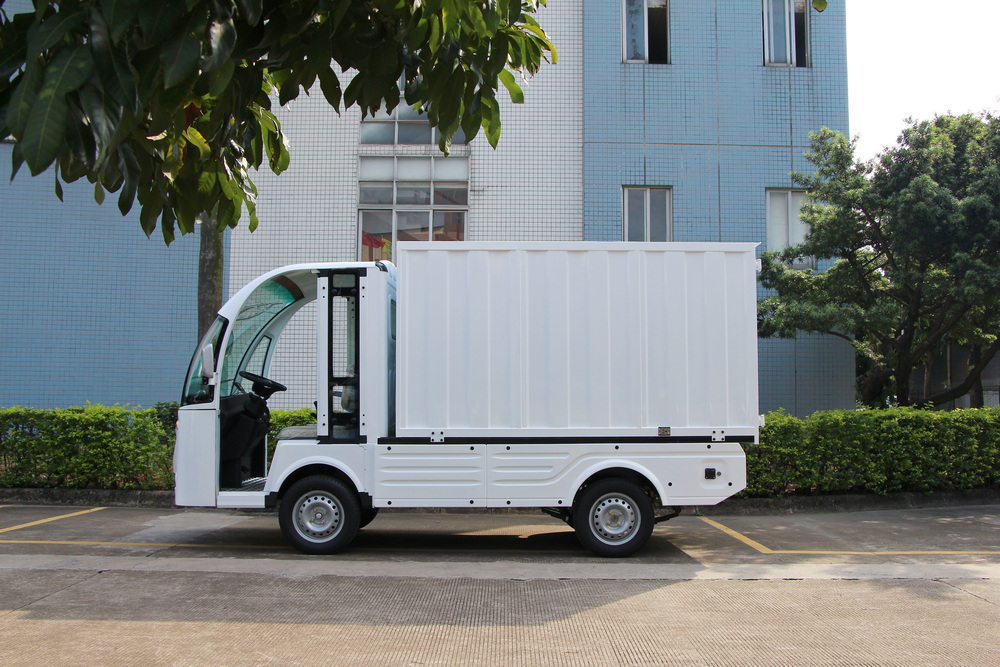
The practical difference is the job and configuration. A cargo van generally offers an enclosed, compact load space. A cargo truck can support different bodies and may be better suited to larger or heavier loads. Actual payload, dimensions, and legal classification must be checked model by model.
No. Compare range against a loaded route that includes real speeds, weather, terrain, and auxiliary equipment. Ask how the figure was measured, then verify the shortlisted vehicle in your own operation.
Not necessarily. A vehicle with a long overnight stop may meet its needs with slower depot charging. Short dwell times or multiple shifts may call for faster charging. Size the system using energy demand, available time, vehicle capability, and site electrical capacity.
The completed vehicle's mass matters. Battery size, body design, shelving, liftgates, and other equipment can all affect the weight available for goods. Confirm payload and axle limits for the final configuration, not an unfinished chassis.
They can require less routine powertrain maintenance than comparable combustion vehicles, but they still need inspections, tires, brakes, body maintenance, and qualified electrical service. Compare written service plans and warranties rather than assuming a fixed saving.
Potentially, but importability and registration depend on the destination market and exact vehicle. Confirm classification, approval, documentation, and any changes made to the finished vehicle before production or shipment.
Provide your target market, intended road use, required payload and dimensions, representative routes, operating temperatures, charging arrangements, customization needs, estimated volume, and service requirements. The clearer the brief, the easier it is to compare proposals on equal terms.
- U.S. Department of Energy, Alternative Fuels Data Center. "[Electric Vehicles for Fleets]." Fleet selection, route factors, charging, infrastructure, and supplier-support considerations. [afdc.energy]
- U.S. Department of Energy, Alternative Fuels Data Center. "[Maintenance and Safety of Electric Vehicles]." Maintenance differences, battery warranties, and safety considerations. [afdc.energy]
- U.S. Department of Energy, Alternative Fuels Data Center. "[Vehicle Cost Calculator]." Framework for comparing vehicle ownership costs using operating assumptions. [afdc.energy]
- U.S. Department of Energy. "[Impact of Cold Ambient Temperature and Extreme Conditions on Electric Vehicles]." Research on temperature, heating, and battery-electric driving range; findings should not be treated as truck-specific guarantees. [energy]
- National Laboratory of the Rockies. "[High-Power Medium- and Heavy-Duty Electric Vehicle Charging]." Charging interoperability, fleet charging data, and site-planning considerations. [nlr]
- European Parliament and Council. "[Regulation (EU) 2018/858]." European vehicle categories and the framework for type approval and market surveillance. [eur-lex.europa]


