


Views: 277 Author: BorCart Publish Time: 2026-09-30 Origin: Site


Content Menu
● Introduction: Why China—and Why Vehicle Class Comes First
● How These Suppliers Were Selected
>> Supplier Comparison: Capacity, MOQ and Certification Evidence
● Six Suppliers Worth Screening
>> 1. Guangzhou BorCart Electric Vehicle Co., Ltd. — Flexible Private-Site OEM
>> 2. SAIC MAXUS Automotive Co., Ltd. — Road-Going Van Range
>> 3. Farizon Auto — Modular Large-Van Engineering
>> 4. FOTON Motor — Commercial-Vehicle Breadth
>> 5. JAC Motors — Export-Oriented Urban Delivery Vans
>> 6. DFSK — Microvan Format and Distribution Network
● Buyer's Guide: From Quote to Shipment
>> Start With an Operating Specification
>> Audit the Materials and Process
>> Run a Prototype-to-Production Sequence
>> The Overlooked Production Trap
● Conclusion: Match the Factory to the Mission
● Five Difficult Procurement Questions
>> 1. How can I tell whether a factory's ISO certificate is still valid?
>> 2. Does a CE mark or a battery test report make the van road-legal in Europe?
>> 3. Can I compare two suppliers' range and payload figures directly?
>> 4. What must an OEM contract say about replacement parts and software?
>> 5. What if the factory offers a two-tonne cargo claim on a compact vehicle?
China is a logical starting point for buyers sourcing electric cargo vehicles. Its concentration of vehicle assembly, battery manufacturing, electric-drive components and tooling supports both established road-vehicle programmes and smaller application-specific builds. The International Energy Agency (IEA) estimates that China accounted for 70% of global electric-car production and more than 80% of battery-cell production in 2025. Separately, the China Association of Automobile Manufacturers reported 2.615 million Chinese new-energy-vehicle exports in 2025. Neither figure is a count of electric cargo vans; both describe the broader industrial ecosystem behind them.
For an importer, however, the first sourcing question is not "Which factory is cheapest?" It is "Where will the vehicle legally operate?" A compact, low-speed cargo vehicle intended for a resort, warehouse campus or industrial park is not interchangeable with a road-going delivery van. Motor power, payload claims, crash and electrical safety requirements, registration documents, charging interfaces and service obligations can differ substantially. In the EU, goods vehicles with a maximum mass not exceeding 3.5 tonnes fall within category N1 when the applicable classification criteria are met; market entry for road vehicles depends on the relevant vehicle-approval framework, not a generic product label.
This guide therefore compares six suppliers across two adjacent—but distinct—sourcing needs: configurable electric cargo vehicles for controlled environments, and homologated or potentially homologatable electric vans for public roads. The order is editorial, not a claim that one company leads the others in van sales. Guangzhou BorCart Electric Vehicle Co., Ltd. appears first because the article addresses private-label and flexible OEM projects; buyers seeking registered highway-capable vans should focus especially on the subsequent road-vehicle manufacturers. Each entry separates published evidence from details that still require a quotation or document review.
A credible shortlist starts with evidence that a company offers an identifiable electric cargo model, followed by checks that the actual legal manufacturer can build, document and support the configuration being purchased. We used five screening dimensions:
1. Product fit: Is there a documented cargo vehicle or electric van, and is its intended operating environment clear? A photograph of a box body is not proof of road approval.
2. Production and engineering: Can the company show its assembly location, engineering resources, component traceability, build records and capacity for the relevant model—not merely an overall corporate headcount?
3. Quality controls: Does it provide incoming-inspection records, in-process checks, end-of-line test sheets, corrective-action logs and a release process tied to each vehicle identification number or serial number?
4. Commercial predictability: Will it quote a written minimum order quantity (MOQ), prototype cost, tooling ownership, monthly allocation, engineering-change process and realistic lead time for the exact specification?
5. Market access and service: Can it supply destination-specific approval evidence, battery and shipping documentation, spare parts, diagnostic access and warranty procedures?
Public product pages and corporate descriptions support initial screening; they do not independently verify factory utilisation, model-specific monthly output, current certification scope or whether an unfamiliar buyer can obtain private-label production. Those points must be checked directly. The distinction matters particularly for BorCart: its published catalogue includes low-speed cargo configurations, while the road-going manufacturers below market larger delivery vans.
| Supplier and likely fit | Publicly visible capacity or scale evidence | Published model-specific MOQ | Certification or approval evidence to request |
|---|---|---|---|
| BorCart — custom low-speed and private-site cargo vehicles | Company reports four production lines and up to 10 containers of electric vehicles per day across multiple product categories; cargo-van-only vehicle capacity is not published. | Not published; request prototype and repeat-order thresholds in writing. | Ask for current factory management-system certificate, exact model test reports and destination-use approval; do not infer road legality from a cargo-van listing. |
| SAIC MAXUS — road-going compact-to-large vans | Established SAIC subsidiary with an electric-van product family; model-specific monthly factory allocation is not published on the cited pages. | Not published; dealer, fleet and private-label terms must be negotiated separately. | Ask for destination-market whole-vehicle type approval and a sample certificate of conformity (CoC) for the exact eDELIVER variant. |
| Farizon — modular large electric panel vans | Geely commercial-vehicle brand with an SV range offered in the UK; cited material does not establish an available OEM production slot. | Not published; clarify whether third-party branding is offered. | Request the market-specific approval, variant-level CoC, battery documentation and conversion limits. |
| FOTON — light commercial delivery fleets | Established commercial-vehicle manufacturer with a documented eVIEW van; published eVIEW page does not state monthly production capacity. | Not published; request a written per-configuration MOQ. | Request the applicable destination approval and supporting electric-safety and production-control records. |
| JAC Motors — urban-delivery and export programmes | Company reports eight Chinese production bases and 19 overseas knock-down facilities across the business, not dedicated M3EV output. | Not published; check whether the importer buys through JAC or an authorised regional channel. | Request the precise M3EV variant approval and country-specific registration documents. |
| DFSK — electric microvans and distribution-led projects | Brand reports operations in more than 70 countries/regions; no verified EC35-specific monthly output in the cited materials. | Not published; confirm channel and volume terms. | Request current approval for the exact EC35 version, manufacturing entity and local after-sales coverage. |
How to read this table: "Not published" does not mean "high MOQ" or "uncertified." It means no defensible number or approval status should be invented. Likewise, a multi-product container-shipping figure cannot be converted into cargo-van units per month without container mix, vehicle dimensions and utilisation records. A supplier's management-system certificate is not a substitute for approval of an individual vehicle model.
Founded: 2000, according to its company profile. Base: Guangzhou, Guangdong. Published markets: Its profile names customers in more than 30 countries, including the United States, Germany, France, the United Kingdom, Mexico, Thailand and Australia. Product emphasis: Golf carts, utility vehicles, sightseeing vehicles and low-speed cargo configurations, rather than a documented mass-market highway van platform.
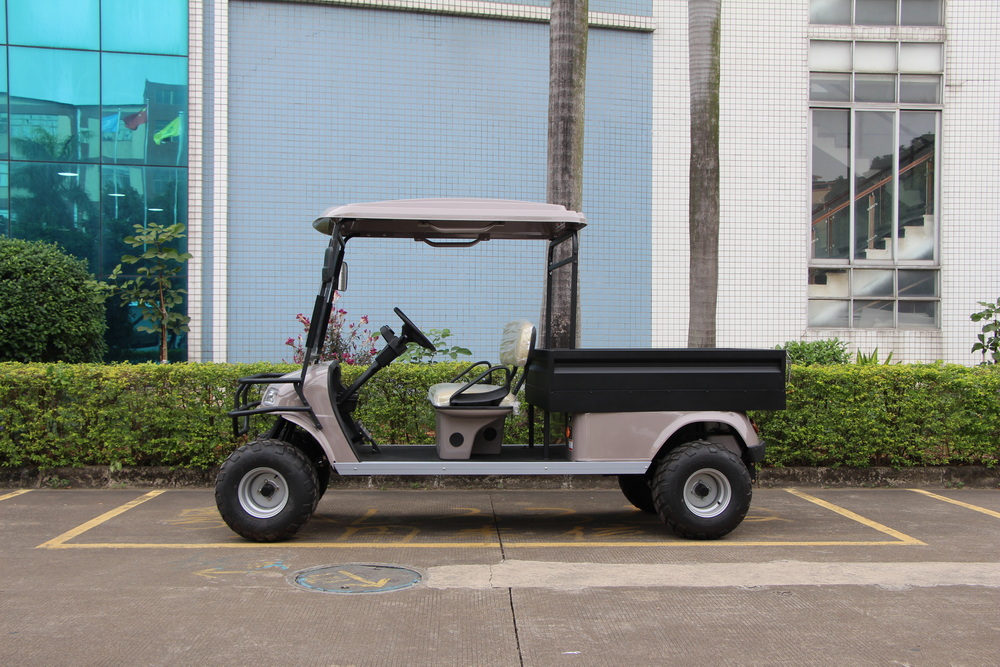
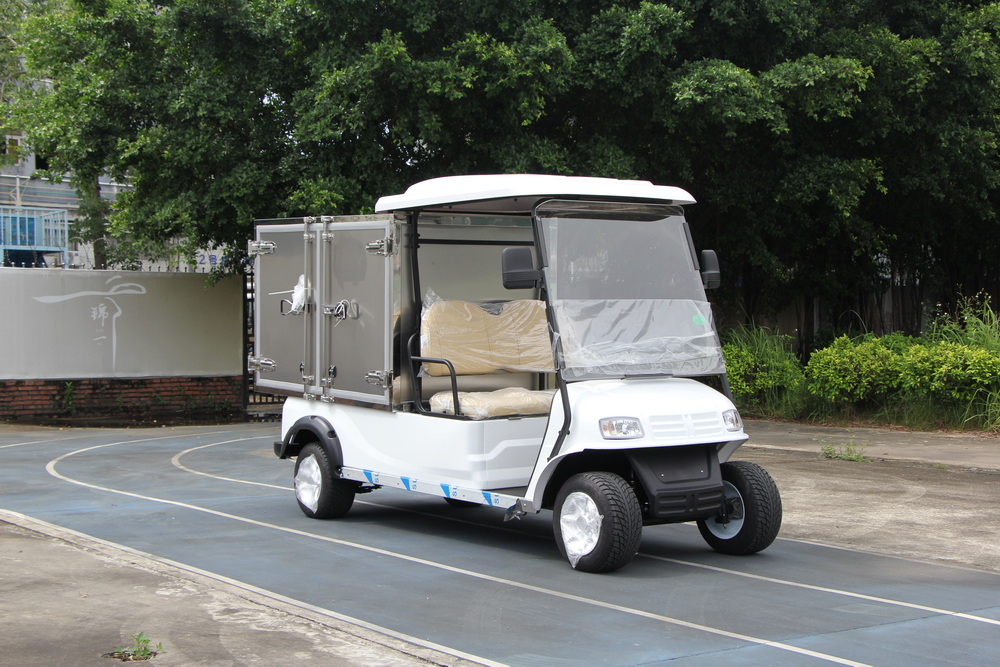
BorCart is relevant to smaller brands and specialised fleet buyers because its catalogue shows an electric cargo cart, a two-seat boxed cargo truck, a stainless-steel-box cargo van, a six-door vehicle advertised with a two-tonne loading claim, and an iron-body cargo van. Its company profile describes in-house chassis, body, mould and paint work; more than 100 engineers and technicians; and incoming, process and final quality checks. It also offers sample orders, factory visits and OEM/ODM development. These are company-reported capabilities, not independent audit findings.
The practical opportunity is a configurable platform for a controlled-site operation: body-box dimensions, cargo access, colour, branding, battery choice and application-specific fittings can be discussed before a repeat order. For a smaller distributor, this may make engineering dialogue more useful than simply choosing a finished retail van from a large brand. Yet "cost-effective" should be tested through a like-for-like quotation that specifies battery capacity, cargo-body metal grade, controller, charger, spares and warranty; no public evidence here establishes a price advantage against the other five companies.
There is a material caveat. BorCart's cargo category includes vehicles positioned alongside utility carts, and its general buyer guidance discusses 5–7.5 kW motors and 60–100 km range for many models. Those figures should not be applied automatically to every pictured cargo van. Nor does a page headed "Cargo Vans" prove that a particular unit can be registered for public roads. Ask BorCart for the exact model code, rated and tested payload, permitted road category, vehicle approval documents, serial-number traceability and target-market charging specification before marketing it as a street-legal van. BorCart's own pages also conflict on its founding year (2000 on the company profile; 1999 on the cargo page), so confirm the registered entity and business licence during onboarding.
OEM/ODM scope to discuss: Branded body panels; tailored cargo enclosures; battery, motor and controller selections; chassis or suspension revisions; prototype approval; and parts documentation.
Best-fit buyer: A brand commissioning private-site logistics vehicles or a project-specific low-speed fleet.
Qualification gate: For public-road use, do not proceed without verifiable approval for the exact configuration and destination.
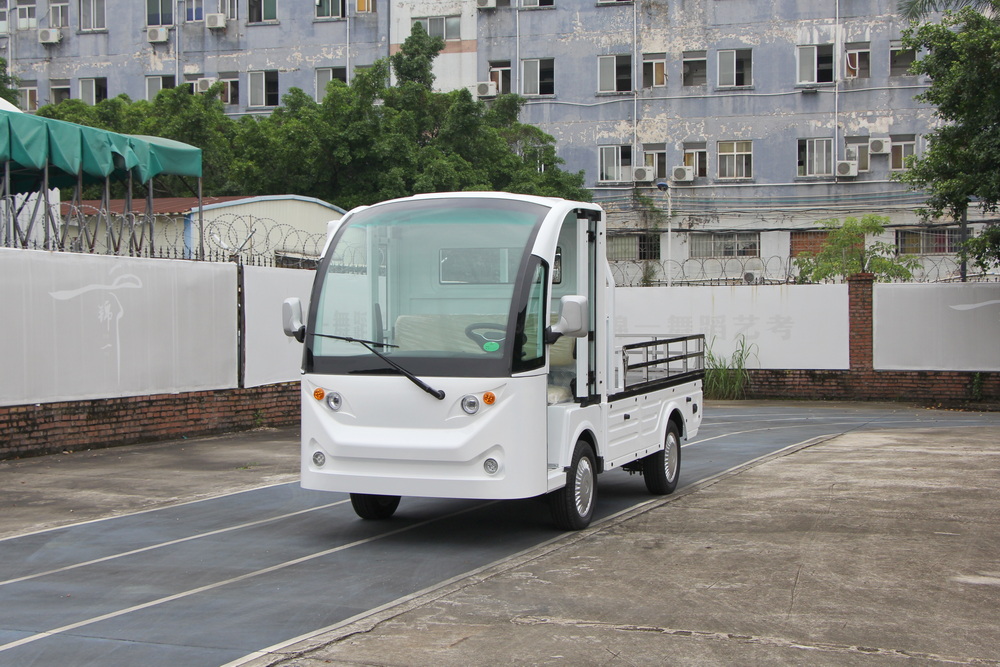
Established: 21 March 2011 as a SAIC Motor subsidiary. Market footprint: Its global site describes a presence in more than 60 markets. Representative model: The eDELIVER 5 page lists a 64 kWh battery, up to 335 km combined WLTP range, maximum 1,200 kg payload and up to 7.6 m³ cargo volume. These are published maximum or test-cycle figures, not a promise that every battery, body and trim combination delivers all maxima simultaneously.
MAXUS is a sensible comparison point for an importer needing conventional van functions: enclosed load space, defined payload, driver-assistance options and a road-vehicle sales channel. Its broader eDELIVER line spans multiple sizes, making it easier to match delivery-route volume to a model family rather than modifying a low-speed cart beyond its design brief. The company describes a user-led, customised-production approach, but that does not prove third-party badge engineering is available for a small order. Treat fleet options, dealer branding and full private-label manufacturing as different contract types.
OEM/ODM scope to verify: Approved factory options, fleet livery, interior racking, telematics integration and—only if contractually available—private-label arrangements.
Primary markets to confirm for your model: The countries covered by the relevant MAXUS sales and service network.
Qualification gate: Obtain the correct market's approval number, CoC or equivalent registration package, and a written statement of what changes are allowed without a fresh approval.
Established: 2016, according to its UK brand materials. Parent group: Geely. Confirmed overseas example: The United Kingdom, where the SV electric panel van is marketed. Farizon's UK product page lists five body-size configurations, up to 13 m³ cargo volume and up to 1,350 kg payload; available specifications depend on the selected variant. The brand's material also shows how commercial-vehicle product development is linked to local distribution and service, rather than the vehicle alone.
Farizon is worth screening if a fleet needs a purpose-designed large panel van or an approved base vehicle for a specialist conversion. Its UK information discusses body lengths, roof heights and cargo access—dimensions that affect actual route economics more than a headline battery figure. However, a brand selling into the UK is not necessarily a contract manufacturer for another company's badge. A procurement team should first establish whether the offer is vehicle supply, approved conversion support, regional distribution or genuine OEM production.
OEM/ODM scope to verify: Factory-approved conversions, body protection, fleet identity, telematics and any rights to modify the vehicle or badge.
Primary documented market: The UK; confirm other territories with Farizon.
Qualification gate: Match the planned upfit to the approved body variant, gross vehicle mass and payload after conversion.
Founded: 1996; headquartered in Beijing. Product focus: Commercial vehicles, including vans, trucks and buses. FOTON's official eVIEW page lists an electric van with up to 7 m³ load volume, up to 1.2 tonnes stated carrying capacity, AC/DC charging and a CATL battery. These figures provide an initial technical comparison but do not establish the payload, approval or support package for a buyer's specific destination market.
FOTON may suit fleet buyers that want a commercial-vehicle manufacturer with multiple vehicle classes and a parts-oriented ecosystem. That breadth can be helpful when a distributor expects to sell more than one delivery-vehicle size. Before discussing badge or equipment customisation, ask which factory and legal entity will build the eVIEW version offered, whether the battery and charger specifications match the destination, and how parts will be supplied over the vehicle's service life.
OEM/ODM scope to verify: Right-hand-drive or left-hand-drive availability, approved cabin and body options, fleet branding, knock-down supply and local parts support.
Primary markets: The company presents itself as a global supplier; request country-specific eVIEW sales references rather than extrapolating from group-wide reach.
Qualification gate: Secure the exact variant specification, production slot and local approval route in writing.
Founded: 1964; headquartered in Hefei, Anhui. Published reach: JAC's corporate page reports 132 countries and regions covered and 19 overseas knock-down facilities, both figures for the wider company. Representative model: Its M3EV material describes a 53.58 kWh lithium iron phosphate (LFP) battery, 5.2 m³ cargo volume and 965 kg cargo weight. Its detailed specification gives 2,835 kg gross vehicle weight and a CLTC driving-range figure of at least 290 km; CLTC and WLTP values should not be compared as if they were the same test.
JAC is attractive when a buyer needs an established export organisation and a medium-sized city-delivery format. The key diligence question is which configuration is actually supplied through the relevant distributor: battery vendor, charging connector, steering position, local diagnostic tools and warranty administration may differ by region. JAC's overseas facilities demonstrate group-level localisation capability, not automatic access to a small-batch private-label M3EV programme.
OEM/ODM scope to verify: Authorised fleet specification, local assembly or knock-down programmes, commercial branding, and approved cargo conversions.
Primary markets: Broad global company presence; confirm the precise M3EV market.
Qualification gate: Reconcile the sales brochure, tested range cycle and approval papers for one vehicle identification number and build specification.
Brand timeline: DFSK's official history begins in 2003; verify the contracting legal entity separately. Documented global reach: Its current site states presence in more than 70 countries and regions and an overseas network exceeding 1,000 marketing and service outlets. Electric cargo example: DFSK identifies the EC35 as a fully electric model in its corporate news. Its wider brand now sits under SERES Group. These are corporate and product statements, not proof of an EC35 production allocation or a particular country's registration status.
For buyers handling smaller parcels on dense urban routes, the microvan format may be easier to deploy than a large panel van where parking and access are constrained. The commercial advantage depends on the specific EC35's legal category, usable load space, battery package and local service coverage. Confirm whether an EC35 is actively offered in the destination market; an older exhibition report is not evidence of current availability.
OEM/ODM scope to verify: Fleet graphics, equipment fit-out, authorised distribution and any contract assembly or badge rights.
Primary markets: The brand's international network, with model availability checked country by country.
Qualification gate: Ask for a current factory quotation, exact model identification, variant-level approval documents and after-sales service agreement.
Give every bidder the same brief: destination country; private property or public road; daily distance; gradient; ambient temperatures; maximum laden mass; required cargo-box internal dimensions; door aperture; charging standard; annual volume; and expected service life. Ask for a response against each line item, not a generic catalogue. The most useful comparison is total landed and operating cost for the same duty cycle, including battery replacement assumptions, consumables, spare parts and downtime.
For road-going vans, make the supplier state the approved vehicle category, exact model/variant/version and gross vehicle weight. In the EU, category N1 concerns goods vehicles up to 3.5 tonnes maximum mass when classification requirements are satisfied. EU whole-vehicle type approval and the manufacturer's CoC support market entry and registration; approval of a differently configured model does not automatically transfer to the version you order. By contrast, a private-site vehicle may have no road-registration pathway at all.
Do not accept a generic "CE-certified electric van" claim as a substitute. The European Commission says CE marking applies only when relevant harmonised rules specifically require it, while EU road vehicles have their own type-approval system. RoHS claims, where relevant to a particular electrical product or component, also do not certify an entire van for highway use. For battery-electric road vehicles, request evidence relating to applicable electric-powertrain safety rules such as UN Regulation No. 100, together with destination-specific approval documentation.
The cheapest-looking vehicle can become the most expensive if a cargo body corrodes, a battery cannot be serviced locally or a revised charger changes the electrical architecture. Ask for a signed technical bill of materials that identifies chassis steel grade and section thickness, cargo-box material grade and sheet thickness, fastener treatment, corrosion-protection method, battery chemistry and manufacturer, pack energy in kWh, motor/controller part numbers, charger input range and connector type. Use the stated materials as purchase-order acceptance criteria; do not assume a stainless box and a painted mild-steel box have equivalent costs or corrosion behaviour.
Request evidence that the factory controls the processes it claims to control: incoming material certificates; weld procedures and inspection points; coating thickness and adhesion results; battery-pack traceability; insulation and high-voltage interlock tests where applicable; brake tests; and end-of-line reports. Before paying for bulk production, agree an independently witnessed sample inspection and a written defect-classification and rework rule. For BorCart, its profile says incoming, in-process and final checks are used, but buyers should still request records for the specific cargo model and production lot.
1. RFQ and document screen: Obtain the manufacturer's legal name, business licence, factory address, model code, written MOQ, quoted lead time, approval scope and preliminary bill of materials.
2. Golden sample: Commission a prototype or pre-production unit against a signed drawing. Record curb mass, loaded ride height, door clearances, range under a defined load and route, charging performance, fault codes and photographs of critical components.
3. Engineering freeze: Approve a revision-controlled specification covering battery cells, battery-management-system software, charger, motor/controller, brakes, tyres, body metal and paint system. State which substitutions require written approval.
4. Pilot order: Inspect multiple serial-numbered units, not only the demonstration unit. Compare actual weights, pack labels, wiring and quality records against the golden sample.
5. Release and shipment: Perform pre-shipment inspection; reconcile the invoice, packing list, serial numbers, approval documents, battery test summary and warranty/spares package before final payment.
Ask freight forwarders and carriers how the completed vehicle, installed battery and any separately shipped batteries will be declared and accepted. UN Manual of Tests and Criteria section 38.3 addresses lithium-cell and battery transport testing; actual maritime classification, packaging and state-of-charge rules must be checked against the current carrier and route requirements. Reserve vessel or container space only after those details are settled.
A common sourcing failure is not the obvious low-grade metal swap; it is a post-sample component change that quietly changes the approved vehicle. A factory may install a different battery pack, charger, controller, tyre load rating or cargo body after the buyer approves a prototype. The van may still look identical in photographs, but payload, electrical safety evidence, charging compatibility or type-approval applicability may no longer match. This is a risk-control scenario, not an allegation about any supplier above.
Close the gap with a "configuration passport" for every unit: model/variant/version, chassis or serial number, battery-pack serial and chemistry, cell supplier, pack kWh, charger and connector, controller firmware, tyre specification, curb mass, cargo-body drawing revision and approval reference. Photograph the labels during pilot and pre-shipment inspections. Contractually prohibit unapproved substitutions and require the supplier to assess whether a proposed change needs new testing or an approval extension. This is particularly important for low-volume OEM orders, where a seemingly minor cost-saving substitution can land between the prototype sign-off and the first production batch. The EU type-approval framework distinguishes vehicle types and their technical characteristics, so buyers should not assume an altered vehicle remains covered by an existing approval.
There is no single "top" supplier for both a private-site electric cargo vehicle and a registered road-delivery van. BorCart merits an initial conversation for custom low-speed cargo applications and smaller-brand OEM work, provided its proposed build and approval status are documented. SAIC MAXUS, Farizon, FOTON, JAC and DFSK provide contrasting road-vehicle or microvan starting points, but MOQ, export configuration, capacity allocation and private-label rights still require direct verification. The strongest procurement decision comes from a controlled specification, a tested sample and a model-specific compliance file—not a broad factory claim.
If your project involves a branded electric cargo vehicle for a defined route or site, send BorCart the operating location, target payload, body dimensions, annual forecast and required documentation. Ask for a model-specific technical proposal, sample plan, written MOQ and evidence of the approvals applicable to your market before committing to production.
Request the complete certificate, including the exact legal entity, factory site, scope, issuing certification body, accreditation details and certificate number. Check it in IAF CertSearch or with the certification body, and confirm that it is active rather than suspended or withdrawn. A certificate held by an affiliated trading company, or one covering only "sales" when you are auditing vehicle assembly, is not enough. ISO itself does not issue certificates.
No. CE marking and whole-vehicle type approval are different regulatory routes. Ask for the approval of the exact road-going vehicle configuration and a matching CoC where required; separately examine any applicable component-level conformity documents and battery evidence. A UN 38.3 battery transport test summary concerns battery shipment, not permission to register a van.
Only after normalising the test conditions. Ask whether range is WLTP, CLTC or an internal cycle; whether the quoted payload assumes a particular battery and body; and whether it includes driver, conversion equipment and accessories. For example, SAIC MAXUS publishes a maximum 335 km WLTP figure for the eDELIVER 5, while JAC lists an M3EV range of at least 290 km under CLTC. These are not like-for-like measurements.
Specify the period of parts availability, critical-parts stock, battery and controller replacement procedure, diagnostic-tool access, firmware version control, fault-code documentation, warranty labour rules and response times. Define ownership of private-label tooling and drawings, and who bears the cost if a component change invalidates testing or approval. A low quoted unit price is less useful than enforceable obligations when a vehicle is immobilised overseas.
Treat it as a claim to verify, not a purchasing specification. Request the vehicle's gross mass rating, curb mass in the quoted battery/body configuration, axle load limits, tyre ratings, brake test evidence and a witnessed loaded trial. BorCart's catalogue includes a six-door cargo listing advertised with a two-tonne loading claim, but that listing alone does not establish the approved payload, operating category or road legality of the vehicle a buyer will receive.
- [International Energy Agency, *Global EV Outlook 2026*: Manufacturing and Trade] — Industry production and supply-chain context. [iea]
- [China Association of Automobile Manufacturers, 2025 industry figures] — National vehicle production and export totals; not van-only figures. [caam.org]
- [European Union, Regulation (EU) 2018/858] — Vehicle categories and approval framework. [eur-lex.europa]
- [European Commission, EU vehicle technical harmonisation] — Whole-vehicle type approval. [single-market-economy.ec.europa]
- [European Commission, CE marking guidance] — When a CE mark may be used. [europa]
- [UNECE, Electric Vehicles and Electric Safety Regulations] — UN Regulation No. 100 and related work. [unece]
- [UNECE, UN Manual of Tests and Criteria, Revision 8] — Lithium-battery transport-test resources. [unece]
- [ISO, Certification and Verification Guidance] — Verifying accredited management-system certificates. [iso]
- [BorCart, About Us] and [Cargo Vans] — Company-reported operations and product listings; verify contradictory founding-year statements. [borcart]
- [SAIC MAXUS, About] and [eDELIVER 5] — Company and model information. [en.saicmaxus]
- [Farizon, About] and [SV Range] — UK brand and product information. [farizonauto.co]
- [FOTON, Company] and [eVIEW] — Company and van details. [foton-global]
- [JAC Motors, Company] and [M3EV Specifications] — Global footprint and model details. [jacen.jac.com]
- [DFSK, Official Site] and [EC35 News] — Brand and electric-microvan context. [dfsk]


