


Views: 298 Author: BorCart Publish Time: 2026-09-28 Origin: Site


Content Menu
● Introduction: Define the Vehicle Before Choosing the Factory
● How the Manufacturers Were Selected
>> What to Compare Technically
● Five Manufacturers to Shortlist
>> 1. Guangzhou BorCart Electric Vehicle Co., Ltd.
>> 2. SAIC MAXUS Automotive Co., Ltd.
>> 3. Farizon New Energy Commercial Vehicle Group
>> 4. FOTON
>> 5. DFSK
● Buyer's Guide: Audit, Sample, and Ship
>> Confirm the Market and Approval Route
>> Verify the Factory and the Production Plan
>> Use the Sample as a Controlled Baseline
>> Compare Quotes on Landed Cost
● Conclusion: Shortlist by Use Case
● FAQs
China offers international buyers a broad electric commercial-vehicle supply base, but an "electric cargo van" is not one uniform product. The phrase may describe a road-legal panel van for public-road deliveries, a compact commercial van, or an enclosed low-speed cargo vehicle intended for a campus, resort, industrial site, or other controlled environment. Those products differ in payload, speed, engineering requirements, documentation, and the markets in which they can be registered.
That distinction is the first test of a supplier. A capable manufacturer should ask where and how the vehicle will operate before quoting a price. A van intended for an EU public-road fleet, for example, requires a different approval discussion from a low-speed vehicle intended to move goods around private property. A product photograph, a component certificate, or an attractive range claim cannot resolve that difference.
China's wider manufacturing ecosystem is a reason to consider local suppliers. Vehicle assemblers can draw on domestic battery, chassis, electric-drive, bodywork, and electronics supply chains. The International Energy Agency's *Global EV Outlook 2026* describes China as the largest electric-car manufacturing hub and identifies a particularly integrated domestic supply chain for electric trucks. Its car and truck figures, however, should not be presented as cargo-van production figures.
Export data likewise provides useful context without proving the performance of any individual factory. A 2026 report from the Association of European Vehicle Logistics, using China Association of Automobile Manufacturers data, recorded approximately 54,000 new-energy commercial-vehicle exports in the first half of 2026, compared with approximately 2.302 million new-energy passenger-vehicle exports. That is a reminder to examine a supplier's specific van program, rather than infer its cargo-van capacity from the size of China's overall EV industry.
This guide compares five Chinese manufacturers with visibly different strengths. Guangzhou BorCart Electric Vehicle Co., Ltd. appears first because it is relevant to buyers seeking customizable low-speed enclosed cargo vehicles. It is not placed ahead of road-legal van producers as a claim of greater vehicle output or broader homologation. The list is a procurement shortlist, not an independently audited sales ranking.
A useful shortlist starts with evidence a buyer can request and verify. For this article, the selection criteria are:
- Product fit: Does the company show an identifiable electric cargo model, rather than only a general EV catalogue?
- Manufacturing and engineering capability: Is there evidence of vehicle development, production facilities, or control over relevant components and processes?
- Quality-control visibility: Can the supplier explain how incoming parts, assembly, finished vehicles, and specification changes are checked?
- Export-market relevance: Does the company identify overseas markets or a commercial route for international buyers?
- Customization fit: Can it discuss branding, bodywork, equipment, or application-specific changes—and distinguish those from changes that may require renewed testing or approval?
- Evidence transparency: Are model-specific capacity, MOQ, lead time, and certification documents available for review?
A company's founding year and overall output help establish context, but neither proves that it can build a particular van to a buyer's specification. Capacity must be tied to the quoted model and factory. The same principle applies to certifications: a management-system certificate describes a certified organization and scope, while vehicle approval concerns a defined vehicle type and market.
| Manufacturer | Main procurement fit | Capacity evidence available publicly | Public MOQ | Approval or certification evidence to request |
|---|---|---|---|---|
| Guangzhou BorCart | Custom low-speed enclosed cargo vehicles; smaller-brand projects | States four production lines and up to 10 containers of electric vehicles per day across multiple product categories; not a cargo-van-only figure | Sample orders offered; production MOQ not published | Current factory certificate, exact-model test reports, and destination-market road-use determination |
| SAIC MAXUS | Road-going panel vans and established distributor programs | Broad international commercial-vehicle operation; model-specific available production allocation not published on the reviewed pages | Not published | Exact eDELIVER configuration's destination-market approval and conformity documents |
| Farizon | Dedicated new-energy commercial-vehicle platforms and fleet programs | States five specialized manufacturing bases; SV-specific available output not published on the reviewed pages | Not published | Exact SV variant's destination-market approval, battery and charging documentation |
| FOTON | Electric light-commercial vans and mixed commercial fleets | Large commercial-vehicle group; eVIEW-specific available output not published on the reviewed pages | Not published | Exact eVIEW variant's approval file and market-specific configuration |
| DFSK | Compact electric delivery vans and distributor-led projects | International distribution presence; EC35-specific available output not published on the reviewed pages | Not published | Exact EC35 variant's approval, payload, and battery documentation |
*"Not published" is not an estimate of a supplier's willingness to accept an order. Request a written MOQ by model, configuration, packaging method, and destination market. The capacity entries distinguish company-wide statements from verifiable availability for the vehicle being purchased.* BorCart publishes its mixed-product line claim and sample-order option; Farizon identifies five bases; the other product and company pages establish the stated model and business focus.
Ask every shortlisted factory for a controlled specification sheet that identifies the vehicle variant and revision date. For the chassis and body, request the material specifications, sheet thicknesses or section dimensions at critical load points, weld-process controls, corrosion-protection method, and a drawing of the cargo-body mounting points. An enclosed steel box may look substantial while relying on poorly protected joints or a mounting structure unsuited to repeated loaded use.
The payload figure needs equal scrutiny. Ask whether it applies to the exact battery, cab, body, and equipment configuration in the quotation. The larger battery or heavier box that makes a vehicle more attractive to a buyer may reduce its remaining payload. Compare the manufacturer's stated gross vehicle weight, unladen weight, axle limits, and rated payload for the same finished configuration, rather than combining figures from different brochures.
For the electric system, identify the cell and pack supplier, battery chemistry, nominal and usable energy if available, battery-management-system functions, charger specification, connector, and supported AC or DC charging method. Require the supplier to state the test basis for range, the vehicle load during the test, and any climate or accessory assumptions. A published maximum range should not be treated as a guaranteed result for a loaded delivery route.
Quality plans should cover incoming component identification, weld and coating inspection, electrical and insulation checks, charging tests, brake and steering checks, water-ingress checks where applicable, and a finished-vehicle inspection linked to a serial number or VIN. The purpose is not to demand an impressive checklist: it is to make the sample and every subsequent shipment traceable to the same approved specification.
Founded: The company's About Us page says 2000. A separate cargo-van category page says 1999; buyers should verify the legal registration and corporate timeline before using either date in a supplier record. Primary fit: Customized low-speed and utility-oriented cargo vehicles. Markets: BorCart's About Us page lists customers in more than 30 countries, including the United States, Germany, the United Kingdom, Mexico, Vietnam, Saudi Arabia, and Australia; this does not establish approval for every listed vehicle in every listed market.
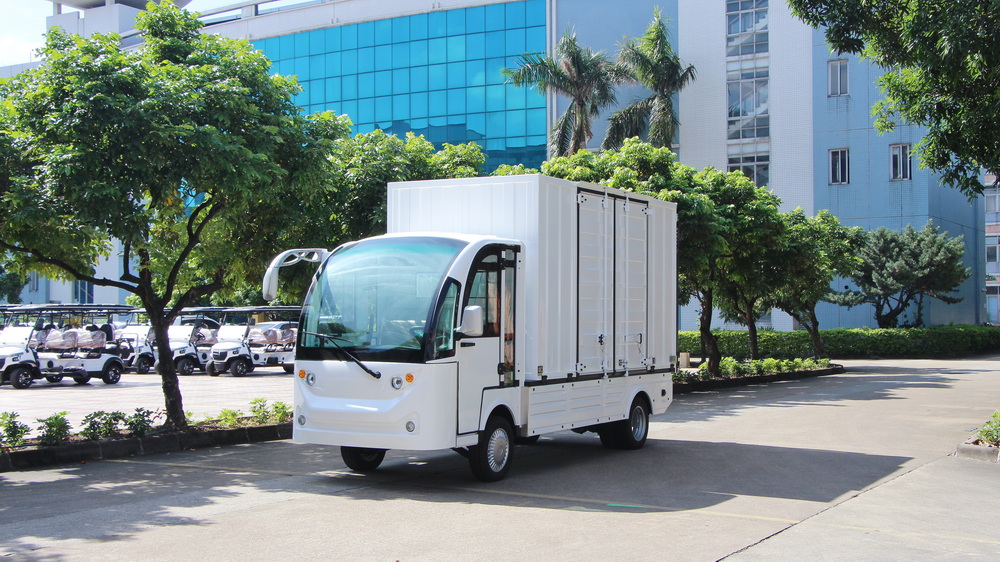
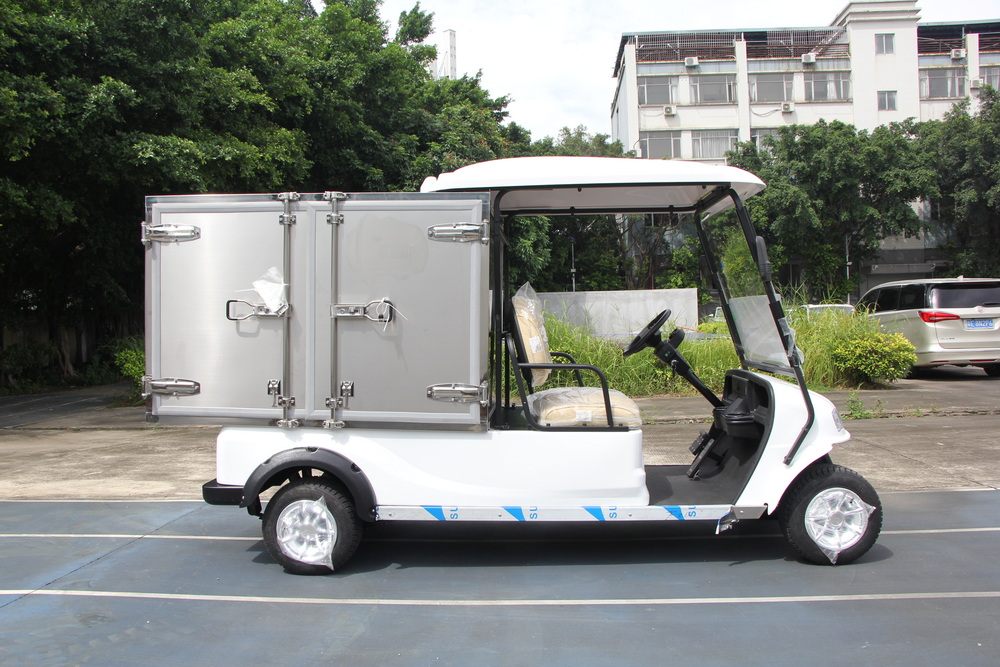
BorCart's shows an electric cargo cart, a two-seat vehicle with a stainless-steel cargo box, a two-seat vehicle with an iron cargo body, and a six-door cargo-van listing. That mix makes the company more relevant to buyers developing a compact delivery or site-logistics product than to buyers who already require a conventional, homologated highway panel van. The product listings are a starting point for an engineering discussion, not proof of public-road eligibility or verified payload.
The company says it operates a 200,000-square-metre workshop, employs more than 100 engineers and technicians, and uses four production lines. It describes in-house production of chassis, bodies, moulds, and paintwork, alongside incoming, in-process, and final quality checks. These are useful factory-audit questions, but its stated ability to deliver 10 containers of electric vehicles per day covers multiple categories—including golf carts and sightseeing vehicles—not 10 containers of cargo vans specifically. Ask for recent output and available line capacity for the exact cargo model under consideration.
BorCart offers OEM/ODM work and sample orders, which may suit a smaller brand that wants to validate a cargo-body design before committing to a production batch. Potential customization discussions include body configuration, battery and motor selection, colour, branding, and application-specific equipment. Its advantage for this type of buyer is the ability to discuss a project through both engineering and commercial contacts; communication speed and change-control performance should still be tested during sampling, rather than assumed from a website.
A prudent first request is a quotation for one named base model with a drawing, payload calculation, component list, sample scope, proposed production MOQ, and written destination-market limitations. BorCart's cargo page claims ISO 9001 and CE-related credentials, but the reviewed pages do not establish the certificate scope, validity, or approval status of each cargo model. Obtain the documents for the precise product before making any compliance claim.

Founded: 2011, according to the company's global About page. Primary fit: Road-going electric panel vans and established commercial-vehicle distribution. Markets: MAXUS says its commercial vans and other vehicles are available across more than 60 markets. Customization scope to investigate: Fleet equipment, approved variants, body conversions, and distributor arrangements; eligibility for private-label vehicle production is not established by the reviewed pages.
MAXUS provides a clearer reference point for buyers whose requirement is a conventional electric panel van. Its global lists a 100 kWh battery, up to 12.3 m³ of cargo space, a maximum payload of 1,530 kg, and a maximum combined WLTP range of 370 km. Those are published maximum or configuration-dependent figures; a purchase specification must identify which body length, roof, battery, and equipment package delivers each number in the intended market.
For a fleet operator, an established model family and market presence can simplify the initial assessment. The harder questions concern the commercial structure: who holds the vehicle approval, who supplies warranty parts locally, whether an importer has exclusive territorial rights, and which modifications remain inside the approved vehicle type. A buyer wanting an entirely new badge or heavily revised body should establish that business model before spending time on technical sampling.
Founded: Farizon's group About page states 2014; a UK distribution announcement describes Farizon as established in 2016. Those statements may refer to different organizational or brand milestones, so confirm the exact contracting entity's history rather than silently treating them as interchangeable. Primary fit: Dedicated new-energy commercial-vehicle platforms. Markets: Farizon has identified Europe, the Middle East and North Africa, and Asia-Pacific in its international expansion plans. Customization scope to investigate: Approved SV configurations, fleet integration, and potential body or equipment adaptations through the relevant market partner.
Farizon identifies five specialized manufacturing bases and an electric-commercial-vehicle research operation. Its global range includes the as well as other vans and commercial vehicles. For buyers planning a larger road-vehicle program, that platform focus warrants an inquiry—particularly where charging, service provision, and fleet support matter alongside the vehicle itself.
The UK distribution announcement specified three planned vehicle lengths, three heights, and battery options. That flexibility helps buyers compare cargo volume and route requirements, but a configuration available through one country's distributor should not be presumed available—or approved—in another. Ask the relevant Farizon entity for a market-specific variant list, homologation documents, available production slot, spare-parts arrangement, and whether the proposed OEM changes would create a new approval obligation.
Founded: 1996. Primary fit: Electric light-commercial vans within a wider commercial-vehicle supply program. Markets: FOTON's company page describes overseas commercial-vehicle operations and identifies electric truck, van, and bus entries into European markets. Customization scope to investigate: Market-specific light-commercial configurations and fleet or application equipment, subject to model approval and the commercial terms offered by FOTON.
FOTON's is presented for last-mile transport. Its product page states a maximum cargo volume of 7 m³ and load capacity of up to 1.2 tonnes, as well as AC and DC charging options. The same page discusses passenger layouts, so buyers must specify whether their quotation is for the cargo configuration, the passenger configuration, or a conversion. Do not copy a maximum load figure from one layout into a purchase order for another.
A broad commercial-vehicle group may appeal to distributors sourcing more than one vehicle class. The trade-off is that a buyer should not equate group-wide sales, factory count, or engineering resources with a guaranteed eVIEW allocation. Request the manufacturing location and monthly available output for the specified variant, plus written confirmation of local service, charging compatibility, and parts lead times.
Founded: The reviewed official material does not provide a verified founding year for the precise DFSK contracting or manufacturing entity; request its business registration record and factory details. Primary fit: Compact electric delivery vans. Markets: DFSK says it operates in more than 70 countries and regions, while its export-business page describes overseas shipments to Europe, South America, Africa, the Middle East, and Southeast Asia. Those are brand-wide market statements, not proof that the EC35 is approved in every destination. Customization scope to investigate: Distributor-specific trim, branding, and fleet equipment; private-label or structural-change terms require direct confirmation.
DFSK's lists a rated load of 1,090 kg, cargo space of 4.8 m³ in a two-seat layout, and 3.1 m³ in a five-seat layout. That is a useful example of why a procurement team should compare the actual seating and cargo configuration rather than a model name alone. The page also gives a maximum mileage figure of 268 km, but buyers need its test method and operating conditions before using it in route planning.
For a distributor testing a compact delivery segment, EC35 is worth examining where the local import route and service network can be established. Ask which legal entity manufactures the quoted variant, which entity will sign the warranty, and whether the documents supplied apply to the exact battery, seating, and cargo-body arrangement ordered.
Write the intended operating environment into the request for quotation: country, public roads or controlled site, vehicle category sought, maximum operating speed, payload, seating, daily route, charging infrastructure, and expected annual volume. This prevents a low-speed cargo vehicle and a road-going van from being quoted as though they were interchangeable.
For EU public-road vehicles, the relevant framework includes, which covers type approval for motor vehicles in categories including goods-carrying category N. The applicable vehicle type, variant, and approval route must be assessed for the intended sale. The European Commission explains that whole-vehicle type approval and a certificate of conformity support placing and registering an approved vehicle in the EU. A supplier's general statement that a van is "export-ready" is not a substitute for those model-specific documents.
For electric vehicles, check the applicable electric-powertrain and battery-safety requirements, including, and electromagnetic-compatibility requirements such as UN Regulation No. 10 where relevant. If batteries or battery-containing products require transport documentation, obtain the applicable battery test evidence and confirm the shipment classification and carrier requirements with a qualified freight partner. UN Manual of Tests and Criteria section 38.3 sets out tests for lithium cells and batteries prior to transport of a particular type.
Do not use "CE/RoHS certified van" as shorthand for road legality. The European Commission says CE marking applies only where the relevant product legislation requires it; EU rules prohibit affixing it to products outside that scope. The RoHS Directive generally excludes means of transport for persons or goods, with a specified exception. Particular electrical equipment may have its own obligations, but a component-level mark does not establish whole-vehicle approval. Ask the importer's approval specialist to identify the applicable rules for the exact vehicle and any separately supplied equipment.
Before paying for tooling or a production batch, obtain the manufacturer's legal business name, registered address, manufacturing-site address, contracting entity, and export entity. Ask the supplier to identify which party builds the vehicle, which party issues the invoice, and which party carries warranty responsibility. If those names differ, put their responsibilities in the contract.
Then audit the processes that can change the finished product: incoming batteries and motors, chassis fabrication, welding, coating, wiring, assembly, final testing, and release of nonconforming vehicles. Select a recent serial number and ask the factory to trace its major components and inspection records. A remote tour can screen a supplier, but an independent on-site audit becomes more valuable before a large or structurally customized order.
Request model-specific production evidence, not a headline factory-capacity number. Useful records include recent monthly output for the relevant platform, current order backlog, available line slots, key-component procurement lead times, and a recovery plan for a delayed battery or controller. Agree on the production MOQ separately from the sample quantity and confirm whether branding, colour, battery, and body changes each trigger a different minimum.
A sample is most useful when both parties agree what it is testing. Give it a revision-controlled bill of materials, drawings, battery and motor identifiers, software version, inspection plan, and a list of approved deviations. Record measured vehicle mass, axle loads, usable cargo dimensions, charging behaviour, loaded-route energy consumption, braking, water ingress where relevant, and any fault codes.
Run the sample in conditions close to the buyer's actual duty cycle. For a delivery van, that may mean repeated stops, realistic cargo weight, expected ambient temperatures, and the charger model that will be installed at the depot. Document failures and corrective actions before authorizing production. When production starts, require the supplier to identify any difference between the approved sample and the first shipment.
A common purchasing failure occurs after the sample passes: a component listed only as "or equivalent" is changed to protect margin or keep the line moving. The practical safeguard is a no-substitution list. Lock the cell and pack identifiers, BMS, motor, controller, charger, brake components, tyres, steel specifications, coating system, and safety-critical fasteners—or specify a documented engineering-change process for each. Request first-article evidence and serial-level traceability for every approved change. This is especially important when a cheaper substitute looks identical once the body panels are fitted.
A low vehicle price can conceal costs in approvals, spare parts, batteries, tooling, local servicing, and freight. Ask each supplier to quote the same specification and identify what is excluded. Clarify Incoterms, export packing, vehicle dimensions and weight as shipped, battery state-of-charge or isolation instructions, shipping method, destination handling, customs responsibility, and insurance arrangements with the forwarder.
Obtain a priced spare-parts list before ordering vehicles. It should identify long-lead items such as body panels, glazing, chargers, controllers, battery modules or packs, and diagnostic tools. Confirm who will provide service manuals, fault-code access, technician training, and warranty decision authority. For a fleet, vehicle uptime depends on these details as much as on the factory's stated assembly lead time.
Finally, inspect the first production lot, not just the pre-production sample. Recheck materials and coatings at concealed joints, compare component labels with the approved bill of materials, and verify the vehicle's paperwork against its actual serial number or VIN. This is where material substitution, undocumented running changes, and configuration mismatches are most likely to become costly for an importer.
The right Chinese electric cargo van manufacturer depends first on the vehicle class and operating market. BorCart is a relevant starting point for brands exploring customized, low-speed enclosed cargo vehicles and a sample-led OEM project. SAIC MAXUS, Farizon, FOTON, and DFSK offer different road-going commercial-van or compact-delivery-van starting points. None should be selected on a founding date, brochure maximum, or group-wide capacity claim alone.
For a BorCart project, send the intended country, operating site, payload, daily route, charging requirements, desired cargo-body drawing, branding needs, and forecast order volume. Request a model-specific specification, sample plan, production MOQ, quality records, and written compliance assessment before placing an order. BorCart publishes both a and a as starting points for that discussion.
1. How can we check whether a supplier's ISO 9001 certificate is still valid?
Request the certificate number, legal entity, site address, standard edition, scope, issuing body, and expiry date. Check an accredited certificate through the relevant certification database or contact the issuing body directly; verify that the *manufacturing site and activities in scope* match the factory building the vehicles. ISO itself does not issue certificates.
2. Does a certificate for one electric cargo van cover a customized version?
Not automatically. A new battery, body structure, seating layout, gross weight, lighting arrangement, or charging system may affect the documented vehicle type or applicable tests. Before approving a change, ask the approval holder and destination-market specialist for a written determination covering the proposed variant. EU approval documentation is tied to vehicle types and their conformity, not simply to a brand name.
3. How do we check a claimed payload when the van has optional equipment?
Ask for the rated gross vehicle weight, measured unladen weight, axle limits, and payload of the *quoted finished vehicle*. Have the sample weighed with its actual battery, cargo box, shelving, driver allowance where required by the applicable method, and accessories. Resolve any difference between the brochure maximum and the configuration being purchased before signing the specification.
4. Is a battery transport test report enough to establish vehicle battery safety?
No. UN 38.3 concerns lithium-cell and battery testing for transport classification; it should not be presented as whole-vehicle approval or as a replacement for applicable electric-powertrain and rechargeable-energy-storage-system requirements. Match every report to the supplied cell or pack type and seek the vehicle-level evidence required in the destination market.
5. What should we do if the factory will not disclose its production MOQ or current capacity?
Ask for a written quotation at several volumes—sample, pilot lot, and planned repeat order—with separate tooling, engineering, and unit prices. Request available production slots and the lead times of critical parts. If the factory cannot commit to an exact model, configuration, and delivery schedule in writing, treat company-wide capacity figures as background information only.
- [IEA Global EV Outlook 2026]
- [Association of European Vehicle Logistics: China exports, H1 2026]
- [China Association of Automobile Manufacturers data portal]


