


Views: 289 Author: BorCart Publish Time: 2026-10-09 Origin: Site


Content Menu
● China's Position in Electric Vehicle Manufacturing
>> Why Manufacturing Clusters Matter to Buyers
● Selection Criteria: How This Shortlist Was Developed
>> 1. Product and Application Fit
>> 2. Engineering and Customization Capability
>> 3. Production and Quality Controls
>> 4. Compliance and Documentation
● Comparison Table: Capacity, MOQ, and Certification Checks
● 1. Guangzhou BorCart Electric Vehicle Co., Ltd.
>> Company Background and Markets
>> Core Strength: Customization-Oriented Manufacturing
>> Quality Controls and Technical Support
>> OEM/ODM Fit and Procurement Limits
>> Company Background and Market Coverage
>> Core Strength: Established Electric Van Platforms
>> OEM and Customization Scope
● 3. Farizon New Energy Commercial Vehicle Group
>> Company Background and Markets
>> Core Strength: Purpose-Built Electric Van Engineering
>> OEM and Customization Scope
>> Company Background and Markets
>> Core Strength: Commercial Vehicle Breadth
>> OEM and Customization Scope
>> Company Background and Markets
>> Core Strength: Commercial Vehicle Program Experience
>> OEM and Customization Scope
● Technical Buyer's Guide: What to Put in the Specification
>> Materials and Body Construction
>> Battery Capacity and Real Operating Range
>> CE, RoHS, and Vehicle Approval
● Procurement Pitfalls and How to Avoid Them
>> Component Substitution After Sample Approval
>> Capacity Claims That Cannot Be Compared
>> Payload Figures Before Conversion
>> Insider Procurement Check: Freeze the Approved Configuration
● Factory Verification, Sampling, and Logistics
>> Step 1: Verify the Contracting Entity
>> Step 2: Verify Certificates
>> Step 3: Approve a Production-Representative Sample
>> Step 4: Inspect the Pilot Order
>> Step 5: Confirm Shipping Requirements Before Booking
● Conclusion: Match the Manufacturer to the Procurement Model
● FAQs
>> 1. How Can I Verify Whether a Factory's ISO Certificate Is Expired or Suspended?
>> 2. Is a Battery Approval Enough to Register an Electric Cargo Van in Europe?
>> 3. Can We Add Refrigeration or Another Body Without Affecting Approval?
>> 4. How Do We Detect a Different Battery or Controller in Repeat Orders?
>> 5. What Should We Do When a Supplier Will Not Publish Its MOQ or Available Capacity?
China offers a broad supplier base for electric cargo vans, from export-oriented automotive groups to manufacturers specializing in customized utility vehicles. For overseas brand owners, wholesalers, and vehicle manufacturers, the challenge is not finding a supplier. It is identifying a partner whose engineering capability, product category, production controls, and export documentation match the intended application.
A useful supplier assessment starts with five questions:
1. Does the factory manufacture the relevant vehicle category, rather than simply trade it?
2. Can its engineering team support the required payload, battery configuration, body design, and operating environment?
3. Are quality controls documented and traceable from incoming materials to final inspection?
4. Does the exact vehicle configuration satisfy the destination market's requirements?
5. Can the supplier maintain delivery schedules, spare-parts availability, and configuration consistency across repeat orders?
This guide examines five manufacturers with different procurement strengths: Guangzhou BorCart Electric Vehicle Co., Ltd., SAIC MAXUS, Farizon, JAC Motors, and Foton.
The central purchasing principle is verification: assess the exact factory, vehicle variant, and contractual scope—not just the brand name.
China's manufacturing scale provides a substantial foundation for sourcing electric commercial vehicles. According to government reporting of China Association of Automobile Manufacturers data, China exported 7.098 million vehicles in 2025, up 21.1% year over year. New-energy vehicle exports reached 2.615 million units, approximately doubling from the previous year. These figures cover the wider automotive industry; they are not electric cargo van export totals.
The International Energy Agency's Global EV Outlook 2026 also reports that China's electric car exports more than doubled in 2025 to over 2.5 million units. Its electric-car figures should not be treated as interchangeable with all new-energy commercial vehicle statistics, but they demonstrate the scale of China's electrified vehicle supply chain.
China's automotive capabilities are supported by regional manufacturing networks:
- The Pearl River Delta, including Guangzhou and Shenzhen, combines automotive production with electronics, components, and export services.
- The Yangtze River Delta, including Shanghai and Hangzhou, supports advanced manufacturing and vehicle development.
- Northern industrial corridors around Beijing and surrounding provinces provide established commercial vehicle manufacturing capabilities.
The advantage is not simply a lower factory price. A concentrated supplier network can make component sourcing, engineering coordination, tooling development, and production troubleshooting more practical.
Government commentary on the Yangtze River Delta describes an automotive supply network in which a new-energy vehicle manufacturer can source necessary supporting parts within a four-hour driving distance. This illustrates the cluster advantage, although it does not establish the delivery performance of any individual supplier.
This is an application-based shortlist, not an audited ranking of manufacturing quality. BorCart appears first because it is the commissioning company and offers a relevant customization-led sourcing option. Its inclusion should not be interpreted as evidence that its vehicles are directly equivalent to the highway-capable vans offered by larger automotive groups.
Manufacturer statements are identified as such. Where model-specific capacity, minimum order quantities, or current certificates were not established from the reviewed public sources, they are marked for confirmation rather than estimated.
"Electric cargo van" can describe materially different products:
- Highway-capable enclosed delivery vans.
- Urban commercial vehicles intended for registered road use.
- Low-speed cargo vehicles for resorts, campuses, warehouses, and industrial estates.
- Customized utility vehicles with enclosed cargo bodies.
These categories require different performance specifications and potentially different approval routes. A vehicle suited to a private industrial site may not be suitable for public-road parcel delivery.
Buyers should distinguish among:
- Branding and cosmetic customization.
- Cargo-body adaptations.
- Electrical accessories and auxiliary power integration.
- Battery or drivetrain changes.
- Full private-label vehicle development.
- Local assembly or component-supply programs.
A manufacturer offering several vehicle configurations does not automatically offer unrestricted private-label production.
Relevant evidence includes incoming inspection records, controlled assembly instructions, material traceability, torque records, electrical testing, and final vehicle inspection.
Factory size alone is insufficient. Buyers need to understand actual output, available capacity, bottlenecks, and whether the claimed production resources apply to the requested vehicle.
Management-system certificates and vehicle approvals serve different purposes.
An ISO certificate may support confidence in organizational processes. It does not prove that a particular electric cargo van can be registered in a destination country. For EU road vehicles, the type-approval framework and vehicle-specific conformity documentation are central to market access.
A long-term supplier assessment should cover quotation clarity, engineering response time, warranty administration, spare-parts commitments, and controls over component substitutions.
These factors should be tested during qualification rather than assumed from promotional material.
The table below separates published information from items requiring direct confirmation. "Not established" means the reviewed sources did not substantiate a comparable figure; it does not mean that the manufacturer lacks capacity or certification.
| Manufacturer | Established | Procurement focus | Capacity evidence | MOQ position | Certification and approval checks |
|---|---|---|---|---|---|
| Guangzhou BorCart Electric Vehicle Co., Ltd. | 2000, according to its company profile | Customized utility and low-speed cargo applications; OEM/ODM discussions | Company reports four production lines and delivery capability of 10 containers of electric vehicles daily; this is not cargo-van-specific unit capacity | Sample orders advertised; bulk and customized MOQ require confirmation | Request current certificates and determine approval requirements for the exact vehicle and operating category |
| SAIC MAXUS | 2011 | Road-going electric delivery vans and established model platforms | Electric-van-specific available capacity not established from reviewed sources | Confirm through the authorized export or market channel | Request destination-specific approval and conformity documents for the selected variant |
| Farizon | 2016 | Purpose-built electric commercial vans and fleet applications | Current SV production allocation and factory capacity require confirmation | Confirm with the relevant manufacturer or distributor | Verify approval coverage for the selected body, battery, weight class, and market |
| JAC Motors | 1964 | Electric commercial vans, including Sunray EV | Model-specific available capacity not established | Confirm export order and customization requirements | Verify selected configuration and destination-market documentation |
| Foton | 1996 | Commercial vehicle procurement and electric van programs | Electric-van-specific available capacity not established | Confirm with the responsible export channel | Verify the exact electric model; do not substitute diesel-platform documentation |
Sources for company histories, product positioning, and BorCart's stated production information: BorCart company profile, MAXUS official company and product pages, Farizon distribution announcement, JAC official pages, and Foton official company information.
Containers per day, annual vehicle capacity, actual monthly output, and available order allocation are different measurements. Ask each shortlisted supplier for the same set of figures before comparing production capability.
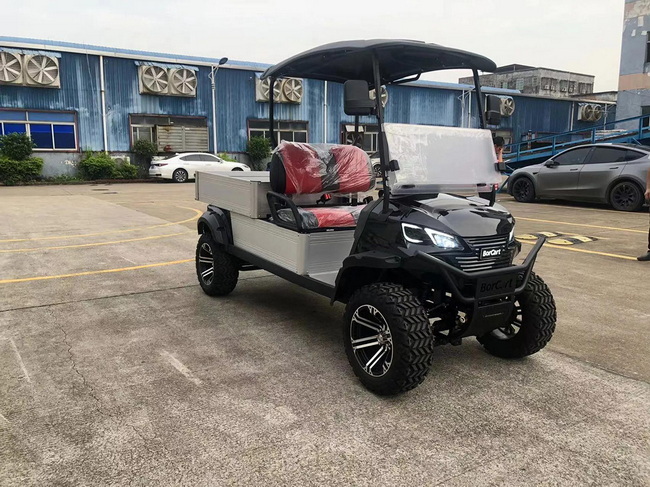
Guangzhou BorCart Electric Vehicle Co., Ltd. states that it was founded in 2000 and operates from Guangzhou, China. Its company profile reports a 200,000-square-meter workshop, more than 100 engineers and technicians, and over 1,000 skilled workers. These are supplier-published figures and should be confirmed during factory qualification.
BorCart reports customers in more than 30 countries, including the United States, Germany, France, the United Kingdom, Mexico, Australia, several Southeast Asian countries, Saudi Arabia, and South Africa. These are stated customer markets across its product portfolio, not independently established cargo van sales shares.
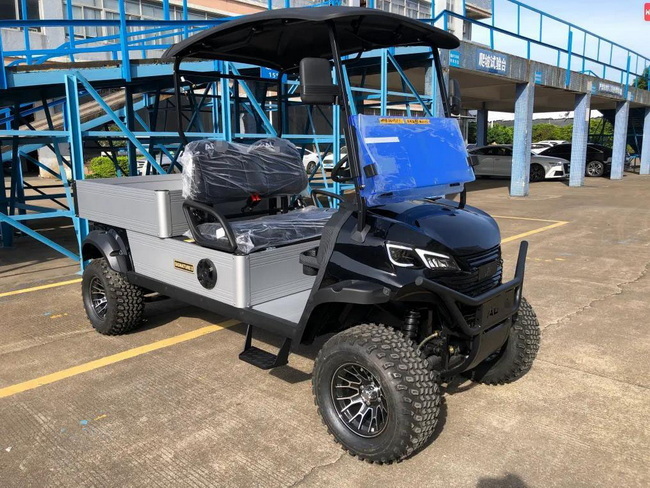
BorCart's published manufacturing scope includes golf carts, sightseeing buses, low-speed vehicles, and multipurpose vehicles. Its website also lists cargo vans as a product category. It states that chassis, bodies, molds, and painting are handled in-house, and it explicitly advertises OEM/ODM services, sample orders, and factory visits.
This makes BorCart a relevant candidate for buyers exploring:
- Branded cargo vehicles for private-site logistics.
- Utility vehicles adapted to specific commercial applications.
- Customized bodies, finishes, and functional layouts.
- Projects requiring closer coordination between vehicle assembly and fabricated components.
For smaller brands, this scope creates a useful starting point for discussing project flexibility and development costs. However, low MOQ, superior communication speed, and lower total cost should be evaluated through quotations and a pilot project rather than presented as proven advantages.
BorCart describes a New Product Introduction process supported by Incoming Quality Control, Process Quality Control, and Quality Assurance. It also states that every vehicle undergoes assembly-line testing. Its profile names KDS and Mahle motors, Curtis controllers, and Delta-Q chargers among components used in its vehicles.
Buyers should request a model-specific bill of materials. A component brand mentioned in a company profile does not establish that it is installed in every cargo vehicle configuration.
BorCart is particularly worth evaluating where the purchasing brief prioritizes customized utility applications, cost-controlled fabrication, and direct engineering collaboration.
To test communication efficiency, submit a structured specification and request:
1. A named project contact.
2. An engineering feasibility response.
3. A drawing and specification approval schedule.
4. A prototype quotation.
5. A production change-control procedure.
The important limitation is product-category fit. BorCart's public profile emphasizes low-speed and utility vehicles; buyers seeking highway-capable commercial vans should obtain explicit model specifications and destination-market approval evidence before placing an order.
SAIC MAXUS Automotive Co., Ltd. was established on March 21, 2011, as a wholly owned subsidiary of SAIC Motor. Its international website states that its broader vehicle portfolio is available in more than 60 markets worldwide.
Its published electric commercial vehicle range includes the eDELIVER 3 and eDELIVER 9, making it a relevant shortlist candidate for buyers seeking recognizable road-going delivery van platforms.
The official eDELIVER 3 page lists a 50 kWh battery, a maximum combined WLTP range of 227 km, maximum payload of 1,045 kg, and cargo space of 4.8 cubic meters. These are published product figures, not a guarantee that every market specification delivers the same combination.
MAXUS provides a useful benchmark for buyers comparing standardized electric van platforms against custom-built alternatives.
For MAXUS, procurement discussions should begin with the available factory variants, authorized distribution arrangements, and permitted commercial conversions.
Potential requirements include shelving, fleet graphics, cargo protection, and specialist equipment installation. Whether these changes are factory-supported, distributor-managed, or handled by an approved conversion partner must be confirmed.
Do not assume that an established vehicle brand offers unrestricted white-label manufacturing. Private-label rights, substantial engineering changes, and local assembly arrangements require explicit commercial agreements.
Confirm the exact market version, steering position, battery configuration, charging interface, payload, warranty provider, and service network. Global brand coverage does not automatically mean that the required model is approved or supported in every country.
Farizon was established in 2016 and is Geely Holding Group's commercial vehicle business. A December 2024 announcement from Jameel Motors described an agreement to distribute Farizon new-energy commercial vehicles in the United Kingdom, led by the SV electric van.
Farizon's New Zealand distributor also identifies export activity across Asia-Pacific, the Middle East, and South America. These statements describe international coverage, not a verified ranking of market importance.
The SV was developed on a dedicated electric modular platform. Jameel Motors' launch announcement describes a development program exceeding one million miles and engineering features including cell-to-pack battery integration and a hybrid aluminum-steel structure. These are company and distribution-partner statements rather than independent test conclusions.
Farizon is therefore a relevant candidate for fleets that want to evaluate a purpose-built electric platform rather than focus exclusively on purchase price.
Buyers should investigate factory options and authorized upfitting provisions for cargo layouts, fleet equipment, and application-specific installations.
The reviewed sources establish electric commercial vehicle development and distribution, but do not establish a general small-order private-label ODM service. Branding rights, structural modifications, software integration, and assembly programs should be negotiated separately.
Ask how third-party equipment affects warranty coverage and approval status. Refrigeration, auxiliary batteries, powered equipment, and telematics should have documented integration responsibilities before installation.
JAC Motors was founded in 1964. Its official company profile describes an automotive group integrating research, manufacturing, sales, and services across passenger and commercial vehicles.
JAC's South African website reports exports to more than 130 countries. This reflects the group's overall international presence, not confirmation that the Sunray EV is sold or approved in every one of those markets.
JAC's official international website lists the Sunray EV and M3 EV. The Sunray EV page publishes a 77.28 kWh battery, a stated range of 280–315 km, cargo weight up to 1,850 kg, and cargo volume ranging from 10.5 to 20 cubic meters. It also lists estimated DC charging from 15% to 80% in no more than 43 minutes.
These figures require variant-level clarification. A broad cargo-volume range may cover different bodies or configurations, while the reviewed page does not clearly establish the range test cycle.
JAC's wider Sunray family includes cargo, passenger, and special-purpose configurations, demonstrating a broader commercial vehicle platform approach. However, the published Sunray family page also covers combustion powertrains, so those conversion capabilities should not automatically be attributed to every electric version.
For an electric cargo van project, ask which body configurations and conversions are approved for the selected EV platform.
Specify the exact combination of cargo volume, usable payload, battery, wheelbase, and destination-market documentation. Do not accept a quotation assembled from the most favorable figures across several different variants.
Foton was founded on August 28, 1996, and is headquartered in Beijing. Its official profile describes a broad commercial vehicle portfolio and states that electric truck, van, and bus products have entered European markets including Italy, Germany, and Malta.
The same profile describes wider electric commercial vehicle activity in markets including Australia, New Zealand, Singapore, India, Egypt, and Latin America. These markets relate to different products and applications, not necessarily one cargo van model.
Foton is relevant for buyers whose procurement plans extend beyond a single van to a broader commercial vehicle relationship.
Its established commercial vehicle background can justify discussions about distribution, fleet supply, maintenance support, and export programs. Nevertheless, the exact electric van offering must be confirmed through the responsible sales channel.
Ask Foton to identify the factory-supported options, authorized conversion routes, branding restrictions, and any available component or assembly programs.
The reviewed public material does not establish a universal private-label ODM offering or model-specific MOQ.
Avoid treating the name "TOANO" as proof of an electric configuration. Foton's reviewed global TOANO product page describes fuel consumption and combustion-engine characteristics, illustrating why buyers must verify the actual drivetrain and variant rather than rely on a familiar platform name.
The following checklist is a procurement framework. It should be adapted with the manufacturer, testing organization, and destination-market approval specialist.
Specify measurable requirements rather than "high-quality steel" or "premium materials."
| Area | Recommended specification evidence |
|---|---|
| Structural materials | Material grade, thickness, supplier traceability, and approved substitutions |
| Welding | Controlled process instructions, joint inspection criteria, and repair procedures |
| Corrosion protection | Pretreatment, coating system, inspection method, and acceptance criteria |
| Cargo floor | Rated load, concentrated-load limits, fastening method, and surface durability |
| Doors and seals | Water-ingress checks, alignment criteria, and latch durability |
| Payload | Final completed-vehicle weight, axle limits, and approved gross vehicle weight |
| Battery installation | Pack identification, mounting design, protection, and relevant test documentation |
The aim is to connect the specification to evidence that can be inspected—not to create a long list of unsupported performance promises.
Ask suppliers to distinguish:
- Gross capacity from usable capacity.
- Cell specifications from complete pack specifications.
- Laboratory range from route-based fleet performance.
- Maximum charging power from charging time across a defined state-of-charge window.
- Battery warranty duration from the capacity-retention conditions.
Do not compare MAXUS's explicitly stated WLTP figure with another supplier's range figure unless the test conditions are comparable. MAXUS identifies its eDELIVER 3 combined range as WLTP, while the reviewed JAC Sunray EV page lists a range without clearly identifying the cycle.
For sample evaluation, define payload, ambient temperature, road profile, speed, climate-control use, and charging conditions.
CE and RoHS should not be used as generic substitutes for vehicle registration evidence.
EU motor vehicle market access is governed by the applicable vehicle approval framework. Regulation (EU) 2018/858 establishes technical and administrative requirements for passenger and goods vehicles and provides for vehicle-specific certificates of conformity.
The European Commission's RoHS guidance identifies cars and commercial vehicles among excluded means of transport. Separate electrical products supplied with a vehicle may require their own assessment, but a general "RoHS-compliant" statement is not proof that the van can be registered.
For applicable electric road vehicles, UNECE Regulation No. 100 addresses electric powertrain and rechargeable energy storage system safety. Confirm the relevant scope, amendment series, and relationship between the approved system and the vehicle configuration being purchased.
For battery transport, request the relevant UN 38.3 test summary. PHMSA explains that lithium batteries are subject to design testing under subsection 38.3 and describes the associated test-summary requirement. This is transport-safety evidence, not whole-vehicle road approval.
The approved sample is useful only if repeat production follows a controlled specification.
Reduce substitution risk by agreeing:
1. A signed bill of materials.
2. Critical component manufacturers and part numbers.
3. Written approval requirements for substitutions.
4. Batch traceability.
5. Inspection rights before shipment.
Avoid accepting "equivalent quality" as an undefined substitution rule.
A factory may quote workshop area, containers shipped, total group output, or theoretical line capacity. None automatically establishes how many customized vans it can deliver by your deadline.
Request actual recent output for the relevant category, current backlog, available allocation, and the production schedule for your order.
Require a completed prototype to be weighed with the agreed equipment installed. Record axle loads and confirm the resulting payload against applicable vehicle limits.
This avoids purchasing against a base-vehicle figure that no longer describes the finished product.
A less visible risk is configuration drift between the approved vehicle, the sample, and repeat production.
For EU type-approved vehicles, manufacturers must produce vehicles in conformity with the approved type. That makes configuration control more than an administrative preference.
Build a "configuration passport" containing:
- Vehicle type, variant, and version.
- Battery pack identifier.
- Motor and controller identifiers.
- Relevant software versions.
- Approved weight and tire specifications.
- Body and conversion drawings.
- Applicable approval references.
- Sample inspection records.
Require the supplier to explain whether a proposed change affects approval, warranty, servicing, or spare-parts compatibility before authorizing it.
Confirm the manufacturer's legal name, factory address, invoicing entity, bank beneficiary, and authorization of any export agent.
The contract should clearly allocate manufacturing, warranty, documentation, and after-sales responsibilities.
For management-system certificates, check the legal entity, covered locations, scope, certificate number, issuer, and current status.
IAF CertSearch allows searches by company or certificate number and provides status, scope, issuing body, and accreditation information. A certificate image alone is not a current verification result.
The sample should match the intended production configuration. Use it to assess loaded operation, charging compatibility, cargo usability, water ingress, documentation, and service access.
Agree acceptance criteria before shipment rather than deciding afterward what constitutes a defect.
Review consistency across several vehicles, not only the demonstration unit. Check identifiers, installed components, inspection records, packaging, and supplied spare parts.
Ask a forwarder experienced with electric vehicles to confirm the current requirements for the specific shipment:
- Complete vehicles versus separately shipped batteries.
- Required battery test summaries and declarations.
- Carrier acceptance conditions.
- Packing and securing arrangements.
- Insurance coverage.
- Destination handling and customs documentation.
Do not assume that acceptance of one vehicle or battery shipment establishes acceptance for a different configuration. UN 38.3 documentation should be checked against the battery type being shipped.
The five suppliers serve different purchasing priorities:
- BorCart merits evaluation for customization-led utility and low-speed cargo projects, particularly where direct OEM/ODM support is important.
- MAXUS offers established electric delivery van platforms.
- Farizon offers a purpose-built electric commercial van proposition.
- JAC combines electric van products with a broader commercial vehicle portfolio.
- Foton provides an established commercial vehicle group for buyers exploring electric van supply and wider fleet programs.
For a BorCart project, start with a technical sourcing brief covering operating environment, road-use requirements, payload, cargo dimensions, battery expectations, target market, and annual volume. Request a model-specific quotation, sample plan, bill of materials, and documentation package before discussing repeat production.
BorCart's advertised sample-order and factory-tour services provide practical routes for evaluating manufacturing fit before entering a longer-term OEM relationship.

Search by the certificate number or company name, then compare the legal entity, factory address, scope, and status with the supplier's documents.
IAF CertSearch distinguishes active, suspended, withdrawn, and expired statuses. If the information is missing or inconsistent, contact the issuing certification body directly before treating the certificate as verified.
No. Battery or powertrain safety evidence is only part of the assessment.
The applicable vehicle approval framework addresses the complete vehicle, while UNECE R100 covers specified electric powertrain and rechargeable energy storage safety requirements. Obtain the selected vehicle's approval and conformity documentation, not only a battery report.
Do not assume so. EU rules provide for multi-stage approval and also address completed vehicles converted or modified by another manufacturer.
Before ordering, ask the approval holder and conversion specialist to determine the route for the finished vehicle and identify who issues the final documentation.
Make identification and change control contractual.
Record the approved part numbers, serial-number format, software information, and relevant documents during sample qualification. Require shipment inspection against that baseline.
For applicable approved vehicles, configuration consistency also supports the obligation to manufacture in conformity with the approved type.
Request a written, project-specific response rather than an informal estimate.
Separate MOQ for standard vehicles, paint changes, branding, custom tooling, and electrical modifications. Ask for the production allocation supporting your delivery date.
If reliable information remains unavailable, use a limited pilot order and avoid commitments that depend on unverified capacity.
- [China's 2025 automotive production, sales, and exports — State Council Information Office]. [english.scio.gov]
- [Global EV Outlook 2026: Manufacturing and Trade — International Energy Agency]. [iea]
- [Industry statistics — China Association of Automobile Manufacturers]. [en.caam.org]
- [EU motor vehicle approval framework — Regulation (EU) 2018/858]. [eur-lex.europa]
- [UNECE Regulation No. 100 — electric powertrain and battery safety]. [unece]
- [Lithium Battery Test Summaries — PHMSA]. [phmsa.dot]
- [RoHS guidance — European Commission]. [environment.ec.europa]
- [Accredited management-system certificate verification — IAF CertSearch]. [iafcertsearch]
- [Guangzhou BorCart company profile]. [borcart]
- [SAIC MAXUS company information]. [en.saicmaxus]
- [Farizon SV UK distribution announcement — Jameel Motors]. [jameelmotors]
- [JAC Motors company profile]. [jacen.jac.com]
- [Foton company profile]. [fotonmotor]


