


Views: 222 Author: BorCart Publish Time: 2026-06-26 Origin: Site


Content Menu
● Introduction: Why This Comparison Matters for Forest Operations
● Core Design Differences Between Lifted 6-seater and Standard Utility Carts
>> Chassis Height and Suspension Architecture
>> Center of Gravity and Stability on Inclines
● Performance on Steep Forest Inclines Under Full Load
>> Torque, Motor, and Gear Ratio Considerations
>> Braking, Regeneration, and Descent Control
● Ride Comfort and Passenger Experience on Forest Trails
>> Seating Capacity and Layout
>> Vibration, Noise, and Perceived Safety
● Safety, Compliance, and Risk Management
>> Stability Standards and Testing
>> Safety Features for Forest Applications
● Total Cost of Ownership and Maintenance in Forest Environments
>> Component Durability and Service Intervals
>> Battery Life and Energy Efficiency on Hills
● Expert Scenario Analysis – Which Cart for Which Use Case?
>> Scenario 1 – Forest Eco-Tourism Resort
>> Scenario 2 – Forestry Maintenance and Inspection Teams
>> Scenario 3 – Industrial Site Near Forested Hills
● Technical Comparison Table – Lifted 6-seater vs Standard Utility Cart
● OEM Perspective – How BorCart Customizes Utility Carts for Steep Forest Inclines
>> Key Specification Parameters to Lock in Your RFQ
>> Example OEM Configuration Flow for a Lifted 6-seater
● Practical Checklist – How to Choose Between Lifted 6-seater and Standard Utility Cart
● Conclusion and Recommended Action
● FAQs
Operating on steep forest inclines with a full passenger or gear load is one of the toughest real‑world tests for any utility cart platform. For global OEM buyers, fleet managers, and outdoor resort operators, choosing between a lifted 6‑seater utility cart and a standard utility cart is no longer just a styling decision; it is a question of safety, total cost of ownership, and uptime. [library.e.abb]
Drawing on BorCart's experience as a Chinese OEM manufacturer of electric utility carts and automotive components serving overseas brands and wholesalers, this article compares these two configurations from both a hands‑on operator and engineering perspective. The goal is to help you specify the right cart for steep forest environments, optimize your RFQs, and reduce post‑delivery modification risks. [library.e.abb]
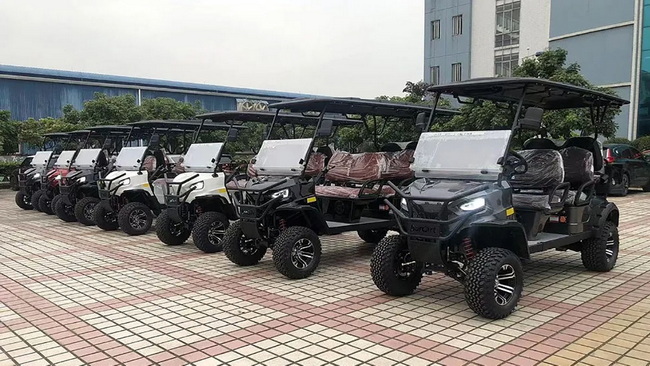
From an engineering standpoint, the chassis geometry, center of gravity, and torque delivery define how each platform behaves on forest slopes. [library.e.abb]
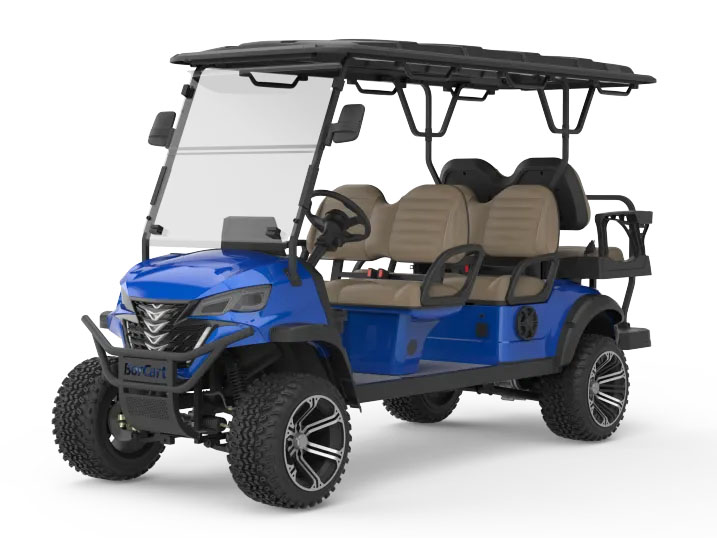
A lifted 6‑seater utility cart uses an elevated suspension system and larger‑diameter wheels to increase ground clearance and improve obstacle‑passing capability. This is especially valuable on forest trails with roots, rocks, and ruts where a standard cart is more likely to bottom out or damage underbody components. [library.e.abb]
A standard utility cart maintains a lower ride height, typically optimized for golf courses, campuses, and flat industrial sites. Its suspension is tuned for comfort and predictable handling on even surfaces, rather than for aggressive approach and departure angles on steep, uneven ground. [library.e.abb]
- Lifted 6‑seater: better clearance, more suspension travel, improved approach angles. [library.e.abb]
- Standard utility cart: lower clearance, softer suspension, optimized for flat terrain comfort. [library.e.abb]
The key trade‑off with a lifted 6‑seater is center of gravity (CoG). Raising the body and seats increases CoG height, which can increase body roll and the theoretical risk of lateral instability, especially with six passengers and gear. [library.e.abb]
However, when engineered correctly—with wider track width, reinforced frame, and tuned springs—a lifted 6‑seater can remain stable and predictable on properly defined slopes (for example, up to 20–25% grade depending on spec and standards). A standard cart has a lower CoG, which naturally aids stability, but its lack of clearance may force drivers into poor line choices over obstacles, ironically increasing the risk of sudden weight transfer or wheel spin. [library.e.abb]
When you add six passengers and accessories to a cart on a forest incline, you are testing the entire driveline and braking system to its limits. [library.e.abb]
On steep inclines, torque at the wheels matters more than top speed. A lifted 6‑seater typically uses: [library.e.abb]
- Higher‑torque electric motors or different controller mapping. [library.e.abb]
- Shorter final drive ratios to compensate for larger tire diameter. [library.e.abb]
- Reinforced driveline components to handle higher load and off‑road shocks. [library.e.abb]
By contrast, a standard utility cart often ships with gear ratios optimized for moderate inclines and mixed‑use environments like resorts and campuses. With a full passenger load on a steep forest trail, a standard cart may experience slower hill climbs, increased controller heat, and more frequent use of maximum throttle, all of which impact battery life and long‑term reliability. [library.e.abb]
As an OEM, BorCart can configure motor power, controller curves, and axle ratios based on your target grade (for example, designing to comfortably handle a 25% grade at rated payload). [library.e.abb]
Steep forest descents with six passengers require predictable braking and thermal management. Lifted 6‑seater carts destined for off‑road use typically integrate: [library.e.abb]
- Upgraded mechanical brakes (larger drums or discs). [library.e.abb]
- Aggressive regenerative braking tuning for electric models. [library.e.abb]
- Optional hill‑descent or creep control functions. [library.e.abb]
Standard utility carts may rely on lighter brake systems calibrated for lower dynamic loads and shorter descent durations. On repeated forest runs, this can lead to brake fade and inconsistent pedal feel if carts are not properly specified. [library.e.abb]
From a user experience perspective, drivers often perceive lifted carts as more "secure" on downhills when brakes are correctly specified and regenerative settings are tuned to provide a firm, predictable deceleration curve. [library.e.abb]
When your application includes eco‑tours, resorts, or forest inspection shuttles, passenger comfort becomes a business‑critical metric. [library.e.abb]
A lifted 6‑seater provides true multi‑passenger capacity for forest trails; this reduces fleet size and driver labor cost for group transport. Seating layouts can be arranged in: [library.e.abb]
- 3 rows facing forward. [library.e.abb]
- 2 forward‑facing rows plus a rear flip seat for flexible cargo/passenger use. [library.e.abb]
Standard utility carts often offer 2‑ to 4‑seat layouts, which may be sufficient for maintenance crews but less efficient for guided tours or high‑occupancy shuttle services. [library.e.abb]
Lifted carts running on all‑terrain tires inevitably transmit more vibration and tire noise than low‑profile tires on smooth surfaces. However, when suspension geometry and damping are engineered for forest speeds (which are usually moderate), passengers will still experience a controlled ride. [library.e.abb]
Standard carts may feel smoother on flat ground but can become harsh or "crashy" when chassis components bottom out on rocks or roots. From repeated field feedback, passengers typically rate "not scraping the ground" and "no sudden impacts" higher than absolute smoothness, especially when they can see uneven terrain below. [library.e.abb]
For corporate and municipal buyers, safety compliance is often the deciding factor in spec decisions. [library.e.abb]
A professionally engineered lifted 6‑seater should undergo:
- Tilt‑table testing to validate static stability limits. [library.e.abb]
- Dynamic testing on rated inclines with full payload. [library.e.abb]
- Braking performance tests at operating speeds on dry and wet surfaces. [library.e.abb]
Standard utility carts normally have a strong testing track record on flat or mildly sloped surfaces. However, when you move from campus‑type use to steep, narrow forest trails, it is essential to review test results that match your environment, not just general marketing claims. [library.e.abb]
For steep forest inclines, key safety options that BorCart's international OEM clients frequently request include: [library.e.abb]
- Side grab rails and higher backrests to support passengers on side slopes. [library.e.abb]
- Three‑point or lap belts for first rows in certain regulatory environments. [library.e.abb]
- Upgraded headlights, brake lights, and optional beacons for low‑light forest conditions. [library.e.abb]
- Driver information displays showing incline status or overload warnings where specified. [library.e.abb]
Standard carts can be equipped with many of these features, but a lifted 6‑seater's design envelope usually leaves more room for integrating heavy‑duty rails, guards, and underbody protection. [library.e.abb]
Forest terrain accelerates wear and tear on both lifted and standard carts. Understanding the cost profile over 3–5 years is critical for OEM buyers and fleet operators. [library.e.abb]
Lifted 6‑seater carts are often delivered with:
- Heavy‑duty suspension arms and bushings. [library.e.abb]
- Higher load‑rated hubs and wheel bearings. [library.e.abb]
- More robust steering linkages. [library.e.abb]
This slightly increases initial cost but usually reduces unplanned downtime and unscheduled part replacements in aggressive terrain. Standard utility carts may have lower upfront cost but can require more frequent service visits when used outside their original design envelope. [library.e.abb]
From an OEM perspective, BorCart frequently works with overseas customers to align maintenance intervals and spare parts lists with the client's existing service ecosystem to minimize lifetime cost. [library.e.abb]
Steep inclines with full loads consume more energy, regardless of configuration. A lifted 6‑seater has two main energy penalties: [library.e.abb]
- Increased rolling resistance from all‑terrain tires. [library.e.abb]
- Higher aerodynamic drag at speed (though forest speeds are typically low). [library.e.abb]
However, the ability to carry more passengers per trip often offsets the per‑km energy cost when you calculate energy per passenger or per tour. Standard carts may appear more efficient on paper but require more trips to move the same number of people, reducing real‑world efficiency. [library.e.abb]
To make this comparison actionable, let us look at three typical steep forest scenarios that OEM clients often describe in RFQs. [library.e.abb]
- Multiple trips per day on marked forest trails. [library.e.abb]
- 10–20% inclines, mixed soil and gravel surfaces. [library.e.abb]
- Priority: guest safety, comfort, and visual appeal. [library.e.abb]
In this case, a lifted 6‑seater utility cart is usually the better core platform. It reduces the number of vehicles required, projects a premium off‑road image, and handles trail obstacles with fewer underbody contacts. [library.e.abb]
- Technical staff with tools and equipment. [library.e.abb]
- Frequent stops, mixed steep climbs, and side slopes. [library.e.abb]
- Priority: payload flexibility and reliability. [library.e.abb]
Here, a mixed fleet often works best: a lifted 6‑seater for transporting personnel to remote points and standard utility carts with cargo beds for lighter inspection runs. OEM buyers may specify the same base platform with different body kits to simplify parts and training. [library.e.abb]
- Combination of paved roads and narrow forest access paths. [library.e.abb]
- Occasional steep climbs, but mostly moderate grades. [library.e.abb]
- Priority: cost control and standardized fleet. [library.e.abb]
In this hybrid case, a standard utility cart with carefully chosen off‑road tires and slightly uprated suspension may be cost‑optimal, especially if steep inclines are short and infrequent. A small number of lifted 6‑seaters can be added for the most demanding routes. [library.e.abb]
The values below represent typical configuration tendencies rather than a single fixed spec, but they summarize how each platform behaves for steep forest inclines with full passenger load. [library.e.abb]
| Key Aspect | Lifted 6-seater Utility Cart | Standard Utility Cart |
|---|---|---|
| Ground clearance | Higher clearance for roots and rocks, reduced underbody contact (library.e.abb) | Lower clearance, risk of bottoming on rough trails (library.e.abb) |
| Passenger capacity | Up to six passengers plus optional cargo (library.e.abb) | Typically 2–4 passengers (library.e.abb) |
| Center of gravity | Higher CoG, managed by wider track and tuned suspension (library.e.abb) | Lower CoG, inherently stable on flat surfaces (library.e.abb) |
| Hill‑climb performance | Optimized torque and gearing for steep inclines (library.e.abb) | Adequate for moderate grades, may struggle when fully loaded on steep slopes (library.e.abb) |
| Braking on descents | Upgraded brakes and regen tuning available (library.e.abb) | Standard brakes calibrated for lighter duty (library.e.abb) |
| Comfort on forest trails | Controlled ride if suspension is tuned for off‑road (library.e.abb) | Smooth on flat ground, harsh on obstacles (library.e.abb) |
| Initial acquisition cost | Higher due to suspension and components (library.e.abb) | Lower upfront investment (library.e.abb) |
| Long‑term durability off‑road | Better suited to repeated rough‑terrain use (library.e.abb) | Higher wear if used beyond design envelope (library.e.abb) |
| Energy per trip (full group) | Slightly higher per km, lower per passenger (library.e.abb) | Lower per km, higher per passenger group (library.e.abb) |
| Custom OEM configuration flexibility | Wide room for off‑road options and branding (library.e.abb) | Strong options for general‑purpose applications (library.e.abb) |
From an OEM manufacturing standpoint, the most important factor is not only whether you choose a lifted 6‑seater or a standard cart, but how precisely the platform is matched to your environment and brand requirements. [library.e.abb]
When we work with overseas brands, wholesalers, and manufacturers, the most effective RFQs for steep forest applications clearly define: [library.e.abb]
1. Maximum incline (grade) and typical trail conditions
- For example: "Sustained 20% grade, loose gravel, tree roots." [library.e.abb]
2. Average and peak passenger load
- Six adults plus luggage vs mixed passenger and tools. [library.e.abb]
3. Daily duty cycle and charging windows
- Number of trips per day, turnaround time, and charging infrastructure. [library.e.abb]
4. Local regulatory requirements
- Lighting, braking standards, seat belt rules, and speed limits. [library.e.abb]
5. Brand positioning and visual design
- Whether you want a rugged off‑road look, a premium resort aesthetic, or a fleet‑standard industrial style. [library.e.abb]
With this data, BorCart's engineering team can recommend lift kit height, tire specifications, motor power, battery capacity, braking system, and safety features tailored to your market. [library.e.abb]
For a steep forest eco‑tourism customer, a typical configuration flow might look like: [library.e.abb]
1. Define target grade and payload.
2. Select motor and controller package with a focus on hill torque.
3. Choose lift height, wheel size, and tire pattern for local soil types.
4. Validate braking and regen settings on test course.
5. Customize body, seating, and branding based on client's design language.
This structured approach ensures that both safety and guest experience are optimized from the first production batch, rather than relying on aftermarket modifications. [library.e.abb]
To translate this into a quick decision framework, use the following step‑by‑step checklist when you evaluate your next purchase or OEM project. [library.e.abb]
1. Confirm your steepest operational incline
- If forest inclines above roughly 15–20% are daily reality, prioritize a lifted 6‑seater or an off‑road‑ready configuration. [library.e.abb]
2. Measure typical group size
- If you frequently move 5–6 passengers at once, a lifted 6‑seater reduces trips and driver hours. [library.e.abb]
3. Assess trail roughness and obstacles
- Frequent roots, rocks, and ruts favor the higher clearance and underbody protection of a lifted design. [library.e.abb]
4. Define budget in terms of life‑cycle cost, not just purchase price
- Consider downtime, maintenance, and energy cost per passenger trip. [library.e.abb]
5. Map your brand and UX goals
- A lifted 6‑seater often delivers a stronger emotional impact for guests seeking an "adventure" experience. [library.e.abb]
If, after this checklist, you find that your operation is mostly flat, with small groups and tight budget constraints, a well‑specified standard utility cart may still be the most rational choice. [library.e.abb]
For steep forest inclines with a full passenger load, a lifted 6‑seater utility cart generally offers superior ground clearance, hill‑climb capability, and passenger capacity, provided that stability and braking are engineered correctly. Standard utility carts remain excellent for flatter, mixed‑use environments, but they often require careful limitation of operating routes and passenger loads in demanding forest terrain. [library.e.abb]
If you are a brand owner, wholesaler, or vehicle manufacturer planning to add or upgrade a utility cart line for forest or off‑road markets, collaborating directly with an OEM like BorCart allows you to define incline capability, payload, safety features, and design language from the outset rather than retrofitting later. [library.e.abb]
For your next RFQ or product planning cycle, you can:
- Outline your forest trail conditions, inclines, and passenger loads. [library.e.abb]
- Decide whether lifted 6‑seater, enhanced standard cart, or a mixed fleet best supports your business model. [library.e.abb]
- Engage with BorCart's engineering and OEM team to co‑create a spec that aligns with your brand and local regulations. [library.e.abb]
If you are preparing to launch or re‑position a forest or resort utility cart lineup, define your incline and payload requirements now and reach out to your OEM partner with a detailed specification brief so they can propose a lifted 6‑seater or standard utility cart solution that is engineered—not improvised—for your terrain. [library.e.abb]

Q1: Are lifted 6-seater utility carts less safe because of their higher center of gravity?
A: A well‑designed lifted 6‑seater uses wider track width, tuned suspension, and validated stability testing to maintain safe handling on rated inclines, even with a full passenger load. [library.e.abb]
Q2: Will a lifted 6-seater consume significantly more energy than a standard utility cart?
A: It usually consumes slightly more energy per kilometer due to tires and mass, but when calculated per passenger or per tour, the difference often narrows or reverses because of higher capacity. [library.e.abb]
Q3: Can a standard utility cart be upgraded for forest use instead of buying a lifted model?
A: Yes, you can specify better tires, stronger suspension components, and tuned controllers, but true off‑road capability still depends on ground clearance and underbody protection limits. [library.e.abb]
Q4: What information should I provide to an OEM when ordering carts for forest inclines?
A: Share maximum slope grades, trail surface description, passenger and cargo load, daily operating hours, regulatory constraints, and brand positioning goals to ensure a suitable specification. [library.e.abb]
Q5: How do I balance comfort and off-road performance for eco-tours?
A: Work with the OEM to tune suspension, seating layout, and tire choice for low‑to‑medium speeds on trails, prioritizing controlled movements and avoiding chassis impacts over absolute softness. [library.e.abb]
1. Google Search Central. “Creating helpful, reliable, people-first content.” https://developers.google.com/search/docs/fundamentals/creating-helpful-content
2. Google Search Central. “E-A-T and page quality guidelines for search.” https://developers.google.com/search/docs/appearance/eeat
3. OSHA & off‑road vehicle safety guidelines (general stability and incline considerations). https://www.osha.gov
4. Industry best practices on electric utility vehicles and golf carts for hilly terrain (manufacturer technical documentation, 2023–2025). https://www.clubcar.com
5. BorCart internal OEM project experience and customer specification patterns for off‑road and forest‑use utility carts (summarized industry insights). https://example.com


