


Content Menu
● Why Golf Buggy Width Matters
● Golf Buggy Width vs. Cart Path Design
● Interior Space and Seating Comfort
● Storing and Transporting a Golf Buggy
● How Accessories Affect Golf Buggy Width
● Choosing the Right Golf Buggy Width for Different Applications
>> Golf courses and country clubs
>> Resorts, hotels, and theme parks
>> Industrial, campus, and community use
>> Off‑road, hunting, and utility work
● Practical Tips for Selecting Golf Buggy Width
● Manufacturing Perspective: Designing Golf Buggy Width
● Safety and Handling: How Width Influences the Driving Experience
>> 1. How wide is a standard golf buggy?
>> 2. Are 4‑seater golf buggies wider than 2‑seaters?
>> 3. How does a lifted or hunting buggy's width compare?
>> 4. What path width is needed for golf buggies?
>> 5. Why do accessibility rules often mention 48 inches?
When planning, buying, or manufacturing a golf buggy, width is one of the most important dimensions to understand because it affects where the vehicle can go, how it is stored, and how comfortable it feels on the course. In global markets, especially for OEM partners, knowing typical golf buggy width ranges also ensures compatibility with course paths, trailers, containers, and local regulations.
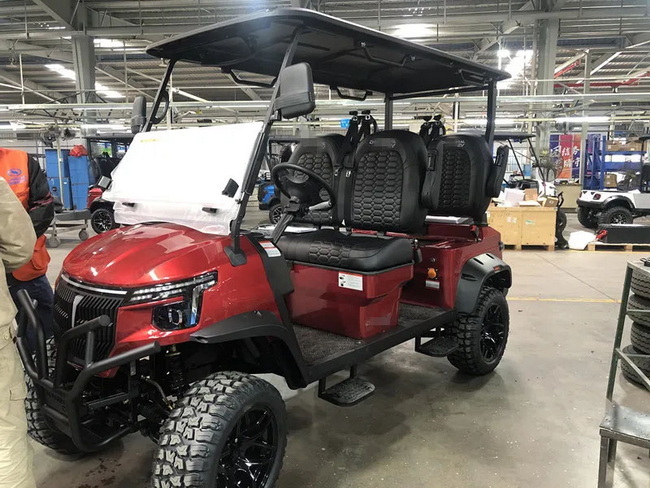
For most modern golf buggies, the standard overall width (measured from the widest outer point of one tire to the other) typically falls around 120–125 cm, or roughly 48–50 inches. This size allows a golf buggy to navigate narrow golf paths while still giving two passengers a comfortable seating area.
- Typical 2‑seater golf buggy width: about 120 cm (≈48 inches).
- Many 2‑seat golf carts in inches: 48–50 inches wide.
- Wider, multi‑row buggies: up to about 125–130 cm (≈49–51 inches).
In practice, a standard 2‑seat golf buggy usually has overall dimensions close to 240 cm in length, 120 cm in width, and 175 cm in height, which has become a widely accepted reference size on golf courses. For OEM projects, manufacturers often fine‑tune width within this band to balance stability, comfort, and compatibility with existing infrastructure.
Different types of golf buggy are designed for specific roles, and their widths can vary slightly depending on seating layout, tires, and accessories. A specialist producer of electric vehicles typically offers a full range from compact golf buggy models to wider multi‑purpose variants that serve resorts, tourism, hunting, and low‑speed community transport.
1- 2‑seater golf buggy
- Width: about 120 cm (≈48 inches).
- Designed primarily for two golfers plus clubs, ideal for standard golf paths.
2- 4‑seater golf buggy
- Width: around 120–125 cm (≈48–49 inches).
- Length increases significantly, but width only grows slightly to keep path compatibility.
3- 6‑seater golf buggy
- Width: about 125–130 cm (≈49–51 inches).
- Often used as a resort or shuttle buggy, where stability and comfort justify a modestly wider track.
4- Off‑road or lifted hunting buggy
- Width: can extend toward the upper range (up to about 55–58 inches) due to larger tires and wider stance.
- Offers extra stability on rough terrain but requires wider paths and trailers.
For brands positioning themselves in international markets, it is common to design core golf buggy platforms around the 48–50 inch width to maximize compatibility, then adapt suspensions, fenders, and bodywork for niche uses without exceeding key thresholds.
The width of a golf buggy affects far more than just how it looks; it is a central parameter for safety, comfort, logistics, and course design. A carefully controlled width helps operators and OEM buyers reduce long‑term operating costs and avoid infrastructure changes.
Key reasons golf buggy width is so important include:
1- Path access
- Golf course paths and bridges are built around standard golf buggy dimensions, so an overly wide buggy may not fit safely.
- Many accessible routes on golf facilities use a minimum width of about 48 inches so a golf buggy can pass.
2- Storage and transport
- Storage sheds, garages, and charging stations are laid out around standard buggy widths, making uniform dimensions highly practical.
- Trailers and containers are often sized to accommodate buggies around 48 inches wide with a small safety margin.
3- Stability and safety
- A golf buggy with a wider track can offer more lateral stability on slopes but may be less maneuverable in tight spaces.
- Manufacturers balance center of gravity, wheelbase, and width so the golf buggy feels stable but still nimble on course paths.
Golf course architects and facility managers design cart paths around typical golf buggy dimensions, which explains why width standards are so consistent worldwide. This tight relationship between buggy width and path design is crucial for operators, resorts, and OEMs.
1- Typical path widths
- Many golf cart paths are at least 6–8 feet wide so that two golf buggies can pass safely without leaving the pavement.
- Near tees, greens, and parking areas, path widths often extend to about 8 feet or more to accommodate turning and maintenance vehicles.
2- Accessibility standards
- In accessibility guidelines, a minimum route width of around 48 inches is set so that a golf car or golf buggy can travel between key course elements.
- Where handrails or obstacles exist, recommended route width may increase to about 60 inches to keep enough space for a buggy and its occupants.
Because of these standards, keeping a golf buggy around 48–50 inches wide ensures it fits comfortably on most existing paths while still leaving room for overtaking and pedestrian traffic. For operators planning new courses, aligning path width with the chosen fleet of golf buggies avoids costly redesigns later.
From the rider's perspective, what matters most is how roomy the golf buggy feels inside rather than the pure exterior width number. Good buggy engineering converts exterior width into usable shoulder room, seat width, and safe side clearance.
1- Seat width and passenger comfort
- A typical 2‑seat golf buggy uses the 120 cm overall width to provide adequate shoulder room for two adults side by side.
- Seat designs and armrests also influence perceived width, so ergonomic layouts can make a buggy feel more spacious than its raw dimensions suggest.
2- Club and cargo clearance
- Rear bag wells and cargo beds are arranged so that bags, coolers, and accessories do not protrude beyond the golf buggy's basic width.
- This careful packaging keeps the effective width predictable when navigating narrow paths or parking areas.
3- Multi‑row configurations
- On 4‑seater and 6‑seater models, designers usually extend the chassis length instead of greatly increasing width, in order to maintain path compatibility.
- Slight width increases (up to around 125–130 cm) are used mainly for stability and more comfortable bench seating.
OEM manufacturers that specialize in electric golf buggy platforms often adjust track widths and seat modules to match specific markets—for example, compact versions for older, narrower courses, and more spacious versions for resorts and tourism fleets.
Understanding how wide a golf buggy is becomes especially important when planning storage rooms, choosing trailers, or loading vehicles into containers. A few centimeters of difference can decide whether a buggy fits through a doorway or needs more extensive infrastructure.
1- Garage and shed planning
- Since a standard golf buggy is about 120 cm wide, many private owners and clubs design doors and internal lanes with extra clearance on each side.
- For rows of multiple buggies, operators often allow at least 30–60 cm between vehicles for safe entry, exit, and maintenance.
2- Trailer and truck loading
- Common trailers that carry golf buggies are sized to handle carts around 48 inches wide with some margin, making standard dimensions a practical baseline.
- When transporting lifted or hunting variants with wider tires, owners may need wider trailers or single‑vehicle loading to stay within legal limits.
3- Container and overseas shipping
- For export OEM projects, manufacturers design golf buggy models and packaging methods so several units can fit safely in standard shipping containers.
- Careful control of buggy width makes stacking, racking, and side‑by‑side loading more efficient for importers and distributors.
A producer of electric golf buggy and low‑speed vehicles can therefore add significant value for foreign partners by delivering detailed dimensional drawings and transport recommendations with every order.
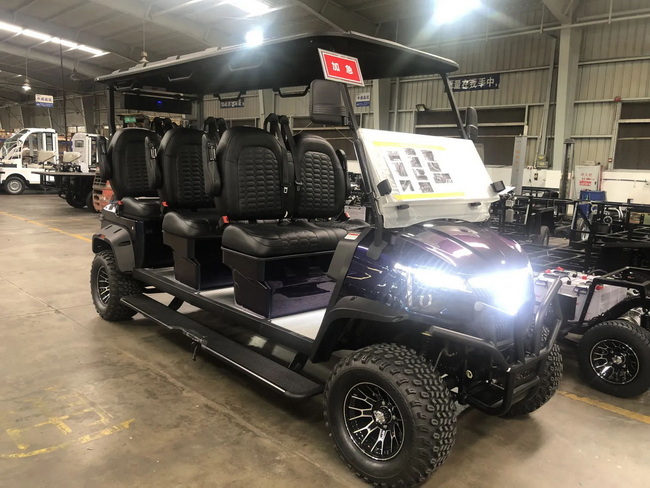
While the base chassis width of a golf buggy is relatively fixed, certain accessories and customization options can change the effective operating width. Understanding these influences helps buyers choose options that fit their course and storage conditions.
1- Wheel and tire upgrades
- Larger or wider tires, as well as modified wheel offsets, can increase overall width by several inches.
- Off‑road, hunting, or lifted golf buggy builds often prioritize traction and stability, accepting a wider stance as a trade‑off.
2- Body kits and fender flares
- Styling packages sometimes extend fenders beyond the base tire line, which can slightly increase the apparent width.
- For courses with tight bridges or gates, operators usually prefer cleaner body lines that keep the golf buggy within standard width envelopes.
3- Rear seats and cargo boxes
- Adding a rear‑facing seat kit or utility box normally increases length more than width, but mis‑aligned accessories can protrude sideways.
- Professional OEM integration keeps these modules inside the design width so that the golf buggy still fits paths and trailers.
When specifying an OEM golf buggy order, foreign distributors often provide local path dimensions, trailer sizes, and storage layouts so the manufacturer can configure widths and accessories accordingly.
Not every operation needs the same type of golf buggy, and width is a key parameter that should be matched to real‑world usage scenarios. Thinking through your main application before ordering a fleet can prevent expensive mistakes later.
For traditional 18‑hole or 27‑hole courses, the classic 2‑seat golf buggy around 48 inches wide remains the most efficient choice. Paths, bridges, and parking areas are usually built with this dimension in mind, so staying close to the standard width reduces risk and avoids modification work.
Some clubs also add a small number of 4‑seater or 6‑seater buggies for marshals, starters, or VIP guests. These buggies are often only slightly wider but much longer, so managers should ensure turning spaces and parking bays are planned accordingly.
Resort environments often favor multi‑row golf buggy designs that carry four, six, or even eight passengers at low speeds. In these situations, stability and comfort can justify a slightly wider footprint, especially when the paths are wide and traffic is mostly internal.
However, resort operators still benefit from limiting buggy width to ranges that fit standard service doors, elevators (where used), and loading ramps. A fleet based on one or two standardized widths simplifies maintenance, training, and spare part storage.
In factories, campuses, and gated communities, golf buggy style vehicles are often used as low‑speed transport shuttles. Here, width planning must take into account indoor aisles, warehouse doors, and mixed traffic with pedestrians and bicycles.
Compact golf buggy widths similar to standard 2‑seat models generally work best in these environments. When extra seats or cargo boxes are needed, many operators choose extended‑length versions instead of much wider models so they can still move easily through existing infrastructure.
For hunting estates, farms, or rugged resort terrain, off‑road golf buggy platforms with larger tires and a wider stance are popular. The increased width improves stability on uneven ground and allows for thicker off‑road tires with deep tread patterns.
The trade‑off is that such buggies may no longer fit through very narrow gates or onto compact trailers, so path and transport planning needs to consider their true operating width. For OEM customers, it is often helpful to specify separate width ranges for on‑course and off‑road golf buggy product lines.
When selecting a golf buggy or working with an OEM to develop a new model, width should be considered together with course layout, passenger capacity, and intended use. A simple checklist helps ensure the golf buggy fits both the environment and the business model.
Key practical tips include:
1- Confirm your narrowest points
- Measure bridges, gates, tunnels, and indoor doors on your property, and keep the golf buggy at least several centimeters narrower than these points.
- If your course has older or very narrow paths, prioritize compact golf buggy models around 48 inches in width.
2- Consider your main usage
- For pure golf course use, a standard width 2‑seat golf buggy offers the best balance of maneuverability and comfort.
- For resort, shuttle, or hunting operations, slightly wider golf buggy platforms may be worth it for stability and load capacity.
3- Plan for future expansion
- If you may later purchase wider lifted buggies or multi‑row vehicles, design new paths and storage with additional clearance from the beginning.
- Work with the buggy manufacturer to standardize widths across your fleet so accessories, trailers, and spare parts remain compatible.
4- Coordinate with your OEM supplier
- Share detailed drawings or measurements of your paths, ramps, and garages with your manufacturer so the recommended golf buggy width fits real conditions.
- Ask for technical data sheets that list track width, overall width including mirrors, and width at the roof or canopy for precise planning.
From the viewpoint of a professional manufacturer of electric vehicles and golf buggies, width is not just a static number, but the result of many engineering decisions and market requirements. Good design tries to find the optimal balance among comfort, safety, cost, and global compatibility.
Key engineering and manufacturing considerations include:
1- Chassis and suspension design
- The position of control arms, axles, and steering components sets the basic track width of a golf buggy.
- Engineers must balance a low center of gravity, sufficient wheel travel, and a compact turning radius while staying within width targets.
2- Body and styling constraints
- Bodywork must cover the wheels enough to protect passengers and passers‑by from debris and spray.
- Styling elements such as fender shapes, side steps, and decorative panels must be kept under control so they do not push the golf buggy beyond desired dimensions.
3- Component sharing across platforms
- Many manufacturers design common frames and axles that can be used across different golf buggy models, from 2‑seaters to 6‑seaters.
- Shared components reduce cost and simplify after‑sales service, but they also encourage standardization around a small set of width options.
4- Compliance and export requirements
- Some markets have specific rules for low‑speed vehicles and golf buggies that indirectly influence width, especially when allowed on public roads.
- Export partners may require detailed dimension certificates for customs, shipping, and local inspection authorities.
By treating width as a core design parameter from the beginning of a project, manufacturers can deliver golf buggy platforms that integrate smoothly into golf courses, resorts, and communities without costly site modifications.
Beyond dimensions and logistics, the width of a golf buggy strongly affects how the vehicle feels to drive and how safe it is in everyday use. A well‑balanced golf buggy gives drivers confidence on slopes, curves, and wet surfaces while remaining easy to maneuver in tight situations.
1- Cornering stability
- A wider track reduces body roll and lowers the risk of tipping during fast turns or sudden steering inputs.
- On steep side slopes, a slightly wider golf buggy can provide extra safety margin, especially when carrying passengers and equipment.
2- Maneuverability and turning radius
- For tight switchbacks, narrow bridges, and small parking areas, a more compact golf buggy width is advantageous.
- Vehicle designers must tune steering geometry and wheelbase so the buggy can turn sharply without sacrificing stability.
3- Weight distribution and load
- Seat configuration, battery placement, and cargo areas all interact with width to determine how weight is distributed.
- When a golf buggy is loaded heavily on one side or at the rear, a well‑designed width helps maintain predictable handling.
Operators who use golf buggies on hilly or uneven terrain should pay close attention to both width and recommended maximum slope values given by the manufacturer. Training drivers on correct cornering speed, passenger seating, and load placement further enhances safety.
In most markets today, a standard 2‑seat golf buggy is about 120 cm, or roughly 48 inches wide, with larger 4‑seat and 6‑seat models staying within approximately 125–130 cm. This carefully controlled width allows the golf buggy to fit comfortably on 6–8 foot cart paths, pass through 48‑inch accessible routes, and load easily into standard trailers, garages, and containers.
For course operators, resort managers, industrial users, and OEM buyers, understanding how wide a golf buggy is—and how that width interacts with paths, storage, accessories, and safety—is essential to building a reliable and efficient transportation system. By choosing the right golf buggy width for each application and working closely with experienced manufacturers, businesses can optimize comfort, stability, and life‑cycle cost across their vehicle fleets.
Contact us to get more information!
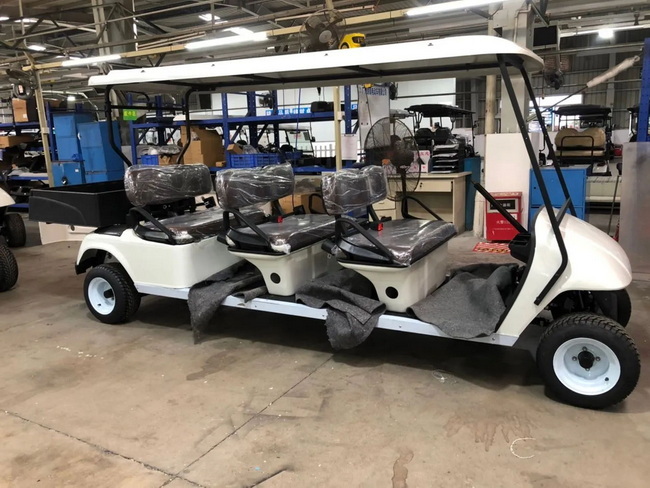
A typical standard 2‑seat golf buggy is about 120 cm wide, which is roughly equal to 48 inches. Most mainstream buggies stay within a narrow band of 48–50 inches overall width so they fit standard golf paths, bridges, and garages.
Most 4‑seater golf buggies increase length more than width, generally staying around 120–125 cm (48–49 inches) wide. This approach keeps them compatible with existing golf cart paths, storage sheds, and transport trailers designed for standard‑width vehicles.
Lifted or hunting‑style buggies often use larger, wider tires and a broader stance, so their overall width can reach the upper end of common ranges, around 54–58 inches. These golf buggy builds offer improved off‑road stability and grip but require wider paths, ramps, and trailers to operate safely.
Many facilities design cart paths to be at least 6–8 feet wide so that two golf buggies can pass each other without leaving the pavement. Near tees, greens, and staging areas, path widths often increase further to accommodate turning, parking, and occasional use by maintenance vehicles.
Accessibility guidelines in many regions specify a minimum clear route width of around 48 inches so that a golf car or golf buggy can move between important areas such as rental shops, tees, and shelters. This figure closely matches the width of common 2‑seat golf buggies, creating a natural alignment between vehicle design and course infrastructure.
1. https://taraelectricvehicles.com/blog/2025/05/23/how-wide-is-a-golf-cart-golf-cart-dimensions-by-type-length-width-height/
2. https://jsgolfcarts.com/blog/golf-cart-dimensions/
3. https://hartvillegolfcarts.com/how-wide-is-a-golf-cart/
4. https://www.taragolfcart.com/news/golf-buggy-dimensions-standard-sizes-and-a-practical-guide/
5. https://wis-tek.com/blogs/knowledge/comprehensive-guide-to-golf-cart-dimensions-width-length-and-height-explained
6. https://www.vatrerpower.com/blogs/news/how-wide-is-a-golf-cart
7. https://www.youtube.com/watch?v=oJVoTYDW1vA
8. https://www.hotbot.com/answers/how-wide-is-a-golf-cart
9. https://www.gowithgarretts.com/golf-cart-dimensions-size-does-matter/
10. https://www.access-board.gov/ada/guides/chapter-10-golf-courses/
11. https://www.reddit.com/r/golfcarts/comments/1k65wlo/standard_width/
12. https://www.golfcartgarage.com/blog/golf-cart-dimensions-and-their-importance/
13. https://www.usga.org/content/usga/home-page/course-care/green-section-record/62/issue-02/cart-path-talking-points.html
14. https://buncebuildings.com/electric-vehicles-golf-carts/a-closer-look-at-golf-cart-dimensions-and-why-size-matters/
15. https://taraelectricvehicles.com/blog/2025/09/11/understanding-the-dimensions-and-weight-of-a-standard-golf-cart/


