


Content Menu
● What Defines Golf Buggy Speed?
● Typical Speed Ranges for Golf Buggies
● Electric Golf Buggy vs Gas Golf Buggy Speed
● How Voltage and Power Affect Speed
● Terrain, Load, and Driving Conditions
● Legal Limits on Golf Buggy Speed
● Safety Considerations at Different Speeds
● Can You Make a Golf Buggy Faster?
● Range vs Speed: Finding the Balance
● Use Cases: Course, Community, and Utility
● Choosing the Right Speed for Your Needs
>> 1. How fast does a standard golf buggy go?
>> 2. What is the top speed of a street‑legal golf buggy?
>> 3. Is an electric golf buggy faster than a gas one?
>> 4. Why is my golf buggy slower than advertised?
>> 5. Is it safe to modify a golf buggy for higher speed?
A typical golf buggy runs at about 12–15 mph on golf courses, while upgraded or street‑ready versions often reach 20–25 mph. Some modified electric units can approach 30 mph, but these higher speeds usually bring extra safety concerns and stricter legal requirements.[1][2][3][4]
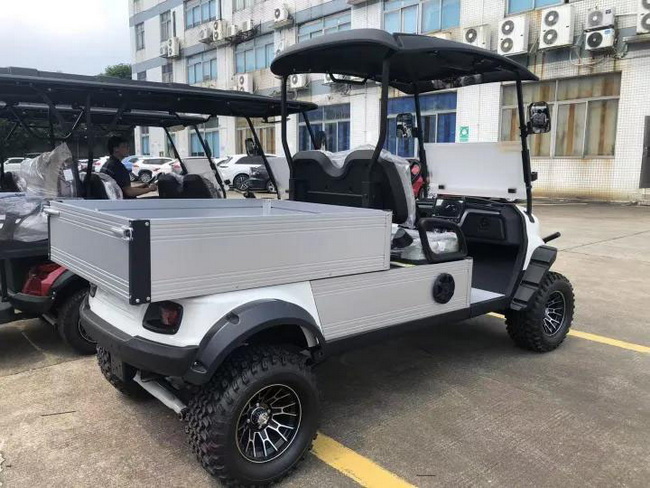
A golf buggy is engineered as a low‑speed vehicle, optimized for short trips, quiet operation, and minimal impact on turf rather than high performance. Designers deliberately limit speed so that drivers can maneuver safely on narrow paths, among pedestrians, and over uneven ground.[2][5][6]
Several core parameters determine how fast a golf buggy can go:[3][2]
- Powertrain design, including motor type and output
- System voltage (for example, 36V, 48V, or 72V electric setups)
- Controller programming and factory speed limits
- Gear ratios, tire size, and rolling resistance
- Total weight, including passengers and cargo
Instead of chasing the highest possible top speed, most brands tune the golf buggy to feel smooth, predictable, and efficient at low to moderate speeds.[5][2]
Across the market, golf buggy top speeds fall into relatively consistent bands that align with safety expectations on courses and in residential communities. Manufacturers generally prioritize stability and control over outright speed, especially for base models used in everyday resort and club operations.[6][7][1][5]
Common benchmarks include:[7][1][2]
- Standard course buggy: about 12–15 mph on level surfaces
- “Fast” factory tune: around 15–18 mph
- LSV‑style or enhanced buggy: 20–25 mph top speed
Modern electric systems have expanded the range in the upper band, and performance‑oriented controllers can push certain golf buggy models well beyond the traditional 15 mph ceiling. However, once a golf buggy consistently operates above 20–25 mph, it often falls under stricter low‑speed vehicle classifications in many jurisdictions.[8][9][10][3]
Both electric and gas platforms can deliver enjoyable, practical performance, but they feel different in how they accelerate and maintain speed. Many buyers assume gas must be faster; in reality, well‑equipped electric golf buggy models frequently match or outperform gas units in top speed and initial pickup.[4][11][7]
Key tendencies:[11][3][4][7]
- Electric golf buggy:
- Often reaches 15–25 mph in standard or upgraded trim.
- Provides strong low‑end torque and quick throttle response.
- Can be programmed or upgraded for more speed, though this may affect range and safety.
- Gas golf buggy:
- Commonly capped around 18–20 mph to stay within safe limits.
- Maintains speed well over long distances and on extended climbs.
- Usually offers fewer “plug‑and‑play” speed upgrades than electric platforms.
In practice, a well‑designed electric golf buggy can feel more responsive at typical operating speeds, while a gas golf buggy may appeal to users who value long range and familiar refueling over outright acceleration.[4][7]
For electric designs, the electrical system's architecture plays a huge role in determining golf buggy performance. Voltage, controller current limits, and motor efficiency all work together to define how quickly the vehicle can accelerate and how high its top speed can climb.[3][7][8]
Typical patterns include:[7][3]
- 36V systems: Often deliver about 12–14 mph with a focus on economy and light utility use.
- 48V systems: Frequently run in the 15–19 mph range and offer stronger acceleration.
- 72V or high‑performance systems: Commonly tuned toward 20–25 mph or beyond, especially in premium electric golf buggy platforms.
Raising voltage or installing a more powerful motor can make a golf buggy feel dramatically livelier, but these changes need to be matched with stronger controllers, appropriate wiring, and suitable braking capability. Without a balanced approach, the golf buggy may reach higher speeds than its chassis and suspension were originally designed to handle.[6][8][11][3]
The speed a brochure promises and the speed a driver actually experiences are rarely identical, because terrain and load exert a strong influence. Even two identical golf buggy units can behave very differently if one climbs hills with four passengers while the other cruises lightly loaded on smooth paths.[12][13][6]
Important real‑world factors include:[13][12][6]
- Terrain:
- Flat, paved, or well‑maintained paths let a golf buggy run close to its rated top speed.
- Hills, deep grass, gravel, or sand force the motor to work harder, reducing both speed and range.
- Load and weight:
- Additional passengers, luggage, hunting gear, or maintenance tools all add mass.
- Heavier loads slow acceleration and may cut top speed by several mph, especially on inclines.
- Environmental conditions:
- Extreme heat or cold can temporarily reduce battery performance in an electric golf buggy.
- Wet or muddy surfaces require slower driving to maintain traction and stability.
Due to these influences, operators often cruise a few mph below the theoretical maximum, trading peak speed for control, comfort, and energy efficiency.[12][3]
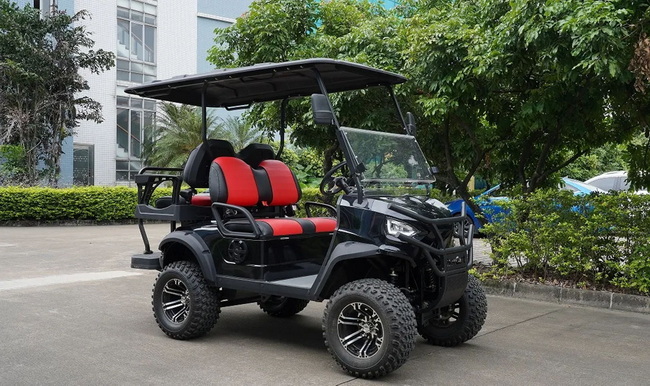
The speed a golf buggy is allowed to reach on public or semi‑public routes is defined not just by engineering but also by law. Authorities typically classify golf buggy and similar vehicles as low‑speed or neighborhood electric vehicles when they fall within specific speed bands.[9][10][5]
Typical regulatory themes include:[10][5][9]
- Top speed band: Street‑oriented golf buggy and LSV models are usually capped between 20–25 mph.
- Road access:
- Many regions restrict golf buggy use to streets posted at 25–35 mph or below.
- Operation may be limited to designated routes near golf courses, in gated communities, or inside resorts.
- Equipment requirements:
- Vehicles that exceed certain speed thresholds need features such as headlights, tail lamps, reflectors, mirrors, and turn signals.
- In some areas, faster golf buggy models also require registration, insurance, and compliance with additional safety standards.
Anyone considering a higher‑speed golf buggy for neighborhood or commercial use should verify local rules before modifying or purchasing a vehicle, because crossing a legal speed boundary can change the entire regulatory category.[14][9][10]
Even modest speed increases have a large effect on risk because a golf buggy is relatively light, tall, and open compared with a passenger car. At higher speeds, stopping distances grow, cornering forces intensify, and the chance of losing balance on uneven terrain rises sharply.[15][5][6]
Practical safety guidelines include:[15][6]
- Maintain conservative speeds:
- Keep a golf buggy below about 15 mph in crowded areas, work zones, or tight paths.
- Slow down before entering intersections, slopes, or blind corners.
- Control turning and braking:
- Avoid sudden steering movements or hard braking, especially on gravel and wet grass.
- Approach turns at reduced speed to reduce rollover risk.
- Respect weight and seating limits:
- Do not overload the golf buggy beyond the rated passenger and cargo capacity.
- Ensure riders remain seated and keep limbs within the vehicle while moving.
Many safety programs recommend treating a fast golf buggy with the same seriousness as a compact car, particularly when travel involves roads shared with larger vehicles.[6][15]
Enthusiasts often want to transform a standard golf buggy into a quicker, more versatile runabout, and several upgrade paths make this possible. However, each modification affects not only performance but also reliability, range, and legal status.[8][10][11][3]
Common performance upgrades for an electric golf buggy include:[3][7][8]
- Higher‑voltage battery packs: Boost voltage from 36V to 48V or higher to increase motor speed potential.
- High‑output motors: Replace stock motors with torque‑oriented or speed‑oriented units designed for greater performance.
- Controller upgrades: Install controllers with higher current capacity and tailored programming profiles.
- Tire and gear changes: Use tires with larger diameter or adjust final drive ratios to extend top‑end speed.
These changes can lift a golf buggy from the 12–15 mph range into the 20–25 mph bracket or beyond, but they also add stress to components such as axles, brakes, and suspension. In many regions, a golf buggy modified to exceed about 20–25 mph may be legally treated as an LSV and thus subject to more stringent compliance rules.[9][10][11][8][3]
Higher speed is only one dimension of performance; for many owners, efficient range is just as critical. Pushing a golf buggy faster consumes more energy per mile and can significantly shorten the usable distance between charges or refueling stops.[13][12]
Speed–range trade‑offs include:[12][13][3]
- Energy demand rises with speed, meaning that a buggy driven at full throttle will empty its battery faster than one cruising moderately.
- Rough terrain, hills, and frequent stops compound consumption, reducing both average speed and range.
- Upgraded motors and controllers can deliver more speed, but they may also draw more current, requiring higher‑capacity batteries to maintain similar endurance.
For golf course fleets, resorts, and industrial users, a moderate top speed often delivers the best balance between productivity, comfort, and the number of hours the golf buggy can operate between charges.[5][12]
How fast a golf buggy should be depends strongly on the environment where it operates and the tasks it performs. A fleet vehicle on a private course has different priorities from a resort shuttle or a light‑duty maintenance buggy working in a large industrial park.[2][10][5]
Typical role‑specific preferences:[10][2][7]
- Golf course shuttle:
- Usually optimized for 12–15 mph to minimize turf damage and maintain quiet, relaxed operation.
- Focus on smooth acceleration, gentle braking, and predictable handling.
- Community or resort transport:
- Often configured around 15–20 mph so guests can move efficiently between facilities.
- May require lighting, mirrors, and other features for safe mixed‑traffic use.
- Utility or hunting buggy:
- May prioritize torque and off‑road ability over maximum speed.
- Often used at variable speeds on dirt tracks, slopes, and uneven terrain.
By matching speed capability to environment and purpose, operators keep the golf buggy productive while avoiding unnecessary risks.[5][6]
When selecting or specifying a golf buggy, it helps to think beyond the single number printed as “top speed.” Instead, consider how the vehicle will be used day after day and which performance attributes matter most.[2][7][5][12]
Key questions to consider:[7][10][2]
- Where will the golf buggy primarily operate: course paths, resort roads, industrial yards, or public streets?
- How many passengers and how much cargo will it carry during typical trips?
- Are there steep hills, loose surfaces, or long distances that require extra power or range?
- Which local regulations apply, and do they limit speed or require specific equipment?
For many applications, a thoughtfully specified golf buggy in the 15–20 mph band offers the best compromise among safety, efficiency, and practicality.[2][5]
Most standard golf buggy models are designed to run at about 12–15 mph, delivering safe, comfortable transport on golf courses and similar environments. Upgraded, electric, and street‑oriented variants typically operate between 20 and 25 mph, while heavily modified versions can go even faster but bring heightened safety and regulatory concerns.[1][11][3][7][2]
Real‑world golf buggy speed depends on powertrain design, system voltage, terrain, load, and local laws, so the “right” setup always reflects a balance of performance, range, comfort, and compliance. Whether used for sport, community transport, or light utility work, a well‑matched golf buggy should feel responsive and efficient without sacrificing control or safety.[10][5][12]
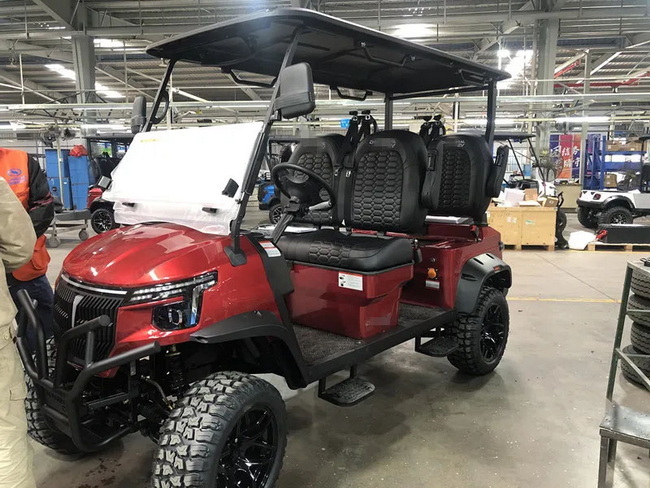
A typical standard golf buggy from major brands reaches about 12–15 mph on level ground with no modifications. This range is chosen to protect passengers, pedestrians, and course surfaces while still keeping play and transport moving efficiently.[1][5][6][7]
Many street‑legal golf buggy and low‑speed vehicle models target a top speed between 20 and 25 mph. In this band, vehicles can share certain low‑limit roads if they meet equipment standards such as lights, mirrors, and sometimes seat belts, plus registration and insurance where required.[9][10][2]
Higher‑end electric golf buggy configurations often achieve slightly higher top speeds and stronger initial acceleration than comparable gas units. Gas versions usually top out near 18–20 mph but maintain speed well over long distances and can be refueled quickly when range is more important than outright speed.[11][4][3][7]
A golf buggy may run slower than expected due to weak or aging batteries, worn components, incorrect tire pressure, heavy loads, or challenging terrain. In addition, some fleet and resort operators deliberately program lower controller limits to keep speed within internal safety policies and local rules.[8][5][7][12]
Speed‑increasing modifications can work technically, but they must be planned carefully because they reduce safety margins and may alter the vehicle's legal classification. Exceeding roughly 20–25 mph can increase rollover and braking risk and may require the golf buggy to meet low‑speed vehicle regulations regarding equipment, registration, and insurance.[11][15][3][8][10]
[1](https://jsgolfcarts.com/blog/how-fast-can-golf-carts-go/)
[2](https://www.gowithgarretts.com/how-fast-do-golf-carts-go-5-faqs-about-golf-carts-speed/)
[3](https://www.golfcarttiresupply.com/blog/how-fast-can-a-golf-cart-go/)
[4](https://www.bennelsongolfcars.com/blog/gas-vs-electric-golf-carts-whats-the-difference--62439)
[5](https://taraelectricvehicles.com/blog/2025/05/26/understanding-golf-cart-top-speed-regulations-and-safety/)
[6](https://golfcarsofthedesert.com/blogs/news/10-golf-cart-safety-tips-and-best-practices)
[7](https://hartvillegolfcarts.com/how-fast-do-golf-carts-go/)
[8](https://ipowerqueen.com/blogs/tips-and-tricks/how-fast-do-golf-carts-go)
[9](https://www.kandiamerica.com/what-is-a-street-legal-golf-cart/)
[10](https://evtitan.com/golf-cart-laws-regulations-state-by-state-guide/)
[11](https://www.progressive.com/answers/gas-vs-electric-golf-carts/)
[12](https://www.centralusgolfcarts.com/blog/how-temperature-and-terrain-impact-your-golf-cart-battery)
[13](https://extremekartz.com/blogs/lithium-knowledge-center/the-impact-of-terrain-on-lithium-battery-performance-in-golf-carts)
[14](https://www.flhsmv.gov/safety-center/consumer-education/low-speed-vehicles/)
[15](https://www.tdi.texas.gov/pubs/videoresource/fsgolfcart.pdf)


