


Views: 248 Author: BorCart Publish Time: 2026-08-13 Origin: Site


Content Menu
● Why Battery Downtime Matters in Multi-Shift Fleets
● Fast-Charging Lithium vs Standard AGM at a Glance
● Charging Speed: The Largest Uptime Difference
>> Example: Three-Shift Utility Vehicle Operation
● Opportunity Charging Changes Fleet Planning
>> When Opportunity Charging Works Best
● Performance Under Load and Late-Shift Use
● Weight, Payload, and Vehicle Design Flexibility
● Maintenance Labor: The Cost That Is Often Missed
● Safety and Charging Area Considerations
>> A Practical Safety Checklist for OEM Projects
● Total Cost: Look Beyond Battery Purchase Price
>> Questions to Ask Before Comparing Quotes
● When AGM Is Still the Right Choice
● Choosing the Right System for Your Electric Vehicle Fleet
● FAQ
>> 1. Is lithium always better than AGM for electric industrial vehicles?
>> 2. Can lithium batteries be charged during operator breaks?
>> 3. Do AGM batteries require maintenance?
>> 4. Does a lithium battery make an electric golf cart lighter?
>> 5. What is the biggest reason to choose lithium for 24/7 shift work?
>> 6. Can AGM and lithium use the same charger?
>> 7. What information should an OEM buyer provide before choosing a battery?
For industrial fleets operating around the clock, battery choice directly determines whether electric vehicles remain productive or sit idle. Fast-charging lithium batteries and standard AGM batteries can both power golf carts, utility vehicles, personnel carriers, and light electric work vehicles, but they create very different operating models for multi-shift environments.
At BorCart, we work with international brands, wholesalers, and vehicle manufacturers that need dependable electric vehicle platforms for demanding applications. From factories and warehouses to resorts, airports, campuses, logistics yards, and industrial parks, fleet buyers increasingly evaluate batteries not only by purchase price, but by vehicle availability, charging time, labor requirements, safety procedures, and lifetime operating cost.
For a fleet that runs one short shift per day, AGM can remain a practical and familiar option. For 24/7 industrial shift work, however, lithium—especially correctly engineered LiFePO₄ battery systems—often provides a stronger path to higher uptime and lower operational interruption.
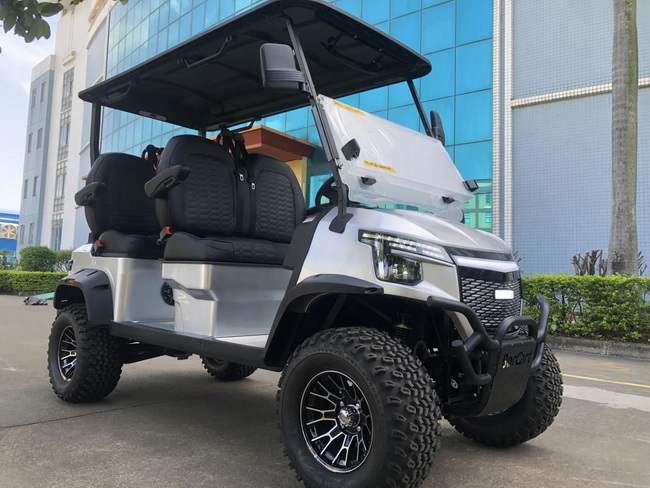
In a continuous-operation facility, a vehicle is not simply an asset; it is part of a process. A utility cart may transport operators between production lines. A cargo vehicle may move tools, components, samples, or maintenance teams. A people mover may support large sites where walking between work zones consumes valuable time.
When a battery needs a long charging window, the vehicle may be unavailable during the next shift. When a fleet relies on battery swapping, workers must spend time moving heavy batteries, checking connections, and managing charging schedules. These interruptions can compound quickly across dozens of vehicles.
The key question is not only, "How long can this vehicle drive on one charge?" It is also:
- How quickly can it return to work?
- Can it be charged during planned breaks?
- Does it maintain usable power late in the shift?
- How much labor is required to keep the fleet available?
- What happens when the operation adds a night shift or seasonal peak?
For 24/7 operations, the ideal battery system turns unavoidable pauses—meal breaks, shift handovers, loading windows, and scheduled maintenance—into charging opportunities.
| Evaluation Area | Fast-Charging Lithium Battery | Standard AGM Battery |
|---|---|---|
| Charging approach | Can support rapid and opportunity charging when matched with the correct charger and battery controls | Generally needs a longer, more complete charging cycle |
| Multi-shift suitability | Well suited to intensive, high-utilization fleets | Better suited to lower-utilization or single-shift fleets |
| Usable energy delivery | Typically provides more consistent voltage through discharge | Voltage can decline more noticeably as state of charge falls |
| Weight | Significantly lighter for comparable usable energy | Heavy due to lead-based construction |
| Maintenance | Typically no watering; electronic monitoring may be included | Sealed design reduces watering needs, but charging and condition checks remain important |
| Battery swapping | Often avoidable with appropriate capacity and charging infrastructure | May be required when vehicles must cover multiple shifts |
| Upfront investment | Usually higher | Usually lower |
| Lifetime operating model | Fewer interruptions, less handling, potentially fewer replacements | Lower initial cost but may require more charging time and replacement planning |
| System intelligence | Battery management system can monitor voltage, temperature, current, and protection status | Usually less integrated data visibility |
| Best fit | 24/7 sites, frequent stop-start duty, high fleet utilization | Budget-led projects, familiar legacy systems, lighter duty cycles |
The correct choice depends on the vehicle's duty cycle, route distance, payload, charging access, ambient temperature, and local safety requirements. Still, the central distinction is clear: lithium is designed around operational flexibility, while AGM is usually managed around a fixed charging schedule.
AGM is a sealed form of lead-acid battery. It offers advantages over conventional flooded lead-acid designs, including reduced maintenance, good current delivery, and less risk of electrolyte spillage. However, it still follows the fundamental limitations of lead-acid charging behavior.
A standard AGM battery normally needs a relatively long charging and absorption stage to restore capacity safely. If charging is stopped too early on a repeated basis, the battery may not recover fully. Over time, partial charging and prolonged low state of charge can contribute to capacity loss and shorter service life.
Lithium battery systems accept charge more efficiently and can often be replenished faster. A properly designed lithium system may allow the vehicle to recover meaningful driving time during short planned breaks rather than waiting for a full overnight charging cycle.
Imagine a plant using electric utility carts across three eight-hour shifts.
With AGM batteries, the fleet operator may need to:
1. Charge vehicles for a long period after a shift.
2. Maintain spare vehicles or spare battery packs.
3. Schedule battery changing or vehicle rotation.
4. Allocate a charging area and handling process.
5. Accept that some vehicles are unavailable during charging.
With fast-charging lithium batteries, the operator may instead:
1. Install compatible charging points near break or staging areas.
2. Recharge selected vehicles during lunch, handover, or dispatch pauses.
3. Use battery status data to prioritize charging.
4. Keep more vehicles in active service.
5. Reduce the need for spare battery inventory.
This does not mean every lithium vehicle can charge at maximum speed without planning. Charger output, cable specification, battery temperature, battery capacity, vehicle electrical architecture, and battery management settings must all be matched. Fast charging is a system-level capability, not simply a battery label.
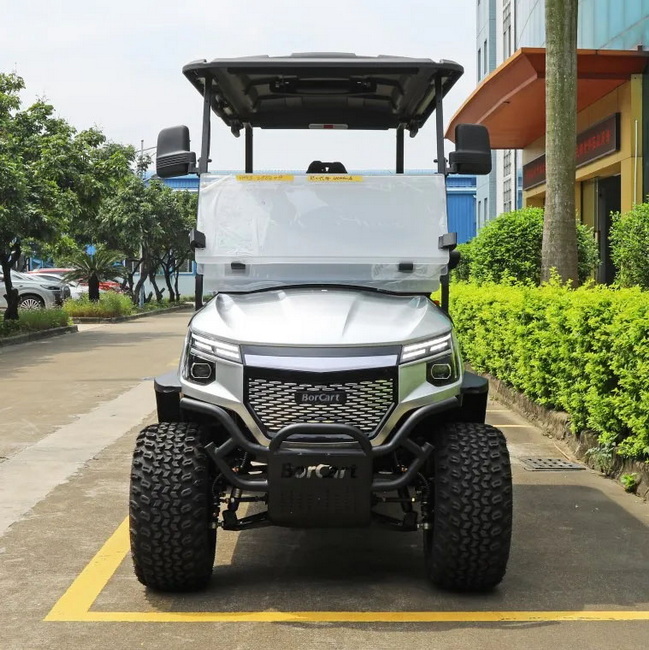
Opportunity charging means adding energy during short, naturally occurring idle periods rather than waiting for a single long charge after the workday. This approach can be valuable for industrial parks, large warehouses, manufacturing sites, and service facilities with predictable breaks.
For example, a vehicle that parks for 30 to 60 minutes several times per day may recover enough energy to extend service availability significantly. This helps operations avoid deep discharge and reduces the pressure to fully recharge every vehicle at the same time.
Opportunity charging is most effective when the fleet has:
- Predictable operator breaks or shift-change periods
- Charging points located near normal parking zones
- Vehicles with suitable lithium battery capacity
- Chargers designed for the battery's voltage and charge profile
- Clear procedures for plug-in, inspection, and reporting
- Fleet data that identifies high-energy routes and vehicles
A well-designed system should not force workers to make special trips solely to charge. Charging should fit into the existing workflow. For example, a maintenance cart can charge while technicians complete paperwork, collect parts, attend a briefing, or take a scheduled break.
Industrial electric vehicles often face changing loads. A vehicle may carry one operator in the morning, then transport tools, spare parts, or multiple passengers later in the day. It may travel on ramps, uneven roads, warehouse surfaces, or outdoor terrain.
Lithium batteries generally maintain a more stable voltage profile during discharge. In practical terms, this can help the vehicle deliver more consistent acceleration and climbing ability as the battery state of charge decreases.
AGM batteries can provide strong current output, especially in short bursts. However, their usable performance may decline as they discharge. In demanding fleet applications, this can mean a vehicle feels less responsive near the end of a shift, even before the battery is fully depleted.
For OEM buyers, this difference matters because vehicle performance shapes the end user's perception of quality. A cart that slows noticeably under load, struggles on an incline, or requires frequent rotation may affect operator confidence and fleet productivity.
Battery weight affects more than transport cost. It influences payload capacity, suspension tuning, braking behavior, tire wear, energy consumption, and vehicle handling.
AGM battery banks are heavy. In a multi-battery electric vehicle system, this weight can occupy a meaningful portion of the vehicle's allowable payload. Lithium packs generally deliver more usable energy per kilogram, allowing manufacturers and fleet operators to consider several design advantages:
- More payload available for passengers, cargo, or accessories
- Easier handling during installation and service
- Potentially improved efficiency from lower vehicle mass
- Greater flexibility in battery-pack placement
- More room for enclosed storage, tool compartments, or specialized equipment
For a golf cart or utility vehicle manufacturer, weight reduction can also support better product positioning. A lighter vehicle may be easier to transport, easier to maneuver, and more efficient in stop-and-go use.
Purchase price is visible. Maintenance labor is often less visible but can become substantial over several years.
AGM batteries are sealed and do not require the routine watering associated with flooded lead-acid batteries. That is an advantage. Yet AGM fleets still require disciplined charging, terminal checks, cable inspection, cleaning, capacity monitoring, replacement planning, and diagnosis of batteries that no longer hold sufficient charge.
Lithium systems usually reduce routine battery-care tasks because they are sealed and commonly incorporate a battery management system. The battery management system can monitor essential operating conditions and protect the pack from conditions such as overcharge, over-discharge, overcurrent, and temperature extremes.
However, lithium is not "maintenance-free" in the absolute sense. Professional fleet management still requires:
- Charger inspection and compatibility verification
- Connector and cable checks
- Battery status review
- Software or parameter management where applicable
- Scheduled inspection of enclosures and mounting
- Clear procedures for damaged or abnormal battery packs
The difference is that lithium maintenance is more focused on system monitoring and preventive management, while AGM fleet care often includes more frequent attention to charging discipline and battery condition.
Every battery technology requires safe installation, charging, and service practices. AGM batteries are sealed, but charging lead-acid batteries can still involve gas generation under certain conditions. Facilities should provide appropriate ventilation and follow local workplace safety requirements for charging areas.
Lithium systems require equally serious planning. Battery packs should be designed with suitable cell selection, electrical protection, thermal considerations, robust enclosures, and a reliable battery management system. Fleet operators should also establish procedures for inspection, incident response, charger use, transportation, and end-of-life handling.
Before selecting either technology, confirm:
1. The battery voltage and capacity match the vehicle powertrain.
2. The charger is designed for the specific battery chemistry and configuration.
3. Connectors, cables, fuses, and contactors are rated for expected current.
4. The battery enclosure is protected from water, dust, shock, and vibration as required by the application.
5. The installation leaves sufficient access for inspection and service.
6. Operators understand normal charging behavior and warning indicators.
7. The supplier can provide technical documents, test information, and support for the target market.
For export projects, safety documentation and component traceability should be considered early. This is especially important when a brand customer plans to sell vehicles across multiple regions with different certification, labeling, and transport requirements.
AGM may cost less at the beginning. This can make it attractive for projects with limited capital expenditure, low daily utilization, or existing charging infrastructure designed around lead-acid batteries.
But 24/7 operations should evaluate total cost over the vehicle's working life. A battery decision affects not only replacement cost but also labor, charger utilization, spare fleet requirements, energy consumption, vehicle availability, and lost productivity.
A useful evaluation framework is:
Total Battery Cost=Purchase Cost+Energy Cost+Labor Cost+Replacement Cost+Downtime Cost
The final term—downtime cost—is often the most underestimated. If a vehicle cannot deliver parts to a production line, transport a technician to a breakdown, or move workers between zones, the impact can exceed the difference in battery purchase price.
- How many operating hours does each vehicle complete per day?
- How many shifts must the fleet cover?
- How long are the planned charging windows?
- Is battery swapping currently required?
- How many spare vehicles are kept only because others are charging?
- How much labor is spent managing batteries each week?
- What level of vehicle performance is required at the end of a shift?
- How many years is the fleet expected to remain in service?
These questions shift the conversation from "Which battery is cheaper?" to "Which system keeps the operation moving?"
Lithium is not automatically the best option for every project. AGM remains relevant in several situations.
AGM can be suitable when:
- The vehicle operates only one moderate shift per day.
- Overnight charging is consistently available.
- The initial budget is the main decision factor.
- The customer already has compatible AGM charging infrastructure.
- The vehicle sees low annual mileage or limited cycling.
- The project does not require frequent short-break charging.
- Simple replacement compatibility is more important than fleet optimization.
For example, a resort with light seasonal cart usage may prioritize a lower initial investment. A facility with a predictable overnight idle period may also find AGM sufficient, provided it follows a disciplined charging routine.
The important point is to match the battery to the actual duty cycle—not to choose based on habit alone.
For brands, wholesalers, and vehicle manufacturers, the battery should be selected during vehicle specification, not treated as a final accessory. The ideal approach is to define the application first, then engineer the battery, charger, and vehicle configuration around it.
At BorCart, we can support OEM customers with electric golf carts, utility vehicles, personnel carriers, and customized vehicle platforms configured around real operating requirements. Whether your market needs a practical AGM solution or a fast-charging lithium vehicle for continuous industrial work, the objective should remain the same: more productive driving hours and fewer unplanned stops.
Contact BorCart to discuss your fleet duty cycle, target market, payload requirements, charging conditions, and branding needs. Our team can help you develop an OEM electric vehicle solution that is built for the way your customers actually work.
No. Lithium is usually more suitable for high-utilization, multi-shift, and fast-turnaround applications. AGM may remain a cost-effective choice for single-shift fleets with reliable overnight charging and lower daily usage.
Yes, provided the battery, charger, wiring, and operating procedures are designed for opportunity charging. The charging schedule should be based on battery capacity, shift demands, and the available break duration.
AGM batteries are sealed and do not need water refilling. However, they still require correct charging, terminal inspection, cleaning, cable checks, and timely replacement when capacity declines.
In many cases, yes. Lithium batteries usually weigh significantly less than equivalent AGM battery banks. This can improve payload flexibility, handling, and vehicle efficiency.
The main advantage is reduced downtime. Fast charging and opportunity charging can keep vehicles in service more consistently and reduce the need for battery swapping or spare vehicles.
Not automatically. Chargers must match the battery chemistry, voltage, capacity, and charging profile. Using an unsuitable charger can reduce battery life, cause poor performance, or create safety risks.
Provide the vehicle voltage, motor power, daily travel distance, payload, slope conditions, number of shifts, charging windows, ambient temperature range, target country, and desired product positioning.
1. Occupational Safety and Health Administration. [Powered Industrial Trucks: Electrical Power Sources and Battery-Charging Guidance]. [osha]
2. Occupational Safety and Health Administration. [Battery Charging Stations for Forklifts and Other Industrial Trucks]. [osha]
3. U.S. Department of Energy. [Energy Storage Safety Strategic Plan]. [energy]
4. Battery University. [BU-201a: Absorbent Glass Mat (AGM)]. [batteryuniversity]
5. Battery University. [BU-201: How Does the Lead Acid Battery Work?]. [batteryuniversity]
6. International Society of Automation. [Power Protection at the Edge: How Industrial Batteries Are Evolving]. [isa]
7. OneCharge. [Absorbed Glass Mat (AGM) vs. Li-Ion Battery]. [onecharge.com]


