


Views: 222 Author: BorCart Publish Time: 2026-06-02 Origin: Site


Content Menu
● Understanding the Two Core Vehicle Types
>> What is an electric sightseeing bus?
>> What is an open‑air tour golf cart?
● Passenger Throughput: Capacity vs Frequency
>> Capacity dynamics in high‑traffic historical districts
>> Throughput advantages of electric sightseeing buses
>> Throughput advantages of open‑air tour golf carts
● Operational Efficiency and Total Cost Perspective
>> Energy and maintenance economics
>> Fleet management implications
● Street Geometry, Heritage Constraints, and UX
>> Navigating narrow historical streets
>> Noise, emissions, and community acceptance
● Passenger Experience: Comfort, Safety, and Perceived Quality
>> Comfort and all‑weather operation
● Strategic Use Cases for Operators
>> When electric sightseeing buses are the better choice
>> When open‑air tour golf carts are the better choice
● Side‑by‑Side Comparison for High‑traffic Historical Districts
● Expert Design Insights from an OEM Perspective
● Practical Steps for City Planners and Tour Operators
● FAQ
Electric sightseeing buses and open-air tour golf carts can both move tourists efficiently through high‑traffic historical districts, but they optimize passenger throughput in very different ways. [olympianmotors]
An *electric sightseeing bus* is a larger, enclosed, battery‑powered shuttle or mini‑bus designed for guided tours and short‑range transit. It typically offers row seating, standing room in some designs, and may integrate audio guides, wide doors, and low floors for fast boarding. [aliexpress]
Key characteristics:
- Higher seating capacity and potential standing capacity
- Fully or semi‑enclosed cabin for all‑weather operation
- Professional charging and fleet‑management systems
- Zero tailpipe emissions, supporting low‑emission zones and heritage‑city policies [insights.made-in-china]
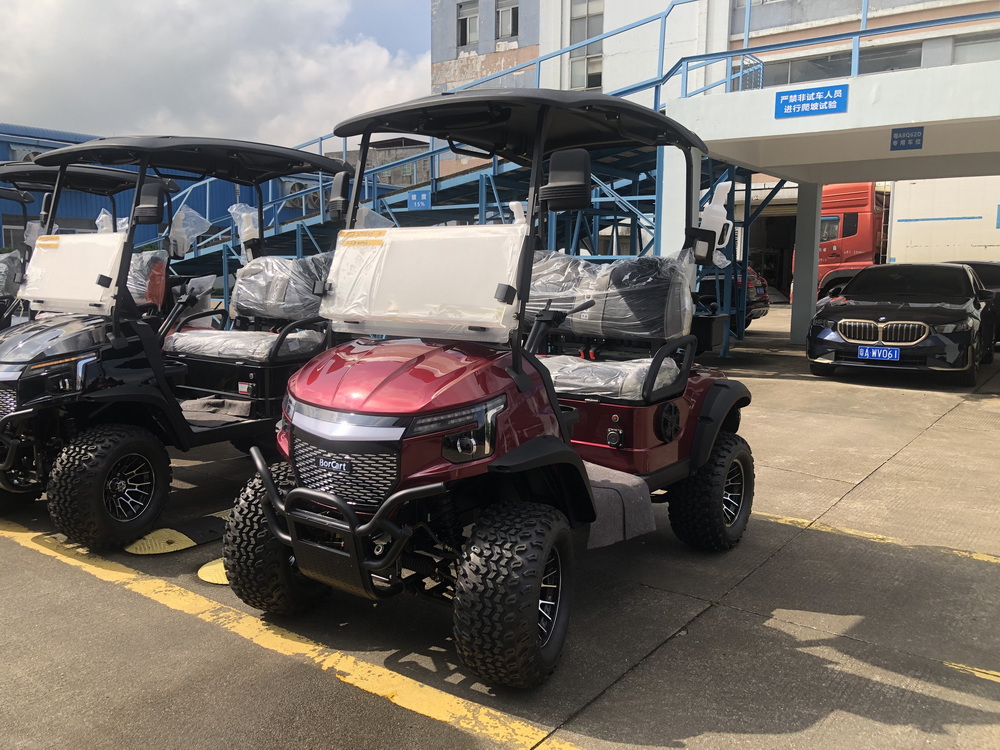
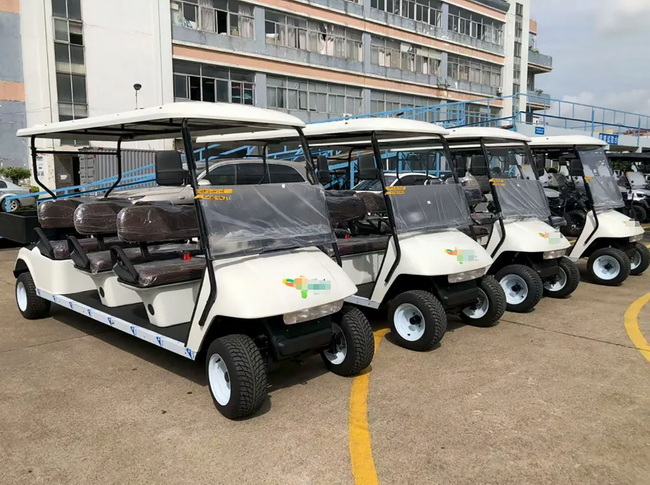
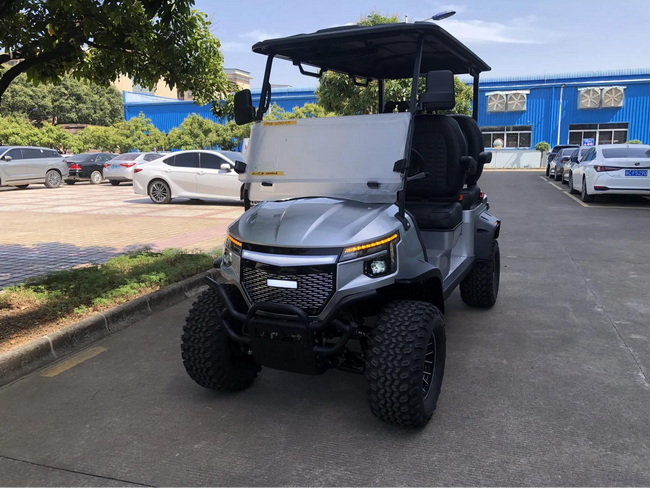
An open‑air tour golf cart is an extended electric cart originally derived from golf course vehicles, adapted for sightseeing. It usually has 4–14 seats, open sides, low speed, and very tight turning radius, which makes it ideal for narrow historical lanes. [etuktoursrome]
Key characteristics:
- Compact footprint and excellent maneuverability in alley‑like streets
- Open sides for ventilation, photography, and guide–guest interaction
- Low speed, typically used on restricted or mixed‑traffic roads
- Very quiet, low‑emission operation suitable for sensitive heritage areas [etuktoursrome]
In dense tourist cores, city authorities must balance vehicle size, street width, and dwell time (time spent at stops). Passenger throughput is not only about seats per vehicle; it is seats multiplied by trips per hour within real urban constraints. [njtod]
Important variables:
- Vehicle capacity (seated + standing)
- Average speed and route geometry (narrow vs wide streets)
- Boarding/alighting time per stop
- Loading strategy (continuous hop‑on/hop‑off vs fixed tours)
Electric sightseeing buses generally carry more people per trip. [aliexpress]
- Typical mini‑bus capacities: 20–35 passengers, depending on configuration [insights.made-in-china]
- Wide doors and low‑floor designs can cut dwell time, especially for group boarding [aliexpress]
- Better suited for hub‑and‑spoke operations where groups are picked up at hotels, park‑and‑ride locations, or cruise terminals and delivered into the historic core. [insights.made-in-china]
In high‑demand corridors with relatively wider streets, this can produce excellent passenger throughput, because one bus trip replaces multiple golf‑cart trips. [aliexpress]
Open‑air tour golf carts offer lower capacity per unit but can achieve high service frequency and flexible routing. [olympianmotors]
- Smaller vehicles can maintain smoother circulation on narrow or congested streets, reducing blockages that larger buses might cause. [njtod]
- Quick curbside stops and short boarding distances can reduce passenger hesitation and speed up loading. [etuktoursrome]
- Operators can deploy more carts in parallel, creating a "micro‑fleet" that approximates bus‑level throughput but with finer granularity. [olympianmotors]
For labyrinth‑like historical districts where streets were never designed for buses, multiple small vehicles often achieve better effective throughput and less disruption to local life. [njtod]
Across the tourism and campus shuttle market, electric buses and golf‑cart‑style vehicles both benefit from lower operating costs than internal‑combustion alternatives. [olympianmotors]
Studies on electric mini buses show:
- Higher upfront cost than traditional buses but significantly lower long‑term fuel and maintenance costs. [insights.made-in-china]
- Simpler electric drivetrains reduce wear on components like transmissions and exhaust systems. [insights.made-in-china]
Golf carts, by contrast:
- Have lower vehicle purchase prices and simpler mechanical architecture. [olympianmotors]
- Use smaller battery packs, which cost less per unit but may require more frequent charging cycles in intensive operations. [aliexpress]
For high‑traffic historical districts with moderate tour distances, both platforms can yield competitive total cost of ownership, but the optimal choice hinges on daily passenger volumes and route design. [aliexpress]
Electric sightseeing buses:
- Fewer units to manage, but each vehicle is mission‑critical
- Require more robust charging infrastructure and depot space
- Often integrate telematics and centralized dispatch systems [olympianmotors]
Open‑air tour golf carts:
- More units to schedule, but each is lower risk if one fails
- Can rely on distributed charging hubs or even swappable battery systems depending on design [olympianmotors]
- Make sense where operators prefer flexible staffing and micro‑route experimentation
From an OEM perspective, both categories demand modular platforms that can be customized to each operator's duty cycle and charging strategy. [insights.made-in-china]
Many historical districts—whether in Europe, Asia, or Latin America—feature:
- Cobblestone pavements
- Tight, winding alleys
- Height limits and weight restrictions to protect built heritage [kingcounty]
In this context:
- Electric sightseeing buses are more suitable on perimeter routes and wider boulevards that serve as feeder lines. [njtod]
- Open‑air tour golf carts can penetrate deeper into the historic grid where street width is limited and turning radii are tight. [etuktoursrome]
Operators often adopt a *hybrid topology*: buses bring visitors to gateways; golf carts handle last‑mile circulation inside the historical core. [etuktoursrome]
Heritage city authorities increasingly require quiet, low‑emission vehicles. [kingcounty]
- Both electric sightseeing buses and golf carts offer zero tailpipe emissions and low noise signatures. [aliexpress]
- Smaller golf carts may be more acceptable in very tranquil old towns, where visual and acoustic intrusion must be minimized. [njtod]
- Buses can still be welcomed if designed with heritage‑friendly aesthetics and restricted to designated corridors. [njtod]
Community acceptance is critical, because local resistance can limit operating permits and route approvals. [njtod]
Electric sightseeing buses:
- Provide enclosed cabins with HVAC, better suited for hot summers, cold winters, or rainy seasons. [insights.made-in-china]
- Offer a more "premium shuttle" feeling for multi‑national tour groups and corporate events. [olympianmotors]
Open‑air tour golf carts:
- Deliver immersive, open‑air experiences, ideal for pleasant climates or evening tours. [etuktoursrome]
- Facilitate photography, casual conversations, and direct interaction with the guide. [etuktoursrome]
In climates with large seasonal variation, mixed fleets can adapt service to weather—deploy more buses in winter and more golf carts in peak sightseeing months.
Safety regulations for public‑facing vehicles typically require:
- Certified braking and lighting systems
- Seat belts or safety bars where appropriate
- Clear entry steps and handrails for older passengers [aliexpress]
Electric sightseeing buses:
- Can integrate low‑floor access and wheelchair ramps, critical for inclusive heritage tourism. [insights.made-in-china]
- Support more robust crash structures.
Open‑air tour golf carts:
- Must be carefully specified with safety belts, handgrips, and speed limiters when used on public roads. [etuktoursrome]
- Need thoughtful step heights and grab handles for elderly or mobility‑challenged visitors.
For OEMs supplying international markets, compliance with CE, DOT, or other regional standards is essential to build trust with municipal and B2B buyers. [aliexpress]
Electric sightseeing buses are ideal when:
- Daily passenger volume is high and routes focus on a few primary corridors. [insights.made-in-china]
- Streets around the historical district are wide enough to handle mid‑size buses without congestion. [njtod]
- Operators serve large tour groups, cruise passengers, or conference visitors arriving in batches. [olympianmotors]
Typical scenarios:
- Park‑and‑ride circuits from outer parking lots into the old town
- Shuttle links between train stations, museums, and historic cores
- City‑branded sightseeing lines with fixed schedules
Open‑air tour golf carts excel when:
- The historical district has narrow, irregular streets and low speed limits. [etuktoursrome]
- Tourists demand flexible, hop‑on/hop‑off micro‑tours and customized itineraries. [etuktoursrome]
- Operators target small group experiences and private guided tours.
Typical scenarios:
- Last‑mile connections inside car‑restricted heritage zones
- Night tours, thematic storytelling routes, and photo‑focused experiences
- Resort‑style historical complexes where vehicles mingle with pedestrians [olympianmotors]
| Factor | Electric Micro-Bus / Shuttle | Electric Golf Cart / Tuk-tuk |
|---|---|---|
| Passenger capacity per vehicle | Higher (typically 20–35) (aliexpress) | Lower (4–14 per cart) (etuktoursrome) |
| Street suitability | Better for wider corridors & perimeter loops (njtod) | Excellent for narrow lanes & alleys (etuktoursrome) |
| Throughput strategy | Fewer, larger units; corridor‑based (aliexpress) | Many small units; flexible micro‑routes (etuktoursrome) |
| Weather protection | Strong, with HVAC and enclosure (aliexpress) | Limited; best in mild conditions (etuktoursrome) |
| Experience style | Structured, "city shuttle" feel (olympianmotors) | Immersive, intimate, open‑air (etuktoursrome) |
| Accessibility options | Easier integration of ramps & low floors (aliexpress) | Requires careful custom design (etuktoursrome) |
| Charging & depot | Centralized infrastructure, higher capacity (olympianmotors) | Smaller chargers, flexible locations (olympianmotors) |
From an OEM standpoint, optimizing passenger throughput in historical districts is less about choosing one platform and more about designing modular, interoperable fleets. [insights.made-in-china]
Best‑practice design choices include:
- Offering multiple chassis lengths and seating configurations for both buses and carts, allowing operators to tailor capacity to each route segment. [aliexpress]
- Designing battery systems with scalable capacity and fast‑charge or opportunity‑charge options for intensive tour operations. [olympianmotors]
- Integrating telematics so operators can monitor load factors, dwell times, and energy consumption across mixed fleets. [aliexpress]
For a manufacturer like BorCart, positioning as a customizable OEM partner rather than a single‑product vendor aligns with how tour operators, cities, and resorts are rethinking sustainable mobility solutions. [insights.made-in-china]
To select between electric sightseeing buses and open‑air tour golf carts (or a mixed strategy), decision‑makers can follow a concise framework:
1. Map street typologies
- Classify streets into bus‑capable corridors, cart‑only lanes, and pedestrian‑only segments. [njtod]
2. Quantify peak demand
- Estimate passengers per hour per direction on each corridor and inside the heritage grid. [njtod]
3. Define service models
- Choose between fixed sightseeing loops, hop‑on/hop‑off, private tours, or hybrid operations. [olympianmotors]
4. Evaluate infrastructure
- Assess available depot space, charging grid, and city regulations on vehicle size and noise. [njtod]
5. Specify OEM requirements
- Determine needed seating configurations, accessibility features, safety standards, and branding options. [insights.made-in-china]
This process typically reveals that a multi‑vehicle portfolio—mid‑size electric buses plus open‑air golf carts—delivers the best combination of throughput, guest experience, and heritage protection in busy historical districts. [aliexpress]
1. Are electric sightseeing buses always more efficient than open‑air tour golf carts?
No. Electric sightseeing buses move more passengers per trip, but in very narrow historical districts a larger vehicle can cause congestion, making multiple small golf carts more effective overall. [etuktoursrome]
2. Which option is better for all‑weather operation in heritage cities?
Electric sightseeing buses perform better in extreme heat, cold, or rain thanks to enclosed cabins and HVAC, while open‑air golf carts excel in mild climates and seasonal evening tours. [etuktoursrome]
3. How do these vehicles impact air quality in historical districts?
Both electric sightseeing buses and open‑air golf carts produce zero tailpipe emissions, helping cities meet air‑quality and carbon‑reduction targets in sensitive heritage cores. [olympianmotors]
4. Can operators mix both vehicle types in one fleet?
Yes. Many destinations use buses for perimeter and feeder routes and deploy golf‑cart‑style vehicles for last‑mile circulation deep inside the historic grid, balancing capacity with street constraints. [njtod]
5. What should OEM customers ask from manufacturers like BorCart?
They should request modular platforms, route‑specific seating and accessibility options, scalable battery systems, and telematics support so fleets can be optimized for local demand and regulations. [aliexpress]
1. Olympus EV Platform – "Build Electric Tourism Vehicles with Olympus EV Platform." [olympianmotors]
2. AliExpress – "The Ultimate Guide to Choosing the Right Electric Bus for Campus and Resort Transportation." [aliexpress]
3. Made‑in‑China Insights – "Electric Mini Bus Vs Traditional Bus: What Are the Differences in Meeting User Needs." [insights.made-in-china]
4. E‑Tuk Tours Rome – "The Benefits of an ETuk Tour vs Golf Cart Tour." [etuktoursrome]
5. King County – "Historic and Scenic Corridors Project." [kingcounty]
6. NJTOD – "Guide to Facilitate Historic Preservation through Transit Oriented Development." [njtod]


