


Views: 210 Author: BorCart Publish Time: 2026-10-06 Origin: Site


Content Menu
● Electric Cargo Van vs. Electric Utility Cart: Key Differences
● When an Electric Cargo Van Is the Better Choice
>> Public-Road Deliveries and Customer Visits
>> Enclosed Transport and Cargo Organization
>> Longer Routes and Higher-Speed Operation
● When an Electric Utility Cart Is the Better Choice
>> Short-Distance Internal Logistics
>> Maintenance and Task-Specific Work
>> Frequent Loading and Unloading
● Payload, Cargo Volume, and Handling: Compare the Complete Load
>> Understand the Weight Ratings
>> Measure the Goods, Not Just Their Weight
>> Check Stability and Terrain
● Battery Range and Charging: Design Around the Working Shift
>> Validate Range Under Real Operating Conditions
>> Match Charging to Available Downtime
● Total Cost of Ownership: Look Beyond the Purchase Price
>> Illustrative Workflow Comparison
● Safety and Compliance: Verify the Exact Vehicle Class
>> Build Safety Into the Procurement Specification
● A Five-Step Trial Before Purchasing Your Fleet
>> 1. Record a Representative Working Week
>> 2. Identify Non-Negotiable Requirements
>> 3. Test the Finished Configuration
>> 5. Approve a Pilot Before Scaling
● OEM Procurement with BorCart: Turn Requirements into a Clear Brief
● Which Electric Vehicle Should Your Business Choose?
>> Can an Electric Utility Cart Replace an Electric Cargo Van?
>> Is an Electric Cargo Van Always More Expensive?
>> Can Electric Utility Carts Operate on Public Roads?
>> How Much Battery Range Does My Business Need?
>> Which Vehicle Is Better for Carrying Heavy Goods?
>> What Should an Overseas OEM Buyer Request First?
Choosing an electric cargo van vs. electric utility cart starts with one question: where does your business need to move goods? An electric cargo van generally suits road-based deliveries and enclosed transport. An electric utility cart often works better for short, repeated trips within factories, resorts, warehouses, and managed properties.
For overseas brands, wholesalers, and manufacturers, the decision also affects product positioning, compliance, and OEM specifications. A vehicle that performs well on a private site may be unsuitable for public-road distribution.
My recommendation is to prioritize operational fit over headline specifications. Start with routes, loads, and working conditions, then select the platform.
This guide takes a procurement-focused approach for businesses considering commercial electric vehicles and OEM manufacturing with BorCart, a Chinese manufacturer of electric vehicles and automotive components.
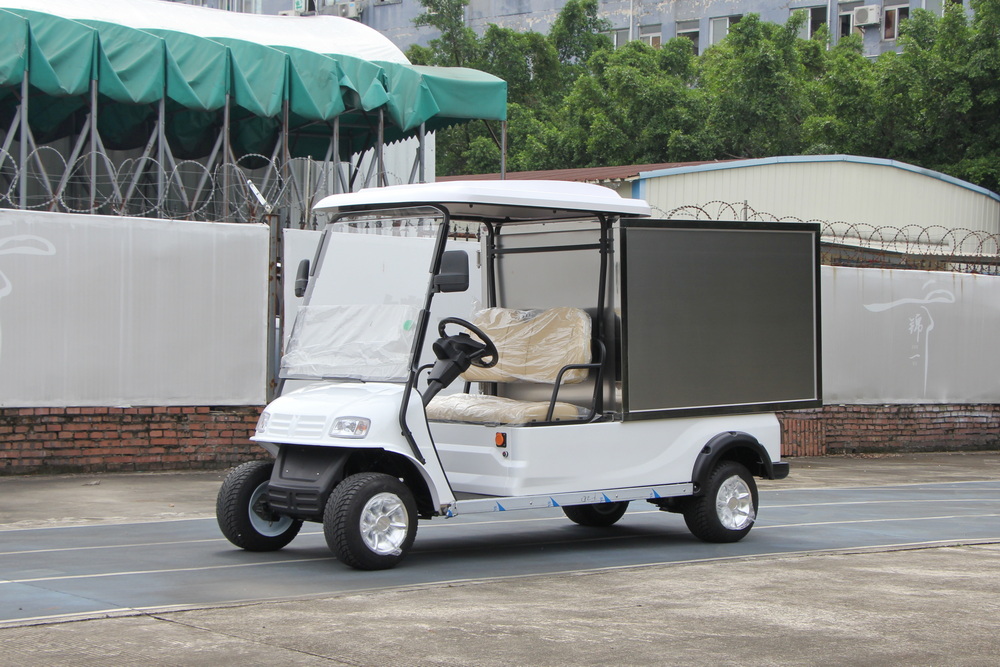
An electric cargo van is typically designed around enclosed goods transport. An electric utility cart generally prioritizes compact movement, accessible loading, and site-based tasks.
However, these terms describe broad product categories. Some compact cargo vans are low-speed vehicles, while some utility vehicles offer enclosed cabins and cargo boxes. Appearance alone does not establish performance or legal classification.
| Comparison factor | Electric cargo van | Electric utility cart |
|---|---|---|
| Typical application | Deliveries and service routes | Internal logistics and property maintenance |
| Cargo arrangement | Usually enclosed compartment | Often open bed; enclosed options available |
| Road suitability | Depends on certification and vehicle class | Frequently intended for controlled sites |
| Maneuverability | Requires checking vehicle dimensions | Compact configurations can suit restricted spaces |
| Loading workflow | Doors, shelves, and cargo restraints | Accessible bed, toolbox, or task-specific body |
| Weather protection | Usually better cargo enclosure | Depends on cabin and body configuration |
| Charging requirements | Determined by battery and duty cycle | Determined by battery and duty cycle |
| OEM priorities | Body layout, payload, compliance | Dimensions, work attachments, site suitability |
Neither category is automatically cheaper, safer, or more productive. Compare specific configurations against the same operational requirements.
An electric cargo van for business is usually the stronger starting point when vehicles travel between customer addresses, depots, and service locations.
Relevant applications include:
- Parcel and wholesale deliveries.
- Spare-parts distribution.
- Mobile repair services.
- Catering and hospitality supplies.
- Transport between business premises.
Before ordering, verify that the proposed model can be registered and operated on the intended roads. A van-shaped vehicle is not necessarily a road-certified commercial van.
An enclosed cargo compartment helps protect goods from rain and casual exposure. It also supports shelving, partitions, and organized tool storage.
For service teams, organization can matter as much as capacity. A technician who can reach parts quickly may complete jobs more efficiently.
Specify door openings, loading height, internal dimensions, and restraint points. Nominal cargo volume alone does not show whether your largest package will fit.
Road-oriented electric vans can serve routes that exceed the practical operating envelope of many site utility carts.
As a manufacturer example, Ford lists estimated ranges of 148–166 miles across its 2027 E-Transit cargo configurations. These are model-specific estimates, not a universal electric cargo van range.
Do not transfer those figures to compact OEM vehicles. Request specifications and test results for the actual model being purchased.
An electric utility cart for industrial use is worth considering when vehicles repeatedly move materials within a controlled area.
Typical settings include:
- Manufacturing plants.
- Warehouses and distribution yards.
- Hotels and resorts.
- Campuses and managed communities.
- Maintenance depots.
The operational advantage is often convenient access rather than speed. A compact vehicle may reduce unnecessary walking and simplify frequent loading stops.
Check aisle clearance, pedestrian interaction, and turning space before assuming a cart will fit.
An electric utility vehicle can be configured around tools, waste collection, landscaping materials, or maintenance supplies.
Potential OEM requirements include:
- Open cargo beds.
- Lockable toolboxes.
- Enclosed cargo bodies.
- Removable side panels.
- Equipment mounting points.
- Task-specific storage.
Treat these as design requests, not confirmed BorCart features. Availability, engineering feasibility, and permitted loads must be established during quotation.
Open-bed carts can suit jobs where workers repeatedly handle equipment or bulky materials.
For example, Club Car describes its Carryall 700 with a bed nearly six feet long and a stated 1,000-pound bed payload capacity. It separately lists a higher total vehicle capacity.
That distinction matters: cargo-bed capacity and total vehicle capacity are not interchangeable. Always identify what each published rating includes.
A meaningful electric cargo van vs. utility cart comparison must separate:
- Payload allowance.
- Cargo-bed limit.
- Gross vehicle weight rating.
- Individual axle limits.
- Towing capacity, where approved.
Ask the supplier how occupants, accessories, and installed equipment affect the remaining load allowance.
A toolbox, enclosure, or additional seating can change usable capacity. Confirm the completed vehicle's ratings rather than relying on an unmodified platform specification.
Light goods can occupy substantial space. Dense components can reach weight limits before filling the cargo area.
Record:
1. Maximum shipment weight.
2. Largest package dimensions.
3. Required loading equipment.
4. Number of daily loading stops.
5. Cargo restraint requirements.
Also evaluate unloading access. A vehicle that carries everything in one trip may still perform poorly if workers struggle to retrieve individual items.
Assess ramps, slopes, uneven surfaces, and tight corners with representative loads.
Request the manufacturer's limits for gradients, loading distribution, and operating conditions. Do not assume a published climbing capability means the vehicle can safely descend the same slope at full load.
Site speed limits and driver procedures should reflect actual conditions.
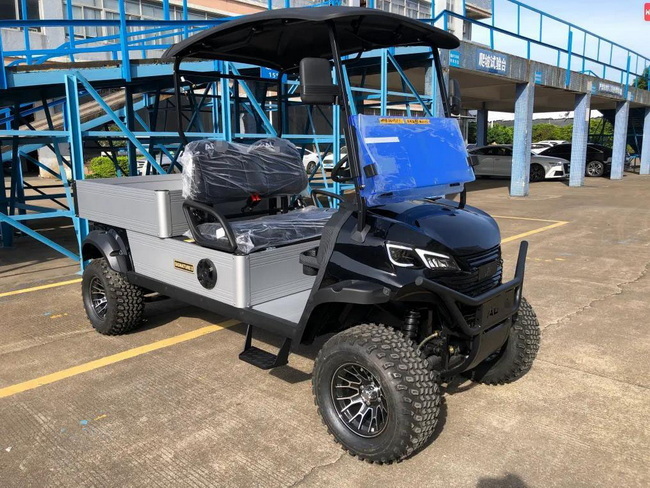
Battery capacity alone does not establish usable range.
Route length, load, temperature, gradients, stopping frequency, and auxiliary equipment can affect performance. A delivery van using cabin heating has a different energy profile from a cart making short warehouse trips.
Ask suppliers to disclose the conditions behind range claims:
- Test load.
- Average speed.
- Ambient temperature.
- Terrain.
- Battery configuration.
- Accessories operating during testing.
Compare vehicles using equivalent conditions wherever possible.
Charging suitability depends on the vehicle's battery, charging equipment, electrical supply, and idle periods.
A practical plan should identify:
- Overnight charging windows.
- Between-shift charging opportunities.
- Connector compatibility.
- Circuit capacity.
- Installation requirements.
- Backup arrangements.
Public fast-charging availability is irrelevant if the vehicle cannot use that equipment.
Have qualified electrical professionals assess the installation. Confirm charging-temperature restrictions and battery requirements with the supplier.
The cheaper quotation is not necessarily the better investment.
Use the same ownership period and workload for both options:
> Total ownership cost = purchase and import costs + charging infrastructure + electricity + maintenance + downtime + replacement costs − residual value.
Include freight, duties, inspections, registration, training, and spare-parts inventory where applicable.
Battery-electric vehicles generally require less routine powertrain maintenance than comparable combustion vehicles. However, both vans and carts still need inspections and servicing for components such as tires, brakes, steering, and suspension.
Consider a hypothetical factory moving components between buildings.
Vehicle A carries more per trip but requires slower positioning. Vehicle B carries less but loads quickly and accesses narrower routes.
The better choice depends on completed work, not carrying capacity alone.
Measure:
- Cost per completed task.
- Labor minutes per delivery.
- Trips per shift.
- Unplanned downtime.
- Charging interruptions.
This scenario illustrates an evaluation method; it is not a reported BorCart customer result.
Public-road approval is a separate question from private-site suitability.
In the United States, Federal Motor Vehicle Safety Standard No. 500 sets requirements for low-speed vehicles, including a maximum tested speed of 25 mph and specified safety equipment.
Meeting that standard does not establish permission to use every public road. Registration and road-access rules must also be checked locally.
For other destinations, obtain advice on the applicable vehicle category, approval pathway, and importer responsibilities.
Request documentation covering relevant features and limits, including:
- Braking and parking-brake performance.
- Lighting and visibility.
- Occupant restraints where applicable.
- Cargo securing provisions.
- Battery protection.
- Emergency procedures.
- Approved operating conditions.
An enclosed cabin does not, by itself, prove crash protection equivalent to a conventional road vehicle.
Log routes, distances, loads, slopes, stops, and idle periods. Include busy days rather than only average conditions.
Separate essential requirements from preferences. Public-road approval, package fit, and shift completion may be essential; cosmetic options usually are not.
Trial the vehicle with representative cargo and installed accessories. Record handling, loading time, visibility, and remaining battery charge.
Ask who supplies replacement parts, performs diagnostics, and authorizes warranty work. Establish expected response times and escalation procedures.
Use agreed acceptance criteria. Expand only after the pilot demonstrates the required productivity, charging reliability, and support arrangements.
For overseas brands and wholesalers, a detailed OEM brief reduces ambiguity between the requested product and the delivered vehicle.
Send BorCart:
- Destination market and intended vehicle classification.
- Application and operating environment.
- Required payload and cargo dimensions.
- Daily distance and shift pattern.
- Battery and charging requirements.
- Cabin, cargo-body, and branding requests.
- Required documentation.
- Trial quantity and projected order volume.
Ask the quotation to distinguish standard equipment, optional features, engineering changes, and buyer responsibilities.
Manufacturers sourcing automotive components should also specify drawings, materials, tolerances, testing requirements, and traceability expectations.
Choose an electric cargo van when enclosed transport, external delivery routes, and customer-facing service work drive the requirement.
Choose an electric utility cart when compact movement, frequent loading, and controlled-site operations dominate.
A mixed fleet may suit businesses with both external deliveries and internal material handling. Evaluate each route separately rather than forcing one vehicle category into every job.
Contact BorCart with your route profile, load requirements, destination market, and expected order quantity. Request a configuration proposal, compliance-document review, and pilot quotation before committing to volume production.

Sometimes, for short journeys within a controlled property. It should not replace a road-delivery van unless its capacity, performance, approval, and local operating permissions meet the same requirements.
No. Pricing depends on size, battery, equipment, certification, and order volume. Compare complete delivered specifications and ownership costs rather than category labels.
Some approved configurations may qualify. Others are intended for private-site use. Verify the exact classification, registration requirements, and permitted roads in the destination market.
Enough to complete demanding working days with an appropriate operational reserve. Base the requirement on measured routes and loaded trials, not advertised maximum range alone.
The vehicle with verified ratings suitable for the complete load. Check payload, cargo-bed limits, axle ratings, and loading distribution; neither category automatically wins.
Request a configuration-specific specification sheet, destination-market documentation, warranty terms, spare-parts arrangements, and a pilot proposal. Clarify which claims apply to the finished vehicle.
1. Ford — "2027 Ford E-Transit Cargo Van." Manufacturer source for the configuration-specific estimated range example. Figures should not be applied to other models or BorCart vehicles. [ford]
2. Club Car — "Carryall 700." Manufacturer source for the cargo-bed length, stated bed payload, and separately stated total vehicle capacity example. [clubcar]
3. Electronic Code of Federal Regulations — "49 CFR § 571.500: Standard No. 500; Low-Speed Vehicles." Primary regulatory source for U.S. low-speed vehicle safety requirements. It does not establish local road-access permission. [ecfr]
4. U.S. Department of Energy, Alternative Fuels Data Center — "Electric Vehicles for Fleets." Source for fleet charging considerations, equipment compatibility, temperature restrictions, and operational planning. [afdc.energy]
5. U.S. Department of Energy, Alternative Fuels Data Center — "Maintenance and Safety of Electric Vehicles." Source for the discussion of reduced routine electric-powertrain maintenance and continuing service requirements. [afdc.energy]
6. U.S. Department of Energy, Alternative Fuels Data Center — "Electric Vehicle Benefits and Considerations." Source for battery-life variables, model-specific warranty considerations, and replacement-cost risks. [afdc.energy]


