


Views: 269 Author: BorCart Publish Time: 2026-09-18 Origin: Site


Content Menu
● Why Community Golf Cart Laws Matter
● Golf Cart vs. Low-Speed Vehicle: Know the Difference
● Core Safety Equipment for Road-Oriented Electric Carts
>> Why Factory Integration Is Better Than Aftermarket Conversion
● Where Can Golf Carts Be Driven?
>> Community Route Planning Example
● Insurance, Registration, and Documentation
● A Community Golf Cart Safety Checklist
● How Communities Can Build Better Golf Cart Rules
>> Build a Clear Written Policy
● Choosing the Right Electric Golf Cart for Your Market
● FAQs
>> 1. Is every golf cart street legal?
>> 2. What is the difference between a golf cart and an LSV?
>> 3. Can a community make stricter rules than state law?
>> 4. Does adding lights make a golf cart legal on public roads?
>> 5. Does a golf cart need insurance?
>> 6. Can children ride in a golf cart?
>> 7. What should an OEM buyer request from a golf cart manufacturer?
Golf carts have become a familiar part of modern communities. They are used in gated neighborhoods, resorts, retirement communities, campuses, waterfront developments, industrial parks, and mixed-use residential areas. For many residents, an electric golf cart is no longer only a vehicle for the golf course. It is a practical way to visit neighbors, carry groceries, travel to local amenities, or move around a large private property.
However, community golf cart use creates an important challenge: a golf cart may be allowed in one neighborhood but prohibited on a nearby public street. Rules can change depending on the vehicle's speed, safety equipment, registration status, driver age, insurance coverage, road classification, and local ordinance.
For communities, dealers, fleet operators, and overseas brands sourcing electric golf carts, understanding the difference between a conventional golf cart and a road-oriented low-speed vehicle is essential. A well-designed vehicle can support safer local mobility, but safe operation also depends on community policies, driver education, and careful compliance planning.
This guide explains how golf cart laws work at the community level, what equipment may be needed for public-road operation, how property managers can create stronger policies, and what buyers should evaluate before purchasing or importing electric golf carts.
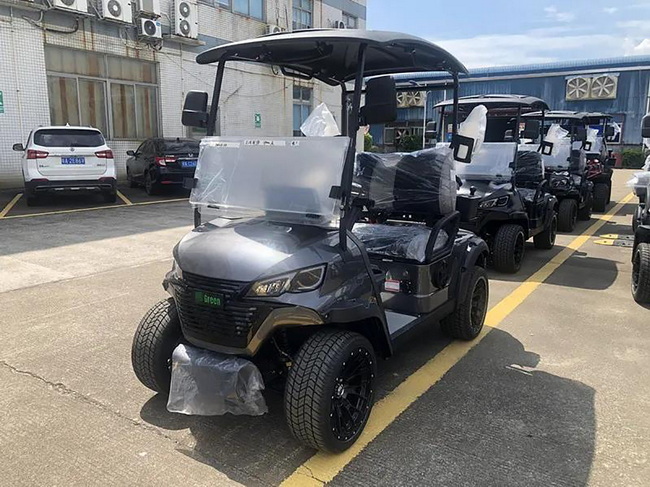
Golf cart laws exist to balance convenience with public safety. A golf cart may seem simple to operate, but it shares space with pedestrians, bicycles, children, parked vehicles, delivery trucks, and conventional passenger cars.
When communities do not establish clear rules, common problems can include:
- Underage or untrained drivers operating carts without supervision.
- Carts traveling on roads where higher-speed traffic creates a serious hazard.
- Passengers riding without seat belts or holding children on their laps.
- Night operation without sufficient lighting or visibility equipment.
- Vehicles being modified beyond their intended operating speed.
- Confusion over whether insurance, registration, or driver identification is required.
- Residents assuming that a street-legal-looking cart is automatically legal everywhere.
A golf cart is not automatically street legal simply because it has lights, mirrors, or a windshield. Legal road use depends on the vehicle classification and the rules of the state, county, municipality, or private community where it is operated.
For manufacturers and private-label brands, this distinction should influence vehicle design, product positioning, documentation, accessory packages, and customer education materials.
One of the most important legal distinctions is the difference between a conventional golf cart and a low-speed vehicle, often called an LSV or neighborhood electric vehicle.
A standard golf cart is usually designed for golf courses, private land, resorts, or designated community paths. It commonly has a lower top speed and may not include all road-use safety components.
A low-speed vehicle is a specific vehicle category with defined performance and equipment requirements. In the United States, a qualifying LSV generally has four wheels and is capable of traveling at more than 20 mph but not more than 25 mph. It must also meet prescribed safety-equipment requirements before it can be sold for applicable road use.
| Feature | Conventional Golf Cart | Low-Speed Vehicle |
|---|---|---|
| Typical primary use | Golf courses, private property, resorts, community paths | Designated public roads and local transportation routes |
| Usual top-speed range | Often 12–20 mph | More than 20 mph and no more than 25 mph |
| Federal road-use equipment | Not necessarily required as manufactured | Required for the applicable vehicle classification |
| Registration requirements | Depends on local rules and usage | Often required before public-road operation |
| Insurance requirements | May be optional or locally required | Often required for road use |
| Public-road access | Limited, conditional, or prohibited | Allowed only where state and local rules permit |
| Driver requirements | May vary by property rules or local ordinances | Often requires a licensed driver |
This distinction matters because a vehicle built for private-property mobility should not be marketed or used as a public-road vehicle unless it has been engineered, documented, and configured for the applicable legal requirements.
When a golf cart is intended for road-oriented use, equipment requirements become more demanding. A compliant low-speed vehicle typically needs safety components that help drivers communicate with traffic, remain visible, and control the vehicle in mixed-use environments.
Common required or expected features can include:
- Headlamps for forward visibility.
- Taillamps to make the vehicle visible from behind.
- Brake lamps that warn following traffic.
- Front and rear turn signals for safer lane and turning movements.
- Reflectors to improve visibility in low-light conditions.
- Exterior mirrors or an interior rear-view mirror configuration.
- A parking brake to prevent unwanted movement when parked.
- A safety-glass windshield where required.
- Seat belts at designated seating positions.
- A compliant vehicle identification number, often called a VIN.
- A manufacturer certification label where applicable.
For OEM buyers, these components should not be treated as simple accessories added at the end of production. They should be considered during the engineering stage. Wiring layout, lamp placement, switch design, frame mounting points, seat-belt anchorage, windshield fitment, battery protection, braking performance, and vehicle labeling all affect the final vehicle's practical suitability.
Adding lights and mirrors to a conventional golf cart may improve convenience, but it does not automatically create a compliant road vehicle. Aftermarket conversions can create inconsistencies in wiring quality, mounting strength, waterproofing, electrical protection, and documentation.
A factory-integrated solution offers important advantages:
- More consistent component installation.
- Better compatibility between electrical systems and accessories.
- Cleaner vehicle appearance for branded distribution programs.
- Easier quality-control procedures before shipment.
- Improved parts standardization for dealers and service teams.
- Better support for future product certification or market-specific adaptation.
For distributors, it is often more efficient to source a purpose-built electric vehicle platform than to modify standard carts after arrival.
Driver-age and licensing rules differ widely by jurisdiction. In many communities, the legal requirement may depend on whether the cart is being driven on private property, on a designated cart path, or on a public roadway.
For example, Florida law states that a person under 18 may not operate a golf cart on public roads or streets unless they possess a valid learner's driver license or driver license. Adults aged 18 or older must carry valid government-issued photographic identification when operating a golf cart on public roads or streets. Local governments may also adopt stricter rules for golf cart operation and required equipment.
This illustrates a major principle: state rules establish a baseline, but local rules may be more restrictive.
A responsible community policy should clearly state:
1. The minimum permitted driver age.
2. Whether a driver license or learner permit is required.
3. Whether adult supervision is required for younger operators.
4. Whether carts may be operated by guests.
5. Whether commercial workers, contractors, or delivery personnel may use carts.
6. Whether driver education is required before receiving a community permit.
7. Whether residents must carry proof of insurance or registration.
Even where the law permits youth operation under limited conditions, communities may choose higher standards. A private residential community may reasonably require all drivers to be at least 16, require a valid driver license, or prohibit minor drivers entirely.
A common mistake is assuming that a golf cart can travel on any road with a low posted speed limit. In practice, permitted routes are usually much more limited.
Public-road use may depend on:
- Whether the road is public or privately owned.
- The posted speed limit.
- The vehicle's legal classification.
- State transportation rules.
- Local municipal ordinances.
- Whether the community has designated golf-cart crossings or routes.
- Whether the vehicle is registered and insured.
- Whether the road connects to higher-speed traffic corridors.
In Pennsylvania, for example, operating a standard golf cart on a highway is generally unlawful except under limited exemptions. State law allows a direct highway crossing when the driver stops, crosses at approximately a 90-degree angle where visibility is adequate, and yields to oncoming traffic. That is very different from allowing a cart to travel along the road as regular traffic.
This is why communities should create a route map rather than relying on verbal instructions. A good map should show:
- Approved internal streets.
- Cart-only paths.
- Prohibited roads.
- Pedestrian-heavy areas.
- School zones.
- Crossing points.
- Charging locations.
- Parking areas.
- Emergency access lanes.
- Places where carts must yield to pedestrians or vehicles.
Imagine a coastal residential development with 600 homes, a clubhouse, a marina, small retail shops, and a recreation center. Residents may want to use carts throughout the development.
A safer policy could allow carts on internal roads with low traffic volumes while prohibiting them from entering the main access road, which connects directly to a higher-speed public highway. The community could also establish marked crossing areas, a lower cart speed limit near playgrounds, and designated parking beside shared facilities.
This approach does not eliminate all risk. It does, however, reduce uncertainty and make enforcement easier.
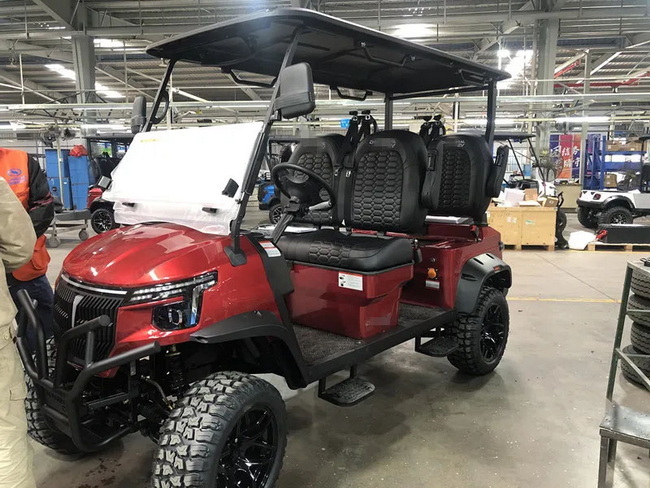
Insurance and registration requirements depend heavily on the jurisdiction and the way the vehicle is used.
A golf cart operating only on private property may not need the same paperwork as a registered low-speed vehicle. However, a community should not assume that private use eliminates all financial risk. Property damage, passenger injuries, collisions with pedestrians, and vehicle theft can still create significant costs.
Owners should speak with their insurance provider about appropriate coverage. Depending on the vehicle and location, useful coverage may include:
- Liability coverage for bodily injury or property damage caused to others.
- Collision coverage for damage resulting from an accident.
- Comprehensive coverage for theft, weather events, fire, vandalism, or falling objects.
- Uninsured or underinsured motorist coverage where available.
- Accessory coverage for custom enclosures, upgraded wheels, lift kits, batteries, sound systems, or cargo equipment.
For OEM brands and distributors, documentation also matters. Buyers may need product specifications, wiring diagrams, parts lists, VIN-related information, operator manuals, warranty terms, battery safety guidance, and recommended maintenance schedules.
A professionally organized document package can improve dealer confidence and reduce post-sale confusion.
A practical safety checklist makes rules easier for residents to remember. Communities can include this information in welcome packages, property-management portals, rental agreements, and annual safety reminders.
Before driving, operators should confirm that:
- The vehicle is approved for the planned route.
- The driver meets the community's age and licensing rules.
- All passengers have a proper seat.
- Children are seated safely and supervised appropriately.
- Seat belts are used where installed or required.
- The battery has enough charge for the planned trip.
- Brakes, lights, horn, steering, and tires are in proper condition.
- Loose cargo is secured.
- The cart is not overloaded.
- The route avoids prohibited roads and high-speed traffic.
- The driver remains alert and does not use a phone while driving.
- The cart is parked without blocking sidewalks, fire lanes, ramps, or emergency access.
For fleet operators, a pre-use inspection sheet can be especially valuable. Resorts, campuses, factories, and rental operations should document brake condition, tire wear, battery charging, lights, steering response, and body damage before each shift or rental period.
The best community policies are simple enough for residents to follow but detailed enough to guide enforcement. Avoid vague statements such as "drive carefully" or "use carts responsibly." Instead, create specific rules that explain what is allowed, where it is allowed, and what happens when rules are ignored.
A practical policy should include:
- Definitions for golf carts, utility vehicles, and low-speed vehicles.
- Approved operating areas and prohibited roads.
- Maximum community speed limits.
- Driver age, identification, and licensing requirements.
- Passenger limits based on available seating.
- Rules for children, pets, and cargo.
- Lighting requirements for evening or early-morning use.
- Parking and charging requirements.
- Insurance or registration requirements.
- Penalties for unsafe operation or repeated violations.
- Procedures for reporting collisions or property damage.
Rules work best when users understand the reason behind them. Communities can offer a short orientation session, digital safety quiz, or annual refresher program.
Training should explain:
- Right-of-way principles.
- Pedestrian awareness.
- Blind spots.
- Safe turning.
- Battery charging practices.
- Rain and wet-surface driving risks.
- Passenger safety.
- Emergency procedures after a collision.
For new residential developments, golf cart orientation can be included in the homeowner move-in process.
Vehicle technology, local ordinances, and community traffic patterns can change. A policy created five years ago may no longer match the number of carts, the age of residents, or the layout of the property.
Communities should review their policy annually and after any serious incident. Managers should also monitor common complaints, such as speeding near playgrounds, improper parking, or nighttime driving without sufficient lighting.
For brands, wholesalers, and project buyers, selecting the right golf cart starts with the end-use environment.
A private resort may prioritize quiet operation, passenger comfort, premium seating, weather enclosures, and attractive body colors. An industrial facility may need cargo capacity, durable suspension, easy-clean surfaces, and reliable battery performance. A residential community may focus on safety equipment, family seating, storage, charging convenience, and local-route compatibility.
Before sourcing an OEM electric golf cart, consider the following questions:
| Buying Question | Why It Matters |
|---|---|
| Will the vehicle operate only on private property or also on public roads? | Determines the required vehicle configuration and documentation |
| What passenger capacity is needed? | Affects chassis size, seating layout, suspension, and braking load |
| What terrain will the cart handle? | Influences tire selection, ground clearance, motor output, and suspension |
| What daily travel distance is expected? | Helps determine battery capacity and charging strategy |
| Is weather protection needed? | May require roofs, enclosures, windshields, wipers, or drainage design |
| Does the market need custom branding? | Supports body color, logo placement, upholstery, wheels, and accessory selection |
| What local rules apply? | Helps avoid selling a vehicle that does not match the buyer's intended usage |
A strong OEM partner should be able to discuss these questions early in the project. The goal is not simply to produce a golf cart. The goal is to provide a vehicle configuration that fits the customer's market, operating conditions, branding strategy, and compliance pathway.
Community golf cart use can improve convenience, reduce short-trip vehicle dependence, and create a more connected local lifestyle. But those benefits depend on thoughtful vehicle selection and clear operating rules.
The most successful communities treat golf carts as real transportation tools rather than casual recreational equipment. They define approved routes, establish driver requirements, manage safety equipment, educate residents, and review rules as conditions change.
For distributors, private-label brands, resorts, property developers, and fleet operators, the most effective starting point is to match the vehicle design to the intended operating environment. Whether the requirement is a standard electric golf cart for private-property use or a road-oriented low-speed vehicle configuration, early planning can reduce risk and improve long-term customer satisfaction.
Looking for a custom electric golf cart, low-speed vehicle platform, utility cart, or branded fleet solution? Contact BorCart to discuss OEM configurations, passenger capacity, battery options, safety equipment, custom colors, accessories, and project-specific vehicle requirements.
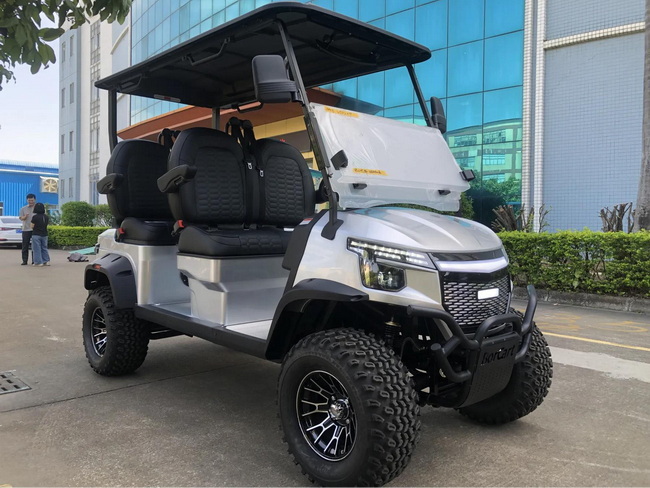
No. A conventional golf cart is not automatically legal for public-road use. Road access depends on the vehicle classification, safety equipment, registration, insurance, local ordinances, and the road itself.
A golf cart is generally intended for golf courses, private property, or designated community areas. An LSV is a low-speed vehicle designed to meet specific road-oriented requirements, including a speed capability of more than 20 mph and no more than 25 mph, plus required safety equipment.
Yes. A private community, homeowners' association, resort, or property manager can establish stricter internal rules, provided those rules do not conflict with applicable law. For example, a community may require licensed adult drivers even if local law allows younger drivers in limited situations.
Not necessarily. Headlights, taillights, turn signals, mirrors, and seat belts may be important, but equipment alone does not determine whether a vehicle is legally permitted on public roads. Classification, documentation, registration, insurance, and local route rules may also apply.
It depends on where and how the cart is used. Insurance may not always be legally required for private-property use, but liability, collision, and comprehensive coverage can provide important financial protection. Registered road-use vehicles often have additional insurance requirements.
Children can ride only when they have a proper seat and can be transported safely under applicable local rules. Carrying children on laps, standing passengers, or exceeding the designed seating capacity creates unnecessary risk.
OEM buyers should request product specifications, vehicle dimensions, payload data, battery information, range estimates, wiring diagrams, spare-parts lists, warranty terms, operator manuals, available accessories, quality-control procedures, and market-specific configuration options.
1. [TIGON Golf Carts — Understanding Golf Cart Laws as a Community]
2. [Electronic Code of Federal Regulations — 49 CFR § 571.500, Standard No. 500: Low-Speed Vehicles]
4. [The 2026 Florida Statutes — Section 316.212, Operation of Golf Carts]
5. [Pennsylvania Consolidated Statutes — Title 75, Section 77A01: Operation of Golf Carts]
6. [Upper Allen Police Department — Golf Carts and Pennsylvania Law]
7. [BorCart — Street Legal Golf Carts: Expert Guide, Features, and OEM Insights]


