


Views: 257 Author: BorCart Publish Time: 2026-09-16 Origin: Site


Content Menu
● Why Electric Golf Carts Are Popular With Senior Riders
● What Makes an Electric Golf Cart Senior-Friendly?
>> Low Step-In Height and Safe Entry
>> Supportive Seating and Ride Comfort
>> Easy-to-Read Controls and Displays
>> Stability, Braking, and Visibility
● How Dealers Can Build the Right Senior Cart Program
>> Step 1: Define the Primary Use Environment
>> Step 2: Choose the Right Seating Layout
>> Step 3: Select Lithium or Lead-Acid Power
● A Senior Golf Cart Specification Checklist
● Product Features That Create Real End-User Value
● OEM Customization for Senior-Friendly Golf Carts
● Build a Strong After-Sales Plan Before Launching
● Why Sample Evaluation Matters
● Choose a Long-Term Electric Golf Cart Partner
>> 1. What is the best electric golf cart configuration for seniors?
>> 2. Are lithium electric golf carts better for senior users?
>> 3. What safety features should a senior-friendly golf cart include?
>> 4. Can an electric golf cart be customized for a retirement community?
>> 5. How far can an electric golf cart travel on one charge?
>> 6. Should dealers stock spare parts with their first golf cart shipment?
>> 7. Can overseas brands add their own logo and color scheme?
Electric golf carts for seniors are no longer limited to golf courses. They are now widely used in retirement communities, resorts, private estates, holiday parks, campuses, medical facilities, and gated neighborhoods. For older riders, the right cart can make daily mobility easier, safer, and more comfortable. For golf cart brands, wholesalers, and fleet operators, senior-friendly electric golf carts represent a growing product category with strong long-term replacement, customization, and after-sales opportunities.
However, a cart that looks stylish is not automatically suitable for senior users. The best electric golf carts for seniors must be designed around easy access, stable handling, clear controls, comfortable seating, dependable braking, and simple charging. Buyers should also consider how local road rules, terrain, passenger capacity, climate, service access, and battery type will affect the final product configuration.
For private-label brands and distributors, the opportunity is not simply to source a standard vehicle. It is to build a reliable senior mobility solution that meets the expectations of end users while protecting product quality, brand reputation, and operating margins.
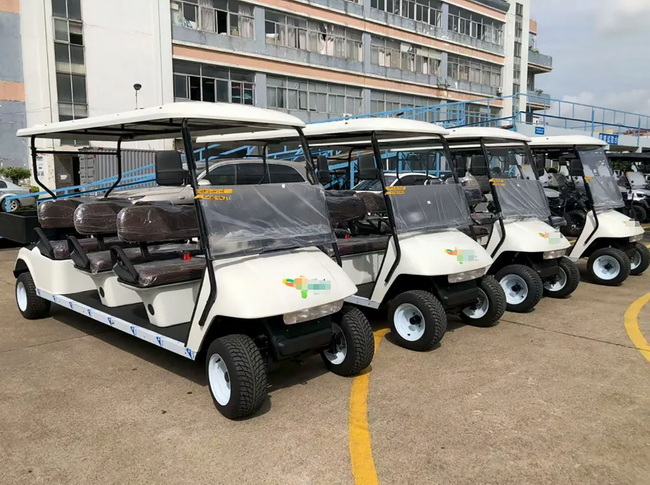
Many seniors value independence but may find long walks, steep paths, heavy golf bags, or uneven terrain more physically demanding than before. An electric golf cart provides quiet, low-speed transportation without requiring the effort associated with walking long distances or operating a full-size vehicle.
A properly configured electric golf cart can help older riders move confidently between homes, clubhouses, parking areas, gardens, recreation facilities, and golf course locations.
The most important benefits include:
- Reduced walking fatigue during golf rounds, resort stays, and community travel.
- Simple driving controls that are easier to understand than complex automotive systems.
- Comfortable seated mobility for users who need more physical support.
- Low-noise operation that suits residential, hospitality, and recreational environments.
- Lower routine maintenance needs compared with fuel-powered alternatives.
- Flexible seating layouts for couples, caregivers, family members, or small groups.
- Customizable features that let dealers create products for specific local markets.
For many operators, the strongest business case comes from combining practical transport with comfort. A senior-friendly cart should feel approachable from the moment a rider steps in, starts the vehicle, and makes the first turn.
A golf cart for seniors should be evaluated from the rider's point of view, not just by motor output, paint color, or entertainment features. The most valuable design choices reduce physical strain and lower the risk of confusion or instability.
Getting in and out of the cart is one of the most important moments for an older rider. A high floor, narrow opening, slippery running board, or poorly placed handrail can make a cart difficult to use.
A senior-friendly configuration should include:
- Low step-in height to reduce knee and hip strain.
- Wide, anti-slip footboards or running boards.
- Strong grab handles near entry points.
- Stable door openings or easy-access side layouts.
- Supportive seating that does not feel too low or too soft.
- Clearly defined handholds for passengers.
For resort and community operators, this feature is especially important because carts may be used by riders with a wide range of mobility levels.
Comfort should be treated as a core product requirement rather than a luxury upgrade. Older riders may be more sensitive to vibration, sudden braking, uneven surfaces, and poorly designed seat cushions.
The ideal cart configuration may include high-back seats, armrests, contoured cushions, durable upholstery, and suspension tuned for the intended terrain. For vehicles used on paved residential roads, smooth acceleration and predictable braking may matter more than aggressive off-road capability.
For golf courses, resorts, and rural communities with mixed surfaces, buyers should also assess tire selection, ground clearance, suspension travel, and chassis stability.
Simple controls help users feel confident. A crowded dashboard may create uncertainty, especially for first-time or occasional riders.
A practical senior-oriented dashboard should prioritize:
- Large, easy-to-read speed and battery indicators.
- Clearly marked forward, neutral, and reverse settings.
- Straightforward key, card, or push-button starting systems.
- High-contrast symbols and labels.
- Accessible parking brake controls.
- Warning lights that are visible in daytime conditions.
- Optional USB charging ports for mobile devices.
A well-designed display does not need to be overly complicated. It needs to communicate the right information quickly.
Safety is not one single feature. It is a system made up of vehicle balance, tire grip, steering feel, braking response, lighting, and rider behavior.
For senior-oriented electric golf carts, buyers should prioritize:
- Four-wheel braking systems with predictable pedal response.
- Seat belts where required or appropriate for the intended use.
- LED headlights, taillights, turn signals, and brake lights.
- Reverse warning alarms or cameras where suitable.
- Wide mirrors for better all-around visibility.
- Stable chassis geometry and a low center of gravity.
- Tires selected for pavement, turf, gravel, or mixed terrain.
- Speed settings matched to local operating conditions.
A cart should never be marketed as suitable for public-road use unless its configuration and documentation meet the applicable requirements of the destination market. Road-use rules can differ significantly by country, state, municipality, community, and vehicle classification.
The most successful senior mobility programs do not begin with a random model selection. They begin with a clear understanding of who will use the vehicles, where they will operate, and how the dealer will support them after delivery.
Before selecting a chassis or battery system, identify the operating environment.
| Primary Use | Recommended Focus | Typical Configuration Priorities |
|---|---|---|
| Golf course | Quiet operation and golf storage | 2-seat or 2+2 seating, turf tires, bag holders, smooth suspension |
| Retirement community | Safe everyday mobility | Low step-in height, lighting package, mirrors, turn signals, comfortable seats |
| Resort or hotel | Guest comfort and visual appeal | Premium upholstery, 4–8 seats, branded body colors, weather protection |
| Gated community | Practical short-distance transport | 2+2 or 4-seat layout, storage, weather enclosure, simple charging |
| Medical or care facility | Accessibility and dependable movement | Easy-entry layout, stable ride, rear storage, optional special-purpose equipment |
| Property maintenance | Dual passenger and utility use | Cargo bed, durable tires, weather-resistant materials, higher payload capability |
A cart used only on manicured turf may need very different tires, suspension, lighting, and seating from a cart used daily on paved paths with slopes and speed bumps.
Passenger capacity affects more than the number of seats. It affects vehicle length, turning radius, payload, battery demand, braking requirements, and storage needs.
Common options include:
- 2-seat carts: Suitable for individual users, couples, golfers, and compact properties.
- 2+2 carts: Popular for families, communities, and buyers who want occasional rear passenger capacity.
- 4-seat carts: A strong option for resorts, residential use, and shared mobility.
- 6-seat carts: Better for commercial guest transport and larger properties.
- 8-seat carts: Designed for shuttle-style applications where passenger movement is the priority.
For older riders, a 2+2 or 4-seat layout often provides the best balance between compact handling and practical passenger space.
Battery selection is one of the most important commercial decisions in an electric golf cart project. Both options can serve specific markets, but they create different ownership experiences.
| Battery Type | Advantages | Considerations |
|---|---|---|
| Lithium battery | Lighter weight, faster charging potential, lower routine maintenance, longer service potential | Higher initial purchase cost; battery quality and support must be verified |
| Lead-acid battery | Lower upfront cost, familiar technology, common in traditional fleets | Heavier, requires regular care, charging discipline is essential, replacement cycle may be shorter |
For premium senior mobility products, lithium configurations can be attractive because they reduce routine battery maintenance and help maintain vehicle performance. For entry-level fleet or price-sensitive programs, lead-acid systems may remain commercially useful when supported by clear maintenance guidance.
The correct choice depends on daily distance, charging access, climate, expected ownership period, budget, and local service capability.
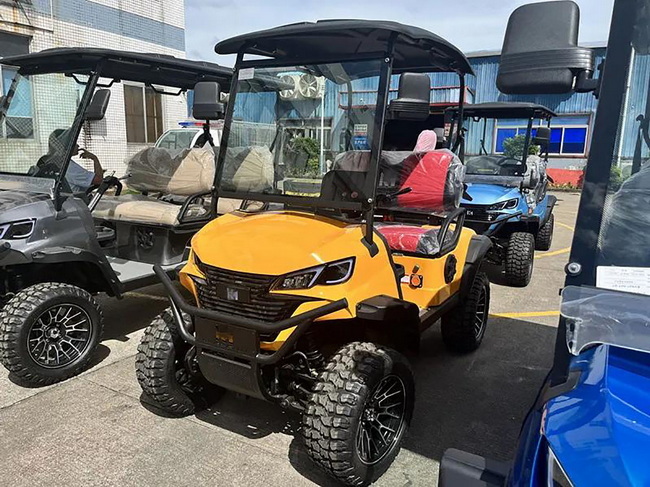
A buyer should request a clear specification sheet before approving a sample or beginning a private-label project. Avoid relying only on catalog photos or general marketing descriptions.
Ask the manufacturer to confirm the following items:
1. Vehicle dimensions and turning radius.
2. Passenger capacity and rated payload.
3. Motor power and controller specification.
4. Battery chemistry, voltage, capacity, charging time, and charger type.
5. Expected driving range under clearly stated test conditions.
6. Brake type and parking brake design.
7. Tire size, tire pattern, and recommended terrain.
8. Suspension configuration and ground clearance.
9. Lighting package, mirrors, horn, and reverse warning equipment.
10. Seat material, seat height, armrests, and entry-assistance options.
11. Weather protection, including roof, windshield, enclosure, and wiper options.
12. Available colors, logo placement, decals, and private-label packaging.
13. Spare-parts list and recommended first-order service inventory.
14. Quality inspection process before shipment.
15. Market-specific documentation required for the target destination.
This level of preparation helps distributors avoid a common problem: ordering a visually attractive cart that later proves difficult to service, certify, charge, or position for the intended customer group.
Senior riders often do not evaluate a cart the same way as an enthusiast buyer. They may care less about top speed and more about whether the vehicle feels calm, intuitive, and dependable.
The features that often create the strongest day-to-day value include:
- A smooth low-speed start rather than sudden acceleration.
- A comfortable seat with enough support for longer journeys.
- A battery display that is easy to understand.
- A secure place for a cane, walker, personal bag, golf clubs, or groceries.
- Good lighting for early morning or evening use.
- A stable ride over small bumps and uneven paths.
- A roof and windshield for basic weather protection.
- Convenient charging access at home, a clubhouse, or a community parking point.
For brands, these details can become meaningful product differentiators. A thoughtful accessory package may improve customer satisfaction more than adding unnecessary decorative features.
For overseas brands and wholesalers, customization can turn a standard electric golf cart into a distinct market offering. The key is to customize with purpose.
Useful customization options may include:
- Private-label logos on the body, steering wheel, seats, wheel covers, and documentation.
- Market-specific body colors and interior trim.
- Customized seat materials for hot, humid, coastal, or cold environments.
- Upgraded batteries and chargers based on daily operating range.
- Different wheel and tire packages for golf, pavement, resort, or light off-road use.
- Weather enclosures, windshields, wipers, and rear-view mirrors.
- Golf bag holders, storage boxes, cup holders, coolers, and USB ports.
- Safety equipment such as belts, speed limit settings, lighting, and reverse alarms.
- Cargo solutions for maintenance teams or property-management fleets.
- Packaging and spare-parts programs built around the distributor's service model.
BorCart offers electric golf cart configurations covering 2-seat through larger passenger formats, as well as utility and specialty vehicle applications. Its published information also describes in-house manufacturing, four production lines, export support, and OEM/ODM capabilities for global customers.
The quality of the cart matters, but the customer's long-term experience also depends on service. This is especially true for senior users, who may value quick support and simple maintenance instructions.
A practical dealer program should include:
- A recommended spare-parts package for the first container shipment.
- Clear battery charging and storage instructions.
- Basic inspection procedures for brakes, tires, steering, and lights.
- Service training for local technicians.
- Easy access to model-specific wiring diagrams and parts lists.
- Defined warranty terms and communication procedures.
- A process for collecting customer feedback after delivery.
For fleet operators, preventive maintenance can reduce downtime and improve rider confidence. A simple monthly inspection of tires, brake performance, battery connections, charger condition, lights, steering response, and fasteners can help identify issues before they become operational problems.
A sample order is not merely a formality. It is the most effective way to assess whether a vehicle fits your brand and customer base.
During a sample evaluation, test the cart under realistic conditions:
- Drive it with typical passenger weight.
- Test starts and stops on flat ground and moderate slopes.
- Check visibility from the driver's position.
- Evaluate seat comfort after a longer ride.
- Measure entry and exit convenience for older users.
- Inspect body panel alignment, paint finish, wiring, fasteners, and accessories.
- Confirm charging compatibility with the destination market.
- Review the spare-parts list and technical documentation.
- Test communication speed and support quality from the supplier.
A strong supplier relationship should include transparent discussion of target pricing, expected order volume, compliance needs, delivery planning, customization boundaries, and service requirements.
The market for electric golf carts for seniors is built on trust. End users want comfort, easy operation, and dependable performance. Dealers need product consistency, service support, and a clear path to product differentiation. Brands need a manufacturing partner capable of translating market feedback into practical vehicle improvements.
BorCart supports global brands, wholesalers, project contractors, and fleet buyers with OEM electric golf cart solutions designed for golf courses, resorts, communities, commercial properties, and specialized mobility applications. With configurable seating, battery options, branded finishes, functional accessories, and application-specific vehicle development, buyers can create a senior-friendly cart program that fits their market rather than relying on a one-size-fits-all product.
Planning to launch or expand a senior electric golf cart range? Contact BorCart with your target market, preferred seating capacity, battery preference, estimated order volume, and customization requirements. Our team can help you evaluate a suitable model platform, build a specification proposal, and prepare for sample testing.
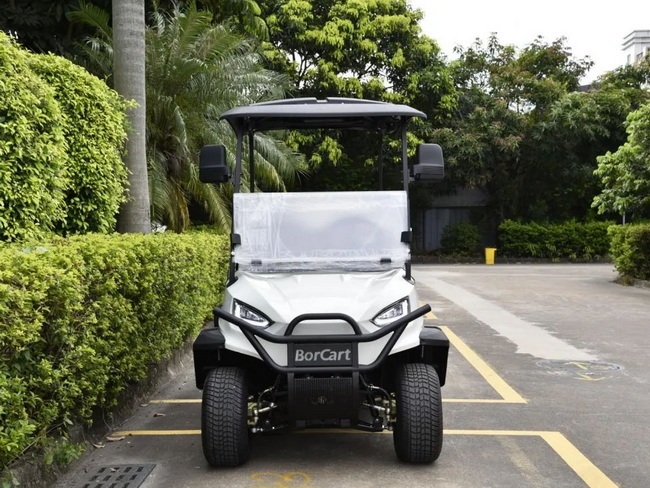
The best configuration depends on where the cart will be used. In many residential, resort, and golf settings, a 2+2 or 4-seat electric golf cart with a low step-in height, supportive seats, stable suspension, clear controls, good lighting, and reliable brakes is a practical choice.
Lithium-powered carts can be a good option because they are lighter and generally require less routine battery maintenance than traditional lead-acid systems. However, the best choice depends on budget, charging access, expected range, climate, service support, and local customer preferences.
Important features may include seat belts where appropriate, LED headlights, brake lights, turn signals, mirrors, a horn, a reverse warning signal, stable tires, responsive brakes, grab handles, and a low step-in design. The final configuration should match the intended operating environment and applicable local rules.
Yes. A retirement-community cart can be customized with branded colors, easy-entry steps, comfortable seats, weather enclosures, storage solutions, lighting packages, speed settings, lithium batteries, and practical accessories such as cup holders, USB ports, and rear cargo space.
Driving range depends on battery type, battery capacity, passenger weight, terrain, temperature, tire choice, speed, driving habits, and vehicle accessories. Buyers should request range estimates based on defined conditions rather than relying on a single general claim.
Yes. Dealers should normally prepare a recommended spare-parts inventory with the first shipment. Common items can include chargers, controllers, brake parts, switches, lighting components, tires, suspension parts, wiring items, and body accessories. The ideal list depends on the model mix and local service capacity.
Yes. OEM projects can include private-label logos, customized body colors, seat finishes, wheel designs, accessory packages, packaging, documentation, and market-specific configurations. Buyers should provide brand guidelines and target-market requirements early in the development process.
2. [BorCart — Golf Cart Factory & Manufacturer: High-Performance Golf Carts]
3. [BorCart — Why Forward-Thinking EV Brands Choose BorCart for Next-Generation Golf Carts]
4. [BorCart — Electric Golf Carts Product Collection]
5. [National Highway Traffic Safety Administration — Low-Speed Vehicles]
6. [U.S. Consumer Product Safety Commission — Golf Cart Safety Information]


