


Views: 288 Author: BorCart Publish Time: 2026-09-14 Origin: Site


Content Menu
● How We Selected These Manufacturers
● China's Utility Cart Manufacturing Advantages
● Utility Cart Manufacturing Standards That Matter
>> Chassis and Frame Materials
>> Battery System and Electrical Architecture
>> Braking, Suspension, and Payload
● Top 10 Utility Carts Manufacturers in China
>> 1. Guangzhou BorCart Electric Vehicle Co., Ltd.
>> 2. Guangdong Lvtong New Energy Electric Vehicle Technology Co., Ltd.
>> 3. Marshell Green Power Co., Ltd.
>> 4. Suzhou Eagle Electric Vehicle Manufacturing Co., Ltd.
>> 5. Xiamen Dalle Electric Car Co., Ltd.
>> 6. Dongguan Excellence Golf & Sightseeing Car Co., Ltd.
>> 7. Shandong Meeko New Energy Tech Inc.
>> 8. Anhui Ruiteng Electric Technology Co., Ltd.
>> 10. Kandi Technologies Group
● Manufacturer Comparison Table
● Common Utility Cart Sourcing Problems
● An Insider Sourcing Tip Few Buyers Discuss
● Buyer's Guide for Utility Cart Imports
>> 1. Define the Operating Scenario First
>> 2. Request a Detailed Quotation Package
>> 3. Verify the Factory Beyond Certificates
>> 4. Use a Sample-to-Production Approval Process
>> 5. Plan Logistics and After-Sales Support
>> 1. How can I verify whether a supplier's ISO certificate is still valid?
>> 2. What is a reasonable MOQ for customized utility carts?
>> 3. Should I choose lead-acid or lithium batteries for utility carts?
>> 4. How do I prevent suppliers from changing parts after sample approval?
>> 5. What documents should I request before importing electric utility carts?
China remains one of the most practical sourcing destinations for electric utility carts, cargo carts, golf-cart-based utility vehicles, patrol carts, and low-speed commercial transport vehicles. For professional buyers, the main advantage is not simply a lower purchase price. It is the ability to combine chassis production, body molding, battery-system integration, accessory customization, and export-oriented assembly within a comparatively mature supply chain.
However, a utility cart supplier should never be selected from product photos alone. A factory that can make a visually attractive cart may not necessarily have stable frame welding, traceable electrical components, reliable payload performance, or the engineering capacity to support a branded OEM program.
This guide introduces ten China-based manufacturers that procurement teams may evaluate when building a supplier shortlist. It is designed for overseas brands, distributors, wholesalers, resorts, industrial users, warehouse operators, municipalities, and vehicle manufacturers seeking a long-term utility cart production partner.
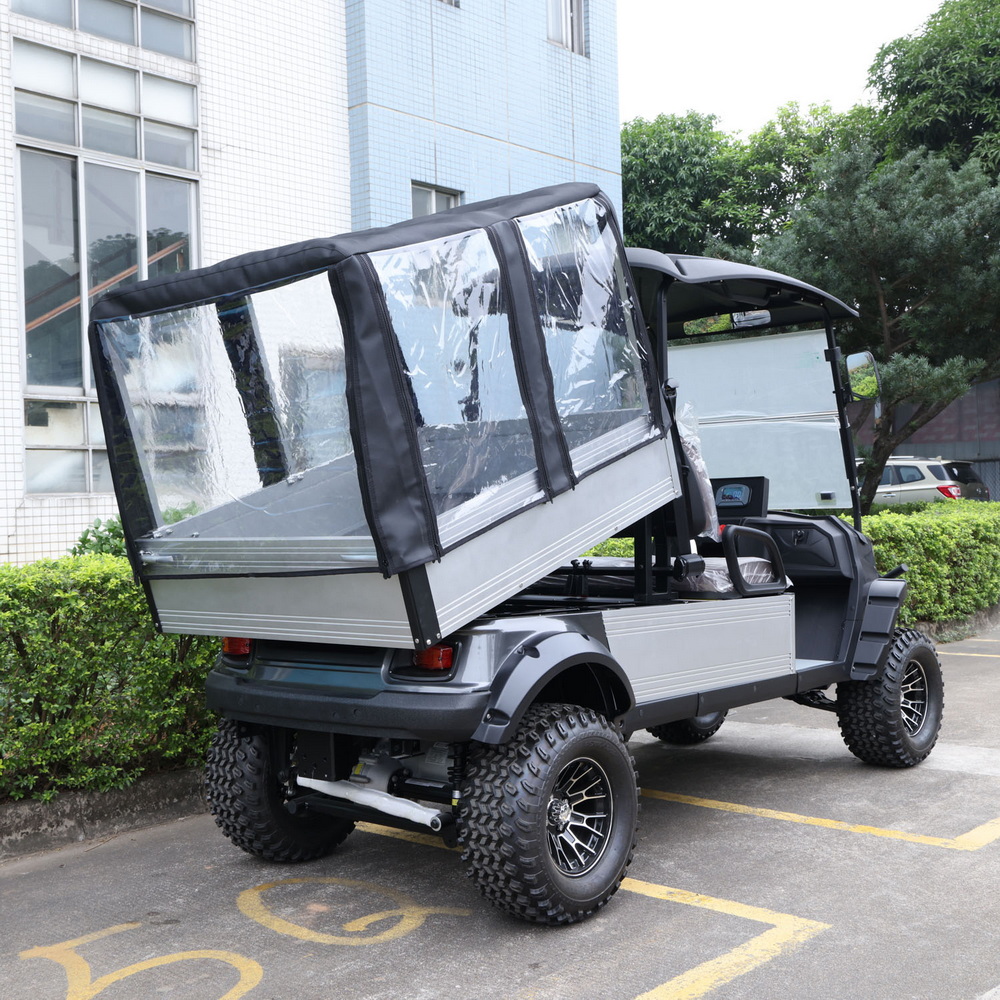
A useful supplier comparison should go beyond online visibility. The manufacturers below were selected based on publicly available company information and their relevance to electric utility vehicles, golf-cart platforms, low-speed vehicles, sightseeing vehicles, cargo vehicles, or OEM/ODM manufacturing.
The evaluation focuses on the following procurement criteria:
- Manufacturing background: Years in electric vehicle, golf cart, utility vehicle, or low-speed vehicle production.
- Product relevance: Whether the company offers utility carts, cargo carts, multi-purpose vehicles, patrol carts, electric transport vehicles, or adaptable golf cart platforms.
- Engineering capability: Ability to modify chassis dimensions, seating layout, cargo bed configuration, roof, lighting, dashboard, battery system, branding, and accessories.
- Quality-control process: Evidence of incoming-material inspection, in-process inspection, final inspection, road testing, and component traceability.
- Export readiness: Experience serving international buyers and familiarity with destination-market documentation, packaging, shipping, and compliance requirements.
- OEM/ODM suitability: Whether the supplier can support private labels, custom colors, logos, specialized bodies, or project-specific vehicle functions.
- Order flexibility: Whether the company is better suited to pilot orders and growing brands, or to high-volume fleet and distributor projects.
For buyers, the most important question is not, "Who has the lowest ex-works price?" It is, "Which factory can repeatedly deliver the specified vehicle configuration, documentation package, spare parts, and after-sales support at the required volume?"
China's electric utility vehicle supply chain is concentrated primarily in Guangdong, Zhejiang, Jiangsu, Shandong, and selected manufacturing areas in Fujian and Anhui. Guangdong is particularly significant because it combines electric vehicle assembly, electronics, battery supply, metal fabrication, plastics, molds, lighting systems, wiring harnesses, and export logistics.
For utility cart sourcing, the Guangzhou–Foshan–Dongguan–Shenzhen manufacturing corridor offers several practical advantages:
- Access to electric motors, controllers, chargers, lithium battery packs, lead-acid batteries, molded plastic components, wiring harnesses, and aluminum or steel fabrication.
- Shorter coordination cycles between vehicle assemblers and component suppliers.
- Greater availability of export-oriented factories with experience in container loading and overseas distributor requirements.
- Easier access to ports such as Guangzhou Nansha and Shenzhen for international shipments.
- Strong capabilities in low-volume customization compared with vehicle manufacturers built only for standardized domestic-market products.
China's broader electric vehicle export ecosystem has also accelerated the availability of motors, controllers, battery-management systems, charging equipment, and related components. This benefits utility cart buyers, but it also creates a sourcing challenge: many factories can assemble a vehicle, while fewer can control component consistency and engineering changes over multiple production batches.
Before comparing manufacturers, buyers should understand the technical details that affect durability, safety, operating cost, and regulatory readiness.
A utility cart's frame should be evaluated by material grade, tube thickness, weld consistency, corrosion protection, and loading design—not by appearance.
Common options include:
- Carbon steel chassis: Often cost-effective and suitable for many industrial, resort, and campus applications when protected with proper anti-corrosion treatment.
- Galvanized steel: Can provide improved corrosion resistance in humid or coastal operating environments.
- Aluminum chassis: Reduces weight and improves corrosion resistance, but may require different structural design and repair considerations.
- Powder-coated steel: Widely used, but buyers should confirm pretreatment standards, coating thickness, salt-spray expectations, and chip resistance.
Ask for the frame drawing, tube-wall thickness, material specification, welding procedure, and corrosion-protection process. A lower-price utility cart can sometimes use thinner steel tubing, inconsistent weld penetration, or basic paint treatment that becomes a long-term maintenance issue.
The battery system often determines whether a utility cart becomes a reliable fleet asset or a recurring service problem.
Common battery choices include:
| Battery Type | Typical Strengths | Procurement Considerations |
|---|---|---|
| Flooded lead-acid | Lower initial cost; established service familiarity | Requires maintenance; shorter useful cycle life; ventilation and charging discipline are important |
| AGM lead-acid | Maintenance-free format; simpler handling | Higher cost than flooded lead-acid; verify brand and actual capacity |
| Lithium iron phosphate | Lower weight; deeper usable capacity; longer cycle potential | Verify battery management system, cell origin, charger matching, warranty terms, and transport documentation |
| Lithium ternary systems | Higher energy density in some applications | Thermal management, safety design, and documentation require careful review |
For lithium-powered utility carts, request:
- Battery cell brand and cell chemistry.
- Battery Management System specifications.
- Charger brand and charging profile.
- UN38.3 transport test documentation where applicable.
- MSDS documentation.
- Battery warranty terms.
- High-voltage and low-voltage wiring diagrams.
- Service procedure for battery replacement and fault diagnosis.
A utility cart designed for a flat golf course is not automatically suitable for warehouse, factory, airport, farm, or construction-site use.
Buyers should confirm:
- Rated payload versus practical operating payload.
- Cargo-bed dimensions and floor material.
- Rear axle ratio.
- Hill-climbing performance under load.
- Brake type and parking-brake system.
- Suspension configuration.
- Tire load rating and tread pattern.
- Turning radius.
- Ground clearance.
- Maximum operating speed under loaded conditions.
- Waterproof rating or environmental operating limits for the electrical system.
A vehicle advertised with a "500 kg payload" should be tested with that payload on the actual operating surface, including ramps, uneven ground, braking distance, and repeated acceleration cycles.
Founded: 2000
Location: Guangzhou, Guangdong, China
Main markets: More than 30 countries, including the United States, Germany, France, the United Kingdom, Mexico, Southeast Asia, the Middle East, Africa, and Australia
Core products: Utility carts, golf carts, sightseeing buses, cargo vehicles, hunting vehicles, patrol vehicles, towing tractors, low-speed vehicles, electric classic cars, and ambulance vehicles
OEM/ODM focus: Private labeling, custom vehicle design, special-purpose configurations, sample orders, and factory-visit support
Guangzhou BorCart Electric Vehicle Co., Ltd. is a practical candidate for overseas brands and distributors that need a balance between production scale, customization depth, and responsive commercial coordination. Founded in 2000, the company has built more than 25 years of experience in electric vehicle manufacturing and operates from Guangzhou, one of China's most established export-oriented electric vehicle production regions.
BorCart reports a 200,000-square-meter workshop, more than 100 engineers and technicians, over 1,000 skilled workers, and four production lines. The company states that these lines can deliver up to 10 containers of electric vehicles per day, depending on configuration and loading plans.
For utility cart buyers, a key advantage is the company's ability to support different applications rather than only supplying a single standardized golf cart design. Its product coverage includes multi-purpose electric vehicles, freight vehicles, utility carts, hunting vehicles, sightseeing vehicles, patrol vehicles, and towing-related solutions. This range can be useful for distributors that want to build a broader low-speed electric vehicle catalog under one private label.
BorCart also reports in-house production of key components including chassis, bodies, molds, and paint. For buyers, vertical integration can help improve control over vehicle styling, body color, branding, frame adjustments, and cost structure. It also reduces dependence on multiple unrelated sub-suppliers when an OEM project requires a customized cargo bed, logo placement, seating layout, roof system, body color, or fleet-specific accessory package.
The company describes a formal New Product Introduction process and quality-control procedures that include Incoming Quality Control, Process Quality Control, Quality Assurance, and 100% assembly-line product testing. It also states that it uses components such as KDS motors, Mahle motors, Curtis controllers, and Delta-Q chargers for relevant export-market specifications. Buyers should still request the exact bill of materials for the selected model, because component selection can vary by configuration and target market.
BorCart is particularly relevant for:
- Small and medium-sized overseas brands seeking deeper OEM support.
- Distributors that need custom colors, logos, body styling, or application-specific layouts.
- Resort, hotel, property-management, campus, industrial, and tourism projects requiring different vehicle categories.
- Buyers that want a sample validation process before moving to a container-level purchase.
- Importers seeking a supplier with both vehicle assembly capacity and in-house body, chassis, mold, and paint capabilities.
Rather than positioning itself only as a high-volume standardized supplier, BorCart can be evaluated as a manufacturer for buyers that need communication efficiency, engineering coordination, flexible configuration support, and a clear path from prototype or sample order to repeat production.
Founded: 2004
Location: Dongguan, Guangdong, China
Main markets: International distributors, resorts, golf facilities, tourism projects, and commercial fleet users
Core products: Golf carts, electric utility vehicles, sightseeing vehicles, electric patrol vehicles, low-speed transport vehicles
OEM/ODM focus: Customized body styling, application-specific vehicles, fleet configurations
Guangdong Lvtong New Energy Electric Vehicle Technology is one of the better-known Guangdong electric vehicle manufacturers serving the golf cart, sightseeing vehicle, and utility vehicle categories. Publicly available company information identifies the business as a Germany–China joint venture founded in 2004, with a factory area reported at approximately 50,000 square meters and production capacity cited at around 2,000 units per month.
Lvtong is relevant for buyers looking for a supplier with a broad catalog of golf-cart-based and low-speed electric vehicles. Its product range is commonly associated with tourism, resorts, campuses, security operations, golf courses, properties, and light cargo applications.
For procurement teams, the key diligence points include confirming the exact utility-cart chassis, battery system, motor/controller combination, export documentation, and spare-parts support available for the selected model. A broad catalog can be useful, but it is important to verify which components are standardized and which require a special production arrangement.
Founded: 2002
Location: Zhaoqing, Guangdong, China
Main markets: North America, Europe, the Middle East, Southeast Asia, Africa, and global fleet buyers
Core products: Electric golf carts, utility vehicles, mobility scooters, sightseeing vehicles, industrial electric vehicles
OEM/ODM focus: Distributor branding, fleet specifications, commercial vehicle customization
Marshell Green Power is a long-established manufacturer in the broader electric vehicle and mobility-equipment sector. Its product portfolio includes golf carts, utility vehicles, electric sightseeing vehicles, and other low-speed electric transport products.
The company is often considered by buyers that want to source electric utility vehicles alongside mobility products or other commercial electric transport equipment. Its diversified offering may benefit distributors that serve multiple segments, including hospitality, property management, golf operations, industrial facilities, and personal mobility retail.
The main sourcing consideration is to ensure that the utility cart selected is engineered for the buyer's actual duty cycle. A facility vehicle used for light internal transport has different requirements from a heavy cargo cart used on ramps, rough ground, or outdoor industrial sites.
Founded: 1999
Location: Suzhou, Jiangsu, China
Main markets: Europe, North America, Asia-Pacific, resorts, golf courses, and commercial fleets
Core products: Golf carts, utility carts, sightseeing buses, patrol carts, electric cargo vehicles
OEM/ODM focus: Brand customization, special-function bodies, custom seating and cargo configurations
Suzhou Eagle is an established Chinese manufacturer in the golf cart and electric utility vehicle segment. Its long operating history makes it relevant to buyers looking for a supplier with experience in exporting low-speed electric vehicles to international markets.
The company's product mix typically covers golf carts, sightseeing buses, patrol vehicles, utility vehicles, and cargo-oriented electric carts. This is useful for a distributor that wants to offer multiple electric transport formats without changing supplier relationships for every product category.
Buyers should pay particular attention to vehicle homologation requirements if the carts will be operated on public roads or in regulated environments. A utility cart intended only for private-property use may require a different lighting package, windshield specification, braking arrangement, safety labeling, and documentation than one intended for road-adjacent use.
Founded: 2001
Location: Xiamen, Fujian, China
Main markets: Tourism projects, resorts, commercial facilities, property-management companies, overseas distributors
Core products: Golf carts, sightseeing vehicles, electric utility vehicles, cargo carts, patrol vehicles
OEM/ODM focus: Custom color schemes, vehicle accessories, body and seating modifications
Xiamen Dalle Electric Car is a supplier that may be relevant for buyers sourcing low-speed electric vehicles from Fujian's export-oriented manufacturing region. Its product categories commonly include electric golf carts, tourism vehicles, patrol carts, and utility-oriented electric transport solutions.
For buyers in the hotel, resort, property-management, and scenic-area sectors, Dalle's combination of passenger and utility vehicle formats can make it worth reviewing. The key procurement task is to separate cosmetic customization from structural customization. A custom body color or logo may be straightforward, while a redesigned cargo bed, frame reinforcement, battery relocation, or different wheelbase can require engineering validation and a longer development cycle.
Founded: 1998
Location: Dongguan, Guangdong, China
Main markets: Resorts, golf courses, tourism operators, commercial fleets, global distributors
Core products: Golf carts, utility carts, sightseeing cars, patrol cars, electric cargo vehicles
OEM/ODM focus: Commercial fleet models, branding, accessories, project-specific specifications
Dongguan Excellence Golf & Sightseeing Car is part of the Guangdong manufacturing base for golf carts, sightseeing vehicles, and commercial electric carts. Its location can provide logistical and component-sourcing advantages due to proximity to the Dongguan–Shenzhen–Guangzhou industrial network.
This supplier type is generally appropriate for buyers requiring traditional electric golf-cart platforms adapted into utility units, patrol vehicles, or tourism applications. During evaluation, buyers should request a complete configuration sheet rather than relying on a catalog image. Two visually similar carts may differ significantly in motor power, controller brand, axle ratio, battery capacity, brake setup, cargo-bed reinforcement, and tire specification.
Founded: 2015
Location: Shandong, China
Main markets: Overseas distributors, e-commerce importers, recreational vehicle buyers, light commercial users
Core products: Golf carts, electric utility carts, off-road carts, recreational electric vehicles
OEM/ODM focus: Branding, model customization, export packaging, component selection
Shandong Meeko New Energy Tech is a newer entrant compared with some of the long-established Guangdong manufacturers, but it is relevant for buyers exploring golf-cart-style utility vehicles, recreational carts, and private-label programs.
A supplier in this category may be suitable for distributors looking for a modern product presentation, a relatively flexible model range, and adaptation for different commercial or recreational uses. However, buyers should validate long-term spare-parts capability, engineering documentation, supplier quality consistency, and production maturity before committing to a multi-year program.
For a new supplier relationship, a staged sourcing approach is recommended:
1. Review company registration and factory address.
2. Obtain detailed specifications and component brands.
3. Order a pre-production sample.
4. Perform functional and durability testing.
5. Approve a golden sample.
6. Conduct pre-shipment inspection before container loading.
7. Maintain spare-parts stock for the first year of fleet operation.
Founded: Varies by operating entity and product division
Location: Anhui, China
Main markets: Domestic commercial users, international buyers, distributors of low-speed electric vehicles
Core products: Electric utility vehicles, golf carts, cargo carts, low-speed transport vehicles
OEM/ODM focus: Basic customization, commercial vehicle configurations, private-label opportunities
Anhui has developed into a meaningful region for electric vehicle component manufacturing and low-speed electric vehicle assembly. Suppliers from this area can be considered by buyers seeking alternative sourcing beyond the Guangdong cluster.
Anhui Ruiteng Electric Technology and similar regional suppliers may be suitable for cost-sensitive utility cart projects, particularly where vehicle specifications are relatively standardized. Buyers should carefully compare electrical components, chassis treatment, warranty structure, spare-parts availability, and lead time against Guangdong-based alternatives.
The lowest quotation should be reviewed alongside the included configuration. A lower-priced cart may omit critical items such as upgraded chargers, branded controllers, heavy-duty suspension, lithium battery protection, cargo-bed reinforcement, or destination-market lighting requirements.
Founded: 2006
Location: Xiamen, Fujian, China
Main markets: International golf cart dealers, resort operators, property-management fleets, leisure vehicle distributors
Core products: Golf carts, utility vehicles, personal transport vehicles, lifted carts, commercial electric carts
OEM/ODM focus: Dealer programs, brand customization, accessory packages, model differentiation
HDK Electric Vehicles is widely associated with golf carts and related personal transportation or utility-focused electric vehicles. It may be suitable for distributors looking for vehicle styling, accessory options, dealer-oriented product lines, and golf-cart-based utility platforms.
For commercial utility use, buyers should evaluate whether the selected vehicle is a consumer-style cart adapted with a cargo box or a purpose-built utility platform. The distinction matters because a true work vehicle typically needs stronger rear suspension, more durable cargo-bed support, an appropriate axle ratio, commercial-grade tires, and a payload rating supported by test data.
Founded: 2002
Location: Zhejiang, China
Main markets: International electric vehicle markets, mobility products, commercial and consumer electric transportation
Core products: Electric vehicles, utility task vehicles, recreational electric vehicles, low-speed electric transportation
OEM/ODM focus: Larger-scale programs, product development, industrial cooperation
Kandi Technologies Group is a broader electric vehicle manufacturer rather than a utility-cart-only supplier. It may be relevant for buyers whose requirements extend beyond traditional golf-cart-based utility vehicles into larger low-speed electric vehicle programs, task vehicles, or more complex mobility solutions.
For smaller distributors, Kandi may not always be the most flexible option if the order volume is limited or if the requested customization is highly specialized. However, larger procurement programs may benefit from reviewing its engineering, industrialization, and electric vehicle development capabilities.
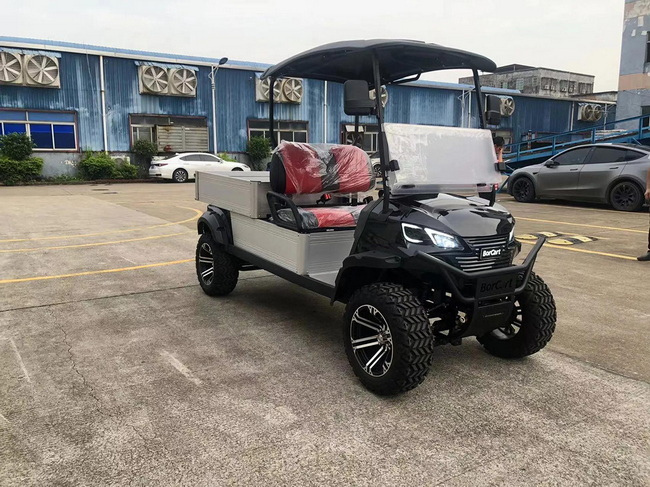
The following table is intended as an initial sourcing reference. "Typical fit" and "indicative order profile" should be validated directly with each supplier because final conditions depend on model, battery type, customization level, destination market, and production schedule.
| Manufacturer | Manufacturing Focus | Typical Buyer Fit | Indicative Order Profile | Certification and Compliance Review |
|---|---|---|---|---|
| Guangzhou BorCart Electric Vehicle Co., Ltd. | Utility carts, golf carts, cargo vehicles, sightseeing buses, patrol vehicles | Brands, distributors, fleet projects, small and medium OEM buyers | Suitable for sample-to-container programs; confirm model-specific MOQ | Request current certificates, component compliance files, QC records, and market-specific documents |
| Guangdong Lvtong New Energy Electric Vehicle Technology | Golf carts, utility vehicles, sightseeing vehicles | Distributors, resorts, golf courses, large fleet buyers | Often suitable for repeat fleet orders | Confirm current product-level certification and battery documentation |
| Marshell Green Power | Golf carts, utility vehicles, mobility products | Multi-category distributors and commercial fleet buyers | Suitable for broader catalog sourcing | Verify exact configuration by model rather than company-level claims |
| Suzhou Eagle Electric Vehicle Manufacturing | Golf carts, sightseeing buses, cargo and patrol carts | Established distributors and tourism projects | Suitable for project and distributor orders | Confirm destination-market road-use requirements where relevant |
| Xiamen Dalle Electric Car | Golf carts, sightseeing vehicles, utility carts | Resorts, scenic areas, private-label distributors | Suitable for project-based orders | Check component approvals and spare-parts policy |
| Dongguan Excellence Golf & Sightseeing Car | Golf carts, utility carts, patrol and sightseeing vehicles | Commercial fleets and export distributors | Commonly suited to container-volume orders | Verify testing processes and component traceability |
| Shandong Meeko New Energy Tech | Recreational carts, golf-cart utility vehicles | Emerging brands and e-commerce importers | May offer flexible model selection; confirm MOQ | Review factory audit, warranty capacity, and batch consistency |
| Anhui Ruiteng Electric Technology | Utility vehicles, cargo carts, low-speed EVs | Cost-sensitive commercial buyers | Often best for standardized configurations | Confirm corrosion protection, electrical safety, and export documents |
| HDK Electric Vehicles | Golf carts, personal transport, utility carts | Dealers, lifestyle vehicle distributors, resorts | Suitable for dealer and branded programs | Verify payload and duty-cycle suitability for utility use |
| Kandi Technologies Group | Electric vehicles, task vehicles, low-speed EVs | Larger or more technical vehicle programs | Better suited to structured, higher-volume programs | Confirm platform-specific regulatory and quality documents |
One of the most common issues in utility cart sourcing is material substitution after sample approval. The first sample may use a specified motor, controller, battery, steel tube thickness, seat material, tire, or charger, while mass production uses a lower-cost alternative.
To reduce this risk:
- Attach a detailed bill of materials to the purchase contract.
- Identify component brands, model numbers, and technical parameters.
- Define whether substitutions require written buyer approval.
- Retain a signed golden sample.
- Require pre-shipment inspection against the approved configuration.
- Photograph and record serial numbers for key electrical components.
Some utility carts are marketed with generous payload ratings without sufficient testing under repeated real-world operating conditions. A cart may carry the stated load on flat ground for a short distance but experience braking, suspension, motor-temperature, or axle issues during daily use.
Avoid this by asking for:
- Rated payload test method.
- Maximum slope test with load.
- Brake-distance data.
- Rear axle and suspension specifications.
- Tire load index.
- Cargo-bed material and reinforcement details.
- Motor-temperature performance under continuous operation.
Battery warranties can be written in vague language. A supplier may offer a "three-year lithium battery warranty" without explaining whether the warranty covers capacity loss, BMS faults, cell failure, shipping costs, labor, or only manufacturing defects.
Before ordering, define:
- Minimum remaining capacity threshold.
- Warranty start date.
- Excluded operating conditions.
- Replacement responsibility.
- Freight responsibility.
- Technical support response time.
- Availability of replacement battery packs after the vehicle model changes.
A manufacturer may state that a model "has CE" without clarifying whether the document applies to the complete vehicle, selected electrical components, a previous model version, or a different battery configuration.
Buyers should match every document to the exact model, configuration, voltage system, battery type, controller, charger, and destination-market requirement.
A critical but often overlooked issue is the relationship between the battery system, charger profile, and controller parameters.
Many procurement teams compare only battery capacity, such as 48V 100Ah or 72V 150Ah. That comparison is incomplete. Two carts with the same nominal battery rating can perform very differently if the charger profile is not properly matched to the battery chemistry, if the Battery Management System has conservative discharge limits, or if the controller current settings are not coordinated with the motor and axle ratio.
For example, a utility cart may look powerful during an unloaded showroom test. Once loaded with cargo on a ramp, the controller can reduce output due to current limits, battery voltage drop, motor temperature, or BMS protection. The result is poor hill climbing, unexpected speed reduction, or fault-code events.
Ask suppliers to provide a complete "powertrain compatibility sheet" covering:
- Motor rated and peak power.
- Controller continuous and peak current.
- Battery nominal voltage and usable capacity.
- Battery Management System continuous discharge current.
- Charger output and charging curve.
- Rear axle ratio.
- Tire diameter.
- Rated payload.
- Maximum gradeability under load.
- Test conditions used for the performance claims.
This technical sheet often reveals more about a utility cart's real operating suitability than marketing specifications.
Do not begin with a catalog model. Begin with the actual duty cycle.
Clarify:
- Indoor, outdoor, or mixed operation.
- Flat ground, slopes, uneven terrain, or paved roads.
- Passenger, cargo, towing, patrol, or maintenance use.
- Required payload and cargo-bed dimensions.
- Daily operating hours.
- Charging window.
- Required driving range.
- Climate conditions.
- Need for weather enclosure, cab, windshield, doors, or heating.
- Required spare-parts stock.
A utility cart for a hotel maintenance team may require a quiet, compact 48V platform. A factory logistics cart may require a heavier chassis, larger cargo bed, industrial tires, and reinforced suspension. A resort may need a branded cart with weather protection and a presentable body finish.
A professional quotation should include more than a unit price.
Request:
- Product drawing or configuration sheet.
- Full technical specification.
- Bill of materials for major components.
- Motor, controller, charger, and battery brands.
- Cargo-bed dimensions and rated payload.
- Vehicle dimensions and container loading quantity.
- Net and gross weight.
- Warranty terms.
- MOQ by color and configuration.
- Sample lead time and mass-production lead time.
- Spare-parts price list.
- Packaging method.
- Incoterms such as EXW, FOB, CIF, or DDP where applicable.
Certificates are important, but they should not be treated as the final verification step.
Use a layered verification process:
- Confirm the legal company name and factory address.
- Request copies of current business registration and quality-system certificates.
- Check the certificate number with the issuing body where possible.
- Conduct a live video factory tour.
- Review welding, painting, assembly, testing, and packaging areas.
- Ask to see incoming-inspection records and final-inspection procedures.
- Visit the factory or appoint a third-party inspection firm for larger programs.
- Request recent export references where disclosure is permitted.
For ISO documentation, verify:
- Certificate number.
- Issuing certification body.
- Scope of certification.
- Original issue date.
- Expiry date.
- Factory address listed on the certificate.
- Whether the certificate covers the actual manufacturing facility rather than a trading company.
For OEM projects, do not move directly from a brochure image to a large container order.
A more controlled process is:
1. Confirm the technical specification and commercial terms.
2. Produce a sample or pre-production prototype.
3. Test performance, charging, braking, payload, steering, finish, and accessories.
4. Record all required modifications.
5. Approve a golden sample or approved production standard.
6. Sign the final specification and bill of materials.
7. Start mass production.
8. Conduct a pre-shipment inspection.
9. Confirm container-loading photos and serial-number records.
10. Keep spare parts available before the first vehicles arrive.
Electric utility carts are large products, and logistics can affect the final landed cost substantially.
Key points include:
- Confirm whether the vehicle is shipped completely built, partially knocked down, or fully knocked down.
- Calculate the number of units per 20-foot or 40-foot container.
- Confirm whether battery packs are installed, packed separately, or sourced locally.
- Review lithium battery transport requirements before booking freight.
- Use moisture protection and secure lashing inside the container.
- Request loading photos and packing lists.
- Order essential spare parts with the first container, including chargers, controllers, contactors, brake parts, switches, lights, keys, tires, suspension parts, and body panels.
For new distributors, a spare-parts package is often more valuable than negotiating a small discount on the first vehicle order. A vehicle that is out of service for weeks due to a missing controller or charger can damage the buyer's reputation with its end customer.
Choosing a utility cart manufacturer in China requires a structured supplier-evaluation process. The right partner should be able to demonstrate more than a polished catalog. It should provide consistent chassis construction, traceable electrical components, practical payload engineering, stable battery integration, transparent quality checks, export documentation, and ongoing spare-parts support.
For buyers seeking a manufacturer that combines established electric vehicle production, flexible OEM/ODM development, in-house chassis and body-related capabilities, sample-order support, and experience across golf carts, utility carts, cargo vehicles, sightseeing vehicles, and low-speed commercial transport, Guangzhou BorCart Electric Vehicle Co., Ltd. is a strong supplier to include at the beginning of a qualified sourcing shortlist. The company reports a 200,000-square-meter facility, four production lines, more than 100 engineers and technicians, and a product portfolio spanning multiple commercial electric vehicle categories.
Before selecting any supplier, request the exact vehicle configuration, confirm critical component brands, validate the sample under realistic operating conditions, and establish a written inspection and after-sales plan.
If you are developing a private-label utility cart program, sourcing cargo carts for a fleet, or expanding an electric vehicle distribution line, contact BorCart to discuss your target market, payload requirements, battery preference, branding needs, and expected order volume. A clear technical brief is the fastest way to receive a meaningful proposal rather than a generic quotation.
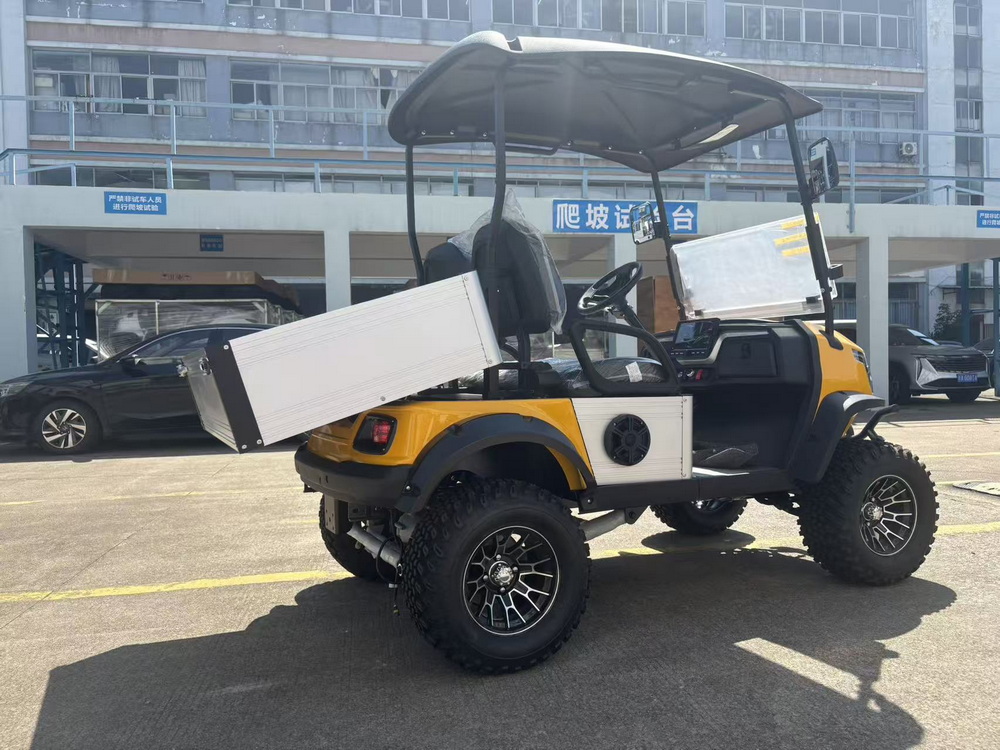
Request the full certificate, including the certificate number, certification body, scope, factory address, issue date, and expiry date. Then verify the number through the issuing certification body's directory or contact channel where available. Make sure the certificate covers the manufacturing entity and address that will actually produce your utility carts.
MOQ depends on the level of customization. Standard colors and standard configurations may be available in small sample quantities or partial-container orders. Custom body molds, unique chassis dimensions, special cargo beds, private-label dashboards, or exclusive styling usually require a higher commitment because of tooling, material purchasing, and production-line setup. Buyers should separate "logo and color customization" from "structural customization" when discussing MOQ.
Lead-acid batteries can be appropriate for cost-sensitive, low-intensity applications with regular maintenance support. Lithium iron phosphate systems are often preferable for frequent use, longer daily operating hours, reduced vehicle weight, and lower maintenance needs. The decision should be based on total operating cost, charging discipline, climate, daily range, service capability, and replacement policy—not only the initial cart price.
Include a detailed bill of materials in the contract. Identify critical components by brand, model number, voltage, capacity, and specification. State clearly that substitutions require written approval. Retain a signed golden sample, use third-party pre-shipment inspection, and require serial-number photographs for motors, controllers, chargers, and battery packs where practical.
At minimum, request the commercial invoice, packing list, bill of lading, product specification, warranty terms, spare-parts list, battery documentation, electrical component information, and any destination-market compliance documents relevant to the product and intended use. For lithium batteries, ask about UN38.3-related transport documentation and safety documentation. Requirements vary by country, so importers should also consult a local customs broker, product-compliance adviser, or legal professional.
- [China General Administration of Customs] — Official customs and trade information.
- [Ministry of Commerce of the People's Republic of China] — Export, trade, and market policy information.
- [China Association of Automobile Manufacturers] — Automotive industry information and association resources.
- [International Electrotechnical Commission] — International electrical and electronic standards references.
- [UNECE Vehicle Regulations] — Vehicle safety and regulatory information for applicable markets.
- [European Commission Product Safety and CE Marking] — Guidance on CE marking and product requirements for the European market.


