


Views: 220 Author: BorCart Publish Time: 2026-09-15 Origin: Site


Content Menu
● Folding Golf Cart vs Rigid Mini Cart at a Glance
● What Is a Folding Golf Cart?
>> Why Folding Golf Carts Appeal to Apartment and RV Users
>> Folding Mechanisms Require Careful Engineering
>> Why Rigid Mini Carts Remain Popular
● Storage Reality: Measure Before You Compare
● Folding Golf Cart Storage Benefits for Apartment Dwellers
>> When Folding Is the Better Apartment Solution
● Folding Golf Cart Storage Benefits for RV Enthusiasts
>> When a Folding Golf Cart Makes Sense for RV Travel
● Rigid Mini Cart Advantages for Daily Use
>> Where Rigid Mini Carts Deliver Greater Value
● Ride Quality, Stability, and Long-Term Ownership
>> Questions Buyers Should Ask About Construction
● Battery and Charging Considerations in Small Living Spaces
● How OEM Buyers Can Build a Better Product Range
>> A Practical Two-Model Product Strategy
● Folding Golf Cart vs Rigid Mini Cart: Final Recommendation
>> 1. Is a folding golf cart better than a rigid mini cart for RV travel?
>> 2. Can a folding golf cart fit in an apartment garage?
>> 3. Are rigid mini carts more durable than folding golf carts?
>> 4. Which option is better for a golf community?
>> 5. What should OEM buyers request from a golf cart manufacturer?
>> 6. Can a rigid mini cart be used for light utility work?
>> 7. What is the most important measurement before buying a golf cart for storage?
>> 8. Should apartment residents use lithium batteries in golf carts?
Choosing between a folding golf cart and a rigid mini cart is no longer only about appearance or driving performance. For apartment dwellers, RV travelers, resort operators, and compact-property owners, storage dimensions, transport convenience, charging access, and daily practicality can be just as important as seating capacity and range.
A folding golf cart is designed to reduce its storage footprint when it is not in use. A rigid mini cart keeps a fixed body structure and typically focuses on stability, passenger comfort, cargo capability, and a more conventional vehicle-like driving experience. Both options can serve residential, recreational, hospitality, and light-utility markets, but they solve different mobility problems.
For overseas brands, distributors, wholesalers, and vehicle assemblers, understanding the differences between folding golf carts and rigid mini carts can help build a product lineup that matches real customer lifestyles. BorCart, a China-based electric vehicle manufacturer supplying electric golf carts, utility vehicles, and related vehicle components, supports OEM projects for customers seeking configurable, market-oriented electric mobility solutions.
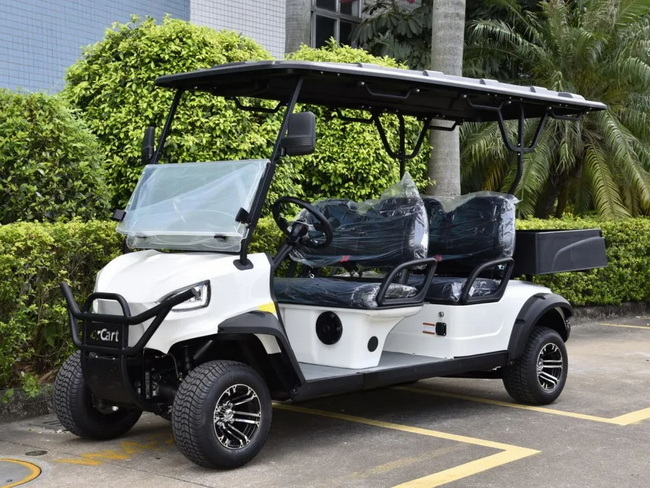
The best choice depends on one practical question: Where will the vehicle stay when nobody is driving it?
Apartment residents may need to store a compact electric cart in a private garage bay, building storage room, small courtyard, or shared parking space. RV enthusiasts often need to consider the available room inside a toy hauler, trailer, pickup bed, rear carrier area, or campsite storage compartment.
A rigid mini cart is generally a better choice when the vehicle has a permanent parking location. A folding golf cart can be more attractive when space changes from trip to trip.
| Comparison Area | Folding Golf Cart | Rigid Mini Cart |
|---|---|---|
| Main advantage | Reduced storage footprint | Stable, permanent vehicle structure |
| Storage method | Folded or partially folded when parked | Stored at full vehicle dimensions |
| Best for | RV travel, compact storage, temporary use | Residential communities, resorts, campuses, daily local transport |
| Transport convenience | Often easier to fit into limited storage areas | May require a trailer, larger garage, or dedicated carrier |
| Frame structure | Includes folding joints or collapsible sections | Fixed chassis and body configuration |
| Ride feel | Depends heavily on folding system design | Usually feels more solid and vehicle-like |
| Passenger capacity | Often optimized for compact use | Can support broader seating layouts |
| Cargo potential | Usually limited by compact design goals | Often better for rear cargo boxes, utility beds, and accessories |
| Product positioning | Space-saving, portable, lifestyle-oriented | Durable, versatile, long-term ownership-oriented |
| OEM opportunity | Compactness, folding mechanism, transport accessories | Body styles, seating, drivetrain, accessories, branding |
A folding design saves space. A rigid design creates more freedom for customization, comfort, and daily utility.
A folding golf cart is an electric personal transport vehicle designed to occupy less room during storage or transport. Depending on the product design, the steering column, roof, windshield, seat section, rear platform, or body structure may fold, collapse, detach, or lower.
Not every compact golf cart is a folding golf cart. A small cart may have a short wheelbase but still remain fully rigid. A true folding model uses a purposeful mechanism to reduce its overall height, length, width, or transport profile.
For customers living in space-constrained environments, the ability to reduce a cart's parked dimensions can be highly valuable.
A folding golf cart may offer practical benefits such as:
- Lower storage height for garages, enclosed trailers, or RV storage areas.
- More flexible transport options for recreational travelers.
- Simpler seasonal storage in compact garages or storage buildings.
- Potentially easier loading when a folding feature reduces roof or windshield height.
- Reduced visual obstruction in private parking areas and campsites.
- Lifestyle differentiation for brands targeting mobile, outdoor-focused consumers.
For example, an RV owner may not use an electric cart every day. They may drive it only after setting up camp, visiting a resort, moving around a large campground, or traveling through a permitted low-speed community. In that scenario, the cart must fit the travel routine—not just the driving routine.
A folding system is not simply an added feature. It affects the vehicle's frame, locking hardware, wire routing, safety guards, usability, and long-term durability.
From a manufacturing perspective, the folding mechanism should be evaluated for:
1. Locking security
The structure must remain firmly locked during operation. Any movement, vibration, looseness, or misalignment can reduce user confidence.
2. Repeated-use durability
Folding joints, pins, latches, hinges, and brackets should withstand repeated opening and closing cycles.
3. Ease of operation
The customer should not need complicated tools, excessive strength, or multiple people to fold the cart.
4. Cable and wiring protection
Electrical wires, lighting connections, battery cables, and controller-related components must be protected from pinching or damage.
5. Transport safety
A folded cart still needs stable tie-down points for trailers, carriers, pickup beds, and enclosed transport systems.
6. Water and corrosion resistance
Moving joints require material and surface-treatment choices suitable for rain, humidity, coastal environments, and outdoor storage.
For an OEM brand, these details matter because a folding golf cart is often purchased for convenience. If folding becomes difficult, slow, or unreliable, the feature loses its commercial value.
A rigid mini cart is a compact electric cart with a fixed chassis and body structure. It may be smaller than a conventional full-size golf cart, but its key feature is that it does not rely on a folding frame for storage.
Rigid mini carts are often configured as:
- Two-seat personal transport carts.
- Four-seat neighborhood electric vehicles.
- Compact resort shuttles.
- Light-duty utility carts.
- Residential community vehicles.
- Campus mobility vehicles.
- Hotel or property-management service carts.
- Recreational carts for golf communities and private estates.
Because the main structure remains fixed, manufacturers can often focus more heavily on cabin space, body styling, suspension tuning, rear seating, cargo layout, weather protection, and accessory compatibility.
A rigid mini cart can feel more familiar to buyers who expect an electric vehicle to be ready whenever they need it. The owner parks it, plugs it in, and drives it again without unfolding, reconfiguring, or reinstalling components.
This makes rigid mini carts well suited to users with a dedicated storage location, such as:
- A private garage.
- A covered driveway.
- A residential parking space.
- A golf course cart barn.
- A resort maintenance area.
- A marina storage location.
- A warehouse or commercial facility.
- A campground with permanent seasonal sites.
Rigid designs can also support more extensive vehicle personalization. A brand may offer several body colors, premium seats, dashboards, wheels, canopies, windshields, lighting systems, rear cargo solutions, audio systems, and branded trim packages.
For a distributor, this matters because accessories can help create clearer product tiers. A basic model can target price-sensitive buyers, while premium trim packages can serve resort, residential, hospitality, and lifestyle customers.
The most common mistake in compact electric vehicle selection is comparing only brochure dimensions. Buyers should instead measure the entire storage path.
A cart may fit inside a garage but still be difficult to bring through the entrance. It may fit in an RV trailer but leave no room for ramps, charging equipment, luggage, or tie-down hardware.
Before selecting either a folding golf cart or rigid mini cart, measure the following:
| Measurement Point | Why It Matters |
|---|---|
| Door width | Determines whether the cart can enter the garage, storage room, trailer, or RV area |
| Door height | Important for roofs, windshields, canopies, and raised accessories |
| Interior length | Determines whether the cart can park fully inside |
| Interior width | Must allow safe entry, exit, turning, and tie-down access |
| Ramp angle | Affects loading safety, especially for low-clearance vehicles |
| Ceiling clearance | Important when folding roofs, raised windshields, or charging equipment are involved |
| Turning path | A cart may fit inside but not be able to maneuver through the entrance |
| Charging outlet location | Avoids using unsafe extension-cord arrangements |
| Tie-down locations | Essential for RV, trailer, and pickup-bed transport |
| Total transport load | Ensures the trailer, carrier, or tow vehicle remains within its rated capacity |
Measure with accessories installed, not only with the base cart. A windshield, roof, rear seat kit, cargo box, lifted suspension, or upgraded wheels can change the real storage requirement.
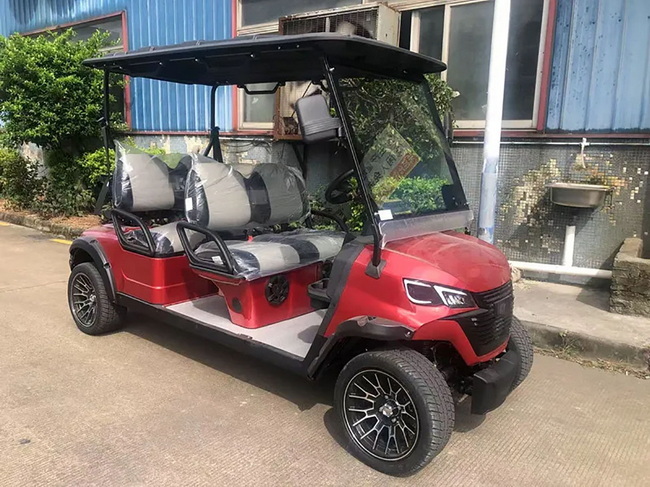
Apartment residents are not a single buyer group. Some have secure underground parking. Others have limited private garages, shared residential lots, compact storage areas, or no dedicated vehicle space at all.
A folding golf cart can be attractive when the owner has access to a small but secure storage area. It may also suit properties where seasonal storage is necessary.
A folding golf cart is often more suitable when:
- The resident has a small private garage.
- The storage entrance has limited height.
- The cart needs to share space with bicycles, tools, luggage, or household equipment.
- The vehicle is used occasionally rather than daily.
- The owner wants easier transport to a vacation property or golf community.
- The building permits cart storage but has compact space restrictions.
- The buyer values portability more than maximum passenger or cargo capacity.
However, apartment users must also consider local building rules. Indoor charging may be restricted by property management, fire-safety requirements, battery type, ventilation conditions, or parking policies. Buyers should always confirm where charging is allowed before purchasing a cart.
Before recommending a folding golf cart to an apartment resident, ask:
1. Does the building allow personal electric carts in its parking or storage areas?
2. Is there a secure, weather-protected location for the vehicle?
3. Is charging permitted in that location?
4. Can the cart pass through the entrance without removing components?
5. Will the owner use the cart often enough to justify repeated folding and unfolding?
6. Does the resident need two seats, four seats, cargo space, or mobility-friendly access?
7. Is the cart legal for use on the roads, paths, private property, or communities where it will be driven?
This buyer conversation helps brands reduce returns, improve customer satisfaction, and recommend the correct model configuration.
RV owners often think differently from residential users. They must balance vehicle size, payload, trailer space, campsite mobility, towing capacity, and cargo organization.
For many RV travelers, a personal electric cart can significantly improve campsite convenience. It can carry groceries, pets, chairs, equipment, fishing gear, campground supplies, or family members across a large property. But the cart must not create a transport problem that outweighs its usefulness.
A folding golf cart can be a strong fit for RV-oriented product lines when the buyer needs:
- Compact trailer storage.
- Lower height for an enclosed hauler.
- Easier loading into a toy hauler or utility trailer.
- More room for camping equipment.
- A cart that can be stored between trips.
- A compact personal transport option for large campgrounds or resorts.
- A solution that can be moved between home, RV storage, and vacation destinations.
The strongest value proposition is not simply "small." It is space-efficient mobility.
An RV buyer may accept fewer luxury features if the cart allows them to retain valuable storage room. On the other hand, buyers with larger toy haulers may prefer rigid mini carts because they value seating comfort, full weather protection, suspension performance, and rear cargo capacity.
Rigid mini carts are usually the better option for customers who view the vehicle as part of their everyday routine.
For example, a homeowner in a golf community may use a cart to visit neighbors, travel to a clubhouse, carry groceries from a nearby store, transport children within private property, or move gardening tools around a large lot. In this situation, the cart is not temporary equipment. It is a regular vehicle.
A rigid mini cart often provides advantages in the following areas:
- Cabin comfort: More room for seats, armrests, cup holders, dashboards, and weather enclosures.
- Passenger flexibility: Easier integration of two-seat, four-seat, and multi-row layouts.
- Cargo capability: Better support for rear cargo boxes, utility beds, coolers, tool racks, and storage compartments.
- Suspension options: More design freedom for ride quality, ground clearance, and load handling.
- Accessory compatibility: Greater potential for lighting, mirrors, doors, enclosures, sound systems, and premium wheels.
- Brand presence: A full-bodied rigid cart can create a stronger visual identity for private-label programs.
- Operational readiness: The driver can typically enter, power on, and drive without preparing a folding structure.
For dealers and wholesalers, rigid mini carts can also support a wider range of commercial customer types. A single platform may be configured for a golf resort, a property-management company, a hotel, a factory site, or a residential community.
Vehicle buyers often focus on storage first and discover later that ride quality determines whether they enjoy owning the cart. Folding and rigid designs can both be safe and reliable when properly engineered, but their priorities differ.
A rigid mini cart naturally benefits from a fixed structural layout. This can simplify chassis tuning and help support a consistent feel across different load conditions. The frame, seating position, roof, suspension, and cargo area can be designed as a unified system.
A folding golf cart requires more careful engineering around its joints and locking areas. The folding function should not create unnecessary vibration, noise, or perceived movement during driving.
Whether sourcing for retail, wholesale, or private-label supply, buyers should request clear answers about:
- Frame material and anti-corrosion treatment.
- Structural reinforcement around folding or high-load areas.
- Front and rear suspension configuration.
- Brake system type.
- Steering system design.
- Tire size and intended terrain.
- Battery chemistry and battery management system.
- Motor power and controller matching.
- Charging requirements.
- Vehicle payload rating.
- Roof, windshield, and enclosure options.
- Spare-parts availability.
- Packaging and shipping configuration.
- Quality-control process before shipment.
These questions are especially important for companies building their own branded product lines. A well-designed catalog should not only show attractive cart photos. It should clearly explain use cases, storage dimensions, capacity, charging needs, and available options.
Storage is closely connected to battery strategy. Apartment residents and RV travelers should evaluate charging access before selecting a golf cart.
Lithium battery systems can offer advantages such as lower weight, faster charging potential, and reduced routine maintenance compared with conventional lead-acid systems. However, the correct battery choice depends on vehicle design, local requirements, operating temperature, charging practices, and the intended customer segment.
A practical battery-and-charging plan should include:
- A compatible charger supplied or clearly specified by the manufacturer.
- A protected charging location.
- Clear charging instructions for end users.
- Guidance on long-term storage charging.
- Appropriate electrical connections.
- Protection from moisture, extreme heat, and physical impact.
- Easy access to after-sales support and replacement components.
For RV users, confirm whether the cart will be charged through campground power, a generator, an inverter system, or another approved electrical source. The charging plan should be realistic for the travel pattern.
For apartment residents, the key question is simple: Can the owner charge the cart safely and legally where it will be stored?
For brands and distributors, the folding golf cart vs rigid mini cart decision should not be treated as a winner-takes-all choice. The strongest product portfolio may include both.
A compact folding model can attract RV users, vacation-property owners, and storage-sensitive buyers. A rigid mini cart can serve daily-use customers, resorts, communities, and commercial users.
| Product Line | Core Customer | Suggested Positioning |
|---|---|---|
| Folding Golf Cart | RV travelers, compact-home users, seasonal owners | Portable, space-saving electric mobility |
| Rigid Two-Seat Mini Cart | Couples, retirees, golf-community residents | Easy daily transport with a compact footprint |
| Rigid Four-Seat Mini Cart | Families, resorts, property communities | Comfortable local mobility with added passenger capacity |
| Utility Mini Cart | Facilities, warehouses, hotels, farms, campuses | Compact electric transport for people and light cargo |
An OEM manufacturer can help brands differentiate through:
- Custom body colors.
- Private-label logos and badges.
- Seat materials and stitching colors.
- Wheel and tire packages.
- Battery options.
- Roof, windshield, and enclosure choices.
- Lighting and mirror packages.
- Rear seat or cargo conversions.
- Packaging configuration for international shipment.
- Spare-parts kits and service documentation.
BorCart promotes electric golf carts, utility vehicles, and factory-direct supply capabilities for overseas customers seeking manufacturer, supplier, and OEM support from China.
Choose a folding golf cart when limited storage space, RV transport, seasonal ownership, and portability are the primary priorities. It is particularly suitable for buyers who need electric mobility but cannot dedicate permanent full-size storage space to a cart.
Choose a rigid mini cart when the customer has a dependable parking location and wants stronger daily usability, broader customization, more passenger comfort, or greater cargo flexibility.
The right answer is not based on which cart is smaller. It depends on how the customer will store it, charge it, transport it, and use it every week.
For brands, wholesalers, and distributors, the opportunity is to offer clear choices instead of a one-size-fits-all product. A thoughtfully designed range can serve both compact-space buyers and customers seeking a full-featured electric mini vehicle.
Looking for an OEM folding golf cart or rigid mini cart program? Contact BorCart to discuss vehicle configuration, branding options, battery systems, seating layouts, storage dimensions, and export-ready supply solutions for your market.
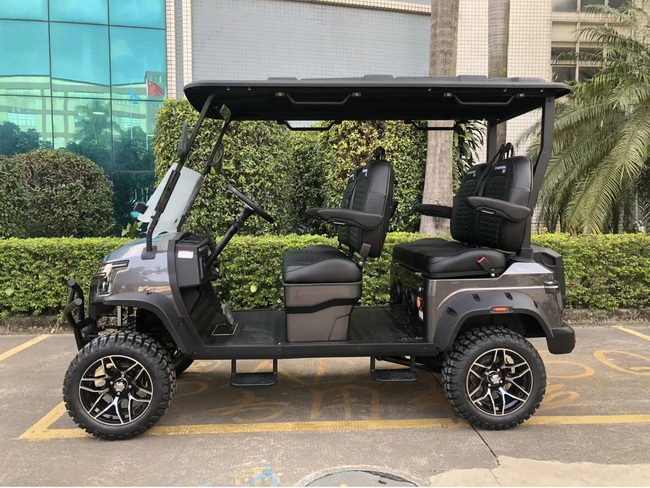
A folding golf cart can be better for RV travel when storage space and loading height are limited. It may fit more easily inside a trailer, toy hauler, or storage area. However, a rigid mini cart can be a better option for RV owners with larger transport capacity who want more comfort, seating, or cargo capability.
It may fit, but buyers should measure the garage entrance, ceiling height, interior length, turning space, and charging-outlet location before purchase. The folded dimensions are important, but the cart must also be able to enter and maneuver safely.
A rigid mini cart has a fixed structure, which can simplify structural design and reduce the number of moving frame components. A well-engineered folding golf cart can also be durable, but its hinges, latches, locking points, and folding joints require strong engineering and regular inspection.
A rigid mini cart is often better for a golf community because it is ready for regular daily use and can support more seating, storage, accessories, and weather-protection options. A folding golf cart can still be useful for residents with limited storage.
OEM buyers should request product specifications, dimensions, battery details, motor and controller information, frame material, loading capacity, available accessories, customization options, quality-control procedures, spare-parts policies, packaging details, and estimated production lead times.
Yes. A rigid mini cart can be configured with rear cargo boxes, utility beds, tool racks, seating conversions, and other accessories. It can be suitable for resorts, hotels, warehouses, campuses, farms, and property-management operations when matched to the intended load and terrain.
The most important measurement is the complete storage path: entrance width, entrance height, interior dimensions, turning space, ramp angle, and charging access. A cart that fits on paper may still be difficult to load, park, or charge in the real location.
Lithium batteries can be a practical choice because they may reduce weight and maintenance needs. However, apartment residents must confirm that storage and charging arrangements comply with building policies, local requirements, and the battery manufacturer's instructions.
1. [Guangzhou Borcart Electric Vehicle Co., Ltd. — Made-in-China Company Profile]
2. [BorCart — Electric Golf Cart OEM Information]
3. [BorCart — Golf Cart Manufacturer and Supplier Page]
4. [BorCart — Utility Golf Carts Product Information]
5. [Guangzhou Borcart Electric Vehicle Co., Ltd. — Alibaba Company Overview]
6. [U.S. Consumer Product Safety Commission — Battery and Charging Safety Resources]
7. [National Fire Protection Association — Electric Vehicle and Lithium-Ion Battery Safety Resources]
8. [Recreation Vehicle Industry Association — RV Industry Information]


