


Views: 257 Author: BorCart Publish Time: 2026-09-09 Origin: Site


Content Menu
● 1. A Golf Cart Makes Short Neighborhood Trips Easier
>> Common neighborhood uses for golf carts
● 2. Electric Golf Carts Can Lower Local Travel Costs
>> Battery choice affects ownership cost
● 3. Quiet Electric Mobility Improves the Neighborhood Experience
>> Benefits of quieter local transportation
● 4. Golf Carts Help Build a More Social Community
>> Why the social benefit matters
● 5. Modern Golf Carts Offer Extensive Customization Options
>> Popular customization options
● 6. Understand the Difference Between Golf Carts and Low-Speed Vehicles
>> Typical LSV safety equipment may include
● 7. How to Choose the Right Neighborhood Golf Cart
>> A practical buying checklist
>> Ask suppliers the right questions
● 8. Battery Care and Daily Safety Tips
>> Daily operating habits that matter
● Make Neighborhood Mobility More Enjoyable
>> 1. Can I drive a golf cart on public roads?
>> 2. What is the difference between a golf cart and a low-speed vehicle?
>> 3. Is a lithium golf cart better than a lead-acid golf cart?
>> 4. How far can an electric golf cart travel on one charge?
>> 5. Do golf carts need maintenance?
>> 6. What should I check before buying a neighborhood golf cart?
>> 7. Can a golf cart be customized for my brand?
>> 8. Are electric golf carts suitable for resorts and commercial communities?
For many homeowners, a neighborhood golf cart has become far more than a vehicle for the course. It can be a simple, enjoyable, and efficient way to visit neighbors, reach community amenities, carry groceries from a nearby store, take children to a local playground, or move around a private property.
However, the right decision is not simply "buy a golf cart." Buyers need to consider local road rules, passenger capacity, battery technology, weather protection, safety equipment, charging access, and the difference between a standard golf cart and a road-capable low-speed vehicle. For dealers, distributors, community developers, and private-label brands, these factors also shape the type of vehicle that customers will actually use—and recommend.
This guide explains the most important reasons to buy a golf cart for neighborhood use, while offering practical selection advice from the perspective of an electric vehicle manufacturer serving international OEM and wholesale markets.
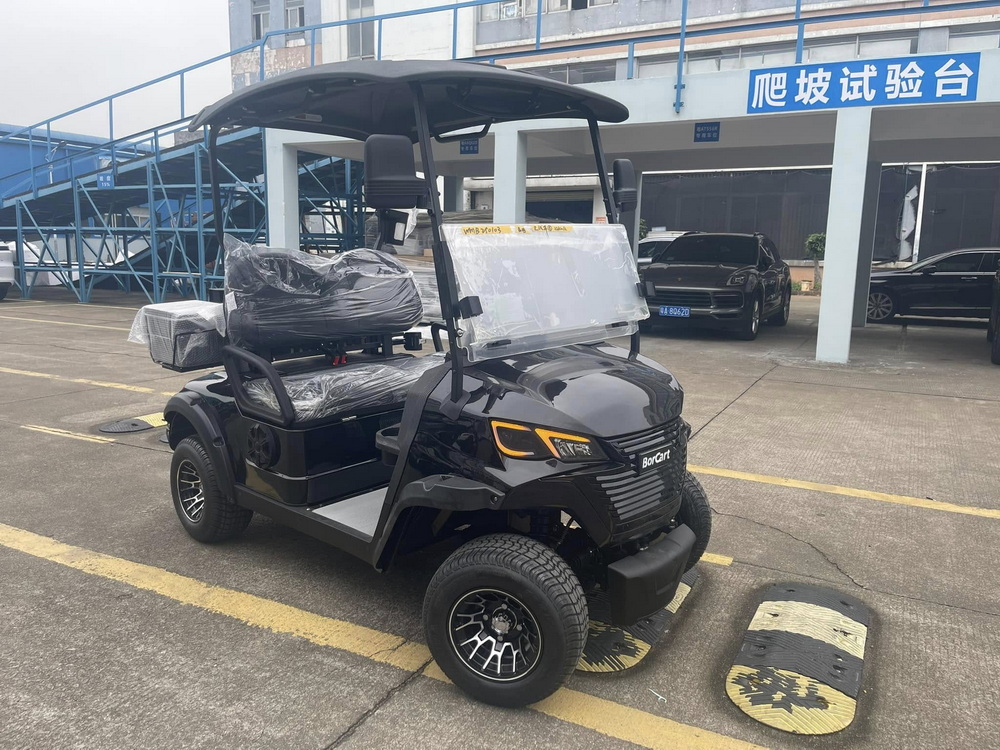
The strongest reason to buy a golf cart for neighborhood use is everyday convenience.
In many residential communities, people make frequent short trips that do not require a full-size car. They may need to travel to a clubhouse, swimming pool, mailbox area, sports court, marina, nearby restaurant, school pickup point, or a neighbor's home. Starting a conventional vehicle for a very short trip can feel unnecessary, especially when parking is limited or traffic moves slowly.
A compact electric golf cart can make these small trips faster and more pleasant.
- Visiting friends or family within a gated community
- Traveling to a clubhouse, pool, park, or fitness center
- Taking children to local recreation areas
- Carrying beach chairs, sports equipment, or picnic supplies
- Moving around resorts, holiday parks, farms, campuses, or large private properties
- Taking short trips to permitted local destinations
- Supporting maintenance, security, delivery, or hospitality staff
Unlike a traditional passenger vehicle, a golf cart is easier to maneuver through narrow residential streets, parking areas, driveways, and community paths. Its compact footprint can reduce the stress of tight turns and limited parking.
For families, the value is often emotional as well as practical. A short ride to the pool or a friend's house can become part of the daily lifestyle rather than another car journey.
> Practical insight: The best neighborhood vehicles solve frequent, low-distance trips. A golf cart is most valuable when it is used several times per week—not stored in a garage for occasional recreation.
A well-configured electric golf cart for neighborhood use can offer lower operating complexity than a gasoline-powered vehicle for short-distance transport.
Electric systems generally have fewer routine service items associated with internal-combustion engines. There is no engine oil change, spark plug replacement, fuel filter service, or exhaust-system maintenance in the same way as a gasoline vehicle. The electric motor, controller, and battery system still need proper inspection and care, but the overall ownership experience can be simpler.
The U.S. Department of Energy notes that electric vehicles have fewer fluids and generally require less routine maintenance than conventional internal-combustion vehicles. Low-speed electric vehicles are also designed for limited-speed environments, subject to state and local regulations.
| Ownership area | Full-size gasoline vehicle | Electric golf cart |
|---|---|---|
| Energy source | Gasoline or diesel | Electricity |
| Routine service | Oil, filters, belts, fluids, exhaust-related components | Battery, brakes, tires, steering, electrical checks |
| Parking needs | Larger space required | Compact parking footprint |
| Best use case | Longer trips and higher-speed roads | Short local routes and private communities |
| Noise level | Usually higher | Usually lower during operation |
The actual cost advantage depends on local electricity prices, battery type, charging habits, annual usage, and maintenance discipline. It is important not to promise a fixed savings figure without knowing the user's driving pattern.
For a fleet buyer, the opportunity can be even larger. Resorts, real-estate communities, warehouses, holiday parks, and golf clubs can standardize a small electric fleet for guest transport, staff mobility, security patrols, and light-duty service work.
Battery selection has a major influence on a golf cart's long-term value.
Lead-acid batteries are often familiar and lower in upfront cost, but they require more regular attention. Depending on battery design, owners may need to monitor water levels, clean terminals, control corrosion, and follow correct charging procedures.
Lithium batteries typically offer lighter weight, faster charging potential, more stable performance, and reduced maintenance needs. They may require a higher initial investment, but they are increasingly attractive for premium neighborhood carts, rental fleets, and customers who prefer a simpler ownership experience.
The most suitable solution depends on the buyer's target market, budget, charging conditions, expected daily range, and desired service model.
A neighborhood should feel comfortable, social, and safe. That is one reason why electric golf carts have become popular in residential communities, resorts, retirement areas, waterfront developments, and vacation destinations.
An electric golf cart produces much less operating noise than a typical gasoline-powered vehicle. This can make early morning rides, evening trips, and low-speed community movement more comfortable for both drivers and nearby residents.
The quieter ride also changes the passenger experience. People can talk more easily. Parents can communicate with children. Guests can enjoy the surroundings rather than sit inside a closed vehicle.
- Less disturbance near homes, pools, parks, and pedestrian areas
- More relaxed communication between passengers
- A more premium atmosphere for resorts and residential developments
- Better suitability for hospitality, tourism, and community shuttle applications
- A more enjoyable open-air travel experience
Electric operation does not automatically mean a vehicle has zero environmental impact. Electricity generation, battery manufacturing, material sourcing, and battery end-of-life management all matter. Still, replacing short gasoline trips with appropriately used electric local mobility can help reduce direct tailpipe emissions during operation.
For manufacturers and private-label brands, this is an important distinction. The strongest product message is not simply "green." It is practical electric mobility for short-distance use, paired with responsible battery selection, service support, and product durability.
One of the most overlooked benefits of neighborhood golf cart ownership is its effect on social interaction.
A car is often designed to separate the driver from the outside environment. Windows are closed, doors lock automatically, and the trip becomes private. A golf cart, by contrast, often creates a more open and relaxed connection with the community.
At low speeds, drivers are more likely to greet neighbors, stop for a short conversation, notice local activities, or bring family members along for a ride. In communities where golf carts are common, they can become part of the local culture.
- Residents may feel more connected to nearby neighbors
- Families can travel together for short recreational trips
- Community events become easier to access
- Older adults may find local movement more convenient
- Visitors can explore private communities more comfortably
- Developers can create a distinctive lifestyle identity around local mobility
For property developers and hospitality operators, golf cart accessibility can contribute to the perceived quality of a destination. A thoughtfully planned cart-friendly community—with designated parking, charging areas, clear route signs, pedestrian awareness, and practical storage—can feel more convenient and better organized.
That said, social value should never override safety. A community needs clear rules for speed, passenger behavior, parking, nighttime use, and shared-path etiquette.
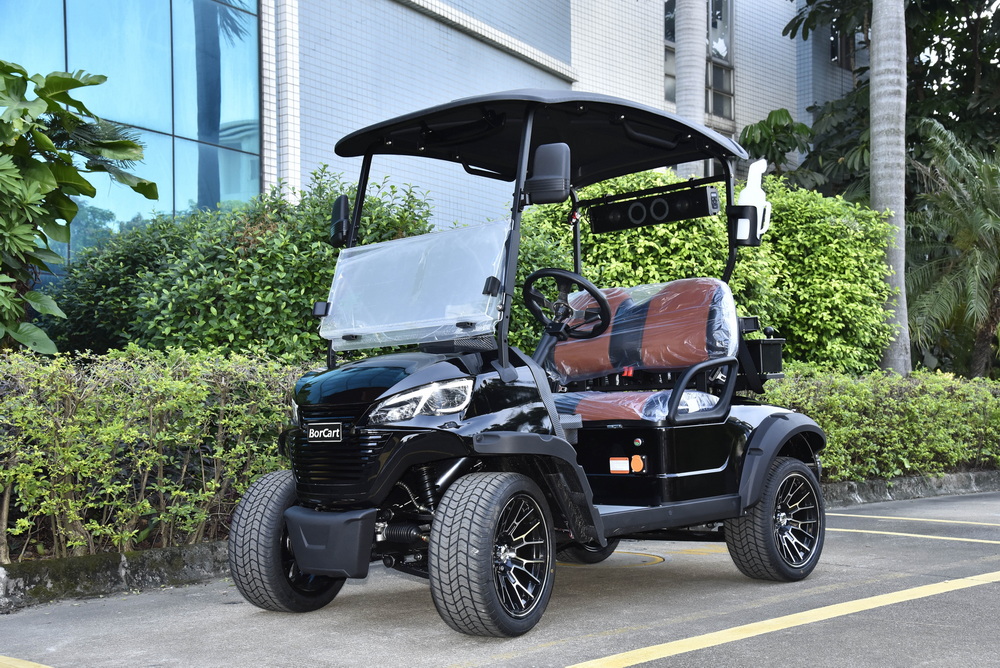
Today's golf carts can be tailored to serve very different users. A two-seat recreational cart, a six-seat family cart, a utility vehicle, and a street-oriented low-speed vehicle may all share a basic electric platform, but their configurations can be dramatically different.
This flexibility is especially valuable for overseas brands, wholesalers, and distributors that need differentiated products for specific customer groups.
- Two-seat, four-seat, six-seat, or multi-row layouts
- Rear-facing seats or fold-down cargo platforms
- Lithium battery systems
- Enhanced suspension systems
- Larger tires and alloy wheels
- Windshields, doors, roofs, and weather enclosures
- LED headlights, tail lights, turn signals, and mirrors
- Premium seats, cup holders, Bluetooth audio, and USB charging
- Lift kits for selected private-property or recreational applications
- Cargo boxes, utility beds, tool racks, and towing accessories
- Custom paint, decals, badging, embroidery, and branded dashboards
For an OEM customer, customization should begin with the target user rather than decoration.
A family-focused cart may need rear-facing seating, seat belts, weather protection, and storage. A resort cart may need durable upholstery, fleet tracking compatibility, easy-clean surfaces, and a professional color scheme. A utility cart may require a cargo bed, stronger suspension, and a practical battery range for repeated work shifts.
> Manufacturer perspective: A successful private-label golf cart is not just a logo on a standard vehicle. It is a product configuration built around the customer's local regulations, terrain, climate, user profile, and after-sales strategy.
Before buying a golf cart for use beyond private property, customers should understand an essential distinction: a standard golf cart and a low-speed vehicle are not always the same thing.
A traditional golf cart is generally designed for golf courses, private properties, resorts, and other controlled environments. A low-speed vehicle, often called an LSV or neighborhood electric vehicle in some markets, may be designed and equipped for use on certain public roads where permitted.
In the United States, an LSV is generally defined as a four-wheeled motor vehicle with a top speed of more than 20 mph but not more than 25 mph, and a gross vehicle weight rating below 3,000 pounds. Applicable federal requirements include specified safety equipment such as lighting, mirrors, seat belts, and windshields.
- Headlights
- Tail lights
- Brake lights
- Turn signals
- Reflectors
- Exterior mirrors
- Windshield
- Windshield wiper
- Seat belts
- Vehicle identification information
- Required tires and braking components
However, compliance requirements, registration rules, insurance requirements, driver licensing rules, and permitted road access vary by country, state, province, city, and community.
For example, some jurisdictions permit golf cart or utility vehicle operation only on designated roads with a posted speed limit of 25 mph or below. Other areas may allow an appropriately registered and equipped LSV on roads with higher posted limits, subject to specific restrictions.
Never assume a golf cart is road legal simply because it has lights or a windshield.
Before purchase, buyers should confirm:
1. Whether golf carts are permitted on local public roads
2. Whether an LSV classification applies
3. Which safety features are mandatory
4. Whether registration, insurance, or a license is required
5. Which roads, crossings, speed zones, and times of day are allowed
6. Whether the homeowners' association has additional rules
A knowledgeable supplier should help the buyer specify the right product, but final local compliance must always be verified with the relevant authority.
The best golf cart for neighborhood use depends on how it will be used every day.
A buyer who mainly drives to a nearby pool has different needs from a resort operator transporting guests or a dealer selling road-capable models to residential communities.
| Question | Why it matters |
|---|---|
| How many passengers will ride regularly? | Determines seat layout, chassis length, and payload needs |
| Will the cart operate only on private property? | Affects safety equipment and vehicle specification |
| Is road use permitted locally? | Determines whether an LSV-oriented model is required |
| What is the average daily travel distance? | Helps define required battery capacity and charging plan |
| Are there hills, rough paths, or heavy loads? | Influences motor power, suspension, brakes, and tire selection |
| Is the climate hot, rainy, cold, or coastal? | Affects enclosure, corrosion protection, roof, and seating choices |
| Who will provide service and spare parts? | Essential for long-term ownership satisfaction |
| Is branding important? | Determines color, decals, logos, packaging, and OEM requirements |
When sourcing from a golf cart manufacturer, do not focus only on unit price. Ask about the product architecture and after-sales support.
- What battery options are available, and what is the expected cycle life?
- What charger specification is supplied for the destination market?
- Can the manufacturer provide required lighting, mirrors, belts, and windshield options?
- What quality-control checks are performed before shipment?
- Are replacement parts available for controllers, chargers, suspension components, body panels, and electrical systems?
- Can the supplier support custom colors, logos, packaging, and documentation?
- What is the recommended maintenance schedule?
- Can the cart be configured for left-hand-drive or right-hand-drive markets if needed?
The right supplier relationship can help brands avoid costly mismatches between product design and local market requirements.
A golf cart's reliability depends heavily on how it is charged, stored, driven, and maintained.
Electric vehicle systems generally require less routine service than gasoline engines, but battery care remains essential. The U.S. Department of Energy notes that electric powertrains have fewer maintenance needs, while owners should still follow manufacturer guidance for battery and vehicle care.
- Charge the vehicle using the approved charger and power supply
- Park in a dry, ventilated location when possible
- Inspect tires, brakes, steering, and lights regularly
- Secure passengers with available restraints
- Keep hands and feet inside the vehicle while moving
- Reduce speed near pedestrians, children, intersections, and blind corners
- Do not overload the seating or cargo capacity
- Avoid steep terrain or water exposure beyond the vehicle's intended design
- Follow local rules for roadway, path, and nighttime operation
For lead-acid batteries, regular inspections may include checking terminal cleanliness, cable condition, corrosion, and water levels where applicable. Battery care guidance commonly recommends charging after use, keeping connections secure, and avoiding prolonged storage in a partially discharged condition.
For lithium systems, the maintenance routine is often simpler, but owners should still use the designated charger, avoid unauthorized electrical modifications, and follow the manufacturer's storage guidance.
A golf cart can be a practical investment when it matches the way people actually live. It can simplify short trips, create a more enjoyable neighborhood experience, support family activities, reduce local driving complexity, and offer a flexible platform for personal or commercial use.
The key is to select the correct vehicle for the environment. Buyers should consider passenger needs, battery type, terrain, climate, local rules, safety equipment, service support, and intended daily distance before placing an order.
For brands, wholesalers, distributors, resorts, and community operators, a customized electric golf cart program can create a distinctive product offering. The strongest models combine dependable electric performance, user-friendly design, practical safety features, durable components, and market-specific customization.
Looking for an OEM electric golf cart solution? BorCart can support overseas brands, wholesalers, and commercial buyers with customizable golf carts, low-speed electric vehicles, utility models, branded configurations, and export-oriented manufacturing support. Share your target market, seating requirement, battery preference, and intended application to begin building the right product specification.
It depends on the country, state, city, and local community rules. Some locations allow standard golf carts only on designated low-speed roads or within approved communities. Others require a registered low-speed vehicle with specified safety equipment. Always verify the rules before driving on public roads.
A golf cart is generally intended for golf courses, private property, resorts, and controlled local use. A low-speed vehicle is typically built to meet a defined regulatory category and may include required equipment such as lights, turn signals, mirrors, seat belts, and a windshield for permitted public-road operation.
Lithium models often offer lower weight, less maintenance, and potentially more consistent performance, while lead-acid systems may have a lower purchase cost. The best option depends on budget, charging habits, expected usage, climate, and service capability.
Range varies according to battery capacity, battery chemistry, passenger load, terrain, tire type, driving speed, temperature, and vehicle configuration. Buyers should compare the supplier's range specification with their real daily route and leave a practical operating margin.
Yes. Electric golf carts generally need less routine service than gasoline vehicles, but they still require battery care, tire inspections, brake checks, steering inspection, lighting checks, and periodic examination of cables, chargers, and suspension components.
Confirm where the vehicle will be used, how many people it will carry, whether it needs road-oriented equipment, the required range, local legal requirements, battery type, terrain capability, weather protection, spare-parts availability, and warranty support.
Yes. OEM manufacturers can often provide custom paint colors, logos, decals, seats, dashboards, wheel designs, packaging, accessory packages, battery options, and seating layouts. The most effective configuration should match the target customer and local market conditions.
Yes. They are widely suited to resorts, holiday parks, golf clubs, campuses, private developments, factories, warehouses, and hospitality environments when the vehicle's passenger capacity, battery range, charging plan, and maintenance support are matched to the operating conditions.
1. U.S. Department of Energy Alternative Fuels Data Center. [Maintenance and Safety of Electric Vehicles]
2. National Highway Traffic Safety Administration. [Interpretation of Low-Speed Vehicle Requirements]
3. National Highway Traffic Safety Administration. [Low-Speed Vehicle Import and Certification Requirements]
4. Federal Register. [Federal Motor Vehicle Safety Standards; Low-Speed Vehicles]
5. Code of Virginia. [Limitations on Golf Cart and Utility Vehicle Operation]
6. Metro Golf Cars. [Battery Care and Maintenance Guidance]
7. Louisiana Transportation Research Center. [Golf Carts on Public Roads: Literature Review]


