


Views: 222 Author: BorCart Publish Time: 2026-05-08 Origin: Site


Street-legal golf carts are no longer just "cute neighborhood runabouts" – they are fast becoming serious low-speed electric vehicles (LSVs) that blend lifestyle, efficiency, and regulatory compliance in one compact package. As an OEM-focused Chinese manufacturer, BorCart has a unique vantage point: we sit at the intersection of global demand trends, evolving regulations, and real-world fleet usage, helping overseas brands and wholesalers bring compliant, street-ready carts to market. [intermountaingolfcars]
The market for street legal golf carts and neighborhood electric vehicles (NEVs) is projected to reach well over 3 billion USD in the coming years as urban and community mobility shifts toward compact EVs. For brands, distributors, and fleet operators, that growth brings both opportunity and risk: you need carts that are stylish and comfortable, but also compliant with low-speed vehicle (LSV) rules, safety standards, and local licensing requirements. [golfcaradvisor]
From BorCart's perspective as an OEM manufacturer of golf carts and EV components, the most successful projects all have three things in common: clear regulatory alignment, thoughtful user-centric design, and a scalable supply chain for critical parts like batteries, braking systems, and lighting assemblies. This guide combines industry data, regulatory best practices, and hands-on experience helping overseas partners launch street-legal lines that pass inspection the first time. [electrickmotorsports]
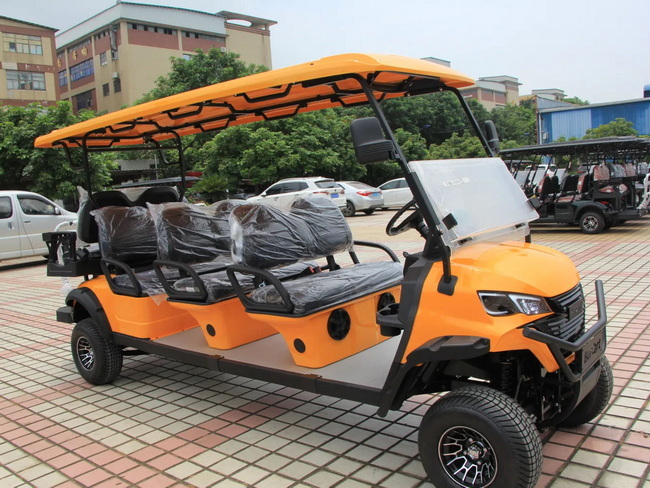
Recent analyses show the global golf cart and LSV market climbing from around 2 billion USD in the mid‑2020s toward 3.5 billion USD by 2033, driven heavily by demand for street-legal personal transportation. In practice, that growth is coming from three core scenarios: [finance.yahoo]
- Residential communities and neighborhoods (short trips to shops, schools, clubhouses). [golfcartsearch]
- Resorts, hotels, and campuses that want quiet, low-emission internal mobility. [futuremarketinsights]
- Light commercial and municipal fleets handling security patrols, maintenance, and last‑mile tasks. [golfcaradvisor]
Analysts expect street-legal golf cars to account for nearly half of new golf car sales in some markets by 2030, reflecting a shift from course-only to multi-purpose vehicles. That's why OEM buyers increasingly ask for factory street-legal packages instead of retrofits: they need vehicles that are ready for registration and road use out of the crate. [eacarts]
In user and fleet feedback, three benefits appear again and again:
- Lower operating cost: Electric golf carts consume far less energy per mile than conventional cars and require fewer consumables. [golfcartstuff]
- Environmental benefits: Fully electric NEVs generate no tailpipe emissions and help properties meet sustainability targets. [tigongolfcarts]
- Legal road access: When configured as LSVs, carts can legally use designated roads (typically up to 25 mph), opening up door‑to‑door mobility in many communities. [solanaev]
For OEM partners, the key is to turn these benefits into clear product stories: a "neighborhood commuter" package focuses on comfort and safety, while a "commercial utility" package emphasizes payload, braking, and durability. [tigongolfcarts]
To qualify as a low-speed vehicle in the United States, most jurisdictions require a governed top speed between 20 and 25 mph; slower vehicles may remain off-road-only, and faster ones risk falling into stricter automotive categories. Federal LSV standards such as FMVSS 500 define safety and performance requirements for vehicles operating at these speeds, influencing frame design, braking, and lighting. [bigbattery]
Key speed-related principles:
- The speed governor must reliably cap top speed at or below 25 mph. [solanaev]
- Acceleration should be smooth enough to avoid wheelspin or instability on wet or uneven community roads. [electrickmotorsports]
- Any performance modifications (batteries, motors, controllers) must preserve that governed range and should not push carts beyond their homologation class. [solanaev]
From an OEM standpoint, we usually recommend pre‑calibrated controller maps for "Eco", "Normal", and "Street-Legal" modes so distributors can adapt to local rules without hardware changes. [tigongolfcarts]
Most regions follow a very similar checklist of safety equipment for street-legal golf carts. Typical requirements include: [electrickmotorsports]
- Headlights and tail lights
- Brake lights and turn signals
- Front and rear reflectors or side reflectors
- Rearview mirror(s) and often side mirrors
- Seat belts for each seating position
- Windshield (often required, sometimes with wiper)
- Horn and clearly visible Vehicle Identification Number (VIN)
Below is a consolidated snapshot of "must‑have" items that BorCart designs into street‑legal OEM builds:
| Safety Item | Typical Street-Legal Requirement | Source |
|---|---|---|
| Speed capability | 20–25 mph governed | (tigongolfcarts) |
| Headlights | Required for night and low‑light | (tigongolfcarts) |
| Tail/brake lights | Required to signal braking | (tigongolfcarts) |
| Turn signals | Often mandatory on public roads | (tigongolfcarts) |
| Mirrors | Rearview and/or side mirrors | (tigongolfcarts) |
| Seat belts | Required for all occupants | (tigongolfcarts) |
| VIN plate | Must be visible and verifiable | (tigongolfcarts) |
| Registration/plates | Registration and titling as LSV | (tigongolfcarts) |
By integrating these components during manufacturing, OEMs help their distributors avoid failed inspections and costly retrofits at the dealership or end‑user level. [electrickmotorsports]
Even the best-engineered street legal golf cart needs to clear paperwork and inspection before it can legally operate on public roads. While details vary by state or country, the process usually follows four stages: [solanaev]
1. Preparation – Confirm that the cart carries all required equipment, a visible VIN, and documentation (MSO, conformity certificates). [tigongolfcarts]
2. Inspection – Local law enforcement or a certified inspector checks lights, brakes, mirrors, seat belts, and VIN placement. [electrickmotorsports]
3. Registration and titling – The owner registers the vehicle as an LSV, presents proof of insurance, and obtains plates. [solanaev]
4. Ongoing compliance – Some regions require periodic safety inspections or emissions-equivalent checks (for hybrids or special-use vehicles). [electrickmotorsports]
OEMs can dramatically improve user experience by delivering pre‑labeled wiring harnesses, standardized VIN placement, and clear owner documentation that matches DMV expectations. [tigongolfcarts]
Local laws define where a street-legal cart can operate and who may drive it. Examples from U.S. states illustrate common patterns: [solanaev]
- Operation is typically allowed only on secondary roads with posted speed limits of 35 mph or less. [golfcartsearch]
- Minimum driver age is often 16, with a valid driver's license required; some municipalities impose stricter rules. [tigongolfcarts]
- Certain cities specify designated lanes, crossings, or cart paths that must be used when available. [golfcartsearch]
For international OEM customers, BorCart usually recommends embedding a "legal use" notice near the driver's position and providing template guidance so importers can localize it according to their own regulations. [solanaev]
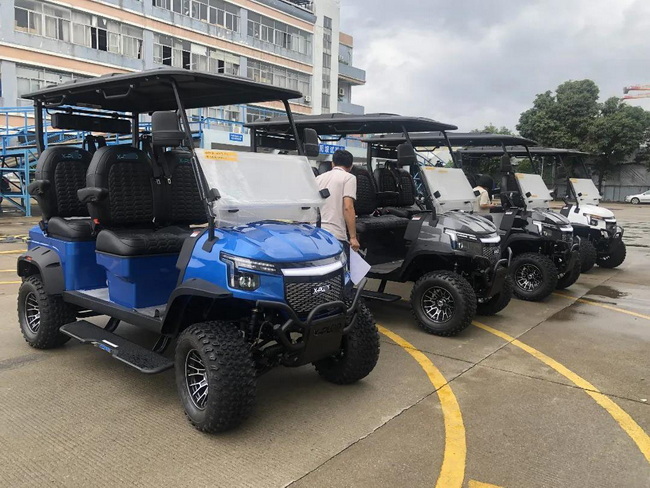
High-performance batteries are the backbone of any capable electric golf cart. Recent LSV and NEV models increasingly favor lithium packs for better power density, faster charging, and longer cycle life compared with traditional lead‑acid. In A/B comparisons, moving from lead‑acid to lithium often increases range and improves speed response without exceeding the 25 mph threshold. [intermountaingolfcars]
Typical performance enhancements include:
- Upgrading to lithium battery packs with higher usable capacity and smarter battery management systems. [intermountaingolfcars]
- Specifying high‑efficiency motors that deliver more torque at low speeds, improving hill‑climb and loaded starts. [futuremarketinsights]
- Fine‑tuning the controller for smoother acceleration curves and regenerative braking where allowed. [tigongolfcarts]
For BorCart, a common OEM configuration is a lithium pack paired with a controller locked in street‑legal mode, giving users brisk but controlled acceleration while keeping top speed inside the LSV window. [bigbattery]
Safety-critical hardware is what separates a true street-legal cart from a casual course runabout. Most compliant carts incorporate: [electrickmotorsports]
- Automotive‑style hydraulic brakes with sufficient stopping power at full passenger and cargo load. [golfcaradvisor]
- Robust steering systems that maintain stability over uneven pavement, speed humps, and curb cuts. [electrickmotorsports]
- Enhanced suspension for comfort and control, particularly on commercial units carrying tools or cargo. [golfcaradvisor]
In commercial fleets, heavy‑duty brakes and upgraded suspension are especially important because repeated stops with full load can dramatically increase wear. BorCart typically offers "resort" and "utility" chassis packages so partners can choose between comfort‑optimized and load‑optimized setups. [golfcaradvisor]
Industry trend reports show that neighborhood and community usage now rivals traditional on‑course use, especially in warm‑climate states that are expanding LSV‑friendly laws. Municipalities are building more cart paths and crossings, while homeowners' associations are formalizing guidelines for ownership, parking, and charging. [futuremarketinsights]
Two big implications for product design:
- Comfort and style matter more: users expect automotive‑inspired seating, infotainment, and storage. [youtube]
- Connectivity is rising: many new models are adding Bluetooth audio, navigation, and even CarPlay/Android Auto. [youtube]
OEMs that integrate these features at the factory level allow downstream brands to differentiate using colors, trims, and branding instead of re‑engineering core systems. [eacarts]
Market research indicates that eco‑friendly transport narratives significantly influence purchasing decisions, particularly in resorts, campuses, and master‑planned communities. Electric street-legal golf carts and NEVs offer: [golfcartstuff]
- Lower lifecycle emissions compared with gasoline vehicles.
- Reduced noise, which improves guest experience in hospitality environments.
- Opportunities for properties to highlight visible sustainability actions (quiet electric shuttles, green branding). [golfcartstuff]
BorCart supports these initiatives by optimizing vehicles for energy-efficient drivetrains, regenerative braking where regulations permit, and compatibility with solar‑assisted charging infrastructure provided by local partners. [intermountaingolfcars]
If you are a brand, distributor, or fleet buyer considering an OEM street-legal golf cart line, the following checklist helps structure your evaluation:
1. Define use cases – Neighborhood commuting, internal resort transport, light commercial, or mixed. [golfcartsearch]
2. Clarify regulatory scope – Which countries/states? What LSV or NEV rules apply? [solanaev]
3. Specify performance targets – Required range, passenger capacity, payload, and top speed (within 20–25 mph). [bigbattery]
4. Map safety requirements – Confirm lighting, mirrors, seat belts, VIN placement, and inspection expectations. [tigongolfcarts]
5. Align on powertrain – Choose between lead‑acid and lithium, motor power, and controller options. [futuremarketinsights]
6. Plan after‑sales support – Parts availability, maintenance intervals, and documentation for local technicians. [electrickmotorsports]
Working directly with an OEM like BorCart allows you to consolidate these decisions into a single configurable platform that can then be customized for multiple markets with limited re‑engineering. [futuremarketinsights]
Because BorCart manufactures both complete vehicles and critical components, we can offer tailored configurations for different segments:
- Street-legal neighborhood carts – Focused on comfort, style, and quiet operation, with refined interiors and infotainment options. [eacarts]
- Commercial LSVs – Reinforced frames, heavy‑duty brakes, cargo beds or tool racks, and simplified, rugged interiors. [golfcaradvisor]
- Resort and hospitality shuttles – Multi‑row seating, luggage solutions, and branding surfaces optimized for property logos. [intermountaingolfcars]
In all cases, we design around LSV safety, compliance, and inspection readiness so overseas partners can focus their resources on marketing, distribution, and customer service rather than hardware redesign. [solanaev]
Choosing the right OEM partner can determine whether your street-legal golf cart program becomes a scalable profit engine or a compliance headache. BorCart combines experience in EV component manufacturing with a deep understanding of LSV rules, giving overseas brands and wholesalers a reliable platform for launching or upgrading their product lines. [golfcaradvisor]
If you are planning to introduce or expand a street legal golf cart range, we can help you:
- Validate your target market's regulations and inspection needs.
- Configure chassis, powertrains, and safety equipment around LSV requirements.
- Co‑develop branded models tailored to your audience and price points.
Reach out to discuss your project, share your target markets, and explore OEM or private label cooperation options that match your growth plans. [futuremarketinsights]
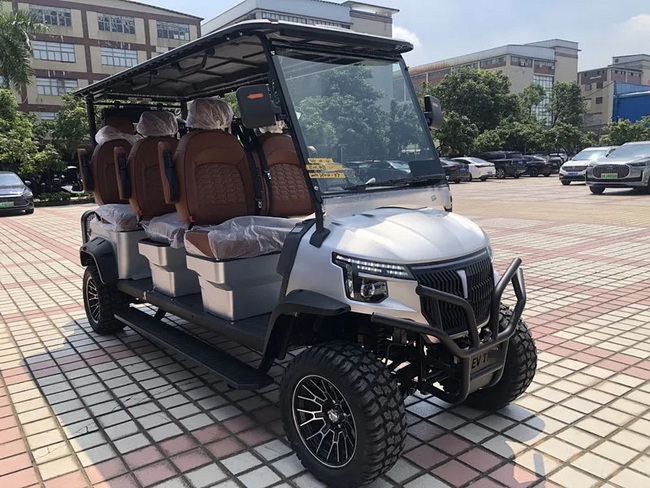
Q1: What makes a golf cart "street legal" instead of just course-ready?
A golf cart becomes street legal when it meets low-speed vehicle rules in its market, including a governed top speed of around 20–25 mph, required lighting, mirrors, seat belts, VIN, and successful registration as an LSV. [bigbattery]
Q2: Do all street legal golf carts have to use lithium batteries?
No. Many compliant carts still use lead‑acid, but lithium offers better range, performance, and lifecycle, which is why newer street-legal NEVs increasingly favor lithium packs when budgets allow. [intermountaingolfcars]
Q3: Can I drive a street legal golf cart on any public road?
Usually not. Most jurisdictions only allow LSVs on roads with posted speed limits of 35 mph or less, and some cities restrict them to specific lanes or zones, so owners must check local rules before driving. [golfcartsearch]
Q4: How can a brand ensure its imported golf carts pass inspection?
Brands should partner with OEMs that design for LSV standards from the start, verify that required equipment is installed and documented, and work with local dealers or compliance consultants to align with regional inspection criteria. [electrickmotorsports]
Q5: Why are street legal golf carts popular in resorts and communities?
They offer quiet, low‑emission transportation with lower operating costs, easy parking, and a relaxed riding experience, making them ideal for short trips within resorts, gated communities, and campuses. [golfcartstuff]
1. Intermountain Golf Cars – "Golf Cart Trends for 2026: What's Driving the Industry Forward." [intermountaingolfcars]
2. GolfCartStuff – "Advantages of street legal golf carts in 2026." [golfcartstuff]
3. Golf Car Advisor – "Street-Legal Surge: How LSVs Are Driving New Profit Opportunities in 2026." [golfcaradvisor]
4. Yahoo Finance – "Golf Cart Market Size to Reach USD 3.5 Billion by 2033." [finance.yahoo]
5. GolfCartSearch – "Best Golf Carts for Neighborhood Use (2026 Guide)." [golfcartsearch]
6. EA Carts – "Best Golf Cart Brands in 2026: 18 Brands Scored & Ranked." [eacarts]
7. Electric K Motorsports – "Making Your Golf Cart Street-Legal: Steps You Need to Know." [electrickmotorsports]
8. Future Market Insights – "Golf Cart Market Size, Demand & Growth Forecast 2026 to 2036." [futuremarketinsights]
9. Solana EV – "Golf Cart Street Legal Requirements Guide." [solanaev]
10. BigBattery – "4 Tips For Making Your Golf Cart Street Legal." [bigbattery]
11. Tigon Golf Carts – "Cruising in Style: Our Top Picks for Street Legal Golf Carts" (regulation, safety, and performance sections). [tigongolfcarts]


