


Views: 222 Author: BorCart Publish Time: 2026-06-23 Origin: Site


Content Menu
● Understanding Seating Layouts in Guided Real Estate Tours
● What Is a 4 Forward Seat Golf Cart?
● What Is Back‑to‑back Golf Cart Seating?
● Passenger Comfort: 4 Forward vs Back‑to‑back
● Passenger Communication and Guide Engagement
● Safety Perception and Professional Image
● Capacity, Route Design, and Tour Flow
● Comparative Overview: 4 Forward vs Back‑to‑back
● Market Context: Why Seating Matters in a Growing Golf Cart Segment
● OEM Design Considerations from an Industry Expert View
● Practical Setup Tips for Real Estate Tour Operators
● How BorCart Can Customize Carts for Guided Tours
● Choosing the Right Layout for Your Next Project
● FAQ
4 forward seat golf carts generally offer better passenger communication and premium comfort for guided real estate tours, while back‑to‑back seating maximizes capacity and flexibility on compact properties. Both layouts can work for professional tours, but your choice should match your target buyer profile, route design, and brand positioning as an OEM or real estate operator. [fortunebusinessinsights]

In guided real estate tours, golf carts are no longer just for golf courses; they are mobile showrooms that shape the buyer's emotional experience of a property or community. Seating layout directly affects comfort, line of sight, and how easily guests can communicate with the guide and with each other. [researchnester]
From an OEM perspective like BorCart, choosing between a 4 forward seat golf cart and back‑to‑back seating is not only an engineering decision but also a positioning tool for different tour scenarios (luxury villas vs. high‑density developments, resort communities vs. industrial parks). [fortunebusinessinsights]
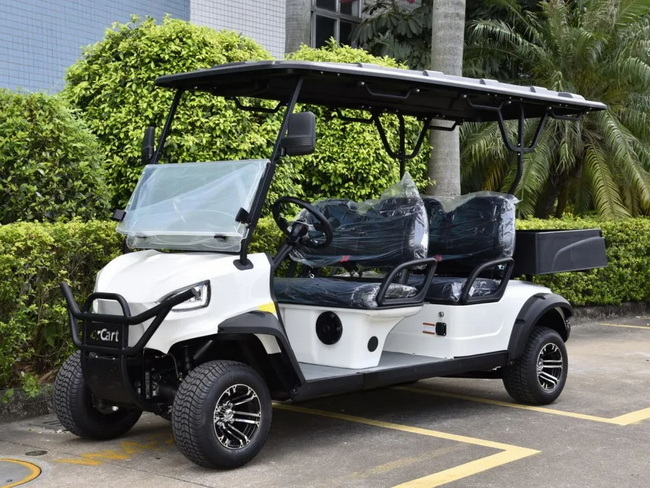
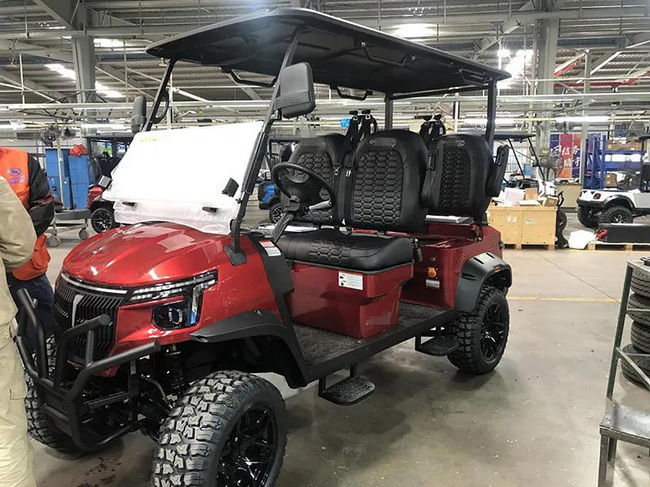
A 4 forward seat golf cart places all passengers facing the direction of travel, typically in two rows of forward‑facing seats. This layout improves visibility of the route, road conditions, and property features that lie ahead. [researchnester]
For guided tours, this configuration feels familiar to passengers used to cars or shuttles, helping them relax quickly. It is especially suitable for premium real estate tours, such as gated communities, resort projects, or corporate campuses where perceived safety and comfort are critical to closing deals. [fortunebusinessinsights]
Back‑to‑back seating usually means one row facing forward and another directly behind it facing backward, sometimes combined with a flip‑flop rear seat that can convert to a cargo bed. This layout is popular in multi‑purpose carts used in hotels, resorts, and mixed‑use developments. [researchnester]
For real estate tours, back‑to‑back seating maximizes capacity in a compact footprint, which is important in narrow community roads or crowded sales environments. However, it introduces an immediate difference in the passenger experience between those facing forward and those facing backward. [fortunebusinessinsights]
Passenger comfort is a key driver for repeat visits, positive word‑of‑mouth, and overall tour satisfaction.
Comfort factors for 4 forward seat golf carts:
- Consistent ride experience for all passengers, as everyone faces forward. [researchnester]
- Reduced motion discomfort for older buyers or high‑value clients who may be sensitive to backward movement. [fortunebusinessinsights]
- Easier ergonomic design for seat cushions, armrests, and legroom when all seats share the same orientation. [researchnester]
Comfort factors for back‑to‑back seating:
- Rear passengers may experience more motion sickness or discomfort due to facing backward during acceleration and braking. [fortunebusinessinsights]
- When the same cart is used for both cargo and passengers, compromises may exist in cushion thickness or backrest angle. [researchnester]
- The feeling of safety can vary between front and rear passengers, especially on slopes or uneven terrain. [fortunebusinessinsights]
From a user‑experience standpoint, 4 forward seating generally delivers higher perceived comfort in guided real estate tours, especially for high‑ticket projects and senior decision‑makers.
Communication quality determines how much sales value a guide can extract from each tour.
In a 4 forward seat golf cart, all passengers naturally face the guide or the front of the vehicle, making it easier to:
- Maintain eye contact during explanations. [researchnester]
- Synchronize attention when pointing to buildings, amenities, or infrastructure ahead. [fortunebusinessinsights]
- Use discreet sales prompts, such as subtle gestures or pointing to interior finishes or landscaping. [researchnester]
In back‑to‑back seating, communication is split:
- Forward‑facing passengers communicate easily with the driver‑guide, but those facing backward often rely on raised voices or turning their upper body, which can be tiring. [fortunebusinessinsights]
- The guide must work harder to repeat key messages or adjust body posture to address both directions, which increases cognitive load and may reduce tour fluency. [researchnester]
For real estate teams that rely on story‑driven tours, forward‑facing layouts clearly support better communication and stronger emotional connection.
Perceived safety directly affects trust in the developer or broker brand.
4 forward seat golf carts:
- Offer a predictable, car‑like experience, which international buyers and corporate tenants often prefer. [fortunebusinessinsights]
- Make it easier to design and position safety belts, side grab bars, and protective doors or enclosures. [researchnester]
- Reinforce an image of professional, well‑organized tours, especially when carts are customized with brand colors and logos. [fortunebusinessinsights]
Back‑to‑back seating:
- Can appear more casual or recreational, which suits resorts or lifestyle communities but may feel less formal for high‑value commercial real estate. [researchnester]
- Requires careful safety communication to reassure rear‑facing passengers about braking, downhill segments, and turns. [fortunebusinessinsights]
Overall, if your target clients are institutional investors, high‑net‑worth buyers, or overseas corporate teams, 4 forward seating often sends a clearer message of safety and professionalism.
Both layouts impact how many people you can move, how fast a tour can run, and how flexible your route can be.
- Back‑to‑back carts can often offer higher headcount per vehicle length, which is attractive when you must move groups through compact sites or tight internal roads. [researchnester]
- 4 forward carts may carry fewer people per cart length but provide a more premium, individualized experience, which can justify higher property pricing and better conversion rates. [fortunebusinessinsights]
For large‑scale projects (new townships, industrial parks, university campuses), operators sometimes deploy mixed fleets, using 4 forward carts for key decision‑makers and back‑to‑back carts for support staff or larger groups. [researchnester]
| Dimension | 4 Forward Seat Golf Cart | Back‑to‑back Seating |
|---|---|---|
| Passenger orientation | All passengers face forward, consistent experience (fortunebusinessinsights) | Mixed: some face forward, some backward (fortunebusinessinsights) |
| Comfort for sensitive passengers | Higher, especially for seniors and VIPs (fortunebusinessinsights) | Lower for rear‑facing seats due to motion discomfort (fortunebusinessinsights) |
| Guide–passenger communication | Strong, easy eye contact and synchronized viewing (fortunebusinessinsights) | Split communication, guide must address two directions (fortunebusinessinsights) |
| Brand positioning | Premium, professional, similar to executive shuttle (fortunebusinessinsights) | Practical, flexible, sometimes perceived as more casual (fortunebusinessinsights) |
| Capacity per vehicle length | Moderate, focused on comfort (fortunebusinessinsights) | Higher, optimized for headcount and flexibility (fortunebusinessinsights) |
| Multi‑purpose use (cargo + people) | Less flexible unless specially designed (fortunebusinessinsights) | Very flexible, often paired with flip‑flop cargo seats (fortunebusinessinsights) |
| Best‑fit tour scenarios | VIP tours, luxury communities, corporate campuses (fortunebusinessinsights) | Large groups, mixed‑use projects, resort shuttles (fortunebusinessinsights) |
The global golf cart and low‑speed vehicle market has been expanding steadily, supported by real estate, hospitality, and industrial applications beyond golf courses. Recent market research shows that the golf cart industry reached around 2.0–2.1 billion USD in 2024 and is projected to grow at over 6% CAGR toward 2032–2034. [fortunebusinessinsights]
For OEMs like BorCart, this growth means more niche demands: real estate developers are no longer buying "generic carts"; they are specifying seating layouts, battery systems, and body designs that match their brand and tour experience. [researchnester]
From an OEM and engineering perspective, optimizing 4 forward seat and back‑to‑back platforms for guided real estate tours involves several expert‑level decisions:
- Chassis and wheelbase design to maintain stability under full passenger load, especially when routes include slopes and uneven surfaces. [fortunebusinessinsights]
- Suspension tuning to reduce vibration and micro‑shocks that passengers feel during slow, scenic tours. [researchnester]
- Battery capacity and motor selection to handle stop‑and‑go patterns typical of property tours without range anxiety. [fortunebusinessinsights]
BorCart, as a specialized manufacturer of electric vehicles and components, can integrate these factors into customized OEM packages, allowing overseas brand owners and wholesalers to differentiate their fleets with tour‑optimized seating and driving dynamics. [researchnester]
When a developer or agency deploys golf carts for tours, small setup choices can significantly improve UX:
1. Match seating layout to buyer profile
- Use 4 forward carts for VIP previews, overseas client visits, or high‑value commercial pitches. [fortunebusinessinsights]
- Use back‑to‑back carts for general public open days or large group visits. [researchnester]
2. Standardize tour routes
- Design routes to avoid excessive reversing or sharp downhill segments for rear‑facing passengers in back‑to‑back carts. [fortunebusinessinsights]
- Place key viewing points on the right‑hand side (or local preference) to align with passenger line of sight. [researchnester]
3. Enhance on‑board communication
- Equip carts with simple PA systems or Bluetooth microphones when groups are larger. [fortunebusinessinsights]
- Use printed seat‑back cards or QR codes with floor plans and pricing to support the verbal tour. [researchnester]
As a Chinese OEM manufacturer of golf carts and automotive components, BorCart can support international brand owners and wholesalers with:
- Custom seating modules: 4 forward or back‑to‑back layouts with tailored foam density, upholstery, and stitching that match your brand guidelines. [fortunebusinessinsights]
- Tour‑ready features: integrated handrails, cup holders, brochure pockets, and lighting for evening site visits. [researchnester]
- Brand personalization: body color, logo application, dashboard labeling, and accessories adapted for specific real estate projects or communities. [fortunebusinessinsights]
By partnering at the OEM design stage, real estate brands can position their tours not just as transportation but as part of a complete, branded sales experience, reinforcing trust and professionalism from the first moment guests board the cart. [researchnester]
In guided real estate tours, there is no single "best" layout, but clear patterns emerge:
- Choose 4 forward seat golf carts if your priority is maximum comfort, strong guide communication, and premium brand perception. [fortunebusinessinsights]
- Choose back‑to‑back seating if you need compact, high‑capacity transport for large groups in dense or mixed‑use properties. [researchnester]
For many international developers and operators, the optimal strategy is to combine both types in a fleet, assigning each layout to the tour scenario where it performs best. [fortunebusinessinsights]
If you are planning a new project, BorCart's OEM team can help you determine the ideal seat layout, power system, and accessories based on your route design, passenger profile, and branding needs. [researchnester]
1. Are 4 forward seat golf carts safer than back‑to‑back carts for real estate tours?
4 forward seat carts often deliver a more secure and predictable experience because all passengers face the direction of travel, which can improve balance and braking perception. [fortunebusinessinsights]
2. Do back‑to‑back carts always carry more passengers?
Not always, but they generally optimize capacity per vehicle length, especially when combined with flip‑flop rear seats designed for dual cargo and passenger use. [researchnester]
3. Which layout is better for older or mobility‑sensitive buyers?
4 forward seating usually provides better comfort and confidence for older passengers or those sensitive to motion, as they do not need to ride facing backward. [fortunebusinessinsights]
4. Can the same chassis support both seating layouts?
Many OEM platforms can be engineered to support modular seating configurations, allowing fleet owners to switch between 4 forward and back‑to‑back setups with appropriate structural verification. [researchnester]
5. How can BorCart help international brands differentiate their tour carts?
BorCart can combine custom seating layouts, branding elements, and tour‑specific accessories into OEM solutions that match the real estate developer's positioning and buyer expectations. [fortunebusinessinsights]
1. Fortune Business Insights – “Golf Cart Market Size, Share & Trends”. https://www.fortunebusinessinsights.com/golf-cart-market-106337
2. Research Nester – “Golf Cart Market Forecast – Global Industry Demand & Trend Analysis”. https://www.researchnester.com/reports/golf-cart-market/1216


