


Views: 243 Author: BorCart Publish Time: 2026-10-11 Origin: Site


Content Menu
● Electric Cargo Truck with Iron Box vs. Electric Cargo Van: Key Differences
● Cargo Capacity: Compare Usable Space, Not Exterior Size
>> When an Electric Cargo Truck with Iron Box Makes Sense
>> When an Electric Cargo Van Makes Sense
● Payload: Why a Larger Steel Box Can Carry Less Freight
● Range and Charging: Body Style Is Only Part of the Equation
>> Why Neither Configuration Automatically Travels Farther
>> Build a Route-Based Charging Plan
● Loading Efficiency, Driver Experience, and Urban Access
>> Evaluate the Entire Working Environment
● Durability, Weather Protection, and Maintenance
>> Steel Cargo Box: Inspect the Details
>> Electric Cargo Van: Check Body Repairability
● Total Cost of Ownership: Calculate Cost per Completed Delivery
● A Practical Five-Day Fleet Validation Plan
>> Day 1: Confirm Dimensions and Loaded Weight
>> Day 2: Run a Typical Delivery Route
>> Day 3: Test the Difficult Route
>> Day 4: Evaluate Charging and Auxiliary Equipment
>> Day 5: Review Results with Drivers and Maintenance Staff
● OEM Purchasing: What Overseas Buyers Should Specify
● Which Electric Cargo Vehicle Should You Choose?
>> Start Your BorCart OEM Evaluation
>> 1. Does an electric cargo truck with iron box carry more than an electric cargo van?
>> 2. Which option is better for last-mile delivery?
>> 3. Is a steel cargo box waterproof?
>> 4. Can either vehicle transport refrigerated goods?
>> 5. What should an overseas OEM buyer request before ordering?
>> 6. Should I choose the vehicle with the largest battery?
An electric cargo truck with iron box suits buyers who need a configurable cargo enclosure, specialized loading arrangements, or body designs tailored to particular freight. An electric cargo van often suits frequent-stop deliveries, service businesses, and urban routes where convenient access matters more than maximum box flexibility.
However, neither design automatically carries more weight, travels farther, or costs less to operate. The right choice depends on the complete vehicle—not simply its body style.
My recommendation is to start with workflow: what you carry, how you load it, where you drive, and when you charge.
For overseas brands, wholesalers, and manufacturers sourcing from BorCart, these questions also establish the foundation of an effective OEM specification. This guide compares both configurations and explains how to turn operational requirements into a practical purchasing decision.
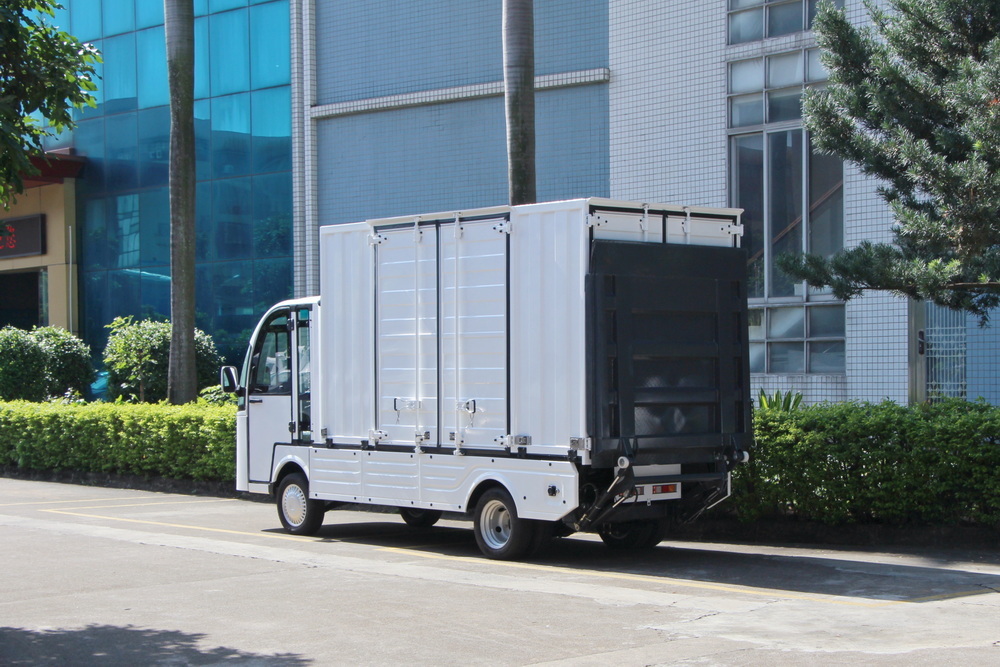
In this article, "iron box" means a steel cargo enclosure mounted behind the cab. Buyers should confirm the actual material specification because the commercial term does not identify steel grade, thickness, or corrosion protection.
An electric cargo van has an enclosed van-style cargo compartment. Construction varies: some models use integrated bodies, while others follow different platform designs.
| Buying consideration | Electric cargo truck with iron box | Electric cargo van |
|---|---|---|
| Cargo layout | Separate enclosure offers body-design flexibility | Compartment follows the van's body dimensions |
| Loading access | Rear doors, shutters, or additional openings may be specified | Rear and side access depend on configuration |
| Typical applications | Bulky freight, equipment, customized distribution | Parcels, service tools, frequent-stop deliveries |
| Payload | Depends on chassis limits and completed body weight | Depends on vehicle limits and installed equipment |
| Urban operation | Box height, width, and overhang require attention | Exterior dimensions and door clearance remain important |
| OEM priorities | Mounting, structural design, sealing, body equipment | Cargo layout, access, shelving, partition, branding |
These are selection tendencies, not guarantees. Compare vehicles within the same operating category and use completed-vehicle specifications.
A separate box can provide a relatively rectangular loading area. That may simplify stacking cartons, arranging reusable containers, or accommodating equipment that does not fit neatly around a van's interior contours.
It can also support application-specific requirements:
- Cargo dimensions matched to standard containers.
- Door openings designed around handling equipment.
- Internal partitions or adjustable securing points.
- Specialized bodies, subject to engineering approval.
However, steel construction does not automatically establish heavy-duty suitability. Floor strength, mounting design, fasteners, and load distribution all matter.
An electric cargo van can be attractive when workers repeatedly retrieve parcels, tools, or spare parts.
Where fitted, a sliding side door may provide access without opening the rear compartment. Shelving and a suitable partition can organize service equipment and separate cargo from occupants.
The limitation is usable geometry. Wheel housings, internal trim, and door apertures can restrict loading even when the advertised cargo volume appears sufficient.
Before purchasing, measure:
1. Internal floor length and width.
2. Width between wheel housings.
3. Clear door-opening dimensions.
4. Internal height after installing shelving.
5. Space occupied by cargo restraints and accessories.
A physical loading trial is more informative than cargo volume alone.
Payload is one of the easiest specifications to misinterpret.
The maximum authorized vehicle mass includes the vehicle and everything carried aboard. Cargo must fit within that overall limit, while individual axle limits must also remain satisfied.
For purchasing purposes:
Available cargo allowance = permitted gross mass − completed vehicle mass − occupants − additional equipment.
Ask suppliers to explain whether their quoted vehicle mass already includes the cargo body, battery, standard accessories, and driver allowance. Definitions can differ between documents.
For an electric cargo truck with iron box, the enclosure consumes part of the available weight allowance. Doors, flooring, insulation, lifting equipment, and reinforcement add further mass.
A van faces the same issue when shelving, refrigeration, or workshop equipment is installed.
My purchasing rule is straightforward: request the weight of the finished configuration, not a bare chassis figure.
Also check axle loading. A vehicle can remain below its total weight limit while exceeding a rear axle limit because heavy freight sits too far behind the cab.
Electric delivery vehicle range depends on battery capacity, vehicle mass, speed, temperature, gradients, driving behavior, and auxiliary equipment.
A tall box may increase aerodynamic demand. Yet a compact box truck could consume less energy than a larger van. Without comparable dimensions and route conditions, a universal ranking would be misleading.
Heating, cooling, refrigeration, and frequent door opening can further change energy requirements.
Cold-weather planning deserves particular attention. Do not assume a published range figure represents a loaded winter delivery route.
Request consumption data for the proposed configuration, then validate it through a representative pilot.
Your charging plan should establish:
- Maximum daily distance, including diversions.
- Energy use with typical and peak loads.
- Battery reserve at the end of the shift.
- Overnight parking duration.
- Charger compatibility and available electrical supply.
- Contingency arrangements for charger failure.
A useful design principle is to avoid depending on an unscheduled public charging stop to finish routine deliveries.
Charging infrastructure is part of the vehicle decision, not an accessory purchased afterward.
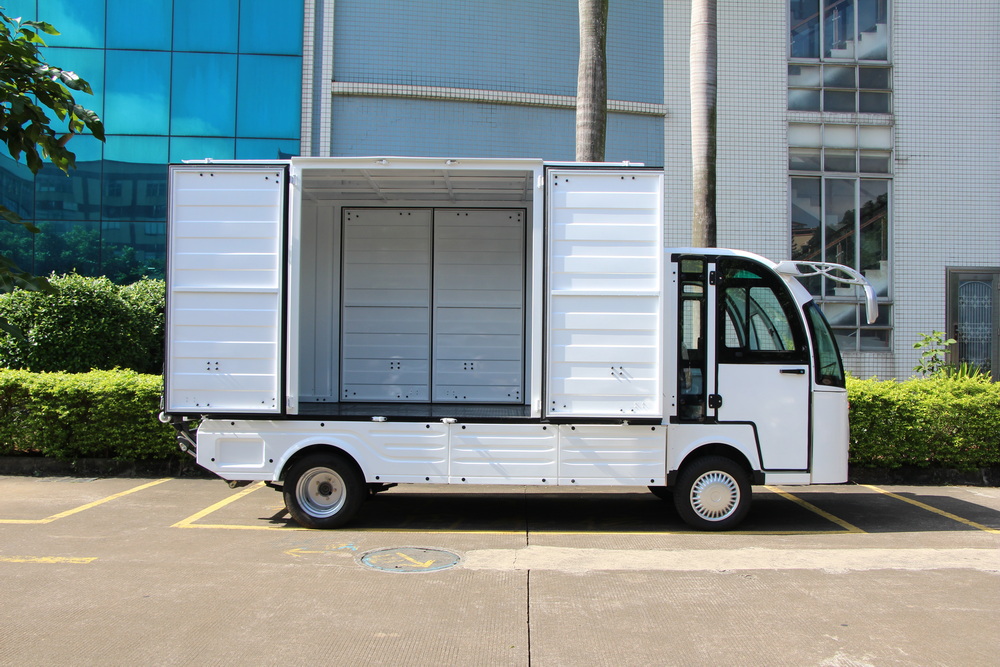
A rear-loading steel box can work well for consolidated freight movements. Its suitability depends on loading height, access equipment, and the space available behind the vehicle.
A van may better support frequent small deliveries where side access is available. However, door placement and parking conditions must match the route.
Consider this hypothetical comparison: saving 20 seconds at each of 60 stops saves 20 minutes per shift. That improvement may matter more than a modest difference in electricity consumption.
This is an illustrative calculation, not a measured result for either vehicle.
Ask drivers to assess:
- Entry and exit.
- Mirror visibility and reversing assistance.
- Cargo reach and lifting posture.
- Door effort and latch operation.
- Cabin comfort during long shifts.
- Access while parked beside walls or other vehicles.
For urban routes, compare actual turning circle, height, width, and rear overhang.
A compact electric cargo truck may be easier to position than a large van. Conversely, an oversized box can create clearance problems. The dimensions decide—not the category name.
For a steel enclosure, specify corrosion protection rather than accepting "durable construction" as sufficient evidence.
Request details covering:
- Steel specification and panel thickness.
- Surface preparation and coating process.
- Weld treatment and protected joints.
- Drainage paths and door seals.
- Replaceable hinges, locks, and seals.
- Inspection and repair procedures.
Wet, coastal, or road-salt environments justify particular attention to seams and mounting points.
Weather protection also requires verification. An enclosed body is not necessarily waterproof under every operating condition.
A van should receive the same scrutiny for sealing, corrosion protection, door durability, and service access.
Integrated body damage may require different repair methods from damage to a separately mounted enclosure. Nevertheless, a box is not automatically replaceable at low cost.
Repairability depends on the mounting system, electrical connections, parts supply, workshop capability, and approved repair procedures.
For both options, request a maintenance schedule and a recommended spare-parts package before placing a fleet order.
Purchase price alone cannot identify the better investment.
Compare the complete operating program:
1. Vehicle and cargo-body purchase.
2. Freight, duties, inspection, and registration.
3. Charging equipment and site installation.
4. Electricity and relevant demand charges.
5. Maintenance, tires, and body repairs.
6. Insurance and downtime.
7. Battery warranty exposure.
8. Driver time and loading productivity.
9. Expected resale or disposal value.
Then relate costs to completed deliveries, operating days, or transported freight.
For example, a cheaper vehicle may become more expensive if insufficient usable capacity forces extra trips. A larger vehicle can also be wasteful when most routes carry small loads.
Keep assumptions consistent between quotations. Compare equivalent battery specifications, cargo equipment, delivery terms, warranty coverage, and charging provisions.
A structured pilot provides stronger evidence than a showroom demonstration. The following is a proposed evaluation method, not a published BorCart test result.
Load representative freight. Check door clearance, restraint positioning, total mass, and axle distribution.
Record distance, energy consumption, charging duration, stop count, and loading time.
Include demanding gradients, tight parking, poor road surfaces, and the highest expected load.
Operate heating, cooling, or cargo equipment as required. Verify that the vehicle can recharge within its actual parking window.
Document usability problems, inspection access, spare-parts requirements, and remaining battery reserve.
Set acceptance criteria before testing. Otherwise, an attractive demonstration can obscure operational shortcomings.
For a BorCart OEM inquiry, begin with a written operating brief rather than requesting only a price.
Include:
- Destination country and intended operating environment.
- Public-road or controlled-site use.
- Daily distance and operating hours.
- Cargo dimensions and peak weight.
- Loading method and preferred door arrangement.
- Climate and storage conditions.
- Charging supply and connector requirements.
- Branding, documentation, and parts-support expectations.
Road legality requires separate verification. Do not assume that a vehicle approved for controlled premises can be registered for public-road use overseas.
Ask for configuration-specific documents and confirm local registration, safety, lighting, braking, and vehicle-category requirements with qualified local advisers.
For specialized bodies, establish responsibility for engineering, mounting, electrical integration, and completed-vehicle approval. Customization should not compromise service access or exceed structural limits.
Because verified BorCart model specifications are not supplied here, this article does not assign the company unconfirmed payloads, ranges, certifications, or warranty terms.
Choose an electric cargo truck with iron box when your business prioritizes configurable enclosure dimensions, specialized loading, or freight that benefits from a dedicated box layout.
Choose an electric cargo van when your operation prioritizes frequent cargo access, organized service equipment, and delivery workflows suited to the van's dimensions.
If both appear suitable, compare the completed vehicles on the same route. Let payload, usable capacity, delivery time, charging feasibility, and operating cost determine the result.
Send BorCart your destination market, route profile, cargo dimensions, maximum load, and charging conditions. Request a configuration-specific quotation, completed-vehicle specification, supporting documentation, and sample evaluation plan.
This gives your team a clearer basis for comparing an electric cargo truck with iron box against an electric cargo van before committing to production.
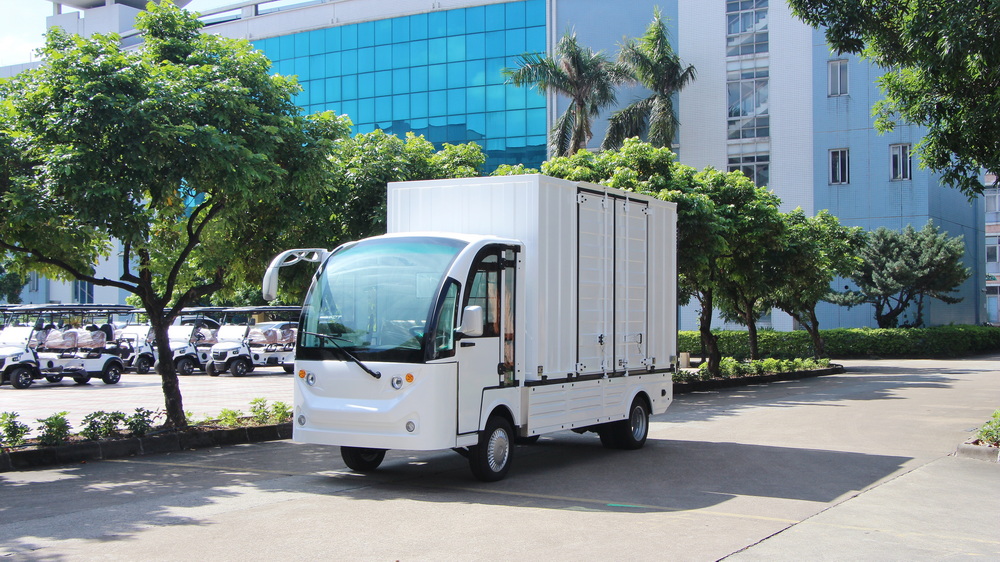
Not necessarily. Cargo allowance depends on permitted vehicle mass, finished vehicle weight, occupants, equipment, and axle limits. A heavy enclosure can reduce available payload.
An electric cargo van may suit frequent small deliveries, especially with convenient side access. A compact box truck may be preferable when the route carries bulky freight or requires a specific loading arrangement.
Not automatically. Water resistance depends on joints, coatings, seals, drainage, and workmanship. Specify a suitable leakage test and inspect the completed enclosure.
Potentially, with an engineered insulated body and compatible refrigeration system. Additional weight and electrical demand must be included in payload, range, charging, and approval assessments.
Request finished-vehicle specifications, relevant compliance documentation, warranty terms, maintenance instructions, parts availability, and a sample test plan. Confirm that every document matches the ordered configuration.
Not automatically. Battery capacity should match validated route requirements and reserve needs. Compare the resulting purchase cost, vehicle weight, charging time, and operational suitability.
1. UK Government. ["Vehicle weights explained."] Definitions of maximum authorized mass and vehicle weight limits used in the payload discussion. [gov]
2. Ford. ["Transit & E-Transit Body and Equipment Mounting Manual," November 2023.] Manufacturer reference for configuration-specific body mounting and equipment integration considerations. [ford.co]
3. Ford. ["What's New: 2026 Ford Transit," November 19, 2025.] Industry example of electric chassis-cab and cutaway configurations intended to accommodate aftermarket bodies and equipment; not a BorCart specification. [fromtheroad.ford]
4. National Renewable Energy Laboratory. ["Zero-Emission Vehicle Adoption Resource Guide for Government Fleets," report 88407.] Fleet-planning guidance addressing temperature, operational conditions, charging-site assessment, and connector compatibility. No range-loss percentage from this report has been applied to BorCart vehicles. [docs.nlr]


