


Views: 222 Author: BorCart Publish Time: 2026-06-19 Origin: Site


Content Menu
● What Is an Electric Golf Cart Today?
● Core Components of an Electric Golf Cart
>> 1. Battery Pack: The Energy Source
>> 2. Electric Motor: Converting Electricity to Motion
>> 3. Motor Controller: The Electronic "Brain"
>> 4. Throttle and Pedal Assembly
>> 5. Charger: Replenishing the Battery
>> 6. Direction and Safety Systems
● How an Electric Golf Cart Works Step by Step
● Electric Golf Carts vs Gas Golf Carts
>> Performance and Ownership Comparison
● How Real Users Actually Use Electric Golf Carts
● Key Technical Specs to Consider When Sourcing from an OEM
>> 2. Battery Capacity and Chemistry
>> 3. Payload, Seating, and Chassis
>> 4. Compliance and Certification
● Practical Maintenance and Safety Checklist
● Why Electric Golf Carts Are a Smart Choice for Modern Operations
● Why Work with BorCart as Your OEM Electric Golf Cart Partner?
● CTA: Plan Your Next Electric Golf Cart Project with BorCart
● Frequently Asked Questions (FAQ)
Electric golf carts are no longer just quiet companions on the fairway—they are now multi‑purpose light electric vehicles used in resorts, gated communities, factories, campuses, and last‑mile logistics fleets worldwide. Understanding how electric golf carts work helps you choose the right model, specify components correctly with your OEM partner, and keep your fleet operating safely and efficiently. [taraelectricvehicles]
As a China‑based manufacturer of electric golf carts and EV components, BorCart has supplied OEM and private label solutions to overseas brands, wholesalers, and assemblers for years. This article combines our engineering experience with up‑to‑date industry insights to give you a practical, expert‑level introduction to modern electric golf carts. [sitebulb]
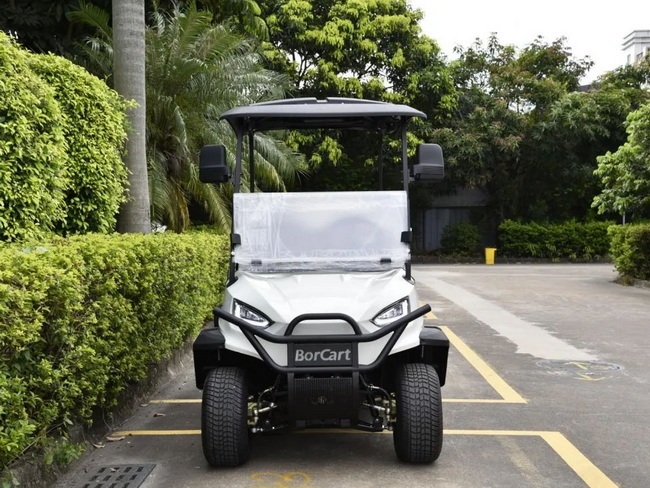
Modern electric golf carts are compact battery‑powered vehicles designed for short‑distance transport at low to moderate speeds, typically in controlled environments. While originally built for golf courses, in many markets more carts are now sold to non‑golf users than to golfers, especially for community transport, tourism, and commercial use. [longmyele]
Key use cases now include:
- Golf courses and country clubs
- Resorts, hotels, and theme parks
- Retirement communities and gated neighborhoods
- Warehouses, factories, and industrial campuses
- Airports, hospitals, and large public facilities
Compared with gas‑powered carts, electric carts deliver quieter operation, lower local emissions, simpler maintenance, and better low‑speed torque, which is ideal for stop‑and‑go usage. [golfcarts]
At the heart of every electric golf cart is a simple but robust electric drive system. Each major component plays a specific role in converting stored electrical energy into controlled motion. [taraelectricvehicles]
The battery pack stores the electrical energy that powers the cart. Historically, golf carts used deep‑cycle lead‑acid batteries connected in series to provide 36 V, 48 V, or higher system voltages. Today, many new carts and upgraded fleets use lithium‑ion packs for higher energy density, lower weight, and longer cycle life. [golfcarts]
Lead‑acid batteries are:
- Lower upfront cost
- Mature and easy to source globally
- Heavier, with shorter cycle life and more maintenance
Lithium‑ion batteries are:
- Lighter and more energy‑dense
- Capable of faster charging and deeper discharge
- Higher upfront cost but lower cost per cycle over the pack's life
For OEM projects, BorCart engineers help match battery chemistry, capacity (Ah), and voltage to the target range, payload, and climate conditions of your end market. [taraelectricvehicles]
The electric motor converts electrical energy from the battery into mechanical rotation that drives the wheels. Two motor types dominate golf carts: [golfcarts]
- DC motors (direct current)
- Common in traditional carts
- Relatively simple and cost‑effective
- Easy to service and widely understood by technicians
- AC motors (alternating current)
- Higher efficiency and better high‑speed performance
- Improved regenerative braking capability
- Often preferred in modern, heavy‑duty, or commercial carts
In an OEM context, AC systems are usually chosen for premium or workhorse models, while DC systems remain popular for price‑sensitive fleets. [taraelectricvehicles]
The motor controller regulates voltage and current from the battery to the motor according to driver input. Its main functions include: [golfcarts]
- Modulating speed based on accelerator pedal position
- Limiting current to protect the motor and battery
- Managing forward/reverse control
- Coordinating regenerative braking in compatible systems
A well‑tuned controller is critical for smooth acceleration, predictable torque, and safe operation, especially for fleets carrying passengers or cargo. [taraelectricvehicles]
The accelerator pedal and throttle sensor convert driver input into a control signal for the controller. In most carts: [golfcarts]
1. Pressing the pedal increases a voltage or resistance signal.
2. The controller reads this signal and feeds more current to the motor.
3. Releasing the pedal reduces current, slowing or stopping the cart.
This simple interface is one reason electric carts are easy for new users to learn compared with manual‑transmission or gas vehicles. [ecarstrade]
The onboard or external charger converts AC mains power into the DC voltage and current profile required by the battery pack. Modern smart chargers: [golfcarts]
- Use multi‑stage charging curves tailored to the battery chemistry
- Provide overcharge and temperature protection
- Can integrate with fleet management systems for monitoring and billing
Most carts can be plugged into standard outlets on courses, in garages, or at public charging points, making daily charging simple and low‑cost for operators. [shopify]
Direction control is usually handled by a gear selector or forward/reverse switch, which changes the motor's rotation direction via the controller. Safety‑relevant systems include: [golfcarts]
- Parking brake
- Lighting and signaling (for street‑legal carts)
- Speed limiters and geofencing (for larger fleets)
For OEM buyers, these systems must be designed to meet local regulations and usage scenarios, such as EU L‑category rules or US neighborhood electric vehicle (NEV) guidelines. [ecarstrade]
From a user's perspective, operating an electric golf cart is straightforward. Behind the scenes, several coordinated processes happen in milliseconds. [taraelectricvehicles]
1. Key On / System Wake‑Up
- Turning the key or pressing the power button activates the controller and safety checks.
2. Power Delivery from Battery to Motor
- The controller draws DC power from the pack and converts it to the appropriate form (DC or AC) for the motor. [golfcarts]
3. Acceleration Control
- As you press the accelerator pedal, the throttle signal tells the controller how much current to send, increasing torque and speed. [golfcarts]
4. Vehicle Motion
- The motor's shaft drives a differential and axles, turning the wheels and moving the cart forward or backward. [taraelectricvehicles]
5. Regenerative Braking (Where Equipped)
- When you release the pedal or apply the brake, the motor can act as a generator, converting kinetic energy back into electrical energy and feeding it to the battery. [taraelectricvehicles]
- This extends range and reduces wear on mechanical brake components.
6. Stopping and Parking
- Releasing the accelerator and applying mechanical brakes bring the vehicle to a stop, and the parking brake prevents roll‑away when parked. [golfcarts]
For fleet managers, understanding this sequence helps with driver training, troubleshooting, and range planning.
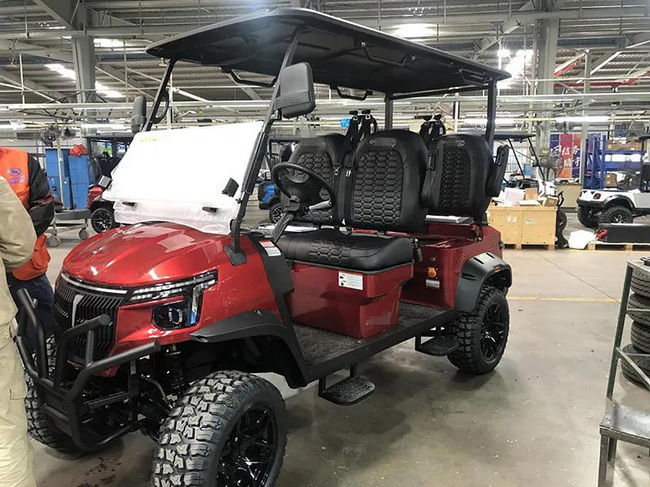
Electric and gas golf carts each have roles, but user reviews and purchasing data increasingly favor electric models in many environments. [longmyele]
| Aspect | Electric golf cart | Gas golf cart |
|---|---|---|
| Power source | Battery + motor (golfcarts) | Combustion engine (ecarstrade) |
| Noise level | Very low (golfcarts) | Noticeably higher (ecarstrade) |
| Local emissions | Zero at point of use (golfcarts) | Tailpipe emissions (ecarstrade) |
| Maintenance | Fewer moving parts (golfcarts) | More fluids and parts (ecarstrade) |
| Operating cost | Low electricity cost (golfcarts) | Higher fuel cost (ecarstrade) |
| Torque at low speed | Strong, smooth (golfcarts) | Dependent on engine and gearing (ecarstrade) |
| Typical use cases | Courses, resorts, communities, campuses (golfcarts) | Courses, off‑grid or specific heavy‑duty tasks (ecarstrade) |
For most golf courses, communities, and hospitality operators, electric carts now represent the default, future‑proof choice thanks to sustainability pressures, quieter guest experiences, and decreasing battery costs. [longmyele]
User feedback from courses, communities, and industrial parks highlights a few consistent patterns in how carts are used and what matters most to buyers. [sitebulb]
Common themes include:
- Range confidence
Users want reassurance that a cart can complete daily routes—18 holes of golf, full resort shift, or campus shuttling—without mid‑day charging.
- Ride comfort and noise
Families and guests appreciate quiet operation and minimal vibration, especially in residential or hospitality settings. [longmyele]
- Customization and branding
Fleet owners and brand customers frequently request custom seating layouts, body colors, logos, and accessories, turning carts into mobile brand assets. [ecarstrade]
- Serviceability and parts availability
International buyers emphasize the importance of standardized components and global parts sourcing to minimize downtime. [ecarstrade]
At BorCart, these feedback patterns heavily influence our OEM design options, component selection, and after‑sales documentation, ensuring that the carts perform as promised in real‑world use. [sitebulb]
If you are an importer, brand owner, or fleet manager working with an OEM like BorCart, it is essential to speak in clear technical specifications instead of only model names. [ecarstrade]
- System voltage (36 V, 48 V, 72 V)
- Motor rated power (kW) and peak torque
- Desired top speed under full load
Higher voltage systems typically offer better efficiency and performance, especially for hilly courses or heavy loads. [taraelectricvehicles]
- Amp‑hour (Ah) rating and energy (kWh)
- Chemistry (lead‑acid vs lithium‑ion)
- Target daily range under typical loading
For commercial fleets, lithium‑ion packs often deliver lower total cost of ownership despite higher upfront cost. [taraelectricvehicles]
- Number of seats (2, 4, 6, or more)
- Payload capacity (passengers + cargo)
- Suspension type and braking system
Clarifying these details allows BorCart engineers to recommend appropriate frame structures, axles, and braking packages for safety and longevity. [taraelectricvehicles]
- Local regulations for lighting, horn, mirrors, and VIN/serial standards
- Required certifications (for example CE, ISO‑related systems)
Early alignment on compliance prevents delays at customs and registration in the destination country. [sitebulb]
Even though electric golf carts are mechanically simpler than gas carts, they still require routine care. A basic checklist for owners and fleet managers includes: [golfcarts]
1. Daily or Weekly
- Visual inspection of tires and lights
- Check battery charge level and indicator warnings
2. Monthly
- Inspect battery terminals for corrosion or loose connections
- Check brake operation and parking brake holding force
3. Quarterly or Semi‑Annually
- Inspect suspension, steering components, and axles
- Review charger cables and connectors for wear
- Update controller firmware where supported
4. Battery‑Specific
- For lead‑acid: monitor electrolyte levels and follow manufacturer guidance
- For lithium‑ion: rely on battery management system (BMS) alerts and follow OEM charging recommendations
Basic training plus simple checklists significantly reduce unexpected downtime and safety incidents, especially in larger fleets. [ecarstrade]
Electric golf carts have evolved into efficient, versatile, and sustainable light‑duty vehicles. When configured correctly, they: [longmyele]
- Lower total operating costs through reduced energy and maintenance expenses
- Support sustainability initiatives by cutting local emissions and noise
- Improve guest and resident experience through quiet, smooth rides
- Offer modular configurations for logistics, maintenance, security, and passenger transport
For B2B buyers and brand owners, they also represent a fast‑growing product category that can be customized with unique branding, accessories, and platform integrations. [youtube]
As a specialized Chinese manufacturer of golf carts, electric vehicles, and automotive components, BorCart serves global brands, wholesalers, and assemblers with OEM and private‑label solutions. [youtube]
When you partner with BorCart, you benefit from:
- Modular platforms that support multiple seating layouts, cargo beds, and application‑specific accessories
- Flexible powertrain options, from cost‑effective DC systems to high‑efficiency AC systems and lithium‑ion packs
- Engineering support for specification, homologation, and documentation tailored to your target market
- Scalable manufacturing with consistent quality control for long‑term, repeat orders
For buyers who want to launch or expand their electric golf cart line without building their own factory, BorCart acts as the technical backbone behind your brand.
If you are a brand owner, distributor, or fleet operator planning your next electric golf cart project, now is the time to define a clear technical spec and long‑term sourcing strategy.
Share your target market, usage scenario, and desired specifications with the BorCart team, and we will help you design and manufacture OEM‑ready electric golf carts and components aligned with your brand and growth plans.
1. How far can an electric golf cart typically travel on a single charge?
Range depends on battery capacity, terrain, payload, and driving style, but many modern carts offer 25–50 km per charge, with extended‑range lithium‑ion options available for heavier duty use. [taraelectricvehicles]
2. How long does it take to fully charge an electric golf cart?
With a standard charger, a full charge usually takes 6–8 hours for lead‑acid packs and 3–6 hours for many lithium‑ion systems, assuming normal depth of discharge. [golfcarts]
3. Are electric golf carts suitable for industrial and commercial applications?
Yes. Many factories, resorts, warehouses, and campuses rely on electric carts for personnel transport, maintenance, and light cargo, thanks to their low noise, low operating cost, and flexible configuration options. [longmyele]
4. What is the typical lifespan of an electric golf cart battery pack?
Lead‑acid packs often last 3–5 years with proper maintenance, while lithium‑ion packs can reach 7–10 years or several thousand cycles, depending on brand and usage conditions. [taraelectricvehicles]
5. What information should I prepare before contacting an OEM like BorCart?
You should clarify target market and regulations, seating and payload needs, desired voltage and range, preferred battery chemistry, and branding or customization requirements, so engineers can quickly prepare a suitable configuration and quotation. [ecarstrade]
1. Golfcarts.com – *Basics of Electric Golf Carts: How Do Electric Golf Carts Work?* (accessed 2026‑06‑13). [Link] [golfcarts]
2. Tara Electric Vehicles – *What Are the Components of an Electric Golf Cart* (accessed via search, 2025‑07‑23). [Link] [taraelectricvehicles]
3. Longmy – *Power Golf Carts: Revolutionizing Efficiency and Sustainability on the Green* (Chinese article, accessed via search). [Link] [longmyele]
4. Stellar Content – *The Complete Guide to Google E‑E‑A‑T: How to Improve SEO* (guidance on authority and content depth). [Link] [stellarcontent]
5. Sitebulb – *5 Steps to Enhance E‑E‑A‑T for Better SEO Rankings* (advice on citations and reviews). [Link] [sitebulb]
6. eCarsTrade – *Automotive Content Marketing: SEO Writing Tips For Dealers* (UX and readability guidance). [Link] [ecarstrade]
7. Shopify – *43个SEO优化技巧,助力网站流量稳步增长(2026)* (Chinese SEO checklist, for structural and UX best practices). [Link] [shopify]
8. NisonCo – *4 Tips to Electrify Your EV SEO Strategy* (EV‑specific SEO strategy ideas). [Link] [nisonco]


