


Views: 248 Author: BorCart Publish Time: 2026-07-30 Origin: Site


Content Menu
● DC Drive: Lower Entry Cost, Simpler Logic
● AC Drive: Better Long-term Operating Economics
● Initial Price vs Lifecycle Value
● Industry Evidence and Market Direction
● FAQ
>> 1. Is DC still suitable for electric sightseeing buses?
>> 2. Why is AC often considered more efficient?
>> 3. Does regenerative braking really matter in sightseeing buses?
>> 4. Which system usually has lower maintenance cost?
>> 5. What is the best choice for OEM export projects?
>> 6. Can route conditions change the result?
For sightseeing bus buyers, the real question is not just which system costs less today, but which one delivers better total value over years of daily use. In most cases, a DC-driven electric sightseeing bus can look attractive at the purchase stage, while an AC-driven platform usually wins on long-term efficiency, maintenance, and energy recovery performance.
Electric sightseeing buses are used in parks, resorts, scenic areas, campuses, and closed-loop tourist routes, where vehicles often start, stop, and brake frequently. That operating pattern makes energy recovery and drivetrain efficiency especially important, because every stop is an opportunity to lose or reclaim energy.
For OEM buyers, the decision affects more than the vehicle price. It influences battery sizing, charging frequency, service intervals, spare parts planning, route profitability, and guest experience. In other words, the drivetrain choice becomes a business model choice.

A DC drive system is often chosen when the priority is to reduce upfront spending. Its architecture is usually simpler, and that can make it easier to explain, specify, and purchase, especially for projects with tight capital budgets.
Typical advantages include:
- Lower initial purchase price.
- Straightforward control behavior.
- Good low-speed starting torque.
- Easier short-term budget approval for some projects.
However, lower acquisition cost does not automatically mean lower lifecycle cost. DC systems tend to face more wear-related maintenance because of brush-related components, and that can raise service effort over time.
AC drive systems usually cost more at the start, but they are often the stronger option for fleets that run many hours per week. Industry and technical sources consistently note that AC drives are more energy-efficient and better suited to variable-load applications, which fits the stop-and-go nature of sightseeing routes.
From an operating perspective, AC drives can deliver:
- Higher energy efficiency under variable load.
- Lower maintenance needs over time.
- Better suitability for frequent acceleration and deceleration.
- Stronger long-term cost performance for active fleets.
For operators running buses daily in tourist zones, those advantages often outweigh the higher purchase price. That is why many fleet planners now evaluate total cost of ownership instead of comparing only the invoice amount.
The smartest way to compare DC and AC is by separating purchase price from operating value. A lower-priced DC vehicle may help a buyer launch faster, but an AC vehicle can recover its higher upfront cost through lower energy waste and lower maintenance demand over time.
| Factor | DC Drive | AC Drive |
|---|---|---|
| Initial purchase price | Usually lower | Usually higher |
| Energy efficiency | More limited in demanding variable-load use | Stronger in variable-load operation |
| Maintenance | More frequent service attention may be needed | Lower routine maintenance burden |
| Long-term cost | Can rise if utilization is high | Often better for high-mileage fleets |
| Best fit | Small budgets, light duty, limited annual use | High-utilization sightseeing fleets, OEM programs, export projects |
For many foreign brand owners and wholesalers, this is the critical decision point: buy cheap, or buy for operating margin. In a route with frequent starts and stops, the second approach usually performs better financially.
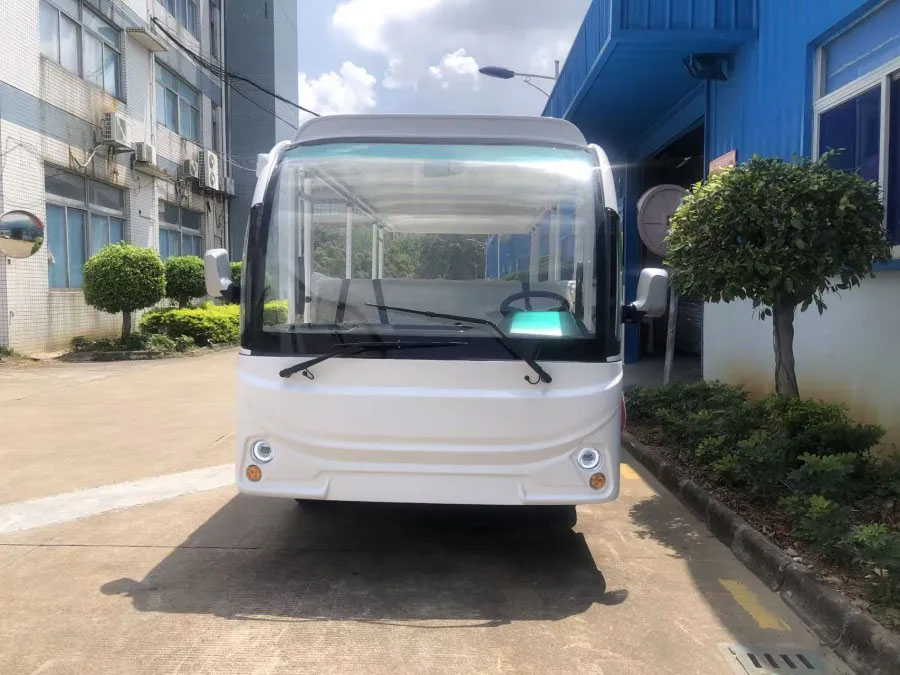
Energy recovery matters because sightseeing buses rarely run at constant speed. They slow down for corners, entrances, pedestrian zones, photo stops, and boarding points. Studies on electric buses show that regenerative braking can contribute meaningfully to overall energy savings and range extension, with reported recovery performance varying by route and vehicle design.
A useful way to think about it is this:
1. The bus accelerates and stores energy as motion.
2. The bus brakes repeatedly in real-world touring conditions.
3. A stronger electric drivetrain can convert more of that braking energy back into usable electricity.
4. More recovered energy means fewer charging interruptions and lower electricity consumption.
This is where AC systems often create a visible advantage. The better the control strategy and drivetrain integration, the more useful the braking energy becomes in daily operation.
Many buyers compare only the motor type and ignore the full vehicle ecosystem. That is a mistake, especially for OEM sightseeing bus projects where chassis layout, battery pack size, route profile, and passenger load all affect efficiency.
Key overlooked factors include:
- Route terrain, because hills increase energy demand and recovery opportunities.
- Stop frequency, because more stops can improve regeneration potential.
- Vehicle weight, because heavier buses consume more energy.
- Battery management, because poor thermal control reduces real-world performance.
- After-sales support, because downtime can erase theoretical savings.
For BorCart and similar OEM suppliers, the best drivetrain is the one that fits the customer's actual operating map, not just the brochure comparison.
The broader electric bus market continues to expand, which shows that buyers are increasingly focused on efficiency, operating cost, and cleaner transport solutions. Market studies in 2026 also indicate continued growth for electric bus adoption worldwide, supported by subsidies, fleet electrification programs, and stronger demand for lower-emission transport.
At the same time, financial studies on battery electric buses show that payback depends heavily on utilization, energy cost, and maintenance savings. In other words, buses that run more often have more opportunity to justify better drivetrain economics. That makes sightseeing fleets a strong candidate for AC-based optimization, because they often operate on dense, repetitive routes.
From a manufacturing and OEM standpoint, the decision should be framed around customer use case, not just technical preference. For low-budget, light-duty, low-frequency projects, DC may still be acceptable when short-term cost is the main driver. For serious commercial sightseeing applications, AC is usually the more future-ready choice because it supports better efficiency, better recovery, and better fleet economics.
A practical OEM recommendation looks like this:
- Choose DC when the customer wants the lowest entry cost and the bus will be used occasionally.
- Choose AC when the customer needs daily operation, lower lifetime cost, and stronger energy recovery.
- Choose route-specific engineering when the project includes hills, long shifts, or frequent passenger cycles.
That is the kind of decision logic international buyers expect from a serious manufacturer.
If your goal is the lowest initial purchase price, DC has the edge. If your goal is the best long-term energy recovery efficiency and total operating value, AC is usually the better investment.
For sightseeing bus fleets, where repeated braking and high daily utilization are common, the AC drive often becomes the more profitable choice after the first year of operation. In OEM projects, that difference can become a major selling point for brand owners, distributors, and fleet operators.
For a project-specific recommendation, compare your route length, passenger load, terrain, and charging schedule before selecting DC or AC. That single step can prevent years of avoidable operating cost.
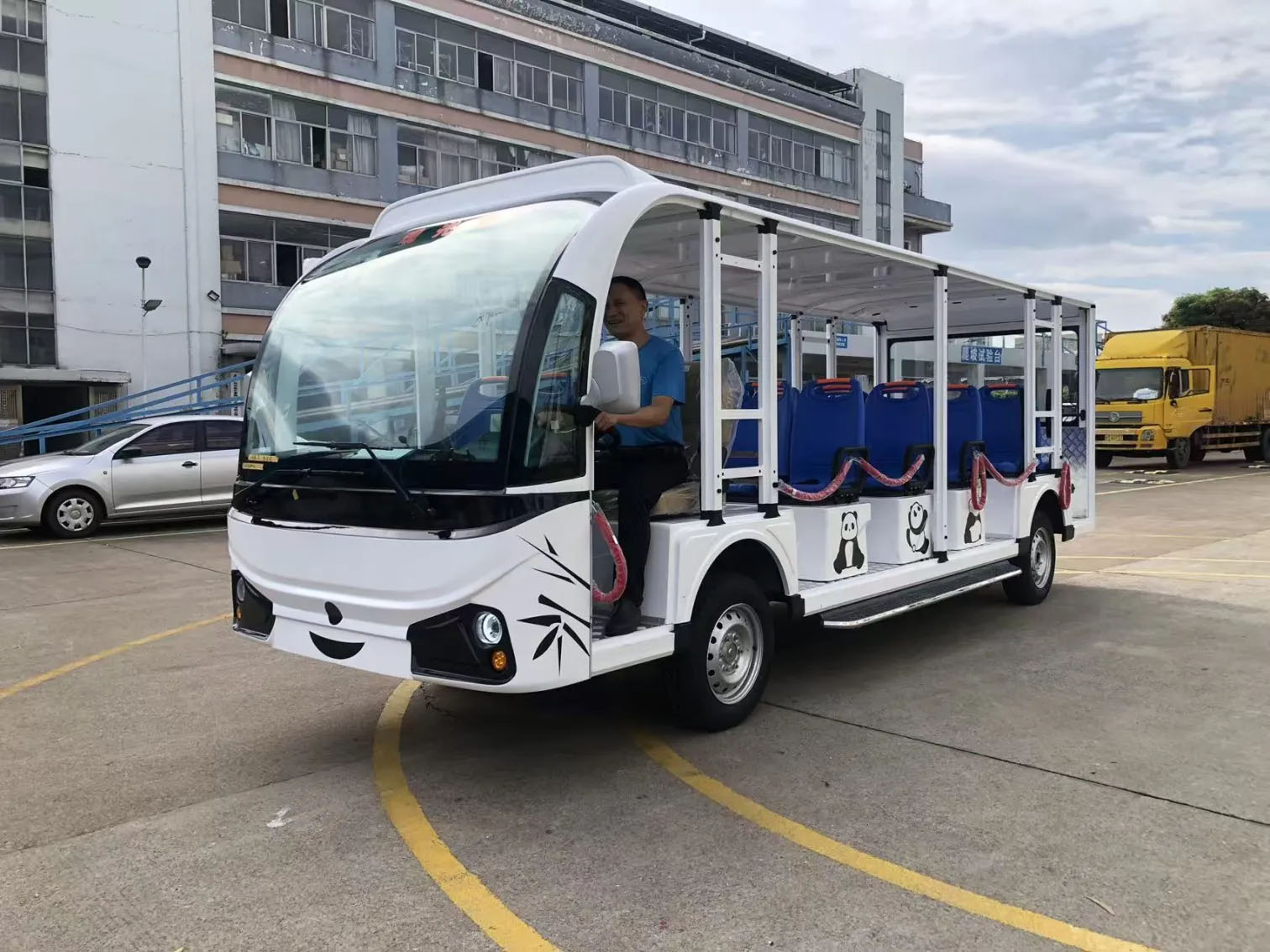
Yes, DC can work for small fleets or low-usage routes where upfront price matters more than lifecycle performance.
AC systems are generally better at variable-load operation and are often more energy efficient in real-world use.
Yes, because sightseeing buses stop and start frequently, which creates repeated opportunities to recover energy.
AC systems typically require less routine maintenance than DC systems because they avoid brush-related wear in many designs.
For most export-oriented sightseeing bus projects, AC is the stronger long-term option unless the buyer's main constraint is the lowest possible upfront cost.
Absolutely. Hills, stop frequency, vehicle weight, and duty cycle can all shift the economics of DC versus AC.
1. [An Assessment of High Performance AC Motor Drives] [epri]
2. [AC vs. DC: How To Choose the Right Drive for the Application] [gesrepair]
3. [Battery capacity and recharging needs for electric buses in city services] [teem.ornl]
4. [Financial Analysis of Battery Electric Transit Buses] [afdc.energy]
5. [Financial Analysis of Battery Electric Transit Buses] [research-hub.nlr]
6. [Analysis of Electric Bus Deployments at Transit Agencies] [static.tti.tamu]
7. [Assessment of energy efficiency of battery electric buses in operation] [sciencedirect]
8. [Regenerative Braking Control Strategy to Improve Braking Energy Recovery in Pure Electric Bus] [saemobilus.sae]
9. [Electric Bus Market Size & Share, Forecast 2035] [gminsights]
10. [Electric Bus Market Size, Share, Trends Report | 2032] [marketsandmarkets]
11. [Electric Bus Market Growth Report 2026 to 2035] [thebusinessresearchcompany]
12. [Electric Bus Market Trends, Share and Forecast, 2026-2033] [coherentmarketinsights]
13. [Inside BorCart: Smarter sightseeing buses and electric vehicles for global OEM buyers] [borcart]


