


Views: 229 Author: BorCart Publish Time: 2026-08-02 Origin: Site


Content Menu
● What The BorCart 4-Seat Cart Actually Delivers
● Why Forward-Facing Seating Is A Bigger Deal Than It Sounds
● Battery Performance: Lead-Acid vs. Lithium
● Campus and Community Use Cases
● How This Model Fits Into BorCart's Broader Lineup
● Safety, Braking, and Build Quality
● A Manufacturer's Perspective On What Sets This Category Apart
● Practical Buying Checklist Before You Choose
● OEM and ODM Support for Global Brands
The BorCart 4-Seat Golf Cart with KDS Motor is a forward-facing electric vehicle engineered by Guangzhou BorCart Electric Vehicle Co., Ltd. for families, campuses, and residential communities that need quiet, low-maintenance daily transportation without sacrificing comfort or safety.
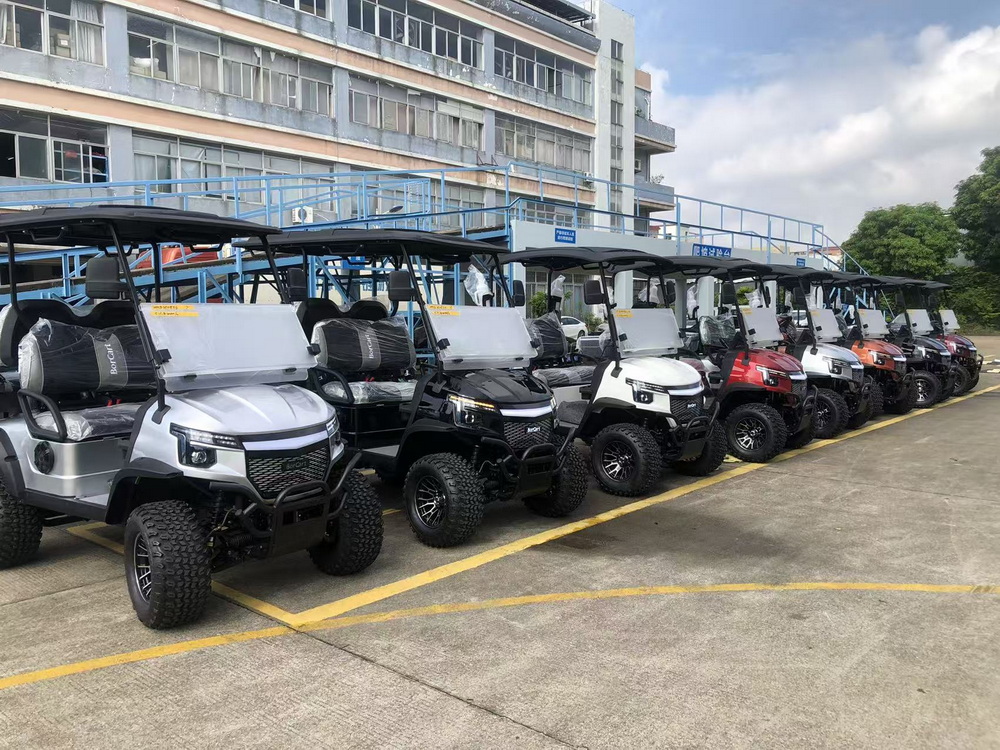
The cart pairs a 48V/72V 5kW KDS motor with a lead-acid or lithium battery option, delivering hydraulic disc braking and a compact yet spacious footprint of roughly 2950 x 1340 x 2130mm. As a direct factory rather than a trading company, BorCart controls chassis fabrication, body manufacturing, painting, and final assembly in-house, which supports consistent batch-to-batch quality for OEM buyers.
| Feature | Specification |
|---|---|
| Seating | 4 forward-facing passengers |
| Motor | 48V/72V 5kW KDS motor |
| Battery options | Lead-acid or lithium-ion |
| Charge time | 8–10 hours |
| Braking | Hydraulic disc brakes |
| Dimensions | ~2950 x 1340 x 2130mm |
| Warranty | Factory-backed, OEM-configurable |
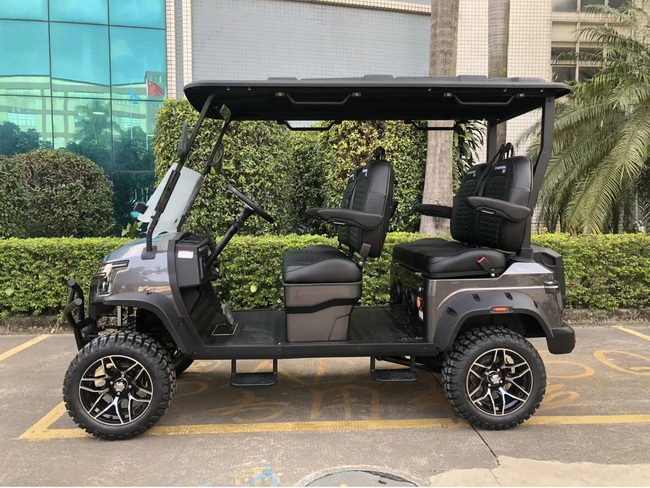
Every forward-facing seat gives passengers the same view and the same ride quality — a small design choice, but one that matters for families who are tired of arguing over who gets the "good seat".
Most entry-level golf carts still use a rear-facing bench for the third and fourth passenger, which limits visibility and can make children or older passengers uneasy on uneven terrain. BorCart's four forward-facing seats eliminate that compromise, positioning this cart as the "most popular choice for families and gated communities" within BorCart's own seating-capacity guidance.
This is one of the clearest signs the model was engineered around real household use rather than adapted from a golf-course-only design. Independent industry commentary echoes this priority, noting that family buyers consistently rank seating comfort and stability above raw speed or styling when choosing an electric cart.
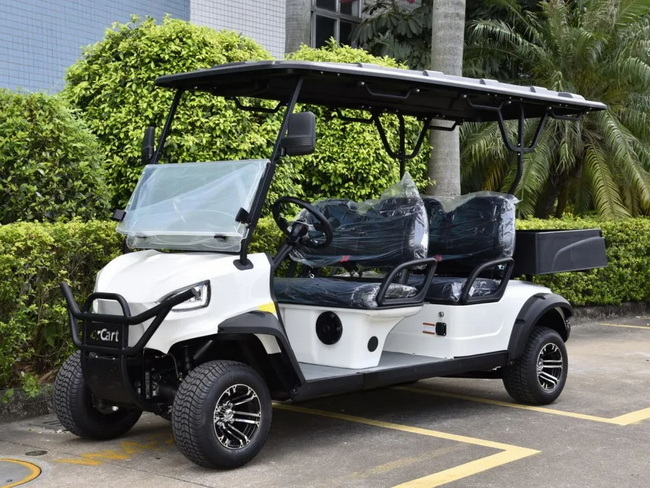
BorCart offers this 4-seat model with either lead-acid or lithium-ion battery packs, letting OEM partners match cost and performance to their target market.
| Power source | Typical charge time | Maintenance | Lifespan |
|---|---|---|---|
| Lead-acid | 8–10 hours | Higher | Standard |
| Lithium-ion | Faster charging | Very low | Up to 10 years |
Buyers researching family-focused carts are advised to treat lithium power as increasingly standard rather than a premium upgrade, since it reduces both charging downtime and long-term maintenance costs. For fleet-scale procurement, BorCart's engineering team can recommend battery configuration based on usage scenario and target market.
Universities, corporate campuses, and gated communities have become one of the fastest-growing buyer categories for electric utility carts. BorCart's broader lineup — including Electric Shuttle & Sightseeing Carts (6–8 passengers) and Patrol & Security Carts — reflects this shift toward multi-purpose institutional fleets.
Practical deployment scenarios for the 4-seat model include:
- Campus shuttle routes between dormitories, parking structures, and academic buildings
- HOA and resort event transport for weddings, tournaments, or seasonal activities
- Security and maintenance patrols benefiting from quiet, zero-emission operation
- School drop-off routes inside private, golf-cart-legal communities
BorCart's full-LED lighting and hydraulic disc brakes make the cart well suited to mixed pedestrian traffic, a factor campus facilities managers increasingly weigh alongside range and seating capacity.
A common question from OEM buyers is how the 4-seat model compares to BorCart's other series. The company organizes its 30+ models across 8 major series, so capacity and terrain capability vary significantly by use case.
| Series | Seating | Primary Use |
|---|---|---|
| Golf Carts & Club Cars | 2–4 | Golf courses, clubs |
| 4-Seat Forward-Facing (this model) | 4 | Family, community |
| Electric Shuttle & Sightseeing | 6–8 | Resorts, campuses, airports |
| Utility & Freight Carts | Varies | Warehouses, factories |
| Patrol & Security Carts | Varies | Campus/community security |
For flatter neighborhoods, resorts, and everyday family errands, the standard 4-seat layout is generally sufficient. Buyers managing hillier campuses or larger groups typically move toward BorCart's Lifted (ES/Z Series) or 6–8 seat shuttle models.
BorCart's 4-seat cart uses hydraulic disc brakes across all four wheels, paired with a full LED headlight and signal system for street-legal readiness. As a company that has served as an official vehicle supplier at the Canton Fair for 12 consecutive years and supplied the 2008 Beijing Olympic Games, BorCart's build quality has been tested under sustained, high-traffic institutional use.
| Safety Component | Function |
|---|---|
| Braking | Four-wheel hydraulic disc |
| Lighting | Full LED headlight and signal system |
| Motor | 48V/72V 5kW KDS |
| Compliance | ISO9001 certified, CE certifications available |
| Quality control | Standardized NPI process, full component traceability |
As a Chinese manufacturer producing golf carts, utility carts, and related electric vehicle components for OEM brand partners internationally, we see firsthand how buyers now evaluate these vehicles differently than they did five years ago. Range and price used to dominate purchasing decisions; today, battery chemistry, warranty structure, and after-sale parts availability carry equal weight.
Manufacturers building for the family, campus, and community segment are increasingly standardizing on lithium-capable platforms, largely because fleet buyers — HOAs, universities, and resort operators — now request this specification directly in procurement conversations rather than treating it as an optional upgrade. Brand partners sourcing OEM carts in this category should prioritize suppliers who can document in-house production control and export compliance, since these details increasingly determine whether a fleet buyer signs a purchase order.
1. Confirm passenger count needs — four seats suits most households; larger families or fleets should evaluate six- to eight-seat platforms
2. Verify battery chemistry — lithium reduces long-term maintenance versus lead-acid
3. Check certification depth — ISO9001 and CE certifications are strong benchmarks for export markets
4. Assess terrain — flat communities rarely need lifted suspension; hilly campuses often do
5. Ask about OEM/ODM support — private labeling, logo customization, and color matching affect brand positioning
BorCart works closely with golf cart distributors, brand owners, and project contractors who require customized electric vehicles for different markets, offering private label branding, market-specific configurations, and cost-optimized models for mass distribution. The company operates four production lines with capacity for up to 10 containers of golf carts per day, supporting both trial orders and large-volume OEM projects.
For families, campus administrators, or community managers who want a cart engineered around comfort, low emissions, and manageable long-term costs, this 4-seat forward-facing model represents one of the more complete packages currently available in BorCart's lineup.
If you are a brand, dealer, or fleet buyer evaluating four-seat electric carts for your own market, contact BorCart to discuss OEM production, customization, and bulk sourcing options tailored to your region's compliance and branding requirements.
1. What makes the BorCart 4-Seat Golf Cart suitable for families specifically?
Its four forward-facing seats and hydraulic disc braking make it comfortable and accessible for passengers of all ages.
2. How long does the BorCart 4-Seat Golf Cart take to charge fully?
A full charge takes approximately 8–10 hours depending on battery configuration.
3. Can this model be used for campus or institutional fleets?
Yes. Its forward-facing seating layout and full LED lighting make it well suited for shuttle routes between campus buildings, dorms, and offices.
4. What battery options does BorCart offer for this cart?
Buyers can choose between lead-acid and lithium-ion battery systems based on cost, performance, and target market.
5. Does BorCart support OEM branding for this model?
Yes. BorCart specializes in OEM and ODM manufacturing, supporting private labeling, logo customization, and color matching.
6. What certifications does BorCart maintain for export markets?
BorCart's facility is ISO9001 certified, and products carry CE certifications meeting international safety standards.
- Wholesale Golf Carts, China Golf Carts Manufacturer & Supplier — [borcart.com]
- 4 Seats Golf Carts Specifications — [alibaba.com listing]
- Guangzhou Borcart Electric Vehicle Co., Ltd company profile — [borcart.com]


