


Views: 277 Author: BorCart Publish Time: 2026-07-31 Origin: Site


Content Menu
● Why Golf Cart Weight Matters
● Typical Golf Cart Weight Ranges
● Battery Weight Changes Everything
● Weight, Range, and Performance
● How to Choose the Right Weight
● OEM Perspective for Global Buyers
● A Better Way to Think About Golf Cart Weight
● FAQ
How much does a golf cart weigh? In most cases, a golf cart weighs about 900 to 1,400 pounds, but the exact number depends on battery type, seating capacity, frame design, and added accessories. For buyers, fleet operators, and OEM brands, understanding golf cart weight is not just about transportation; it affects handling, battery range, towing, storage, and long-term durability.
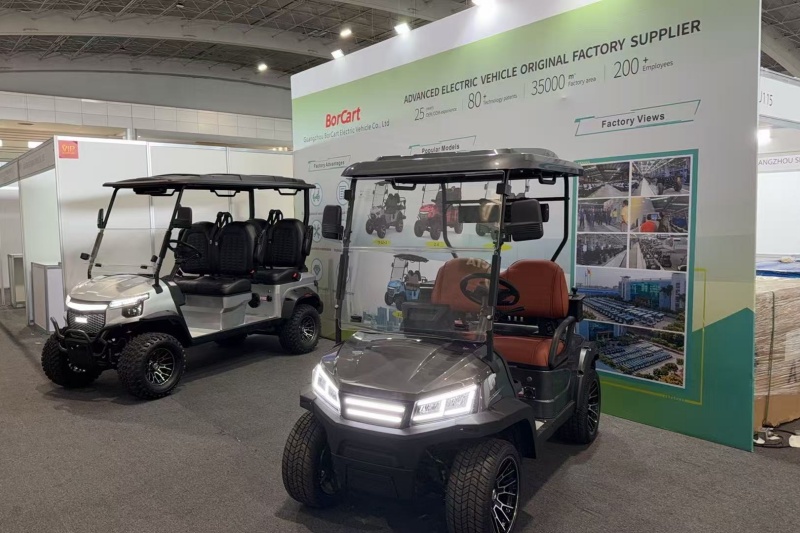
Golf cart weight has a direct impact on real-world use. A heavier cart usually needs more energy to move, which can reduce driving range and increase strain on the motor, brakes, suspension, and tires. Weight also matters when a cart is lifted, loaded with passengers, fitted with utility accessories, or transported on a trailer.
For manufacturers and distributors, weight is also a product-positioning issue. A lighter, well-balanced cart can feel more agile and efficient, while a heavier build may support higher payloads, more features, and a premium user experience.
The most useful way to think about golf cart weight is by configuration. A compact two-seat electric cart will usually sit at the lower end of the range, while four-seat, six-seat, utility, or off-road models can move much higher.
| Cart Type | Typical Weight |
|---|---|
| Basic 2-seat golf cart | 500 to 700 pounds |
| Standard electric golf cart | 900 to 1,100 pounds |
| Lithium-equipped electric cart | 900 to 1,200 pounds |
| 4-seat cart | 1,000 to 1,300 pounds |
| 6-seat or heavy-duty cart | 1,300 to 1,500+ pounds |
The exact number varies by brand and trim, but this table gives a realistic starting point for planning use, transport, and load limits.
Several components add weight to a golf cart, and the biggest difference usually comes from the battery system. Standard lead-acid battery packs are much heavier than lithium systems, which is why two carts with similar frames can feel very different on the road.
Common weight contributors include:
- Battery pack, often the heaviest single component in an electric cart.
- Chassis and body panels, which vary by material and design.
- Seats, roof, windshield, and trim, which add up quickly once the cart is upgraded.
- Motor, controller, and wiring, especially in higher-performance builds.
- Lift kits, larger tires, cargo boxes, and lighting packages, all of which raise total weight.
Battery choice is one of the most important weight decisions in an electric golf cart. Lead-acid packs commonly add several hundred pounds, while lithium packs are far lighter and usually improve acceleration, efficiency, and ease of charging.
A practical comparison looks like this:
| Battery Type | Typical Total Pack Weight | Main Effect |
|---|---|---|
| Lead-acid | 300 to 500 pounds | Lower upfront cost, but heavier |
| Lithium-ion | 150 to 300 pounds | Lighter, cleaner packaging, better efficiency |
For OEM buyers, this difference affects more than curb weight. It influences frame tuning, suspension calibration, range expectations, and the kind of user experience your market will feel on day one.

These two terms are easy to confuse, but they mean different things. Dry weight is the vehicle's weight before fluids or battery installation, while curb weight is the ready-to-drive weight with required operating components installed. For electric carts, curb weight is the more useful number because it reflects the cart customers actually receive.
When you compare models, always check whether the number refers to the bare frame or the finished vehicle. A difference of even 100 to 200 pounds can change transport planning, load capacity, and ride feel.
Heavier golf carts generally use more energy to accelerate and climb slopes. That can reduce range, slow down response, and place greater demand on the battery and drivetrain, especially when the cart carries passengers or cargo.
In practical terms, lighter carts are often better for:
- Short-distance community transport.
- Resort and campus mobility.
- Frequent stop-and-go use.
- Buyers who want longer range per charge.
Heavier carts are often better for:
- Utility work.
- Passenger transport with higher seating capacity.
- Custom builds with more equipment.
- Applications that require stronger load support.
The right golf cart weight depends on how the vehicle will be used. A resort fleet, for example, may prioritize smooth ride quality and passenger comfort, while an industrial user may want a heavier platform with more stability and carrying strength.
Use this simple selection logic:
1. Define the main use case: golf course, resort, community, warehouse, security, or off-road.
2. Decide your seating target: 2-seat, 4-seat, or 6-seat.
3. Choose battery chemistry: lead-acid for lower entry cost or lithium for lower weight and better efficiency.
4. List added equipment: roof, windshield, lights, cargo system, and lift kit.
5. Check towing and storage limits before finalizing the model.
For brands, wholesalers, and vehicle producers, golf cart weight should be treated as part of product design, not just a spec-sheet detail. The right platform can help you balance price, range, payload, and customer satisfaction in different export markets.
At BorCart, OEM development is built around application fit, platform selection, engineering support, testing, pilot builds, and scaled manufacturing. That approach helps international buyers tailor carts for golf courses, resorts, communities, campuses, industrial sites, and utility use without losing control over weight, quality, and feature balance.
Before ordering or upgrading a golf cart, keep these points in mind:
- Ask for the exact curb weight, not just a general estimate.
- Confirm battery system weight, especially if the cart will be shipped internationally.
- Review payload limits, because passengers and cargo change real-world performance.
- Consider trailer and storage limits, especially for fleet delivery or showroom logistics.
- Match the cart weight to the terrain, since hills and uneven surfaces increase the demand on the drivetrain.
Many buyers focus only on top speed or seating count, but weight is the hidden factor that shapes almost everything else. A well-designed cart is not simply the lightest one; it is the one whose weight matches the job it needs to do.
For most buyers, the best question is not "How heavy is it?" but "How does its weight affect performance, comfort, and operating cost?" That mindset leads to better purchasing decisions and fewer surprises after delivery.
A golf cart's weight typically falls between 900 and 1,400 pounds, but the real answer depends on build type, seating, battery chemistry, and accessories. If you want better range and easier handling, lighter lithium-equipped models are often the smarter choice; if you need stronger load support, a heavier platform may be the better fit.
For buyers evaluating OEM supply, weight should be considered alongside durability, payload, battery strategy, and end-market use. That is the best way to choose a golf cart platform that performs well in the field and stays competitive in your market.

1. How much does a standard golf cart weigh?
Most standard electric golf carts weigh about 900 to 1,100 pounds, while smaller basic carts can be closer to 500 to 700 pounds.
2. Are lithium golf carts lighter than lead-acid models?
Yes. Lithium battery packs are usually much lighter than lead-acid packs, which can reduce total cart weight by several hundred pounds.
3. Does golf cart weight affect battery range?
Yes. Heavier carts need more energy to move, so they often consume more power and may deliver less range under the same conditions.
4. What adds the most weight to a golf cart?
The battery pack is usually the biggest contributor in electric models, followed by the frame, seats, accessories, and custom equipment.
5. Can accessories change golf cart weight a lot?
Yes. Lift kits, larger tires, extra seating, cargo boxes, and lighting packages can add noticeable weight and alter the cart's handling.
1. [Golfcarts.com – How Much Does a Golf Cart Weigh?] [borcart]
2. [Rollick Articles – How Much Does a Golf Cart Weigh?] [gorollick]
3. [BorCart – OEM Golf Carts & EV Components Manufacturer in China] [gorollick]
4. [Taragolfcart – Golf Cart Weight Guide] [taragolfcart]
5. [ExtremeKartz – Understanding Golf Cart Battery Weight] [extremekartz]
6. [LiTime – How Much Does a Golf Cart Battery Weigh?] [litime]
7. [ExtremeKartz – Golf Cart Towing Capacity] [extremekartz]
8. [Golf Cart Resource – Golf Cart Trends for 2026] [golfcartresource]
9. [Future Market Insights – Electric Golf Cart Market] [futuremarketinsights]
10. [Market Data Forecast – North America Golf Cart Market] [marketdataforecast]


