


Views: 248 Author: BorCart Publish Time: 2026-08-06 Origin: Site


Content Menu
● Why This Decision Matters More Than Ever
● Wholesale Golf Carts: The Case for Uniformity
● Bespoke Builds: The Case for Brand Identity
● Wholesale vs Bespoke: A Side-by-Side Comparison
● The Hybrid Approach: What Experienced Fleet Buyers Actually Do
>> Step 1: Segment the Fleet by Function
>> Step 2: Customize Strategically, Not Uniformly
>> Step 3: Lock In OEM-Grade Components Regardless of Path
● An Industry Perspective: Where the Market Is Heading
● Practical Recommendations for Fleet Buyers
● Partner With a Manufacturer That Delivers Both
Choosing between wholesale golf carts and bespoke builds is not just a procurement decision—it's a strategic branding choice that shapes how a fleet operator's identity shows up on every fairway, resort path, and gated community street.
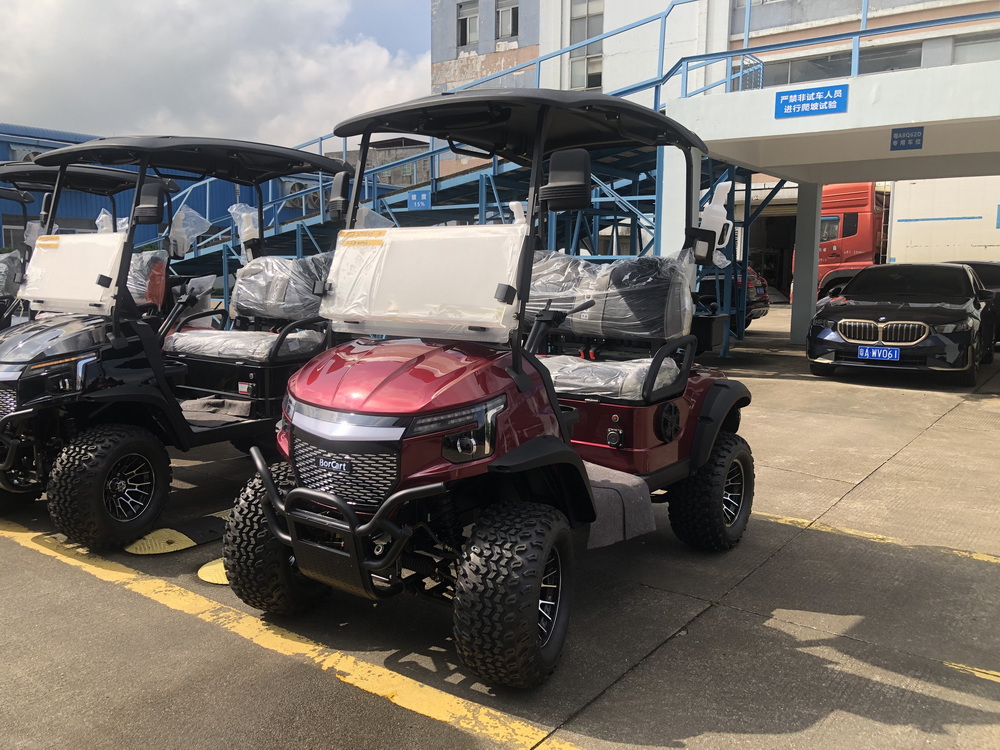
The global golf cart market is expanding fast, projected to grow from roughly USD 2.7 billion in 2026 to USD 5.1 billion by 2035. That growth is not coming solely from traditional golf courses. Resorts, campuses, airports, and residential communities are adopting carts at scale, and each of these buyers has different priorities around cost, speed, and visual identity.
As demand diversifies, fleet operators and brand owners face a genuine fork in the road: buy standardized wholesale units that minimize cost and lead time, or commission bespoke builds that reinforce a distinct visual identity. Neither path is universally correct. The right answer depends on fleet size, budget, timeline, and how much brand differentiation actually drives revenue for the buyer.
Wholesale golf carts are standardized units produced in bulk, typically built on a limited number of chassis and battery configurations to keep manufacturing efficient.
Key advantages of wholesale sourcing include:
- Lower per-unit cost due to economies of scale in production
- Shorter lead times since units are often built to stock or semi-stock specifications
- Simplified maintenance because parts and components are interchangeable across the fleet
- Predictable performance, as every cart shares the same drivetrain, battery pack, and chassis tolerances
- Easier fleet expansion later, since additional units match existing inventory
Large resorts, golf course operators, and rental fleets frequently prioritize uniformity because operational consistency reduces training time for staff and simplifies spare parts inventory. In the US golf cart manufacturing industry alone, revenue has climbed at an estimated CAGR of 1.6% to USD 1.3 billion, reflecting how established, standardized production models still dominate a large share of the market.
Bespoke, or custom, golf cart builds are engineered around a specific brand's visual language—color schemes, body kits, seating configurations, branded lighting, and even proprietary tech integrations.
Bespoke builds tend to matter most when:
- The cart itself functions as a marketing asset (luxury resorts, branded hospitality experiences)
- A gated community or developer wants carts that visually match architectural themes
- A brand is differentiating in a competitive premium segment
- The buyer needs unique dimensions, seating capacity, or accessory integration not available off-the-shelf
Industry commentary on luxury hospitality fleets confirms this trend directly: high-end hotels and premium gated communities increasingly weigh custom golf carts against wholesale models specifically to solve brand identity challenges, since a generic cart can undercut an otherwise premium guest experience. Customization and comfort features are now cited among the leading trends shaping the broader cart market through 2026.
| Factor | Wholesale Golf Carts | Bespoke Builds |
|---|---|---|
| Unit cost | Lower, due to bulk production | Higher, due to custom tooling and design |
| Lead time | Shorter, often from existing stock | Longer, requires design and prototyping cycles |
| Brand differentiation | Minimal to none | High, fully aligned with brand identity |
| Fleet consistency | Very high, uniform specs | Depends on production discipline |
| Ideal buyer | Rental fleets, golf courses, large-scale operators | Luxury resorts, developers, premium hospitality brands |
| Parts availability | Simple, standardized inventory | May require specialized or OEM-matched parts |
| Scalability | Easy to expand with matching units | Requires manufacturer coordination for consistency at scale |
In practice, the sharpest fleet operators rarely choose one extreme. They apply a hybrid sourcing strategy that blends wholesale efficiency with targeted customization.
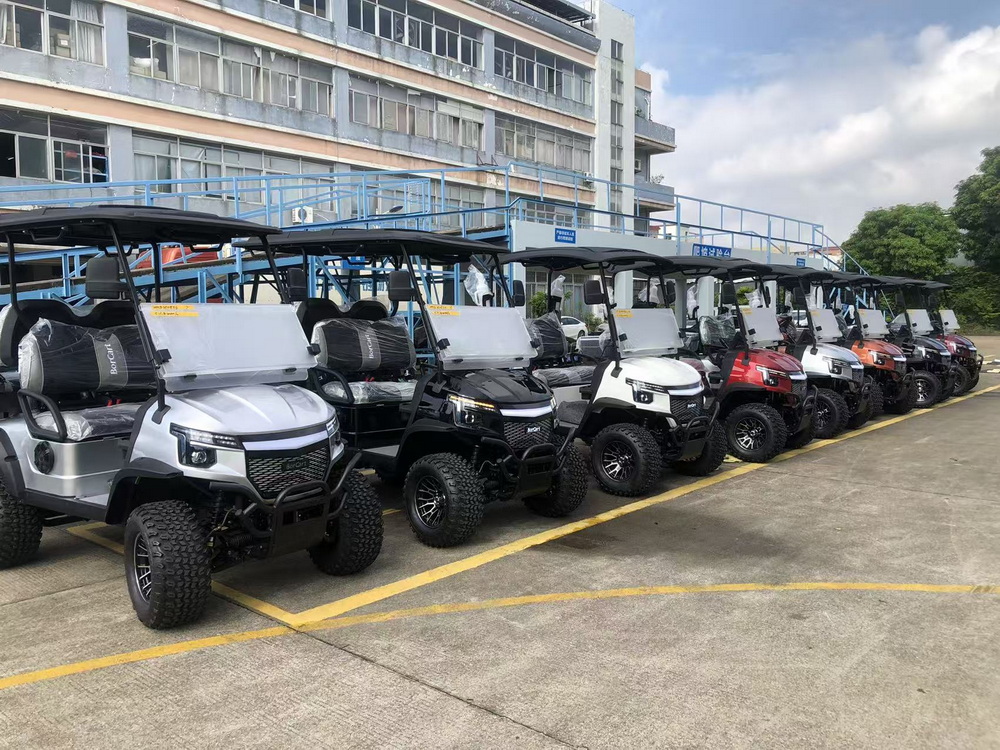
Not every cart in a fleet needs the same treatment. A resort might run standardized wholesale units for staff and utility transport while reserving bespoke, branded carts for guest-facing services.
Rather than redesigning an entire chassis, many brands apply targeted customization—body wraps, branded seating, LED accent lighting, or custom roof structures—on top of a proven wholesale platform. This captures most of the brand identity benefit at a fraction of full bespoke cost.
Whether wholesale or bespoke, buyers should insist on OEM-quality drivetrain, battery, and chassis components. Safety-critical systems like brakes and steering should never be compromised for either cost savings or aesthetic customization.
Electrification and technology integration are reshaping both wholesale and bespoke segments simultaneously. Manufacturers are increasingly offering GPS/GIS-enabled fleet management, telematics, and tailor-made luxury models as standard options, blurring the old line between "basic wholesale" and "premium custom". At the same time, some forecasts put the 2026 industry size as high as USD 3.5 billion, with growth continuing through 2035 at a compound annual rate near 7-8% depending on the segment measured.
This means the wholesale-versus-bespoke decision is no longer just about cost and appearance. It increasingly involves software integration, autonomous driving features, and solar-assisted powertrains, all of which are becoming differentiators regardless of whether a cart comes from a standardized production line or a fully custom build.
For operators managing 20+ units: Start with a wholesale base platform and layer branding elements onto it. This preserves maintenance simplicity while still achieving visual differentiation.
For premium hospitality or developer projects: Commission bespoke builds for guest-facing fleets, but standardize back-of-house and utility carts to control costs.
For any buyer, regardless of path: Vet manufacturers for OEM component sourcing, battery certification, and after-sales support before committing to a production run.
Fleet uniformity and brand identity are not mutually exclusive when the manufacturing partner has the flexibility to support both wholesale production runs and fully bespoke design work under one roof. BorCart specializes in producing golf carts and electric vehicle components for international brands, wholesalers, and OEM partners, offering both standardized wholesale platforms and custom-engineered builds tailored to a client's visual identity. Reach out to BorCart's team to discuss fleet requirements, request a customization consultation, or receive a wholesale quote for your next fleet expansion.
Q1: Is it cheaper to buy wholesale golf carts or commission a bespoke build?
Wholesale golf carts are almost always cheaper per unit because production costs are spread across a larger batch. Bespoke builds carry higher costs due to custom tooling, design work, and lower production volumes.
Q2: Can wholesale golf carts still be branded?
Yes. Many operators apply branded wraps, seating, and lighting to standardized wholesale platforms, achieving meaningful brand presence without full bespoke tooling costs.
Q3: How long does a bespoke golf cart build typically take compared to wholesale?
Bespoke builds generally require longer lead times due to design, prototyping, and approval cycles, while wholesale units can often ship from existing production runs much faster.
Q4: What should buyers prioritize when comparing OEM golf cart manufacturers?
Buyers should evaluate component quality, battery certification, after-sales parts availability, and the manufacturer's ability to support both standardized and custom production lines.
Q5: Are hybrid fleets combining wholesale and bespoke carts common?
Yes, this is increasingly standard practice, particularly among resorts and large developments that use bespoke carts for guest-facing roles and wholesale units for utility functions.
Q6: Is customization becoming more important in the golf cart industry overall?
Industry trend data confirms rising customization and comfort features as a leading growth driver in the golf cart market through 2026, alongside electrification and smart monitoring integration.
- Golf Cart Market Share, Growth & Size, Industry Trends — https://www.polarismarketresearch.com/industry-analysis/golf-cart-market [fortunebusinessinsights]
- Golf Cart Market Size & Share, Growth Report 2035 — https://www.novaoneadvisor.com/report/golf-cart-market [researchnester]
- Understanding Aftermarket and OEM Golf Cart Parts — https://www.golfcartresource.com/aftermarket-oem-golf-cart-parts [extremekartz]
- Custom Golf Carts vs Wholesale Models: Solving Brand Identity Challenges for Luxury Hotels and Premium Gated Communities, Borcart — https://www.borcart.com/blog/custom-vs-wholesale-golf-carts [borcart]
- Best Golf Cart Brands 2026 Buyer's Guide — https://www.golfcartreport.com/best-golf-cart-brands [golfcartsandtrailers]
- Golf Cart Market Trends, Growth, Outlook Report 2026 — https://www.thebusinessresearchcompany.com/report/golf-cart-global-market-report [thebusinessresearchcompany]
- Golf Cart Manufacturing in the US Industry Analysis, 2026 — https://www.ibisworld.com/united-states/industry/golf-cart-manufacturing/ [ibisworld]
- Golf Cart Market Size, Share & Growth Report, 2035 — https://www.gminsights.com/industry-analysis/golf-cart-market [gminsights]
- How to Build an Electric Golf Cart? — https://www.evbuilderguide.com/build-electric-golf-cart [borcart]


