


Views: 208 Author: BorCart Publish Time: 2026-07-17 Origin: Site


Content Menu
● What Is a Neighborhood Cruiser Golf Cart?
● Street-Legal Basics: Why LSV Compliance Matters
● Core Legal Requirements: The Non-Negotiables
● Performance Upgrades: Matching Speed, Range, and Terrain
● Essential Safety & Street-Legal Upgrade Kit
● Comfort Upgrades: Turning Utility Into Everyday Enjoyment
● Style, Branding, and Personalization
● Inspection, Certification, and Owner Training
● Real-World Use Cases: How Communities Use Neighborhood Cruisers
● OEM Insights: Choosing the Right Manufacturer Partner
● Practical Step-by-Step Checklist for Owners
● Maintenance and Long-Term Ownership Considerations
● Call to Action: Partner With BorCart for OEM Neighborhood Cruisers
● Frequently Asked Questions (FAQ)
Transforming a standard golf cart into a safe, comfortable, and stylish neighborhood cruiser is one of the most cost-effective ways for families and communities to enjoy short-distance mobility on low-speed roads. As a China-based OEM manufacturer specializing in golf carts and electric vehicles, BorCart has helped overseas brands, wholesalers, and fleet operators upgrade thousands of carts into street-ready community vehicles that meet modern regulatory and user-experience expectations. [linkedin]
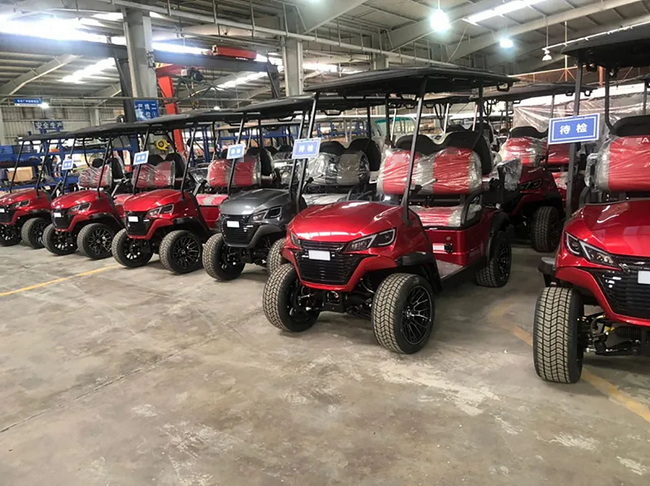
A neighborhood cruiser golf cart is a golf cart or low-speed electric vehicle (LSEV) purpose-built for everyday local use—errands, school runs, beach trips, and community events—on roads with limited speed. Instead of staying confined to the course, these vehicles are optimized for street legality, safety, comfort, and personalization, turning them into an accessible alternative to traditional cars for short trips. [wickedlyawesome]
For foreign brands and distributors, neighborhood cruisers also represent a fast-growing segment in residential communities, resorts, and gated neighborhoods that want quiet, eco-friendly local transport without the cost of full-size EVs. [wickedlyawesome]
Before adding accessories, every upgrade project must begin with street-legal compliance, typically by converting a golf cart into a Low-Speed Vehicle (LSV) under local regulations. While specific rules vary by state, municipality, and HOA, most jurisdictions follow a similar structure around speed, safety equipment, and registration. [linkedin]
Key compliance pillars usually include:
- Speed range: Minimum 20 mph and maximum 25 mph for LSV classification, sometimes enforced with a controller setting or speed governor. [linkedin]
- Road type: Operation is generally limited to roads with posted speed limits of 25–35 mph and not on highways. [linkedin]
- Registration & insurance: LSVs typically require a VIN, title, registration, and at least liability insurance to operate on public roads. [linkedin]
From BorCart's OEM experience, international clients often underestimate how local regulations shape product configuration, so aligning your technical spec sheet with target market legal requirements is critical before any large-volume order. [waypostmarketing]
To move confidently from the golf course to public streets, your cart must include a defined set of safety and signaling components that regulators and inspectors will look for. As an OEM supplier, we often integrate these directly at the factory level to help brands avoid costly aftermarket retrofits. [wickedlyawesome]
Common LSV equipment requirements include: [linkedin]
- Lighting system:
- Headlights with high/low beam
- Taillights and brake lights
- Front and rear turn signals
- Red reflectors on both sides and rear
- Mirrors and visibility:
- Driver-side exterior mirror
- Passenger-side exterior mirror or interior rearview mirror
- Safety hardware:
- Seat belts for every seating position
- DOT-approved windshield (often safety glass), sometimes with wiper
- Parking brake with secure holding force
- Audible horn with regulated minimum sound level
- Acoustic "growler" system:
- Many modern silent electric carts must include a pedestrian alert system to comply with urban safety rules. [linkedin]
- DOT-approved tires and VIN:
- Tires must carry a DOT marking, and LSVs generally require a 17-digit VIN for registration and title issuance. [linkedin]
Because these requirements can vary, your first real "upgrade" step is due diligence: contacting your local DMV, city hall, or HOA to confirm the exact legal checklist before you invest in parts or place an OEM purchase order. [linkedin]
Once legal equipment is mapped out, the next layer is performance tuning so your neighborhood cruiser feels confident in real-world traffic. Different use cases—flat coastal communities, hilly suburban streets, or resort operations—call for tailored motor, controller, and battery configurations. [wickedlyawesome]
Common performance considerations include: [linkedin]
- Speed controller and motor: Ensuring carts reach and maintain the 20–25 mph window without sacrificing reliability or battery life.
- Torque vs. speed: For hilly neighborhoods or heavier loads (rear seat plus cargo), extra torque may be more important than peak speed.
- Battery capacity: Upgrading to larger lithium packs or high-quality lead-acid sets allows multiple daily trips without range anxiety.
At BorCart, we typically co-develop performance packages with overseas brands, selecting controller curves, motor power, and battery chemistry based on target terrain and use cases, rather than applying a one‑size‑fits‑all spec. [waypostmarketing]
If you already own a golf cart, you can retrofit most components through a street-legal upgrade kit or individual parts sourced from a reputable manufacturer or dealer. For B2B buyers, these kits can be integrated into OEM orders and pre-installed at the factory level to simplify assembly and certification. [waypostmarketing]
Core items usually include: [linkedin]
- LED lighting kit: Headlights, taillights, brake lights, turn signals, and reflectors for high visibility and low power draw.
- Mirror set: Wide-view rearview mirror plus durable side mirrors to reduce blind spots.
- Seat belts: Lap belts or 3‑point retractable belts on all seating positions, including rear flip seats.
- Windshield & wiper: Clear, impact-resistant windshield with optional electric wiper to meet local safety codes.
- Horn kit: A loud, reliable horn for pedestrian and traffic awareness.
- Speed management: Controller tuning, motor upgrade, or speed governor depending on whether your cart is too slow or too fast against the legal window. [linkedin]
For large fleets, standardizing on a single kit architecture also simplifies maintenance, spare parts stocking, and training for service technicians. [waypostmarketing]
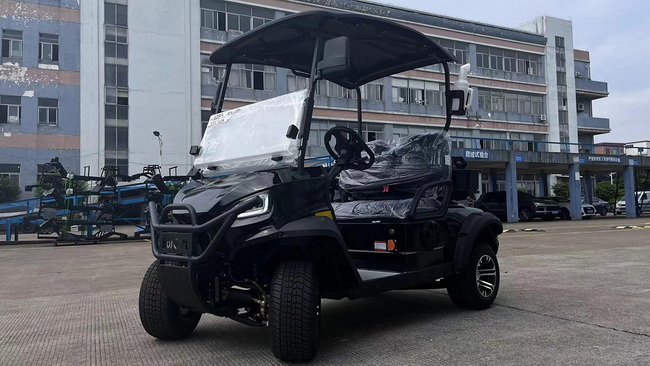
Legal compliance gets your cart onto the road—but comfort and convenience determine whether people actually love using it every day. Communities that adopt neighborhood cruisers for family and leisure use consistently prioritize seating, storage, weather protection, and entertainment. [wickedlyawesome]
Popular comfort upgrades include: [linkedin]
- Premium seating: Contoured seats with marine-grade vinyl, two-tone or diamond stitching for long rides and improved aesthetics.
- Rear flip seats: Flexible seating that converts into a cargo bed for groceries, sports gear, or beach equipment.
- Extended roof: Larger canopies to protect all passengers from sun and rain.
- Bluetooth audio systems: Integrated sound bars or marine speakers for music and navigation prompts.
- USB charging ports: Essential for charging phones for maps, emergency calls, or family entertainment. [linkedin]
As an OEM producer, BorCart often embeds these comfort elements as factory options, allowing foreign brands to offer tiered trim levels—from basic utility spec to premium lifestyle versions—under their own label. [waypostmarketing]
A major reason neighborhood cruisers are booming is that they're fun to personalize, both for individual owners and for brands that want distinctive fleets. Personalization is where a standard cart becomes a statement piece that reflects identity, lifestyle, or corporate branding. [wickedlyawesome]
Common style and personalization ideas include: [linkedin]
- Custom paint or vinyl wraps: Solid colors, matte finishes, or full graphic wraps for sports teams, resort logos, or brand campaigns.
- LED accent lighting: Underbody glow, interior cabin lighting, or branded illuminated logos for evening use.
- Custom steering wheels and trim: More ergonomic wheels, color-matched dashboards, and upgraded pedals for a sportier feel.
- Fender flares and wheel packages: Wider stance, 10–12 inch wheels, and street-specific tires for a more substantial, automotive look. [linkedin]
BorCart frequently works with overseas clients to develop OEM customization packages, enabling private-label brands to offer unique aesthetic configurations that match their market positioning—family-friendly, luxury resort, or urban lifestyle. [waypostmarketing]
After hardware and performance upgrades, your cart must pass inspection and certification processes before it's officially recognized as an LSV or similar category in your jurisdiction. This step is where documentation, labeling, and build quality directly affect approval. [wickedlyawesome]
Typical final steps include: [linkedin]
1. Regulatory inspection: Local authorities or approved inspection stations verify lights, mirrors, seat belts, VIN, tires, and other required elements.
2. Labeling & documentation: Clear VIN plates, weight ratings, and user manuals showing speed and load limits support smoother approvals.
3. Driver orientation: Every driver must understand new controls, braking behavior, acceleration curves, and local traffic rules, especially if they're transitioning from golf-course driving. [linkedin]
From a manufacturer's viewpoint, the most successful fleets always combine technical compliance with basic driver training, reducing accidents, warranty claims, and compliance issues over the vehicle's lifecycle. [waypostmarketing]
Industry data and case studies show that neighborhood cruisers perform best in low-speed, community-centric environments where short trips are frequent and parking is limited. Typical use cases include: [wickedlyawesome]
- Residential communities and HOAs: Families use carts for playground visits, dog walking, or quick grocery runs.
- Resorts and hotels: Guests move between rooms, pools, and restaurants with branded, comfortable cruisers.
- Campus and industrial sites: Staff and visitors travel inside large facilities without full-size vehicles. [waypostmarketing]
As an OEM partner, BorCart supports these scenarios with tailored accessory bundles—for example, adding lockable storage for resort housekeeping, or reinforced cargo platforms for maintenance teams operating within industrial plants. [waypostmarketing]
For overseas brands, wholesalers, and producers, the success of a neighborhood cruiser product line depends heavily on choosing the right OEM manufacturing partner. Beyond price, you need a supplier who understands legal compliance, end-user expectations, and after-sales realities in your target markets. [wickedlyawesome]
Key factors to evaluate in an OEM partner include: [waypostmarketing]
- Regulatory knowledge: Ability to design carts and kits that align with US, EU, or specific regional LSV standards.
- Component reliability: Proven performance of motors, controllers, batteries, and safety systems under daily use.
- Customization capacity: Willingness and capability to support branded colors, logos, seating layouts, and feature packages.
- After-sales support: Clear documentation, spare parts programs, and technical assistance for dealers and fleet operators.
BorCart focuses on long-term B2B cooperation, offering OEM services for golf carts, electric vehicles, and automotive parts with a strong emphasis on manufacturing consistency and cross-border logistics, helping clients launch or scale neighborhood cruiser programs quickly and safely. [waypostmarketing]
If you're an individual owner or a small fleet manager, here is a simple, actionable checklist to guide the transformation from standard golf cart to neighborhood cruiser: [linkedin]
1. Confirm local regulations
- Contact DMV, municipality, or HOA for LSV/NEV requirements.
2. Assess current cart condition
- Check brakes, steering, frame integrity, and electrical systems.
3. Plan your legal upgrade kit
- Lights, mirrors, seat belts, horn, windshield, tires, and VIN (if applicable).
4. Decide performance upgrades
- Controller tuning, motor choice, and battery capacity for your terrain and trip distance.
5. Add comfort and lifestyle features
- Seating, roof extension, sound system, charging ports, and storage.
6. Select style and branding elements
- Paint, wrap, lighting, wheels, and interior trim.
7. Complete inspection and registration
- Book inspection, finalize paperwork, and obtain plates or stickers.
8. Train all drivers
- Review handling, speed limits, safety rules, and maintenance basics. [linkedin]
This process keeps the transformation structured and compliant, ensuring you don't overlook critical safety or legal details while focusing on personalization and comfort.
A neighborhood cruiser stays enjoyable only if it's maintained like a road vehicle, not just a seasonal golf accessory. From an OEM and fleet-management perspective, proactive maintenance dramatically extends vehicle life, protects batteries, and keeps safety systems reliable. [waypostmarketing]
Key maintenance practices include: [linkedin]
- Regular inspections of tire wear, brake performance, lighting functionality, and steering.
- Battery care (for electric carts), including proper charging habits, avoiding deep discharge, and periodic capacity checks.
- Scheduled servicing based on mileage or operating hours, documenting service history for resale or fleet reporting. [linkedin]
BorCart recommends that distributors and fleet operators set up simple maintenance schedules and provide basic guides to end users, reducing downtime and preserving the value of the neighborhood cruiser investment. [waypostmarketing]
If you're a foreign brand owner, wholesaler, or producer looking to capitalize on the growing demand for neighborhood cruiser golf carts and low-speed EVs, partnering with an experienced OEM manufacturer can significantly reduce launch risk and time-to-market. [wickedlyawesome]
BorCart offers:
- OEM and private-label manufacturing for golf carts and electric vehicles.
- Customizable street-legal upgrade packages aligned with target market regulations.
- Comfort and style options tailored to your audience—family, resort, industrial, or campus.
By working with BorCart, you can build a neighborhood cruiser portfolio that combines compliance, reliability, and lifestyle appeal, ready to ship under your brand to global markets. [waypostmarketing]
Q1: Can any golf cart be turned into a street-legal neighborhood cruiser?
Most modern golf carts can be upgraded, but frame condition, braking capability, and electrical systems must be suitable for 20–25 mph operation and full safety equipment. [linkedin]
Q2: Do I need a driver's license to operate an LSV?
In most regions, a valid driver's license is required to drive an LSV on public roads, even if the vehicle is smaller and slower than a traditional car. [linkedin]
Q3: How far can a neighborhood cruiser travel on one charge?
Range depends on battery capacity, load, terrain, and driving style, but many well-configured carts offer multiple short trips per day within residential areas on a single charge. [wickedlyawesome]
Q4: What's the most important upgrade for safety?
Proper braking performance, seat belts for all passengers, compliant lighting, and mirrors are the foundational safety elements for neighborhood use. [linkedin]
Q5: How can overseas brands offer customized neighborhood cruisers without managing manufacturing themselves?
By partnering with an OEM like BorCart, overseas brands can define specs, trims, and branding while outsourcing production, testing, and logistics to a specialist manufacturer. [waypostmarketing]
1. TIGON Golf Carts. "How to Turn Your Golf Cart Into a Neighborhood Cruiser." https://tigongolfcarts.com/how-to-turn-your-golf-cart-into-a-neighborhood-cruiser/
2. Wickedly Awesome. "Why SEO is Critical for Golf Cart Dealerships: Embracing Modern Strategies to Drive Traffic and Sales." https://wickedlyawesome.com/blogs/golf-cart-news/why-seo-is-critical-for-golf-cart-dealerships-embracing-modern-strategies-to-drive-traffic-and-sales
3. Waypost Marketing. "Garrett's Golf Cars Case Study." https://www.waypostmarketing.com/our-work/garretts-golf-cars-case-study/
4. Search Engine Land. "How to Write for SEO in 2025." https://searchengineland.com/guide/how-to-write-for-seo
5. Visualmodo. "SEO for Technical Content: How to Write Technical Articles." https://visualmodo.com/seo-for-technical-content/


