


Views: 241 Author: BorCart Publish Time: 2026-09-06 Origin: Site


Content Menu
● What Does "Made in the USA" Mean for Golf Carts?
● Leading Golf Cart Brands With U.S. Manufacturing Operations
>> Club Car: A Longstanding Name in Golf and Utility Vehicles
>> E-Z-GO: Strong Heritage in Augusta Manufacturing
>> Yamaha Golf-Car: U.S. Production in Newnan, Georgia
● Golf Cart, Low-Speed Vehicle, and Street-Legal Vehicle: Know the Difference
>> Common Equipment for LSV Configurations
● How to Choose the Right American-Built Golf Cart
>> 1. Define the Main Application
>> 2. Compare Battery Technologies
>> 3. Evaluate the Chassis, Suspension, and Brakes
● What Distributors Should Ask an OEM Golf Cart Manufacturer
>> Product Development Capability
>> Spare Parts and After-Sales Planning
● A Smarter Way to Compare Golf Cart Suppliers
● Why OEM Electric Golf Carts Matter for Modern Brands
● FAQ
>> 1. Which golf cart brands are made in the USA?
>> 2. Is a golf cart the same as a low-speed vehicle?
>> 3. Can I make a regular golf cart street legal by adding lights?
>> 4. Are lithium golf cart batteries worth the extra cost?
>> 5. What should a golf cart distributor request from an OEM factory?
>> 6. What is the most important factor when choosing a golf cart for a resort?
>> 7. How can a new brand reduce warranty risk when importing electric golf carts?
When buyers search for golf carts made in the USA, they are often looking for more than a country-of-origin label. They want dependable build quality, accessible service support, stable parts supply, and a vehicle configuration that suits golf courses, resorts, gated communities, campuses, commercial facilities, or neighborhood transportation.
However, "Made in the USA" can mean different things. A golf cart may be engineered, assembled, tested, or supported in the United States while its batteries, motors, controllers, tires, electronics, and other components come from global supply chains. For fleet managers, distributors, private-label brands, and vehicle buyers, the smarter question is not simply *where was the cart made?* It is whether the manufacturer can deliver the right balance of durability, compliance capability, configuration flexibility, serviceability, and total ownership value.
This guide explains the leading American-built golf cart brands, how to compare them, and what buyers should ask before placing an order. It also provides practical guidance for companies looking to develop branded electric golf carts through an experienced OEM manufacturing partner.

The phrase American-made golf cart is widely used, but it should be evaluated carefully. In this industry, manufacturing can include several different activities:
- Vehicle engineering and product development
- Chassis fabrication and welding
- Final vehicle assembly
- Battery pack integration
- Quality inspection and road testing
- Vehicle customization
- Parts warehousing and after-sales support
A brand may operate a U.S. production or assembly facility while sourcing components internationally. This is common across the automotive and electric-vehicle industries. A buyer should therefore ask for a clear explanation of the vehicle's manufacturing process rather than relying on a broad marketing claim.
For example, Club Car has long maintained operations in Augusta, Georgia, while E-Z-GO also produces vehicles in Augusta. Yamaha Golf-Car vehicles are assembled and produced at Yamaha's Newnan, Georgia facility. These long-established production footprints have helped make Georgia a major hub for golf car manufacturing in the United States.
The following brands are among the best-known names associated with U.S. golf car production, assembly, engineering, or market support. Product availability, configuration, component origin, and production practices can change by model and year, so commercial buyers should always verify details directly before procurement.
| Brand | Known U.S. Presence | Typical Product Focus | Best Fit for |
|---|---|---|---|
| Club Car | Augusta, Georgia | Golf fleet, personal transport, utility vehicles, LSVs | Courses, communities, commercial fleets |
| E-Z-GO | Augusta, Georgia | Golf cars, personal vehicles, utility vehicles | Golf operations, resorts, personal users |
| Yamaha Golf-Car | Newnan, Georgia | Golf cars and utility vehicles | Golf fleets, utility applications, dealers |
| GEM | U.S. low-speed vehicle market | Street-oriented electric vehicles | Campus, resort, neighborhood mobility |
| Cushman | U.S. commercial vehicle market | Industrial and utility vehicles | Facilities, maintenance, hospitality |
| Tomberlin | U.S. LSV market presence | Street-oriented personal EVs | Neighborhood and lifestyle users |
| Garia | Premium personal electric vehicles | Luxury golf and personal vehicles | Resorts, premium communities |
| Star EV | U.S. distribution and retail market | Personal transport and LSV-style vehicles | Dealers and recreational buyers |
| Evolution | U.S. dealer market | Personal electric vehicles | Lifestyle and community use |
| ICON | U.S. retail and dealer market | LSV-style golf carts | Personal transport and dealer sales |
Club Car is one of the most recognized names in the golf car industry. Founded in Augusta, Georgia, the company has expanded from golf fleet vehicles into personal transportation, commercial utility vehicles, and low-speed transportation solutions. Its product ecosystem includes the Onward personal vehicle range and Carryall utility vehicle range, alongside traditional golf fleet models.
For fleet buyers, Club Car is often considered because of its established dealer network, long operating history, and broad range of applications. A golf course may prioritize fleet reliability and daily charging efficiency, while a resort may prefer passenger comfort, appearance, and accessories. Club Car's portfolio addresses several of these use cases.
What commercial buyers should evaluate:
- Fleet management options
- Battery type and charging infrastructure
- Parts availability in the destination market
- Passenger capacity and payload requirements
- Service intervals and warranty structure
- Branding, body color, seating, and accessory options
Club Car has also announced expansion activity in Georgia, including a planned 105,000-square-foot facility in Appling, near an existing facility.
E-Z-GO was founded in 1954 and has developed into a major golf cart manufacturer with global distribution. The company states that its vehicles are designed and manufactured by Textron Specialized Vehicles, with headquarters and production activity in Augusta, Georgia.
E-Z-GO is well known across golf courses, residential communities, recreational properties, and commercial environments. Its reputation is closely connected to practical golf fleet operation, although its product offering extends into personal and utility transportation.
From an operator's perspective, E-Z-GO's appeal often comes down to three priorities:
- Familiarity among golf facilities and maintenance teams
- A broad dealer and service ecosystem
- Vehicle options designed for both course and off-course use
For a buyer managing dozens or hundreds of units, the key issue is not only purchase price. It is how quickly a damaged part can be replaced, how consistent vehicle performance remains during peak use, and whether the fleet can be maintained without excessive downtime.
Yamaha has a long presence in the golf car market and operates manufacturing activity in Newnan, Georgia. Yamaha Golf-Car Company states that assembly and production of all its cars take place at its Newnan production facility, while the company is headquartered in Kennesaw, Georgia.
Yamaha's golf car range is frequently considered by buyers who value established engineering, dealer support, and operational consistency. The company's background in powersports and vehicle manufacturing also gives it strong recognition among users familiar with Yamaha motorcycles, ATVs, and marine products.
For a golf club or resort, a Yamaha fleet can be evaluated through practical operating criteria:
- Hill-climbing performance under passenger load
- Battery runtime over a full operating day
- Brake feel and parking performance
- Steering durability on uneven paths
- Seat comfort and weather resistance
- Availability of fleet-specific accessories
The best choice depends on the operating environment. A flat private community has different needs from a hilly golf course, a large resort, or an industrial facility with heavy utility use.
One of the most important buying decisions is determining whether the vehicle is a conventional golf cart or a low-speed vehicle, commonly called an LSV.
A standard golf cart is generally intended for golf courses, private property, resorts, campuses, and other controlled environments. It may not be designed or certified for public-road operation.
In the United States, a low-speed vehicle is defined as a four-wheeled motor vehicle that can travel above 20 mph but no more than 25 mph on a paved level surface, with a gross vehicle weight rating below 3,000 pounds. Conventional golf carts with a maximum capability of 20 mph or less are generally treated differently from LSVs under federal vehicle rules.
An LSV-oriented vehicle typically requires safety equipment such as:
- Headlamps
- Turn signals
- Tail lamps and stop lamps
- Reflectors
- Exterior and/or interior mirrors
- Windshield
- Parking brake
- Seat belts
- Vehicle identification documentation
Road-access rules vary significantly by state, county, and city. Even if a vehicle is equipped as an LSV, buyers should confirm local registration, insurance, roadway, speed-limit, and licensing requirements before operating it on public roads.
Practical advice: Do not assume that adding lights to a standard golf cart automatically makes it street legal. Road-use eligibility depends on the complete vehicle specification, applicable regulations, documentation, and local rules.
A high-quality cart is not necessarily the most expensive one. It is the vehicle that matches your operating conditions and can be supported throughout its working life.
Start by identifying how the vehicle will be used.
| Application | Priority Features |
|---|---|
| Golf course fleet | Turf-friendly tires, fleet charging, bag capacity, reliability |
| Resort or hotel | Quiet operation, comfort, appearance, passenger capacity |
| Gated community | Range, weather protection, storage, lighting, personal style |
| Campus transport | Multi-passenger seating, safety features, easy maintenance |
| Industrial facility | Cargo bed, payload, towing capability, durable chassis |
| Dealership retail | Attractive design, options, warranty, parts support |
| Street-oriented use | LSV equipment, documentation, local-rule compatibility |
A golf fleet cart should be optimized for repeated daily cycles and operational uptime. A neighborhood vehicle may prioritize rear seating, premium upholstery, roof design, Bluetooth audio, wheel styling, and weather protection. A utility cart needs a more durable rear cargo system, practical suspension, and dependable braking under load.
Battery choice has a major impact on performance, maintenance, operating cost, and customer satisfaction.
Lead-acid batteries remain common in older and budget-focused cart configurations. They can offer lower initial cost, but they typically require routine water maintenance, careful charging practices, and eventual replacement.
Advantages:
- Lower upfront cost
- Familiar service procedures
- Broad availability in many markets
Considerations:
- Higher maintenance needs
- Heavier vehicle weight
- Greater sensitivity to improper charging
- Shorter useful cycle life compared with many lithium systems
Lithium battery systems are increasingly preferred for personal, commercial, and premium electric golf carts. They can reduce vehicle weight, improve charging convenience, and lower routine maintenance requirements. However, performance depends on cell quality, battery management system design, charger compatibility, thermal protection, and supplier reliability.
Advantages:
- Lower maintenance requirements
- Reduced weight
- Stronger voltage consistency during discharge
- Potentially longer service life
- Faster charging capability in some systems
Considerations:
- Higher initial investment
- Need for compatible charger and battery management system
- Importance of warranty clarity
- End-of-life collection and recycling planning
Battery recycling is becoming an increasingly important part of electric-vehicle supply-chain planning. The U.S. Department of Energy has funded projects intended to improve battery collection, recycling economics, and recovery of valuable materials from electric-drive batteries.
Many buyers focus first on body color, wheels, seating, and entertainment features. These details matter, but the chassis and running gear matter more over time.
Ask the supplier about:
- Chassis material and corrosion protection
- Frame welding process
- Front suspension design
- Rear axle configuration
- Brake type and parking-brake design
- Steering system
- Tire specification
- Maximum payload
- Climbing capability
- Water-resistance approach for electrical components
For coastal resorts, rainy climates, and humid regions, corrosion protection is especially important. For commercial fleets, reinforced suspension, strong brake performance, and accessible maintenance points are often more valuable than decorative upgrades.
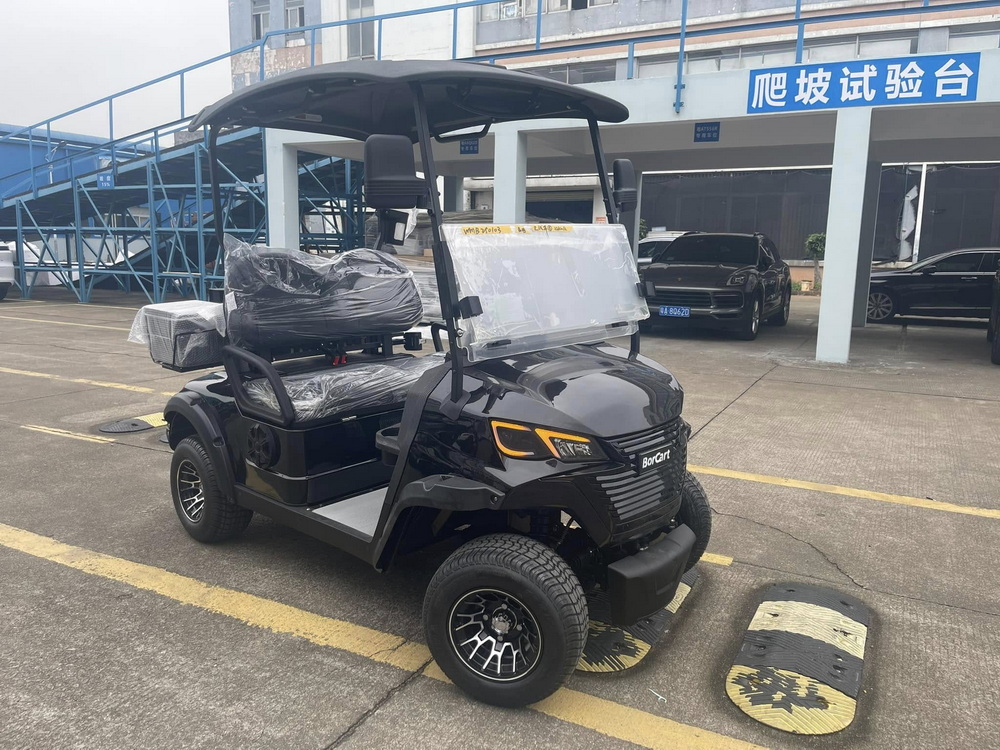
For distributors and private-label brands, choosing an OEM partner is a strategic decision. The supplier is not only producing vehicles; it is influencing your customer experience, warranty costs, market reputation, delivery reliability, and long-term growth.
A capable OEM manufacturer should be evaluated beyond the catalog.
Ask whether the manufacturer can support:
- Custom body colors and decals
- Private-label badging
- Seat color and material options
- Dashboard and steering-wheel updates
- Wheel and tire customization
- Roof, windshield, enclosure, and lighting options
- Rear seat, cargo bed, or utility conversion
- LSV-oriented equipment packages
- Packaging and export documentation
A strong OEM process should include design confirmation, sample approval, inspection standards, assembly controls, and clear communication about changes.
Before ordering, ask for a documented quality approach covering:
1. Incoming inspection for key components
2. Chassis and body assembly inspection
3. Electrical-system testing
4. Brake, steering, and driving checks
5. Cosmetic inspection
6. Pre-shipment inspection
7. Packaging verification for export transport
For a distributor, the goal is to reduce arrival defects and minimize the number of units requiring repair before retail delivery.
A low purchase price can become expensive if replacement parts are unavailable. Before launching a branded golf cart range, build a parts plan that includes:
- Controllers
- Chargers
- Battery-related components
- Solenoids and contactors
- Brake components
- Suspension parts
- Windshields
- Lights and switches
- Body panels
- Seat components
- Tires and wheels
A practical starting point is to stock fast-moving maintenance parts and critical electrical parts locally. This can dramatically shorten repair time and improve dealer confidence.
Instead of comparing only unit price, use a weighted supplier scorecard. This helps buyers make decisions based on commercial risk, not just initial cost.
| Evaluation Area | Why It Matters |
|---|---|
| Vehicle reliability | Protects end-user satisfaction and warranty margins |
| Battery system | Affects range, charging, maintenance, and replacement cost |
| OEM customization | Supports brand differentiation and market positioning |
| Compliance capability | Reduces risk for street-oriented models |
| Spare-parts support | Limits downtime and improves dealer service |
| Quality control | Reduces defects and rework before delivery |
| Communication | Keeps development, production, and shipment on schedule |
| Export packaging | Helps prevent damage during ocean or inland transport |
| Warranty policy | Clarifies responsibility for component failures |
| Total landed cost | Provides a more realistic procurement comparison |
Example: A supplier offering a cart at a lower unit price may appear attractive. But if the vehicle has weak packaging, limited spare parts, inconsistent wiring quality, or slow technical response, the total cost can be far higher after freight, repairs, claims, and lost dealer sales.
The golf cart market is no longer limited to golfers. Electric carts are increasingly used for neighborhood mobility, hospitality transport, factory logistics, warehouse operations, tourism, property management, and recreation.
This creates an opportunity for distributors, importers, and vehicle brands to build differentiated product lines rather than selling identical catalog models.
An OEM manufacturing partner can help turn a standard platform into a more distinctive commercial offering through:
- Brand-specific exterior design
- Market-specific seating configuration
- Battery and charger selection
- Accessories for local climate conditions
- Cargo or passenger conversion packages
- Dealer-ready packaging and manuals
- Custom labels, decals, and identification systems
For BorCart, the focus is to support overseas brands, wholesalers, and manufacturers with electric golf carts, low-speed transportation solutions, and automotive parts through OEM-oriented production. The most effective projects begin with a clear brief: target market, intended use, required certification pathway, expected annual volume, preferred battery type, key accessories, branding requirements, and after-sales expectations.
The best golf carts made in the USA are not defined by a single badge, factory location, or feature list. They are defined by how well they perform in the real world: on golf courses, in resorts, across communities, and within commercial fleets.
Established brands such as Club Car, E-Z-GO, and Yamaha have strong manufacturing roots in Georgia and remain important names for buyers considering American-built golf cars. Yet buyers should still examine each specific vehicle's assembly process, component sourcing, battery system, service support, road-use suitability, and long-term operating cost.
For private-label buyers and distributors, the opportunity is even broader. A well-managed OEM program can create a differentiated electric vehicle range that reflects your brand, your market, and your customers' real needs.
Ready to develop your own electric golf cart line? Contact BorCart to discuss OEM golf cart manufacturing, branded vehicle customization, battery options, accessory configurations, export packaging, and long-term parts support for your target market.
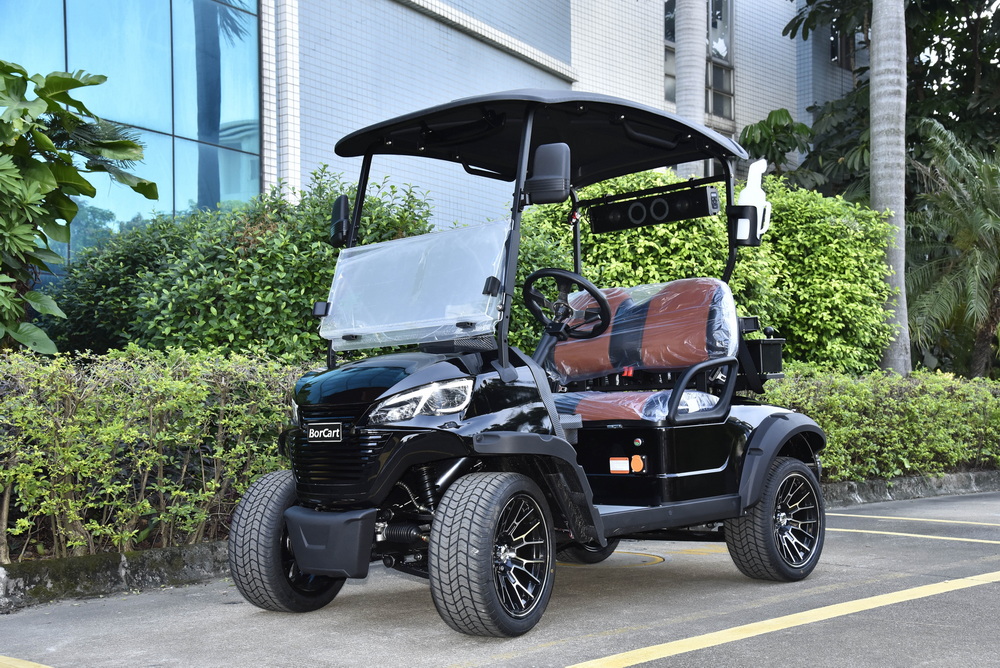
Club Car, E-Z-GO, and Yamaha are among the best-known brands with established manufacturing or production activity in Georgia. Buyers should confirm the manufacturing and component-origin details for the exact model they plan to purchase because these details can vary by product line.
No. A conventional golf cart is generally designed for golf courses and private-property use. A low-speed vehicle is a specific category of four-wheeled motor vehicle with a speed capability above 20 mph and no more than 25 mph, subject to applicable vehicle requirements.
Not necessarily. Adding lights, mirrors, or turn signals alone does not automatically make a golf cart eligible for public-road use. Buyers should confirm the complete vehicle specification, documentation, local registration rules, insurance requirements, and roadway restrictions.
For many commercial and personal users, lithium batteries can be worthwhile because they can reduce routine maintenance, lower vehicle weight, and provide more consistent performance. The decision should consider the battery warranty, charger compatibility, expected daily use, replacement planning, and initial investment.
A distributor should request a detailed specification sheet, product drawings or photos, battery information, inspection standards, warranty terms, spare-parts list, packaging plan, delivery schedule, branding options, and documentation for the intended market.
For resorts, the best choice usually combines passenger comfort, quiet operation, attractive design, dependable range, low downtime, and rapid access to replacement parts. A beautiful cart that cannot stay in service during peak occupancy creates operational problems.
Start with a small pilot order, inspect units before shipment, define quality standards in writing, stock critical spare parts, establish a technical support workflow, and verify battery, controller, charger, and wiring quality before scaling up.
- [Club Car — Expansion Into New Appling, Georgia Facility]
- [E-Z-GO — Quality Craftsmanship Built in Augusta]
- [Yamaha Motor — Yamaha Golf-Car Production in Newnan, Georgia]
- [National Highway Traffic Safety Administration — Low-Speed Vehicle Interpretation]
- [National Highway Traffic Safety Administration — LSV Equipment Requirements]
- [U.S. Department of Energy — Battery Recycling and Collection Funding]
- [Alternative Fuels Data Center — Batteries for Electric Vehicles]


