


Views: 222 Author: Leah Publish Time: 2026-02-14 Origin: Site


Content Menu
● Why New Zealand Needs Custom Golf Carts
● How Custom Golf Carts Differ from Standard Models
● Key Features Buyers in New Zealand Look For
● BorCart: A Global Custom Golf Carts Manufacturer
● Customization Capabilities for New Zealand Clients
● Quality Control and Compliance
● How New Zealand Importers Work with Custom Golf Carts Manufacturers
● Selecting the Right Custom Golf Carts Manufacturer
● FAQ
>> 1. What are custom golf carts manufacturers and suppliers?
>> 2. Why should New Zealand buyers work with overseas custom golf carts manufacturers?
>> 3. Can custom golf carts be used for purposes other than golf in New Zealand?
>> 4. How do custom golf carts manufacturers ensure quality and safety?
>> 5. What should I ask a custom golf carts manufacturer before placing an order?
New Zealand's demand for custom golf carts is growing fast, driven by golf clubs, resorts, retirement communities, and commercial operators seeking tailored, low‑speed electric transport. At the same time, global buyers are increasingly looking for custom golf carts manufacturers and suppliers that combine design flexibility, robust engineering, and competitive pricing. In this landscape, Chinese OEM factories such as BorCart have become strategic partners for many New Zealand importers, distributors, and project developers who want to source high‑quality, fully customized golf carts without the premium price tag of Western‑brand vehicles.

New Zealand's terrain, climate, and lifestyle make electric golf carts ideal for a wide range of applications beyond the fairway. Resorts in popular tourist regions use them for guest shuttles, retirement villages rely on them for resident mobility, and vineyards and farms deploy utility‑style carts for light transport and inspection rounds.
Because each use case has different requirements—seating capacity, battery range, payload, and aesthetic style—off‑the‑shelf models often fall short. This is where custom golf carts manufacturers and suppliers come in. They can adjust body length, wheelbase, roof configuration, seating layout, lighting, and even branding to match a client's exact needs, giving New Zealand businesses a distinct competitive edge and helping them offer more comfortable and efficient on‑site transport.
Custom vehicles are especially valuable where operators want a consistent visual identity across their fleet. Matching colors, logos, upholstery styles, and exterior trims allow golf clubs, resorts, and retirement communities to reinforce their brand and present a unified, premium look to members, guests, and residents.
Standard golf carts are built for mass‑market play: simple two‑ or four‑seaters with basic features and limited color or accessory options. Custom golf carts, by contrast, are engineered as low‑speed vehicles (LSVs) or utility vehicles that can be adapted for many different scenarios:
- Golf courses: multi‑passenger shuttle carts for tournaments, pull‑behind buggies, or fleet‑matched designs that fit an existing brand image.
- Resorts and hotels: branded shuttles with luggage racks, fold‑down seats, and weather enclosures for year‑round operation.
- Retirement communities: accessible designs with easy‑entry steps, grab handles, and upgraded seating for comfort and safety.
- Commercial and industrial sites: maintenance and security patrol carts, light‑cargo carriers, and staff transport within large premises.
Leading custom golf carts manufacturers and suppliers offer options such as lithium‑ion batteries, advanced suspension, upgraded brakes, LED lighting, custom upholstery, and integrated audio or infotainment systems. These upgrades not only improve comfort and safety but also extend vehicle life in New Zealand's coastal and hilly environments, where corrosion resistance and reliable braking on slopes are critical.
Another key difference is the level of engineering support. Custom‑focused factories typically have in‑house design and R&D teams capable of adapting the chassis, electrical system, and bodywork to unusual use cases, such as steep vineyard tracks, narrow resort pathways, or high‑capacity sightseeing routes.
When selecting custom golf carts manufacturers and suppliers, New Zealand buyers typically prioritize several core features.
First, a weather‑resistant build is essential. Corrosion‑resistant frames, marine‑grade wiring, sealed connectors, and UV‑stable plastics are critical in a country with strong sun, coastal salt air, and frequent rain. Buyers look for robust underbody coatings, high‑quality paint processes, and durable floor materials to ensure carts can operate outdoors year‑round.
Second, battery performance and range are major decision factors. Operators often need carts to run full days on golf courses, resorts, campuses, and large private estates. This makes battery capacity, charging time, and overall energy efficiency extremely important. Many custom golf carts manufacturers and suppliers now offer a choice between traditional deep‑cycle lead‑acid packs and modern lithium‑ion systems, allowing buyers to balance initial cost against longer‑term performance and maintenance.
Third, safety and compliance need careful consideration. While golf carts in New Zealand are generally limited to private roads and off‑road areas, operators still demand reliable braking systems, effective lighting, mirrors, and safety belts. For sites that treat carts as part of a professional fleet—such as retirement communities or large resorts—formal safety procedures and regular inspections are often required, so carts must be designed with predictable, stable handling and dependable brakes.
Fourth, New Zealand buyers frequently seek deep customization. The best custom golf carts manufacturers and suppliers can alter body color, logo placement, seat layout, roof style, wheel designs, and accessory configurations. Popular accessories include coolers, ball and club holders, storage boxes, weather enclosures, towing hitches, and specialized racks for tools or equipment.
Finally, after‑sales support is crucial. Importers and local dealers require reliable access to spare parts, technical documentation, and responsive engineering assistance. Manufacturers that provide clear manuals, parts catalogues, and remote troubleshooting support make it much easier for New Zealand partners to keep their fleets running with minimal downtime.
Among custom golf carts manufacturers and suppliers, BorCart (Guangzhou Borcart Electric Vehicle Co., Ltd.) stands out as a large‑scale Chinese OEM factory focused on electric vehicles and automotive components. Founded in 2000 and based in Guangzhou, BorCart has grown into a major producer of golf carts, sightseeing buses, low‑speed vehicles, hunting vehicles, and multi‑purpose electric vehicles.
BorCart's facility spans hundreds of thousands of square meters and operates multiple production lines. The company employs a sizable engineering team as well as an experienced manufacturing workforce, allowing it to manage projects from initial concept through to mass production. This scale makes BorCart attractive to international clients who need consistent supply, flexible capacity, and the ability to ramp up orders quickly for new projects or seasonal demand.
The company's product range includes:
- Golf carts and electric golf carts, from compact two‑seaters to 6‑ or 8‑seat shuttle models.
- Sightseeing buses and multi‑passenger shuttles for resorts, campuses, and tourist attractions.
- Low‑speed vehicles and multi‑purpose vehicles used in industrial parks, gated communities, and large private properties.
- Hunting vehicles and off‑road utility carts designed to handle rough terrain and heavier loads.
One of BorCart's core strengths is its emphasis on OEM and ODM services. As a custom golf carts manufacturer and supplier, BorCart can produce vehicles entirely under a client's brand, with bespoke specifications and design elements. New Zealand distributors and project developers can therefore build their own branded line of golf carts without investing in their own factory, R&D infrastructure, or tooling.
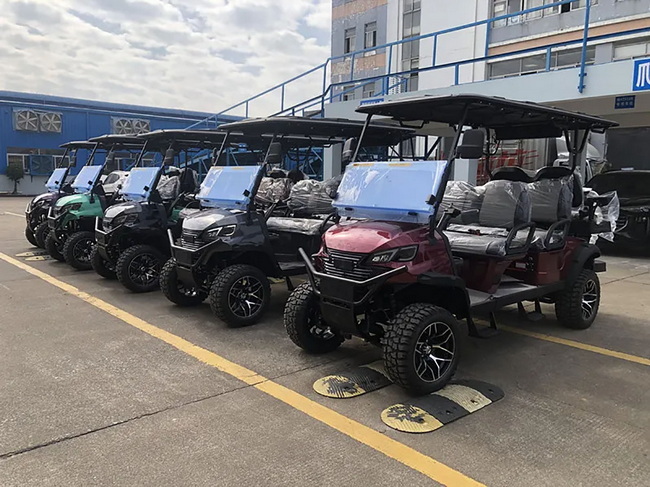
BorCart's flexibility is a major reason why it is often shortlisted when importers search for custom golf carts manufacturers and suppliers to serve the New Zealand market.
On a technical level, BorCart can modify chassis and body dimensions to suit local terrain and loading requirements. This includes adjusting wheelbase, track width, ground clearance, and suspension tuning to match the conditions of golf courses, vineyards, resorts, or industrial sites.
The company offers both lead‑acid and lithium‑ion battery solutions. Lithium‑ion options provide higher energy density, reduced weight, and shorter charging times, which are useful for intensive applications where vehicles must operate for long hours with minimal downtime. Lead‑acid configurations remain popular where buyers prioritize lower upfront cost and straightforward maintenance.
BorCart supplies multiple motor and controller combinations, including advanced AC motors and controllers tuned for smooth acceleration, good hill‑climbing performance, and energy efficiency. For demanding environments, motors and controllers can be specified with higher power ratings to handle steep gradients or heavier payloads.
Interior layout is another area where BorCart excels as a custom golf carts manufacturer and supplier. Seating can be configured as forward‑facing, rear‑facing, or fold‑down bench seats. Rear seats can often be converted into cargo beds, and additional storage compartments or tool racks can be integrated into the design. This kind of interior customization is especially valuable for New Zealand resorts, retirement villages, and farms that require different configurations for passengers and cargo.
On the aesthetic side, clients can specify custom colors, two‑tone paint schemes, logo placement, and decal packages. Premium upholstery, contrasting stitching, decorative trims, and unique wheel designs help operators create a distinct visual identity. These options allow New Zealand buyers to build fleets that are not only functional but also visually aligned with their brand.
When sourcing vehicles from overseas, quality control is a top concern for New Zealand buyers. Reputable custom golf carts manufacturers and suppliers address this by implementing structured quality management systems.
BorCart follows a layered inspection approach, starting with incoming quality control for raw materials and key components. Only parts that meet specified standards are released to production. During assembly, process quality control checkpoints ensure that each step is performed correctly and consistently, minimizing variation and reducing the risk of defects.
Before shipping, finished vehicles undergo final inspection and testing. This typically includes functional tests on electrical systems, brakes, steering, suspension, and lighting. Vehicles may also be driven on test tracks to validate acceleration, braking distance, turning radius, and noise levels. Only units that pass all tests are approved for delivery.
Compliance is another important aspect of working with a custom golf carts manufacturer and supplier. Although golf carts in New Zealand are usually restricted to private roads and off‑road environments, operators often have internal safety standards that must be met. Manufacturers like BorCart can design vehicles to comply with such requirements, for example by fitting seat belts, installing lights and mirrors, or limiting top speed to specified thresholds.
New Zealand importers and distributors typically engage custom golf carts manufacturers and suppliers in one of three main ways.
The first is through private‑label OEM partnerships. In this model, the importer develops a brand for its golf carts and works with the manufacturer to design and produce vehicles that match the brand's positioning. The factory handles engineering, tooling, and production, while the importer focuses on marketing, sales, and after‑sales service in New Zealand. This approach allows local companies to build recognizable brands without owning manufacturing facilities.
The second is project‑based custom fleets. Resorts, retirement villages, universities, and large private estates sometimes need a complete fleet tailored to a specific project. They prepare a detailed specification covering seating capacity, body style, color scheme, accessories, and performance requirements. A custom golf carts manufacturer and supplier like BorCart then engineers and builds the fleet to match this brief. This model works well for one‑off or bespoke projects where standard catalog models are not suitable.
The third approach is wholesale supply for dealers. Importers purchase standardized or semi‑custom models in container quantities and resell them to a network of local dealers, golf clubs, and commercial users. The importer may carry a mix of basic models for cost‑sensitive buyers and more heavily customized models for premium applications. Working with a single custom golf carts manufacturer and supplier makes it easier to maintain consistent quality and parts compatibility across the range.
Regardless of the engagement model, clear communication is essential. Specifications must be detailed and unambiguous, covering everything from motor power and battery configuration to seating materials and color codes. Shipping terms such as FOB, CIF, or DDP must be agreed in advance, along with lead times, payment terms, and warranty conditions. Successful long‑term relationships between New Zealand importers and overseas manufacturers are built on transparency, responsiveness, and reliable after‑sales support.
Because there are many custom golf carts manufacturers and suppliers worldwide, New Zealand buyers should use a structured set of criteria when choosing a partner.
Production scale and capacity come first. A manufacturer with large, modern facilities and multiple production lines is better equipped to handle bulk orders and maintain stable lead times. This is especially important for importers who need guaranteed availability during peak seasons or for large projects.
Engineering and R&D strength is the second major factor. A manufacturer with a strong in‑house engineering team can respond quickly to customization requests, optimize designs for specific environments, and resolve issues efficiently. This capability is invaluable when adapting vehicles for New Zealand's particular terrain and usage patterns.
Component quality is the third key consideration. Reputable manufacturers use motors, controllers, batteries, chargers, and other components from known, reliable suppliers. High‑quality components reduce failure rates, simplify maintenance, and improve the total cost of ownership over the vehicle's lifetime.
Export experience is also critical. Custom golf carts manufacturers and suppliers with a long history of exporting understand international standards, documentation requirements, and logistics. They know how to package vehicles securely, prepare the correct paperwork, and coordinate with freight forwarders to minimize delays at ports and customs.
Finally, communication and support can make or break a partnership. Buyers should evaluate how quickly the manufacturer responds to inquiries, whether they provide clear technical documentation, and how willing they are to collaborate on improvements. A responsive, service‑oriented factory becomes an extension of the buyer's own team, enabling smoother operations and faster problem resolution.
As demand for tailored, low‑speed electric transport grows in New Zealand, custom golf carts manufacturers and suppliers are becoming indispensable partners for golf clubs, resorts, retirement communities, and commercial operators. Factories such as BorCart combine large‑scale production, deep customization capabilities, and rigorous quality control to offer OEM solutions that meet diverse local needs.
For New Zealand businesses, working with a capable custom golf carts manufacturer and supplier means access to branded, high‑quality fleets without the overhead of in‑house R&D or manufacturing. With the right partner, operators can deploy customized golf carts that enhance guest experience, improve staff efficiency, and support sustainable electric mobility across the country. By focusing on key selection criteria—production capacity, engineering strength, component quality, export experience, and responsive support—buyers can build long‑term relationships that deliver both operational reliability and strong brand positioning.
Contact us to get more information!
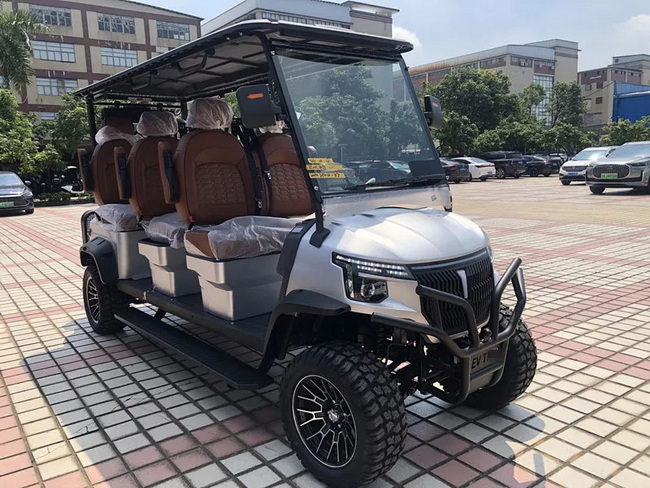
Custom golf carts manufacturers and suppliers are companies that design, build, and distribute golf carts and low‑speed electric vehicles that can be tailored to specific customer requirements. They typically offer options for body style, seating layout, battery type, color, branding, and accessories, and often provide OEM and ODM services so clients can sell the carts under their own brands.
New Zealand buyers often partner with overseas custom golf carts manufacturers and suppliers to gain access to larger production capacity, more advanced engineering capabilities, and lower unit costs. Overseas manufacturers, especially established OEM factories, can provide a wide range of customization options and have experience exporting to multiple markets, which simplifies logistics and compliance. This allows New Zealand importers and distributors to offer competitively priced, fully branded fleets without owning manufacturing facilities.
Yes. Custom golf carts manufacturers and suppliers design vehicles that serve many purposes beyond golf. In New Zealand, these carts are widely used as resort shuttles, retirement‑community transport, vineyard and farm utility vehicles, maintenance and security patrol carts, and staff transport within large private properties. While public‑road use is restricted, golf carts are extremely effective on private roads, within gated communities, and across golf courses, resorts, campuses, and industrial sites.
Leading custom golf carts manufacturers and suppliers implement multi‑stage quality control systems that include incoming inspection of components, in‑process checks during assembly, and comprehensive final testing of completed vehicles. They use reliable motors, controllers, batteries, and chargers, and design vehicles with stable handling, predictable braking performance, and robust electrical systems. Many also follow international quality standards and can adapt vehicles to meet specific safety requirements requested by customers or local regulations.
Before placing an order, you should ask a custom golf carts manufacturer and supplier about production capacity, typical lead times, and their experience with export projects similar to yours. It is important to clarify available customization options, component brands, testing procedures, warranty terms, and after‑sales support for spare parts and technical assistance. You should also confirm shipping terms (such as FOB, CIF, or DDP), payment conditions, and whether the factory can supply technical documentation and training to support your local service and maintenance team.
1. https://www.borcart.com
2. https://borcart.en.made-in-china.com
3. https://m.made-in-china.com/product/Borcart-OEM-ODM-Manufacturer-Electric-Golf-Car-Newly-Golf-Cart-2088633095.html
4. https://www.golfcartparts.co.nz
5. https://thecartwarehouse.co.nz
6. https://ensun.io/search/golf-cart/new-zealand
7. https://www.nzherald.co.nz/sponsored-stories/could-us-golf-cart-trend-happen-in-nz/XX5D2CH5BBCH7NNAFCW4L6BAPA/


