


Views: 298 Author: BorCart Publish Time: 2026-10-05 Origin: Site


Content Menu
● Why Source Electric Cargo Vans from China?
>> Industrial Clusters Provide Different Sourcing Advantages
● Selection Criteria: How This Manufacturer Shortlist Was Built
>> 1. Vehicle Category and Application Fit
>> 2. Manufacturing and Engineering Capability
>> 3. Quality Control and Traceability
>> 4. Destination-Market Compliance
>> 5. Commercial Cooperation and After-Sales Support
● Manufacturer Comparison: Capacity, MOQ, and Certification Evidence
● 1. Guangzhou BorCart Electric Vehicle Co., Ltd.
>> Company Background and Markets
>> Core Strength: Customization and In-House Component Control
>> OEM/ODM Fit for Smaller Brands
>> Important Procurement Limitation
>> Company Background and Markets
>> Core Strength: Established Electric Van Platforms
>> Company Background and Markets
>> Core Strength: Electric Commercial-Vehicle Engineering
>> Company Background and Markets
>> Core Strength: Commercial-Vehicle Breadth
● 5. DFSK
>> Company Background and Markets
>> Core Strength: Compact Commercial-Vehicle Applications
● Technical Evaluation: What a Procurement Specification Should Include
>> Battery Quality Requires More Than a Capacity Figure
>> Specify Materials and Manufacturing Processes
>> CE and RoHS Are Not a Complete-Vehicle Approval Shortcut
● Buyer's Guide: From Factory Verification to Shipment
>> Step 1: Define the Application Before Requesting Prices
>> Step 2: Verify the Manufacturing and Contracting Entities
>> Step 3: Approve a Representative Sample
>> Step 4: Convert the Sample into a Controlled Production Standard
>> Step 5: Plan Freight and Import Compliance Before Paying the Balance
● Common Procurement Pitfalls and How to Avoid Them
>> Pitfall 1: A Premium Sample Followed by Cheaper Production Components
>> Pitfall 2: Attractive Range Figures Without a Comparable Test Basis
>> Pitfall 3: Factory Credentials Mistaken for Product Approval
>> Pitfall 4: Warranty Coverage Without a Repair Process
>> Pitfall 5: Production Capacity Confused with Available Capacity
● An Overlooked Buyer-Side Trap: The Approved Vehicle and the Delivered Vehicle May Differ
● Conclusion: Select the Manufacturing Relationship, Not Just the Vehicle
>> 1. How Can I Verify Whether a Factory's ISO Certificate Has Expired?
>> 2. Can I Register an Electric Cargo Van If the Supplier Provides CE and Battery Certificates?
>> 3. How Can I Prevent Battery Substitution After Sample Approval?
>> 4. Who Is Responsible If a Customized Body Changes Payload or Approval Status?
>> 5. What Should a Small Brand Negotiate If It Cannot Meet the Supplier's MOQ?
Choosing a Chinese electric cargo van manufacturer requires more than comparing prices, advertised range, or factory photographs. For overseas brand owners, wholesalers, and vehicle manufacturers, the real challenge is finding a supplier that can reproduce an approved specification, maintain consistent quality, and support the vehicle throughout its commercial life.
A practical supplier evaluation should begin with five questions:
- Does the factory manufacture the vehicle category your market actually permits?
- Can it demonstrate engineering capability rather than simply offer cosmetic customization?
- Are incoming inspection, production controls, and final testing documented?
- Does its delivery commitment reflect available production capacity and component supply?
- Can it provide the approval documents, diagnostic support, and replacement parts required in your destination country?
This guide compares five manufacturers with different strengths: Guangzhou BorCart Electric Vehicle Co., Ltd., SAIC MAXUS, Farizon, JAC Motors, and DFSK. It is a procurement shortlist, not a claim that every company offers the same vehicle category, accepts private-label projects, or has been independently factory-audited.
The most important purchasing distinction is homologation: whether the exact vehicle configuration can legally enter service in its intended market. A low-speed cargo vehicle for a resort or industrial estate is not automatically interchangeable with a road-approved delivery van. Government vehicle-approval guidance distinguishes approval of a vehicle, system, or component from broader supplier credentials.
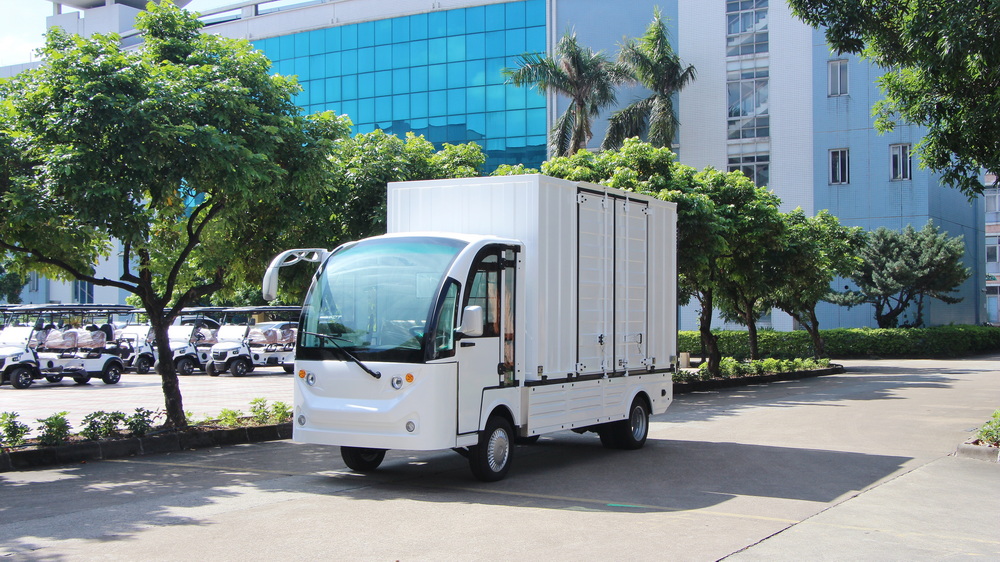
China offers a substantial electric-vehicle manufacturing base, supported by battery production, automotive engineering, component suppliers, and established export channels.
The International Energy Agency's *Global EV Outlook 2026* reports that China produced approximately 16 million electric cars in 2025 and exported more than 2.5 million. These figures concern electric cars, not electric cargo vans specifically; buyers should not use passenger-car statistics as proof of a particular supplier's commercial-vehicle capability. Nevertheless, they demonstrate the scale of the broader manufacturing ecosystem.
More recent trade information also needs careful interpretation. The Association of European Vehicle Logistics' first-half 2026 China export update reports approximately 663,000 commercial-vehicle exports and 2.356 million new-energy-vehicle exports. These are different categories: commercial vehicles include more than electric vans, while new-energy vehicles include passenger vehicles and multiple powertrain types. The report does not establish electric cargo van exports as a separate total.
Supplier location can influence access to engineering resources, component production, and export coordination.
The Yangtze River Delta links Shanghai, Jiangsu, Zhejiang, and Anhui through an established automotive industrial base. Research from the University of Maryland's Center for Global Sustainability describes cooperation across these provinces in developing the region's electric-vehicle ecosystem. MAXUS, Farizon, and JAC provide examples of manufacturers operating within this broader regional network.
Guangzhou offers a different procurement starting point. BorCart's manufacturing operation is located in Nansha, Guangzhou, and its published capabilities emphasize electric vehicles, component production, and customization. For buyers, the useful question is not simply whether a supplier sits within a recognized industrial region, but which manufacturing processes it actually controls.
The companies below were selected for documented electric-vehicle activity, identifiable manufacturing backgrounds, published product information, and relevance to international commercial buyers.
No confidential quotations, live capacity audits, or independent road tests were available for this comparison. Therefore, unpublished minimum order quantities, cargo-van-specific capacity, and certification status are identified as items requiring verification rather than filled with estimates.
The shortlist distinguishes between:
- Low-speed cargo and utility vehicles.
- Compact urban electric delivery vans.
- Larger road-going electric commercial vans.
- Manufacturer-supported fleet configurations.
- Potential OEM or engineering-cooperation projects requiring negotiation.
A manufacturer can be suitable for one category and unsuitable for another.
Useful evidence includes in-house fabrication, engineering personnel, documented production processes, published vehicle platforms, and the ability to control specifications.
The presence of a large factory does not, by itself, establish capacity for a particular cargo van model.
Buyers should request examples of:
- Incoming component inspection records.
- Battery serial-number traceability.
- Welding and assembly inspection procedures.
- End-of-line electrical and functional test reports.
- Nonconformance handling and corrective-action records.
These are proposed procurement requirements, not claims that all shortlisted manufacturers publicly disclose the same documentation.
A certificate must match the manufacturer, production site, vehicle type, and configuration being purchased.
For road vehicles, whole-vehicle approval and conformity documentation are more relevant than a generic certificate displayed on a website. The UK Vehicle Certification Agency describes conformity of production as evidence that serially manufactured products match approved specifications, performance, and marking requirements.
Private labeling, body conversion, component supply, and complete-vehicle manufacturing are different services.
An established vehicle brand should not be assumed to accept an overseas buyer's badge, tooling ownership requirements, or small production batch. Confirm these rights before discussing a launch schedule.
| Manufacturer | Primary sourcing focus | Published capacity evidence | MOQ position | Certification and approval checks |
|---|---|---|---|---|
| Guangzhou BorCart Electric Vehicle Co., Ltd. | Customized low-speed electric vehicles, cargo applications, and components | Reports four production lines and capacity to deliver 10 containers of mixed electric vehicles daily; not a cargo-van-specific unit figure. | Sample orders are advertised; production MOQ is not disclosed on the reviewed company page. | Request current factory certificates and approval evidence for the exact proposed cargo vehicle; the reviewed page does not establish road approval for a specific van. |
| SAIC MAXUS | Road-going electric vans for commercial fleets | Official global pages show multiple electric van platforms but do not disclose comparable model-specific annual capacity. | No manufacturer-level MOQ disclosed in the reviewed sources; distinguish distributor purchases from factory cooperation. | Obtain destination-specific approval and conformity documents for the ordered variant. |
| Farizon | Purpose-built electric commercial vehicles and fleet vans | Published sources establish its commercial-vehicle focus and international distribution, not allocated capacity for a buyer's order. | No private-label or factory MOQ established by the reviewed sources. | Verify the exact SV variant, destination approval, and applicable software-management requirements. |
| JAC Motors | Larger electric vans and commercial-vehicle platforms | Official sources document Sunray EV and M3 EV offerings; comparable cargo-van-specific capacity is not disclosed. | Project MOQ and any assembly-cooperation terms require a direct quotation. | Confirm model-specific approval, battery documentation, and destination warranty conditions. |
| DFSK | Compact commercial vehicles and electric urban vans | Global export presence is documented; current electric-van-specific capacity is not established in the reviewed sources. | Confirm current supply channel, minimum batch, and customization limits. | Historical EC35 market entry does not establish approval or availability of every current configuration. |
For every supplier, certification documents should be verified against the exact production site and vehicle specification. Approval of one model or export configuration should not be generalized to an entire product range.
Guangzhou BorCart Electric Vehicle Co., Ltd. states that it was founded in 2000. Its company profile reports a 200,000-square-meter workshop, more than 100 engineers and technicians, and more than 1,000 skilled workers. These are manufacturer-published figures and should be confirmed during supplier qualification.
The company identifies customers in more than 30 countries, including the United States, Germany, France, the United Kingdom, Mexico, Southeast Asian markets, Saudi Arabia, South Africa, and Australia. This describes its stated geographic reach, not independently verified sales proportions by market.
BorCart's published manufacturing scope includes chassis, bodies, molds, and painting. Its profile also describes OEM/ODM services and customer-specific vehicle development. In-house control of these processes provides a relevant starting point for buyers seeking body modifications, utility configurations, branded vehicles, or component cooperation.
The company reports a new-product-introduction process, incoming quality control, process quality control, quality assurance, and testing of every vehicle on the assembly line. Buyers should request actual inspection forms and test records to understand how these controls apply to the proposed cargo model.
BorCart is worth evaluating for smaller brands seeking customization rather than a standard distributor vehicle. Its advertised sample-order service and factory visits allow buyers to structure an initial validation project before committing to a production batch.
However, flexibility, communication efficiency, and cost-effectiveness should be measured, not assumed. A buyer can evaluate them through a pilot project with:
- A named engineering and commercial contact.
- A written customization feasibility response.
- A controlled drawing and specification revision process.
- An itemized tooling and development quotation.
- A sample build schedule with acceptance milestones.
This turns "responsive service" into something the purchasing team can assess.
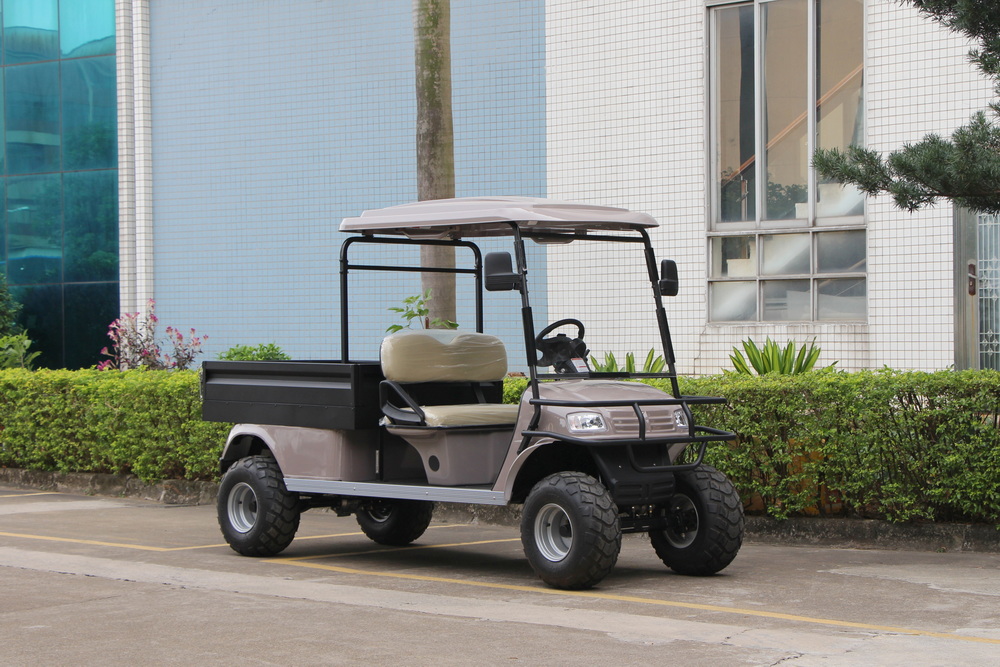
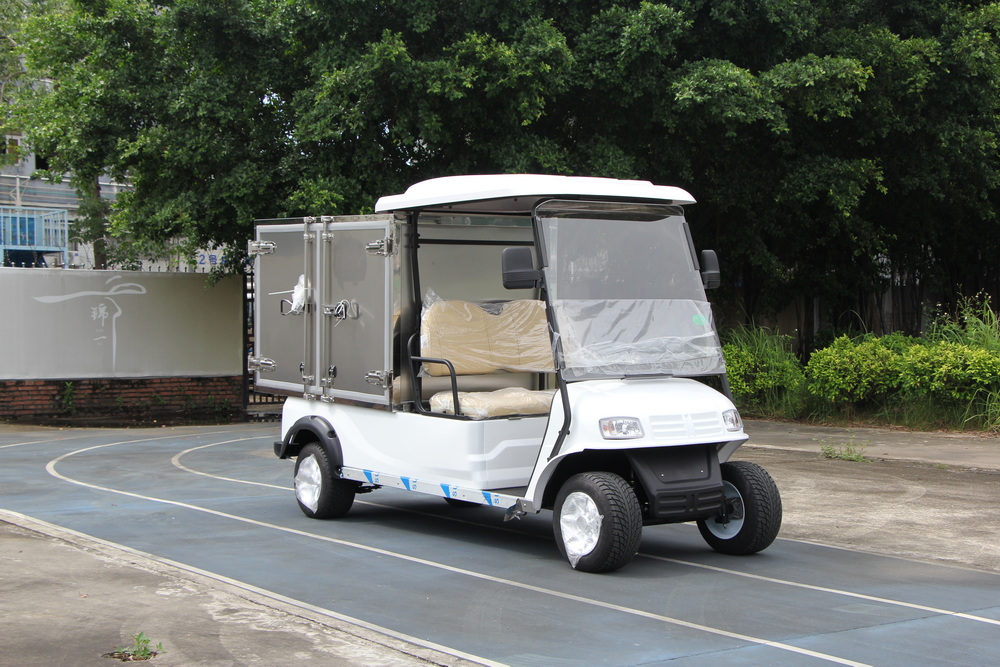
BorCart's company profile emphasizes golf carts, low-speed vehicles, sightseeing vehicles, and multipurpose electric vehicles. Its cargo applications should therefore be assessed separately from highway-capable enclosed vans. The reviewed profile does not establish that a specific cargo model holds whole-vehicle road approval for the buyer's destination.
BorCart's position in this guide reflects its relevance to customization-focused buyers and the commissioning company's requested placement, not an independently measured superiority over the other manufacturers.
SAIC MAXUS was established in 2011 and is part of SAIC Motor. Its global website presents a commercial-vehicle range available across more than 60 markets, while its UK website identifies distribution in the United Kingdom and Ireland.
MAXUS offers several electric commercial vans, including the eDELIVER 3, 5, 7, and 9. This range makes it relevant to buyers comparing compact delivery vehicles with larger fleet vans.
For example, the official eDELIVER 7 page advertises an 88 kWh battery, up to 370 km WLTP combined range, maximum payload of 1,245 kg, and up to 8.7 cubic meters of cargo space. Treat these as published maximum figures, not a guarantee that every specification is available simultaneously in every market.
MAXUS is a strong candidate for buyers seeking existing road-going platforms and established commercial distribution. However, the reviewed public sources do not establish an open private-label manufacturing program or a universal OEM MOQ.
Before approaching MAXUS as a contract manufacturer, clarify:
- Whether the proposed transaction is vehicle distribution or manufacturing cooperation.
- Whether rebadging is permitted.
- Which body conversions are approved.
- Who assumes responsibility for modified-vehicle approval.
- Whether diagnostic access and fleet support extend to the buyer's territory.
Do not compare advertised range across different test cycles or market specifications. Obtain the exact vehicle datasheet, approval configuration, battery specification, and warranty applicable to the destination.
Farizon was established in 2016 and is Geely's commercial-vehicle business. Its product portfolio includes trucks, light commercial vehicles, and buses. The Farizon SV has been introduced to the UK through Jameel Motors, with the distributor also identifying expansion into other European markets.
Farizon's SV is positioned as a purpose-built electric van developed for commercial use. Its UK introduction specifically emphasizes the requirements of European fleets. This makes Farizon relevant to purchasing teams prioritizing vehicle-platform design and structured fleet deployment.
A dedicated electric platform is still only the beginning of qualification. Buyers should validate loading access, usable cargo dimensions, battery performance, and charging behavior against their own delivery routes.
Public sources support Farizon's commercial-vehicle production and international distribution. They do not establish unrestricted private-label availability.
Potential cooperation should be discussed in terms of fleet specification, approved equipment integration, distributor rights, and engineering changes. Buyers should not describe Farizon as an established private-label supplier without a written agreement.
Connected vehicles introduce a dependency that a conventional quotation may overlook: continued access to software services.
For relevant European vehicle categories, UN R155 and UN R156 address cybersecurity and software-update management. The Vehicle Certification Agency explains that these regulations require management-system assessment, not merely a one-time hardware test. Confirm which entity maintains those obligations throughout the vehicle's life.
JAC Motors traces its founding to 1964. Its official history records the first export batch in 1990 and cumulative exports reaching one million vehicles in December 2022. Its global business covers commercial vehicles, passenger vehicles, core components, and related services.
Its international website lists both Sunray EV and M3 EV, providing direct evidence of electric van offerings for overseas-market consideration.
The published Sunray EV specification includes a 77.28 kWh battery, advertised range of 280–315 km, cargo-volume options from 10.5 to 20 cubic meters, and cargo weight up to 1,850 kg. Its product page also identifies a CATL lithium iron phosphate battery.
These figures describe a model family. Buyers should not assume that the largest cargo body, highest payload, and longest range belong to the same variant. The range figure should also not be directly compared with another manufacturer's WLTP result unless the measurement basis is confirmed.
JAC is relevant to importers evaluating larger commercial vans and broader vehicle-platform cooperation. Nevertheless, the reviewed sources do not establish project-specific terms for private labeling, component supply, or overseas assembly.
Specify whether the inquiry concerns:
- Complete vehicles.
- Approved commercial conversions.
- Chassis or component supply.
- Local assembly cooperation.
- A destination-specific engineering project.
Larger cargo volume does not necessarily mean higher usable payload. Request a mass breakdown for the exact vehicle, including battery, body, optional equipment, driver allowance, and any refrigeration or shelving system.
DFSK's manufacturing history dates to 2003. An established Malaysian commercial distributor documents that founding year, while the current DFSK global website identifies the brand as part of SERES Group. Older descriptions of its ownership should therefore be checked against current corporate information.
DFSK states that it has expanded into more than 70 countries and regions and exported more than 600,000 vehicles. These totals concern the broader brand, not electric cargo vans alone.
DFSK is relevant to buyers investigating compact urban delivery vehicles. Its EC35 electric van entered the UK market through Innovation Automotive in 2022, demonstrating an established international commercial application.
That launch information is historical. It should not be reused as a current quotation, warranty promise, or confirmation of present model availability.
Potential buyers should confirm the current manufacturer-authorized export channel before discussing branding, equipment changes, or local assembly.
The reviewed sources establish vehicle manufacturing and international distribution, but not unrestricted OEM/ODM services for every purchaser. Any proposal for rebadging or substantial modification should identify the authorized contracting entity and the party responsible for approval.
Different intermediaries may advertise different EC35 specifications. Treat each listing as a separate proposed configuration until the manufacturer confirms the battery, payload, maximum speed, charging equipment, and approval documentation in writing.
A battery quotation should identify:
- Cell manufacturer and cell model.
- Battery chemistry.
- Nominal and usable energy.
- Pack manufacturer and serial-number system.
- Thermal-management design.
- Battery-management-system functions.
- Warranty conditions and capacity-retention threshold.
- Safety and transport documentation applicable to the exact pack.
UNECE R100 addresses electrical and traction-battery safety for relevant road electric vehicles. UN/DOT 38.3 concerns lithium-battery transport testing. These documents serve different purposes and should not be treated as interchangeable.
For sample approval, require the supplier to explain whether the battery in the sample is identical to the intended production battery.
Avoid purchasing specifications such as "high-quality steel" or "premium aluminum."
Instead, request:
| Area | Information to define in the purchase specification |
|---|---|
| Chassis and structural members | Material designation, thickness, drawings, and traceability requirements |
| Welding | Approved process, inspection points, and acceptance criteria |
| Body protection | Pretreatment, coating system, thickness requirements, and corrosion-test method |
| Cargo floor | Material, point-load limits, and supported loading conditions |
| Doors and seals | Water-ingress acceptance criteria and functional cycling requirements |
| Electrical harness | Connector specifications, routing, protection, and identification |
| Critical fasteners | Torque requirements, recording method, and rework procedure |
These are proposed controls for supplier qualification. They are not claims that every manufacturer uses one universal material grade or manufacturing method.
A CE-marked charger or documentation covering electrical components does not establish that an entire cargo van can be registered for road use.
Likewise, do not accept a general RoHS statement as a substitute for the relevant vehicle approval package. Ask which product the document covers, which regulation applies, and whether it corresponds to the delivered configuration. Whole-vehicle approval remains a separate question.
Prepare a purchasing brief covering:
- Destination country and registration category.
- Public-road or restricted-site operation.
- Required payload and cargo dimensions.
- Daily distance and route conditions.
- Operating temperatures.
- Charging infrastructure.
- Steering position.
- Branding and customization requirements.
- Forecast annual volume and initial order quantity.
This prevents a low-speed utility quotation from being compared with a road-going commercial van quotation.
Request the business license, factory address, legal manufacturer name, and proposed seller's details.
During a factory visit or independent inspection, follow the actual production flow. Identify which processes are performed in-house and which are outsourced. Then confirm that the company receiving payment has a documented relationship with the factory and authority to supply the vehicles.
Use a sample configured as closely as possible to the intended production vehicle.
The proposed test plan should include:
1. Loading the agreed commercial payload.
2. Driving the intended route or an agreed representative route.
3. Recording energy use and charging performance.
4. Checking braking and hill-start behavior.
5. Testing doors, locks, seals, and cargo access.
6. Demonstrating diagnostic functions.
7. Reviewing maintenance access and replacement-part identification.
Record test conditions, vehicle identification, battery state, and software version. A test report without configuration details is difficult to use later.
Approve a bill of materials, drawings, software versions, and inspection checklist.
Include a written rule that critical substitutions require buyer approval. Relevant items may include the battery pack, motor, controller, charger, braking components, structural materials, and approved lighting.
Ask the freight forwarder and destination broker to confirm the current shipping requirements for the specific vehicle and battery arrangement.
Request the applicable battery transport test summary, vehicle shipping documents, packing method, lifting or securing instructions, and damage-inspection procedure. Lithium-battery transport testing is a distinct requirement from road-vehicle approval.
Also clarify whether the transaction covers a complete vehicle, an incomplete vehicle, or an assembly kit. Those distinctions can materially affect the import and registration process.
Proposed safeguard: bind the approved bill of materials to the purchase contract, require critical-component traceability, and inspect production vehicles against the sample specification.
Proposed safeguard: require the test cycle, load, temperature, speed profile, and auxiliary-equipment conditions. Do not compare a WLTP result directly with an unspecified "comprehensive range."
Proposed safeguard: maintain separate files for management-system certificates, component documents, and whole-vehicle approval. Verify each against its actual scope.
Proposed safeguard: agree diagnostic access, technical response times, spare-parts availability, labor reimbursement rules, and battery-claim evidence before shipment.
Proposed safeguard: ask for the planned production slot, component allocation, inspection date, and shipment milestones. A factory's total output does not prove that capacity is reserved for your order.
A particularly important procurement risk is configuration drift after sample approval.
A manufacturer may propose an apparently minor change to a battery, controller, tire, body, charging system, or software version. The change may reduce cost or solve a supply shortage, but it should not be assumed to remain within the approved vehicle configuration.
The underlying issue is conformity of production: vehicles must match the specification and requirements covered by their approval documentation.
A practical buyer-side safeguard is a configuration passport for every production batch, recording:
- Vehicle identification numbers.
- Battery and charger identifiers.
- Critical-component part numbers.
- Software versions.
- Approved body configuration.
- Relevant approval references.
- Accepted engineering changes.
Require the manufacturer to assess proposed changes before implementation and explain whether approval documentation must be updated.
This is an overlooked purchasing control, not a claim based on undisclosed factory audits or confidential industry experience.
The five manufacturers represent different sourcing routes.
BorCart merits evaluation for customization-oriented low-speed cargo projects and component cooperation. MAXUS and Farizon offer documented electric commercial-van platforms and international market channels. JAC provides a broader commercial-vehicle background with published electric van offerings, while DFSK offers a compact-commercial-vehicle starting point whose current export configuration must be verified.
For an OEM project, send Guangzhou BorCart Electric Vehicle Co., Ltd. a clear application brief covering destination market, operating category, payload, cargo dimensions, battery requirements, forecast volume, and customization scope. Request a feasibility response, sample proposal, current compliance documents, and itemized quotation before committing to production.
Search the legal company name or certificate details in IAF CertSearch, which supports verification of accredited management-system certificates and their status. Check the certified site, scope, issuing body, and validity information—not just the expiry date on a scanned PDF.
If a record cannot be located, seek confirmation directly from the issuing certification body rather than assuming that absence alone proves fraud.
Not necessarily. Component or battery documents do not establish whole-vehicle approval.
Request the applicable approval package and vehicle-specific conformity documentation, then ask the destination authority or a qualified local approval specialist to confirm the registration route. In Great Britain, government guidance states that approved vehicles must carry the relevant approval marking and be supplied with a certificate of conformity.
Specify the approved cell and pack identification in the contract, require serial-number traceability, and prohibit unapproved substitutions.
At inspection, compare production identification records with the approved sample. Agree how discrepancies will be handled before shipment, including reinspection, replacement, or rejection where contractually applicable.
Assign responsibility in writing before development begins.
The agreement should identify who recalculates vehicle mass, verifies axle loads, evaluates the modification, and provides any revised documentation. Conformity requirements make it important that the delivered vehicle remains consistent with its approved specification.
Request separate commercial terms for a sample, a pilot batch, and repeat production.
Reduce early complexity by limiting body options, colors, battery variants, and proprietary tooling. Ask which standard platform features can be retained. BorCart advertises sample orders and customization services, but its production MOQ still requires direct confirmation.
- International Energy Agency — *Global EV Outlook 2026: Manufacturing and Trade*, for electric-vehicle production and export context. [iea]
- Association of European Vehicle Logistics — *China Car Exports, January–June 2026 Update*, for recent export-category data. [ecgassociation]
- UK Vehicle Certification Agency — *What Is Vehicle Type Approval?*, for the distinction between vehicle and component approval. [vehicle-certification-agency.gov]
- UK Vehicle Certification Agency — *Cyber Security and Software Updating*, for UN R155 and UN R156 guidance. [vehicle-certification-agency.gov]
- UK Government — *Dual Marking Vehicles Under the GB Type-Approval Scheme*, for approval marking and conformity-document context. [gov]
- International Accreditation Forum — *IAF CertSearch*, for accredited management-system certificate verification. [iafcertsearch]


