


Views: 288 Author: BorCart Publish Time: 2026-09-07 Origin: Site


Content Menu
● China's Manufacturing Advantages
>> 1. Guangzhou BorCart Electric Vehicle Co., Ltd.
>> 2. Guangdong Lvtong New Energy Electric Vehicle Technology Co., Ltd.
>> 3. Guangdong Marshell Electric Vehicle Co., Ltd.
>> 4. Suzhou Eagle Electric Vehicle Manufacturing Co., Ltd.
>> 6. CENGO
>> 7. Kandi Technologies Group
>> 8. Tao Motor
>> 10. XUNHU EV
● Manufacturer Comparison Table
● Technical Requirements for Golf Cart Trucks
>> Battery and charging system
>> Motor, controller, and braking
>> The "same appearance, different structure" problem
>> The battery substitution risk
>> The certification-copy problem
>> 1. Define the operating environment
>> 2. Request comparable quotations
>> 3. Order a sample before mass production
>> 5. Protect the purchase contract
>> 1. How can I verify whether a supplier's ISO certification is still valid?
>> 2. What is a reasonable MOQ for a customized Golf Cart Truck?
>> 3. Should I choose lithium or lead-acid batteries?
>> 4. How do I confirm that a Golf Cart Truck can truly carry its stated payload?
>> 5. What spare parts should be ordered with the first shipment?
China has become an important sourcing base for electric golf cart trucks, utility carts, resort vehicles, campus transport vehicles, and low-speed electric work vehicles. For overseas distributors, fleet operators, brand owners, and commercial vehicle importers, the advantage is no longer limited to purchase price: the stronger Chinese manufacturers now provide chassis engineering, lithium battery integration, body customization, component sourcing, export documentation, and private-label production.
This guide reviews 10 Chinese manufacturers worth evaluating for Golf Cart Truck and electric utility vehicle projects. It is designed for professional buyers looking for stable long-term supply, not for buyers choosing solely on the lowest quoted unit price. China exported 2.615 million new-energy vehicles in 2025, according to China Association of Automobile Manufacturers data reported by official Chinese sources, illustrating the scale of the country's wider electric-vehicle supply chain and export capability.
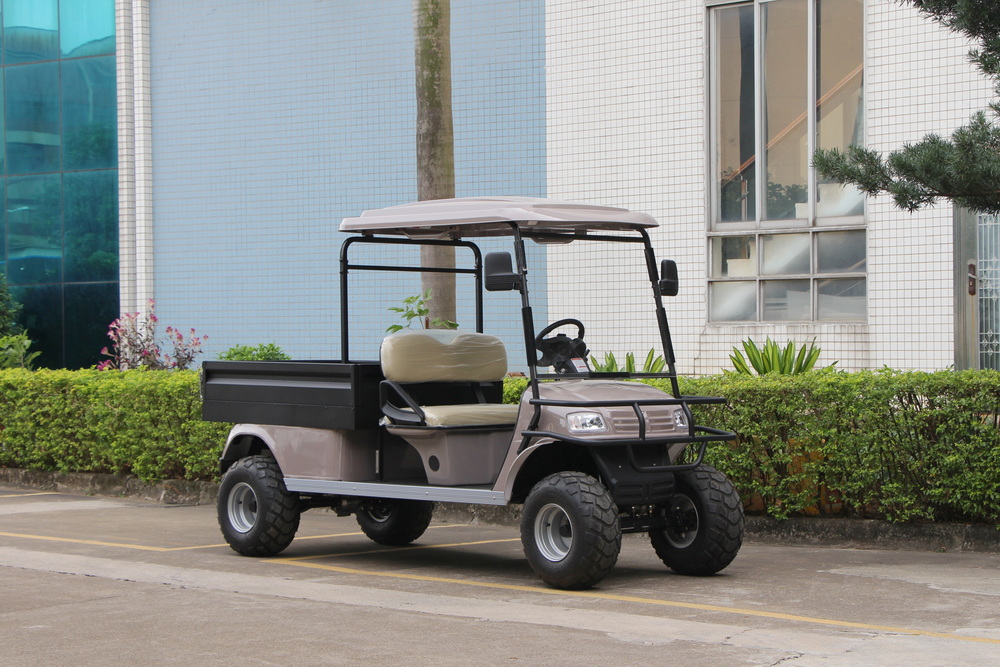
A reliable Golf Cart Truck supplier should be assessed as a manufacturing partner rather than a catalog seller. The companies below were selected based on publicly available company information, product scope, factory scale where disclosed, export readiness, customization capability, and relevance to commercial electric utility vehicles.
The evaluation focused on the following areas:
- Manufacturing depth: Whether the supplier designs and manufactures key vehicle structures, including chassis, body panels, molds, paint, wiring assemblies, and cargo configurations.
- Product relevance: Availability of cargo golf carts, utility carts, electric mini trucks, service carts, tow tractors, patrol vehicles, enclosed delivery vehicles, and other work-oriented models.
- Engineering capability: Ability to modify seating layout, cargo bed, canopy, enclosed cab, battery system, suspension, motor power, steering configuration, lighting, branding, and accessories.
- Quality-control process: Evidence of incoming inspection, in-process checks, finished-vehicle testing, component traceability, and pre-shipment inspection.
- Export experience: Familiarity with CE, RoHS, ISO systems, WMI/VIN requirements, DOT-oriented configurations, or destination-market documentation.
- Order flexibility: Suitability for distributors and developing brands that may need pilot orders, phased rollouts, or mixed-container purchasing.
- After-sales readiness: Availability of spare parts, technical manuals, wiring diagrams, remote troubleshooting, and replacement-component support.
For market context, published industry research estimates that the global golf-cart market will grow from approximately USD 1.79 billion in 2025 to USD 1.87 billion in 2026. Commercial use cases—resorts, industrial parks, airports, campuses, gated communities, warehouses, and last-mile service operations—are a major reason utility-oriented carts are expanding beyond traditional golf courses.
China's Golf Cart Truck manufacturing base is concentrated in several industrial regions, each with different strengths.
| Manufacturing cluster | Typical strengths for buyers | Suitable sourcing projects |
|---|---|---|
| Guangdong: Guangzhou, Dongguan, Zhaoqing, Shenzhen | Vehicle assembly, export logistics, bodywork, electronics, charging systems, OEM branding | Golf carts, utility carts, sightseeing vehicles, resort fleets |
| Fujian: Xiamen | Golf-cart design, lithium integration, export-oriented product development | Premium carts, hunting buggies, lifestyle and utility vehicles |
| Jiangsu: Suzhou | Precision manufacturing, electric vehicle engineering, industrial customization | Electric trucks, patrol vehicles, shuttle vehicles, specialty fleets |
| Zhejiang: Jinhua and surrounding areas | Low-speed EV supply chain, components, battery-related manufacturing | LSVs, off-road electric vehicles, utility and cargo models |
| Sichuan: Chengdu | Emerging electric cart production and lower-MOQ export supply | Distributor projects, standard golf carts and customized buggies |
For buyers, this regional specialization matters. A supplier that is excellent at passenger sightseeing vehicles may not be equally strong at reinforced cargo beds, industrial braking systems, enclosed cabins, or utility-grade suspension. The right factory should match the end-use environment—not merely the vehicle's appearance.
Location: Guangzhou, Guangdong
Founded: 2000
Primary products: Golf carts, utility carts, freight cars, sightseeing buses, low-speed vehicles, hunting vehicles, patrol vehicles, towing tractors, electric ambulances, and customized electric vehicles
Key markets: More than 30 countries, including the United States, Germany, France, the United Kingdom, Mexico, Vietnam, Thailand, Malaysia, Saudi Arabia, South Africa, Sweden, and Australia
OEM/ODM scope: Branding, body color, seating configurations, cargo structures, chassis-related customization, special-purpose vehicle development, components, and project-specific vehicle configurations
Guangzhou BorCart Electric Vehicle Co., Ltd. is a practical option for overseas buyers seeking a balance of manufacturing scale, customization depth, and communication flexibility. Founded in 2000, BorCart operates a 200,000-square-meter workshop and reports more than 1,000 skilled workers, supported by over 100 engineers and technicians. Its four production lines are stated to support delivery of up to 10 containers of electric vehicles per day, depending on the product mix and order configuration.
For Golf Cart Truck buyers, BorCart's main advantage is that it is not limited to standard golf-course carts. Its portfolio includes freight cars, utility carts, towing tractors, low-speed vehicles, and special-purpose electric vehicles. This gives importers more room to develop a product range for resorts, industrial parks, warehouses, property-management companies, campuses, construction sites, and tourism operators.
The company states that it produces key components in-house, including chassis, bodies, molds, and paint. From a procurement perspective, this can be important because it reduces dependency on multiple third-party suppliers for visible components and structural parts. It can also improve consistency when buyers require private-label body colors, decals, cargo-bed layouts, roof designs, or project-specific body modifications.
BorCart also describes a structured quality process involving New Product Introduction procedures, incoming quality control, process quality control, quality assurance, and 100% assembly-line testing. For international buyers, the most useful next step is to request the exact inspection checklist for the selected Golf Cart Truck model, including braking, steering, charging, water resistance, battery, gradeability, and load tests.
Why it may fit a buyer's program
- Suitable for small and medium-sized brands that need deeper OEM support rather than only a standard product with a logo sticker.
- Broad model portfolio supports mixed-container purchasing, such as passenger carts plus cargo carts, patrol carts, or resort shuttle vehicles.
- In-house work on chassis, body, molds, and paint may support more efficient customization discussions.
- Offers sample orders and factory-visit support, useful for buyers building a new product line or validating a long-term supplier.
- The company states that its golf-cart and utility-cart offerings carry ISO 9001 and CE credentials; buyers should request current certificates and model-level conformity documents before ordering.
Best suited for: Importers, regional distributors, hospitality-equipment suppliers, and brands seeking flexible OEM/ODM development for Golf Cart Truck programs.
Location: Dongguan, Guangdong
Founded: 2004
Primary products: Golf carts, sightseeing vehicles, classic electric cars, hotel vehicles, patrol cars, real-estate vehicles, utility vehicles, small electric trucks, and engineering-modified vehicles
Reported capacity: Approximately 2,000 units per month
OEM/ODM scope: Utility modifications, commercial fleet configurations, electric vehicle branding, and application-specific body designs
Guangdong Lvtong is one of the more established names in China's electric golf-cart and sightseeing-vehicle sector. Founded in 2004, the company reports a factory area of more than 50,000 square meters and a production capacity of approximately 2,000 units per month.
Lvtong is particularly relevant for buyers sourcing a broader resort, hotel, property, or community-mobility lineup. Its product range includes not only golf carts but also police patrol vehicles, tourism vehicles, real-estate vehicles, and small electric trucks. This portfolio makes it suitable for commercial buyers that need a fleet package rather than a single cart type.
For a Golf Cart Truck sourcing project, ask Lvtong for detailed information about payload rating, cargo-bed material, rear suspension design, brake type, tire specifications, incline performance, and battery options. These technical details are more useful than a generic "heavy-duty" claim.
Best suited for: Larger distributors, resort-fleet suppliers, property-management projects, and buyers requiring multiple electric vehicle categories from one manufacturer.
Location: Zhaoqing, Guangdong, with operations historically associated with Shanghai
Founded: 2002
Primary products: Golf cars, sightseeing buses, mobility scooters, utility vehicles, cleaning machines, patrol vehicles, and other electric mobility products
Reported manufacturing footprint: Approximately 210,000 square meters across two production sites
OEM/ODM scope: Fleet vehicles, commercial mobility equipment, branded distribution programs, and multi-category electric-vehicle sourcing
Marshell is a long-established manufacturer with a broad electric-vehicle portfolio. The company states that it specializes in golf cars, sightseeing buses, mobility scooters, cleaning machines, and related electric products.
Public company-profile information indicates that Marshell was founded in 2002 and historically operated ISO 9001 production sites in Zhaoqing and Shanghai, with a combined area of approximately 210,000 square meters.
Its broad manufacturing footprint can be helpful for established distributors that want to combine golf carts with mobility products, cleaning equipment, and sightseeing vehicles under one sourcing relationship. However, the buyer should distinguish between a standard catalog vehicle and a custom-engineered Golf Cart Truck. For a commercial utility application, confirm whether the requested truck bed, enclosure, electrical accessories, and suspension changes are integrated by the original factory or added by a downstream assembler.
Best suited for: Multi-category distributors, commercial fleet suppliers, and buyers needing both electric vehicle and mobility-equipment products.
Location: Suzhou, Jiangsu
Founded: 1999
Primary products: Electric golf carts, shuttle personnel carriers, electric trucks, custom electric vehicles, fire carts, utility vehicles, and street-legal low-speed vehicles
Reported factory scale: 30,000 square meters, three assembly lines
Reported capacity: Approximately 1,500 units per month
OEM/ODM scope: Electric truck bodies, emergency vehicles, customized cargo carts, street-legal LSV configurations, and export-specific models
Suzhou Eagle is one of the more relevant suppliers for buyers specifically searching for an electric Golf Cart Truck rather than a recreational golf cart. The company was founded in 1999 and specializes in four-wheel electric vehicles, including golf carts, shuttle carriers, electric trucks, and customized vehicles based on standard platforms.
Eagle reports a 30,000-square-meter workshop, three assembly lines, and a monthly production capacity of about 1,500 units. It also reports approximately 600 workers, including 90 R&D engineers and 16 quality-control engineers.
For quality and export compliance, Eagle states that it received ISO 9001 certification in 2003, ISO 14001 certification in 2010, and a WMI code in 2006. Its FAQ also states that selected products can meet CE, DOT, and other regional requirements. Buyers should verify the certificate issuer, certificate number, scope, expiration date, and model-specific documentation rather than relying only on website claims.
Best suited for: Industrial fleet buyers, emergency-service vehicle distributors, municipal-equipment suppliers, and buyers seeking specialized electric truck modifications.
Location: Xiamen, Fujian
Founded: 2007
Primary products: Golf carts, hunting buggies, sightseeing carts, utility carts, lithium battery solutions
Reported factory scale: 88,000 square meters
OEM/ODM scope: Dealer programs, outdoor utility vehicles, hunting-cart configuration, lithium-powered carts, and lifestyle-oriented commercial carts
HDK has developed a significant position in the golf-cart and utility-vehicle segment, with a focus on product design, electric-vehicle development, and international market support. The company states that it develops, manufactures, and sells golf carts, hunting buggies, sightseeing carts, and utility carts. Its main Xiamen factory is reported to cover 88,000 square meters.
HDK is worth considering when the project combines utility use with consumer-facing styling. For example, a distributor serving residential communities, golf facilities, private estates, and light commercial users may value upgraded interiors, lithium battery options, and a more retail-oriented product presentation.
For heavy-duty cargo work, however, buyers should clearly define the duty cycle: load weight, number of trips per day, route incline, ambient temperature, battery charging window, road surface, and expected maintenance interval. A stylish cart with a rear bed is not necessarily designed for repeated industrial hauling.
Best suited for: Golf-cart dealers, lifestyle vehicle distributors, hunting and outdoor retailers, and premium community-mobility programs.
Location: Chengdu, Sichuan
Founded: More than 15 years of stated experience
Primary products: Golf carts, electric utility vehicles, LSVs, sightseeing carts, customized buggies
OEM/ODM scope: Lower-MOQ production, commercial configurations, export-oriented safety options, and private-label programs
CENGO positions itself as a China-based manufacturer of golf carts and utility vehicles with an emphasis on lower minimum order quantities. Its public materials state that it has more than 15 years of experience and can support products aligned with CE, DOT, VIN, LSV, ISO 45001, and ISO 14001 requirements.
For emerging brands, lower-MOQ capability can be valuable. It allows buyers to test a regional market, validate dealer demand, or launch a limited private-label collection before committing to a full-container program. Still, a lower MOQ should not replace technical due diligence. Buyers should clarify which parts are fully customized at low volumes and which options are limited to color, logo, seat material, and accessories.
Best suited for: New distributors, regional dealers, e-commerce sellers with local service capacity, and brands validating new Golf Cart Truck markets.
Location: Jinhua, Zhejiang
Primary products: Electric personal transportation vehicles, utility vehicles, off-road vehicles, golf carts, UTV-related products, EV components
Market orientation: North America and global off-road mobility
OEM/ODM scope: EV technology platforms, low-speed and off-road vehicle development, components, and market-specific product programs
Kandi Technologies is a China-based electric-vehicle group with exposure to electric personal transportation, utility products, off-road mobility, and EV components. Its historical product range includes golf carts, utility terrain vehicles, ATVs, scooters, low-speed vehicles, and lithium-related technologies.
For large-scale buyers, Kandi may be relevant where the project intersects with low-speed road vehicles, recreational off-road products, or North American market requirements. The company is more diversified than a specialist golf-cart supplier, so buyers should identify the exact manufacturing entity, production platform, and intended product line before beginning a development program.
Best suited for: Large distributors, North American market programs, off-road electric vehicle portfolios, and buyers seeking broader low-speed EV capability.
Location: Zhejiang
Primary products: Low-speed electric vehicles, golf carts, neighborhood vehicles, utility-oriented electric mobility products
Market orientation: Overseas low-speed EV markets, including the United States
OEM/ODM scope: Large-volume low-speed EV programs and export-oriented product development
Tao Motor has become increasingly visible in the low-speed electric vehicle and golf-cart sector, especially in overseas markets. China Daily reported that the company's golf-cart business generated 1.96 billion yuan in revenue in 2025, representing year-on-year growth of 141 percent.
This scale may make Tao Motor relevant for buyers requiring high-volume supply, strong product standardization, or established U.S.-oriented market channels. The trade-off is that very small buyers may have less flexibility than they would with a mid-sized OEM factory. For a Golf Cart Truck project, purchasers should ask whether the desired cargo configuration is a standard platform, a dealer-installed accessory package, or a factory-integrated vehicle design.
Best suited for: High-volume distributors, national dealer groups, and buyers seeking standardized low-speed EV platforms.
Location: Anhui
Founded: 2007
Primary products: Electric golf carts, leisure electric tricycles, low-speed electric vehicles
OEM/ODM scope: Export models, customized electric mobility products, and pre-shipment inspection support
Anhui Huaxin E-Tech is a manufacturer focused on electric golf carts and leisure electric vehicles. Public company information identifies the business as founded in 2007 and describes its focus on low-speed vehicle manufacturing.
This supplier may be worth including in a broader quotation exercise, particularly for buyers that want to compare price positioning and standard-model availability against larger Guangdong or Fujian manufacturers. As with all smaller or less internationally visible suppliers, buyers should prioritize factory verification, audit evidence, live production-video review, parts inventory checks, and sample testing before paying a production deposit.
Best suited for: Price-sensitive distributors, standard golf-cart buyers, and importers seeking additional supplier benchmarks.
Location: China
Primary products: Electric golf carts, sightseeing buses, utility vehicles
OEM/ODM scope: Commercial and public-place electric mobility solutions, utility adaptations, and fleet-related customization
XUNHU EV focuses on electric golf carts, sightseeing buses, and utility vehicles for commercial applications and public locations. Its product positioning is relevant for buyers serving tourism zones, resorts, campuses, public facilities, and property-management fleets.
Because public company data is more limited than for larger suppliers, buyers should treat XUNHU as a candidate for qualification rather than as an automatic selection. Request official business-registration details, factory address, ISO certificates, product test reports, export documentation examples, and a live audit before entering a substantial purchasing agreement.
Best suited for: Buyers comparing commercial electric-cart suppliers and seeking project-oriented utility or sightseeing vehicle options.
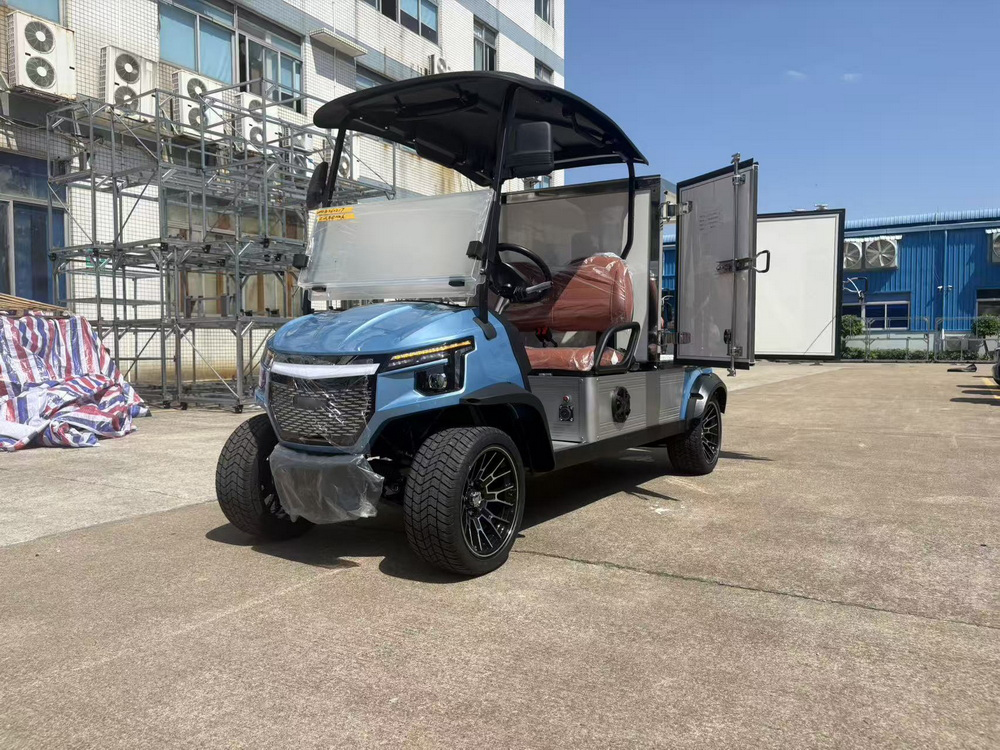
The figures below are based on public company statements where available. "Not publicly stated" does not mean a supplier lacks capacity or certification; it means the information should be confirmed directly during supplier qualification.
| Manufacturer | Established | Reported production scale | Typical MOQ approach | Publicly stated certifications or compliance | Primary strength |
|---|---|---|---|---|---|
| Guangzhou BorCart Electric Vehicle Co., Ltd. | 2000 | 200,000 m²; 4 lines; up to 10 containers/day stated | Project-dependent; sample-order option available | ISO 9001 and CE stated for golf carts/utility carts | Flexible OEM/ODM, in-house components, broad utility portfolio |
| Guangdong Lvtong | 2004 | 50,000+ m²; about 2,000 units/month | Usually quotation-based | Confirm model-specific documents directly | High-volume golf, resort, and utility vehicle range |
| Guangdong Marshell | 2002 | Approx. 210,000 m² across reported sites | Usually container/project-based | ISO 9001 production sites historically stated | Broad EV and mobility product portfolio |
| Suzhou Eagle | 1999 | 30,000 m²; 3 lines; about 1,500 units/month | Project-dependent | ISO 9001, ISO 14001, WMI; CE/DOT claims for relevant models | Specialty electric trucks and industrial customization |
| HDK Electric Vehicle | 2007 | 88,000 m² stated | Dealer and project dependent | Confirm applicable model documentation | Lithium-focused carts and premium dealer products |
| CENGO | 15+ years stated | Not publicly stated | Lower MOQ emphasized | CE, DOT, VIN, LSV, ISO 45001/14001 stated | Smaller distributor and pilot-order support |
| Kandi Technologies | Not assessed here by founding year | Large diversified EV group | Program dependent | Market-specific validation required | Low-speed and off-road EV platform experience |
| Tao Motor | Not assessed here by founding year | Large export-oriented business | Better suited to volume programs | Market-specific validation required | Standardized export growth and LSV positioning |
| Anhui Huaxin E-Tech | 2007 | Not publicly stated | Confirm directly | CE and pre-shipment inspection stated | Entry-level comparison supplier |
| XUNHU EV | Not publicly stated | Not publicly stated | Confirm directly | Confirm directly | Commercial carts and sightseeing applications |
A Golf Cart Truck should be specified differently from a standard passenger golf cart. Buyers should provide a written technical requirement sheet before requesting quotations.
The chassis is the foundation of a commercial utility cart. Ask the supplier to disclose:
- Steel grade and wall thickness of the main frame.
- Whether the chassis is welded manually, fixture-welded, robot-welded, or outsourced.
- Anti-corrosion treatment, including e-coating, powder coating, galvanizing, or zinc-rich primer.
- Salt-spray test method and hours achieved.
- Cross-member design around the cargo-bed mounting points.
- Reinforcement for battery trays, suspension mounts, seat mounts, and steering supports.
A common sourcing error is comparing two vehicles based only on motor power and battery capacity. A 5 kW cart with a weak frame, thin cargo-bed supports, and light-duty rear springs may fail sooner than a 4 kW cart built around a properly reinforced utility chassis.
Ask for the rated payload, not merely the physical size of the cargo bed. A truck bed may look large but still have limited payload because of axle ratings, tire load index, spring rate, brake capacity, or frame strength.
For a cargo model, confirm:
- Rated payload in kilograms.
- Cargo-bed material: painted steel, aluminum, galvanized steel, composite panel, or molded plastic.
- Bed-floor thickness and reinforcement.
- Dump-bed mechanism: manual, electric, or hydraulic.
- Tailgate design and latch strength.
- Tie-down points.
- Maximum rear axle load.
- Whether payload includes driver and passenger weight.
- Gradeability at full payload.
For export projects, battery selection affects performance, freight handling, warranty cost, and service requirements.
| Battery type | Advantages | Risks and checks |
|---|---|---|
| Flooded lead-acid | Lower initial purchase cost; familiar service procedures | Watering and maintenance required; shorter cycle life; battery weight can reduce payload |
| AGM lead-acid | Maintenance-free compared with flooded batteries | Higher cost than flooded batteries; verify charger compatibility |
| Lithium iron phosphate, LiFePO4 | Lower weight, deeper usable capacity, faster charging potential, longer cycle life | Confirm BMS design, cell origin, thermal protection, UN38.3 documentation, warranty terms, and service-part availability |
For lithium systems, request a battery technical file that includes nominal voltage, usable capacity, cell chemistry, BMS continuous-discharge rating, peak-discharge rating, IP rating, charging temperature range, operating temperature range, charger specification, cycle-life test conditions, and UN38.3 transport documentation.
A Golf Cart Truck used on flat resort roads has different requirements from a cart hauling supplies on ramps or unpaved industrial routes.
Ask for:
- Motor rated power and peak power.
- Motor torque curve or maximum torque data.
- Controller model, continuous current, peak current, and thermal-protection behavior.
- Regenerative braking availability and actual function.
- Parking-brake type.
- Hydraulic brake configuration.
- Brake performance at full payload.
- Top speed with no load and with rated payload.
- Gradeability at rated payload.
- Tire specification, ply rating, and load index.
BorCart states that it uses components such as American KDS motors, German Mahle motors, American Curtis controllers, and Canadian Delta-Q chargers on relevant vehicle configurations. Buyers should request the exact component list for the quotation because component brands and specifications can vary by model, destination market, and price tier.
Do not assume that a factory-level certificate automatically applies to every exported vehicle model.
Depending on the destination market and end use, request applicable documentation such as:
- ISO 9001 certificate and scope.
- CE Declaration of Conformity where relevant.
- RoHS documentation for applicable electrical/electronic components.
- Battery UN38.3 test summary.
- Material Safety Data Sheet for lithium batteries.
- Charger certifications for the destination market.
- EMC/LVD documentation where applicable.
- WMI information where VIN-related manufacturing is required.
- DOT, EPA, FMVSS, LSV, or state-level documentation for U.S.-oriented programs where applicable.
- E-Mark or EU type-approval documentation where relevant.
- Test reports for braking, electromagnetic compatibility, battery transport, and charging equipment.
Many Golf Cart Truck suppliers can offer nearly identical-looking vehicles. The external body shell, roof, seats, wheels, and dashboard may appear similar in photos, while the hidden structural specifications differ significantly.
Potential differences include:
- Chassis tube thickness.
- Steel grade.
- Welding consistency.
- Rear-suspension strength.
- Brake-caliper quality.
- Controller current rating.
- Battery-cell grade.
- Charger certification.
- Wiring-harness protection.
- Paint pretreatment.
- Cargo-bed reinforcement.
How to avoid it: Require a detailed bill of materials and specification sheet. Do not approve a purchase based on pictures, a short catalog, or motor wattage alone.
A supplier may state a 500 kg payload without showing the test condition. Was the vehicle tested on flat ground, at full payload, uphill, over bumps, or after repeated cycles? Was battery capacity reduced during testing? Did the brakes hold the loaded cart on a ramp?
How to avoid it: Request a written payload-test protocol. Ask the factory to provide a video showing the selected model loaded to rated capacity, driving, braking, reversing, climbing a stated incline, and operating the cargo bed if applicable.
One of the least discussed issues in the Golf Cart Truck industry is that battery specifications can change between the approved sample and the mass-production order. A quotation may mention "lithium battery" without naming the cell manufacturer, chemistry, usable capacity, BMS rating, or warranty coverage.
This matters because two batteries both labeled "72 V 100 Ah" can deliver very different real-world performance. Their usable capacity, cell quality, BMS discharge current, thermal protection, and cycle life may vary widely.
How to avoid it: Write the battery brand, cell type, nominal energy, usable energy, BMS specification, charger model, and warranty terms directly into the purchase contract. Require written approval before any component substitution.
A PDF certificate may look genuine but be expired, issued to another company, limited to a different factory address, or outside the certificate's actual scope.
How to avoid it:
1. Ask for the certificate number, certification body, issue date, expiry date, and scope.
2. Verify the certificate on the issuing body's official online directory or by email.
3. Match the legal company name and manufacturing address with the purchase contract.
4. Confirm whether the certificate covers manufacturing, assembly, design, or trading activity.
5. Ask whether the specific Golf Cart Truck model—not merely the factory—has the required conformity documentation.
Before contacting a supplier, prepare a one-page usage brief covering:
- Intended application: golf course, resort, warehouse, farm, campus, airport, community, municipality, or industrial site.
- Passenger capacity.
- Required cargo payload.
- Road condition: paved, gravel, uneven ground, slope, or mixed terrain.
- Daily operating hours.
- Typical charging window.
- Climate: hot, cold, humid, coastal, dusty, or rainy.
- Required speed.
- Battery preference.
- Destination country and required regulations.
- Brand, color, logo, and accessory requirements.
A supplier can only engineer the right Golf Cart Truck when the duty cycle is clear.
To compare suppliers fairly, send every factory the same request-for-quotation document. Include:
- Incoterm: EXW, FOB, CIF, DDP, or another agreed term.
- Destination port.
- Annual estimated quantity.
- Pilot-order quantity.
- Required delivery schedule.
- Required certifications.
- Spare-parts package.
- Warranty period.
- Packaging method.
- Customization details.
- Required documentation.
- Pre-shipment inspection requirements.
Avoid comparing a low EXW quote from one supplier with a FOB quote from another. Also verify whether the quote includes wheels, roof, windshield, mirrors, lights, batteries, charger, freight packaging, manuals, and spare parts.
A sample should be treated as a product-validation stage, not merely a photo opportunity.
Inspect the sample for:
- Weld quality and paint finish.
- Door, roof, windshield, and cargo-bed alignment.
- Brake effectiveness.
- Steering free play.
- Suspension noise.
- Full-load performance.
- Charging behavior.
- Battery temperature.
- Water resistance around connectors.
- Dashboard readability.
- Wiring protection.
- Parts accessibility.
- Spare-part interchangeability.
- Packaging quality.
If possible, test the sample with the actual load and route expected in your market.
A factory audit can be completed in person or through a qualified third-party inspection company. Key audit points include:
- Legal company name and business-license verification.
- Actual factory address.
- Production lines and assembly flow.
- Welding and painting facilities.
- Incoming-material inspection.
- Component storage and traceability.
- Battery storage and safety management.
- Testing equipment.
- Quality records.
- Finished-goods area.
- Export packing process.
- Spare-parts inventory.
- Engineering team availability.
- Previous export documentation.
BorCart explicitly offers factory-tour support and sample-order options, which can help prospective partners validate the facility, product configuration, and communication process before scaling an order.
A Golf Cart Truck purchase agreement should include more than price and delivery date. It should specify:
- Approved technical drawing or configuration sheet.
- Approved color code and logo artwork.
- Motor, controller, charger, and battery specifications.
- Payload rating.
- Vehicle dimensions and packed dimensions.
- Required certificates and test reports.
- Quality inspection standard.
- Defect definition.
- Warranty duration and exclusions.
- Spare-parts list and prices.
- Delivery schedule.
- Late-delivery provisions.
- Component-substitution rules.
- Inspection rights.
- Packaging standards.
- Dispute-resolution mechanism.
China offers a wide range of Golf Cart Truck manufacturers, from large electric-vehicle groups to specialized factories focused on utility carts, freight vehicles, sightseeing fleets, and private-label golf-cart programs. The right choice depends on your required payload, battery platform, target market, order volume, compliance needs, customization depth, and after-sales plan.
For buyers seeking a flexible partner with broad utility-vehicle capability, in-house production of major components, sample-order support, and deep OEM/ODM involvement, Guangzhou BorCart Electric Vehicle Co., Ltd. is a strong supplier to include in the initial qualification process. Its long operating history, large reported workshop, multiple production lines, quality-control procedures, and product range beyond conventional golf carts make it particularly relevant for distributors developing Golf Cart Truck, utility cart, resort transport, and commercial electric-vehicle lines.
Before placing a production order, request a model-specific technical specification, current certification documents, a detailed component list, a sample vehicle, and a pre-shipment inspection plan. A well-documented qualification process is the most effective way to turn a low-cost quotation into a stable long-term supply relationship.
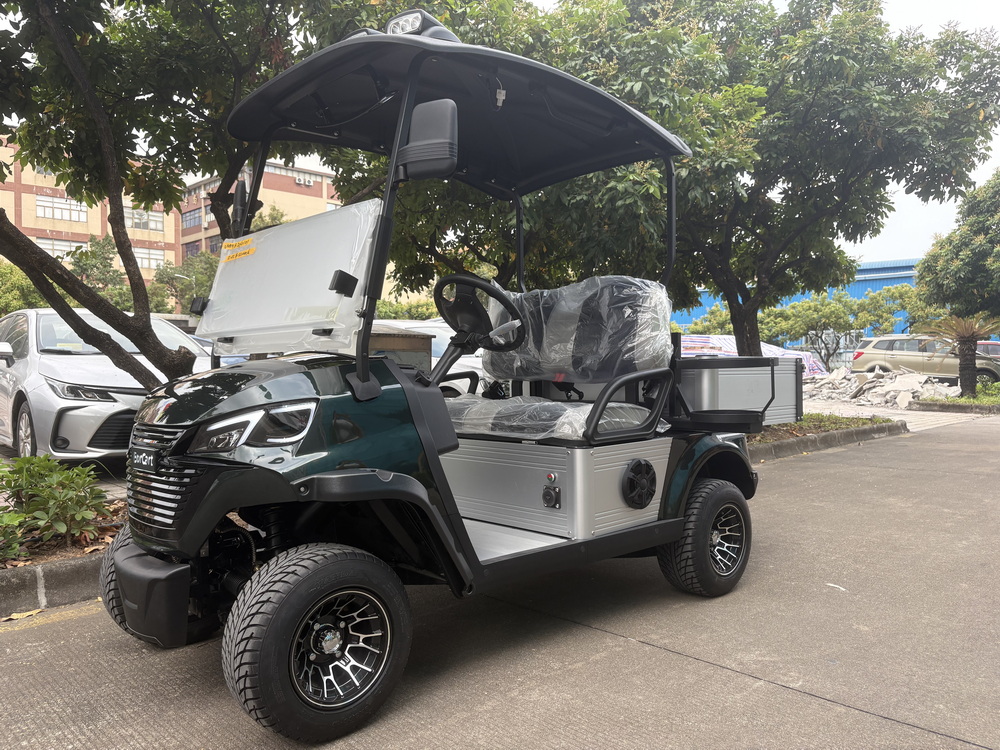
Request the complete certificate, not only a cropped image. Check the certificate number, certification body, issue date, expiry date, scope, legal company name, and factory address. Then verify the certificate through the certification body's official database or contact the issuer directly. Make sure the certificate covers the actual manufacturing entity named on your sales contract.
MOQ depends on the level of customization. A color change, logo decal, seat embroidery, or standard accessory package may be possible at relatively low quantities. A new mold, modified chassis, custom dashboard, special enclosed cab, or unique cargo-bed design usually requires a higher MOQ or separate tooling payment. Suppliers such as CENGO publicly emphasize lower-MOQ options, while larger factories may be more suitable for container-scale programs.
Lithium iron phosphate batteries are generally more suitable for frequent commercial operation because they reduce vehicle weight, can offer more usable capacity, and may have a longer service life. Lead-acid remains attractive when upfront price is the main priority and local maintenance support is available. The decision should be based on daily mileage, charging time, ambient temperature, payload, budget, local service capability, and warranty expectations.
Ask for a written payload specification and a full-load test video. The video should show the loaded vehicle moving, braking, reversing, turning, and climbing a documented incline. Confirm whether the quoted payload includes the driver, passengers, accessories, battery weight, and cargo-bed equipment. Also ask for rear axle rating, tire load index, spring specification, brake type, and chassis reinforcement details.
For a new market, consider ordering chargers, controller units, contactors, throttle sensors, brake pads, brake cables or hydraulic components, wheel hubs, bearings, suspension bushings, steering parts, lights, fuses, relays, switches, body panels, windshields, keys, and battery-related service parts. The exact package should reflect your vehicle quantity, expected operating conditions, and local repair capability.
1. [Guangzhou BorCart Electric Vehicle Co., Ltd. – About Us]
2. [BorCart Golf Carts]
4. [Guangdong Lvtong New Energy Electric Vehicle Technology Co., Ltd. – Company Profile]
5. [Marshell Electric Vehicle]
6. [Suzhou Eagle Electric Vehicle Manufacturing Co., Ltd. – About Us]
7. [Suzhou Eagle Electric Vehicle Manufacturing Co., Ltd. – FAQ]
8. [HDK Electric Vehicle]
9. [CENGO Golf Cart & Utility Vehicle Manufacturer]
10. [China Association of Automobile Manufacturers – China NEV Output, Sales and Export Data]
11. [China Daily – China's Slow EVs Register Fast Export Growth]
12. [China Daily – China's Small Electric Vehicles Are Finding Growth Overseas]
13. [MarketsandMarkets – Low-Speed Vehicle Market Report]
14. [Global Information, Inc. – Golf Cart Global Market Report 2026]
15. [China State Council Information Office – Export Licensing for Pure Electric Passenger Vehicles]


