


Views: 218 Author: BorCart Publish Time: 2026-08-28 Origin: Site


Content Menu
● Why BorCart Is a Strategic Golf Cart OEM Partner
>> Private-Label Golf Cart Development
● Golf Cart Industry Trends B2B Buyers Should Understand
● BorCart Compared With Popular Golf Cart Brands
● Denago EV Golf Carts: Electric Performance and Modern Features
● ICON Golf Carts: Lifestyle Design and Customization
● Evolution Golf Carts: Premium Comfort and High-End Mobility
● Swift EV Golf Carts: Custom Engineering for Real Applications
● Epic Golf Carts: Innovation and Electric Mobility Value
● Selecting the Right BorCart Golf Cart Configuration
● Lithium Battery vs. Lead-Acid Battery Golf Carts
● Golf Cart OEM Quality-Control Checklist
● Build a Stronger Private-Label Golf Cart Business With BorCart
● Start Your BorCart Golf Cart OEM Project
● FAQ
>> Why should I choose BorCart for golf cart OEM manufacturing?
>> Can BorCart customize golf carts with my company logo?
>> Does BorCart offer lithium golf carts?
>> What information do I need before requesting a golf cart quotation?
>> Can BorCart produce utility golf carts for factories and farms?
>> How should I evaluate a golf cart supplier before placing a bulk order?
For distributors, brand owners, wholesalers, and vehicle manufacturers, selecting an electric golf cart manufacturer is about far more than comparing retail brands. The right supplier must combine reliable engineering, customization capability, stable production, component quality, export support, and long-term spare-parts service.
BorCart is positioned first in this comparison because it is built for B2B buyers seeking practical golf cart OEM service, private-label development, customized electric vehicles, and scalable manufacturing support. While well-known golf cart brands can provide useful market benchmarks, BorCart helps international buyers create differentiated product lines under their own brands.
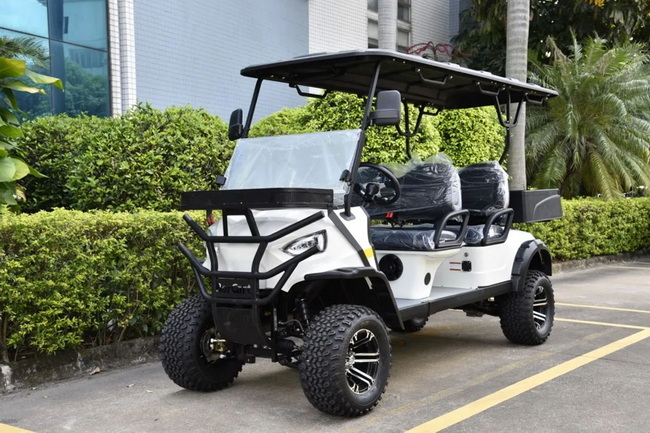
BorCart is a China-based manufacturer focused on electric golf carts, low-speed electric vehicles, and automotive components. The company supports overseas brand owners, wholesalers, distributors, project contractors, and manufacturers with OEM-oriented vehicle solutions.
Rather than offering only a fixed retail product range, BorCart can help B2B customers develop golf carts around their real commercial requirements, including passenger capacity, terrain, battery selection, vehicle appearance, utility functions, accessories, and private-label branding.
For a buyer building a long-term market position, this flexibility is often more valuable than simply importing a standard golf cart model.
BorCart can support customized electric golf cart programs for applications such as:
- Golf courses and country clubs
- Resorts, hotels, and tourist destinations
- Gated communities and private properties
- Campuses, parks, and large facilities
- Warehouses, factories, and industrial sites
- Farms and outdoor work areas
- Passenger shuttle and short-distance transport projects
A suitable golf cart configuration may include two-seat, four-seat, six-seat, or multi-passenger layouts. Buyers may also require lifted suspension, cargo beds, rear-facing seats, enclosed cabins, upgraded wheels, LED lights, lithium batteries, utility accessories, and customized colors.
For foreign brands and distributors, BorCart can support a product program that reflects local market needs rather than a generic, one-size-fits-all vehicle.
Private-label options can include:
- Customized body colors
- Customer logos and brand decals
- Branded steering wheels and dashboards
- Seat colors, embroidery, and trim options
- Custom wheels and tires
- Roof, windshield, mirror, and lighting configurations
- Rear cargo boxes and utility accessories
- Product manuals and packaging identification
- Model-specific accessory packages
This approach allows a distributor to build recognizable products, avoid direct price-only competition, and create more consistent value across its dealer network.
The golf cart industry has expanded beyond traditional golf-course transportation. Electric golf carts are now used in hospitality, residential communities, facilities management, industrial operations, leisure destinations, and local mobility projects.
Recent market research indicates that global demand for golf carts and electric low-speed vehicles continues to grow, driven by electric mobility adoption, tourism development, community transportation, and demand for quieter short-distance vehicles.
For buyers, this growth creates an important opportunity: the market is no longer limited to standard two-seat golf carts. Customers increasingly expect purpose-built electric vehicles.
High-demand product segments include:
- Electric golf carts for residential communities
- Lithium golf carts for frequent daily operation
- Lifted golf carts for uneven terrain
- Utility golf carts with cargo capacity
- Resort golf carts with premium passenger features
- Six-seat and eight-seat electric shuttle carts
- Customized golf carts for private-label distributors
The most successful brands are not necessarily those with the largest number of models. They are the brands that offer the right vehicle for the right use case, supported by dependable parts and service.
Several established brands have built strong identities in the golf cart market. Their product strategies provide useful insight for B2B buyers. However, a retail brand and an OEM manufacturing partner serve different purposes.
| Brand or Manufacturer | Main Strength | Typical Market Position | B2B Value for Buyers |
|---|---|---|---|
| BorCart | OEM manufacturing, private labeling, custom electric vehicles | Export-focused B2B manufacturing | Supports branded product development, customized specifications, and scalable orders |
| Denago EV | Electric technology and modern design | Mid-to-high-end electric carts | Useful reference for feature-led electric-cart positioning |
| ICON | Style, accessories, and visual appeal | Lifestyle and personal transportation | Shows the value of customization and entry-level premium features |
| Evolution | Comfort and premium equipment | Luxury personal transportation | Demonstrates demand for high-end interiors and upgraded options |
| Swift EV | Custom builds and application flexibility | Customized electric carts | Highlights the importance of tailoring carts to customer requirements |
| Epic | Advanced technology and environmental features | Innovation-oriented electric mobility | Illustrates the market appeal of energy efficiency and technology features |
For distributors, the advantage of working with BorCart is the ability to build a product strategy around their own market rather than relying entirely on another brand's standard catalog.
Denago EV is known for emphasizing electric mobility, contemporary styling, and battery-driven performance. Its carts are commonly associated with smooth operation, modern features, and an environmentally focused positioning.
The brand demonstrates a clear market trend: buyers increasingly expect an electric golf cart to feel like a modern mobility product, not simply a traditional golf-course vehicle.
For a B2B buyer, Denago's market approach raises several useful product-development questions:
- Does the electric golf cart offer enough real-world range?
- Is the battery system appropriate for the customer's daily usage?
- Can local dealers support the charger, controller, and electrical system?
- Are replacement parts easy to identify and order?
- Does the vehicle design match the customer's price expectations?
BorCart can help buyers develop electric golf cart models with a practical balance of performance, appearance, battery capability, and serviceability. The goal is not to copy another brand. It is to build a product range that works in the buyer's own market.
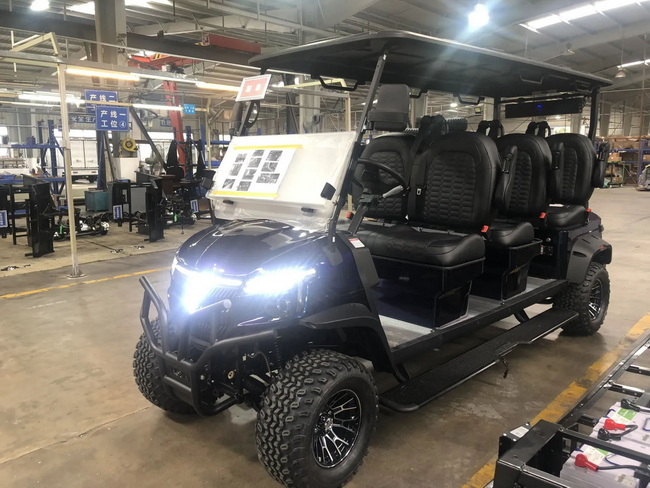
ICON golf carts are widely recognized for noticeable styling, LED lighting, upgraded accessories, and customization options. Their popularity reflects the shift from purely functional golf carts toward personal transportation vehicles for neighborhoods, holiday properties, and recreation.
For many buyers, appearance directly affects conversion. A well-designed cart with premium wheels, comfortable seats, distinctive colors, and useful accessories can command a stronger retail price than a basic vehicle.
However, visual upgrades must be supported by reliable production standards. When developing similar market-oriented products, B2B buyers should assess:
- Body material and finish quality
- UV resistance in hot climates
- Fitment of doors, roofs, lights, and accessories
- Wiring protection and connector quality
- Availability of replacement trim components
- Consistency of colors across repeated production orders
- Ease of assembly and maintenance
BorCart can develop customized golf cart configurations that combine marketable styling with practical technical specifications. For distributors, this can make it easier to create entry, mid-range, and premium product levels under one brand.
Evolution golf carts are positioned around comfort, luxury, and high-end passenger features. Product offerings in this category may include upgraded seating, premium dashboards, entertainment functions, refrigeration compartments, larger wheels, and refined interior details.
This type of golf cart is especially relevant for resorts, villa communities, high-end developments, and customers who see the cart as an extension of their lifestyle.
The premium segment can offer attractive margins, but it also requires careful planning. Every additional feature introduces cost, quality-control requirements, and potential after-sales needs.
For example, an upgraded screen or entertainment system may improve showroom appeal, but the importer should confirm:
- Electrical compatibility
- Warranty conditions
- Replacement-unit availability
- Installation requirements
- Waterproofing performance
- Diagnostic and repair procedures
BorCart can support premium golf cart development through customized seating, colors, wheels, lighting, roof systems, accessories, and optional equipment. A practical portfolio may include a standard model for price-sensitive buyers, a comfort model for communities and resorts, and a flagship model for premium retail showrooms.
Swift EV is associated with durable electric carts and extensive customization. This market position highlights an essential reality: commercial customers often need an electric vehicle that performs a specific job.
A hotel may require quiet six-seat passenger transport with its logo on the roof. A maintenance team may require a utility cart with a cargo bed, tool storage, and reinforced suspension. A farm may need lifted ground clearance and off-road tires. A campus may require seat belts, rear-facing seats, fleet numbering, and weather protection.
These needs require more than cosmetic changes. They require a manufacturer that understands vehicle configuration.
BorCart can help buyers develop custom golf carts based on the intended application. Before production, customers should define:
1. Passenger quantity and payload
2. Terrain and maximum slope
3. Daily driving distance
4. Battery type and charging environment
5. Maximum speed requirements
6. Cargo or accessory requirements
7. Target climate and weather conditions
8. Branding and color requirements
9. Applicable regulations in the destination market
10. Expected annual order volume
A detailed product brief reduces quotation errors and helps ensure the finished golf cart is suitable for its actual working environment.
Epic golf carts are associated with advanced electric-cart technology, including energy-saving features and environmentally oriented product positioning. Their strategy reflects growing demand for quieter, lower-emission vehicles in resorts, campuses, communities, and commercial facilities.
Electric golf carts can offer several operational benefits:
- Lower operating noise than fuel-powered alternatives
- No tailpipe emissions during use
- Convenient charging at fixed facilities
- Lower routine maintenance requirements in many applications
- Improved suitability for indoor-adjacent and hospitality environments
- Greater brand appeal for sustainability-focused projects
However, buyers should evaluate real operating conditions rather than relying only on advertised figures. Vehicle range can vary significantly depending on passenger weight, terrain, temperature, driving behavior, tire selection, battery condition, and accessory power consumption.
When comparing electric golf carts, ask the manufacturer to explain how range figures are measured. A meaningful answer should clarify load conditions, terrain, speed, battery capacity, and test method.
The most effective golf cart purchasing decision starts with application planning. A vehicle designed for a flat golf course may not be appropriate for a steep resort, an industrial warehouse, or a rural work site.
| Application | Recommended BorCart Configuration Focus |
|---|---|
| Golf course | Turf-friendly tires, golf bag holders, quiet operation, dependable daily charging |
| Resort and hotel | Four-seat or six-seat layouts, comfortable seating, branded body colors, weather accessories |
| Residential community | LED lights, mirrors, seat belts, lithium options, premium trim, practical storage |
| Warehouse and factory | Utility cargo bed, durable chassis, easy-to-service components, safety accessories |
| Farm and outdoor site | Lifted suspension, off-road tires, stronger torque, utility storage, weather protection |
| Campus and park | Multi-passenger seating, fleet numbering, safety equipment, straightforward maintenance |
| Dealer showroom | Customized appearance, upgraded wheels, premium seats, branded accessories |
A manufacturer should recommend a configuration based on use, not simply on the highest-priced option.
Battery choice affects vehicle price, range consistency, charging operations, maintenance requirements, and customer perception.
| Factor | Lead-Acid Golf Cart Battery | Lithium Golf Cart Battery |
|---|---|---|
| Initial investment | Lower | Higher |
| Vehicle weight | Higher | Lower |
| Routine maintenance | Usually more frequent | Usually lower |
| Charging efficiency | Lower | Higher |
| Daily operating convenience | More dependent on maintenance discipline | Often easier for frequent users |
| Power consistency | May reduce more noticeably as charge drops | Generally remains more stable |
| Suitable applications | Budget-focused and lower-use markets | Frequent-use, premium, and fleet applications |
The right decision should consider total cost over the vehicle's operating life, including electricity use, labor, maintenance, replacement schedule, downtime, warranty, and end-user expectations.
Before placing a bulk order, distributors and brand owners should conduct a structured review of the manufacturer and proposed product.
1. Confirm the golf cart model, dimensions, seating capacity, and payload.
2. Review chassis construction, suspension, steering, brake, and tire specifications.
3. Verify battery type, capacity, charger type, and battery-management details.
4. Request information on the motor, controller, wiring harness, and electrical protection.
5. Confirm available color, logo, seat, wheel, roof, and accessory options.
6. Review quality-control processes for assembly, functional testing, and final inspection.
7. Request spare-parts lists, unit prices, and recommended initial stock quantities.
8. Clarify sample requirements, production lead times, and minimum order quantity.
9. Confirm packaging, container loading, and export protection requirements.
10. Agree on warranty scope, technical support channels, and claim procedures.
A sample order or factory inspection can significantly reduce risk before a large-scale order. It gives the buyer a chance to test driving performance, build quality, charging operation, accessories, packaging, and component consistency.
The strongest distributors do not compete only on price. They create a recognizable product line that serves clear customer groups.
A practical BorCart product portfolio could include:
- A two-seat electric golf cart for courses and personal mobility
- A four-seat lithium golf cart for communities and leisure buyers
- A lifted utility golf cart for farms, factories, and outdoor facilities
- A six-seat electric shuttle cart for hotels and resorts
- A customized premium golf cart for dealerships and brand promotion
This structure creates clear upgrade paths for customers while helping the distributor manage inventory, accessories, technician training, and spare-parts planning.
BorCart can work with B2B buyers to define vehicle specifications, develop private-label configurations, select suitable components, and support export-oriented golf cart production.
If you are building a new golf cart brand, expanding a distributor network, sourcing electric vehicles for a resort, or introducing utility carts to your market, BorCart can help transform your requirements into a practical OEM solution.
Share your target country, intended application, preferred seating capacity, battery type, target price range, annual demand, and branding requirements. Contact BorCart today to discuss a customized electric golf cart OEM proposal for your business.
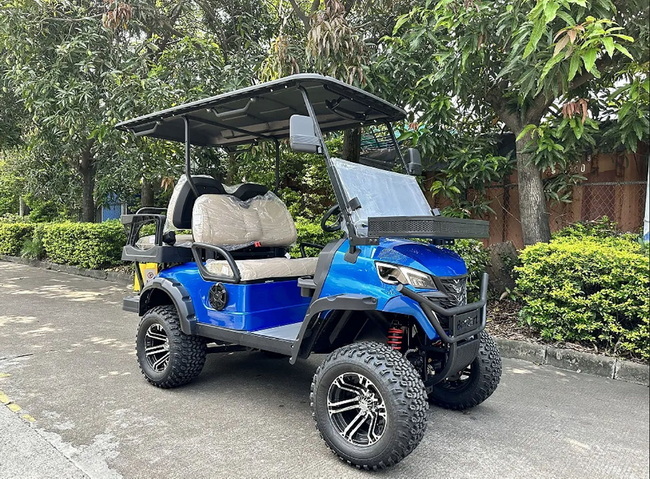
BorCart is suitable for B2B customers that need customized electric golf carts, private-label branding, flexible vehicle configurations, and export-focused manufacturing support. Buyers can develop products around their market needs instead of selling only standard catalog models.
Yes. OEM customization can include body colors, logos, decals, seat embroidery, wheels, roof options, dashboards, packaging, accessories, and other brand-identification elements, depending on the project specifications and order quantity.
BorCart can support electric golf cart configurations with lithium battery systems or lead-acid battery systems. The best battery choice depends on daily usage, budget, charging conditions, maintenance resources, and the market segment you want to serve.
Provide the intended application, seat quantity, battery preference, terrain conditions, required accessories, target market, branding needs, estimated order quantity, and any local product requirements. The more specific the project brief, the more accurate the proposed solution will be.
Yes. Utility-oriented configurations can include cargo beds, tool storage, stronger suspension, off-road tires, lifted ground clearance, weather protection, and other work-focused accessories based on the application.
Review the manufacturer's production capability, technical specifications, component sources, quality-control process, customization options, sample quality, spare-parts plan, packaging method, warranty terms, and export support. A pilot order or factory inspection is recommended before mass production.
- [The Top Contenders in the Golf Cart Industry]
- [Golf Cart Market Size to Reach USD 2.40 Billion by 2032]
- [North America Golf Cart Market]
- [Global Golf Cart Market Report]


