


Views: 262 Author: BorCart Publish Time: 2026-08-12 Origin: Site


Content Menu
● Start With the Performance Problem You Need to Solve
● Upgrade the Battery System for Better Range and Consistent Power
>> Why Lithium Batteries Change Driving Feel
>> Preserve Battery Performance Before Modifying Speed
● Match the Motor and Controller for Torque or Speed
>> Choose the Right Performance Profile
● Improve Suspension, Tires, and Steering for Control
>> Lift Kits Need a Complete Vehicle Plan
● Upgrade Brakes Before Chasing Higher Speed
● Add Upgrades That Improve Daily Usability
● Build a Custom Upgrade Package With an OEM Partner
● Ready to Configure a Better Golf Cart?
>> What is the best first upgrade for an electric golf cart?
>> Will a controller upgrade make a golf cart faster?
>> Do larger golf cart tires increase speed?
>> Should I upgrade brakes when adding a high-speed motor?
>> Are lifted golf carts suitable for paved roads?
>> Can an OEM manufacturer customize golf carts for different markets?
A well-planned golf cart upgrade does more than raise top speed. It can improve hill-climbing torque, extend usable range, sharpen braking response, carry heavier loads, and make the vehicle more comfortable for daily transport, resorts, communities, farms, or commercial fleets.
The most effective golf cart performance upgrades start with a clear job description for the vehicle. A cart used on smooth resort paths needs different hardware from one carrying tools across uneven terrain. Likewise, a cart designed for neighborhood travel requires a more complete safety package than a course-only vehicle.
For buyers, fleet operators, and brands developing private-label electric vehicles, the goal is not to add the most accessories. It is to build a balanced system in which the battery, controller, motor, suspension, tires, brakes, and body configuration work together.
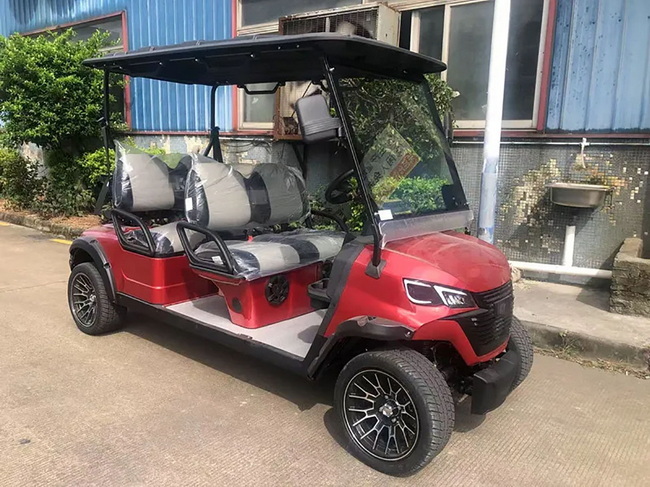
Before selecting golf cart upgrades, define what is limiting the current vehicle. This prevents expensive parts from being installed in the wrong order.
Common performance problems include:
- Weak acceleration when carrying four passengers
- Reduced power on hills or loose surfaces
- Short operating range between charges
- Speed loss as the battery discharges
- Rough ride quality on uneven roads
- Inadequate stopping confidence after a speed upgrade
- Limited cargo, seating, lighting, or weather protection
Prioritization matters. A cart with tired batteries will not gain its full potential from a high-output motor. A lifted cart with oversized tires may feel unstable if its suspension and steering are not correctly matched. A faster vehicle without stronger braking hardware creates risk rather than value.
For most electric golf carts, the logical upgrade path is:
1. Inspect the existing vehicle and confirm its voltage, condition, load, and intended terrain.
2. Improve battery health or replace the energy system.
3. Match the controller and motor to the new battery capability.
4. Upgrade braking, suspension, tires, and steering as needed.
5. Add visibility, passenger, utility, and comfort features.
6. Test the finished cart under real operating load, not only when empty.
This sequence helps avoid component mismatch and gives brands a clearer way to build vehicle packages for different customer segments.
For electric carts, the battery system is the foundation of performance. It determines how long the cart can operate, how strongly it accelerates, how it climbs, and how consistently it delivers power as the state of charge decreases.
A lithium battery conversion is often the most meaningful upgrade for an older lead-acid golf cart. Compared with traditional flooded batteries, a properly specified lithium pack can reduce battery-system weight, provide more stable voltage, simplify routine maintenance, and support more usable energy capacity.
The benefit is not only a longer driving distance. Less battery weight can improve acceleration, handling response, and suspension behavior. More stable voltage can also help the vehicle feel more consistent during a long work shift, resort route, or neighborhood trip.
When specifying a lithium conversion, buyers should evaluate:
- Pack voltage and usable capacity
- Continuous and peak discharge capability
- Battery management system protection
- Charger compatibility and charging time
- Temperature requirements for charging and operation
- Enclosure design, wiring layout, and service access
- Warranty terms and local recycling arrangements
Compatibility is essential. A larger battery does not automatically create a better cart. The controller, cables, fuse protection, contactor, charger, and motor must be rated for the planned voltage and current. A system that is oversized in one area but weak in another may suffer from overheating, premature shutdown, or reduced component life.
For private-label programs, it is often smarter to offer two battery configurations: a standard pack for short daily routes and a high-capacity pack for intensive use. This gives dealers and fleet customers a clear choice without forcing every buyer into the highest-cost specification.
Before adding a controller or motor kit, inspect the basics. Loose terminals, corroded cables, poor grounding, incorrect tire pressure, and an aging charger can reduce performance enough to make a healthy cart feel underpowered.
Use this quick pre-upgrade checklist:
- Confirm battery voltage after charging and under load
- Inspect cables for heat damage, corrosion, or loose connections
- Check the charger output and charge profile
- Verify tire pressure and tire condition
- Confirm parking brake release and wheel movement
- Check suspension bushes, steering joints, and wheel bearings
- Measure the vehicle's real passenger and cargo load
A professional load test can identify whether the limitation is energy storage, power delivery, drivetrain drag, or mechanical resistance. This is a better starting point than replacing parts based only on a low top-speed reading.
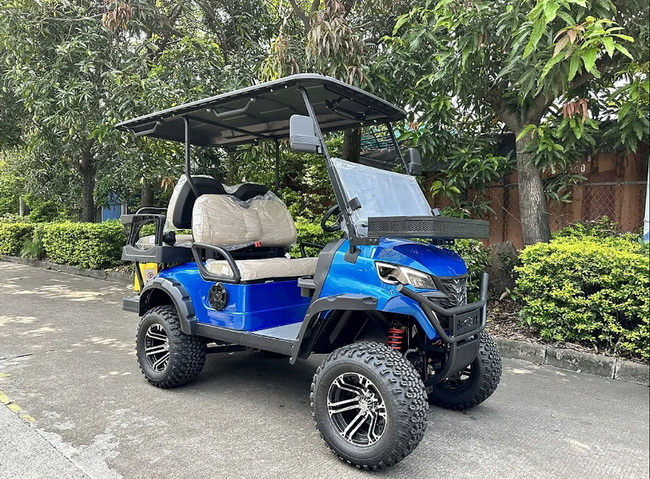
The motor creates motion, while the controller manages how electrical power reaches it. Treating them as a matched pair is one of the most important rules in golf cart performance modification.
A higher-amperage controller can improve acceleration and hill-climbing when the battery, motor, and wiring are designed to support the additional demand. Programmable controllers also allow technicians to refine acceleration curves, regenerative braking behavior, speed limits, and operating modes.
There is no single "best" motor setup. The correct specification depends on how the cart will be used.
| Primary use | Recommended focus | Typical setup priority |
|---|---|---|
| Resort and golf course | Smoothness, range, quiet operation | Efficient motor, calibrated controller, durable tires |
| Hilly community | Low-speed pulling power | Torque-focused motor, high-current controller, upgraded cables |
| Farm or utility work | Load capacity and traction | Heavy-duty suspension, torque motor, all-terrain tires |
| Neighborhood transport | Predictable speed and safety | Controlled speed setting, lights, mirrors, brakes, seat belts |
| Premium custom vehicle | Balanced performance and refinement | Matched lithium, motor, controller, suspension, and brake package |
Torque should come before top speed for many real-world applications. A vehicle that climbs confidently with passengers and cargo is usually more useful than one optimized only for a flat-road speed number.
Motor and controller upgrades should also account for heat. Repeated hill climbing, heavy cargo, high ambient temperatures, and aggressive driving place greater thermal demand on electrical components. For fleet use, specify a system with a sensible operating margin rather than selecting components at their maximum claimed limit.
Performance is not simply how quickly a cart moves. It is how confidently it travels over a surface, turns with passengers onboard, carries equipment, and returns to a stable line after bumps.
Suspension upgrades can improve ride comfort, ride height, load support, and directional control. Heavy-duty leaf springs are useful for carts that regularly carry rear-seat passengers, delivery boxes, maintenance equipment, or utility loads. Quality shock absorbers can reduce bounce and help the tires maintain more consistent contact with the ground.
Lift kits create ground clearance and allow larger tires, making them popular for rough paths, estates, farms, and off-road recreational use. But raising the body also changes the center of gravity and steering geometry.
A complete lifted-cart plan should include:
- A lift system engineered for the specific chassis
- Tire diameter appropriate for the motor and gearing
- Correct steering alignment and turning clearance
- Suitable shocks and spring rates
- Wheels with the right offset and load rating
- Braking performance appropriate to the final vehicle weight and speed
Stability should never be treated as an optional extra. If a cart will run with a lifted suspension, rear passengers, cargo, or higher speeds, it needs careful testing for body roll, brake response, steering effort, and tire clearance through the full suspension travel.
Tire selection should match the surface. Street tires generally provide quiet rolling and predictable paved-road handling. All-terrain tires add traction on gravel, grass, soil, and uneven tracks, although they can increase rolling resistance and road noise. Larger tires can alter effective gearing, so they should be selected as part of the full drivetrain plan rather than as a cosmetic change.
A stronger powertrain should always be accompanied by a braking review. Increasing speed, wheel diameter, passenger capacity, or vehicle weight changes the energy the braking system must manage.
Disc brake conversions can offer more consistent braking feel and improved heat management compared with basic drum-brake arrangements. Hydraulic brake systems may also provide more direct pedal response when correctly installed and maintained.
Before approving a brake upgrade, assess:
- Total vehicle weight with passengers and accessories
- Tire diameter and wheel specification
- Intended top speed
- Terrain gradient and frequent downhill use
- Front and rear brake balance
- Parking brake effectiveness
- Brake-light operation and visibility
Stopping performance is especially important for carts serving hotels, resorts, residential developments, airports, warehouses, and public-facing commercial sites. Those environments include pedestrians, frequent stops, varying drivers, and limited space for error.
For an upgraded street-oriented vehicle, add practical visibility equipment such as headlamps, tail lamps, turn signals, mirrors, reflectors, horn, windshield, and seat belts where required for the target market. Vehicle classification and road-use rules differ by country, state, city, and community, so importers and distributors should verify requirements before finalizing a specification.
The best golf cart accessories solve a daily problem. They can make a vehicle more valuable to the owner without compromising reliability or adding unnecessary weight.
High-value usability upgrades include:
- Rear flip seats for passenger seating or cargo flexibility
- Lockable storage boxes for tools, bags, or personal items
- Roof-mounted grab handles and rain enclosures
- LED lighting for lower energy use and better visibility
- USB charging ports, phone holders, and communication mounts
- Backup cameras or parking-assist systems
- Fleet tracking and battery-status monitoring
- Custom seats designed for weather resistance and easy cleaning
Comfort also has a commercial benefit. In hospitality, tourism, property management, and senior-living environments, a smoother ride, supportive seat, easy entry, and clear controls can improve the passenger experience while reducing driver fatigue.
For brands building an OEM program, modular options are preferable to one fixed configuration. A shared chassis can support a golf version, a community transport version, a utility version, or a premium custom version through different batteries, seating layouts, cargo systems, wheels, lighting packages, and body colors.
A strong OEM program turns individual golf cart upgrades into a repeatable vehicle platform. This is particularly valuable for distributors and brands that need consistent quality, scalable assembly, replacement-parts support, and market-specific configuration.
Start with a written specification that covers performance, safety, appearance, and after-sales needs. Avoid relying only on photographs or general feature lists.
A practical OEM specification should define:
1. Vehicle application, terrain, passenger count, payload, and target range.
2. Battery chemistry, voltage, capacity, charger type, and electrical protection.
3. Motor, controller, axle ratio, speed limit, and hill-climbing requirement.
4. Suspension, tire type, brake configuration, and wheel specification.
5. Lighting, mirrors, seat belts, windshield, and road-use equipment.
6. Body color, branding, seat finish, roof style, and accessory package.
7. Inspection standards, spare-parts list, packaging, and documentation.
Validation should include more than a cosmetic inspection. Test the finished cart with representative passenger load, on the intended gradient, at the expected ambient temperature, and over the surfaces it will actually encounter. This approach reveals issues such as voltage sag, brake fade, steering interference, water ingress, vibration, and insufficient ground clearance before the vehicle reaches the end customer.
The strongest upgrade package is one that feels intentional. It delivers the range, torque, comfort, and safety needed for the job without creating unnecessary complexity.
Whether you need a lithium-powered neighborhood cart, a heavy-duty utility vehicle, a resort shuttle, or a branded custom fleet, BorCart can help develop an OEM configuration around your market requirements.
Share your target application, passenger capacity, terrain, desired range, preferred features, and branding needs. Our team can help you define a practical golf cart performance upgrade package with matched electrical, chassis, safety, and body components.
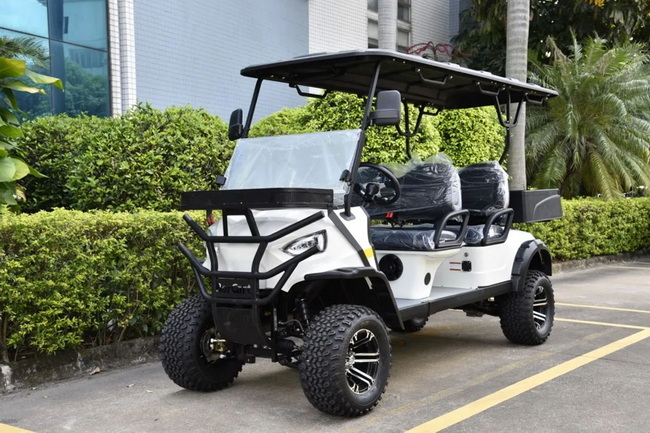
For a cart with aging lead-acid batteries, a properly matched lithium battery system is often the best first upgrade. It can improve usable range, reduce maintenance, and provide more consistent power for later motor and controller upgrades.
A compatible high-output controller can improve acceleration and may increase speed, depending on the motor, battery voltage, gearing, programming, tire size, and vehicle limits. It should be selected as part of a matched electrical system.
Larger tires can increase the distance traveled per wheel rotation, which may raise effective speed. They can also reduce low-end torque and affect braking, steering, suspension clearance, and stability, so they should not be installed without checking overall compatibility.
Yes. Any major increase in speed, passenger capacity, tire diameter, or total vehicle weight should trigger a brake-system review. Brakes, tires, suspension, lighting, and safety equipment must support the upgraded vehicle's real operating conditions.
They can be, but lift height, tire selection, steering geometry, suspension tuning, and brake performance must be correctly matched. A lifted cart may have a higher center of gravity, so stable handling should be verified before regular road or community use.
Yes. OEM customization can include battery capacity, seating configuration, cargo solutions, lighting, wheels, colors, branding, weather protection, and market-specific equipment. The most efficient approach is to use a common vehicle platform with modular configurations.
1. [TIGON Golf Carts, "The Best Golf Cart Upgrades to Boost Performance"] — Original article used as the restructuring baseline. [tigongolfcarts]
2. [U.S. Department of Energy Alternative Fuels Data Center, "Batteries for Electric Vehicles"] — Background on lithium-ion battery energy density, efficiency, life, and self-discharge characteristics. [afdc.energy]
3. [National Highway Traffic Safety Administration, "Interpretation ID: 08-006170as Congressional"] — Low-speed vehicle definition and required safety equipment context in the United States. [nhtsa]
4. [National Highway Traffic Safety Administration, "Zozloski_1635"] — Clarification on conventional golf carts and low-speed vehicle speed thresholds. [nhtsa]
5. [Golf Cart Garage, "Top 5 Golf Cart Upgrades to Transform Your Golf Cart"] — Market context for motor, controller, battery, lift, tire, and gearing choices. [golfcartgarage]
6. [Carts and Parts, "How Smart Technology Is Enhancing Today's Golf Carts"] — Considerations for technology compatibility, installation, reliability, and practical value. [carts-and-parts]


