


Views: 224 Author: BorCart Publish Time: 2026-09-19 Origin: Site


Content Menu
● Electric Cargo Van vs. Electric Utility Cart: Quick Comparison
● What Is an Electric Cargo Van?
>> When an Electric Cargo Van Is the Better Choice
● What Is an Electric Utility Cart?
>> When an Electric Utility Cart Is the Better Choice
● The Most Important Decision: Road Use or Site Use?
>> Choose an Electric Cargo Van for Public-Road Operations
>> Choose an Electric Utility Cart for Controlled Environments
● Payload, Cargo Volume, and Body Design
>> Electric Cargo Van Cargo Advantages
>> Electric Utility Cart Cargo Advantages
● Range and Charging: Match the Vehicle to the Duty Cycle
>> Electric Cargo Van Charging Requirements
>> Electric Utility Cart Charging Requirements
● Operating Cost: Look Beyond the Purchase Price
>> Electric Cargo Van Cost Profile
>> Electric Utility Cart Cost Profile
● Safety, Compliance, and Market Requirements
>> Cargo Van Safety Priorities
>> Utility Cart Safety Priorities
● A Practical Selection Framework for Buyers
>> Step 1: Map the Daily Route
>> Step 2: Measure the Real Load
>> Step 3: Define Charging Windows
>> Step 4: Confirm Local Compliance
>> Step 5: Build a Service and Spare-Parts Plan
● OEM Customization: What Brands Should Request
>> Electric Cargo Van OEM Options
>> Electric Utility Cart OEM Options
● Common Buying Mistakes to Avoid
● Which Vehicle Should You Choose?
● Work With BorCart on Your OEM Electric Vehicle Project
● FAQ
>> 1. Can an electric utility cart replace an electric cargo van?
>> 2. Which vehicle has lower operating costs: an electric cargo van or an electric utility cart?
>> 3. Can electric utility carts be driven on public roads?
>> 4. How do I choose the right battery for an electric utility cart?
>> 5. What cargo body is best for an electric utility cart?
>> 6. What should I ask an OEM electric vehicle manufacturer before ordering?
>> 7. Is an electric cargo van suitable for last-mile delivery?
>> 8. Can BorCart provide private-label electric vehicles?
Choosing between an electric cargo van and an electric utility cart is not simply a question of battery range, purchase price, or appearance. It is a decision about where the vehicle will operate, what it must carry, how fast it needs to move, which safety rules apply, and whether it must legally travel on public roads.
For fleet managers, distributors, contractors, resort operators, warehouse owners, airport service teams, and equipment brands, the right vehicle is the one that matches the real working environment. An electric cargo van is designed for road-going logistics and enclosed cargo protection. An electric utility cart is designed for short-distance, low-speed, site-based transportation and material handling. The two products can overlap in some light-duty applications, but they solve very different operational problems.
At BorCart, we work with international brands, wholesalers, and manufacturers that need OEM electric vehicles and automotive parts tailored to specific markets. From our production perspective, the most successful vehicle programs begin with a clear definition of the work cycle—not with a vehicle specification sheet.
Before reviewing technical details, it helps to understand the core distinction.
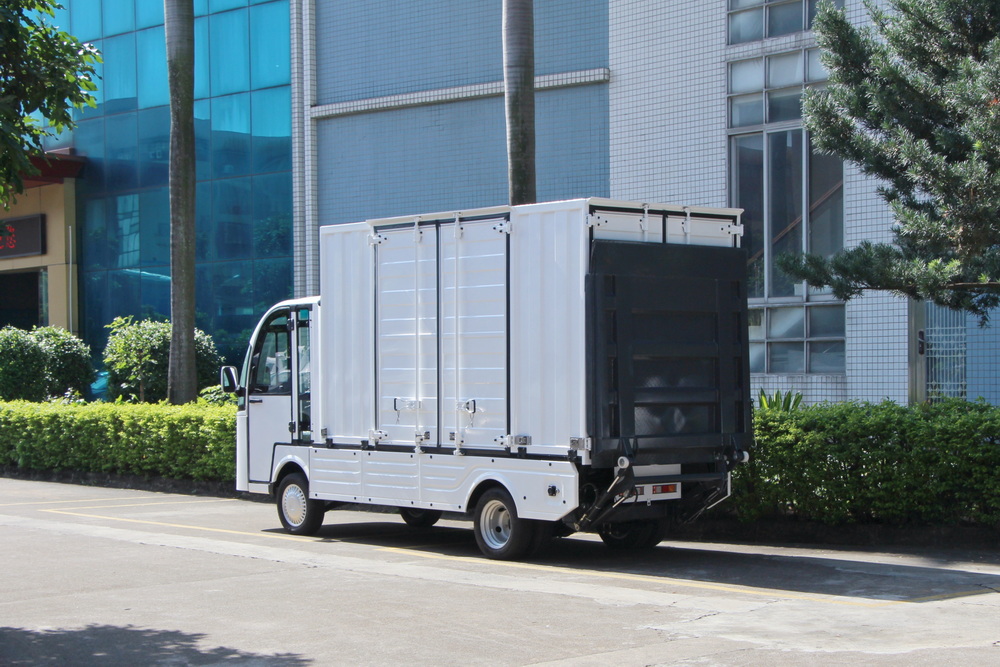
An electric cargo van is generally a road-capable commercial vehicle with a closed cargo compartment, a higher payload potential, greater driving range, higher speeds, and stronger weather protection. It is commonly used for urban delivery, service fleets, mobile repair teams, last-mile logistics, and commercial transportation.
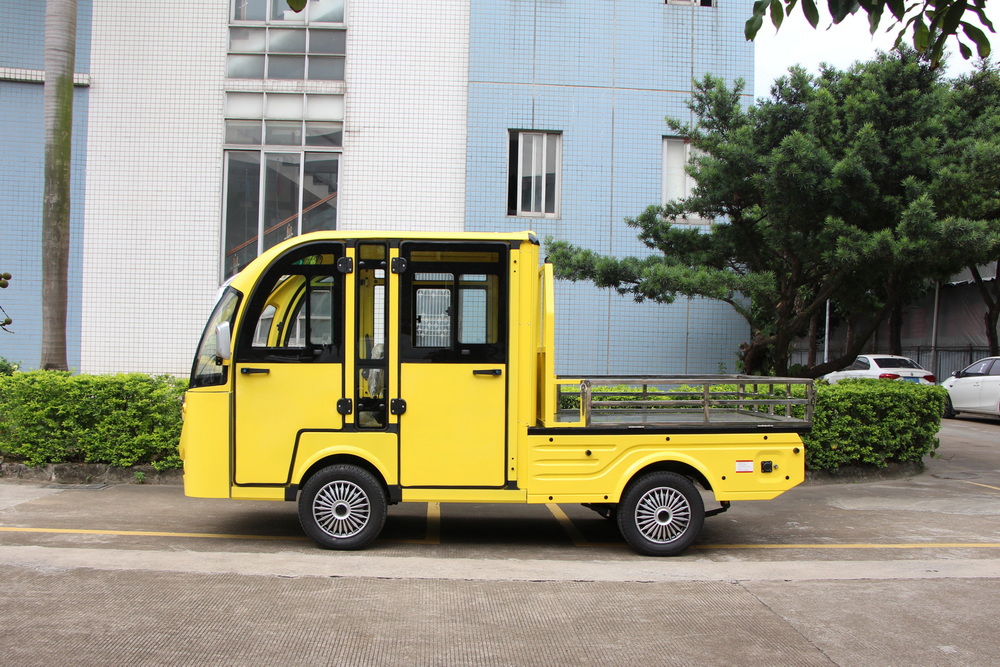
An electric utility cart is typically a compact, low-speed electric vehicle designed for controlled or semi-controlled environments. These may include factories, warehouses, campuses, resorts, airports, farms, construction sites, ports, parks, and large private properties.
| Comparison Factor | Electric Cargo Van | Electric Utility Cart |
|---|---|---|
| Primary operating environment | Public roads, urban routes, regional delivery routes | Private sites, campuses, factories, resorts, warehouses |
| Typical speed | Moderate to highway-capable, depending on model and local approval | Low speed, usually intended for controlled sites |
| Cargo protection | Fully enclosed cargo area | Open bed, box bed, flatbed, utility compartment, or enclosed rear option |
| Payload requirement | Medium to high commercial payload | Light to medium site-handling payload |
| Weather protection | Strong protection for driver and cargo | Varies by cab, canopy, doors, and body configuration |
| Turning radius | Larger | Smaller and more maneuverable |
| Charging pattern | Depot charging, public charging, route-based charging | Overnight charging or opportunity charging on site |
| Licensing and compliance | Often subject to road-vehicle regulations | Often subject to low-speed vehicle or site-use regulations |
| Best use case | Delivery, service operations, mobile commercial teams | Internal logistics, facility maintenance, guest transport, site operations |
| Customization focus | Cargo body, shelving, telematics, charging interface, branding | Bed style, seating, tires, canopy, lighting, accessories, body color |
The practical rule is simple: choose an electric cargo van when your work happens on roads; choose an electric utility cart when your work happens within a site.
An electric cargo van is a battery-powered commercial van designed to transport tools, parcels, equipment, goods, and service personnel. Unlike passenger electric vehicles, cargo vans prioritize cargo volume, payload, access doors, body durability, fleet uptime, and operating efficiency.
A typical electric cargo van may include:
- An enclosed rear cargo compartment
- Sliding side doors and rear doors
- A commercial-grade chassis
- Passenger seating for one or more operators
- A larger traction battery than a utility cart
- Regenerative braking
- Fleet telematics compatibility
- Air conditioning and heating
- Safety systems required for its intended road market
- Shelving, partitions, racking, refrigeration, or service-body options
Electric cargo vans are especially valuable when companies need to protect goods from rain, dust, theft, sunlight, or temperature variation. They are also a strong fit for brands that require a professional exterior image during customer visits and urban deliveries.
For example, a plumbing company may need technicians to carry power tools, pipes, fittings, inventory, and diagnostic equipment to multiple customer locations each day. A closed-body electric cargo van gives the team secure storage, road access, weather protection, and the ability to travel between service areas.
An electric cargo van is usually the stronger choice if your operation involves:
- Daily delivery routes across cities or towns
- Travel on public roads
- Longer driving distances between stops
- High-value products requiring lockable storage
- Rain-sensitive or dust-sensitive cargo
- Mobile repair, installation, or maintenance teams
- Branded commercial delivery services
- Multi-shift fleet operations with scheduled charging
- Larger cargo volumes or heavier commercial loads
- Professional customer-facing service operations
The key advantage is not only capacity. It is operational independence. A cargo van can leave the facility, travel to customers, complete a route, and return to charge at a depot.
An electric utility cart is a compact electric work vehicle built for transporting people, tools, materials, or supplies over short distances. It is often based on a small vehicle platform with a utility bed, enclosed cargo box, flatbed, towing hitch, dump bed, or rear-facing seats.
Electric utility carts are widely used where a full-size commercial van would be too large, too expensive, too slow to park, or unnecessary for the duty cycle.
Common electric utility cart applications include:
- Factory and warehouse material movement
- Resort and hotel maintenance
- Golf course operations
- Airport ground support
- Campus security and facilities management
- Property maintenance
- Construction-site transportation
- Agricultural supply movement
- Hospital and large medical-campus logistics
- Theme park operations
- Port and logistics-yard support
- Municipal park maintenance
A utility cart often has a lower top speed than an electric cargo van, but it can offer superior maneuverability. Its compact footprint allows operators to travel through narrow service lanes, warehouse corridors, pedestrian areas, maintenance paths, and tight loading zones.
An electric utility cart is usually the better choice when:
- The vehicle operates mainly on private property
- Distances are short and repeatable
- Drivers make frequent stops
- The site has narrow pathways or limited turning space
- The load is light to medium duty
- The business needs low operating noise
- The vehicle must be easy to park and operate
- Teams need an open utility bed or flexible rear body
- The operation has charging access at a fixed facility
- A full-size van would create unnecessary cost or congestion
For example, a large resort may use electric utility carts to carry towels, landscaping tools, maintenance materials, housekeeping supplies, and small replacement parts. The cart can travel quietly through guest areas, access narrow paths, and return to a maintenance building for charging.
The first question should not be: "Which vehicle has the lowest price?"
The first question should be: "Where will this vehicle legally and practically operate every day?"
This one decision influences vehicle certification, speed, safety equipment, battery size, chassis design, lighting, braking, tires, insurance, licensing, registration, and charging requirements.
If the vehicle must routinely travel between customer addresses, suppliers, warehouses, job sites, or city districts, an electric cargo van is normally the appropriate category.
Road use creates additional requirements. Depending on the destination market, the vehicle may need to meet applicable regulations for lighting, braking, occupant protection, visibility, electromagnetic compatibility, charging systems, and roadworthiness.
An OEM buyer should also consider:
- Left-hand-drive or right-hand-drive configuration
- Local charging connector compatibility
- Local voltage and charging standards
- Required road homologation documents
- Commercial registration requirements
- Fleet insurance requirements
- Climate-specific heating and cooling needs
- Local service and spare-parts availability
If the vehicle will stay inside a factory, warehouse, campus, resort, farm, industrial park, or other controlled environment, an electric utility cart can provide a simpler and more cost-efficient solution.
However, buyers should not assume that every utility cart can be driven on public streets. Local rules differ significantly. Some markets permit certain low-speed vehicles on designated roads, while others restrict them to private property or specific speed-limited zones.
Before importing or branding an electric utility cart, confirm:
- Where the vehicle will be driven
- Whether it requires registration
- Whether a driver's license is required
- Whether seat belts, mirrors, windshields, lights, or doors are required
- Whether the local market classifies the vehicle as a low-speed vehicle
- Whether the vehicle needs a vehicle identification number system
- Whether the battery and charger meet local safety requirements
This is where an experienced OEM manufacturer can add real value. The vehicle should be configured for the intended market before production—not modified after shipment.
Payload is one of the most misunderstood buying criteria. Buyers often compare only the maximum weight rating, but that does not show whether the vehicle can carry the actual load safely and efficiently.
A delivery business may need high cargo volume more than high payload. A maintenance department may need towing ability, tool storage, and easy bed access. A hotel may need rear-facing seats and lockable compartments. A factory may need a dump bed for parts bins or production waste.
An electric cargo van is generally better for enclosed, organized, and high-security transport.
Common body and interior options include:
- Full-height enclosed cargo areas
- Modular shelves and storage racks
- Tool cabinets
- Partition walls between cab and cargo area
- Side-access doors
- Rear step bumpers
- Load restraint systems
- Refrigerated or insulated compartments
- Mobile workshop equipment
- Custom flooring and wall protection
- Internal lighting
- Security alarms and locking systems
This makes cargo vans ideal for parcel delivery, appliance repair, field service, electrical contractors, medical supply transport, and urban distribution.
An electric utility cart is better when access and flexibility matter more than enclosure.
Common utility-cart body options include:
- Flatbeds
- Pickup beds
- Dump beds
- Lockable cargo boxes
- Rear utility racks
- Towing hitches
- Ladder racks
- Tool holders
- Multi-passenger seating
- Food-service boxes
- Waste-collection bins
- Security equipment mounts
For a landscaping crew inside a resort, for example, a utility cart with a dump bed and tow hitch may be more useful than a cargo van. It can carry soil, plants, hand tools, waste bags, and small equipment while moving through narrow paths.
Range is important, but headline range figures can be misleading if they are not compared with real operating conditions. Vehicle range can change based on cargo weight, outdoor temperature, terrain, stop-and-go driving, acceleration habits, tire type, auxiliary electrical loads, and use of heating or air conditioning.
Fleet guidance from the U.S. Department of Energy emphasizes that vehicle selection should begin with the actual duty cycle: daily distance, route conditions, weather, terrain, charging opportunities, and auxiliary equipment loads.
Electric cargo vans usually require more structured charging planning because they have larger batteries, longer routes, and higher fleet utilization.
A practical cargo-van charging plan should evaluate:
1. Daily distance per vehicle
2. Route length and return-to-depot timing
3. Available overnight charging hours
4. Number of vehicles charging at the same time
5. Site electrical capacity
6. Future fleet expansion
7. Public charging backup options
8. Energy-demand charges where applicable
9. Charging connector compatibility
10. Driver charging procedures
For many fleets, depot-based Level 2 charging is a practical starting point because vehicles can charge during overnight idle time. The U.S. Department of Energy notes that Level 2 equipment can often charge a typical electric vehicle overnight, while public DC fast charging can support longer routes where necessary.
Electric utility carts usually have smaller batteries and shorter daily travel distances. In many cases, they can charge overnight at a fixed site. This can simplify operations and reduce dependence on public infrastructure.
Still, fleet managers should avoid a common mistake: buying carts before checking the electrical capacity of the charging area.
Questions to ask include:
- How many carts will charge at the same time?
- What type of charger is included?
- Can the maintenance building support the charging load?
- Is indoor charging required?
- Does the site need ventilation or battery safety procedures?
- Will the fleet expand within the next two to five years?
- Are charging cables protected from vehicle traffic and water exposure?
- Who is responsible for charging after each shift?
For both vehicle types, charging infrastructure should be planned early. Fleet guidance recommends working with the local utility and assessing both current and future electrical needs before deploying a larger electric fleet.
A low purchase price does not automatically mean a lower total operating cost. The better comparison is the total cost of ownership over the expected service life of the vehicle.
The total cost of ownership may include:
- Vehicle purchase price
- Battery type and warranty
- Charging equipment
- Electrical installation
- Energy use
- Routine maintenance
- Tire replacement
- Brake service
- Insurance
- Registration and compliance
- Spare parts
- Driver training
- Downtime risk
- Resale value
- Fleet management systems
An electric cargo van usually has a higher initial investment than an electric utility cart. However, it can replace a conventional commercial van in a road-going operation and may reduce fuel, maintenance, and emissions-related costs over time.
Cargo vans are more complex vehicles. They may have more advanced safety systems, larger batteries, more robust suspension components, heating and cooling systems, and higher regulatory requirements. These factors can increase purchase and service costs, but they also support more demanding commercial use.
An electric utility cart often has a lower acquisition cost and lower energy consumption because it is smaller and operates at lower speeds. It can be a very efficient tool for internal transportation, especially when replacing gasoline-powered carts or pickups used for short site routes.
The strongest financial case for a utility cart often appears when it eliminates unnecessary trips by larger vehicles. If a maintenance team currently uses a full-size pickup truck to travel two kilometers around a campus several times each day, a compact electric utility cart may be a more efficient asset.
Safety cannot be treated as an optional feature. It must be built into the vehicle configuration, operating policy, training plan, and maintenance process.
Electric cargo vans and electric utility carts have different risk profiles.
For electric cargo vans, key areas include:
- Roadworthiness compliance
- Braking performance
- Vehicle stability under load
- Driver visibility
- Crash protection
- Cargo restraint
- Rear-door safety
- Pedestrian detection systems where available
- Battery protection
- Emergency response procedures
- Charging safety
- Driver fatigue and route management
Overloading is particularly dangerous. Heavy or unsecured cargo can affect stopping distance, steering response, and vehicle balance. A professional fleet should define load limits and secure cargo using appropriate anchors, partitions, straps, and storage systems.
For electric utility carts, key areas include:
- Speed limitation
- Operator training
- Turning stability
- Passenger capacity
- Load distribution
- Pedestrian awareness
- Site traffic rules
- Battery charging procedures
- Safe parking on slopes
- Tire condition
- Use of lights, mirrors, horns, and warning devices
- Weather protection where needed
A utility cart may feel simple to operate, but it still requires a formal operating policy. In busy factories, resorts, airports, and campuses, mixed traffic can include pedestrians, forklifts, bicycles, trucks, and other service vehicles.
The best way to choose between an electric cargo van and electric utility cart is to document the actual job the vehicle must perform.
Use this five-step framework before asking for a quotation.
Record where the vehicle travels during a normal working day.
Include:
- Total daily distance
- Maximum single-trip distance
- Road type
- Indoor or outdoor operation
- Terrain and slopes
- Weather exposure
- Number of stops
- Parking limitations
- Restricted-access zones
If the route crosses public roads frequently, a cargo van is usually the more appropriate starting point. If the route remains on a private site, a utility cart may be more efficient.
Do not estimate cargo requirements based on occasional peak loads alone.
Measure:
- Average payload
- Maximum payload
- Cargo dimensions
- Number of passengers
- Need for enclosed storage
- Need for towing
- Need for a dump bed
- Frequency of loading and unloading
- Need for shelves, drawers, racks, or lockable compartments
A utility cart may carry the right weight but still be unsuitable if the load requires secure, weatherproof storage. Conversely, a cargo van may be oversized if the operation only moves tools and small parts inside one facility.
Identify when the vehicle is idle and available for charging.
For example:
- Overnight charging from 7:00 p.m. to 7:00 a.m.
- Midday opportunity charging during lunch breaks
- Shift-change charging
- Public charging during delivery routes
- Dedicated charging in a warehouse or maintenance building
A predictable return-to-base schedule supports electric fleet deployment. The Department of Energy recommends assessing routes, charging availability, dwell time, environmental conditions, and vehicle duty requirements before selecting fleet EVs.
Before placing an OEM order, verify your local vehicle category, registration rules, import documentation, and road-use requirements.
This is particularly important when branding electric utility carts for resale. A cart intended for a resort may require a different configuration from one intended for a municipality, industrial facility, or low-speed community.
A vehicle program is only as reliable as its after-sales support.
Ask your OEM supplier about:
- Battery warranty terms
- Controller and motor support
- Recommended spare-parts kits
- Technical manuals
- Wiring diagrams
- Maintenance schedules
- Remote troubleshooting procedures
- Custom branding parts
- Packaging and shipping methods
- Service training materials
- Lead time for replacement components
For wholesalers and distributors, a recommended spare-parts package can reduce downtime and improve customer satisfaction after delivery.
For international brands and distributors, a standard vehicle is often only the starting point. The right OEM configuration can improve usability, market fit, brand recognition, and long-term sales potential.
Potential customization areas include:
- Exterior color and logo application
- Left-hand-drive or right-hand-drive layout
- Cargo-body dimensions
- Rear door and side door configuration
- Interior shelving and racking
- Battery capacity options
- Charger type and charging connector
- Climate-control system
- Fleet telematics preparation
- Seat configuration
- Lighting package
- Tire specification
- Suspension tuning
- Safety equipment
- Export packaging
- Documentation and labeling
Potential customization areas include:
- Two-seat, four-seat, or multi-passenger layouts
- Flatbed, pickup bed, dump bed, or enclosed cargo box
- Canopy, windshield, doors, and weather curtains
- Cargo racks and tool storage
- Tire type for pavement, turf, or mixed terrain
- Lift kit or ground-clearance configuration
- LED lights, mirrors, horn, and warning beacon
- Lithium battery or other battery configuration
- Charger voltage and plug type
- Color, decals, and private-label branding
- Seat materials
- Towing hitch
- Speed setting
- Security or hospitality accessories
An effective OEM project begins with a technical requirement sheet. This should describe the operating environment, target customer, expected annual volume, certification needs, battery preference, body configuration, brand design, and service expectations.
Many vehicle projects face delays or disappointing results because buyers focus on visible specifications instead of operational fit.
Avoid these common mistakes:
- Choosing a cargo van for a short, low-speed internal route where a utility cart would be more efficient
- Choosing a utility cart for public-road delivery without confirming local legality
- Comparing battery capacity without evaluating real payload and route conditions
- Ignoring heating, cooling, terrain, and seasonal effects on range
- Ordering vehicles before confirming charging infrastructure
- Failing to specify local charger plugs and electrical standards
- Underestimating the need for spare parts and technical support
- Using a standard cargo bed when the operation requires shelving, dump capability, or secure storage
- Overlooking driver training and site traffic rules
- Treating compliance as an afterthought rather than a product-development requirement
Choose an electric cargo van if your business needs a road-capable commercial vehicle for delivery, mobile service, customer visits, secure cargo transport, or daily operations across multiple locations.
Choose an electric utility cart if your business needs a compact, quiet, low-speed work vehicle for facilities, campuses, resorts, factories, warehouses, farms, airports, or other controlled environments.
For some organizations, the best answer is not one or the other. It is a mixed fleet.
A logistics company may use electric cargo vans for city delivery routes while using electric utility carts inside its warehouse and distribution yard. A resort may use cargo vans for external supply runs and utility carts for internal guest-area maintenance. A manufacturer may use vans for customer service teams and carts for moving components across its production site.
The goal is not to buy the largest or lowest-cost vehicle. The goal is to assign the right electric vehicle to each task.
BorCart supports overseas brands, wholesalers, fleet operators, and manufacturers seeking OEM electric cargo vans, electric utility carts, automotive parts, and customized electric vehicle solutions from China.
Whether you need a private-label utility cart for a resort equipment line, a custom cargo configuration for a commercial fleet, or a tailored vehicle platform for your local market, start by sharing your operating requirements. Our team can help evaluate body design, battery configuration, charging interface, branding, accessories, export packaging, and spare-parts support.
Contact BorCart today to discuss your OEM electric cargo van or electric utility cart project and receive a configuration proposal based on your market, operating conditions, and target customers.

An electric utility cart can replace an electric cargo van only when the work is limited to short-distance, low-speed, site-based operations. It is usually not a suitable replacement for road-going delivery, long-distance service routes, or secure enclosed-cargo transport.
An electric utility cart usually has lower purchase and energy costs because it is smaller and designed for lighter work. However, an electric cargo van may provide better overall value when it replaces a conventional delivery van or supports revenue-generating road-based commercial operations.
It depends on local regulations and the vehicle's specification. Some low-speed vehicles may be allowed on certain roads, while others are restricted to private property. Buyers should verify local registration, licensing, lighting, safety, and import requirements before purchasing.
Choose the battery based on daily distance, payload, charging time, climate, budget, maintenance preference, and expected service life. A lithium battery configuration may offer advantages in weight, charging efficiency, and cycle life, while the final choice should match the actual duty cycle.
The best cargo body depends on the job. A flatbed works well for bulky equipment, a dump bed suits landscaping and maintenance work, an enclosed box protects tools and supplies, and a pickup bed offers flexible general-purpose use.
Ask about battery specifications, charger compatibility, load rating, body options, certification support, spare-parts availability, warranty, lead time, branding options, minimum order quantity, packaging, documentation, and after-sales technical support.
Yes. Electric cargo vans can be well suited to predictable urban and last-mile delivery routes, especially when the fleet can charge at a depot during overnight or idle periods. Route distance, payload, weather, charging access, and local regulations should be evaluated before deployment.
BorCart can support OEM customization for overseas brands, wholesalers, and manufacturers. Available options may include branding, colors, seating, cargo bodies, accessories, battery configurations, charging solutions, and export-oriented packaging, depending on the project requirements.
1. U.S. Department of Energy, Alternative Fuels Data Center. [Electric Vehicles for Fleets]
2. U.S. Department of Energy, Alternative Fuels Data Center. [Electric Vehicle Charging Stations]
3. U.S. Department of Energy, Alternative Fuels Data Center. [Plug-In Electric Vehicle Handbook for Fleet Managers]
4. U.S. Department of Energy. [Electric Vehicles for Federal Fleets]
5. U.S. Department of Energy. [Blueprint 4A: How-To Guide for Electric Vehicles and Fleet Charging Infrastructure]
6. U.S. Department of Transportation. [Electric Vehicles and Rural Transportation Resources]


