


Views: 298 Author: BorCart Publish Time: 2026-09-21 Origin: Site


Content Menu
● China's Electric Cargo Vehicle Clusters
>> 1. Guangzhou BorCart Electric Vehicle Co., Ltd.
>> 3. Geely Farizon New Energy Commercial Vehicle Group
>> 4. Dongfeng Liuzhou Motor / Forthing
>> 6. Chery Commercial Vehicle / Karry
>> 8. Keyton Motor / Fujian Motor Industry Group
● Manufacturer Comparison Table
● Technical Details Buyers Should Check
>> Payload Versus Cargo Volume
>> Range Claims Without Load Data
>> Incomplete Certification Claims
>> Unclear Warranty Responsibility
>> Spare Parts Treated as an Afterthought
>> Step 1: Define the Vehicle Category
>> Step 2: Issue a Detailed RFQ
>> Step 3: Validate the Sample
>> Step 5: Protect the Purchase Contract
>> Step 6: Plan Logistics Early
● FAQ
>> 1. How can I verify whether a supplier's ISO certificate is still valid?
>> 2. Is CE marking enough to import an electric cargo van into Europe?
>> 3. What is a realistic MOQ for customized electric cargo vehicles?
>> 4. How should I compare battery warranties from different factories?
>> 5. What documents should be included with the first shipment?
China has become a major sourcing base for electric commercial vehicles, from road-legal delivery vans to enclosed low-speed cargo vehicles, airport utility transporters, industrial cargo carts, and customized last-mile fleet solutions. For importers, however, "electric cargo van" is not one standardized product category: the correct supplier depends on whether the project requires road homologation, light-commercial payload capability, low-speed site operation, or a private-label vehicle platform.
For purchasing managers, the challenge is no longer simply finding a factory. The real challenge is identifying a manufacturer that can repeatedly deliver compliant vehicles, stable core components, documented quality control, spare-parts continuity, and practical OEM support over multiple procurement cycles.
China's new-energy vehicle sector provides a strong industrial foundation for this sourcing decision. In 2025, China produced 16.626 million new-energy vehicles and sold 16.49 million units; new-energy vehicle exports reached 2.615 million units, according to data cited from the China Association of Automobile Manufacturers. This scale supports a broad supply chain covering traction motors, controllers, lithium battery systems, stamped body parts, wiring harnesses, chargers, telematics modules, chassis components, and vehicle assembly.
This article evaluates manufacturers from the perspective of overseas brand owners, fleet distributors, wholesalers, and project contractors seeking long-term cooperation rather than one-off low-price purchases.
A reliable electric cargo van supplier should be evaluated across the full product lifecycle—not only by catalogue photos, quoted price, or claimed factory size.
The companies below were selected based on a practical procurement framework:
- Manufacturing foundation: Established vehicle-production capability, supply-chain depth, and evidence of actual assembly or vehicle engineering rather than simple trading activity.
- Product relevance: Capability in electric vans, delivery vehicles, utility vehicles, cargo carts, low-speed freight vehicles, light commercial vehicles, or relevant electric mobility platforms.
- Research and development: Ability to modify chassis, cargo-box layouts, controller settings, body colors, seating, battery configuration, charging systems, branding, and functional accessories.
- Quality-control structure: Availability of incoming-material inspection, in-process checks, final functional testing, and documented traceability for critical components.
- Export readiness: Experience supplying overseas markets, familiarity with shipping documentation, packaging, spare-parts planning, and destination-market compliance requirements.
- OEM/ODM flexibility: Suitability for importers that need logo application, differentiated configurations, private-label products, exclusive market specifications, or smaller initial trial orders.
- Long-term service potential: Capacity to support replacement parts, technical manuals, warranty processes, and repeat orders after initial vehicle delivery.
A key principle for buyers: a supplier can be strong in one category but unsuitable in another. A large road-legal van manufacturer may not accept small private-label projects, while a flexible utility-vehicle factory may not be the correct source for a vehicle requiring full EU type approval.
China's electric cargo-vehicle supply chain is not concentrated in one city. Different regions offer distinct sourcing strengths.
| Region | Industrial Strength | Typical Buyer Benefit |
|---|---|---|
| Shanghai and Jiangsu | Major vehicle groups, commercial-vehicle engineering, export logistics | Suitable for road-legal van programs and larger fleet projects |
| Zhejiang | Light commercial vehicles, logistics vehicles, automotive parts, export-oriented manufacturing | Broad supplier selection and mature component sourcing |
| Guangdong | Low-speed EVs, utility vehicles, battery-related supply chains, customization, export trading | Flexible OEM development and project-oriented vehicle solutions |
| Fujian | Vans, minibuses, light commercial vehicles, automotive assembly | Relevant for compact delivery-van and minivan-based projects |
| Shandong and Hebei | Commercial vehicles, trucks, special-purpose vehicles | Useful for cargo-body conversion and fleet utility applications |
| Hubei | Special-purpose vehicles, light trucks, logistics-body integration | Suitable for cargo-body modifications and industry-specific vehicles |
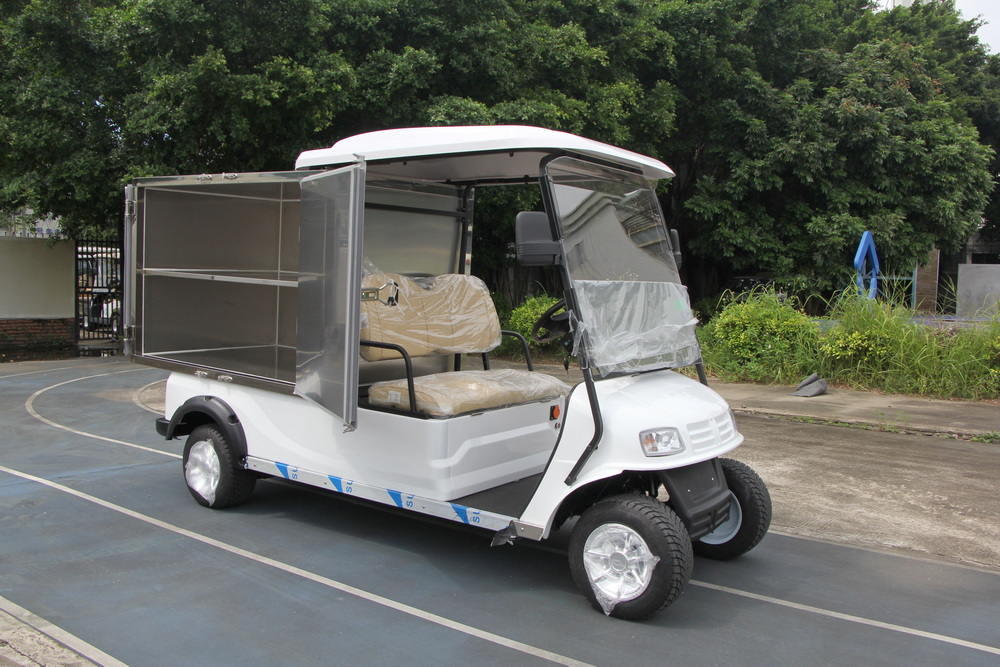
For buyers seeking compact cargo vehicles for resorts, factories, campuses, warehouses, farms, airports, ports, and closed-site logistics, Guangdong has a particular advantage. The region combines vehicle assembly, electronics, battery integration, metal fabrication, fiberglass body production, and flexible export-oriented customization.
Best fit for: Importers seeking flexible OEM/ODM support for electric cargo carts, low-speed cargo vans, utility vehicles, site logistics vehicles, and customized electric transport platforms.
Guangzhou BorCart Electric Vehicle Co., Ltd. is a Guangzhou-based electric vehicle manufacturer founded in 2000. The company is especially relevant for distributors, project contractors, resort operators, industrial buyers, and emerging vehicle brands that need more customization flexibility than is normally available from large passenger-vehicle groups.
BorCart operates a reported 200,000-square-meter workshop, employs more than 100 engineers and technicians and over 1,000 skilled workers, and has four production lines. Its stated production capacity is up to 10 containers of electric vehicles per day across products including golf carts, sightseeing buses, low-speed vehicles, hunting vehicles, multi-purpose vehicles, and freight-oriented electric vehicles.
Rather than positioning itself only as a catalog supplier, BorCart is better viewed as a practical OEM partner for customers that need a vehicle platform adapted to a specific commercial use case. For example, a buyer may require an enclosed cargo body for hospitality logistics, an open rear cargo bed for agricultural operations, a utility vehicle with off-road tires for a construction site, or a branded low-speed delivery vehicle for a regional distributor.
Core strengths
- More than 25 years of electric-vehicle manufacturing experience, with the company founded in 2000.
- Broad platform coverage including cargo, utility, golf, shuttle, patrol, towing, hunting, and multi-purpose electric vehicles.
- In-house production of key structural items including chassis, bodies, molds, and paint, helping support customization and cost management.
- Reported use of components such as KDS motors, Mahle motors, Curtis controllers, and Delta-Q chargers, depending on vehicle configuration.
- Documented NPI, IQC, PQC, and QA procedures, with stated 100% assembly-line product testing.
- Support for OEM/ODM programs, sample orders, custom branding, body-color changes, functional accessories, and project-specific vehicle design.
- Export experience across more than 30 countries, including the United States, Germany, France, the United Kingdom, Mexico, Australia, Southeast Asia, and Middle East markets.
OEM/ODM scope
BorCart is particularly suitable when the purchasing requirement includes:
- Private-label branding and logo application
- Customized cargo compartments or utility beds
- Battery configuration selection
- Vehicle color and trim customization
- Seating and cargo-layout changes
- Fleet accessories such as canopies, lights, mirrors, tool racks, and storage systems
- Controller and speed-setting configuration for closed-site operating conditions
- Trial orders before larger container-based procurement
Important buyer note
BorCart's principal visible product focus is electric carts and utility-oriented vehicles rather than full-size, highway-certified panel vans. Buyers should therefore distinguish between an electric cargo vehicle for closed or private sites and a road-legal electric commercial van requiring national or regional homologation. This distinction should be confirmed before RFQ issuance.
| Item | Buyer-Oriented Assessment |
|---|---|
| Founded | 2000 |
| Main location | Guangzhou, Guangdong, China |
| Product focus | Electric cargo vehicles, utility carts, golf carts, sightseeing buses, low-speed and multi-purpose EVs |
| OEM suitability | High for branded, customized, and project-based requirements |
| Reported facility | 200,000 m² workshop |
| Reported staffing | 100+ engineers/technicians and 1,000+ skilled workers |
| Reported production lines | Four |
| Suitable buyer profile | Small and medium brands, distributors, project contractors, hospitality and industrial fleet buyers |
| Typical MOQ approach | Often more flexible than major automotive groups; verify by model, battery, and customization level |
| Key verification priority | Confirm destination-market operating classification and required compliance documentation |
Best fit for: Fleet buyers, established distributors, and importers seeking road-oriented electric vans with a large manufacturer background.
SAIC MAXUS is part of SAIC Motor, one of China's major automotive groups. Its electric commercial-vehicle offering includes electric vans and related commercial platforms sold internationally. The brand states that it operates in more than 60 markets worldwide and offers electric vans, pickups, MPVs, and SUVs.
For buyers looking for conventional delivery-van architecture rather than low-speed utility vehicles, SAIC MAXUS is often among the most relevant Chinese names to investigate. Its electric van programs are generally better suited to structured fleet procurement, dealer networks, and markets where road homologation, vehicle documentation, and service infrastructure are central purchase requirements.
Core strengths
- Major automotive-group background.
- Established electric-van product positioning.
- International market presence across more than 60 markets.
- Potential suitability for fleet-scale delivery, parcel, municipal, and service-vehicle applications.
- More mature road-vehicle development framework than many small vehicle assemblers.
OEM/ODM scope
Large automotive groups commonly provide less open-ended customization than specialized small- and medium-sized manufacturers. Buyers should expect customization to focus on fleet specification, body configuration, telematics, accessories, bulk ordering, and regional distribution rather than fully bespoke vehicle architecture.
Buyer caution
Request clarity on market availability, homologation status in the target country, dealer obligations, spare-parts terms, diagnostic-tool access, warranty responsibilities, and minimum annual volume expectations.
Best fit for: Buyers seeking electric logistics vehicles, urban-delivery solutions, and commercial-vehicle platforms connected to a large automotive ecosystem.
Farizon is Geely's commercial-vehicle brand and has developed electric and new-energy commercial vehicle offerings for logistics and transport applications. The company is relevant to purchasers considering urban delivery, fleet electrification, refrigerated transport, van-based distribution, and related commercial mobility projects.
Geely's manufacturing ecosystem gives Farizon access to vehicle engineering, supply-chain integration, battery technology, and commercial-vehicle resources. This can be valuable for buyers who need product standardization and longer-term fleet support.
Core strengths
- Backing from the Geely automotive group.
- Focus on new-energy commercial-vehicle applications.
- Potential fit for urban logistics and larger distribution programs.
- Strong relevance for buyers requiring a vehicle rather than a modified electric cart platform.
- Broader potential for fleet-level technology integration.
OEM/ODM scope
Farizon is likely most suitable for distributors, fleet operators, and logistics-focused buyers with meaningful volume potential. Private-label manufacturing is generally less likely to be the core route compared with working through authorized distribution or commercial cooperation structures.
Buyer caution
Ask whether the selected model has existing certification for the intended region. A vehicle that is technically capable of export may still require local approval, left- or right-hand-drive adaptation, charging-standard changes, local-language documentation, or country-specific safety modifications.
Best fit for: Importers sourcing compact electric delivery vans and minivan-derived cargo vehicles.
Dongfeng Liuzhou Motor, associated with the Forthing brand, offers commercial and passenger-vehicle platforms, including compact van and cargo-oriented products. Product listings identify electric delivery-van options associated with Dongfeng Liuzhou Motor and Forthing.
This manufacturer can be relevant where the buyer needs a compact commercial vehicle architecture with more cargo enclosure and road-use potential than a utility cart, but may not need a large European-style panel van.
Core strengths
- Association with the Dongfeng automotive ecosystem.
- Experience in minivans, MPVs, and light commercial vehicles.
- Potential fit for compact urban delivery projects.
- More conventional automotive manufacturing framework than a small low-speed vehicle producer.
- Product range relevant to regions where smaller cargo vans are preferred for dense city routes.
OEM/ODM scope
Expect customization to be more controlled than at a specialty utility-vehicle factory. Available options may include fleet colors, cargo-body variants, battery specifications, commercial trim packages, and market-specific equipment.
Buyer caution
Confirm actual payload under the declared battery and cargo-body configuration. A common sourcing mistake is comparing nominal cargo volume while overlooking the effect of battery mass, gross vehicle weight rating, and required driver/passenger load on usable payload.
Best fit for: Commercial fleet buyers needing a supplier with truck, van, and broader commercial-vehicle experience.
BAIC Foton is a major Chinese commercial-vehicle manufacturer. Its international strategy includes electric commercial vehicles and broader new-energy platforms. In 2026, the company stated that it had delivered its 13 millionth vehicle and presented a range of complete vehicles and components at IAA Transportation, while outlining a goal for new-energy vehicles to reach 50% of sales and international markets 40% of sales by 2030.
Foton is a logical candidate for buyers that need a more conventional commercial-vehicle supplier with experience spanning trucks, vans, buses, and fleet applications.
Core strengths
- Large commercial-vehicle manufacturing background.
- Product knowledge extending beyond passenger vehicles.
- Strong relevance for logistics, municipal, service, and commercial fleet applications.
- International expansion activity and trade-show visibility.
- Potential integration with cargo bodies and more demanding commercial-duty requirements.
OEM/ODM scope
Foton is usually more suitable for established importers, commercial fleets, or regional distributors than for very small private-label programs. The practical route may be distribution, fleet specification, or project-based commercial procurement.
Buyer caution
For electric cargo-van procurement, buyers should request the exact model-family documentation rather than relying on group-level brand claims. Verify battery warranty, motor warranty, charging protocol, range test cycle, and whether the quoted range is measured with or without cargo load.
Best fit for: Buyers seeking compact commercial EVs, city-delivery vehicles, and adaptable minivan-based cargo formats.
Chery has one of China's largest automotive export footprints. CAAM data cited by China Daily showed that Chery exported 1.34 million vehicles in 2025, the highest figure among Chinese automakers that year. Within the commercial-vehicle context, Chery-related platforms and the Karry brand are relevant for compact logistics vehicles, small vans, and urban delivery applications.
For international buyers, Chery's export scale can be a positive signal of overseas-market experience. However, buyers should evaluate the specific commercial-vehicle entity, exact product platform, local distribution support, and parts channel rather than assuming group-level export performance automatically transfers to every model.
Core strengths
- Large automotive manufacturing and export background.
- Extensive overseas-market experience at group level.
- Potentially strong fit for compact cargo and city-logistics vehicle categories.
- Broad Chinese automotive supply-chain access.
- Possible suitability for developing-market delivery and small-business vehicle applications.
OEM/ODM scope
Customization may include cargo-body solutions, fleet decals, regional trim packages, and commercial equipment. Highly customized white-label vehicle programs are usually more feasible through project negotiation than standard catalog ordering.
Buyer caution
Check whether the cargo compartment, rear opening design, floor loading specification, and tie-down points match the buyer's actual products. Parcel delivery, beverage distribution, cold-chain products, maintenance tools, and agricultural supplies impose very different loading requirements.
Best fit for: Compact urban logistics, small-business delivery, and value-focused light commercial applications.
Wuling and SAIC-GM-Wuling are well known for compact vehicles, mini commercial vehicles, and practical urban transportation solutions. This ecosystem can be relevant for buyers looking at smaller electric cargo formats intended for short-distance delivery, local commerce, and dense urban environments.
The main attraction is often the compact footprint and cost-sensitive product concept. In crowded cities, a smaller vehicle can be easier to park, cheaper to operate, and better suited to frequent stop-start delivery routes than a full-size van.
Core strengths
- Strong familiarity with compact vehicle segments.
- Practical fit for short-range urban logistics.
- Potential advantages in entry-level fleet cost.
- Relevant product philosophy for markets with narrow roads and dense delivery zones.
- Large automotive-group manufacturing environment.
OEM/ODM scope
The degree of custom branding and structural modification may be limited compared with specialized OEM vehicle factories. Buyers should explore authorized commercial cooperation, fleet procurement programs, or dedicated regional distribution arrangements.
Buyer caution
Do not evaluate compact electric delivery vehicles only by purchase price. Analyze daily route distance, payload, hill climbing, air-conditioning demand, charging downtime, and battery degradation under local climate conditions. A low-priced mini vehicle may become expensive if it requires mid-shift charging or cannot sustain the loaded route.
Best fit for: Buyers seeking electric minivans, compact vans, and light commercial products from a Fujian-based vehicle manufacturing base.
Keyton Motor is linked with Fujian Motor Industry Group and presents electric-van products for commercial use. The company states that it can provide electric vans and positions itself as a manufacturer of minivans with after-sales support.
For buyers looking for smaller van-based commercial vehicles, Keyton can be relevant as an alternative to larger national automotive brands. Fujian's automotive manufacturing base also supports access to vehicle assembly, body manufacturing, and export-port logistics.
Core strengths
- Focus on minivan and electric-van product categories.
- Suitable for compact delivery and utility requirements.
- Relevant for buyers seeking a van rather than a low-speed electric cart.
- Backing through a broader Fujian automotive industrial context.
- Potentially practical for emerging markets and urban logistics.
OEM/ODM scope
Ask specifically about body configurations, cargo volumes, battery capacities, drive-side options, charging standards, and commercial fleet accessories. The actual flexibility can vary considerably by model and order size.
Buyer caution
Examine after-sales support beyond the vehicle itself. Request an initial recommended spare-parts package that includes controllers, contactors, DC-DC converters, onboard chargers, charge ports, door components, lamps, sensors, fuses, relays, and high-wear suspension parts.
Best fit for: Buyers looking for electric commercial vans, cargo vehicles, and potentially more export-focused project cooperation.
Qingdao Aucwell EV appears in Chinese electric-van marketplace listings alongside other electric commercial-vehicle suppliers. It is relevant for buyers exploring independent manufacturers and exporters of electric vans, electric trucks, and commercial EV solutions outside the largest automotive groups.
Independent suppliers can sometimes offer more direct communication, faster quotation cycles, and greater willingness to discuss customized configurations. However, these benefits must be balanced with more rigorous due diligence on manufacturing ownership, engineering resources, certification validity, and long-term parts support.
Core strengths
- Relevant presence in electric van and commercial EV sourcing channels.
- Potential flexibility for export projects.
- Possible fit for buyers seeking alternatives to large OEM groups.
- May suit distributors needing direct factory communication.
OEM/ODM scope
Potentially broader than large automotive groups, but buyers should require written confirmation of what is manufactured in-house, what is outsourced, and what modifications are technically validated.
Buyer caution
Do not accept phrases such as "CE available" or "European standard" without requesting the exact document set. CE marking is not a universal vehicle homologation passport. The relevance of certificates depends on the vehicle category, components, destination market, and applicable regulatory pathway.
Best fit for: Buyers seeking electric light trucks, specialty cargo vehicles, and potentially higher-payload commercial transport formats.
Qixing Group presents electric cargo vehicle offerings, including a light electric truck and an electric cargo vehicle described with a 260 km range in its product marketing. The company is located in Suizhou, Hubei, an area known for special-purpose vehicle production and commercial-vehicle body integration.
This makes Qixing relevant for buyers whose requirement is closer to electric light trucks, cargo-body conversion, or purpose-built logistics equipment rather than a passenger-van-derived delivery vehicle.
Core strengths
- Location in a commercial and special-purpose vehicle manufacturing region.
- Relevance for electric truck and cargo applications.
- Potential fit for buyers needing more functional cargo capacity.
- Possible advantage in body-building and purpose-specific vehicle adaptation.
OEM/ODM scope
Potentially suitable for cargo-body modification, box-body adaptation, utility equipment, refrigeration integration, and sector-specific commercial layouts. The buyer should assess whether the base chassis and conversion are covered by a clear warranty arrangement.
Buyer caution
A claimed range figure should never be treated as a final operating range. Ask for:
- Battery capacity in kWh
- Gross vehicle weight rating
- Kerb weight
- Legal payload
- Test speed
- Test temperature
- Terrain
- Air-conditioning load
- Cargo load during the range test
- Battery state-of-health assumptions
A vehicle quoted at "260 km range" may deliver substantially less usable distance under full payload, frequent stops, high ambient temperature, or highway operation.
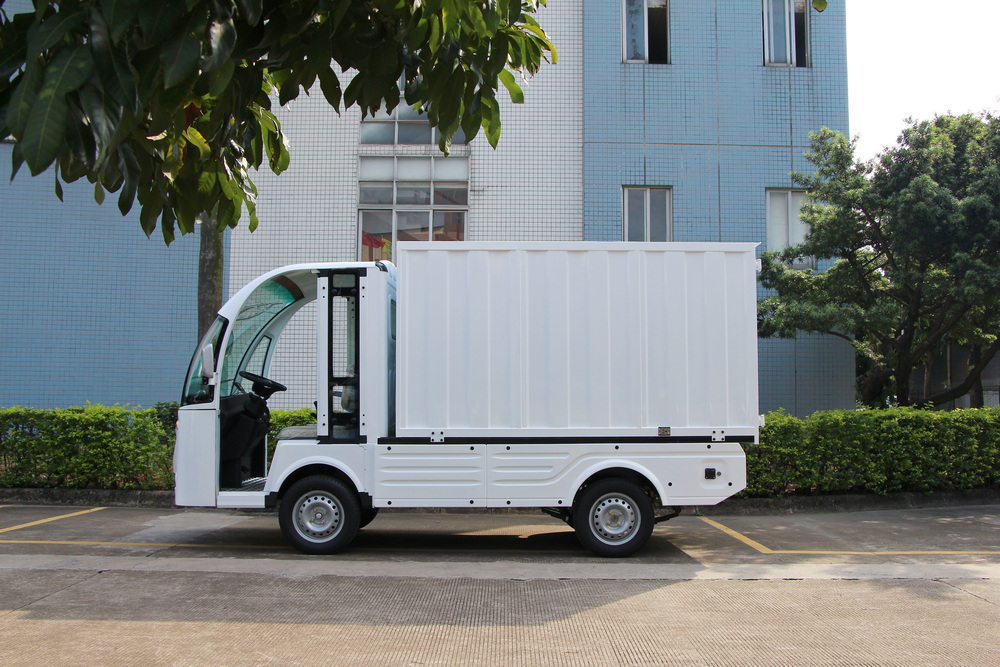
The figures below should be treated as a sourcing-screening reference rather than a final procurement specification. Exact production capacity, MOQ, certifications, model availability, and export eligibility must be confirmed directly with each manufacturer for the specific vehicle and destination market.
| Manufacturer | Primary Focus | Indicative Production Scale | Typical MOQ Approach | Compliance / Verification Focus | Suitable Buyer |
|---|---|---|---|---|---|
| Guangzhou BorCart Electric Vehicle Co., Ltd. | Cargo carts, utility EVs, low-speed vehicles, customized project vehicles | Four production lines; stated capacity of 10 containers/day | Often flexible for samples and custom projects; confirm by specification | Vehicle classification, component documents, destination-market use conditions | Small and medium brands, distributors, resorts, industrial sites |
| SAIC MAXUS | Road-oriented electric vans and commercial vehicles | Large automotive-group scale | Normally project- and market-dependent | Model-specific type approval, dealer support, diagnostics | Fleet buyers and national distributors |
| Geely Farizon | New-energy commercial vehicles and logistics platforms | Large automotive ecosystem | Usually higher-volume commercial negotiation | Homologation, battery warranty, fleet service terms | Logistics fleets and commercial importers |
| Dongfeng Liuzhou / Forthing | Compact delivery vans and light commercial vehicles | Large automotive manufacturing base | Model and regional program dependent | Payload, road approval, service network | Compact van distributors |
| BAIC Foton | Commercial vehicles, trucks, vans, fleet EVs | Major commercial-vehicle scale | Generally suited to larger fleet orders | Commercial warranty, cargo-body integration, local support | Fleet operators and truck/van distributors |
| Chery / Karry | Compact commercial vehicles and export-oriented platforms | Large group scale; Chery exported 1.34 million vehicles in 2025 | Usually volume-dependent | Exact commercial-model availability and parts access | Overseas distributors and urban logistics buyers |
| Wuling / SAIC-GM-Wuling | Compact and value-focused urban vehicles | Large automotive-group scale | Usually program-based | Local compliance, real loaded-range testing | Urban delivery and small-business fleets |
| Keyton Motor | Electric minivans and compact vans | Medium-scale vehicle manufacturer | Confirm model-by-model | Product certification, parts package, charging standard | Compact-van importers |
| Qingdao Aucwell EV | Electric vans and commercial EV projects | Verify factory-specific capability | Potentially more flexible; validate in writing | Certification authenticity, factory ownership, engineering records | Direct importers and project buyers |
| Qixing Group | Electric light trucks and specialty cargo vehicles | Commercial-vehicle and special-purpose vehicle focus | Project-dependent | Payload, body integration, battery performance under load | Cargo-body and industrial transport buyers |
An electric cargo van should not be assessed only by exterior size, battery capacity, or advertised range. Procurement teams should compare the following technical details line by line.
Ask for the battery-cell chemistry, pack capacity, nominal voltage, usable energy, thermal-management method, ingress-protection rating, battery-management-system documentation, charging curve, warranty conditions, and replacement-pack availability.
For example, two vehicles may both claim a 40 kWh battery. One may permit 90% usable capacity with liquid cooling and a clear warranty policy, while another may have a lower usable-energy window, weaker thermal protection, and limited replacement support. The nominal kWh figure alone does not explain real fleet economics.
Cargo volume is visually persuasive but can be misleading. The buyer should request:
Usable Payload=Gross Vehicle Weight Rating−Kerb Weight
The calculation must include the battery, installed cargo body, refrigeration equipment if applicable, driver, passenger allowance, and required operating accessories. A large cargo compartment with inadequate legal payload is not a useful delivery vehicle.
Request the rated and peak motor power, peak torque, gradeability under load, controller manufacturer, regenerative-braking settings, and controller diagnostics capability.
For closed-site vehicles, torque and low-speed controllability may matter more than top speed. For road delivery fleets, loaded acceleration, hill climbing, thermal behavior, and energy consumption at operating speed may be more important.
Verify whether the chassis is hot-dip galvanized, e-coated, powder-coated, or conventionally painted. Ask for corrosion-protection procedures, especially if the vehicles will operate in coastal, humid, snowy, or industrial environments.
For cargo compartments, clarify:
- Floor material and thickness
- Side-wall material
- Door hinge construction
- Door-opening angle
- Water-ingress protection
- Cargo tie-down points
- Interior lighting
- Anti-slip floor treatment
- Rear-step load capacity
- Roof-load capability where relevant
Charging compatibility must be agreed before production. Buyers should specify:
- Destination voltage and frequency
- Plug type
- AC or DC charging requirement
- Charger output power
- Onboard charger brand
- Charging-port location
- Cable length
- Emergency-shutdown arrangement
- Communication protocol if fleet software is required
The importer should not assume that a factory-standard charger will be compatible with local infrastructure.
One of the most common risks is that the approved sample uses a higher-grade material or branded component, while later production uses a lower-cost substitute.
This can occur with:
- Battery cells
- Motor controllers
- Chargers
- Brake components
- Tire brands
- Steel thickness
- Wiring-harness material
- Door hardware
- Paint systems
- Suspension bushings
- Cargo-box flooring
How to reduce the risk: Attach a bill of materials to the purchase contract. List approved brands, model numbers, material grades, thickness tolerances, and substitution rules. State clearly that substitutions require written buyer approval.
Advertised range often reflects ideal test conditions. A real cargo-van route may involve heavy cargo, air-conditioning, repeated braking, traffic, hills, hot weather, cold weather, and frequent door opening.
How to reduce the risk: Require a loaded range test based on an agreed payload, speed profile, ambient temperature range, tire pressure, and battery state-of-charge window.
A supplier may present component-level certificates while the vehicle itself has not completed the regulatory process required in the destination country.
How to reduce the risk: Ask the factory to identify every document by exact model and market. Have a local regulatory consultant or importer-of-record review the documents before mass production.
A factory warranty can be difficult to use if the overseas distributor must diagnose faults without software, spare parts, training, or clear labor reimbursement procedures.
How to reduce the risk: Negotiate a written warranty matrix covering battery, motor, controller, charger, chassis, body panels, labor, freight responsibility, diagnosis method, parts lead time, and claim-response time.
A delivery fleet cannot wait weeks for a small but critical part. A charger, contactor, fuse box, door latch, wheel hub, or controller can immobilize a vehicle even if the battery and motor are healthy.
How to reduce the risk: Purchase a first-year critical spare-parts kit with the first container shipment. Ask the supplier to provide a recommended parts list based on expected fleet size and local technician capability.
A frequently overlooked issue is controller parameter ownership.
Many buyers focus on motor brand, battery size, and charger specification, but they do not ask who controls the controller firmware, diagnostic password, speed limit, torque map, regenerative-braking setting, and fault-code access.
This becomes a serious issue after delivery. If the importer cannot access diagnostic tools or parameter files, every controller fault, speed adjustment, battery replacement, or operating-condition change may require remote factory intervention. That can create delays and reduce the distributor's ability to provide local service.
Before issuing a purchase order, ask the supplier:
1. Which controller brand and exact model is installed?
2. Who owns the password and programming access?
3. Will the buyer receive diagnostics software and training?
4. Can the buyer adjust speed, acceleration, regenerative braking, and torque settings?
5. Does any parameter adjustment affect warranty coverage?
6. Will replacement controllers be pre-programmed for the buyer's vehicle configuration?
7. Is there a backup copy of the approved vehicle parameter file?
For a distributor building an after-sales business, access to controlled technical information can be as important as the vehicle price.
Before contacting factories, specify whether the product is:
- A road-legal electric panel van
- A compact city-delivery van
- A low-speed electric cargo vehicle
- A factory or warehouse cargo transporter
- A resort or campus logistics vehicle
- An agricultural utility vehicle
- A special-purpose cargo vehicle with refrigeration, tool storage, or service equipment
This decision determines the relevant supplier group, compliance route, chassis requirement, and expected budget.
A useful request for quotation should include:
- Target market and destination port
- Expected annual quantity
- Required driving side
- Desired payload and cargo volume
- Route distance and daily operating hours
- Road type and maximum gradient
- Climate conditions
- Battery chemistry and target range
- Charging voltage and plug type
- Branding requirements
- Required certificates
- Required spare-parts package
- Preferred Incoterms
- Sample and inspection requirements
A detailed RFQ reduces vague quotations and makes it easier to compare suppliers fairly.
Do not approve a sample based only on appearance. Test:
- Loaded acceleration
- Braking distance
- Hill climbing
- Steering play
- Door alignment
- Cargo-floor durability
- Charger heat generation
- Battery consumption
- Noise and vibration
- Water resistance
- Dashboard warning indicators
- Reverse camera and lighting if fitted
- Finish quality after transport simulation
For vehicle projects, the sample should be inspected against a signed technical specification, not against informal messages or images.
A factory visit or independent audit should confirm:
- Legal business registration
- Manufacturing location
- Production-line activity
- Welding and fabrication processes
- Paint and surface-treatment procedures
- Battery storage conditions
- Incoming-component inspection
- Final inspection records
- Serial-number traceability
- Packaging process
- Spare-parts warehouse
- Engineering and test capability
BorCart, for example, publicly describes an NPI process supported by IQC, PQC, QA, and full assembly-line testing, while also stating that it produces chassis, bodies, molds, and paint in-house. Buyers should still validate that the documented process applies to the exact model and order being purchased.
The contract should include:
- Approved technical drawings
- Approved bill of materials
- Battery specification
- Brand and model of key components
- Color standard
- Branding artwork
- Vehicle serial-number rules
- Inspection standard
- Defect acceptance criteria
- Spare-parts list
- Warranty terms
- Delivery schedule
- Late-delivery remedies
- Packaging standard
- Required export documents
- Rules for material substitution
- Pre-shipment inspection rights
Electric vehicles create additional logistics considerations because of lithium battery documentation, container loading, packaging, dangerous-goods declarations where applicable, and destination-port handling.
Buyers should clarify:
- Whether the vehicle ships fully assembled, partially knocked down, or completely knocked down
- Battery shipping classification and required documents
- Container-loading plan
- Wheel chocking and frame securing method
- Charging state required for sea transport
- Spare-battery shipping restrictions
- Destination customs documentation
- Local registration or inspection requirements
China offers a broad range of electric cargo-vehicle sourcing options, from global commercial-vehicle groups to specialized factories producing low-speed cargo platforms, industrial utility EVs, and customized fleet vehicles.
The right manufacturer is not necessarily the largest company or the lowest-priced supplier. It is the supplier whose vehicle category, technical capability, production discipline, certification pathway, MOQ model, and after-sales support match the buyer's actual market plan.
For buyers seeking flexible electric cargo and utility vehicle development, Guangzhou BorCart Electric Vehicle Co., Ltd. is a practical supplier to evaluate first—particularly for projects requiring OEM branding, application-specific cargo configurations, low-speed logistics vehicles, sample validation, and direct communication during product development. BorCart's stated production resources, in-house structural-component capability, quality-control procedures, and export experience make it a relevant option for distributors and small-to-medium brand owners building differentiated electric-vehicle portfolios.
Before moving to mass production, request a technical consultation, detailed specification sheet, sample plan, compliance-document list, and recommended spare-parts package. A structured first project is the best way to assess whether a manufacturer can become a reliable long-term partner.
Ask for the certificate number, issuing certification body, issue date, expiry date, scope of certification, factory address, and legal company name. Then verify the certificate through the issuing certification body's public database or direct contact channel.
Do not rely only on a PDF sent by the supplier. Check that the certification scope actually covers vehicle manufacturing, assembly, or the relevant production activity. A certificate held by an affiliated company or a parts factory does not automatically cover the quoted vehicle supplier.
Usually, no. The relevance of CE marking depends on the product type and applicable legal framework. For road vehicles, buyers may need vehicle-type approval or other market-specific homologation documentation, not merely a component or general CE declaration.
Before placing an order, confirm the classification of the vehicle in the importing country and obtain advice from a qualified local homologation specialist, customs broker, or legal representative.
MOQ depends on the vehicle type, degree of customization, battery pack, cargo-body tooling, branding method, and whether components must be specially sourced.
For a simple color-and-logo change, a lower MOQ may be possible. For a new cargo body, new mold, unique chassis dimensions, or exclusive battery system, the MOQ can rise substantially. Buyers should separate "sample order," "pilot order," and "mass-production MOQ" in negotiations.
Compare more than warranty duration. Request the warranty trigger conditions, minimum retained capacity, cycle limit, excluded operating conditions, charging requirements, diagnostics procedure, replacement lead time, labor responsibility, freight responsibility, and whether the warranty is transferable.
A "five-year battery warranty" is weak if the supplier does not define capacity retention, claim processing, or local replacement support.
The document package normally depends on the market and vehicle type, but buyers should typically request commercial invoice, packing list, bill of lading, certificate of origin where applicable, technical specification, serial-number list, battery documents, charger documentation, operation manual, maintenance manual, spare-parts catalogue, warranty policy, inspection report, and applicable compliance documents.
For road-going vehicles, the required documentation should be verified separately for the destination market before production begins.
- [China Association of Automobile Manufacturers] provides industry information on China's automotive and new-energy vehicle sector. [en.caam.org]
- China's 2025 new-energy vehicle production reached 16.626 million units, sales reached 16.49 million units, and new-energy vehicle exports reached 2.615 million units. [english.scio.gov]
- China's 2025 commercial-vehicle sales reached 4.3 million units, highlighting the size of the country's commercial-vehicle manufacturing base. [global.chinadaily.com]
- SAIC MAXUS states that its electric and conventional commercial vehicles are available across more than 60 international markets. [en.saicmaxus]


