


Views: 263 Author: BorCart Publish Time: 2026-09-27 Origin: Site


Content Menu
● Cargo Capacity: Compare Weight and Space
>> Payload Versus Gross Vehicle Weight
>> Cargo Volume Versus Usable Dimensions
● Battery and Range: Compare the Duty Cycle
>> Usable Battery Capacity Versus Advertised Range
>> Energy Consumption and Operating Reserve
● Charging: Compare the Whole System
>> Vehicle Capability Versus Charger Rating
>> Depot Capacity and Charging Schedule
● Performance and Safety: Compare Under Load
>> Motor Output, Gradeability, and Speed
>> Braking, Stability, and Electrical Protection
● Market Approval: Compare Documents Early
>> Road Use Versus Private-Site Use
>> A Document-Matched Specification Check
● OEM Supply: Compare Beyond the Vehicle
>> Customization and Change Control
>> Warranty, Parts, and Service Access
>> Run the Same Trial for Every Candidate
● Choose a Specification You Can Support
>> What is the most important electric cargo vehicle specification?
>> Is a larger battery always better for a cargo van?
>> How should buyers compare advertised range figures?
>> Does a fast charger guarantee a short charging stop?
>> Can an OEM cargo van be customized without affecting approval?
>> Which documents should an overseas buyer request before ordering?
Electric cargo vehicle specifications can look impressive on a product sheet yet tell buyers little about how a van will perform on a loaded route. Before ordering, compare payload and usable cargo space alongside battery capacity and working range. Then check charging, safety, market approval, and service support against the same operating brief.
For overseas brands, wholesalers, and manufacturers sourcing OEM vehicles, the aim is not to find the largest number in every column. It is to identify a vehicle that carries the intended load, completes the required shift, can be registered where needed, and can be supported after delivery.
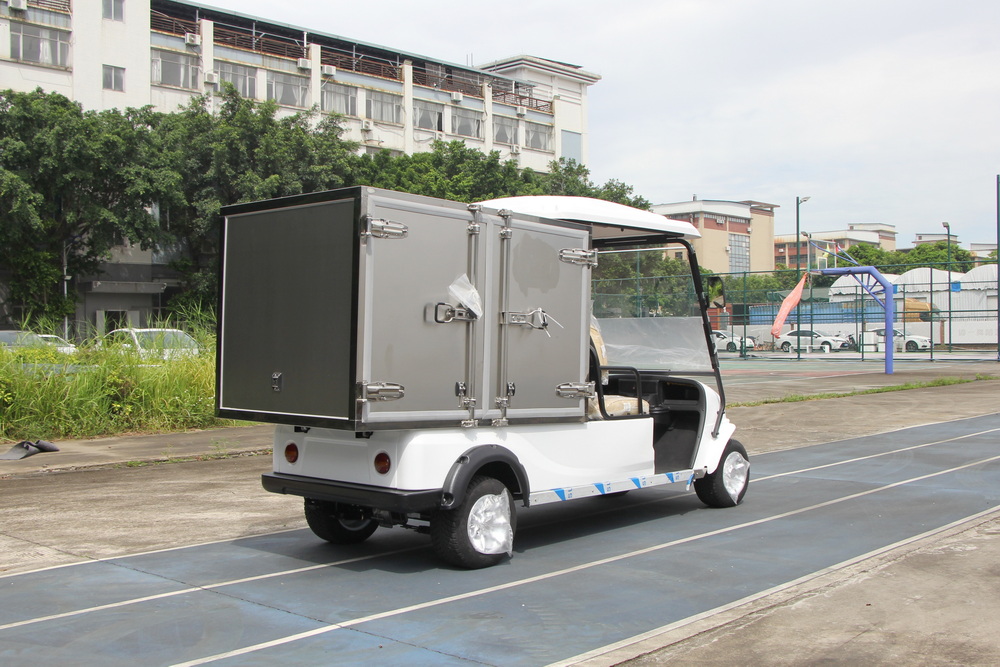
Payload is the weight available for cargo, occupants, and installed equipment after accounting for the vehicle's curb weight. Gross vehicle weight rating, or GVWR, is the maximum permitted operating weight of the loaded vehicle. These figures answer different questions: GVWR describes the limit; payload describes what remains available within it.
Ask suppliers to state whether their quoted curb weight includes the battery, standard accessories, and any requested bodywork. A shelving system, insulated lining, or refrigeration unit can reduce the weight left for goods. A figure measured on a basic vehicle may therefore be misleading for a customized order.
Compare the front and rear axle ratings as well. A van can remain below its total weight limit while exceeding an axle limit if dense cargo sits too far forward or behind the rear axle.
Cargo volume alone does not establish whether the vehicle fits the job. Compare load-floor length, width between wheel arches, internal height, door-opening dimensions, and loading height. Check these against the actual pallets, crates, tools, or delivery containers your customers use.
A wide interior is of limited value if the rear opening is narrower than the goods being loaded. For repeated urban deliveries, side-door access and the space needed to open doors beside a curb may matter more than maximum volume.
| Specification | What to request | Why it matters |
|---|---|---|
| Rated payload | Figure for the proposed final build | Custom equipment reduces available cargo weight |
| GVWR and axle ratings | Ratings and loading assumptions | Total weight alone cannot reveal axle overload |
| Cargo dimensions | Dimensioned drawing and door clearances | Volume figures may hide loading restrictions |
| Loading height | Ground-to-floor measurement | Affects handling effort and equipment choice |
| Tie-down provisions | Locations and rated capacities | Supports secure transport of varied loads |
A battery's capacity, measured in kilowatt-hours (kWh), indicates stored energy. A range claim describes distance achieved under particular test conditions. Neither number, by itself, proves that a loaded van can complete a route.
Request both gross and usable battery capacity, if available. Then ask how range was measured: which test cycle was used, at what load, speed, temperature, and tire specification? Do not place range figures from different test procedures in one comparison table as though they were interchangeable.
Laboratory range estimates account for some real-world conditions, but they cannot reproduce every route. Speed, weather, driving behavior, climate control, and cargo weight can change energy use. For a commercial vehicle, the stronger evidence is a test with the proposed body configuration and a representative payload.
Compare energy consumption in kWh per 100 km or kWh per 100 miles, with the test conditions stated. This makes battery and range claims easier to examine together. A larger battery may extend range, but it can also add weight; the effect on payload should be checked.
Build an operating reserve into route planning rather than treating advertised range as a daily target. The reserve should reflect route variability, seasonal conditions, battery aging, and access to charging. Its size is a fleet decision, not a universal percentage.
Illustrative assessment: If a route covers 120 km each day, a van advertised at 150 km should not automatically pass. Test it at the expected cargo weight, with normal stops and climate-control use. Record the energy remaining when it returns. The result is more useful than the 30 km difference between two brochure figures.
A charger rated at 150 kW does not mean every connected vehicle will receive 150 kW. Charging power depends on the vehicle, battery state of charge, temperature, and equipment. Ask for the van's maximum AC input, maximum DC input, compatible connector, and charging performance over a stated state-of-charge interval.
For depot fleets, overnight AC charging may meet the duty cycle without relying on rapid charging. For multi-shift work, the time needed to add enough energy between shifts becomes critical. Compare charging time over a useful interval, such as 20% to 80%, rather than accepting an unexplained "full charge" figure.
Regional compatibility also matters. Confirm the connector and electrical requirements for the destination market before approving a vehicle specification. The charger, installation, and vehicle must work together.
A workable charging plan includes more than one vehicle. Estimate when each van returns, how long it can remain parked, and how many vehicles must charge at once. Ask who will supply charging equipment, whether load management is available, and how charging faults will be reported.
An OEM buyer should settle these questions during product selection. A vehicle with sufficient route range can still disrupt operations if its charging window conflicts with the depot's electrical capacity or shift schedule.
Motor power is often quoted as a peak figure. Request continuous and peak output, along with the conditions for each. Ask the supplier to demonstrate starting on an incline and climbing it at the proposed gross vehicle weight. This matters for routes with ramps, steep streets, or frequent stop-start driving.
Maximum speed is another figure to interpret in context. It should suit the roads where the van will operate, but higher speed can change energy consumption. Compare acceleration, gradeability, and range using the same load assumptions wherever possible.
Review the complete vehicle, not just its drivetrain. Request specifications for service brakes, parking brake, tires, suspension, lighting, mirrors, and any available driver-assistance functions. Confirm which features are standard on the exact configuration being quoted.
For electric systems, ask for evidence relevant to the destination market covering battery protection, electrical isolation, charging interlocks, and applicable tests. A safety claim should identify the tested vehicle or component, the standard used, and the configuration covered. A report for one battery pack does not automatically establish approval for every finished vehicle built around it.
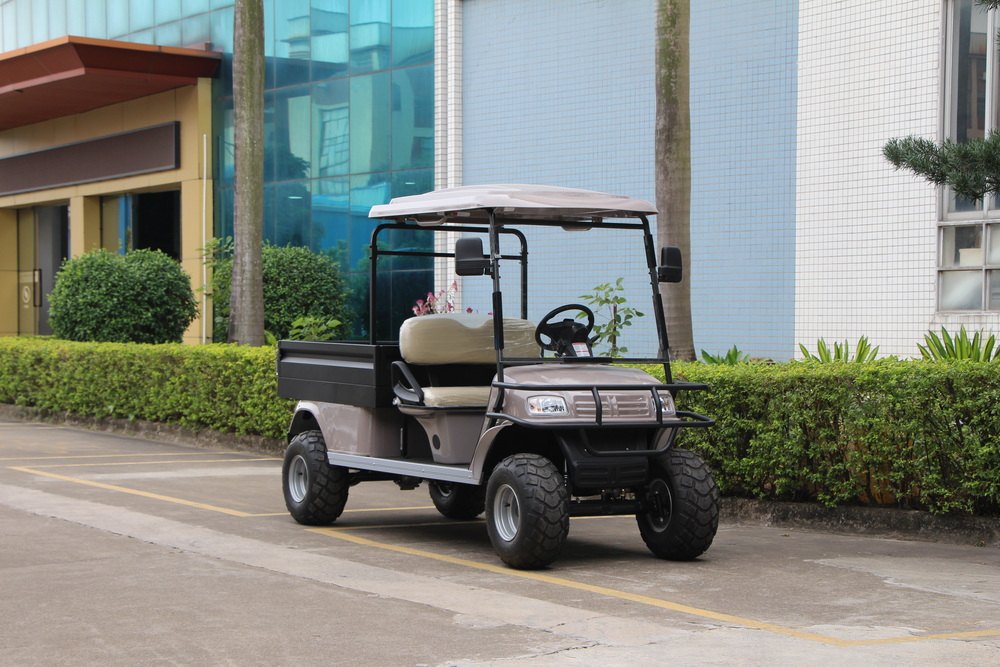
The phrase "electric cargo vehicle" can describe vehicles intended for very different operating environments. A van designed for public roads may face different approval and registration requirements from a vehicle used only on private property.
Before discussing colors or branding, define the destination country and intended use. Ask the supplier to identify the vehicle category, applicable approval route, and documents available for the proposed configuration. Do not assume a vehicle approved in one market can be registered in another.
For European road-going vehicles, type approval and conformity documentation require particular attention. Customizing an approved design can also affect what must be assessed. The buyer and manufacturer should establish who is responsible for approval-related work before changes are finalized.
Use a simple rule: match each important claim to a document for the same vehicle configuration. This is especially useful when evaluating multiple OEM quotations.
- Match payload and dimensions to a drawing and final-build specification.
- Match range and energy use to a stated test method and vehicle configuration.
- Match battery and electrical-safety claims to the relevant test reports.
- Match road-use claims to approval documents for the destination market.
- Match warranty promises to written coverage terms and service procedures.
If a supplier proposes a battery, body, or component change after testing, ask whether the existing evidence still applies. This prevents a seemingly small substitution from becoming a costly approval or support problem later.
For brand owners, wholesalers, and manufacturers, the purchase specification must cover repeat production. Clarify which features BorCart or any shortlisted OEM supplier can customize, and which changes require engineering review, new testing, or revised documentation.
Create an agreed specification covering the battery, motor, controller, charging inlet, tires, cargo body, interior fittings, branding, and market-specific equipment. Include approved component alternatives. Without change control, vehicles from later production batches may no longer match the evaluated sample.
Ask how drawings are approved, how revisions are recorded, and how the final build is inspected. A well-controlled standard configuration may be a better commercial choice than extensive customization that delays approval or makes spare parts difficult to stock.
A competitive vehicle price does not establish a competitive ownership cost. Compare battery and vehicle warranty terms separately, including duration, exclusions, claims process, and responsibilities for labor and freight. Battery life varies with use, charging, design, and climate; avoid assuming that another manufacturer's warranty applies to the proposed van.
Request a recommended spare-parts list, parts identifiers, diagnostic access details, repair instructions, and expected support arrangements. Overseas distributors should decide whether local technicians can handle routine faults before building a customer commitment around the vehicle.
Total cost comparisons should include the purchase, charging equipment, electricity, maintenance, downtime, warranty administration, and parts availability. Use the same service life and operating assumptions for every supplier quotation.
A structured trial reveals trade-offs that separate brochures can hide. It also gives the manufacturer clear evidence for any requested design adjustment.
1. Define the work. Record the route, daily distance, stops, road conditions, climate, operating hours, and heaviest normal load.
2. Fix the configuration. Specify the body, battery, tires, accessories, and charging connector to be evaluated.
3. Check the load. Weigh the finished vehicle and a representative cargo load; check axle loads as well as total weight.
4. Drive the route. Measure energy use and remaining charge under realistic conditions. Repeat when conditions or routes differ materially.
5. Test charging. Use the intended equipment and record the time to restore the energy used during a shift.
6. Review the evidence. Compare test results, drawings, approvals, warranty terms, and service documents against the order specification.
Set pass-or-fail thresholds before the trial. For example, specify a maximum loading height, a required route completion reserve, and a charging deadline for the next shift. This makes it harder to overlook a weakness because another specification looks attractive.
The best electric cargo vehicle is not necessarily the one with the longest advertised range or largest battery. It is the one whose finished configuration fits the cargo, completes the duty cycle, charges on schedule, meets the destination market's requirements, and remains serviceable after sale.
If you are planning an OEM program, send BorCart your target market, route profile, payload, cargo dimensions, charging arrangement, and customization brief. Request a configuration-specific specification sheet, supporting documents, and a representative-vehicle test plan before placing a production order.
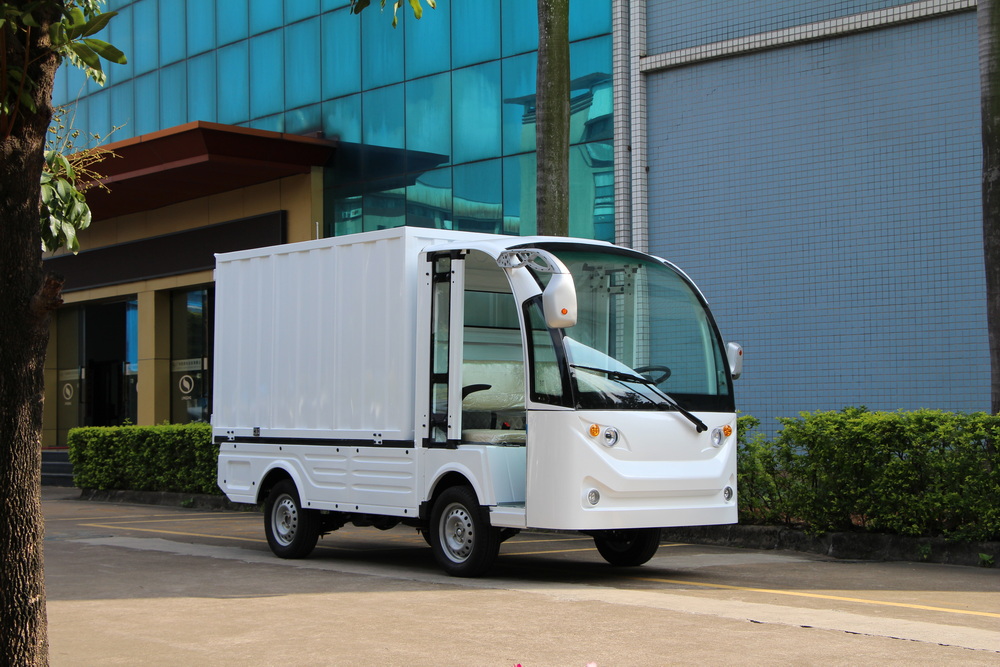
There is no single figure that determines suitability. Start with the required payload and cargo dimensions, then verify loaded working range, charging time, and market approval. A vehicle must satisfy all of these conditions for the intended job.
No. A larger battery may provide more usable energy, but its weight, cost, and effect on payload also matter. Compare the complete vehicle against its route and load requirements rather than ranking battery capacity alone.
First confirm that the figures use the same test method and unit. Then request the tested configuration and conditions. For a purchasing decision, use a representative loaded-route trial to check whether each vehicle meets the required shift with an appropriate reserve.
No. Charging speed depends on both the charger and the vehicle, and it can change during a session. Ask for measured charging times over a stated state-of-charge interval using compatible equipment.
Not always. The effect depends on the change and the destination market's requirements. Agree on the proposed configuration early, then ask which modifications require additional assessment or updated documentation.
Request a final-build specification, dimensioned drawings, weight and axle data, range-test details, relevant safety and approval documents, written warranty terms, and a parts and service plan. Confirm that they apply to the vehicle being purchased.
- U.S. Environmental Protection Agency. [*Fuel Economy and EV Range Testing*]. Explains EV laboratory range procedures, adjustment for real-world factors, and charging losses in efficiency figures. [epa]
- U.S. Department of Energy, Alternative Fuels Data Center. [*Electric Vehicle Charging Stations*]. Details AC and DC charging, connectors, and factors that affect charging time. [afdc.energy]
- U.S. Department of Energy, Alternative Fuels Data Center. [*Electric Vehicle Benefits and Considerations*]. Discusses battery life, warranties, energy use, and ownership-cost considerations. [afdc.energy]
- European Parliament and Council. [*Regulation (EU) 2018/858 on the Approval and Market Surveillance of Motor Vehicles*]. Sets out the EU type-approval framework and certificates of conformity; consult the applicable current text for a specific project. [eur-lex.europa]
- United Nations Economic Commission for Europe. [*UN Regulation No. 100, Revision 2, Amendment 5*]. Covers specified electric-power-train and rechargeable-energy-storage safety requirements; confirm which version applies in the destination market. [unece]


