


Views: 224 Author: BorCart Publish Time: 2026-09-26 Origin: Site


Content Menu
● Electric Cargo Cart or Cargo Van?
● Define the Work Before Comparing Specifications
>> Choose a Cargo Body Around the Load
● Check Payload, Stability, and Braking Together
● Compare Battery, Range, and Charging
>> Calculate the Charging Window
● Evaluate Safety and Market Requirements
● Run a Loaded-Routes Trial Before Ordering
● Compare Total Cost, Not Just Unit Price
● Assess the OEM Partner Behind the Cart
● Choose the Cart That Fits the Job
>> How much weight can an electric cargo cart carry?
>> Is an electric cargo cart suitable for public roads?
>> Which is better for a cargo cart: lithium or lead-acid?
>> How should I check an advertised driving range?
>> What should I ask an OEM cargo cart manufacturer for?
>> Is a cargo cart cheaper than an electric cargo van?
An electric cargo cart can make short-distance goods movement easier, but the right purchase depends on more than the advertised range or payload. Before buying, compare a cargo cart with a cargo van for your actual routes, then verify loaded performance, charging time, safety, service support, and the full cost of ownership.
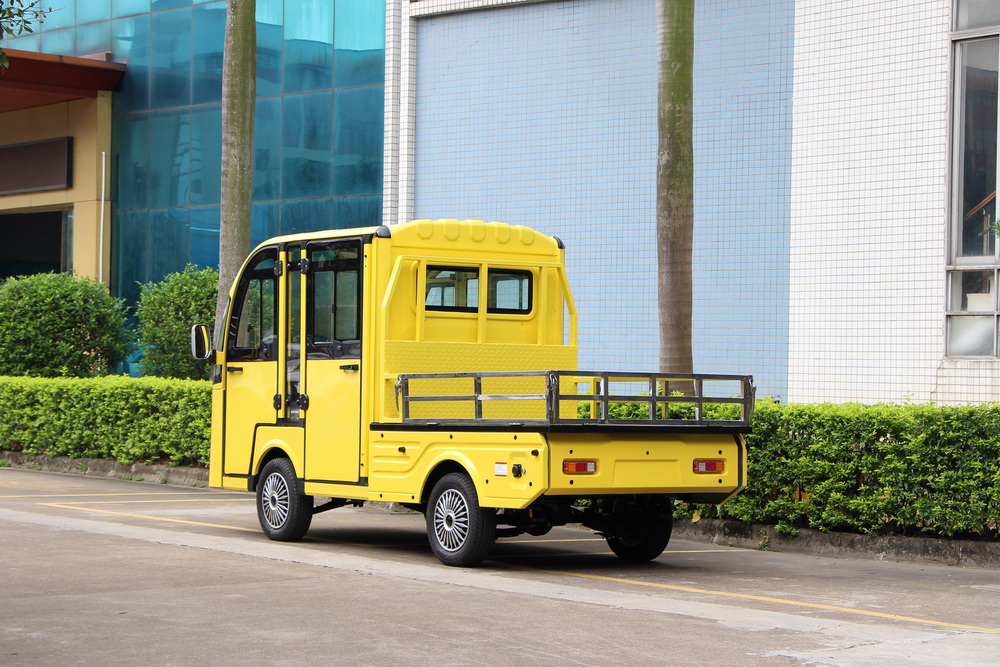
The first decision is whether you need a compact site vehicle or a road-capable delivery vehicle. Both move cargo, but they solve different problems. An electric cargo cart is generally better suited to controlled, low-speed environments, while an electric cargo van is the stronger candidate when deliveries involve public roads, longer routes, or a larger enclosed load.
| Buying factor | Electric cargo cart | Electric cargo van |
|---|---|---|
| Best operating area | Factories, resorts, campuses, warehouses, and private sites | Public-road delivery routes and larger service areas |
| Maneuverability | Easier to position in narrow lanes and crowded facilities | Requires more space to turn and park |
| Cargo protection | Depends on the chosen bed, cage, cover, or enclosure | Typically provides an enclosed cargo compartment |
| Route planning | Best evaluated around short, repeatable trips and charging windows | Better suited to longer or more variable routes |
| Purchase decision | Focus on site fit, usable payload, and task-specific configuration | Focus on road requirements, cargo volume, route range, and licensing |
Do not choose by vehicle name alone. A covered cart is not automatically a road-legal van. Equally, a van may be unnecessary if workers only move tools and supplies between buildings on a private site. Ask where the vehicle will operate, what it must carry, and who will drive it before comparing quotations.
A persuasive product sheet cannot replace a clear duty profile. In vehicle sourcing, I would begin with the busiest realistic workday—not an average day that hides peak demand. The resulting brief gives every supplier the same conditions to answer.
Record:
- Route: Distance per trip, daily distance, stops, slopes, and surface conditions.
- Load: Typical and maximum cargo weight, largest item dimensions, and how the load is secured.
- People: Driver count and any authorized passengers.
- Schedule: Shift length, breaks, overnight parking, and available charging time.
- Environment: Rain, dust, temperature, washdown practices, and exposure to salt air.
- Market: Country of use, intended operating area, and documentation required by the importer.
For example, a hotel moving linen between nearby buildings may prioritize quiet operation, a weather cover, and easy loading. A maintenance team carrying heavy tools up a ramp needs closer scrutiny of loaded hill performance, braking, and load restraint. The same headline range tells those buyers very little.
An open bed suits bulky goods that can tolerate exposure. A cage can help contain loose items, provided its doors and attachment points are appropriate for the job. A cover offers some weather protection; a fully enclosed body may be preferable for parcels or supplies that must stay dry and secure.
Check the usable bed dimensions, not just the vehicle's overall length. Measure your largest container, then confirm that staff can load it without unsafe lifting or awkward overhang. If the body will be customized, ask how its weight changes the remaining payload and vehicle stability.
Payload is the amount the vehicle can carry under its specified conditions. It is not simply the weight that fits on the bed. Buyers should ask whether a stated capacity includes the driver, passengers, fitted cargo body, and accessories, and which axle or tire limits apply.
A cart that carries its rated load on level pavement may behave differently on a slope, loose gravel, or a wet surface. Request written limits for maximum load, grade, towing, and permitted operating conditions. If your task falls near a limit, discuss a different configuration rather than assuming a larger motor will solve every problem.
The loaded position matters as much as the total weight. Dense items placed high or far behind the axle can change handling. Specify tie-down points and a loading method that keeps the load secure. During a demonstration, observe how the cart starts, turns, and stops with a representative load.
Ask the manufacturer to explain the complete braking arrangement: service brakes, parking brake, and any electric braking function. Then test stopping and parking under the conditions your site actually presents. A flat, empty-vehicle demonstration is not enough for a cart that will carry heavy goods down a ramp.

A stated range is a starting point, not a delivery guarantee. Payload, terrain, driving style, temperature, and accessory use can change how far an electric vehicle travels between charges. Request the test conditions behind any range claim: load, speed, route, temperature, battery capacity, and end-of-test state of charge.
BorCart lists both lead-acid and lithium options across its electric-cart offering. Neither choice should be treated as a universal answer. Compare the exact battery systems proposed for your order, including their chargers, warranties, maintenance instructions, and replacement costs.
| Question | Lead-acid configuration | Lithium configuration |
|---|---|---|
| Upfront budget | Ask for the complete vehicle price | Compare any price premium against operating needs |
| Daily operation | Verify usable range and time to recharge | Verify usable range and time to recharge |
| Maintenance | Confirm the specific battery's inspection and care requirements | Confirm the pack's management system and service procedure |
| Long-term planning | Price a replacement set and its installation | Price a replacement pack and its installation |
A lithium label alone does not establish pack quality. Ask for the battery chemistry, rated capacity, battery-management-system protections, charger compatibility, warranty terms, and applicable test documents. Likewise, do not assume all lead-acid batteries have identical maintenance needs; obtain instructions for the exact battery supplied.
Start with the time the cart is parked, not the time printed beside a charger specification. A team running two shifts may have a short overnight window and little opportunity to recharge during the day. A single-shift site may have ample time for a lower-power arrangement.
Ask the supplier for a charging estimate under your expected battery use, along with the input power and connector details. Confirm the electrical supply at the destination before placing an order. Charging losses and the way a battery charges near full capacity mean a simple capacity-divided-by-charger-power calculation is only a rough planning estimate.
Also decide who will charge the vehicle and where. The charging position should not block pedestrian routes or expose cables to routine vehicle traffic. Site procedures should address inspections, damaged equipment, and the battery-specific precautions in the supplied manual.
Electric cargo carts operate close to people. Visibility at corners, reversing movements, vehicle speed, and pedestrian separation deserve attention alongside the motor and battery. Check mirrors, lights, warning devices, seat belts where applicable, parking-brake operation, and clear operating instructions for the proposed configuration.
Match training to the actual vehicle and workplace. Rules for a forklift should not automatically be applied to every cargo cart, but guidance for powered industrial trucks illustrates why operator competence, surface conditions, load stability, slopes, and pedestrian traffic must be assessed before work begins.
Market access requires a separate check. A vehicle suitable for private-property use is not necessarily approved for public roads. Ask the importer or a qualified local compliance specialist which vehicle classification, registration rules, lighting requirements, and conformity documents apply in the destination country. Avoid relying on a general statement that a product is "export ready" or "street legal."
For a lithium-equipped shipment, request battery transport documentation relevant to the specific pack and shipping arrangement. UN 38.3 concerns lithium-battery transport testing; it does not, by itself, certify that an entire cargo cart may be used on public roads. Likewise, a battery standard or factory certificate should not be presented as blanket approval for every vehicle configuration or market.
This is the most useful step buyers often skip. A short trial turns a catalogue comparison into a decision about your own operation. If a physical trial at the destination is impractical, agree on a witnessed factory test using a written test plan.
1. Select the hardest routine route. Include the longest trip, narrowest turn, steepest slope, or roughest surface the cart is expected to handle.
2. Load the vehicle realistically. Use representative weight and dimensions, with the cargo secured as it would be in service.
3. Record starting conditions. Note battery state of charge, temperature, tire specification, and accessory use.
4. Observe the complete task. Check acceleration, steering, visibility, braking, loading access, and driver comfort.
5. Measure what matters. Record distance, shift time, battery state at the end, and charging time before the next shift.
6. Document exceptions. A successful run in dry weather does not prove suitability for rain, steep grades, or a fully loaded peak day.
This trial also helps settle disagreements between departments. Procurement can assess cost, operations can assess productivity, and maintenance can identify parts and training needs. Agree on pass-or-fail criteria before the test so a pleasant demonstration does not replace a purchasing decision.
An electric cart may need less routine powertrain maintenance than a comparable combustion-engine vehicle. That does not make it maintenance-free. Tires, brakes, suspension, body fittings, batteries, chargers, and electrical connections still require attention according to the manufacturer's instructions.
Build a cost comparison for the expected ownership period. Include:
- Acquisition: Vehicle, cargo body, branding, batteries, charger, freight, duties, and taxes.
- Infrastructure: Electrical work, charging location, and any protective equipment.
- Operation: Electricity, operator time, inspections, and cleaning.
- Service: Scheduled work, consumables, replacement parts, and likely downtime.
- Risk: Warranty exclusions, parts lead times, and the cost of a vehicle unavailable during a busy shift.
Use the same assumptions for every candidate. If one quotation excludes the charger and another includes it, the lower sticker price is not yet the cheaper purchase. Ask suppliers to state what is included, what is optional, and which costs are estimates.
For a distributor or fleet operator, an inexpensive component is not inexpensive if replacing it leaves a cart out of service for weeks. Ask which parts are common across models and which are unique to your customized version. Confirm how faults are diagnosed, who approves warranty claims, and whether local technicians can access service information.
A small initial order can reveal issues before fleet-wide rollout. Track completed trips, charging interruptions, repairs, and operator feedback. Those records provide a firmer basis for changing the specification than assumptions made before the first vehicle arrives.
For foreign brands and wholesalers, the purchase is also a manufacturing relationship. BorCart's published range includes utility carts with cargo cages, covered cargo configurations, and other low-speed electric vehicles. Its product information describes options for battery configuration, body appearance, and functional modifications. Treat those as available discussion points, not as a promise that every option fits every model.
Request a configuration proposal tied to your target market and duty profile. It should identify the base vehicle, changes from the standard design, battery and charger, cargo-body drawings, test criteria, and documentation supplied with production units.
A strong OEM review also asks:
- Who approves engineering changes after the sample is signed off?
- Which drawings, components, and finishes are fixed in the production specification?
- What inspections occur before shipment, and what evidence will the buyer receive?
- How are replacement parts identified and ordered?
- What are the warranty process and response times in the destination market?
- Can packaging and shipment documents match the importer's requirements?
Separate sample approval from production approval. A sample that looks correct is not sufficient unless the order documents lock down its critical parts and performance requirements. Agree on how substitutions will be disclosed and approved before production begins.
The best electric cargo cart is the one that completes your hardest routine task safely, recharges within your schedule, and can be serviced where it works. Compare it against a cargo van when public-road access, larger enclosed loads, or longer routes are essential. Then validate the chosen cart with a loaded test and a complete written specification.
Planning an OEM electric cargo cart range? Contact BorCart with your target country, route profile, maximum load, cargo-body requirements, and expected order volume. Request a model-specific configuration proposal and loaded-test plan before committing to production.
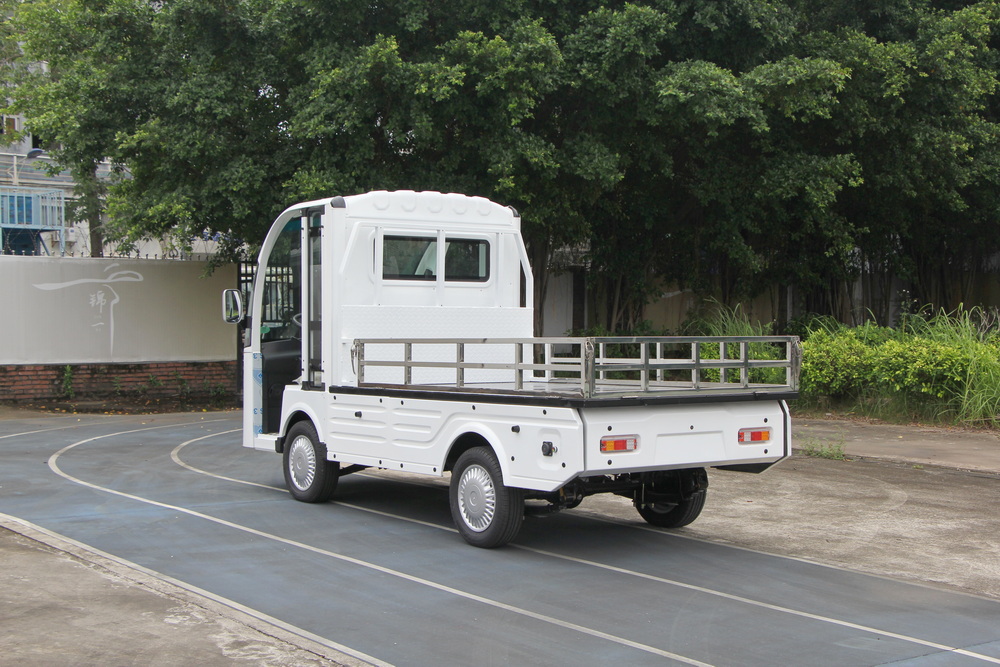
There is no single payload figure that applies to every cart. Capacity depends on the specific vehicle, battery, body, tires, and operating conditions. Ask for a model-specific rating and confirm whether it accounts for the driver, accessories, and customized cargo body.
Not automatically. Road use depends on the vehicle's classification and the rules in the country or locality where it will operate. Confirm registration and technical requirements with a qualified local specialist before marketing or using a cart as road legal.
Choose against the duty cycle and ownership cost, not the battery name. Compare quoted vehicle prices, loaded range, charging windows, maintenance instructions, replacement cost, warranty, and the documentation for the exact battery option.
Ask how the figure was measured. Then test a representative vehicle with your usual load on your hardest routine route. Record battery state before and after the run, and check that enough charge remains for unexpected delays or an additional trip.
Provide your use case and request a model-specific specification, cargo-body drawing, loaded-test criteria, battery and charger details, production inspection plan, warranty terms, replacement-parts process, and destination-market documentation. Make approved changes part of the purchase agreement.
It may have a lower purchase price, but that alone cannot establish the better value. A cart is a poor bargain if it cannot carry the load or operate on the required route. Compare both vehicles using the same task, ownership period, charging costs, service assumptions, and applicable road-use requirements.
- [BorCart — Products]. Manufacturer product categories, cargo-cart configurations, and stated customization options. [borcart]
- [U.S. Department of Energy, Alternative Fuels Data Center — Electric School Bus Planning Guide]. Fleet-planning principles concerning routes, payload effects, charging, and procurement; cited as general electric-fleet guidance, not cargo-cart performance data. [afdc.energy]
- [U.S. Department of Energy, Alternative Fuels Data Center — Maintenance and Safety of Electric Vehicles]. Electric-vehicle maintenance considerations and battery-life questions. [afdc.energy]
- [Occupational Safety and Health Administration — Powered Industrial Trucks: Training Assistance]. Workplace principles concerning operator training, loads, surfaces, slopes, and pedestrians; applicability to any particular cargo cart must be assessed separately. [osha]
- [United Nations Economic Commission for Europe — Recommendations on the Transport of Dangerous Goods, Model Regulations]. Lithium-battery transport provisions and reference to UN 38.3 testing. [unece]
- [UL Solutions — Battery Safety Testing and Certification]. Overview of battery-related standards and transport-testing services, including UL 2271 and UN 38.3. [ul]


