


Views: 222 Author: BorCart Publish Time: 2026-06-05 Origin: Site


Content Menu
● Lithium Golf Carts vs Lead‑acid Fleet: Core Differences
>> Visual Table: Lithium vs Lead‑acid in Coastal Fleets
● Why High‑humidity Coastal Environments Change the Equation
● The Real ROI: TCO and Payback for Lithium Fleet Conversions
● Zero‑maintenance Power Systems: Operational Advantages
● Performance and Customer Experience on Coastal Courses
● Environmental and Sustainability Considerations for Coastal Operators
● OEM and Fleet Design Implications for Buyers
● Practical Migration Steps: From Lead‑acid Fleet to Lithium
● Expert View: When Does Lithium Clearly Win?
● Recommendations for Buyers and Fleet Managers
● CTA for OEM and Fleet Stakeholders
● FAQ: Lithium Golf Carts vs Lead‑acid Fleet in Coastal Environments
Lithium golf carts deliver significantly higher ROI and uptime than traditional lead‑acid fleet carts in high‑humidity coastal environments, mainly because they eliminate routine maintenance, resist corrosion, and reduce total cost of ownership (TCO) over 5–8 years. For coastal golf resorts, communities, and rental fleets, switching to lithium is no longer just a "premium option" but a strategic infrastructure upgrade that directly impacts profitability and customer experience. [leochlithium]
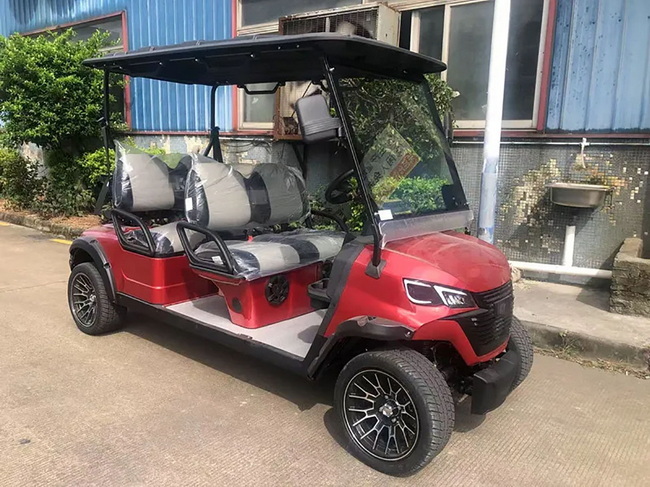
In this guide, we will compare lithium golf carts vs lead‑acid fleet carts from the perspective of a Chinese OEM manufacturer working closely with global brands and fleet operators, focusing on:
- Real ROI and TCO for coastal fleets
- Zero‑maintenance operations vs routine service
- Performance in high‑humidity, salty air environments
- Practical migration steps for OEM buyers and fleet managers
Throughout the article, we will refer back to the core concept: "The ROI of zero‑maintenance power systems in high‑humidity coastal environments."
For fleet owners, the real question is not "Which battery is more advanced?" but "Which power system makes more money, with fewer headaches, in my environment?"
Key contrasts:
- Service life: Lithium packs can last up to 5–10 times longer than flooded lead‑acid under comparable usage. [redwaypower]
- Weight: Lithium batteries are typically around 50% lighter, reducing vehicle stress and improving handling. [battery-energy-storage-system]
- Maintenance: Lead‑acid requires regular watering, terminal cleaning, and equalization, while lithium systems are effectively zero‑maintenance beyond basic diagnostics. [redwaybattery]
- Charging: Lithium charges significantly faster (often up to 4× quicker), enabling more daily turns per cart for busy coastal fleets. [intermountaingolfcars]
| Dimension | Lithium Golf Carts | Lead‑acid Fleet Carts |
|---|---|---|
| Typical lifespan | 2,000–4,000+ cycles (often 5–10× longer) (redwaypower) | 300–500 cycles, faster degradation in humidity (redwaypower) |
| Maintenance | Zero watering, minimal checks (redwaypower) | Regular watering, cleaning, testing (redwaybattery) |
| Weight | ~50% lighter (redwaypower) | Heavy, adds chassis stress (redwaypower) |
| Charge time | Fast charging, opportunity charging friendly (redwaypower) | Slow charging, less flexible (redwaypower) |
| Corrosion risk in humidity | Very low, sealed packs (redwaypower) | High, exposed terminals & acid fumes (redwaybattery) |
| Environmental impact | No free liquid acid, lower contamination risk (redwaypower) | Contains lead and sulfuric acid (redwaypower) |
| TCO over 5 years | 25–40% lower for high‑use fleets (leochlithium) | Lower upfront, higher lifetime cost (leochlithium) |
Coastal regions combine high humidity, salt spray, and temperature swings, which accelerate corrosion and degrade traditional lead‑acid batteries faster than inland environments. [seasidesustainability]
Key coastal stress factors:
- Salt‑laden air attacking exposed terminals and connectors
- Condensation forming on battery racks, frames, and wiring
- Sand and fine dust mixing with acid residue to form conductive paths
Lead‑acid fleets in such conditions typically experience more frequent terminal corrosion, cable failures, and tray rust, leading to higher downtime and maintenance labor. In contrast, lithium packs are sealed, non‑venting systems with integrated Battery Management Systems (BMS), which significantly reduces humidity‑related issues. [redwaypower]
From an OEM and fleet‑management perspective, ROI is not just about energy efficiency. It is about total cost of ownership over time. [leochlithium]
One industry analysis shows that, for commercial carts operating daily, lithium systems can reduce TCO by roughly 25–40% over five years, even though the initial purchase price is higher. A simple decision framework used by fleet managers is: [battery-energy-storage-system]
TCO= Initial Cost + Maintenance Labor + Energy Cost + Downtime Cost + Replacement Cost [leochlithium]
Where lithium gains ROI in coastal fleets:
- Maintenance labor: No watering, less cleaning, fewer service calls. [redwaybattery]
- Downtime: Faster charging and fewer failures mean more billable hours per cart. [leochlithium]
- Replacement cycles: Lithium packs often outlive multiple sets of lead‑acid batteries. [redwaypower]
- Coastal corrosion: Preventing rusted trays and cables saves both parts and labor. [redwaybattery]
For high‑utilization resort or community fleets, these factors frequently deliver a payback period of 2–4 years, after which the remaining battery life translates into pure profit protection. [intermountaingolfcars]
The phrase "zero‑maintenance power system" is not marketing hype; it describes a very different daily routine for technicians and operators.
Typical lead‑acid tasks in a coastal fleet include: [redwaybattery]
- Checking and topping up electrolyte water levels
- Cleaning corroded terminals and applying protective sprays
- Performing equalization charges and load tests
- Managing acid spills and tray rust repairs
In practice, many of these tasks are skipped or delayed in busy operations, which shortens battery life and increases unexpected failures. [redwaybattery]
By contrast, lithium golf cart systems offer:
- No watering, no acid fumes, no equalization [redwaypower]
- Annual or periodic BMS data checks instead of physical inspections [redwaybattery]
- Stable performance even with partial opportunity charging during the day [intermountaingolfcars]
One survey cited in industry discussions notes that lithium users in golf cart applications spend over 80% less time on battery maintenance compared to lead‑acid users, which directly reduces labor cost. [redwaybattery]
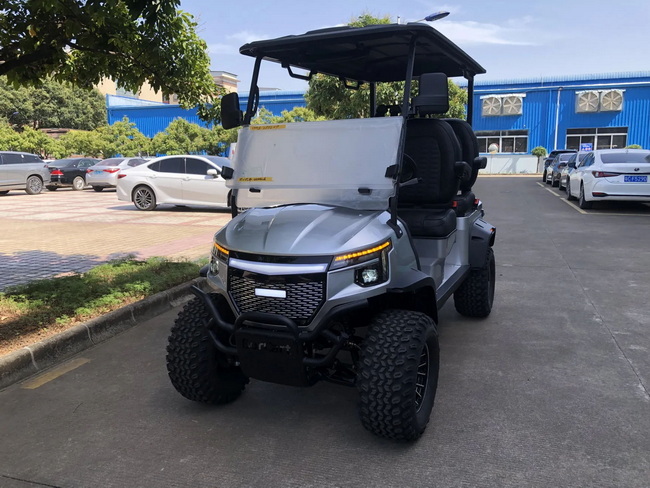
From a UX and revenue perspective, the biggest difference your customers notice is consistency.
Lithium carts in coastal environments:
- Maintain strong, consistent torque across most of the discharge curve. [intermountaingolfcars]
- Offer longer runtime per charge, crucial for 36‑hole resort days or hillier seaside courses. [battery-energy-storage-system]
- Avoid "weak cart" complaints that lead to refunds or negative reviews. [leochlithium]
Lead‑acid fleets often show noticeable power sag as the state of charge drops, especially under salt‑corroded connections and heavier vehicle weight. This directly impacts guest satisfaction scores and repeat bookings at coastal destinations. [seasidesustainability]
Coastal communities are under growing pressure to adopt low‑impact, sustainable technologies. Power systems are part of that conversation. [seasidesustainability]
Lithium systems do not vent acidic gases and contain no free liquid sulfuric acid, which reduces the risk of soil and water contamination in sensitive shoreline areas. Lead‑acid batteries remain recyclable but involve handling toxic lead and corrosive electrolyte, which is especially problematic where groundwater and marine ecosystems are close to facilities. [seasidesustainability]
For coastal resorts positioning themselves as eco‑friendly destinations, lithium golf carts can be integrated into wider renewable and sustainability programs. [seasidesustainability]
As a Chinese OEM like BorCart, working with international brands and distributors, the choice between lithium and lead‑acid is increasingly a platform decision, not just a component swap. [borcart]
For lithium‑ready OEM designs:
- Chassis and suspension can be optimized for lighter packs, improving ride quality and frame longevity. [battery-energy-storage-system]
- Integrated BMS data ports enable telematics, fleet monitoring, and predictive maintenance offers. [redwaypower]
- Battery compartments can be sealed and simplified, ideal for humid coastal storage facilities. [redwaypower]
Chinese manufacturers are now frequently included in global rankings of top golf cart OEMs, reflecting the growth of export‑ready, lithium‑focused platforms. [drivemmc]
If you manage an existing lead‑acid fleet in a coastal setting, a phased migration can reduce risk and budget shock.
Step‑by‑step approach:
1. Audit current fleet usage
- Track daily hours per cart, charging patterns, and maintenance tickets for at least 1–3 months. [leochlithium]
2. Segment vehicles by duty cycle
- High‑use, high‑revenue carts (e.g., resort front‑line, VIP, rental) should be the first candidates for lithium conversion. [battery-energy-storage-system]
3. Select lithium packs and BMS configuration
- Work with your OEM or battery supplier to match pack voltage, capacity, and communication protocols to your fleet controllers. [redwaypower]
4. Plan charging infrastructure
- Replace or reconfigure chargers to support fast, safe lithium charging and opportunity charging during off‑peak windows. [intermountaingolfcars]
5. Train technicians and operators
- Even with zero‑maintenance batteries, staff need to interpret BMS alerts, SOC indicators, and safe handling procedures. [intermountaingolfcars]
6. Monitor ROI and uptime
- Track downtime, service calls, and energy bills for converted vs legacy carts to quantify TCO improvements over 12–24 months. [leochlithium]
This structured process helps fleet owners validate the real‑world ROI of zero‑maintenance power systems before committing to full conversion.
Based on industry data and fleet case studies, lithium is especially compelling when these three conditions overlap: [battery-energy-storage-system]
- Daily or near‑daily operation of carts (resorts, coastal communities, industrial sites)
- High labor costs for maintenance and repairs
- Harsh coastal conditions, where corrosion and humidity accelerate failures
In such environments, lead‑acid's lower upfront price becomes a false economy, because extra maintenance, shorter life, and downtime overshadow the initial savings over a 3–5 year window. [leochlithium]
From a user experience and branding perspective:
- Prioritize consistent runtime and power over lowest initial price; this directly affects guest satisfaction. [intermountaingolfcars]
- Design your booking, routing, and signage assuming lithium's longer range, reducing range‑anxiety and emergency swap‑outs. [battery-energy-storage-system]
- Communicate the lithium upgrade as part of your sustainability narrative to differentiate your coastal resort or community. [seasidesustainability]
For OEM buyers working with BorCart or similar manufacturers, specifying lithium‑ready platform designs today can lock in a competitive advantage as coastal operators upgrade their fleets over the next product cycles. [eagle-ev]
If you are evaluating lithium golf carts vs lead‑acid fleets for a coastal project, the next step is to run a customized 5‑year TCO and ROI model for your specific environment, including humidity, duty cycles, and labor rates. Work with your OEM partner to design or retrofit a zero‑maintenance power system that aligns with your performance, sustainability, and brand positioning goals. [seasidesustainability]
1. Are lithium golf carts always cheaper than lead‑acid over time?
Not always, but for high‑utilization fleets in coastal environments, lithium tends to be 25–40% cheaper in TCO over five years, due to lower maintenance and longer life. [leochlithium]
2. Will lithium batteries corrode in salty, humid air?
Lithium packs are sealed and do not vent acid, so the risk of terminal corrosion is much lower than with flooded lead‑acid, making them better suited to coastal climates. [redwaypower]
3. Can I convert my existing lead‑acid golf carts to lithium?
In many cases, yes. You need compatible lithium packs, BMS, and chargers, plus basic wiring and tray adjustments; your OEM or battery supplier can confirm compatibility. [redwaybattery]
4. How does charging behavior change with lithium fleets?
Lithium supports faster charging and frequent opportunity charging, which allows more rounds per day and reduces downtime for resort fleets. [battery-energy-storage-system]
5. Is lithium more sustainable than lead‑acid for coastal resorts?
Lithium systems avoid liquid acid and reduce the risk of soil or water contamination, which is valuable for environmentally sensitive coastal areas, especially when combined with proper recycling. [seasidesustainability]
1. Leoch Lithium – "Lithium vs Lead-Acid Golf Cart Battery Cost: A 5-Year ROI Analysis for Commercial Fleets."
https://leochlithium.us/lithium-vs-lead-acid-golf-cart-battery-cost-a-5-year-roi-analysis-for-commercial-fleets/ [leochlithium]
2. Battery Energy Storage System – "Lithium Golf Cart Batteries vs Lead Acid: Which is Better in 2026?"
https://www.battery-energy-storage-system.com/news/lithium-golf-cart-batteries-vs-lead-acid.html [battery-energy-storage-system]
3. Redway Battery – "What Are the Best Custom Golf Cart Battery Options?"
https://www.redwaybattery.com/zh-CN/what-are-the-best-custom-golf-cart-battery-options/ [redwaybattery]
4. Redway Battery – "Exploring the Advantages of Lithium Batteries in Golf Carts."
https://www.redwaybattery.com/zh-CN/%E6%8E%A2%E7%B4%A2%E9%94%82%E7%94%B5%E6%B1%A0%E9%AB%98%E5%B0%94%E5%A4%AB%E7%90%83%E8%BD%A6%E7%9A%84%E4%BC%98%E5%8A%BF/ [redwaypower]
5. Intermountain Golf Cars – "Lithium-Ion vs. Lead-Acid Batteries for Golf Carts: Which Is Best?"
https://intermountaingolfcars.com/lithium-ion-vs-lead-acid-batteries-for-golf-carts-which-is-best/ [intermountaingolfcars]
6. Seaside Sustainability – "Empowering Coastal Communities with Environmentally Friendly Energy Solutions."
https://www.seasidesustainability.org/post/empowering-coastal-communities-with-environmentally-friendly-energy-solutions [seasidesustainability]
7. Drive MMC – "Top 5 Chinese Golf Cart Brands: 2024 Updates."
https://www.drivemmc.com/guide/top-5-chinese-golf-cart-brands [drivemmc]
8. Suzhou Eagle Electric Vehicle Manufacturing Co., Ltd. – Corporate site.
https://www.eagle-ev.com [eagle-ev]
9. BorCart – "Top 10 Electric Golf Cart Manufacturers in China."
https://www.borcart.com/top-10-electric-golf-cart-manufacturers-in-china.html [borcart]


