


Views: 224 Author: BorCart Publish Time: 2026-10-03 Origin: Site


Content Menu
● Electric Cargo Vehicle Specifications vs. Application Requirements
● Define Your Electric Cargo Vehicle Application Before Comparing Models
>> Build a Representative Duty-Cycle Profile
>> Distinguish Private-Site Vehicles From Roadgoing Cargo Vans
● Match Electric Cargo Vehicle Payload to Real Loading Conditions
>> Compare Cargo Weight With Remaining Load Capacity
>> Check Axle Loads and Cargo Distribution
● Compare Cargo Volume, Body Design, and Loading Access
● Match Battery Capacity and Electric Cargo Van Range to the Route
>> Use Loaded Energy Consumption Instead of Headline Range
>> Compare Usable Capacity, Thermal Management, and Warranty
● Match Motor Power, Gearing, and Braking to Terrain
>> Ask for Continuous-Duty Performance
>> Include Descending and Repeated-Stop Performance
● Match Charging Specifications to Available Downtime
>> Compare AC Charging With DC Fast Charging
>> Calculate Energy Recovery and Fleet Demand
● Three Practical Tools for Better OEM Specification Decisions
>> 1. Use a Weighted Comparison After Mandatory Checks
>> 2. Run a Loaded Pilot With Written Acceptance Criteria
>> 3. Evaluate Cost per Completed Delivery or Working Shift
● Create an Actionable OEM Brief for BorCart
>> What specifications matter most for an electric cargo vehicle?
>> Is a larger battery always better for a cargo van?
>> How should I calculate required payload?
>> Can a low-speed electric cargo vehicle operate on public roads?
>> How do I compare range claims from different suppliers?
>> What should an OEM electric cargo vehicle quotation include?
Matching electric cargo vehicle specifications to your application starts with understanding the work—not selecting the largest battery or the most powerful motor. Payload, cargo dimensions, route conditions, charging availability, and local vehicle requirements must work together. For overseas brands, wholesalers, and manufacturers sourcing OEM electric cargo vans, the objective is application-fit: a vehicle configuration that completes the required job reliably at an acceptable operating cost.
My starting point for any specification review would be a simple question: what must this vehicle accomplish on its most demanding normal working day?
A compact electric cargo vehicle moving tools around a factory has different requirements from a refrigerated delivery van operating on public roads. Comparing their headline specifications without considering those differences can lead to unnecessary costs—or insufficient capability.
This guide explains how to translate operating requirements into a practical vehicle specification and an actionable OEM development brief.
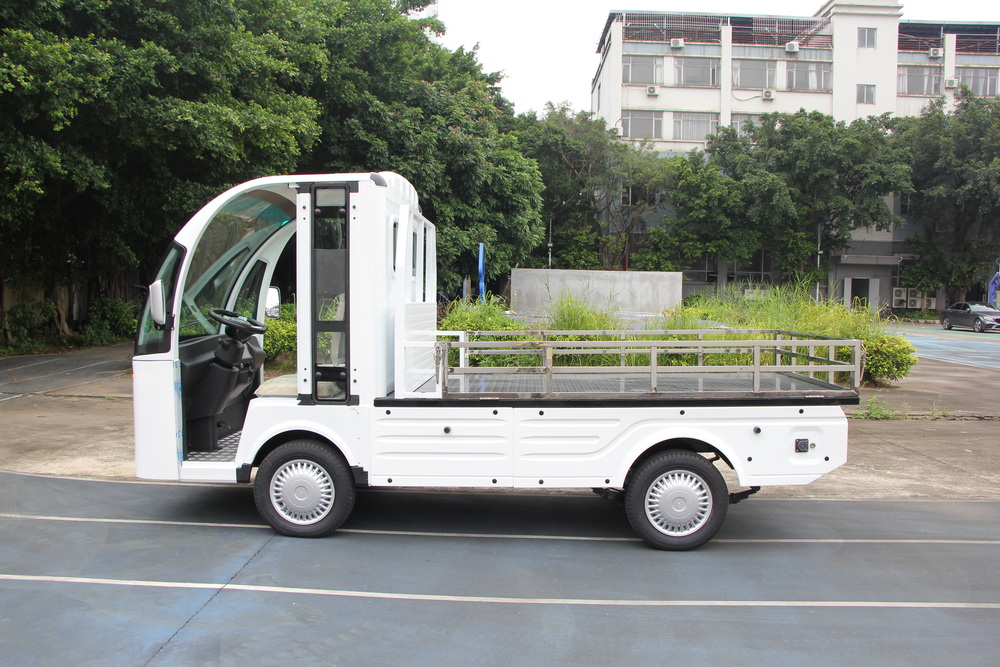
Vehicle specifications describe capability. Application requirements describe the job that capability must support.
The relationship is more useful than a comparison between two isolated numbers.
| Specification | Application question | Evidence to request |
|---|---|---|
| Rated payload | How much weight travels on the busiest trip? | Defined payload calculation and loaded vehicle weights |
| Cargo dimensions | Will the actual goods fit and load efficiently? | Internal dimensions, door openings, and loading trial |
| Usable battery energy | Can the vehicle finish its route with reserve? | Loaded energy-consumption results |
| Motor and drivetrain | Can it maintain the required speed on gradients? | Continuous-duty and loaded hill-test results |
| Charging capability | Can energy be replenished before departure? | Compatible charger specifications and charging tests |
| Vehicle classification | Where can the vehicle legally operate? | Model-specific approval documentation |
| Service support | How quickly can a fault be resolved? | Parts list, diagnostic access, and service agreement |
Treat legal suitability, safe loading, and route completion as pass-or-fail requirements. Only then compare price, optional equipment, and appearance.
A duty cycle describes how a vehicle works throughout the day. Distance alone is insufficient.
Record:
- Daily distance and the longest recurring route.
- Typical and maximum cargo weight.
- Number of stops and loading events.
- Road speeds, gradients, and surface conditions.
- Ambient temperatures and seasonal extremes.
- Cabin heating, cooling, and auxiliary equipment use.
- Return-to-depot times and available charging windows.
Collect representative operating records rather than relying on one quiet day. Include seasonal peaks and predictable disruptions.
A route with frequent stops, short distances, and overnight depot parking may suit a different configuration from a highway-heavy route with short turnaround times.
"Electric cargo vehicle" covers several categories. A utility cart, low-speed cargo vehicle, and highway-capable electric van are not interchangeable.
Before discussing battery upgrades, confirm the intended operating environment:
1. Private factory, warehouse, resort, or agricultural site.
2. Public roads under a locally recognized low-speed classification.
3. General public-road operation requiring the applicable vehicle approvals.
Equipment such as lights, mirrors, and seat belts does not independently establish road legality. Importability, registration, vehicle classification, and operating permissions require destination-market verification.
For an international OEM project, this should be an early procurement gate—not a final shipping check.
Payload descriptions can differ between suppliers. Ask whether the quoted figure includes occupants, body equipment, accessories, or only freight.
The vehicle's permitted gross weight must accommodate the complete operating configuration.
Consider:
- Chassis and battery.
- Cargo body and installed equipment.
- Driver and passengers.
- Freight, packaging, and handling equipment.
- Optional accessories.
Illustrative calculation: a vehicle with a 2,500 kg permitted gross weight and a 1,650 kg ready-to-operate weight has 850 kg remaining capacity. If occupants and additional equipment consume 150 kg, only 700 kg remains for freight.
These figures explain the method; they are not BorCart model specifications. Confirm the supplier's weight definitions to avoid counting equipment twice.
Total weight is only one part of loading suitability. A concentrated load near the rear can create an axle-loading problem even when total vehicle weight appears acceptable.
Request axle ratings and a loading plan for the intended body.
For machinery, liquids, or dense components, evaluate:
- Load position and center of gravity.
- Floor strength.
- Tie-down locations.
- Suspension suitability.
- Braking performance when loaded.
My procurement preference would be to approve a documented loading arrangement, not simply a maximum payload number.
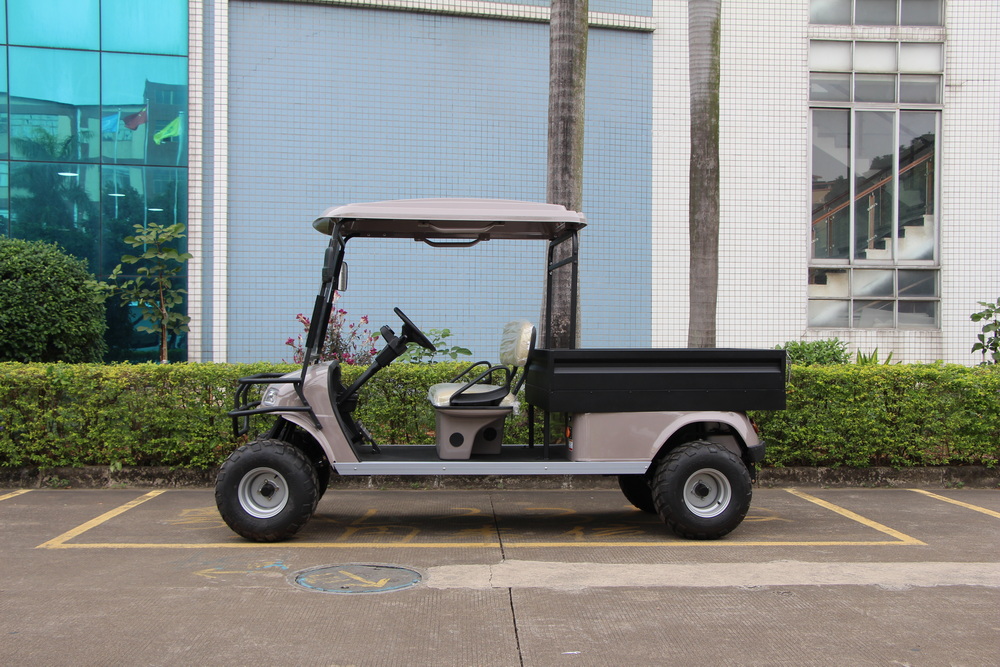
An electric cargo van can have enough payload but insufficient usable space. Equally, a large cargo body can fill with dense goods before reaching its advertised volume.
| Application | Primary constraint | Body features to evaluate |
|---|---|---|
| Parcel delivery | Volume and access frequency | Wide openings, shelving, efficient retrieval |
| Industrial components | Weight and restraint | Reinforced floor and suitable tie-downs |
| Food distribution | Temperature and hygiene | Insulation, cleanable surfaces, cooling provision |
| Campus maintenance | Tools and mixed materials | Compartments and lockable storage |
| Agricultural transport | Surface conditions and cleaning | Suitable cargo body and accessible loading |
Measure usable internal space, not just external dimensions. Check wheel-arch intrusion, door width, loading height, and access to goods at the front of the body.
For OEM development, a simple full-size loading mock-up can reveal problems before body tooling begins. Test actual cartons, pallets, tools, or containers.
An additional door may improve retrieval, but it should also be evaluated for structural, sealing, and manufacturing implications.
Advertised range depends on test conditions. Actual consumption changes with speed, cargo, terrain, temperature, and auxiliary loads.
A practical starting calculation is:
Route energy=Distance×Measured energy consumption
For an illustrative 90 km route at 0.22 kWh/km, driving requires 19.8 kWh. If independently measured auxiliary use adds 3 kWh, total route demand becomes 22.8 kWh.
Avoid double-counting auxiliaries if the consumption measurement already includes them.
If procurement planning allows that route to consume 80% of usable battery energy, the initial requirement becomes 28.5 kWh. That percentage is an illustrative planning assumption, not a universal operating recommendation.
The final reserve should reflect route uncertainty, charging options, battery condition, and supplier guidance.
A larger battery is not automatically the better commercial choice. It may increase purchase cost and vehicle mass without improving the required service.
Request:
- Nominal and usable capacity.
- Operating and charging temperature limits.
- Battery thermal-management details.
- Compatible charging equipment.
- Warranty duration and usage limits.
- Capacity-retention conditions and exclusions.
- Replacement and repair arrangements.
Avoid applying one fixed winter range-loss percentage to every electric cargo vehicle. Validate the selected configuration under representative conditions.
The useful comparison is not "small battery versus large battery." It is "adequate route capability versus unnecessary capacity."
Peak motor output alone cannot establish suitability for continuous commercial operation.
A vehicle may accelerate adequately on level ground yet struggle to sustain a long climb with a full load.
Evaluate the complete drivetrain:
- Continuous and peak motor output.
- Controller current limits.
- Gear ratio.
- Loaded climbing speed.
- Cooling capability.
- Tire size and intended surface.
Ask suppliers to define any hill-climbing claim. Specify vehicle mass, gradient, climb length, speed, and ambient conditions.
"Maximum gradeability" without those conditions is difficult to compare.
Do not evaluate climbing separately from braking.
Request loaded braking validation, parking-brake capability, and information about regenerative braking behavior. Confirm how the vehicle behaves when regenerative braking is limited.
For industrial sites, maneuverability and visibility may matter more than maximum speed. Compare turning clearance against actual aisles, loading bays, and gate openings.
Charging suitability depends on replenishing the day's energy within the real parking window.
| Charging approach | Application fit | Main limitation to check |
|---|---|---|
| AC depot charging | Predictable routes with longer downtime | Onboard charging limit and site capacity |
| DC fast charging | Short turnaround or in-shift replenishment | Vehicle compatibility and charging behavior |
| Opportunity charging | Scheduled breaks or loading stops | Reliable access and usable dwell time |
Do not assume every compact cargo vehicle supports DC fast charging.
For AC charging, actual power is constrained by the vehicle, charging equipment, and electrical supply. For DC charging, acceptance varies with battery conditions and state of charge.
Using the earlier example, replacing 22.8 kWh with an assumed 90% charging efficiency requires approximately 25.3 kWh from the grid.
Across seven available hours, average input power must be about 3.6 kW. Allow additional operational margin for delays, preconditioning, or shared charging.
Fleet demand needs separate attention. Twenty vehicles simultaneously drawing 7 kW create a nominal 140 kW charging load before other facility demand.
Managed charging can stagger sessions, but it cannot compensate for insufficient energy delivery before departure. Confirm site capacity and tariffs with the local utility early.
First reject configurations that fail legal, loading, route, or charging requirements.
Then score the remaining candidates. An illustrative weighting might allocate:
- 30% to route completion and charging fit.
- 25% to payload and cargo usability.
- 20% to serviceability and uptime.
- 15% to lifecycle cost.
- 10% to customization and driver experience.
Change these weights for the application. A cold-chain operator may prioritize temperature control; a component wholesaler may prioritize loading capacity.
This prevents an attractive headline specification from dominating the decision.
Use a production-representative prototype on actual routes.
Record departure and return charge levels, energy consumption, cargo mass, charging duration, loading time, driver feedback, and faults.
Define acceptance criteria beforehand, including:
- Minimum return reserve.
- Required loaded climbing performance.
- Charging completion before departure.
- Acceptable loading access.
- Required cargo-temperature performance, where applicable.
Illustrative scenario: a campus route may need only modest daily energy but frequent side access. Improving the body layout could create more operational value than increasing battery capacity.
That is a planning example, not a reported customer case.
Purchase price is only part of the commercial comparison.
Include vehicles, charging installation, electricity, maintenance, tires, insurance, financing, downtime, battery risk, and residual value.
Then divide lifecycle cost by completed deliveries, transported loads, or productive shifts.
A cheaper vehicle is not necessarily cheaper to operate if its limitations require extra trips or replacement capacity.
BorCart's cargo-vehicle offering includes cargo carts and enclosed cargo-body configurations, with OEM/ODM customization options. Buyers should confirm capabilities for the exact proposed model rather than transferring specifications between products.
For an effective enquiry, provide:
1. Destination market and intended vehicle classification.
2. Route distance, speeds, gradients, and climate.
3. Maximum cargo weight and actual cargo dimensions.
4. Required body layout and auxiliary equipment.
5. Charging supply and available downtime.
6. Branding, forecast quantity, and delivery schedule.
7. Testing, documentation, warranty, and service expectations.
For manufacturers purchasing vehicle components, add interface drawings, electrical requirements, revision control, and responsibilities for system validation.
Send BorCart this application brief and request a configuration proposal, compliance-document checklist, and loaded pilot plan before committing to a production order.

Start with legal suitability, payload, cargo dimensions, loaded route capability, and charging compatibility. Motor output and optional features matter only when connected to those requirements.
No. Additional capacity may increase cost and mass. Select usable energy that supports the route, agreed reserve, and expected operating conditions without unnecessary oversizing.
Account for freight, occupants, installed equipment, and accessories using consistent supplier weight definitions. Verify both total permitted weight and axle loading.
That depends on its classification, approval documents, and destination-market rules. A private-site vehicle should not be assumed road-legal because it has road-style equipment.
Request the test conditions: cargo mass, speed, temperature, terrain, auxiliary use, and battery configuration. Prefer comparable loaded tests over unrelated advertised maximums.
Request the configuration, drawings, defined weights, battery and charging details, validation plan, relevant approval documents, warranty conditions, spare-parts support, and delivery terms.
- [U.S. Department of Energy, Alternative Fuels Data Center — Electric Vehicles for Fleets]. Supports duty-cycle assessment, environmental and auxiliary-load considerations, charging selection, utility coordination, training, warranties, and service planning. [afdc.energy]
- [U.S. Department of Energy, Alternative Fuels Data Center — Electric Vehicle Benefits and Considerations]. Supports battery-life considerations, model-specific warranty review, load-dependent commercial-vehicle efficiency, and lifecycle-cost assessment. [afdc.energy]
- [U.S. Department of Energy — Blueprint 4A: Electric Vehicles and Fleet Electrification, How-To Guide]. Supports coordinated vehicle procurement, charging-site planning, utility engagement, installation, and implementation. [energy]
- [National Highway Traffic Safety Administration — Interpretation 07-005545as]. Explains the distinction between U.S. low-speed vehicle classification and other motor-vehicle categories. This jurisdiction-specific interpretation does not establish approval for any BorCart model. [nhtsa]
- [BorCart — Cargo Vans and OEM/ODM Solutions]. Manufacturer-provided source for product categories and customization offerings; not independent verification of model performance or destination-market approval. [borcart]


