


Views: 222 Author: Leah Publish Time: 2026-01-28 Origin: Site


Content Menu
● How Fast Is an Electric Golf Cart in Everyday Use?
● Typical Speed of a Standard Electric Golf Cart
● Voltage, Power, and Electric Golf Cart Speed
>> Common Voltage Levels and Typical Speeds
● Street-Legal Electric Golf Carts and Regulations
● Performance and Custom Electric Golf Carts
● Factors That Affect Electric Golf Cart Speed
● Electric vs Gas Golf Cart Speed
● Safety Considerations at Higher Speeds
● OEM Opportunities with Electric Golf Carts
● Example Use Scenarios for Different Electric Golf Cart Speeds
● How to Choose the Right Electric Golf Cart Speed for Your Project
● FAQ About Electric Golf Cart Speed
>> 1. How fast does a standard electric golf cart go?
>> 2. Can an electric golf cart reach 25 mph?
>> 3. What upgrades make an electric golf cart faster?
>> 4. Is it safe to modify an electric golf cart for more speed?
>> 5. Why choose an electric golf cart over a gas cart for similar speed?
An electric golf cart is much faster than many people expect, especially modern models designed for resorts, communities, golf courses, and light transport. In real-world use, most standard electric golf cart setups run between 12–20 mph, while upgraded or performance-tuned versions can reliably reach 25–30 mph or more in custom builds.
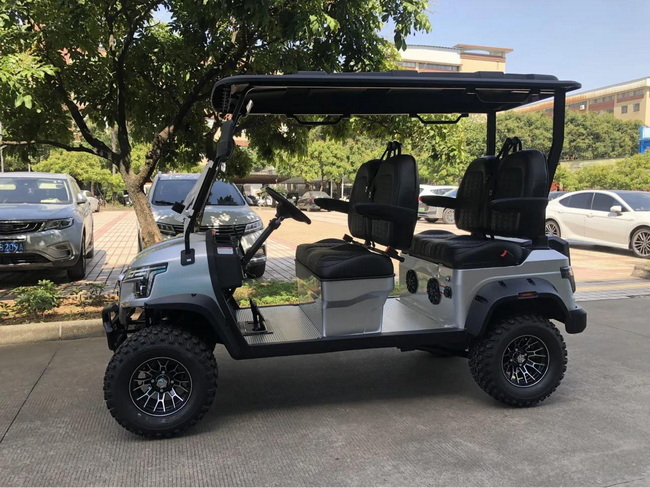
For most users, an electric golf cart offers a balance of safe cruising speed, quiet operation, and efficient battery use. Standard fleet models are tuned conservatively for safety and durability, while personal and performance versions unlock higher top speeds for private properties, low-speed roads, and commercial projects.
A typical fleet electric golf cart used on golf courses is usually programmed for moderate, predictable speeds. This protects passengers, pedestrians, and turf while still keeping play or transport efficient. Personal-use and OEM-configured electric golf cart platforms can be adjusted to meet specific market requirements, local regulations, and brand positioning.
A factory-stock electric golf cart used on golf courses or in resorts is usually set up for controlled and comfortable operation. Most of these carts must work all day with many different drivers, so manufacturers prioritize stability, safety, and battery life.
Key reference ranges for standard setups include:
- Most fleet electric golf cart models: about 12–15 mph in stock form.
- Many personal-use electric golf cart versions: roughly 15–19 mph, depending on controller settings, passenger load, and terrain.
- Standard consumer electric golf cart (unmodified): generally 12–20 mph in everyday conditions.
In practice, this means an electric golf cart can comfortably move players between holes, shuttle guests in resorts, or circulate inside residential communities without feeling too slow or too aggressive. For family or commercial use, these speeds are more than enough to cover short to medium distances efficiently while remaining easy for new drivers to control.
The electrical system voltage and motor/controller configuration are key to how fast an electric golf cart can go. Higher voltage systems usually deliver better acceleration, higher efficiency, and more comfortable cruising at the upper end of the speed range.
A basic 36V system is common on older or entry-level electric golf cart platforms. These are typically tuned for reliability rather than performance. Modern 48V systems have become the standard for many premium models because they combine solid acceleration with good range and improved hill-climbing ability. For more demanding applications, some manufacturers offer 72V systems that push an electric golf cart into clearly higher performance territory.
- 36V electric golf cart: typically around 12–14 mph, mainly in basic fleet carts aimed at reliability and safety.
- 48V electric golf cart: commonly in the 15–19 mph range, with stronger hill-climbing and smoother acceleration.
- 72V electric golf cart: often in the 20–25 mph range in higher-end or lifted models configured for more demanding use.
These ranges show why many modern buyers prefer 48V or 72V platforms. The electric golf cart feels more responsive and capable, especially with multiple passengers or light cargo, while still preserving battery life and control. For OEM projects, voltage and controller tuning can be matched to each target market and usage scenario.
In many markets, an electric golf cart configured as a low-speed vehicle (LSV) must obey regulatory speed caps. To qualify as a road-legal low-speed vehicle on designated streets, the electric golf cart is typically limited to a safe top speed defined by local rules.
Most street-legal LSV-style electric golf carts are electronically limited to about 20–25 mph. Even if the motor and battery system can technically support higher speed, controller programming restricts the maximum to ensure compliance. Beyond speed, road-legal versions often need lighting, mirrors, reflectors, seat belts, and other safety components.
For OEM and branding customers, this means your private-label electric golf cart can be tuned to match specific regulatory frameworks and project needs in different countries. Speed can be locked via software so that fleet operators, resorts, or communities have predictable and uniform performance across all vehicles.
Beyond standard use, a performance-oriented electric golf cart can deliver significantly higher speeds. These vehicles combine stronger motors, higher voltage packs, and advanced controllers tailored for acceleration and torque. They are popular in private communities, large estates, and off-road recreation projects.
Performance electric golf cart platforms often operate comfortably in the 20–25 mph range for confident driving on varied terrain. Specialty custom electric golf cart builds can reach 30–35 mph or more, often for private property or enthusiast use. In these cases, owners usually upgrade batteries to high-capacity lithium packs, install heavy-duty controllers, and regear the drivetrain for higher top speed.
With higher‑voltage lithium batteries, tuned controllers, and upgraded drivetrains, a modern electric golf cart can behave almost like a compact low-speed car while remaining quiet and energy-efficient. However, whenever speed is increased, equal attention should be given to brakes, suspension, frames, and safety features.
Even with the same factory rating, the actual speed of an electric golf cart depends on multiple real-world factors. Understanding these helps owners and buyers set realistic expectations and configure the correct specification for their projects.
Key factors include:
- Total load: The number of passengers, cargo weight, and added accessories all impact acceleration and top speed. A fully loaded electric golf cart will usually run slower than an empty one.
- Terrain: Hills, slopes, sand, grass, and off-road surfaces reduce the achievable speed and increase energy consumption.
- Tire size and tread: Larger tires can change effective gearing, sometimes increasing top speed but reducing torque, while aggressive off-road tread increases rolling resistance.
- Battery condition and type: Healthy lithium packs support more stable high-speed performance than worn lead-acid batteries. Voltage sag in old batteries can dramatically slow an electric golf cart.
- Controller programming: Fleet modes often limit speed for safety and uniformity. Personal or performance settings can unlock more of the system's capability.
For OEM programs, these parameters can be pre-configured so that each electric golf cart under a customer's brand matches the usage scenario of end users, from gentle resort shuttle to more dynamic community or off-road applications.
From a user's perspective, the speed difference between an electric golf cart and a gas cart is often smaller than expected. Both can typically reach mid-teen or low-20 mph ranges, depending on setup, load, and terrain.
Standard electric golf cart models usually run at 12–20 mph, while many gas-powered carts fall in a similar band. Gas carts may hold speed slightly better on steep hills or under continuous heavy loads. However, electric golf carts compensate with instant torque, smoother acceleration, and quieter operation.
For resorts, gated communities, campuses, and industrial parks, the quiet operation of an electric golf cart is often more valuable than a small speed advantage from gas alternatives. Reduced noise improves guest experience, and the lack of exhaust emissions supports a cleaner environment and greener brand image.
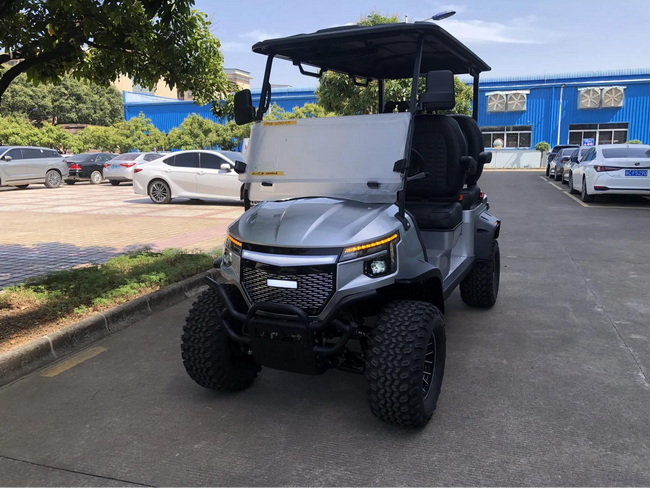
As the electric golf cart becomes faster, safety features become critical. For OEM buyers and brand owners, integrating safety systems is essential for both compliance and user confidence.
Important safety elements for higher-speed electric golf cart configurations include:
- Strong braking systems: Hydraulic or disc brakes sized for extended downhill braking, especially for loaded vehicles.
- Lighting and signaling: Headlights, tail lights, brake lights, turn signals, and reflectors are important in low-speed road environments.
- Structural protection: Seat belts, sturdy frames, side guards, and handrails help protect occupants in sudden stops or minor impacts.
- Tire and suspension upgrades: Proper tires and tuned suspension improve stability at higher speeds and over uneven surfaces.
- Speed-limited modes: Configurable modes for fleet use or rental applications allow operators to restrict maximum speed in sensitive areas.
When configured correctly, even a 25 mph electric golf cart can remain stable and predictable in resorts, campuses, and residential traffic. Manufacturers and OEM partners must design the whole vehicle system around the intended top speed rather than focusing only on the motor and battery.
BorCart is a high‑tech Chinese manufacturer specializing in the research, development, and production of electric vehicles, including electric golf carts, sightseeing vehicles, low‑speed vehicles, hunting vehicles, and multi‑purpose vehicles. With strong R&D capability and modern production lines, BorCart supports global brand owners, distributors, and wholesalers through customized OEM and ODM services.
Key strengths include:
- Scalable production capability for large-volume orders.
- Flexible configurations for electric golf cart platforms, including different seating layouts, cargo beds, lifted chassis, and body designs.
- Use of quality motors, controllers, chargers, and battery options to match overseas standards and durability expectations.
- Engineering support to define target speed ranges, driving modes, and safety packages according to local regulations and application needs.
This allows customers worldwide to launch their own electric golf cart brands with tailored speed, styling, and functional options. Whether the project is focused on golf courses, hotels, campuses, residential communities, or hunting and utility scenarios, the electric golf cart can be configured as a reliable, efficient, and comfortable solution.
Different projects demand different speed ranges, and an electric golf cart can be engineered precisely for those requirements. Below are typical scenarios and recommended speed targets.
- Golf course fleet: 12–15 mph is usually enough for moving players between holes while protecting turf and ensuring safety.
- Resort and hotel shuttle: 15–19 mph provides quick yet comfortable transportation between rooms, lobbies, and attractions.
- Campus or community mobility: Up to 20–25 mph works well for street-legal low-speed routes inside large residential, industrial, or commercial areas where traffic is controlled.
- Hunting and off-road recreation: 20–25 mph with torque‑focused gearing and off‑road suspension delivers good control over uneven ground.
- Utility and cargo support: Moderate speeds with strong low‑end torque are ideal for maintenance teams and logistics within large facilities, stadiums, factories, or parks.
A well‑specified electric golf cart gives each operator the right combination of speed, comfort, carrying capacity, and durability for their daily tasks. When planning a project, matching the target top speed to the specific environment is one of the most important design decisions.
If you are planning to introduce or brand your own electric golf cart line, choosing the correct speed range should be one of your first strategic decisions. This choice affects hardware configuration, regulatory classification, and marketing position.
Consider the following points when deciding:
- Primary environment: Golf courses and resorts require lower, safer speeds, while large communities and industrial parks may benefit from higher-speed LSV configurations.
- Legal requirements: Many regions clearly define low-speed vehicle categories with specific maximum speeds. Your electric golf cart must fit these rules if used on public or semi-public roads.
- Type of users: If many different drivers will share the vehicle (tourists, staff, residents), conservative speeds and easy handling are usually better.
- Brand image: Some brands want a relaxed, comfortable electric golf cart experience, while others promote a more energetic, sporty driving feel.
- Maintenance and operating cost: Higher speeds can increase mechanical stress and energy use. Matching speed to realistic needs often lowers lifetime costs.
By working with an experienced manufacturer, you can decide how fast your electric golf cart should be and then standardize this across your entire lineup, from basic two-seat carts to multi-row passenger shuttles and utility models.
An electric golf cart is no longer limited to slow movement across a golf course. Modern platforms cover a wide speed spectrum, from 12–15 mph fleet vehicles to 25 mph street‑legal LSVs and 30+ mph custom builds for private use. With different voltage systems, battery technologies, and controller settings, the electric golf cart can be optimized for gentle resort service, energetic community mobility, or robust off-road use.
When planning or purchasing electric golf cart solutions, speed should be considered together with safety, range, load capacity, and regulatory compliance. For brand owners, distributors, and project developers, working with a capable OEM partner makes it possible to define the ideal balance between performance and protection. With thoughtful configuration, the electric golf cart becomes a quiet, efficient, and versatile vehicle that fits perfectly into modern mobility and tourism environments.
Contact us to get more information!
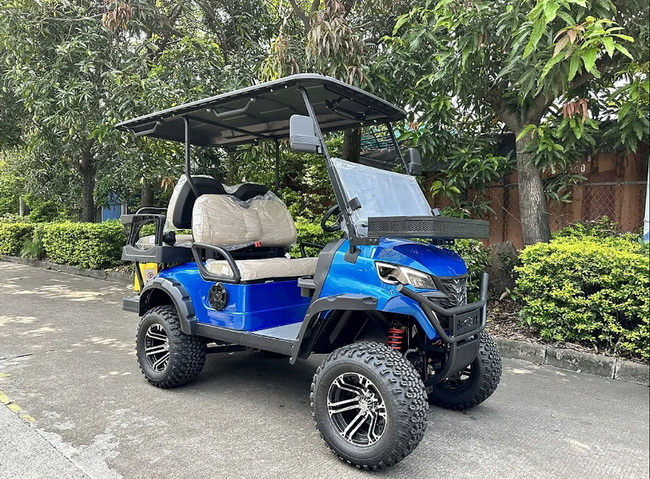
A standard fleet electric golf cart designed for golf courses usually travels at about 12–15 mph. This range offers safe, predictable operation while keeping players moving efficiently between holes and facilities.
Yes, many personal or performance electric golf cart setups can be configured to run at 20–25 mph, especially with 48V or 72V systems and upgraded controllers. Street‑legal low-speed versions are often electronically limited to around 25 mph to comply with local regulations for low-speed vehicles.
Common upgrades include higher‑voltage lithium battery packs, more powerful motors, performance‑tuned controllers, and suitable gearing. Together, these modifications can push a well‑built electric golf cart from the typical 15 mph range into 25–30 mph territory or beyond for custom builds, provided that the frame, brakes, and suspension are also upgraded accordingly.
It can be safe if speed upgrades are matched with appropriate brakes, suspension components, tires, and safety equipment. However, once an electric golf cart exceeds regulated speed limits, it may no longer qualify as a low-speed vehicle in some regions and must be used strictly on private property or reclassified according to local laws.
An electric golf cart offers comparable speeds to many gas carts while producing less noise, lower emissions, and smoother acceleration. For golf courses, resorts, campuses, and communities, this combination of speed, comfort, and environmental benefits makes the electric golf cart especially attractive and often preferred by both operators and passengers.
1. https://www.borcart.com/how-fast-can-an-electric-golf-cart-go.html
2. https://borcart.en.made-in-china.com
3. https://www.golfcarttiresupply.com/blog/how-fast-can-a-golf-cart-go/
4. http://gzborcartev.com
5. https://thecartfinder.com/2024/07/12/how-fast-do-golf-carts-go/
6. http://zh.borcartev.com/news/the-electric-vehicle-exhibition-showing/
7. https://hartvillegolfcarts.com/how-fast-do-golf-carts-go/
8. https://www.borcartev.com/about-us/
9. https://jsgolfcarts.com/blog/how-fast-can-golf-carts-go/
10. https://www.borcart.com/products/Golf-Carts-Electric.html


