


Views: 222 Author: Leah Publish Time: 2026-01-28 Origin: Site


Content Menu
● What Is the Typical Range of an Electric Golf Cart?
● Main Factors That Affect Electric Golf Cart Range
>> Voltage System (36V, 48V, 72V)
>> Battery Age, Maintenance, and Temperature
● How Many Rounds or Hours Can an Electric Golf Cart Run?
● Electric Golf Cart Range vs Gas Golf Cart Range
● How BorCart Optimizes Electric Golf Cart Range for OEM Clients
● How to Maximize the Range of Your Electric Golf Cart
>> Choose the Right Battery and System
>> Maintain Batteries Correctly
>> Optimize Load and Driving Habits
>> Schedule Professional Service
● FAQ
>> 1. How far can a 48V electric golf cart go on one charge?
>> 2. How many rounds of golf can an electric golf cart complete per charge?
>> 3. Do lithium batteries really make a big difference in electric golf cart range?
>> 4. How does terrain affect the range of an electric golf cart?
>> 5. What can fleet operators do to ensure consistent range from their electric golf carts?
For most modern electric golf carts, real-world range typically falls between 15 and 80 miles per charge, depending mainly on battery type, voltage, load, and driving conditions. For professional OEM manufacturers like BorCart, optimizing electric golf cart configuration allows overseas brands and wholesalers to match range to specific golf courses, resorts, or community use cases.
Electric golf cart buyers today have many options in terms of battery chemistry, system voltage, and vehicle design. These choices allow you to balance range, speed, carrying capacity, and budget for different application scenarios. Whether you operate a golf course fleet, a resort shuttle service, or sell private-use electric golf carts, understanding range is essential for planning daily operations and customer experience.
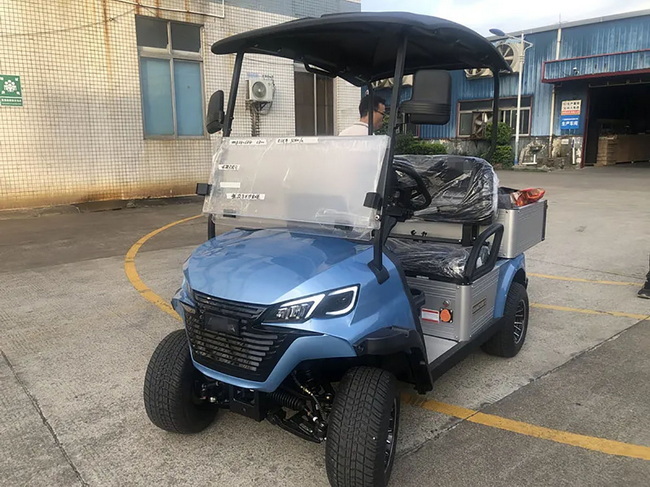
A standard 48V electric golf cart with traditional lead-acid batteries usually covers about 15–40 miles per full charge under normal conditions. When the same electric golf cart platform is upgraded to lithium-ion batteries, range commonly increases to around 35–60+ miles per charge.
For higher voltage platforms such as 72V electric golf carts, the range can extend to roughly 30–50 miles per charge on typical golf or resort terrain. In premium lithium configurations and ideal flat conditions, some electric golf carts can approach or exceed 80 miles on a single charge, especially in light-load neighborhood or community applications.
These numbers are general working ranges, not absolute limits. Real performance will always depend on the specific electric golf cart configuration, total weight, driving style, and the quality of the battery pack. When planning a fleet or community shuttle, it is wise to calculate daily mileage requirements and then add a safety margin on top.
Several technical and usage-related variables determine how far an electric golf cart can go before it needs recharging. By understanding these factors, you can choose the right configuration and manage your electric golf carts for stable, predictable range.
Battery chemistry is one of the most important influences on electric golf cart range.
- Lead-acid batteries: Most traditional electric golf carts still use flooded or sealed lead-acid batteries, offering about 15–40 miles of range per charge depending on capacity and maintenance. These packs are heavier and less energy-dense, which slightly limits speed and climbing ability. Lead-acid batteries are usually cheaper at the beginning, but they require regular maintenance and have a shorter lifespan.
- Lithium-ion batteries: Modern lithium packs are lighter, more efficient, and can extend typical electric golf cart range to roughly 35–80+ miles depending on configuration. They also charge faster, tolerate deeper discharge, and maintain voltage more consistently across the drive cycle. Although the initial cost is higher, lithium batteries can reduce total cost of ownership over time through longer life and lower maintenance.
For golf courses or resorts with intensive usage, a lithium-powered electric golf cart often becomes more economical when you consider reduced downtime, faster charging, and extended lifecycle.
The system voltage of an electric golf cart affects both performance and range.
- 36V systems: Older electric golf carts with 36V systems usually provide the lowest range and performance, often in the 15–25 mile band per charge. These systems are fine for light-duty applications but may struggle with hills or heavy loads.
- 48V systems: A 48V electric golf cart generally delivers about 25–55 miles per charge depending on battery type—around 25–40 miles with lead-acid and 40–55 miles with lithium-ion. This is the most common choice for modern fleets because it offers a good balance between power and efficiency.
- 72V systems: A performance-oriented 72V electric golf cart can combine higher speed with a typical range in the 30–50 mile bracket, assuming healthy batteries and moderate terrain. This configuration suits demanding applications such as hilly resorts or multi-purpose vehicles that require both power and endurance.
The right voltage level depends on your terrain, typical load, and expectations for acceleration and hill-climbing. For many professional buyers, 48V and 72V electric golf carts are now standard.
The ground conditions where you operate an electric golf cart also have a big impact on range.
- Flat terrain: Driving an electric golf cart on flat golf courses, resorts, and gated communities maximizes range because the motor works in its most efficient zone. On flat paths, the controller can deliver stable current, and energy consumption stays relatively low.
- Hilly terrain: Frequent climbs, steep slopes, and rough ground increase current draw from the battery, reducing range by a noticeable percentage over each round. Going uphill demands more torque, and even though regenerative braking may recover a little energy going downhill, it usually does not fully compensate.
- Mixed surfaces: Transitions between grass, paved paths, sand, and off-road sections (for hunting or multi-purpose electric golf carts) can also shorten range slightly. Soft surfaces create more rolling resistance, forcing the motor to draw more current for the same speed.
When planning the usage of an electric golf cart, it is useful to map the typical route and elevation. This helps you choose the right battery capacity and voltage system.
The total weight carried by an electric golf cart directly affects how far it can go.
- Passenger count: A two-seat electric golf cart with a single driver travels farther than a fully loaded 4–6 seat cart carrying players, clubs, and accessories. More passengers mean more mass, so the motor must work harder on every acceleration and climb.
- Cargo and accessories: Utility boxes, hunting racks, coolers, roofs, windshields, and extra equipment add weight, causing higher current draw and shorter range. Heavy optional equipment should be considered when specifying the battery pack for an electric golf cart.
- Fleet use patterns: Rental fleets at golf courses or resorts that run electric golf carts continuously at full capacity often see lower effective range per charge than private owners. Frequent stops and starts with heavy loads put extra stress on the batteries.
For professional buyers, it is smart to define typical maximum load and then size the battery system to meet that requirement comfortably.
How drivers operate an electric golf cart can change range as much as hardware configuration.
- Aggressive acceleration: Rapid starts, frequent full-throttle runs, and hard braking all reduce the distance a single charge can deliver. High current draws heat up components and create inefficiencies.
- Steady cruising: Keeping a moderate, steady speed on an electric golf cart can significantly improve range, especially on flat paths. Smooth acceleration and early deceleration make the best use of available energy.
- Speed-limited carts: Many course fleets limit electric golf cart speed to improve both safety and range over a full day of play. A slightly lower top speed can reduce energy consumption without harming the user experience.
Training staff and giving clear usage instructions to customers can help maintain consistent range for electric golf cart fleets.
An electric golf cart is only as strong as its batteries. Age and care directly influence performance.
- Battery age: As lead-acid batteries age, internal resistance increases and usable capacity drops, shortening electric golf cart range compared with new packs. Even lithium batteries, although more durable, lose some capacity over time.
- Maintenance: Correct water levels (for flooded lead-acid), clean terminals, proper charging routines, and avoiding deep discharge all help protect range. Poor maintenance can easily cut effective range and shorten battery life.
- Temperature: Extremely hot or cold environments can affect battery performance and reduce effective range, especially for older lead-acid packs. In very cold weather, capacity falls, and in high heat, long-term battery health can be damaged.
A well-maintained battery pack in an electric golf cart can deliver reliable range for years, while neglected batteries may lose performance quickly.
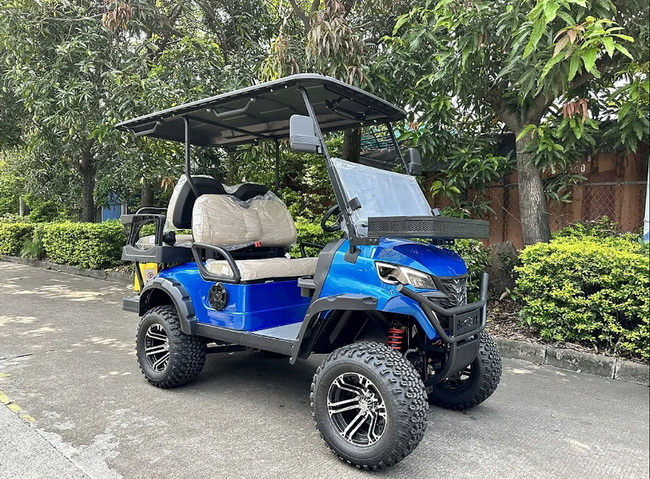
On a standard 18-hole course, an electric golf cart typically travels about 4–6 miles per round depending on layout and routing of the cart paths. Most 48V lead-acid electric golf carts can complete approximately 4–6 full rounds on a charge, while lithium-powered carts can often complete 7–10+ rounds in the same conditions.
In terms of hours, this often translates to one full day of course use for fleets, assuming proper overnight charging. For community or resort shuttle applications, operators may schedule top-up charges between peak periods to keep electric golf carts within the optimal state-of-charge band.
For example, a resort might run electric golf carts for three hours in the morning, give them a partial charge at midday, then run another three-hour shift in the afternoon. By managing duty cycles and charging windows, operators can make sure all electric golf carts have enough range for peak traffic times.
Gas golf carts typically deliver a longer driving distance per refueling than electric golf carts, but with higher noise and operating costs. For many customers of OEM factories like BorCart, the decision between gas and electric golf carts depends on range requirements, local regulations, and environmental goals.
Below is a quick comparison of key points:
- Typical range per use: An electric golf cart generally delivers about 15–80 miles per charge depending on batteries and setup, while many gas carts cover roughly 100–180 miles per tank.
- Energy source: Electric golf carts rely on rechargeable battery packs (lead-acid or lithium), while gas golf carts use a gasoline engine with a fuel tank.
- Operating noise: An electric golf cart is very quiet and ideal for golf courses, resorts, and residential communities. Gas carts produce more engine noise and may disturb guests or residents.
- Running cost: Electric golf carts usually have lower energy and maintenance costs over time, particularly with lithium batteries and simple electric drivetrains. Gas carts have higher fuel costs and more complex mechanical systems to maintain.
- Environmental impact: Electric golf carts produce no tailpipe emissions at the point of use, which helps meet environmental regulations and sustainability goals. Gas carts generate direct emissions from combustion engines.
Many operators now prefer electric golf carts because the total cost of ownership, comfort, and environmental benefits often outweigh the advantage of slightly longer gas range.
BorCart is one of China's leading high-tech manufacturers of electric vehicles and automotive components, supplying electric golf carts, sightseeing vehicles, low-speed vehicles, hunting vehicles, and multi-purpose vehicles to global partners. With multiple production lines and strong research and development capability, BorCart supports overseas brands, wholesalers, and manufacturers with flexible OEM and ODM customization of electric golf carts.
Key ways BorCart helps partners achieve the right electric golf cart range include:
- Battery configuration: BorCart offers both lead-acid and lithium battery solutions, as well as different capacity options to balance cost, weight, and range targets. Customers can choose standard packs or upgrade options based on their market positioning.
- Voltage and motor system: The company matches 48V or 72V platforms with branded motors and controllers to deliver efficient performance and reliable distance per charge. Optimized controller programming helps protect batteries and smooth power output.
- Application-specific design: BorCart customizes electric golf carts for golf courses, resorts, hunting grounds, industrial parks, and multi-purpose environments so that range matches real operational needs. Seating layout, cargo areas, and accessories can all be adapted.
- Component quality: BorCart uses internationally recognized motors, controllers, and chargers that comply with overseas standards to ensure stable range and long-term durability. Consistent quality control allows fleets of electric golf carts to operate with fewer failures and more predictable performance.
- Styling and branding: As an OEM supplier, BorCart can design electric golf carts according to customer branding requirements, including body styling, colors, logos, and optional equipment, while still maintaining optimized range and safety.
By combining engineering experience with manufacturing scale, BorCart positions itself as a long-term partner for companies that want dependable electric golf carts under their own brand.
Whether you use an electric golf cart on a course, in a resort, or as a community shuttle, there are several practical steps to go farther on every charge. Small improvements in hardware and driving habits can add up to noticeably longer range.
Selecting the correct battery and voltage system is the foundation of good range.
- Upgrade to lithium-ion: When budget allows, lithium batteries are one of the most effective ways to extend electric golf cart range and reduce charging time. They also provide more consistent power until the state of charge becomes low.
- Match voltage to usage: For demanding courses or multi-purpose use, a 48V or 72V system may offer more efficient range than an older 36V platform. Higher voltage systems can deliver the same power with lower current, improving overall efficiency.
- Specify capacity correctly: For fleets, it is better to choose a battery pack that comfortably covers the longest expected daily distance plus a safety margin. This avoids deep discharging and protects long-term battery health.
Even a high-quality battery pack in an electric golf cart needs proper maintenance.
- Correct charging: Charge the electric golf cart after each use, avoid deep discharges whenever possible, and use a quality charger matched to the battery chemistry. Overcharging or using incorrect chargers can seriously damage batteries.
- Regular inspection: Check cables and terminals, and for lead-acid units, maintain proper water levels according to the manufacturer's instructions. Clean off any corrosion to keep electrical connections efficient.
- Storage habits: Store electric golf carts in moderate temperature environments and avoid leaving batteries fully discharged for long periods. If the cart is stored for weeks or months, maintain a partial state of charge and perform periodic top-ups.
By building good habits into daily operations, fleet managers can protect range and avoid unexpected downtime.
The way an electric golf cart is used every day can extend or reduce range.
- Control weight: Remove unnecessary cargo and accessories when you need maximum range from the electric golf cart. This might include heavy tools, unused racks, or redundant items.
- Smooth driving: Accelerate gently, keep a steady speed, and avoid unnecessary full-throttle operation to conserve energy. On downhill sections, drivers can ease off the accelerator earlier and let the cart roll.
- Plan routes: For fleets, plan paths that avoid steep climbs where possible and schedule charging breaks between intensive shifts. Well-designed routes can help electric golf carts cover more trips per charge.
Regular technical checks ensure your electric golf cart stays efficient.
- Periodic checks: Have the motor, controller, brakes, wheel bearings, and wheel alignment inspected regularly to minimize energy waste. Mechanical resistance from poorly maintained parts can eat into range.
- Software and settings: For modern electric golf carts with programmable controllers, range can sometimes be optimized through software parameters, speed limits, and acceleration curves. Manufacturers like BorCart can support OEM customers in finding the right balance between performance and efficiency.
- Replacement planning: Monitor battery health and plan timely replacement before severe capacity loss appears. This keeps electric golf carts performing reliably and protects the user experience.
The real-world distance an electric golf cart can travel on a full charge depends on battery chemistry, system voltage, terrain, load, and driving habits, creating a range window from roughly 15 up to 80 miles or more. By choosing the right configuration and following good maintenance and driving practices, users can ensure that their electric golf cart comfortably covers multiple rounds of golf, a full day of resort service, or extended neighborhood trips.
For global brands, wholesalers, and manufacturers, partnering with an experienced OEM factory like BorCart makes it easier to specify electric golf carts that balance range, performance, and cost for different markets and applications. With strong research and development, high-quality components, and flexible customization, BorCart helps overseas customers build electric golf cart lineups that meet modern expectations for efficiency, comfort, and sustainable mobility. When you properly match battery system, vehicle design, and real usage requirements, an electric golf cart becomes a reliable, economical solution for modern short-distance transportation.
Contact us to get more information!
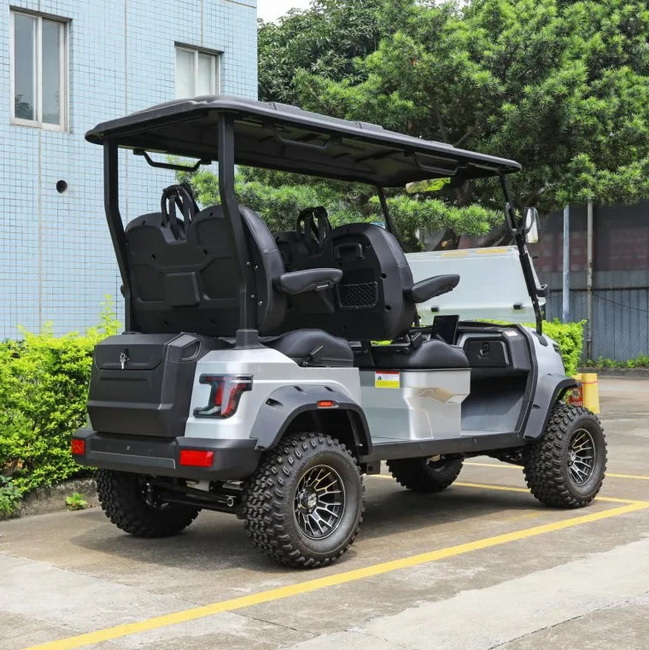
A 48V electric golf cart with lead-acid batteries typically travels about 25–40 miles on a full charge, assuming moderate terrain and normal load. With a lithium battery upgrade on the same 48V platform, range often increases to approximately 40–55 miles or more per charge. Actual distance will vary with passenger weight, driving style, and maintenance level.
Most electric golf carts can complete around 4–6 rounds of 18 holes on a full charge with lead-acid batteries, depending on terrain and pace of play. Lithium-powered electric golf carts can often handle 7–10 or more rounds in similar conditions before needing a recharge. Golf courses that schedule overnight charging and occasional daytime top-ups can easily cover full-day operations.
Yes, lithium batteries significantly increase the range of an electric golf cart thanks to higher energy density, lower weight, and more efficient discharge characteristics. In many cases, swapping from lead-acid to lithium can boost range by 30–60 percent while also improving acceleration and reducing charging time. Lithium packs also keep voltage more stable, so the performance of the electric golf cart stays strong until the battery is nearly empty.
Flat courses and paths allow an electric golf cart to run closer to its maximum rated range because the motor stays in an efficient operating zone. Hilly or off-road terrain forces the motor to work harder, which increases current draw and can noticeably cut the distance covered per charge. If your operation includes many steep slopes, it is wise to choose a higher-capacity battery pack and possibly a higher-voltage system.
Fleet operators should implement regular battery maintenance programs, charge electric golf carts after each operating shift, and replace aging battery packs before capacity drops too far. They can also optimize routes, limit top speed, and train drivers to use smooth acceleration and braking. Working with OEM partners like BorCart to select the right battery, voltage, and controller settings for specific course or resort conditions further helps maintain stable, predictable range across the entire electric golf cart fleet.
1. https://centralcoastcarts.com/central-coast-carts/how-far-can-an-electric-golf-cart-go-on-a-full-charge/
2. https://borcart.en.made-in-china.com
3. https://taraelectricvehicles.com/blog/2025/07/05/72-volt-golf-carts-the-ultimate-power-for-golf-course-performance/
4. http://gzborcartev.com
5. https://luxeelectriccar.com/golf-cart-range-how-far-can-your-electric-cart-go-on-a-charge/
6. http://zh.borcartev.com/news/the-electric-vehicle-exhibition-showing/
7. https://www.lakeeriegolfcars.com/blog/ez-go-golf-carts-gas-vs-electric--which-is-right-for-you--82062
8. https://www.borcartev.com/about-us/
9. https://golfcartsearch.com/blog/how-far-can-a-golf-cart-go-range-guide-2026
10. https://www.borcart.com/products/Golf-Carts-Electric.html


